LGBTQI+ identity is ancient and sacred. From Shikhandi, a character in the Hindu epic Mahabharata who transitions from male to female, to Hermaphroditus, an ancient Greek god presenting as both a man and a woman or both in different myths, some of our earliest queer representations are divine, as Charlie Claire Burgess explores in their new book Queer Devotion (2025). This is something that came to mind exploring The First Homosexuals: The Birth of a New Identity exhibit.
Ancient LGBTQI+ people devoted to the divine did not use terms like LGBTQI+ to describe themselves or how these deities’ stories resonate with their own identities — the South Asian hijra, Mexican Muxe, and Southern Italian femminielli used their own terms, rather than queer or trans; the language they used in their devotion to these figures reflected how many Indigenous peoples around the world view LGBTQI+ identity as natural and sacred.
Indiqueer individuals in the United States and abroad push back on queerness being nascent, as well as the overwhelming whiteness of queer visibility in mainstream media and western advocacy movements.
So it feels initially confusing for Wrightwood 659 Chicago’s new exhibition The First Homosexuals: The Birth of a New Identity, 1869-1939 to situate queerness in the 19th century. Or at least colonial to claim that queerness came into being when European and American communities claimed the specific term homosexual, now largely considered outdated and medical in the 21st century. It is, however, an interesting part of history.
Also as Johnny Wallis, one of two curators leading a team of 22 researchers along with queer art historian Jonathan Katz, explained in an interview, choosing this time period is intentional. It’s not meant to be a reflection on queerness’ ancient roots but rather an exploration of when this term and language for queerness came into being and was utilised widely.
“It’s really investigating the idea of the so-called invention of homosexuality in 1869,” Wallis said, “the year that the word first appears in print.” Included in an activist’s publication calling for the decriminalisation of same-sex relationships in Prussia, the word has been both a form of liberation and discrimination through the medicalisation of homosexuality.
At the same time, this language enforced this reductive binary — arguably one magnified again today for trans, nonbinary, and intersex people in the United States with US President Trump’s Executive Order arguing that the government only recognises and enforces a male-female gender binary, and largely erases the history of queer representation beyond this binary within Indigenous communities around the world. As for Russia, that’s a whole lot to unpack.
As Wallis said, “the concept of homosexuality in this homo-hetero binary is fundamentally European in origin and is subsequently spread across the world along the lines of colonial domination and is violently imposed onto Indigenous populations. It overwrites pre-existing modes of sexuality and gender that were more expansive in many instances and frankly more accepting.”
To claim that European and American communities discovered queerness in the 19th century or rather named it for the first time feels like another form of colonial violence against communities whose queer members and frameworks were largely erased and destroyed by imposing white religious moral frameworks. In many instances, it wasn’t queerness that spread with white people, it was queerphobia.
Wallis and Katz don’t erase images from legacies of racial violence among European and American queer communities, nor how white queer people fetishised queer people and queer people of colour. Some of the art on display features violence against Indigenous peoples and outright racist depictions of people made by queer artists. But as a result of what art depicting queerness survives in museum and private collections, these views and views that centralise white cis men are foregrounded in the exhibition.
Even though a third of the works on display were produced by women and artists of colour, this still fails to explicitly acknowledge how people of colour were instrumental in exploring and documenting queer communities and identities.
While including the earliest depiction of a same-sex couple in European art, some of the first modern trans representation and a number of other works that until now could not travel outside of their home countries, this exhibition explores how white, cis constructions of queerness dominated early and even later visualisations and explorations of what it means to be LGBTQI+. This is despite the community owing the LGBTQI+ rights that exist today to the queer and trans people of colour who spearheaded the movement, and whose labour largely goes unrecognised.
This is not to deny that the exhibition is timely and poignant, especially in the United States where LGBTQI+ identity remains politically charged. In the United States, where this exhibition takes place, anti-LGBTQI+ legislation has skyrocketed with the election of Donald Trump for a second term. As the Supreme Court threatens to expand “Don’t Say Gay” laws by hearing the court case Mahmoud v Taylor, we are seeing in real time how discussions and representation of LGBTQ+ identity in classrooms and other public settings are being challenged by the growth of far-right American Christian nationalism.
“We explore,” Willis explained, “how language can be weaponised against queer and trans people and how the very categories that we’re using to perhaps liberate ourselves can be used against us.”
These laws are part of a push to restrict language once more in an effort to disappear LGBTQI+ identity in the United States, but as this exhibition shows, language does not actualise LGBTQI+ peoples — even before they had terms to reflect and express their identities, queer people captured, shared, and celebrated who we were through art. They continued to exist, without the need for the word homosexual, just as restricting conversations about queer teachers, families, and characters on television and in books never stopped queer and trans children from existing.
Highlighting how queer and trans people have existed throughout history is important, now more than ever in the United States and abroad, but tethering it to the 19th century denies the much older histories of queer language and identification that are lost through colonial collecting and erasure. And some of the works on display do depict Indigenous queer communities but are identified using terms like berdache that Europeans created and used and are considered outdated, just as the term homosexual is largely considered outdated.
But the exhibition does foreground how white queer people, especially white queer art historians and scholars, historically (and sometimes today) reinforce the idea that queerness was discovered or claimed by white people when in fact, concepts of queerness are ancient and accepted by Indigenous peoples around the world whose identity was affirmed by names anointed by their communities.
“We want people to realise that sexuality is not a natural category per se,” Willis continued. “It’s a historical category, which is to say that it is subject entirely to a sociohistorical context in which it is played out. It is not something that stays stagnant over time, and there is not necessarily an essential idea of sexuality that we find throughout history. It is different in every single region and context.”
In these Indigenous communities, communities whose histories are largely absent from this exhibition as a result of the failings of existing LGBTQI+ art history collection, language did exist for queerness but it was not a homogenised nor colonial construction. Instead, it was a localised one with sacred dimensions, one that was integrated into native lexicons as a key part of communities.
As a result, The First Homosexuals presents a complex but pointedly real depiction of queer art history — one that struggles with the erasure of pre-colonial queer identities and the claiming and naming of queerness by white communities. Yet in a country where language remains a critical issue and queer and trans people are increasingly targeted and restricted from public spaces, where governments are attempting to mandate people “Don’t Say Gay,” the exhibition provides a rare view into historical LGBTQI+ representation, even if that representation is slanted by the legacies of white queer collecting and art history.
The First Homosexuals: The Birth of a New Identity, 1869-1939
Now until July 26, 2025
Wrightwood 659 in Chicago, Illinois
Now until July 26, 2025
Wrightwood 659 in Chicago, Illinois
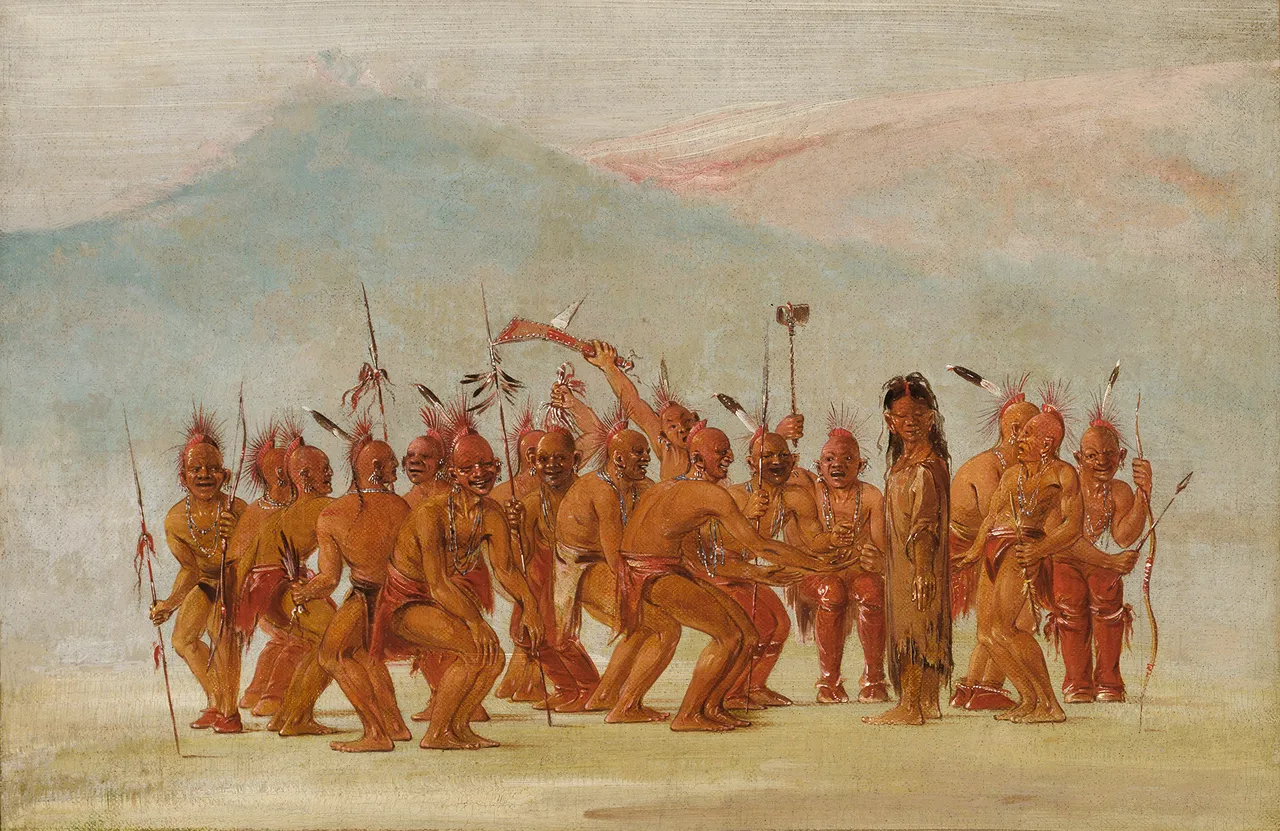
George Catlin, Dance to the Berdash, 1835-1837, Smithsonian American Art Museum, Gift of Mrs. Joseph Harrison, Jr.
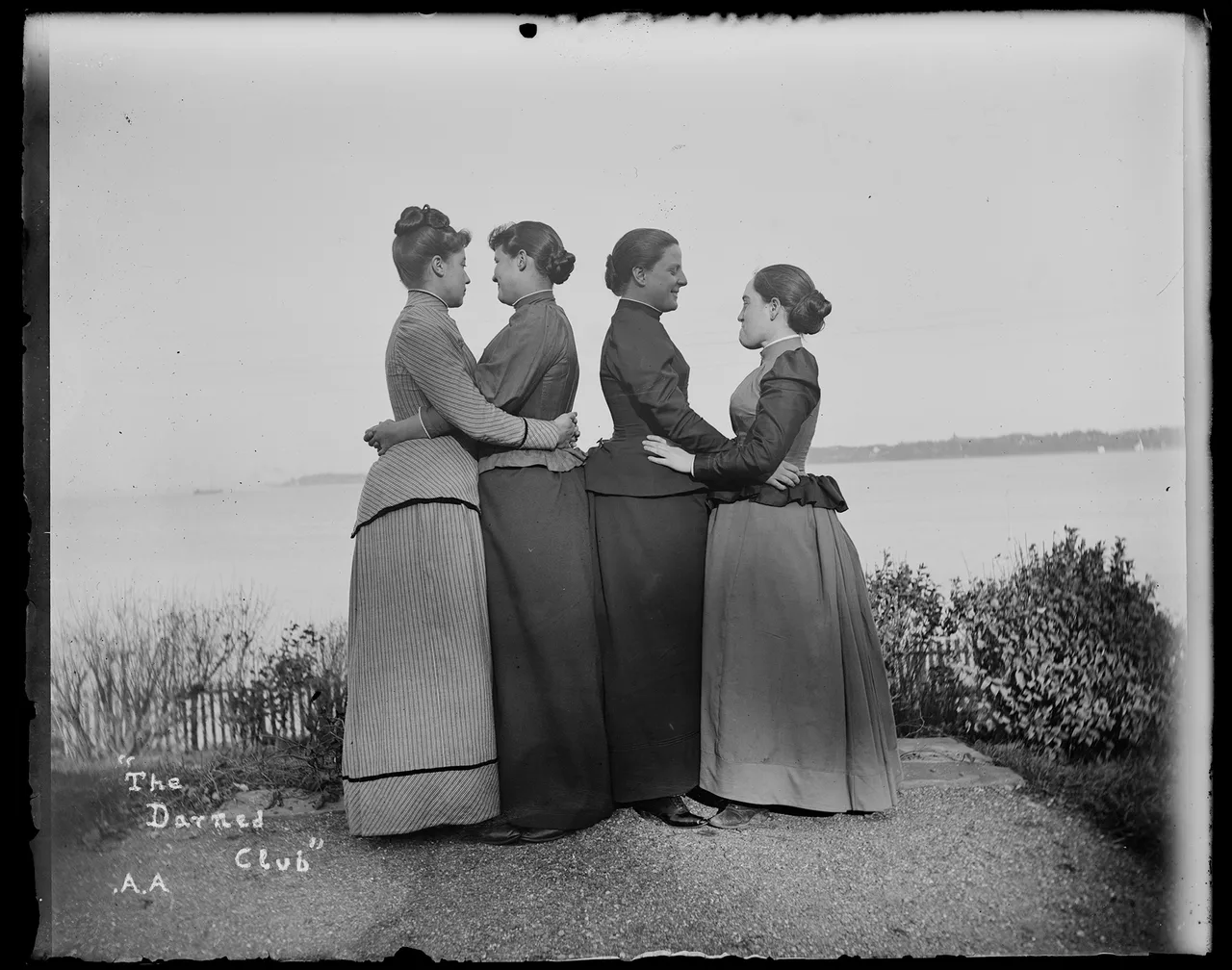
Alice Austen, The Darned Club, 1891, Collection of Historic Richmond Town.
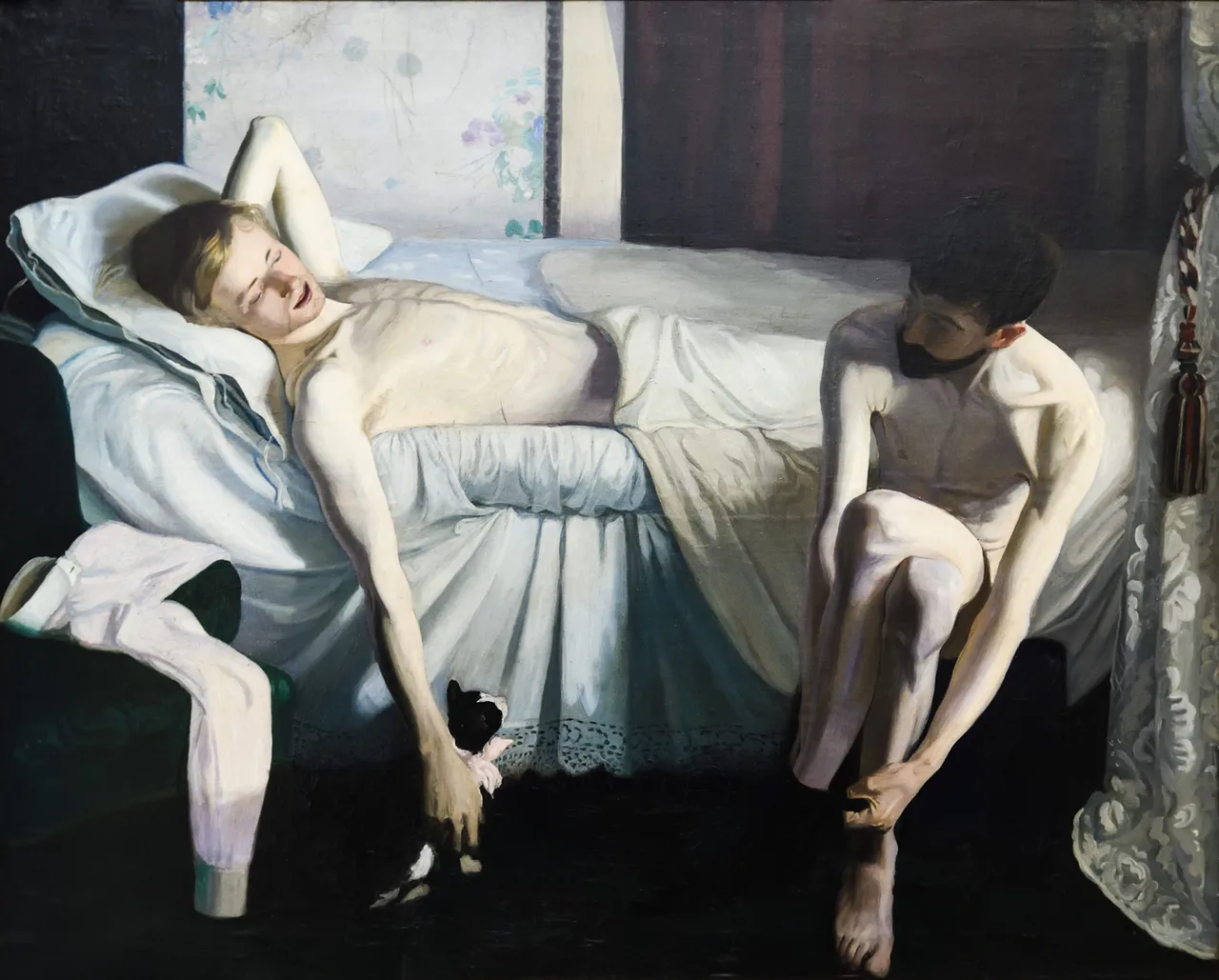
Andreas Andersen, Interior with Hendrik Andersen and John Briggs Potter in Florence, 1894. Under licence from MiC - Direzione Musei Statali della Città di Roma - Photographic Archive; by kind permission of the National Museums Directorate of the City of Rome - Hendrik Christian Andersen Museum.
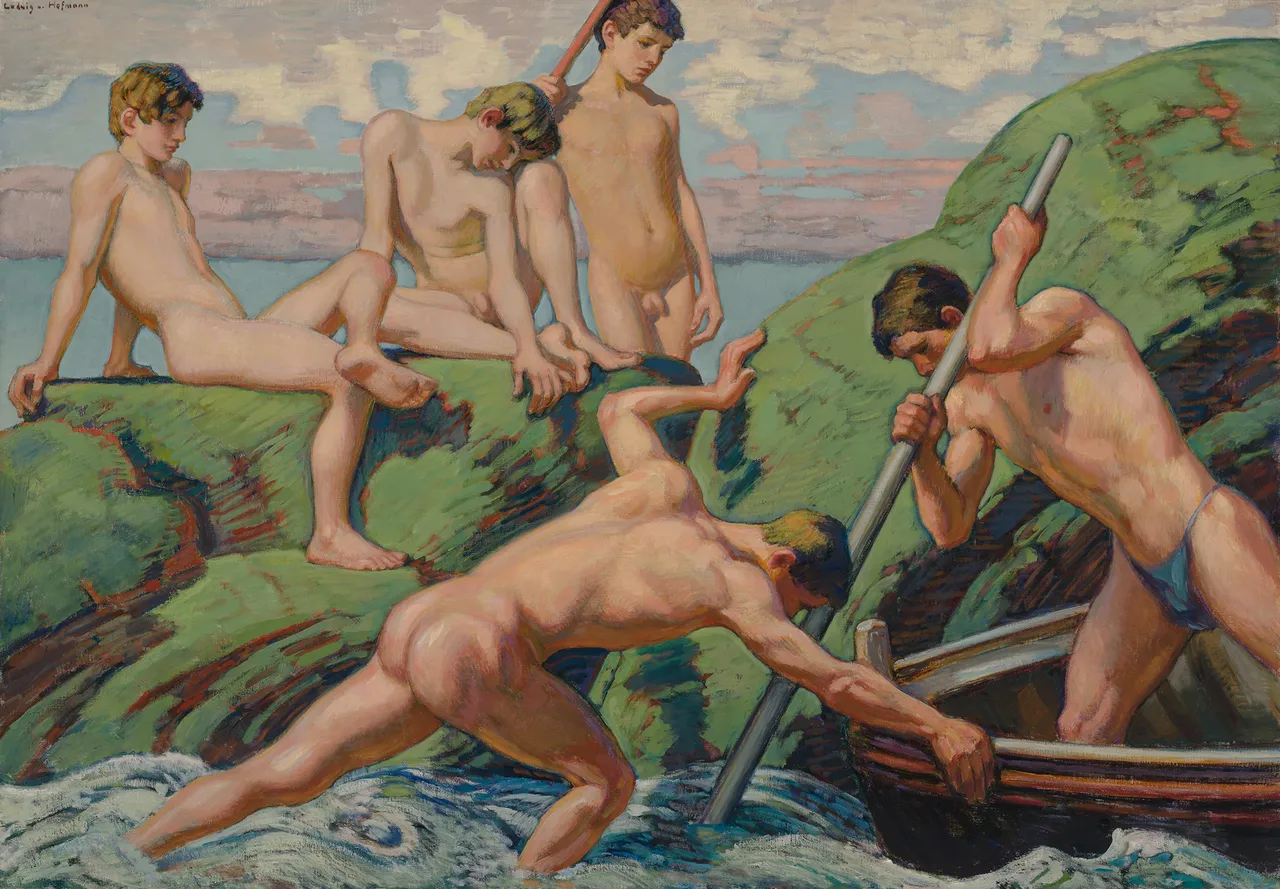
Ludwig von Hofmann, Nude Fishermen and Boys on Green Shore, c. 1900. Museum der bildenden Künste Leipzig.
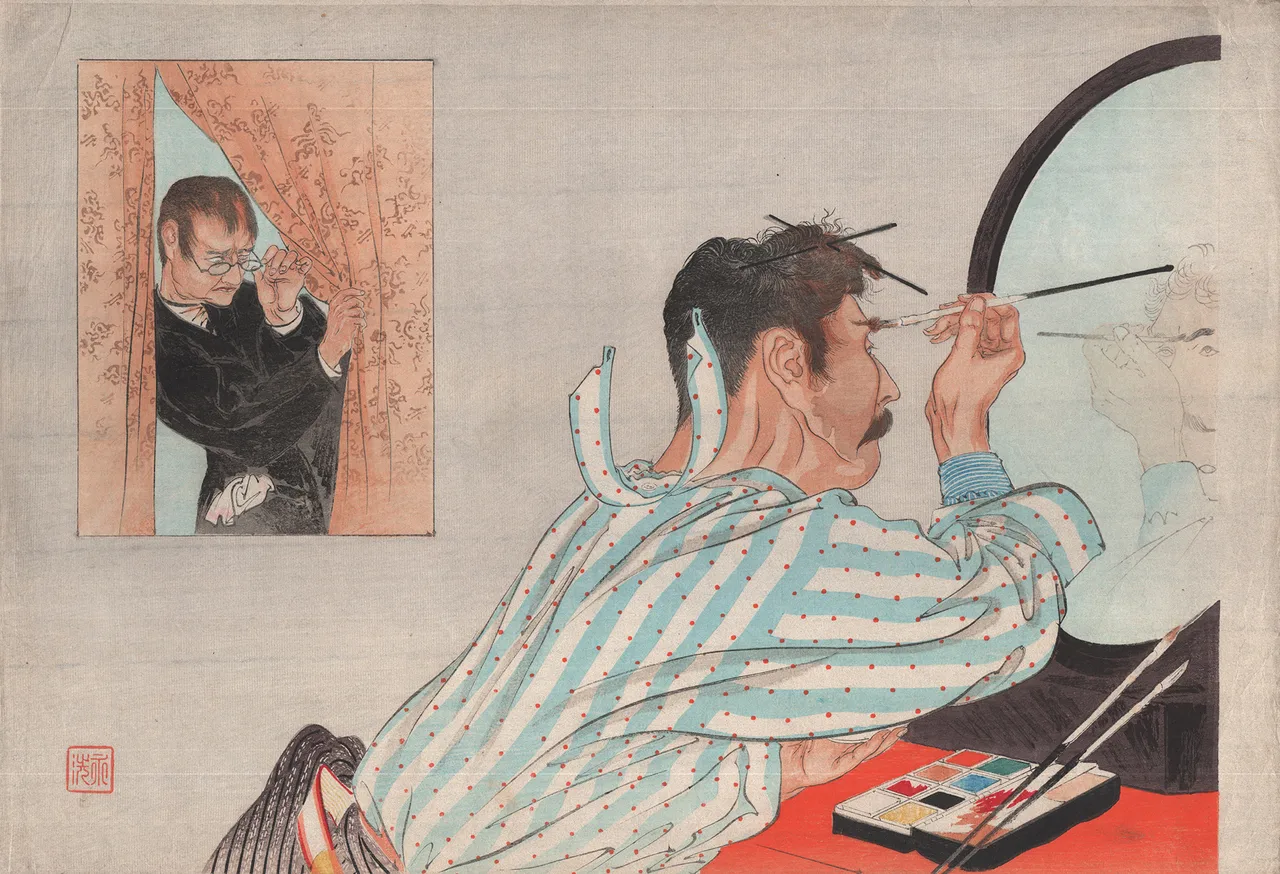
Tomioka Eisen, kuchi-e (frontispiece) with artist's seal Shisen, c. 1906, Tirey-van Lohuizen Collection.
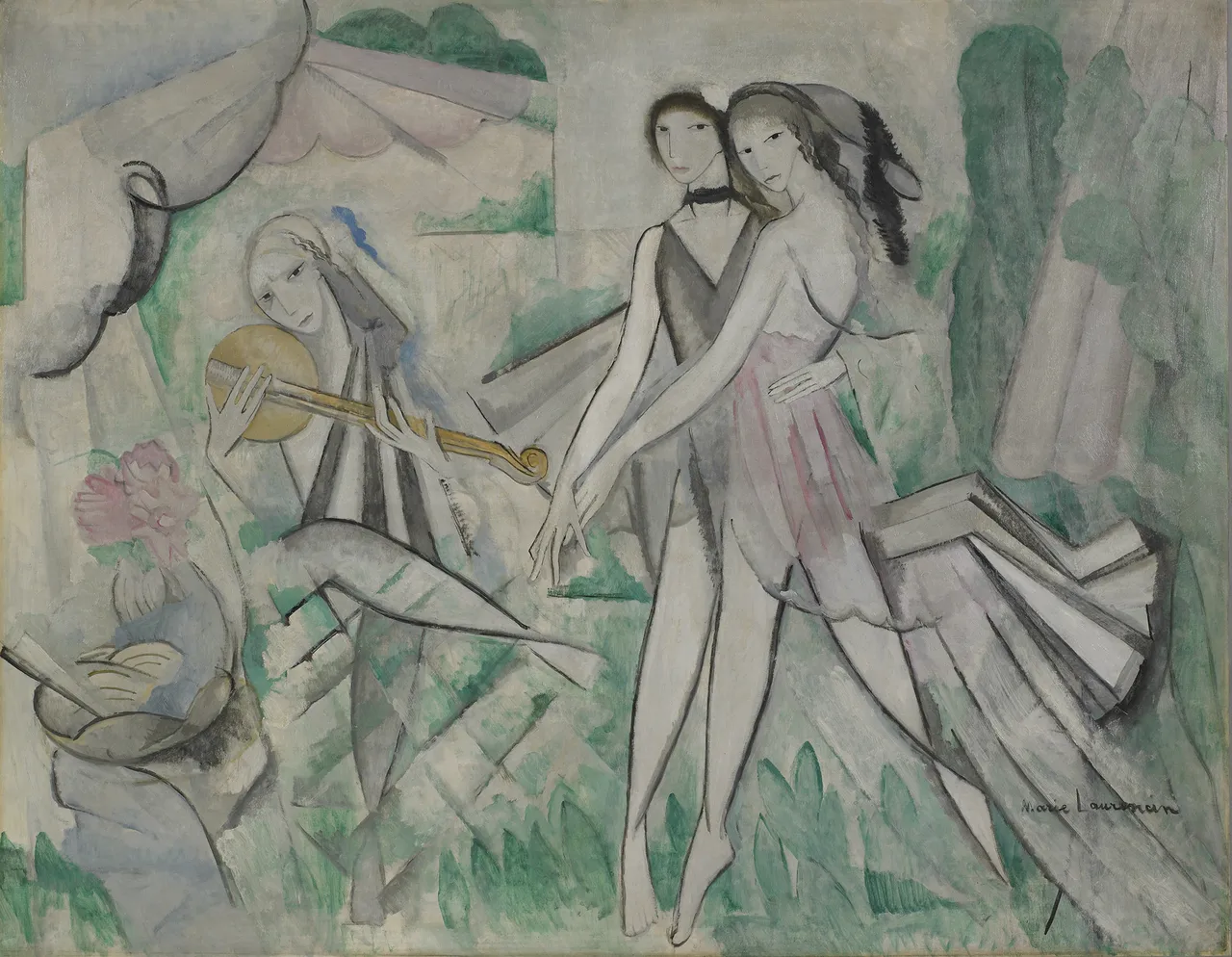
Marie Laurencin, Le bal élégant or La danse à la campagne (The Elegant Ball, or The Country Dance), 1913, Musée Marie Laurencin, Tokyo.