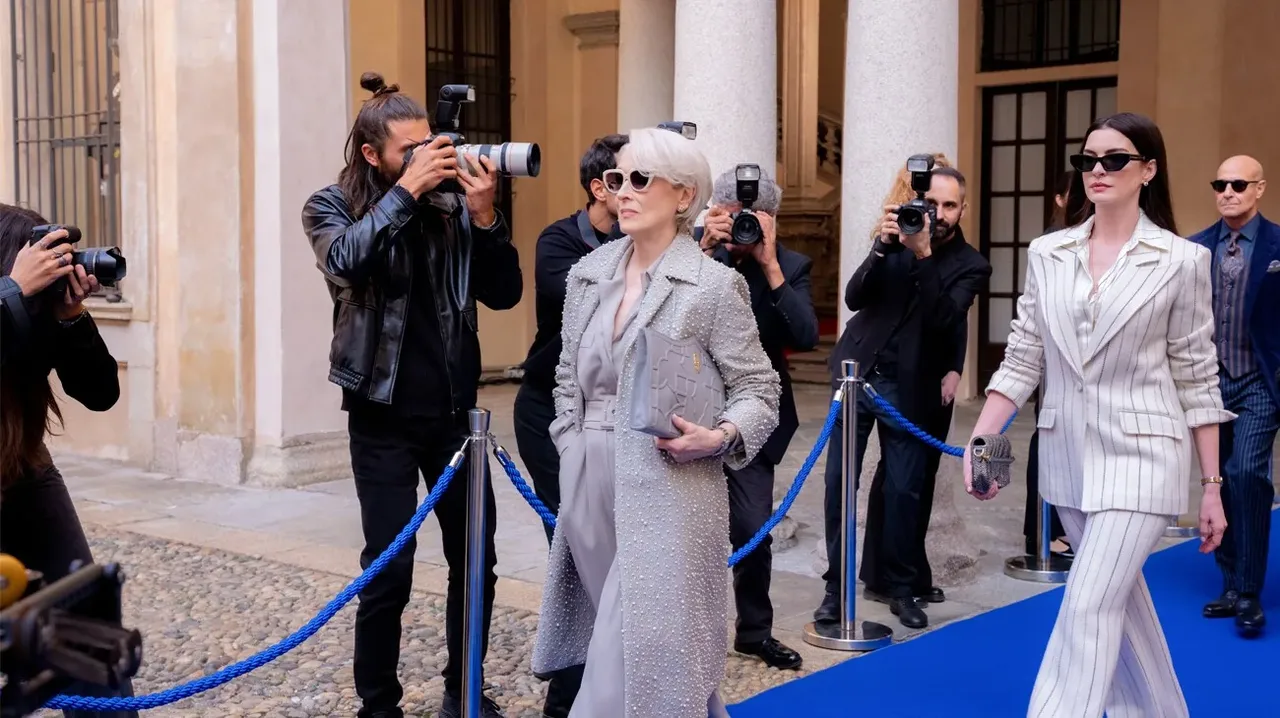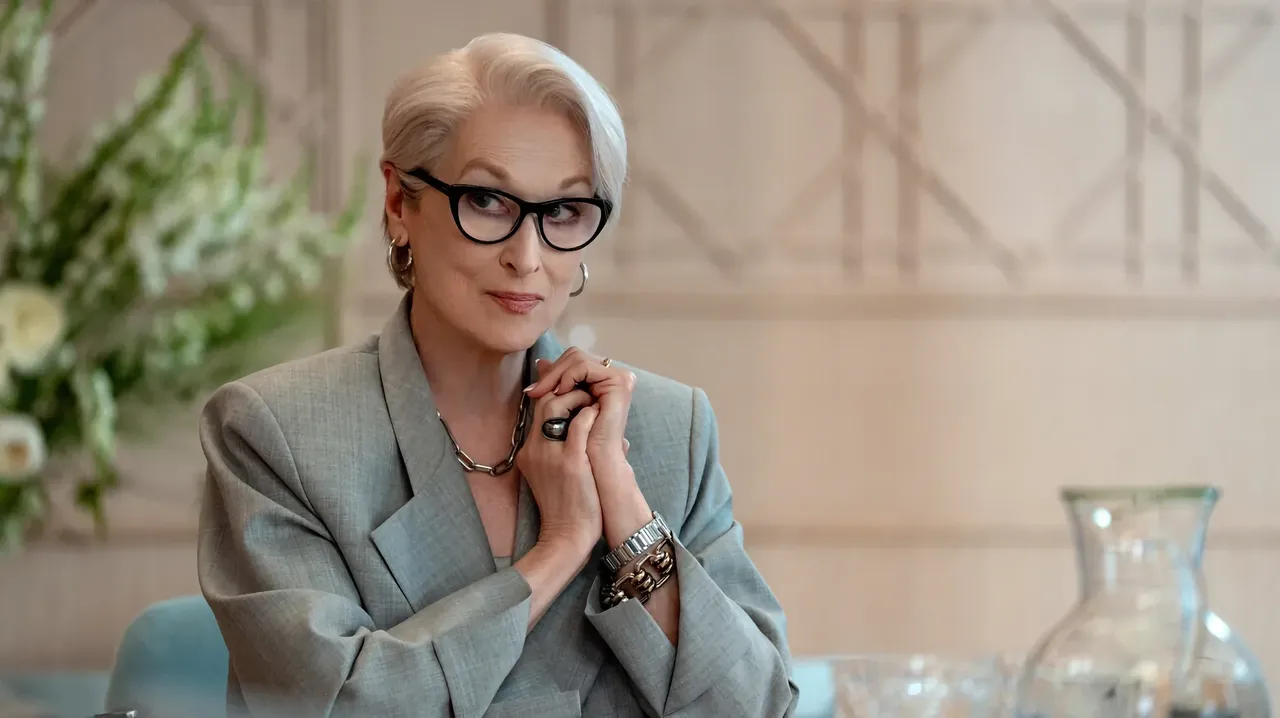
This time, Miranda hangs her own coat. And just like that, the fantasy is over. The woman who once wouldn’t even acknowledge your existence unless you anticipated her needs now quietly walks in and does it herself. She’s not weak, she’s still the head of fashion, but she’s facing a credibility crisis in a society where magazines and traditional media have been dethroned by vapid, feel-good content, and where everyone seems to think of themselves as a self-proclaimed guru. I wonder what Anna Wintour thinks.
Spoiler warning: if you haven’t watched it yet, well, bore someone else with your questions. There may be some plot details in this article along with some unfiltered opinions, so be ready.
The film isn’t really about fashion anymore
The logical expectation for a sequel like this is nostalgia: glamour, impossible outfits, the ‘clackers’, the illusion of magazine life that a million girls would kill for. The original film was a window into the glossy insides of the fashion world. This, however, is something else entirely.
In the twenty years since Miranda hired the ‘smart, fat girl’, the industry has evolved so drastically that not even its emperor can keep up. Runway is no longer what it used to be but an online presence that shares the same name. A downloadable ghost of what was once a powerhouse that dictated fashion itself. The magazine is drowning in scandal and debt, kept alive by big marketing corporations under the shadow of algorithm-friendly content with no room to say or do, not even for her. Sounds familiar, no?
The real surprise is discovering that the film turns into a purposeful love letter to journalism, its relevance and power, alongside a sharp critique of the industry’s current state. It becomes a traditional ode to integrity and editorial freedom, just with killer looks.
Andy who?
The girl who threw her phone into the Seine and walked away from Chanel (“Who gives up Chanel!”) is now fired from her big-girl newsroom job just as she receives an award for her investigations. If fashion isn’t safe anymore, let alone plain journalism. Vogue by Madonna plays in the background (tradition, of course), and finally we get what we came for: Andy running across the city in Valentino Rockstud heels and a gorgeous Coach messenger bag slung across her shoulder, like her life depends on it. Because it kind of does. Only this time it is not for the newest Harry Potter manuscript or Calvin Klein skirts, but Runway’s reputation, which is somehow harder to find.
What happened to Prada?
At some point, things get so bleak you genuinely wonder whether they might as well stop wearing designer altogether. But, for a film that quite literally built its identity around a brand, the absence, or at least the noticeable reduction of Prada, feels strange, to say the least. The Devil wears red Balenciaga now. Feels ironic, too, because if there’s one brand that embodies intellectualism and female empowerment, it’s Prada.
Now that’s what I’m talking about. Power suits
Amari’s looks alone make you want to personally thank Molly Rogers. Because who doesn’t love a Thom Browne shirt or a Jean Paul Gaultier couture moment? Andy is the perfect blend of a recovered fashion insider newsroom girl. Allegedly inspired by Annie Hall, her style reflects a more mature, grounded version of herself. Giorgio Armani vests, vintage Margiela blazers and so many ties. Love the ties. It fits and it works. (The glittery dresses, though? Not it.)
Miranda, on the other hand, is still the moment. Her Dries Van Noten jacket alone could make any non-fashionista faint. She’s lost control of her magazine, but her style feels more defiant than ever. The only miss? The sneakers. It happened once, but honestly… no. And still, best dressed, best character goes to Nigel. It always has, and it always will.
Oh… and Emily?
That plot twist, you’ll have to see for yourself. But she was an icon and she deserved more.
Cinema has gone stale
Don’t get me wrong, this is very much a ‘life of a writer in the Big Apple’ kind of film, impossible to dislike. But lately, every new release seems to be a sequel to a 90s or early 2000s blockbuster. And ironically, that’s exactly what this film critiques: capitalism consuming everything and leaving no real space for creativity or thought. Making this movie was a safe choice — they knew it would work. Still, they could have approached it in a hundred different ways, and instead, they found one that feels in tune with the times, faithful to the original storyline, and most importantly, unafraid to critique what’s wrong. This supposedly chick flick is kicking ass, and we have to love it.
Netflix lighting was a paid actor, again
The lighting isn’t horrible, but it does lack the grainy warmth of the original. It doesn’t quite make you dream about life and its possibilities the way the original once did. Like so many films today. But then again, it makes sense. The film portrays a world submerged in a grey bubble where only money and audiences matter. A nostalgic, feel-good aesthetic wouldn’t fit here. The coldness feels intentional.
There isn’t a ‘cerulean moment’
The film is packed with easter eggs from the original, in a subtle and funny way. But beyond Emily’s iconic anxiety-calming ritual, there isn’t a single line that feels legendary the way “Gird your loins” did. Maybe it comes with age, too?
“Journalism still fucking matters!” – Andy Sachs.
That’s all.