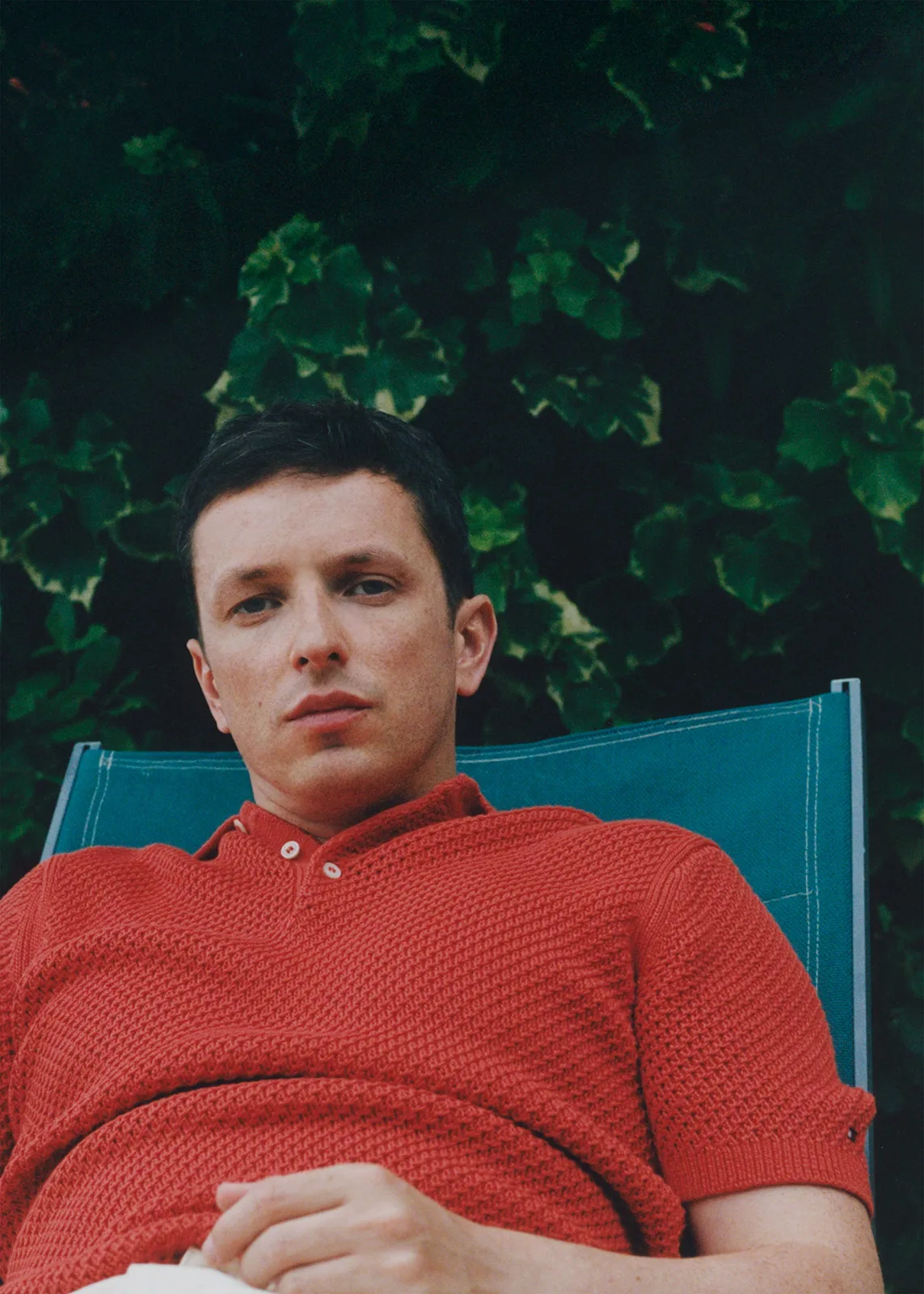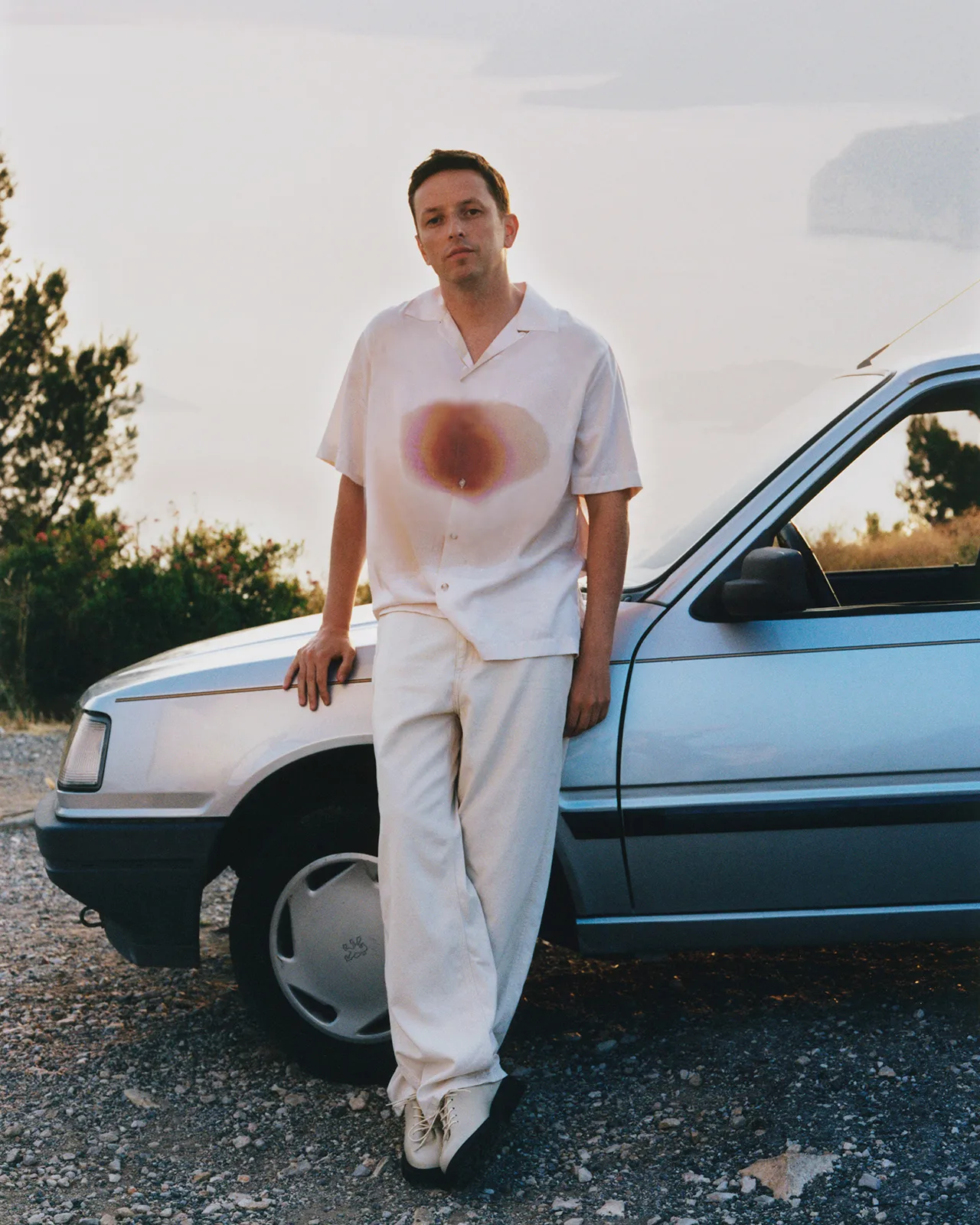
TEED returns with a record that feels like sunlight spilling across a memory. Always With Me is a quietly ambitious album: stripped-back, luminous, and built from the fragments of childhood summers, first crushes, and the ache of growing up. With a single synth and a new clarity, Orlando Higginbottom sheds his former alias and lets the music breathe, soft yet insistent, intimate yet expansive.
Across its eleven tracks, the record navigates love, longing, and introspection, blending French pop influences with subtle electronic textures. It’s an album that lingers in the mind, capturing the bittersweet resonance of memory and the light-filled spaces between youth and adulthood.
You’re releasing new album Always With Me under the name TEED, leaving behind the full moniker Totally Enormous Extinct Dinosaurs. What led to this quiet redefinition, and what does the name represent to you now?
It’s really a long story. The full name was reactionary and a joke, something for a myspace page to host music I was making that I didn’t have a plan for, just excitement to get it up online. I’d been DJing and making music on computers since I was about fourteen, but had my eyes on a very serious DJ world that felt like a closed room to me. So it was the silliest name me and a friend could come up while we ate lunch. Things sort of slipped into an actual career through this project (this is the quick version) and the name served as an ironic shield against the music scene and industry. I think it served me well in that respect. Being outwardly ironic is only fun if people get it though, and eventually it became clear that people thought I was just into dinosaurs and had a bad way with words. So now I’ve dropped the irony and kept the history, and it feels good!
Looking back together, the Totally Enormous Extinct Dinosaurs project definitely began with a sense of humour and protection. Do you feel that dropping it has changed your relationship with your audience?
I’m not sure. I feel like people have been very welcoming of the change, everyone has referred to me as TEED since the beginning so it wasn’t exactly a shocker. I probably hope that it does change my relationship with my audience, I want that to be an interesting ride for us all!
Compared to the immediacy of Trouble and the intimacy of When the Lights Go, Always With Me feels like a panoramic reflection on life. What shifted in you personally to make that perspective possible?
My second album was very hard to complete and release, I’m surprised that even happened at all. It got to a point where finishing that album was a matter of proving something huge to myself, a completely disproportionate struggle to the outcome. None of that weight was on my shoulders this time, and I could focus on following the music and having fun. What came was something way less self-involved, which is where I am in my life too. And it sounds better for it!
The album draws on childhood summers in France — freedom, loneliness, first crushes. What’s your most vivid sensory memory from that time, and how did you translate it sonically on the record?
I started thinking about the first time I felt certain big feelings. Clichés, nothing special about those feelings in particular, but it’s interesting when they first arise. These impactful moments seemed to happen outside of my normal school life. A holiday meant nine of us in one car driving for two days to get to the Alps or south coast of France, serious headphones-on-daydream-time for a ten year old. My first memories of independence, romance, crushes, and really over the top dramatic sadness all happened in the month of August. Being a kid and experiencing a first yearning feeling because the mountains are beautiful is bizarre, that yearning feeling is still pretty much the same tone to this day. It makes me wonder how different our individual experiences really are.
The record’s first half orbits love, longing and desire; the second turns inward toward self-awareness and vulnerability. Did that structure emerge naturally, or was it part of an intentional narrative arc?
It emerged a little on its own, and then I made changes to commit to it.
You built most of Always With Me in LA using a single synth and a stripped-back setup. How did that minimalism influence the emotional tone of the record?
The Access Virus TI was the only polyphonic synth in my studio the whole time, it’s not even mine (shout out Bag Raiders for lending it to me). I’d sold almost all my instruments during the 2020-2021 bad times, and that was so upsetting I hadn’t wanted to start collecting gear again. Also really I don’t have a big desire to have all the toys right now. It’s obviously very freeing to have restrictions, not only with instruments but with general ideas too. I had a big note on my studio wall that said “no 80s drums” which always annoyed people when they saw it. Fact checking myself here — the Virus probably makes up about eighty percent of the keys on the record. It has a distinct character and the best stuff came from it when I couldn’t work out how to use it.
The album’s palette feels sun-washed, cinematic and spacious. Were you chasing a specific light or visual texture while producing it?
I’d put that down to living in LA for a long time now, I love my sunsets!! I always wanted it to be a lighter and warmer record than the last one. How much of making a record is apologising for the last one!?
You reference French pop influences like Mylène Farmer, mingled with the “stranger corners” of European electronic music. Can you tell us about a song or artist that unexpectedly shaped this album’s sonic DNA?
Maybe Mylène Farmer’s hit Désenchantée is a good example here. It’s so pop and so sophisticated at the same time, very dramatic and still very classy. That’s an inspiring combination! Little moments where the pop is too abrasive for me and then the melody completely pulls me back in. There’s a lot to technically dissect in a song like that, but it’s really just how it makes me feel. So I hold on to that feeling and see what happens when I write. The funny thing is I set out to make a club album at the same time. Not very reasonable of me!
Your live performances often blur the line between DJ set and concert. How do you imagine Always With Me translating to the stage, and has your approach to performance changed over time?
I DJ or I play live, I’ve always tried to keep the two shows very different. Right now I’m on a DJ tour with lots of edits and new versions of my tracks that work in that context. Maybe in 2026 there will be a live show. My approach to performing live has changed a lot. When I started I couldn’t really accept that people wanted to see the show, so I would be sort of apologetic in front of thousands of people. Which is a shame really. Now, obviously, I understand that if people buy a ticket then they want to be there, and that changes everything. Laugh you may, but I’m not the only artist who went on that journey!
You’ve previously mentioned feeling detached from the “coolness” of DJ culture. Do you think reclaiming emotional sincerity is a kind of quiet rebellion within electronic music today?
Social media made DJing a really effective way to get famous, and that attracted a lot of people who are in it for the attention. Those kinds of people are very good at taking up bandwidth, so it’s changed the tone of the whole thing. The gravitational pull of banger plus crowd reaction videos is seriously strong. Don’t get me wrong, I’m team banger all day, but things are warped. Depth and exploration have been devalued while immediacy has been turbo charged. I feel things are swinging back to a more balanced place though. So many musicians within electronic music work with sincerity and meaning. There’s too much to say about this subject, it’s fascinating to me. Recently I’ve been wondering about the fetishisation of certain classic sounds (UK Garage for example), and how that doesn’t seem to be as much of an issue for audiences as I would think.
There’s a strong sense of healing and perspective running through the record. Where do you imagine your next creative chapter might lead?
I’m very excited about working on music at the moment, I understand myself as a musician more than I ever have. I don’t think about if the music is going to be more successful or anything like that, I just feel like I’m gradually making my way closer to the source.
And finally, if you could tell the younger version of yourself who wrote Trouble one thing before making Always With Me, what would it be?
Do not be a contrarian to your own taste (I’m very much still working on that).