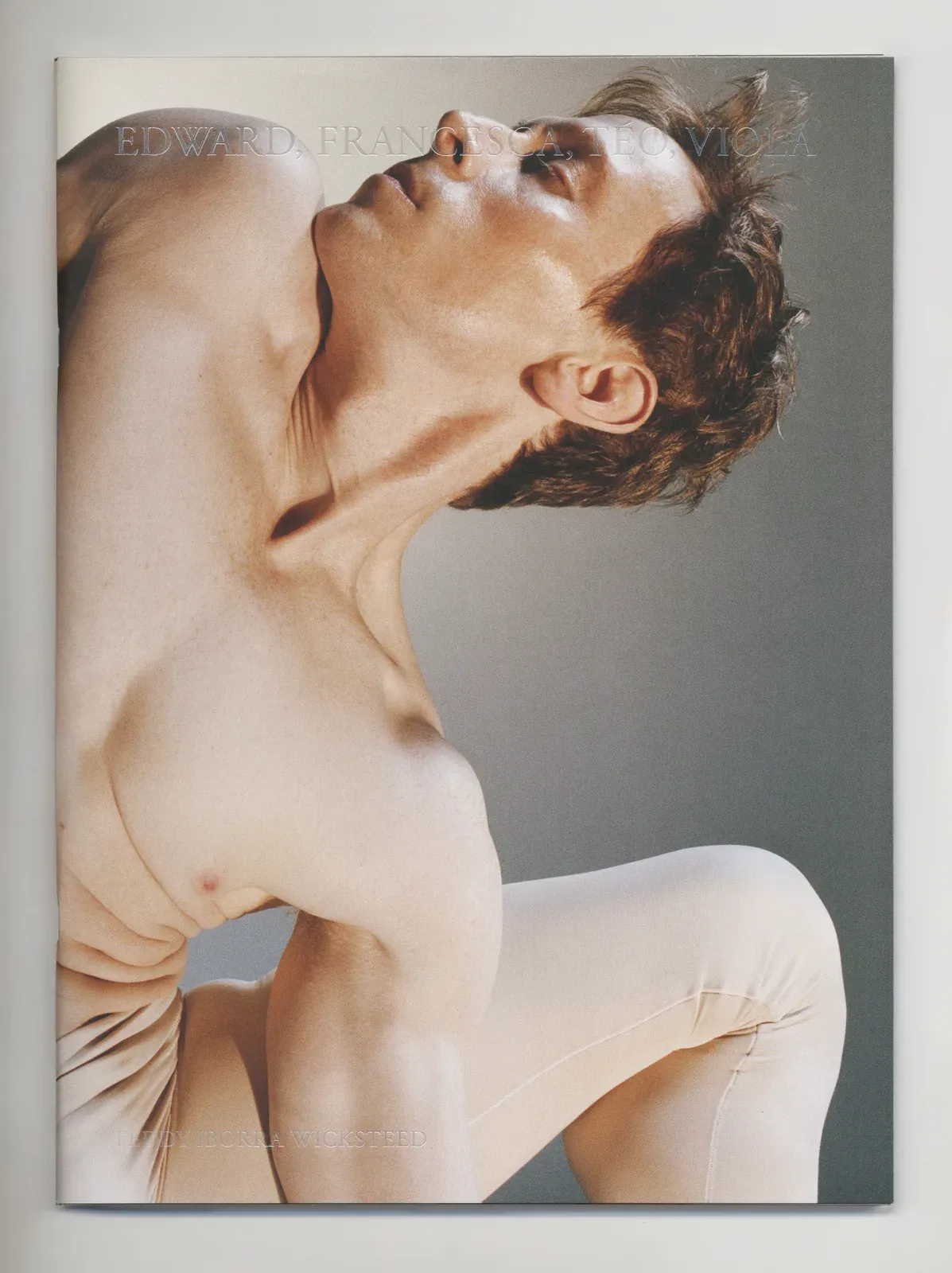
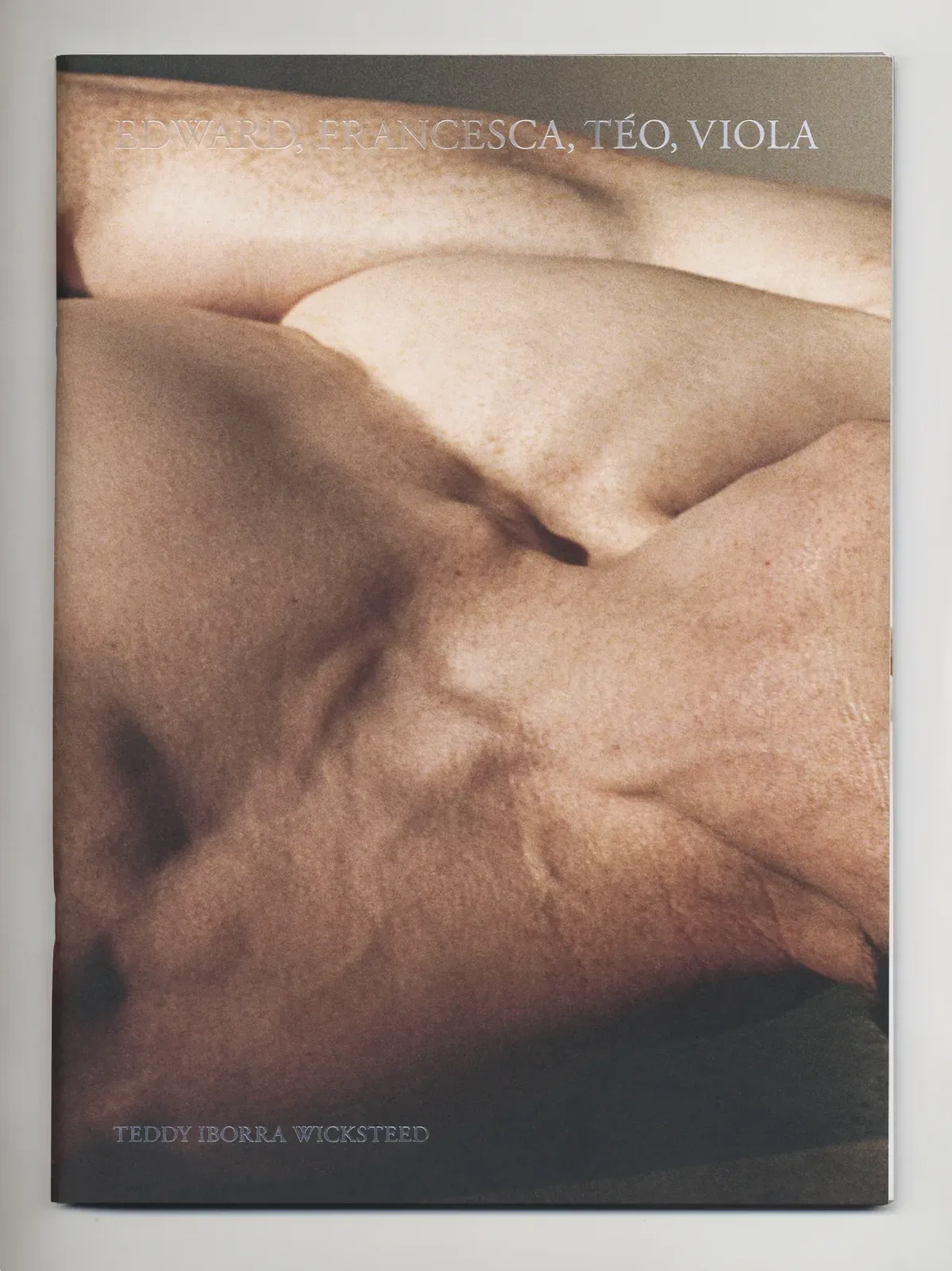
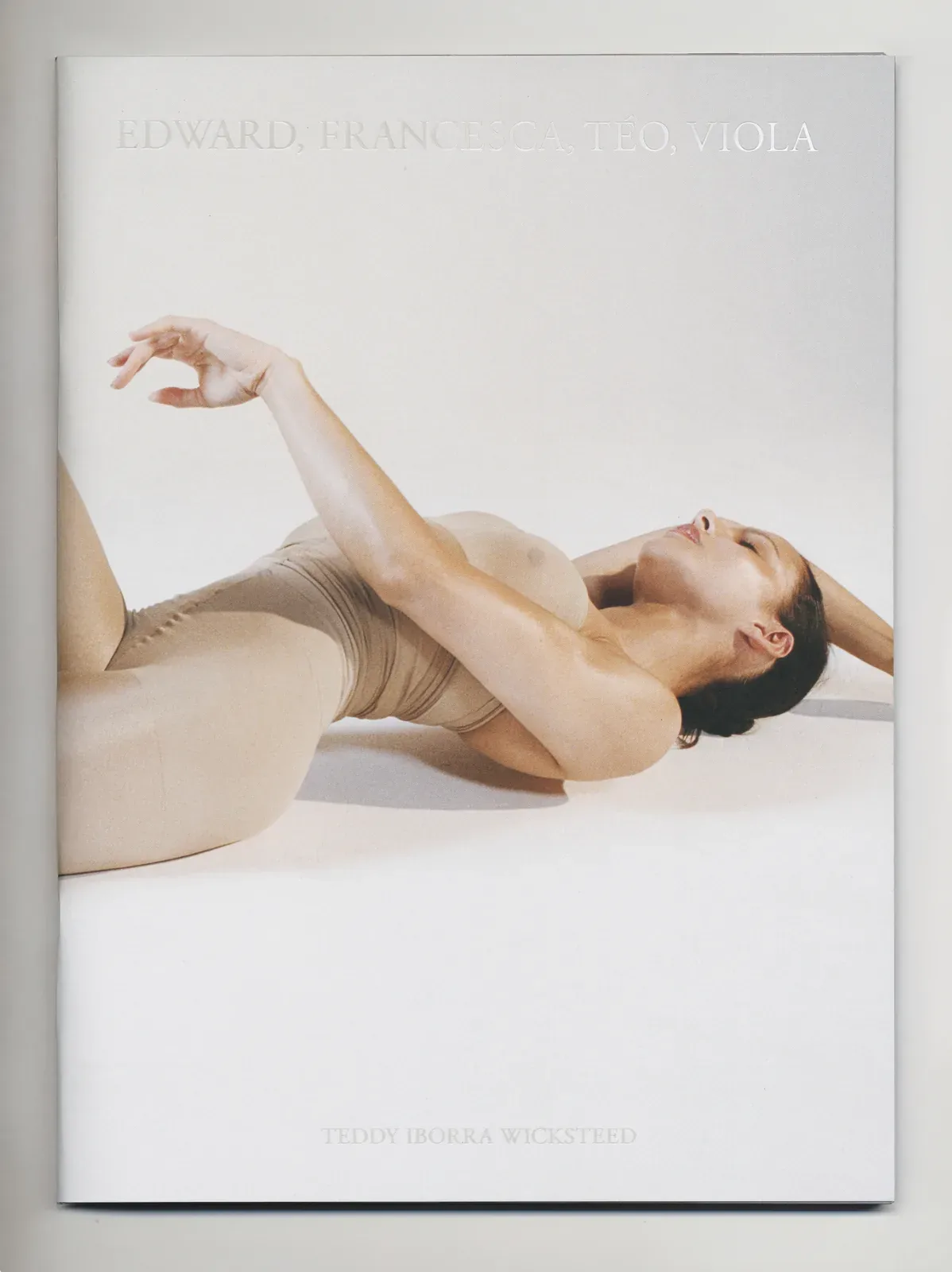
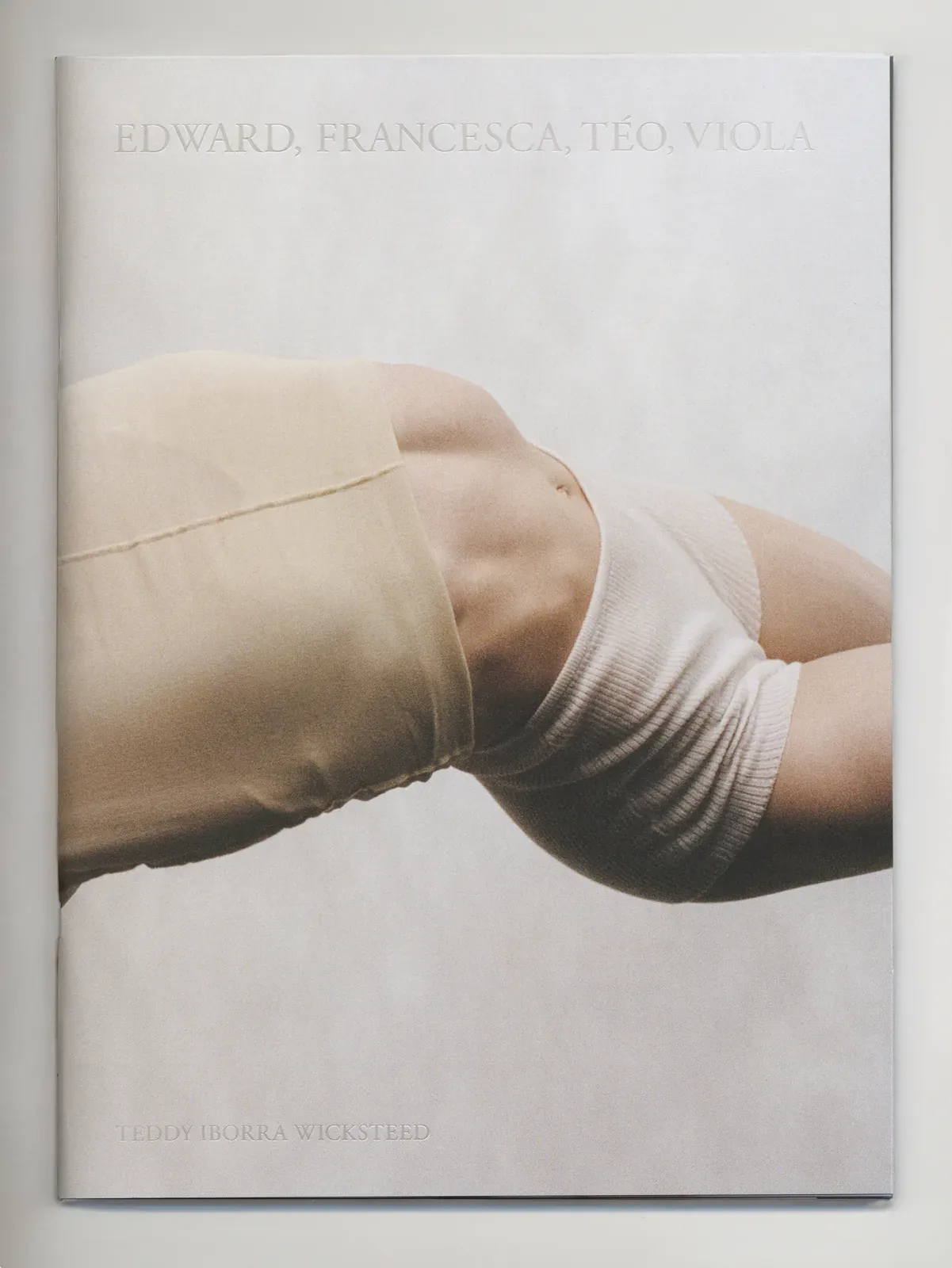
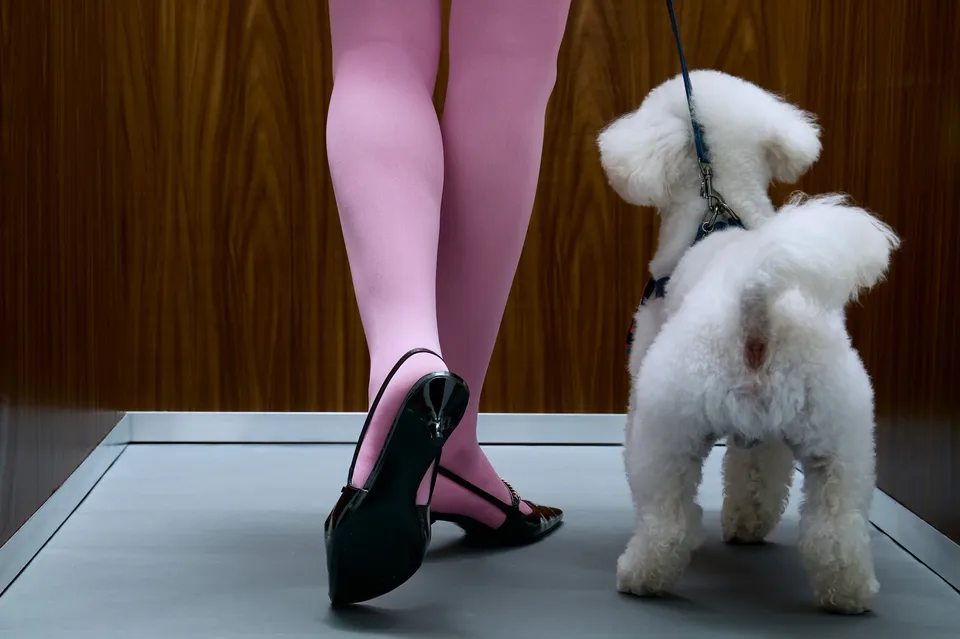
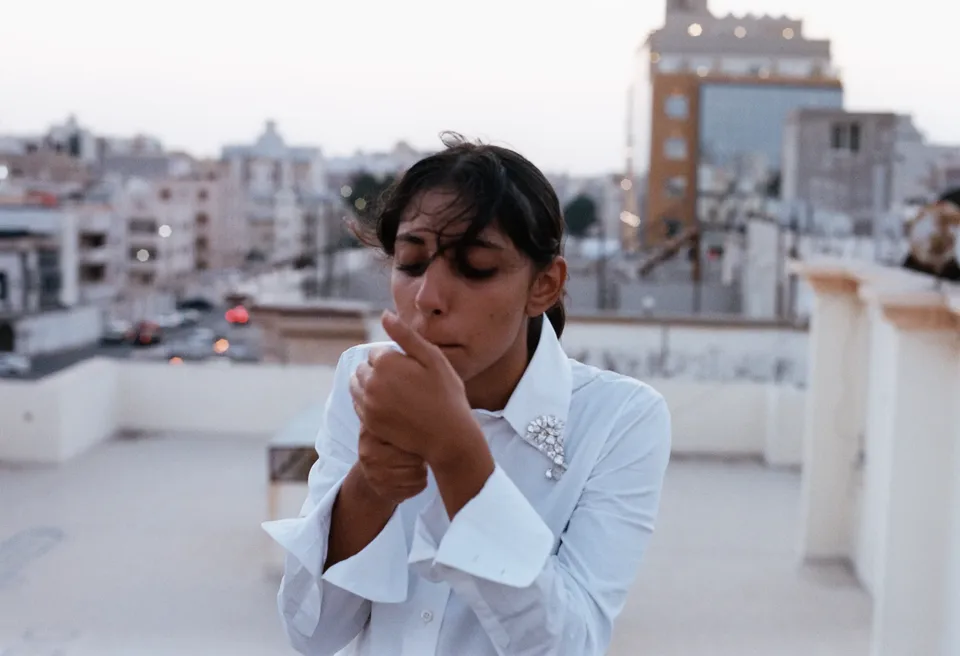
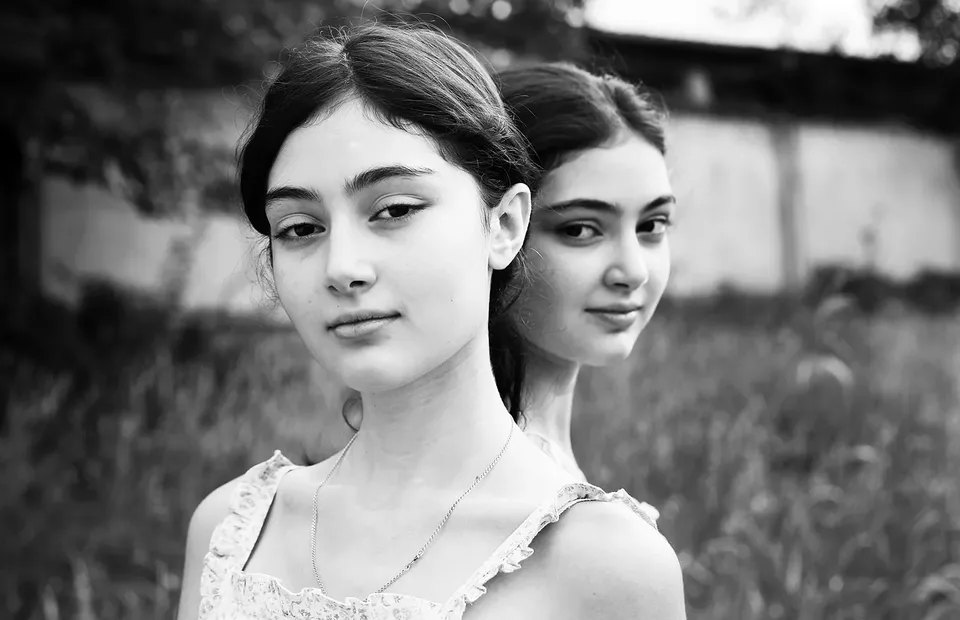
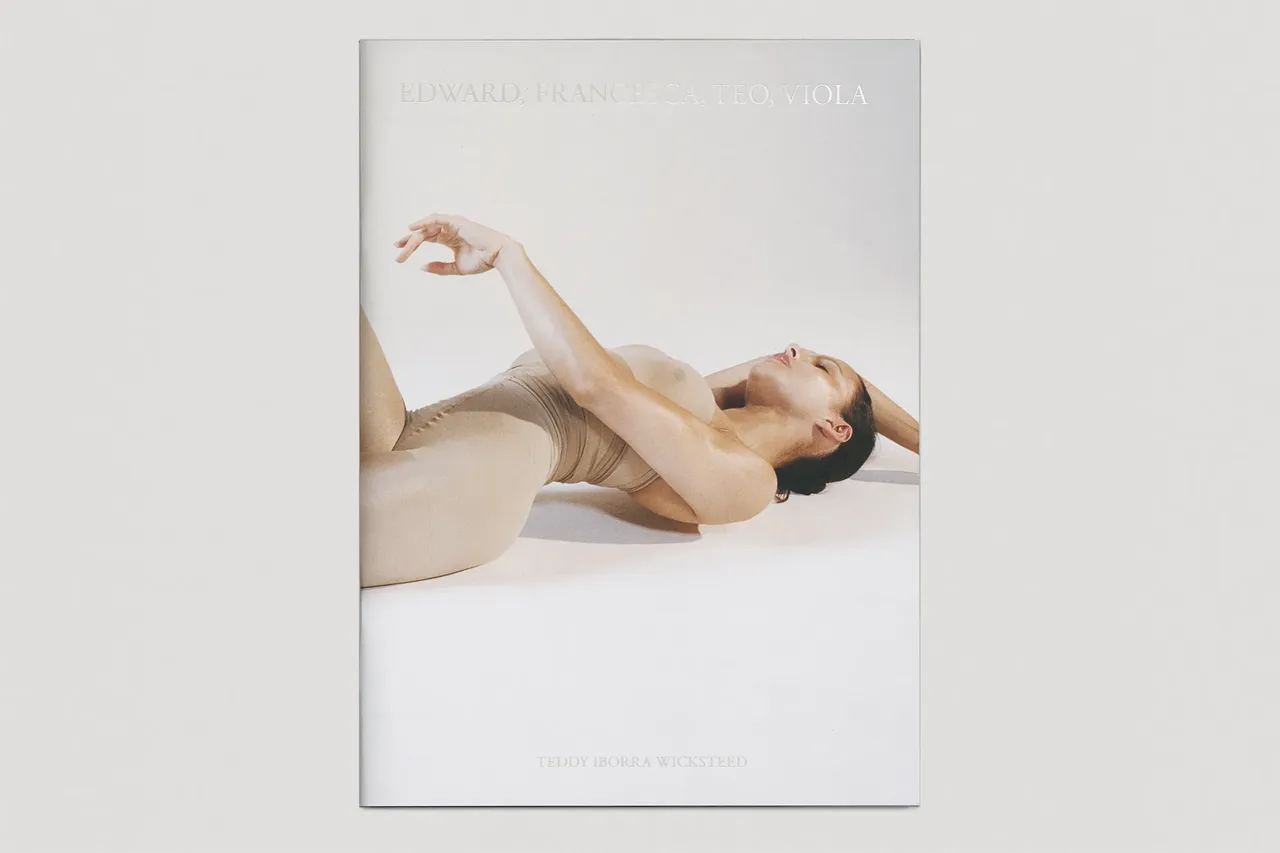
Every discipline runs the risk of becoming routine, and Teddy Iborra Wicksteed needed to reconnect with why he became a photographer in the first place. So, to look inward, he chose to observe others. Edward, Francesca, Téo and Viola, his new photographic essay on ballet, arrives not to challenge the limits of the discipline’s classical aesthetics or representation, but to question his own methodology and practice.
Under the premise of a new beginning, his ‘tabula rasa’, Iborra sets out to strip things away. First, from himself: certainties, established codes, automatisms, and recurring themes within his work. Then, from a group of dancers from The Royal Ballet in London, removing choreography, music, and performance. What remains is movement in its rawest form, and a photographer rediscovering his language through it.
Part portrait, part visual essay, the project approaches dance at its purest: discipline, repetition, and control. It does so through Iborra’s most essential elements: backdrop, light, and camera. From this position, he looks at ballet from the outside, with a perspective that seeks neither critique nor deconstruction, but is instead rooted in a deeply vulnerable sense of observation and admiration. A study of dance, and a thesis on the possibility of seeing again as if for the very first time.
How did Edward, Francesca, Téo and Viola come into being? The project was developed between 2024 and 2025. At what point in your life or creative journey did it emerge? What need was driving it?
Regarding my creative journey, I had completely abandoned my personal/auteur photography and had spent too much time focused on commissions. I was starting to feel deeply disenchanted and needed a tabula rasa; I wanted to recover the freshness I had when I first started, strip away all my technical knowledge, and understand what I was doing all over again. I also needed to understand what I truly liked. I am a classicist, and I can’t hide it anymore; I’m starting to wear it with pride. Ballet has always fascinated me. Years ago, I shot a fashion editorial using a dancer as a model, and I always had this nagging desire to know what it would be like to approach it while stripping everything away. I was offered a grant by the Abderrahim Crickmay Charitable Settlement, which gave me the opportunity to finance a large part of the project.
It’s defined not as an exhibition, but as a photographic essay, with a specific timeline to tell a particular story. What is it?
I see the photo essay as a study that serves only me. The book is presented in a strict chronological order, from the very first photograph to the last, without searching for a visual rhythm. There is no deeper meaning other than my own experience in the moment. Each dancer was photographed in a different act. I would take the rolls of film to be processed, print the contact sheets, draw my conclusions, and then move on to photograph the next dancer.
You portray different artistic moments through dancers with distinct artistic backgrounds. How do these perspectives interact with each other?
All four dancers, Viola Pantuso, Téo Dubreuil, Ed Watson, and Francesca Hayward, belong to The Royal Ballet in London. Viola and Téo are soloists, Ed is a former Principal dancer, and Francesca is currently a Principal ballerina. The difference between them lies in their own personality within the movement, and in how they interact during the photographic act.
How did you adapt the visual language to each of them while maintaining a coherent whole?
The visual language varies slightly depending on the dancer, the hardness or softness of the light, or the background. In the end, my tools are always the same: background, light, and camera. I wanted this minimal intervention to emphasise the personality of the movement intrinsic to each dancer.
“I wanted to recover the freshness I had when I first started, strip away all my technical knowledge, and understand what I was doing all over again.”
You mention working “within your own codes.” What does that mean in practice?
I’m referring to formal codes; I believe this is what makes the project so conceptually cohesive. It’s important to remember that the object, the book, the printed piece, is what closes the essay. The book is a 128-page softcover piece, with every photograph printed full-bleed across a double-page spread. It comes in a huge format, measuring 280 mm x 380 mm closed, which means each photo is practically a 560 mm x 380 mm poster. It is staple-bound so that it opens easily, creating a feeling of total immersion. If you understand the photo essay as a study on a subject, total control of the tools from start to finish is fundamental.
The project unfolds in a space of creative freedom. The dancers moved without specific direction, capturing the natural flow of dance. What happens within that empty space?
As I mentioned before, what was planned was the control of the formal codes. What each dancer did in their own space and time was for me to admire and capture. I didn’t give a single direction. I am neither a choreographer nor a dancer; I simply want the viewer to understand what fascinates me.
This approach feels somewhat paradoxical given the nature of ballet: rigid, disciplined, carefully planned, and executed. Were you aiming to challenge or reinterpret those conventions?
No, not at all. I would never dare to. I think the dancers themselves shifted their movements a bit toward what they thought might interest me, or perhaps toward what they already know works when they are being photographed.
Ballet is also an inherently visual and widely represented discipline. Given that, and your intention to work within your own codes, what were you up against in trying to build a different visual narrative around dance?
Absolutely. Ballet has a very distinct photographic imagery, and I wanted to avoid, at all costs, the frozen image of a grand jeté or a saut de chat. In the same way, shooting in an outdoor location or on a stage wouldn’t have made any sense.
“I didn’t give a single direction. I am neither a choreographer nor a dancer; I simply want the viewer to understand what fascinates me.”
How do your codes engage with the specific discipline of ballet?
It was conceived so that everything connects. As I was saying, I created a reality in which the dancers moved; we only stopped to change the roll of film. It is somewhat the opposite of today’s photo shoots, where people constantly stop to check and validate everything.
Styling also plays a key role in the essay. The pieces don’t directly reference classical ballet, but they don’t reject it either.
The styling was carefully curated and selected with Lara Savill and Laura d’Agnelli from Artificielideas. You’re right, the clothes don’t reference ballet, nor are they ballet pieces, but there are indeed common elements. In the end, I’m not trying to reinvent anything. The selected pieces are the ones that help explain the body in movement. Any ballet attire has that exact function, as well as a purely technical one, but it’s always there to help explain a specific movement.
The creative process itself is also striking. You’ve said there was no set choreography during the sessions, but also no music. So how does the dance emerge? How does that “pure act” take shape?
I could only admire what was happening right in front of me.
However, things shift in post-production. You describe an almost scientific process: shoot, develop, analyse, reshoot. To what extent does this iterative method reshape your initial perspective? And how does it relate to that earlier sense of freedom?
Indeed, once you have the material in your hands, everything changes. I wasted time overthinking how to shift the outcome, and doubts began to creep in, but I stayed true to the energy that drove me to do it in the first place: tabula rasa. Reclaiming what I used to feel for photography.