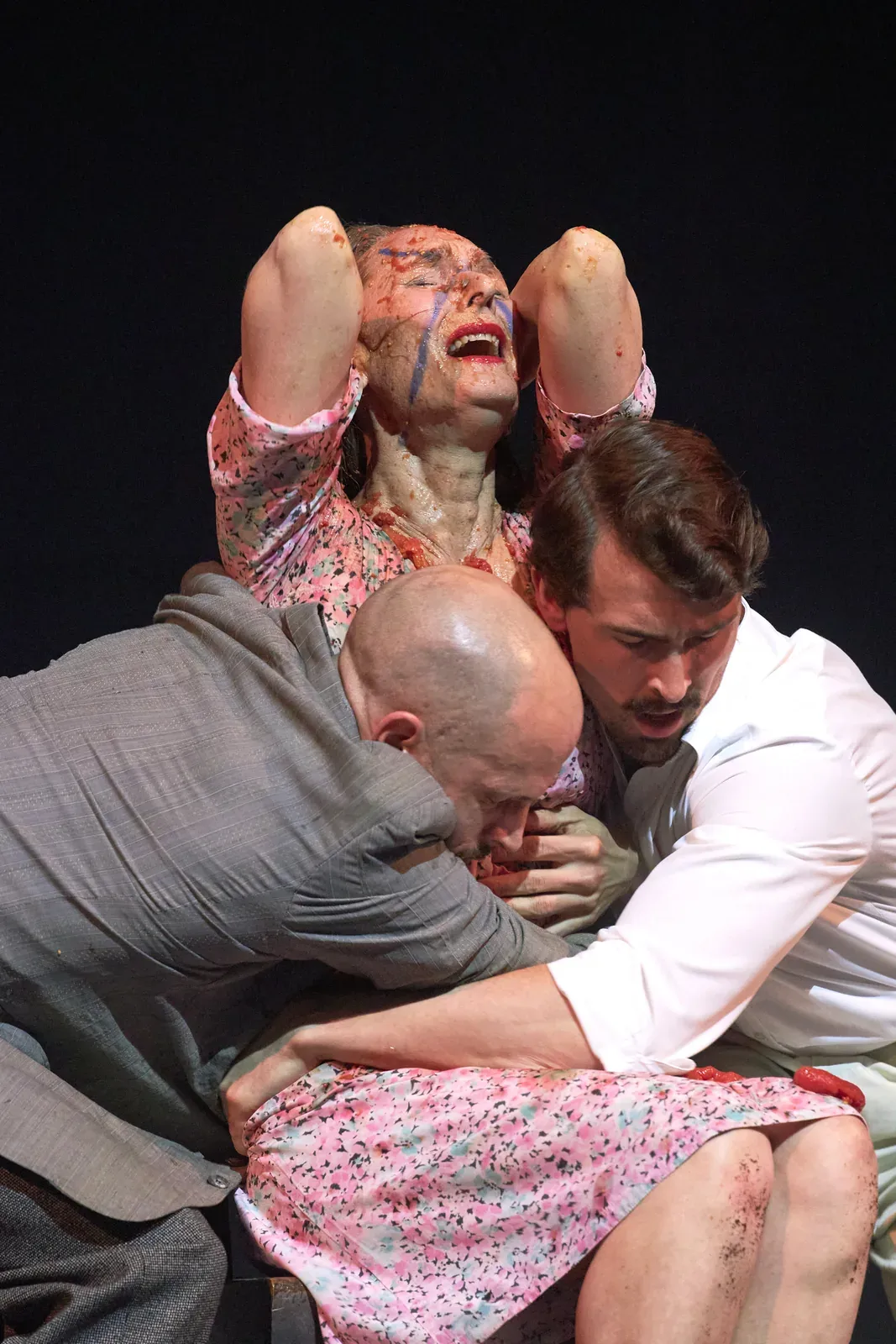
Eminently theatrical and conceived in the late eighties in a Sicily ravaged by the wounds of the mafia, poverty and a deep religious devotion, Palermo Palermo allowed Pina Bausch to transform the trauma of a city into a metaphor for resilience. The tension between ruin and possibility hovers over much of the work. Even in chaos, the piece performed by Tanztheater Wuppertal at the Grand Théâtre de Luxembourg from 21 to 23 May suggests a form of precarious vitality – between exhaustion and heaviness – that, curiously, springs from the rubble. In that city named twice, as if calling out to someone moving away, the poetics of destruction feels like a stark chronicle of human endurance, wrapped in a dense, dusty atmosphere where bells resound beneath a constant sense of threat, softened by a disconcerting comic edge.
With its portrait of a city that is alive yet in crisis, and its unmistakable neorealist cinematic air, Palermo Palermo – co-produced in 1989 with the Teatro Biondo Stabile of Palermo – gathers Tanztheater Wuppertal’s bodily impressions of the city (its light, its everyday violence, its decay, its mixture of beauty and social disorder) and turns them into a portrait in motion in which the ordinary becomes strange and the tragic coexists with the satirical.
The work begins with the collapse of a large wall of breeze blocks. In their obstacle course towards love or despair, the dancers will have to manage for two and a half hours to perform on the remains of the fall. That visual cataclysm, however, is not a nod to the fall of the Wall, even if its gestation coincided with it. Palermo Palermo captures the atmosphere of southern Italy; it is not gazing at Germany’s national navel. That is how Norbert Servos, dramaturg and Pina Bausch’s principal intellectual collaborator, responsible for structuring and contextualising many of her works, explains it.
After the collapse, Julie Shanahan emerges from the cloud of dust like a spectral figure. This tormented woman does not know what she wants: “Take my hand! Hug me!”, she orders, only to reject whoever obeys her. Her enigmatic entrances and exits will mark the entire performance. The opening drags the spectator into a whirl of running, collapsed bodies, bells and gunshots, while stagehands remove some of the rubble against the clock. Once that deceptive catharsis has passed, the work grows still until its conclusion.
The absurd, the poetic and the disturbing overlap with astonishing naturalness onto ordinary life in a landscape of ruins. Nor are tender, sad humour, distorted rituals or extreme gestures of seduction absent. Sicilian popular music merges with traditional African and Eastern melodies, the tolling of bells and the song of cicadas, carrying us into a rural atmosphere.
In that outlandish climate, Andrey Berezin prepares a picnic with a white tablecloth on top of the blocks. When he leaves, a black-and-white greyhound devours it. The actor will reappear in his marginal refuge in the right-hand corner, detached from the rest: watching television, dressing up, smoking, putting on make-up or even frying two pieces of meat he slices from his forearm on a clothes iron.
In the midst of this bombardment of stimuli, a girl in mourning swallows her wedding ring while drinking a coffee. Nine others take off their dresses and do handstands against the wall. A lost soul walks through the air while six men extend their hands as support beneath her feet. It is the typical succession of autonomous vignettes in which looped movements – a house trademark – structure the micro-sketches. This flow of vivid scenes activates open associations in the spectator around love, desire, sorrow, rage, unease or survival. A constant theatrical ingenuity prevails, sustained by the commitment of the ensemble's performances. Skirting caricature without ever falling into it, the bodies move from effort to fragility with a conviction that makes the absurd believable.
In this accumulation of theatrical numbers, dance is relegated to sporadic appearances dominated by arm movements – beautiful, violent, hypnotic, perfect – so characteristic of Pina Bausch. On the verge of the close of the first act, the twenty or so performers scatter rubbish across the stage before smashing dozens of apples against the wall. Then they dance, alone or in pairs, until someone shouts: “Pause!”
Anyone expecting the electrifying energy of Vollmond, the minimalist, electronic freshness of Sweet Mambo, the overwhelming and nostalgic beauty of Kontakthof or the contagious joy of Àgua or Masurca Fogo is, of course, going to be disappointed. Perhaps that is why a large number of audience members did not return to the auditorium after the interval. The fact is that Palermo Palermo aligns with more complex, less danced works, such as Nelken or Viktor, which subject the spectator to an intermittent short circuit of ambivalent emotional shocks. The energy in this piece is not a joyful celebration, but an exhausting pulse. That mix of young faces and veteran ones, such as Nazareth Panadero’s, which reinforces the personality of the cast, is welcome.
The density of the second half, far from lightening, sharpens. A girl puts on four pairs of knickers in front of the audience without fully lifting her skirt. Six pianos and their respective pianists burst onto the stage to perform a song and leave with the same haste. The group of eleven girls dance with arms let loose, advancing towards the front, in a beautiful, overpowering passage. The song of the cicadas announces the end of the day. Coppery grit falls from the sky. A saxophonist plays Stormy Weather. In the gloom, a man undresses and bathes with his back to the audience, while another sticks lit candles to his arm to illuminate what remains standing.
If on stage Palermo Palermo materialises survival in a panorama of misery, between the lines there surfaces the desire to cling fully to everyday existence, even when no strength remains. Several almond trees in bloom descend upside down from the sky. It is the sweetened face of life in the midst of disaster, as if beauty and a certain form of consolation were sprouting from desolation.
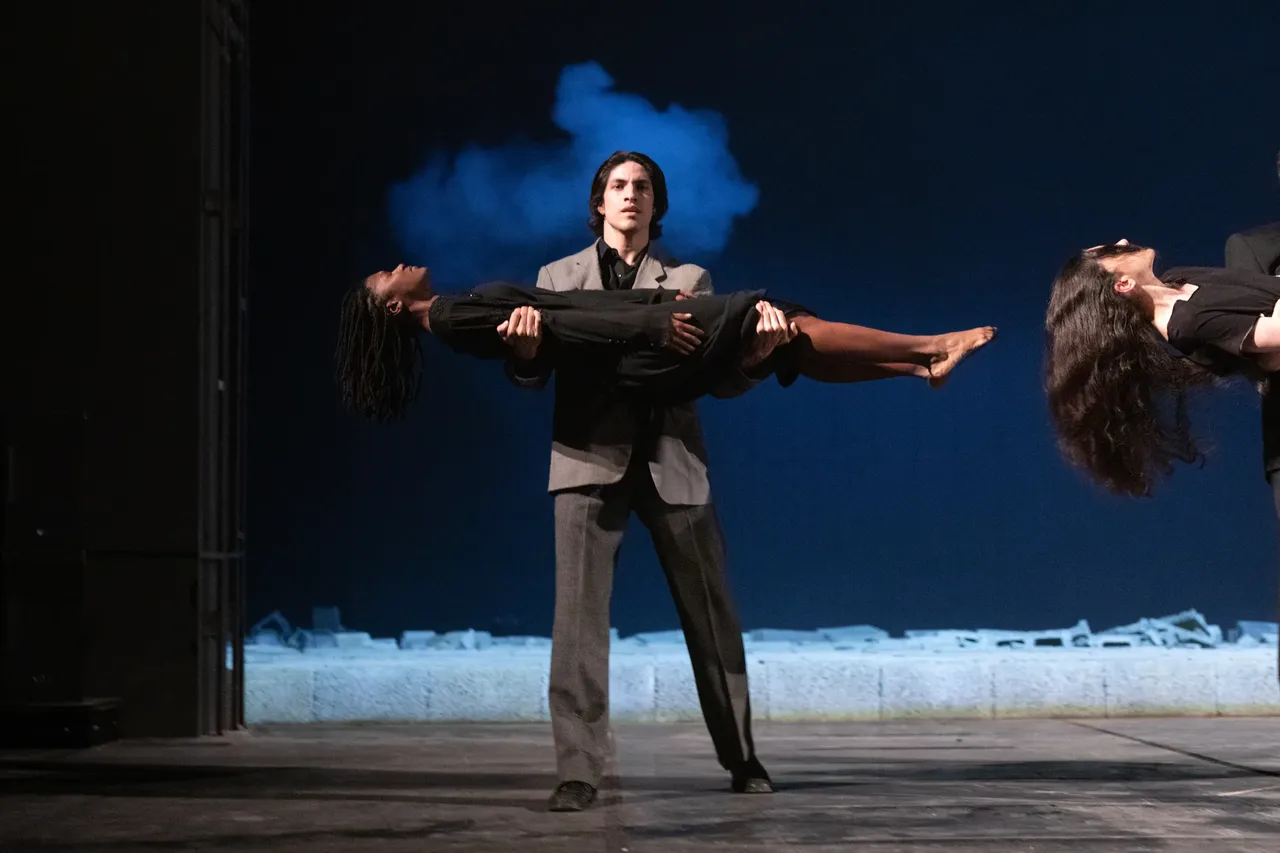
Alexander Guerra López, Luciény Kaabral. Palermo Palermo. A piece by Pina Bausch © Julie Freichel
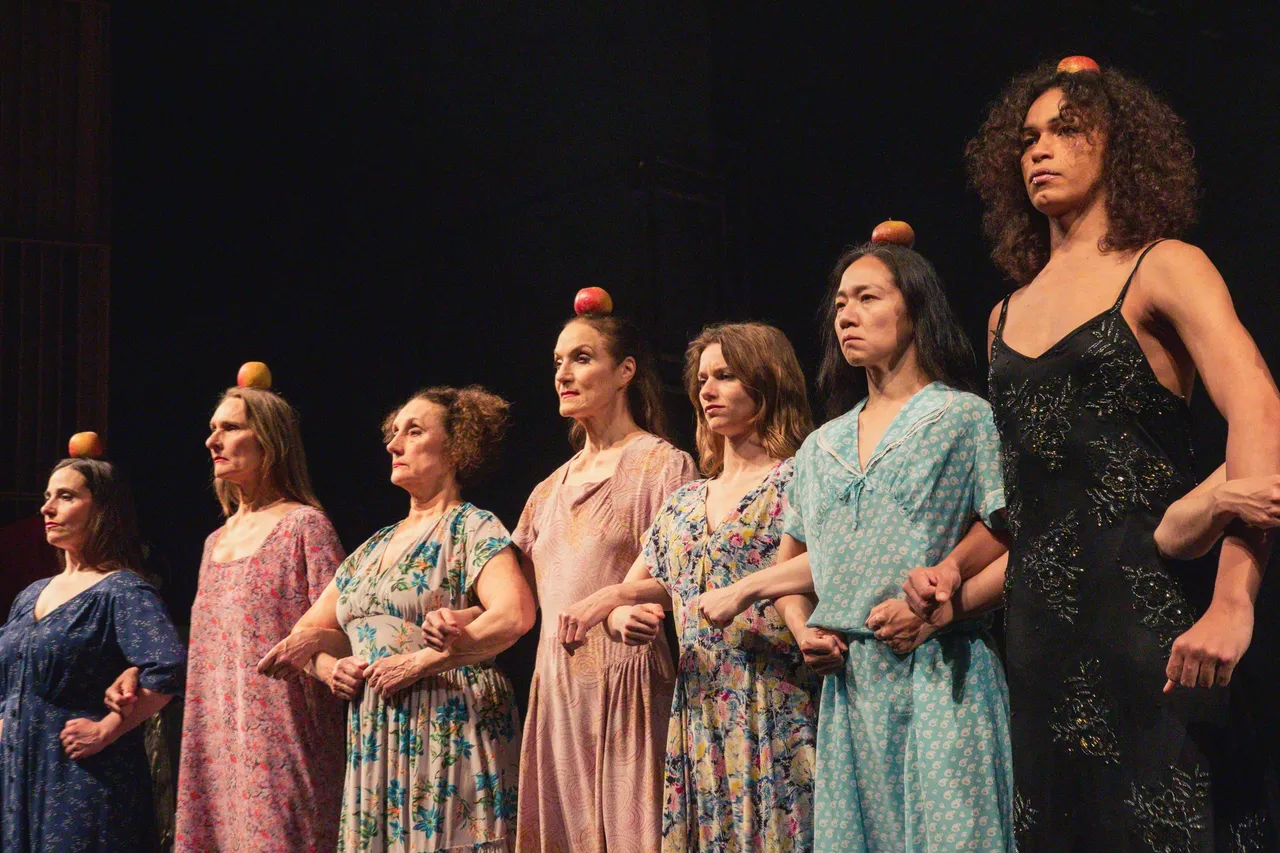
Palermo Palermo. A piece by Pina Bausch © Mathilde Dieudonné
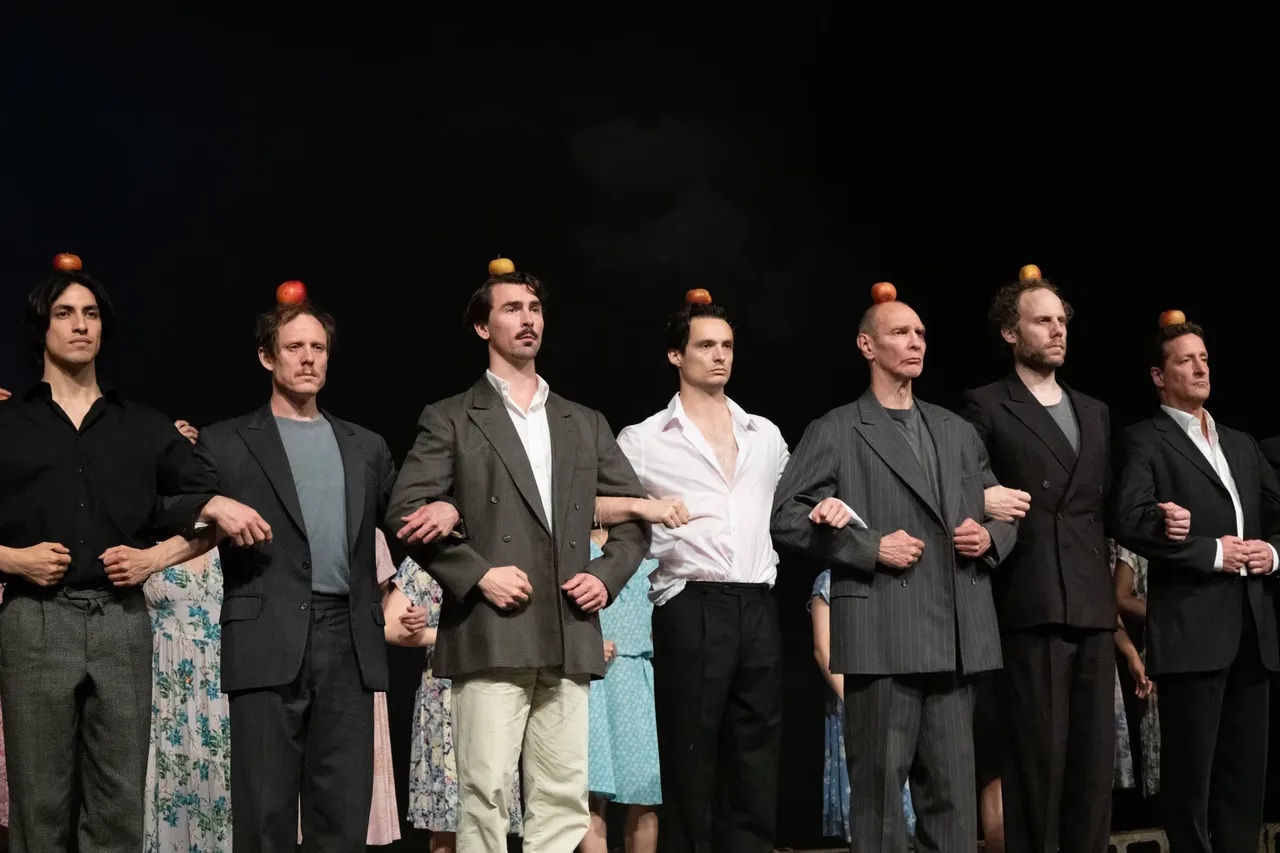
Palermo Palermo. A piece by Pina Bausch © Julie Freichel
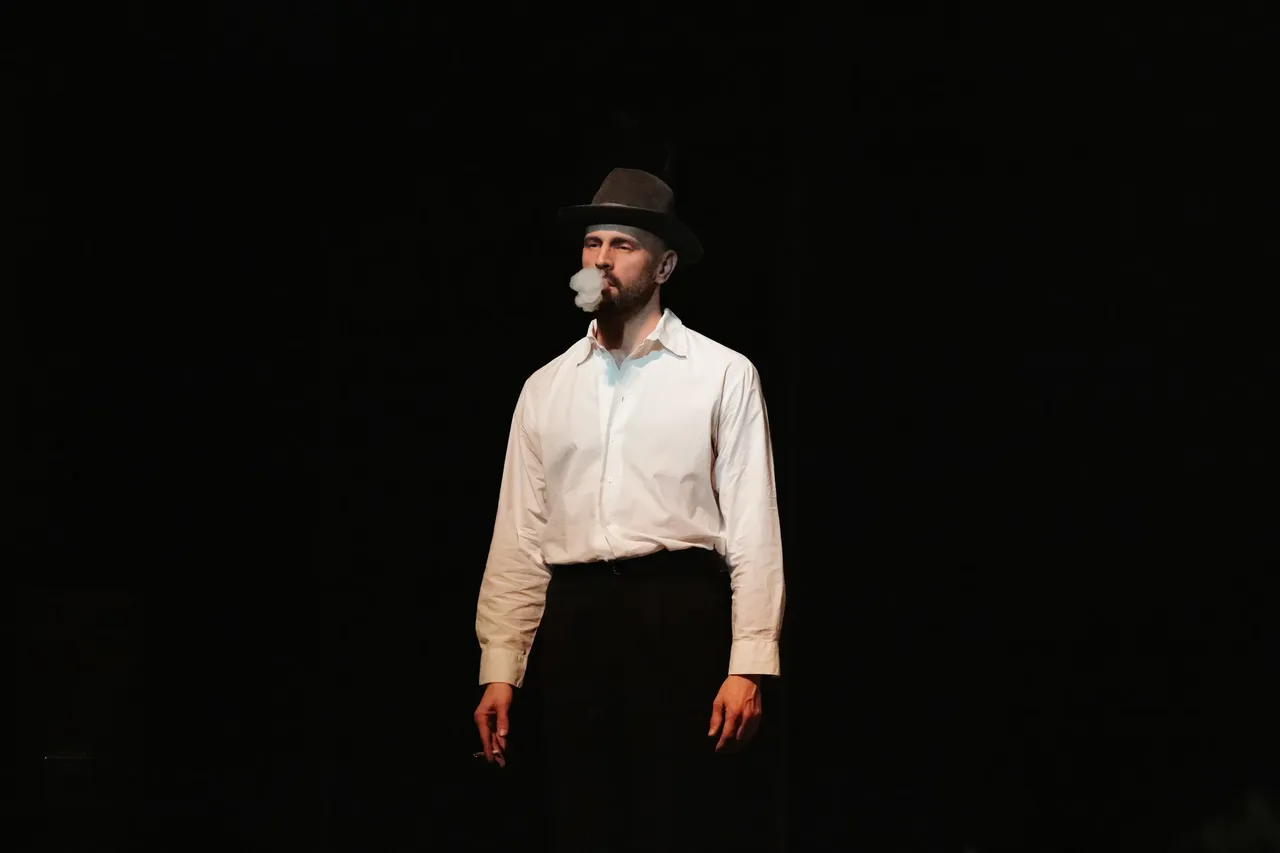
Christopher Tandy. Palermo Palermo. A piece by Pina Bausch © Leslie Artamonov
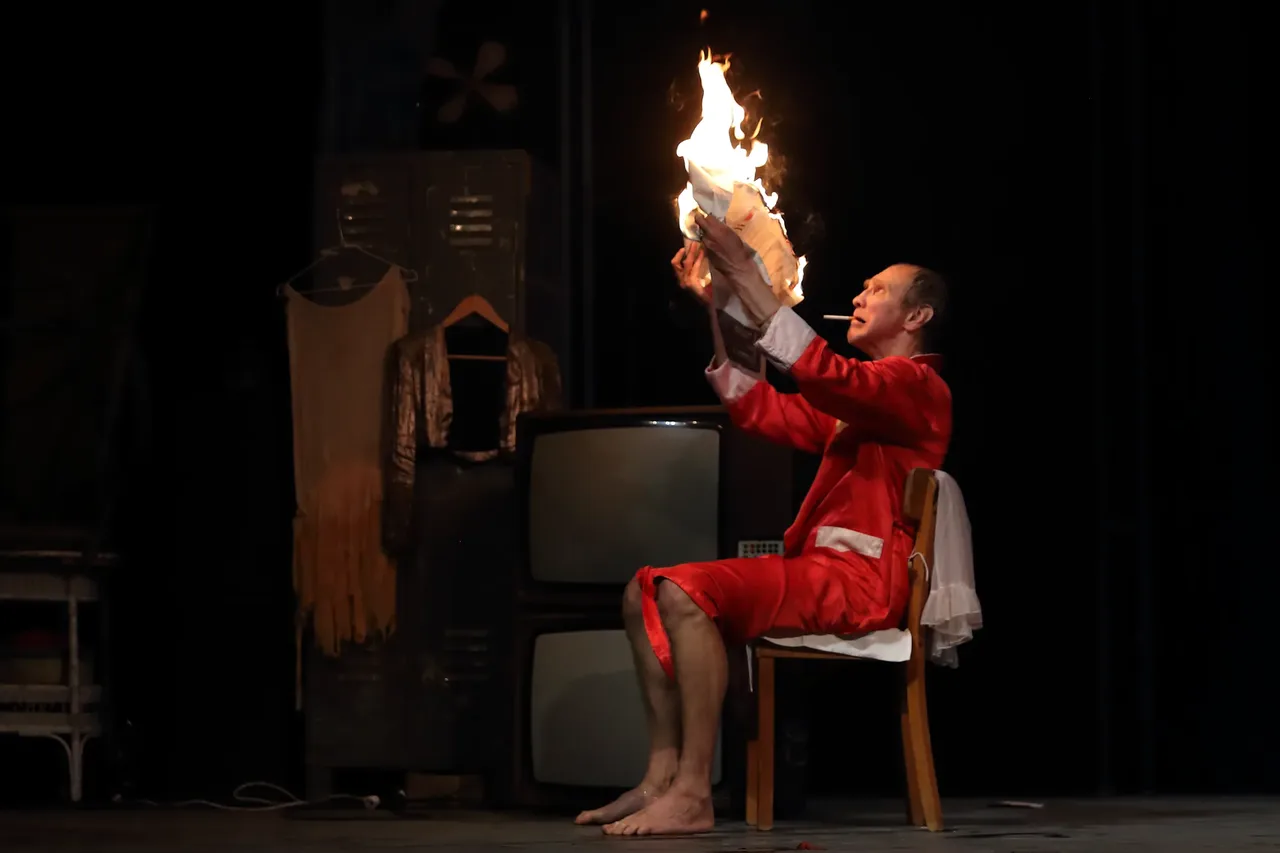
Andrey Berezin. Palermo Palermo. A piece by Pina Bausch © Laszlo Szito