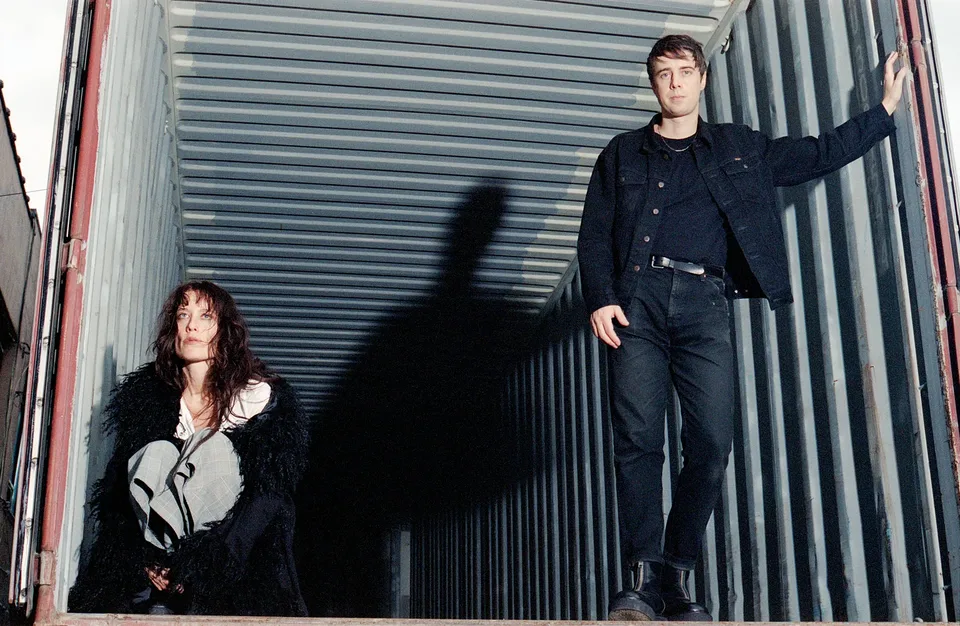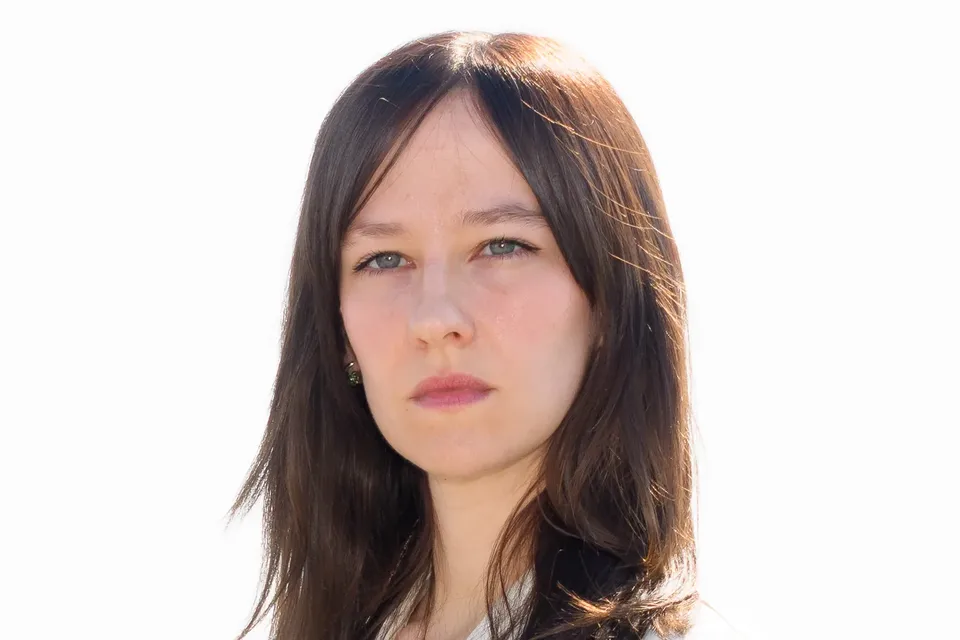
Norwegian-Indian DJ and producer SUCHI has built a sound that resists easy categorisation. Moving between psychedelic club textures, playful percussion and colourful, functional dance music, her sets and productions reflect the same openness that has shaped her life across Oslo, London, New York and India. Before committing to music full-time, she worked in advertising, a background that still informs the way she thinks about discipline, visual identity and the creative control behind her own label, Ikke Sant, whose debut release, Sub Cut, marked a new chapter in her career.
At Horst Festival, a project rooted in community and experimentation, SUCHI found herself on a lineup alongside artists she deeply admires. Rather than letting self-doubt take over, the experience became a reminder of where she stands now: trusting her instincts, learning to quiet the noise and continuing to define her own space within club culture. Between conversations about nightlife, imposter syndrome, social media, sober touring and the importance of feeling safe on the dance floor, we took the opportunity to sit down with SUCHI at the Belgian festival.
To get to know you better, what is a film, an album or a book that has inspired you recently?
I have been reading Norwegian Wood by Haruki Murakami, which is such a classic. I don’t know exactly how it has inspired me, but it has been a nice form of escapism from everything I am dealing with right now. Reading is a good way for me to disconnect from being in my head and from music, and then come back to my own world. I love the way Murakami writes, especially how he reflects on relationships and very mundane life. I also read a lot of self-help.
Does it help you?
Oh my God, yes. If I had to name one thing that has inspired me very directly, it would be The Let Them Theory. Obviously, it is a bestseller and I think most people have read it, but it has been really good for me in terms of learning not to be so affected by judgement or by what other people think. It has helped with my approach to making music and DJing, and with not giving a fuck quite so much. It has taught me to let things happen as they happen and not read into everything too deeply.
You have lived in Oslo, London and New York, and also spent time in India in your early teens. If you had to build a Frankenstein city, using one element from each place for the perfect night out, what would they be?
That is a good question. Indian nightlife is amazing. I would say everyone is really respectful on the dance floor there, surprisingly, especially given the ratio of men to women going out. There are a lot of men, but in my experience they have been very respectful towards women. In Norway, by contrast, the guys can be really creepy.
Really?
Yes, it is strange.
“Sometimes you have to be your own coach and let the voice in your head quiet down.”
It is interesting how prejudice works, because I have seen viral clips of women at Indian festivals being harassed, and their male friends having to step in.
I have never had an issue. I was speaking to my sister about it because I toured there, and I said it was amazing how respectful the men were. Of course, it depends where you go out, and it always depends on the experience, but in the underground scene in India the men are really respectful. I feel they have good etiquette. Oslo really shaped me as a teenager because I grew up there. The nature, and that combination of partying and being close to nature, has been amazing: parties in the woods, raves in the woods, this way of combining dance music with a more natural setting. New York is funny because, when I lived there, I actually did not party that much.
I know you were working in advertising there.
You have done your research. I was working my ass off because that was my previous career. My mind was focused on trying to make it in that world. I was living on my own in Williamsburg, and I did not want to spend money on going out. I just wanted to make money. That said, the queer community in New York is amazing, and the queer parties there are incredible. The queer parties in London are amazing as well. That is something I would say is lacking in India and Norway. New York and London both have very open-minded crowds, amazing music and incredible DJs. The DJs are next level. I have seen a lot of them here at Horst and been very inspired by their sets, so I was very nervous before playing today. I felt I had some levelling up to do, but I was also happy with my set.
When you see yourself on those lineups, alongside people you have admired, does it light a fire under you? Or does it make you feel small, as if you should not be playing before or after that person because you are not on the same level? I do think you are, but how does your mind work?
It is a bit of both. Your anxiety and your imposter syndrome kick in, especially because I was here last night watching all the sets and thinking: this is incredible, tasteful music, great technical skill. Then you go on and think, why am I here? Why did they book me? But you also have to take a step back and remind yourself that they booked you for a reason. They feel you are worthy of being part of this lineup. That was a good lesson for me. Yesterday I was really nervous watching everyone, and I was watching Jane Fitz. You can’t compare yourself to her, but when I played today, it was a good reminder that I am worthy of being on this stage, I know what I am doing and there is a reason they booked me. Sometimes you have to be your own coach and let the voice in your head quiet down. It is something I am working on, but it comes with experience and confidence. It has been super inspiring seeing everyone play, and I am really happy with the set I played. I felt it represented me and my taste, and everyone had a great time.
I was there for about an hour, and it was incredible!
Thank you. People were feeling it. When you start a set, you are worried, but then you see how the crowd is reacting and you get into your body rather than your head, you think: no, I am here for a reason, I know what I am doing, so I should just do me. It is a balance.
“The advertising brain and working in the corporate world have helped me be disciplined. They have helped me treat music as a job and be professional about my productivity and work ethic.”
You started in advertising before moving into music full-time. What is one corporate skill that has surprisingly helped you navigate the music industry?
I would say networking. I wish I could say marketing, but there is a difference between marketing, branding and promoting something like toilet paper compared with promoting your own brand. It is hard to talk about yourself. I have to tell myself: you are the product, you are the brand. As someone with an advertising background, how would you use those skills to promote yourself? But it is difficult because it is you and your identity. If someone says, “We need to sell butter,” there is a disconnect. It is not part of your identity. I think I have been quite good at things like writing about myself, because I have writing skills, and I am trying to get better at social media. But it’s tricky. Before, your set spoke for you. Now it’s a ten-second clip, how people respond to it, a Boiler Room moment, and then one five-second thing blows up.
How do you navigate TikTok?
I just want people to listen to my SoundCloud. But I have started trying TikTok as an experiment, and every time I do one, I cringe. But I guess I have to play the game in some way. It has been tricky. The advertising brain and working in the corporate world have helped me be disciplined. They have helped me treat music as a job and be professional about my productivity and work ethic, because advertising is not an easy industry to be in. But I do need to get better at marketing myself, which is ironic.
You founded your own label, Ikke Sant, whose debut release was your latest EP, Sub Cut. What did it feel like to finally give your music a home that you fully controlled? Was it very different from previous releases?
I started my own label to have more creative freedom and not be pressured by time frames. With labels, they might say, “We can release it, but we have to wait six months.” I wanted the flexibility to think: I have finished this music and I want to put it out whenever I want to put it out. I also did not want to be confined by the idea that a tune has to fit this label’s sound or that label’s sound, or have labels give me too much feedback because they are trying to shoehorn it into their vibe. Sometimes that is good because it can make the music better, but I wanted a platform where I could be freer and truly express myself. If I have music that I feel fits a bigger label or a certain label, I would pitch it to them. I have released on big labels like !K7 and Spectral Sound. But this was a way to create my own thing and have more ownership. Visual branding is something I have taken from advertising and applied to the label. All my releases have really nice visuals. Sometimes, when I release on other labels and see the artwork, I think, that is it? I put so much work into the music, and that is how you are going to present it visually? I like having more control not only over the music, but over the visual brand and the branding aspect as well.
The tracks on the EP are rather psychedelic, playful and colourful. Tell us more about how it came to be.
I don’t really have an intention when I produce. It is more about what I am feeling in the moment, what tracks are inspiring me and what I want to explore as a reference. Then I see where I can take it and make it my own. A lot of my music is quite varied genre-wise. I do not have a very tight sound, but I don’t think that is an issue because, as a DJ, I also play a lot of different things. My approach is about what I am feeling in the moment and what inspires me. If I have enough tracks that feel like they fit together as an EP, I cluster them together and release them. I try not to over-contextualise the music because, in the end, I am making club music. You want people to dance. It is not that deep. I am not making a conceptual album; that would be different. I have to remind myself that I am making music to make people dance, so I don’t need to force a thread through all the tracks. They are cool, they are danceable, I like them, and as long as they feel unique to me and do not sound like generic dance music, that is enough. I want people to think, “This sounds like SUCHI,” but I also want the tracks to be functional to play out. I do not want to be too experimental or too concerned with being unique. It is a hard balance, but I think I am finding it now.
“I try not to over-contextualise the music because, in the end, I am making club music. You want people to dance. It is not that deep. I am not making a conceptual album; that would be different.”
Horst emphasises the democratisation of the dance floor. It is part of their manifesto as a DIY-spirited project. In your view, what is the DJ’s responsibility in making a massive festival space feel safe and inclusive for everyone?
A lot of DJs I know have diversity riders, for example. They would not take a booking unless there was a certain balance on the lineup. When a lineup is balanced, it affects the type of crowd that comes. If you are playing an all-white-male lineup, you will get a certain type of crowd. That is one way to influence promoters and push them a little harder to create a certain atmosphere. It is hard, because sometimes you show up, play music, do your job and go home. But I think it is important to make sure your rider goes beyond a bottle of tequila. If you have a kid and you are a touring DJ, maybe your rider includes something that makes promoters and festival organisers think beyond the generic way of putting on a festival. Not necessarily daycare, but a way of adapting so there is more diversity and inclusivity around different types of DJs and different needs. I do not know if that answers your question.
Yes, it does! Summer is usually one of the busiest seasons for DJs. As we approach it, how do you prepare mentally and physically for an especially busy and draining period of work?
I still work freelance in advertising, so sometimes you have to balance it out. You still have to pay the bills.
Where are you now, in London?
I am in Oslo, but I am moving back to London. I keep moving around, and I have to settle down at some point. Mentally, it has been okay. It has not been super overwhelming at the moment, but whenever an offer comes in, I start preparing in my head: what tracks I might play, what I might do. I have a habit of constantly making notes in my app for each show: for this one, I want to play this and this. Then, when the show comes around, I am not overwhelmed. I already have a roadmap, so I can spend two days properly preparing for it. But you don’t want to over-prepare and overwhelm yourself because touring schedules can be busy. I am not touring as hard as certain DJs. I don’t know how they do it, and full respect to them. The most important thing is to have some sort of routine in between, so you are not completely thrown off. You have to take care of your health and your mental health. You get used to playing shows sober and treating it like a job. That is the main thing: how do you separate work from partying? You choose your battles. You choose the shows where you want to go and have a good time, and the other shows you treat as work, so you can go home, continue with your routine and not burn yourself out. And sauna. Lots of sauna.
Very Scandinavian of you.
Exactly.