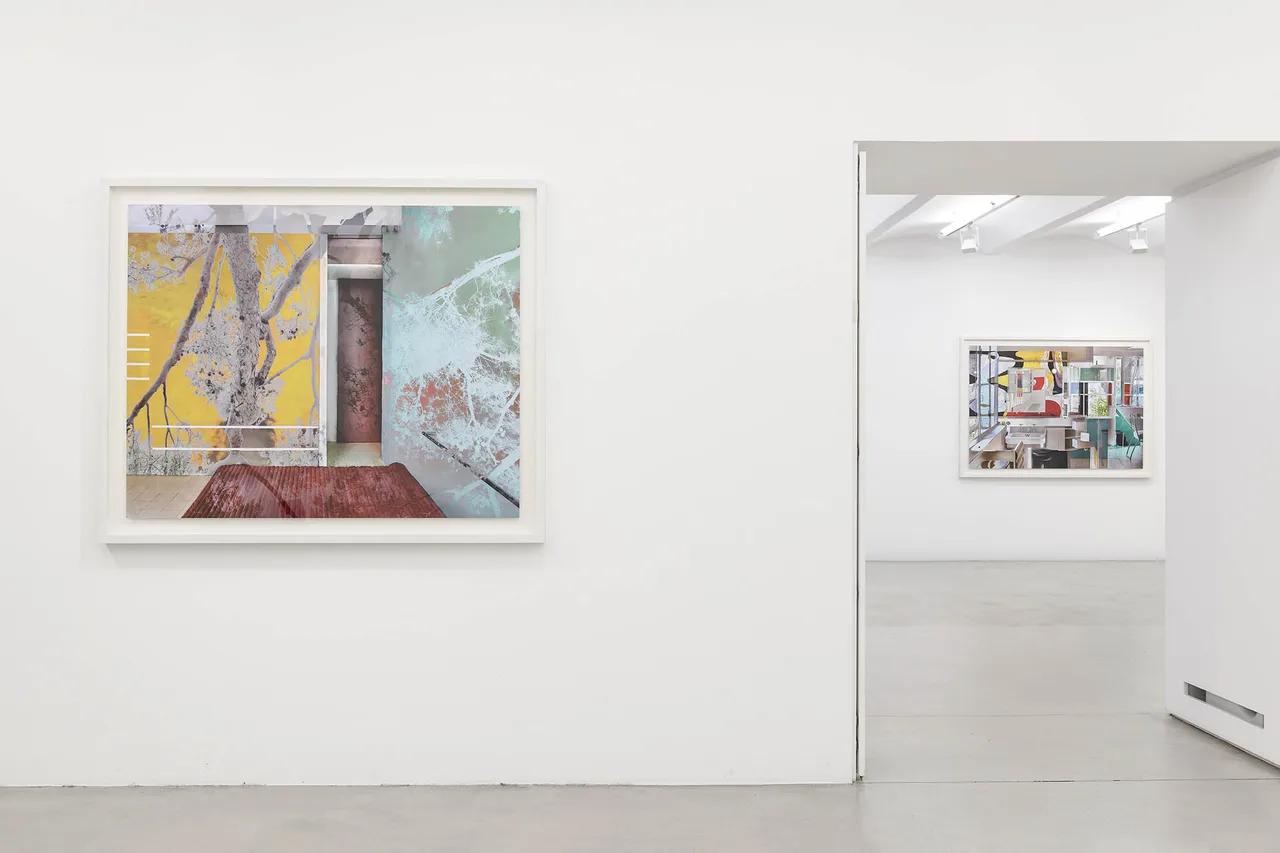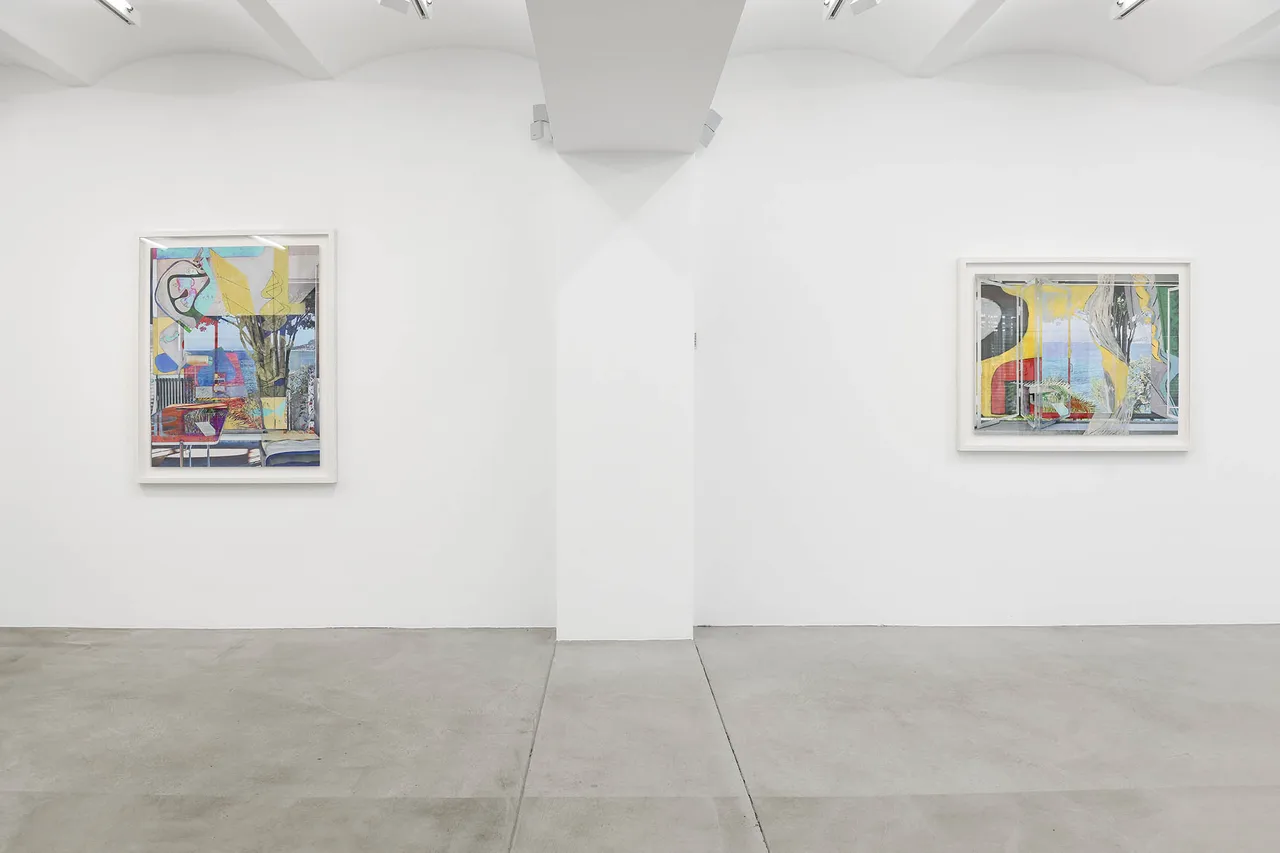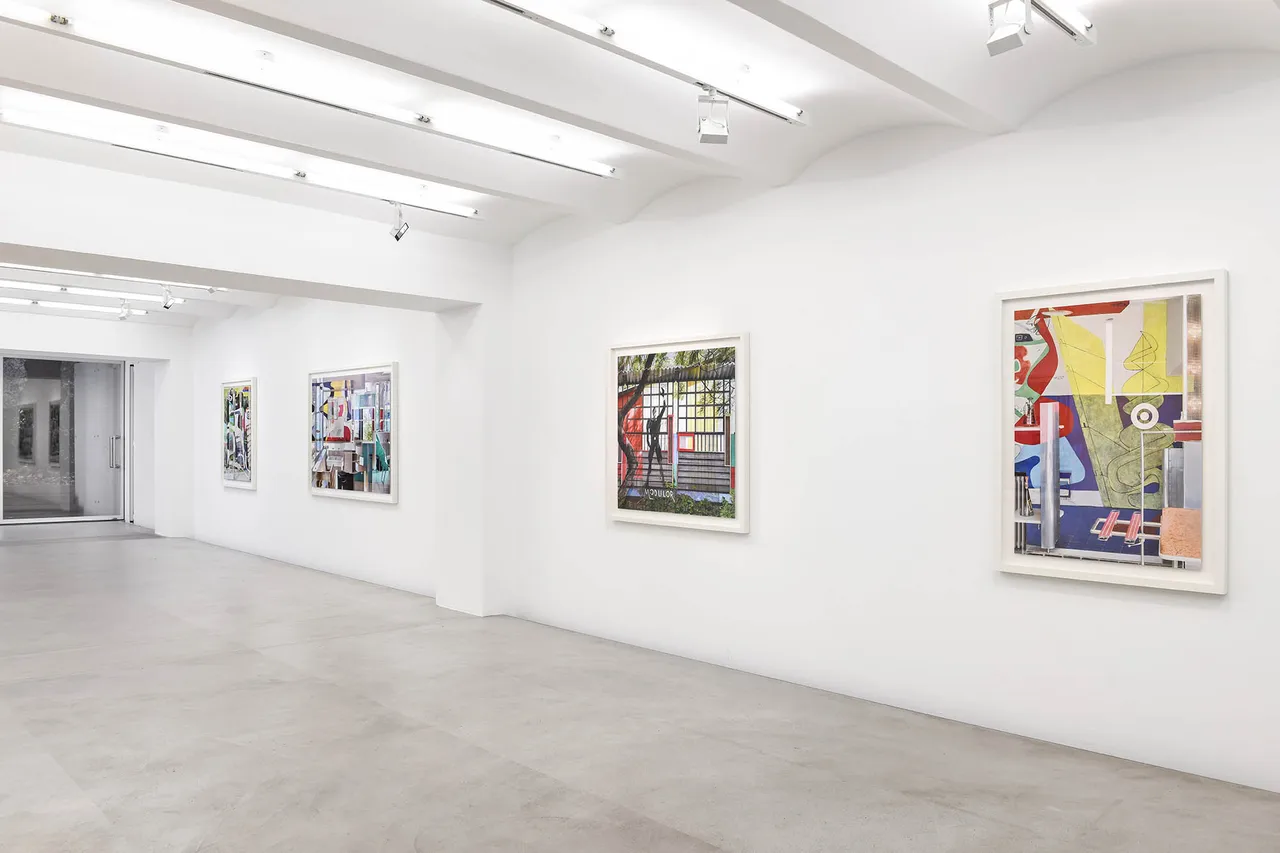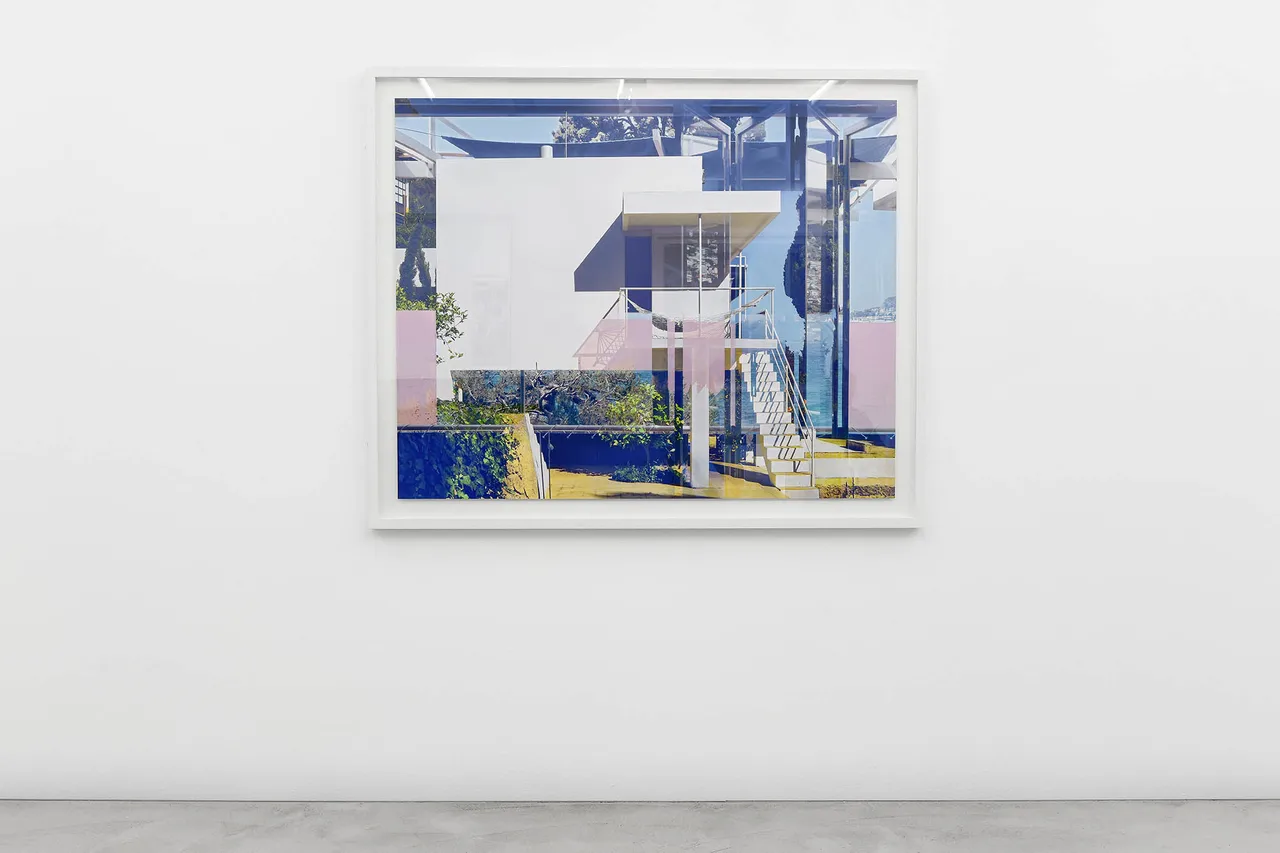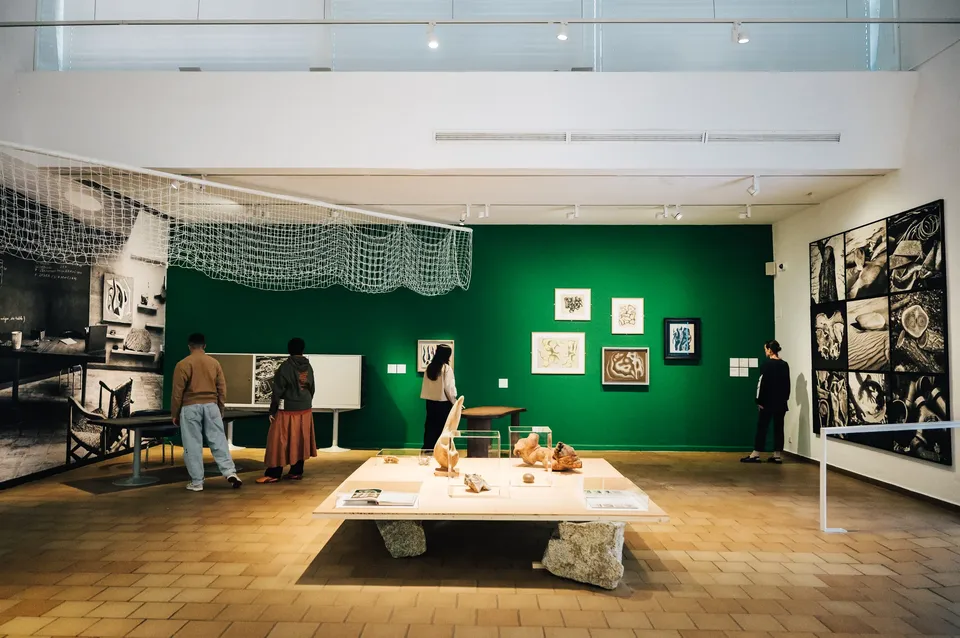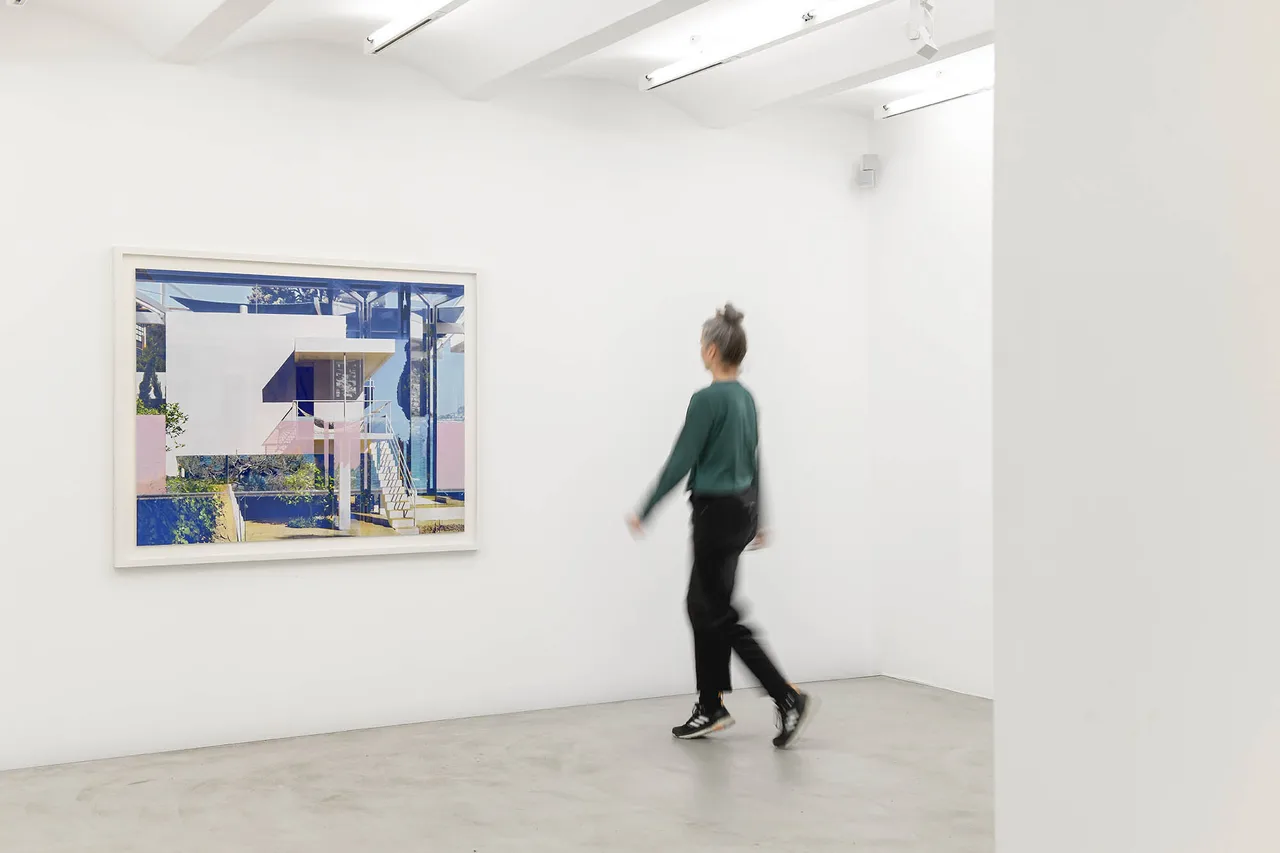
In Roquebrune-Cap-Martin, there’s a house. Looking above the French Riviera. Right above turquoise water and nested rocks. With a white façade, clear shapes and a design that obviously breaks with the leading ideas of modernism: Instead of functionality, you have intimacy, atmosphere, and quality of life. The villa, E-1027 by Eileen Gray, is a declaration of love, a cryptic monogram that combines her own initials with her partner’s. It’s her heart, her safe space. At least until none other than Le Corbusier decided to paint the walls during a visit in the late 1930s. After that, she refused to enter her own artwork ever again. This tension between the two, these layers of reality, abstraction, vision and past, are what Stéphane Couturier’s latest photo exhibition E-1027+123, on view until January 10th in Berlin, is all about.
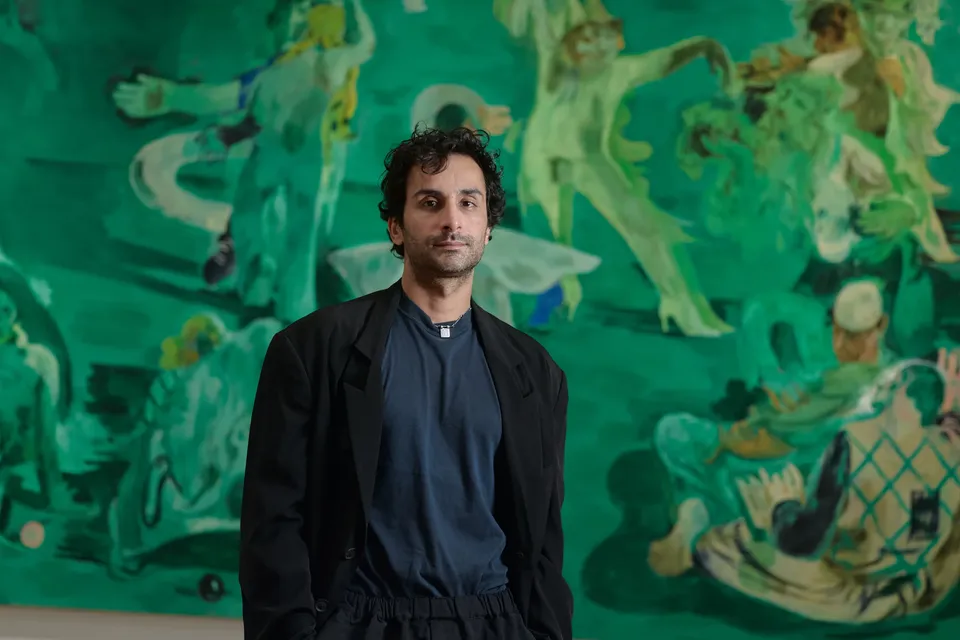
Couturier’s work always tells a story of transformation. A story of the physical relationship between the viewer and the image. And what object is better suited for that than architecture? Through his images of places, buildings, and human constructs, the French photographer manages to create a mirror of social situations, life, development, and deconstruction all at once. It’s a mirror to our thoughts and our intrigue, mixing genres and ideas from the present and the past. While photography, for him, is an objective medium that continuously updates recorded reality, he invites us to dive into his motifs with him. Whether that’s the industrial buildings of Valenciennes, the utopian planned city of Chandigarh in India, the housing estate in Climat de France in Algiers, or Eileen Gray’s E-1027. Captivating, thought-provoking, and hyperrealistic.
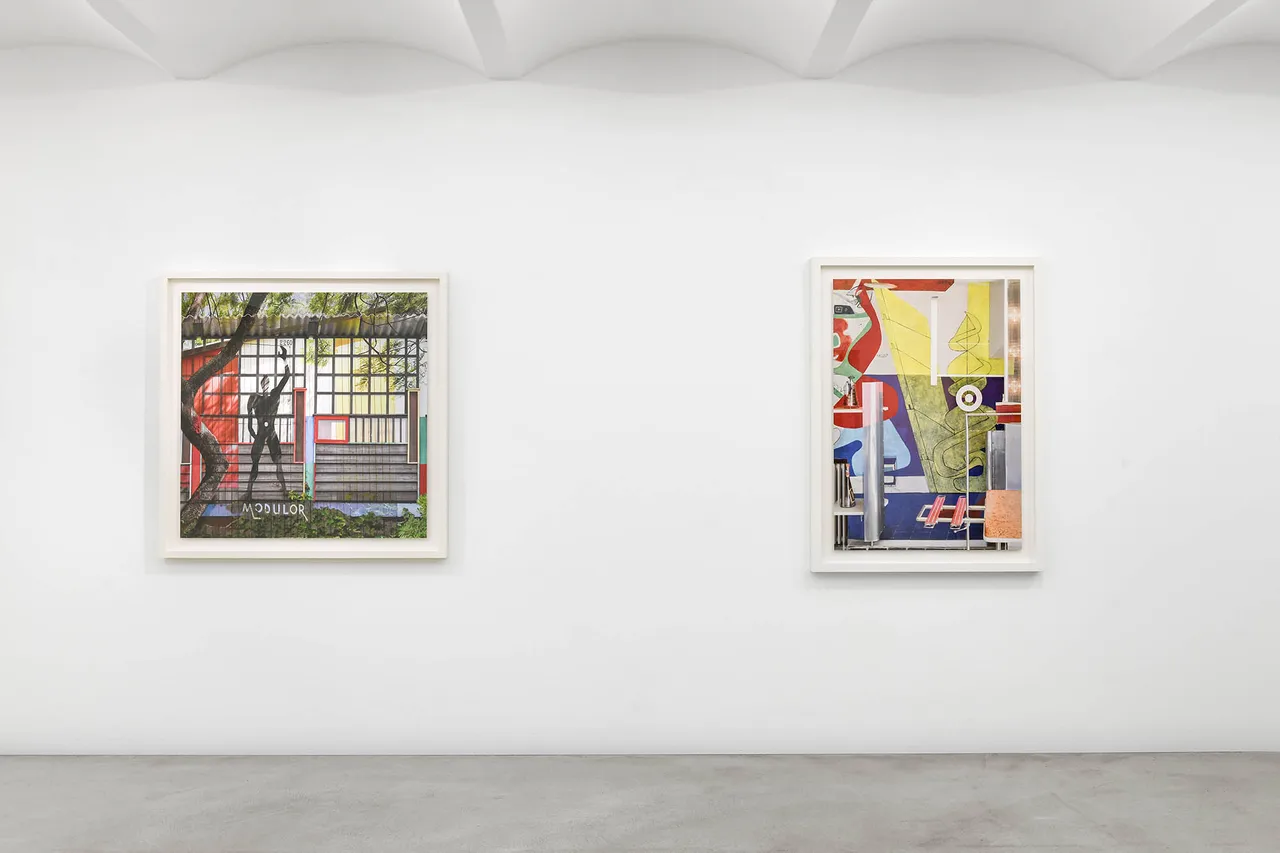
So, what Couturier basically did for this latest exhibition at Kornfeld Galerie Berlin is this: he visited the villa at the French Riviera. He immersed himself in its rooms, its lights, and its history. Capturing its unique energy and bringing together Gray’s clear, personal design language and Le Corbusier’s expressive traces through double exposure. A technique that combines analogue and digital photography in a complex process, allowing him to focus on shapes, repetition, colours, and composition. The result is a visual journey that explores the possible bridges between two opposing artistic visions.
Right after the opening of E-1027+123, we had the chance to hear from the photographer. To investigate construction, Le Corbusier and Eileen Gray, the balance between emotion and structure, and what his camera would say to him, if it could talk.
Hi, Stéphane! What’s one colour you’ve currently been obsessed with?
Hi! Definitely yellow, the colour of the Mediterranean, and the painters (such as Van Gogh) who discovered and promoted this colour from southern Europe.
Has architecture always inspired you? Do you remember the first place or building that truly moved you or sparked your imagination?
Yes, cities and architecture in general have always fascinated me. To me, architecture is the mother of the arts. It’s always linked to a country's politics, economy and social evolution. The first place that truly moved me in that way was the wastelands of the 1980s and 90s. They were my first playgrounds in a way. Or the Renault factories in Boulogne are also a fine example. It’s the parallel, the image of architecture as a living organism, that has always struck me.
You’ve said that architecture mirrors society’s transformations. If Gray’s E-1027 reflected a female modernity, what does its current state reflect about our present moment?
At the time the villa was built, it didn’t reflect a feminine modernity, really. It's rather today that we're rediscovering the importance of Eileen Gray, who didn't hesitate to venture into fields that were reserved for men back then.
You titled the project E-1027+123, a nod to Eileen Gray, her partner and now also Le Corbusier’s initials. Why did you decide not to add your own initials as well, to complete the equation – let’s say +193?
It would have been fun to add my own initials, of course. So, why not! But to be honest, my photographs are not part of the villa. I prefer to reflect on the fascinating history of the building itself and to focus on the telescoping of two extraordinary personalities from an observant perspective. Also, I usually do sign my photographs Stéphane Couturier. +193 would be something completely new to me.
Le Corbusier left his mark with paint; you leave yours with pixels and light. Do you see yourselves as part of the same act, trespassing?
Not really. I'm more into a game of deconstruction and reconstruction. For me, the idea is to restore the sensorial data of the place, to move towards a kind of revelation through photography.
You’ve photographed Le Corbusier’s architecture several times before. What is it about his work that continues to fascinate you?
What I love about Le Corbusier is that he was not only an architect; he was also a painter. He was a visionary in search of a total work of art. A search that leads to a kind of synthesis of arts, you could say. He compared himself to an acrobat, a provocateur of space. It’s captivating for me.
If Eileen Gray and Le Corbusier could see your exhibition today, who do you think would storm out first? And what kind of conversation would you imagine having with them?
I don't think either of them would slam the door. Because both of them have always wanted to experiment, and play with the elements they find in nature. Le Corbusier himself, for example, spoke of photography as revealing the unspoken potential of a work. Eileen Gray, at the same time, is a painter, designer and photographer, distinguished by her independence of spirit, audacity, and freedom. She was a spiritist in search of new experiences. So, I don’t think they would storm out.
Your work is highly formal, but E-1027+123 also carries an emotional charge: loss, appropriation, love. How do you balance emotion and structure?
I’d like to quote H. Bergson from his work on Creative Evolution. He says: ‘To create is to combine.’ So, imagination in the proper sense is creative imagination. It’s the ability we have to compose ideas, and especially images, from the elements that memory provides us. In the psychological world, there is no creation out of nothing. That means the elements we combine always come from previous perceptions or sensations: what is new, what is original, is the order we impose on these elements and the meaning of the whole. We could therefore say that imagination borrows its material from memory, and that its true role is to combine these elements. In other words, to create a form. So, emotion and structure always work together.
You seem fascinated by repetition, both industrial and visual. Is repetition a way of revealing transformation, or of resisting it?
Good question. I believe in repetition as an act of creation. Through multiplication, transfer, accumulation, the combinatorial dynamic enables me to make new propositions about the laws that govern the invention of forms.
Do you consider your photography closer to being a painter or a documentarian?
I consider my work to be at the crossroads of different fields. It can be seen as artistic, documentary or sociological. It's not up to me to decide how to read the photographs, that's up to the viewer, I’d say.
If your camera could talk, what would it say about you as a photographer?
He'd say I'm not really a photographer. Photography is just a material. With artificial intelligence, we don't even need a camera anymore.