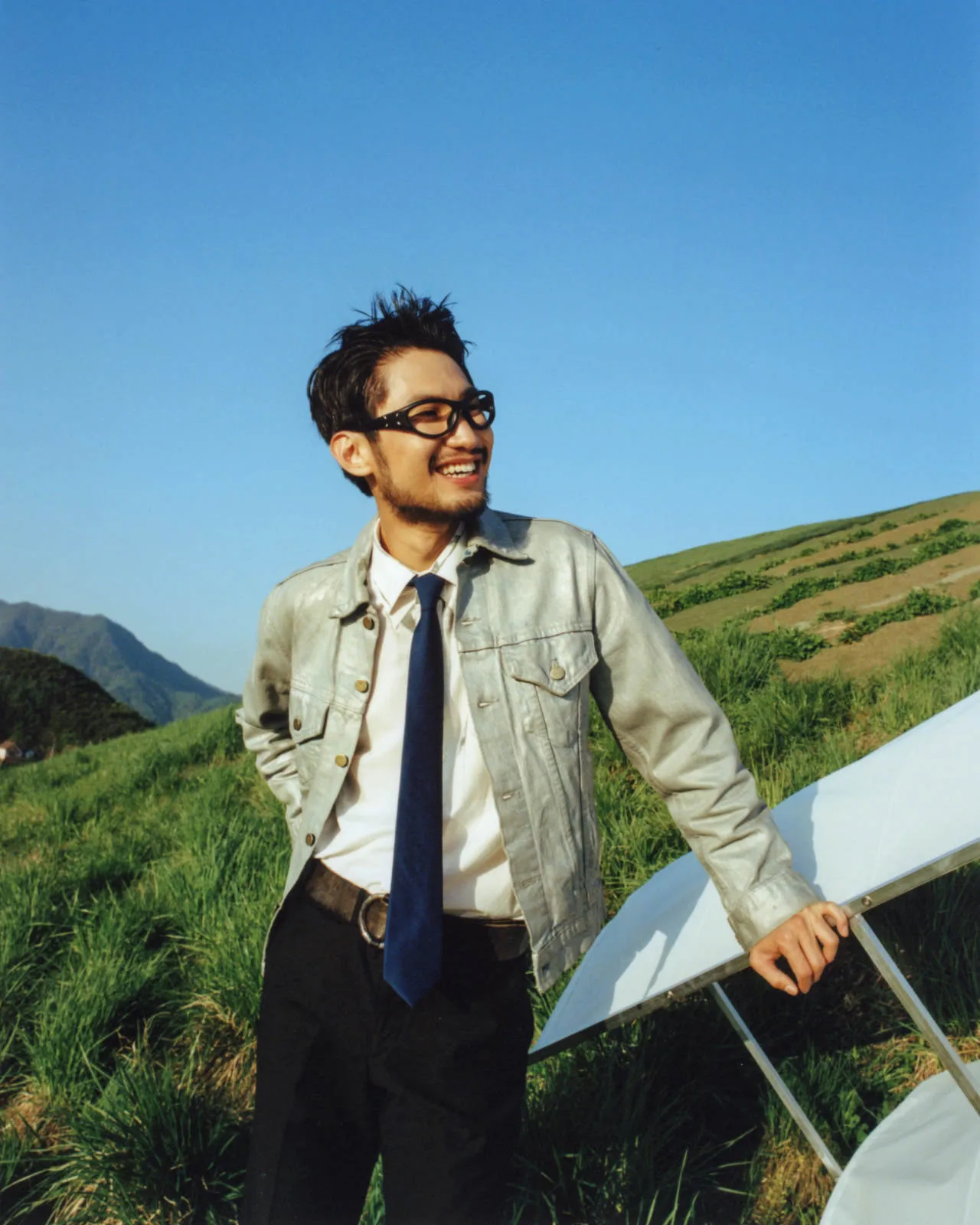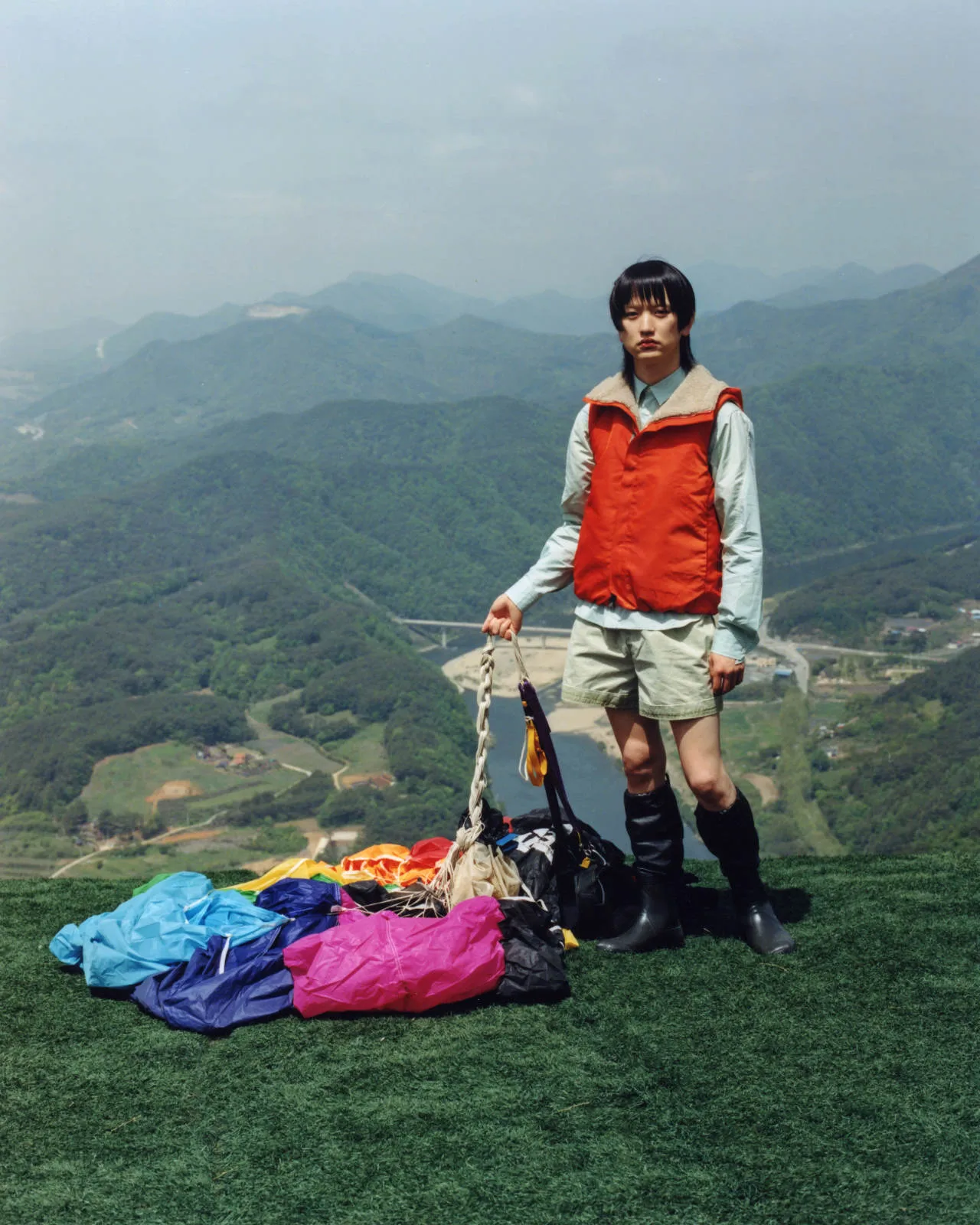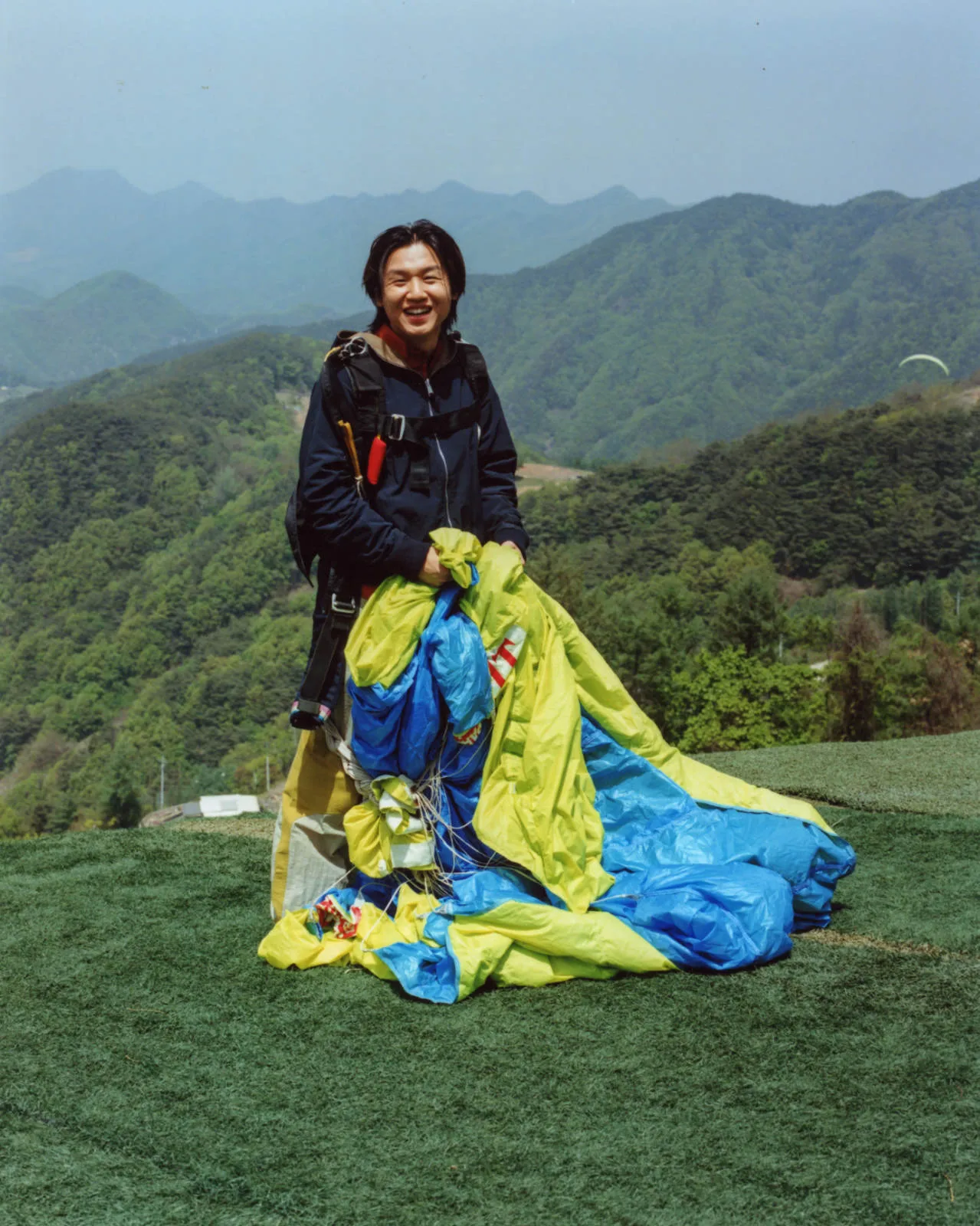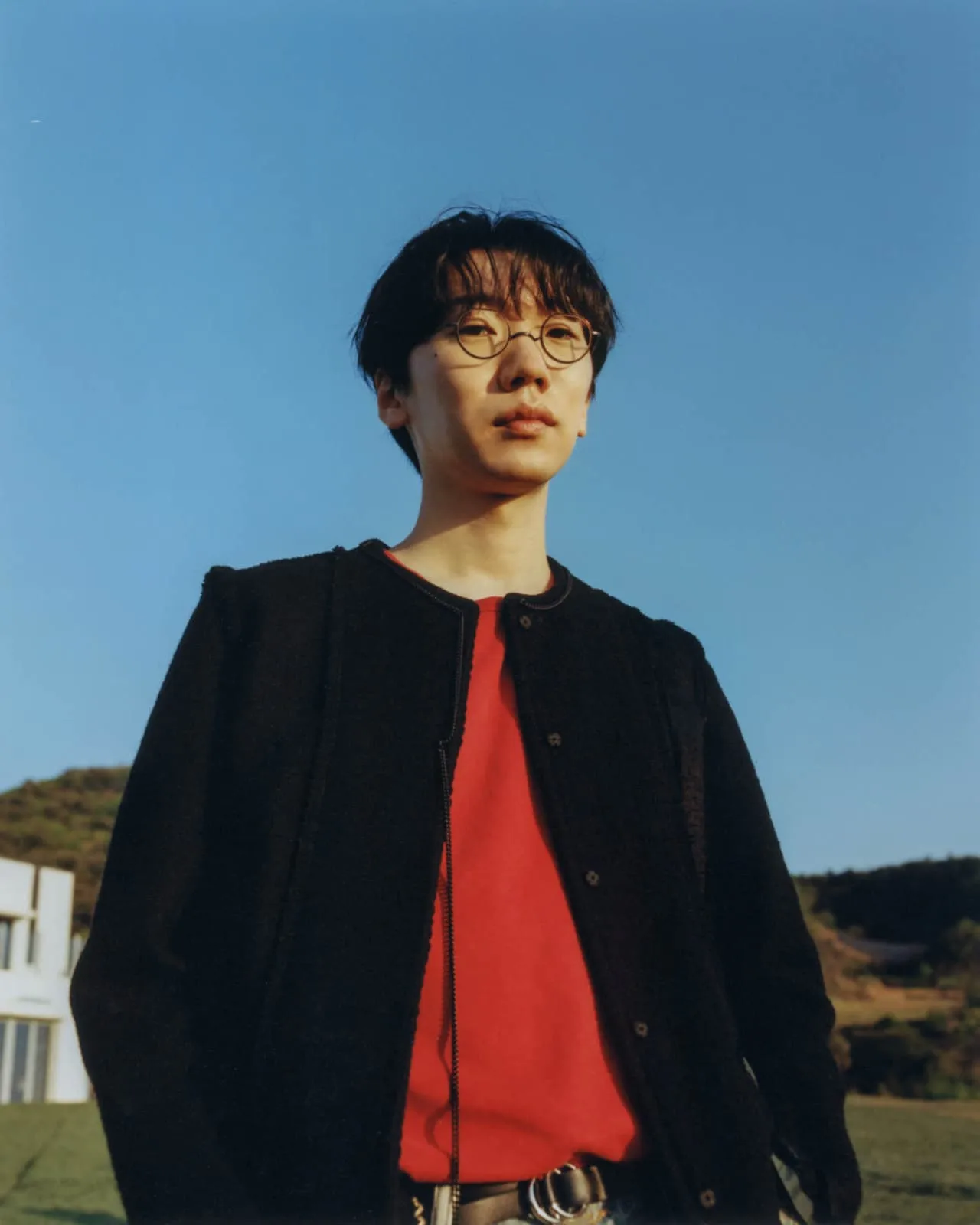
One of the most special qualities of music is its ability to help us travel in time. Regardless of when it is made, the reunion of multiple factors from the techniques and specificities used when making it to the inherent sound of those who bring it to life can result in a song containing the sound of the past, of the future, or of the current realistic present. The South Korean indie band Silica Gel has managed, in their extensive and prolific career, to capture the essence of every timeline in their repertoire, all of them linked by that unique je ne sais quoi that makes their sound easily recognisable, completely relevant in the industry, highly intricate and simply addictive.
Desert Eagle sounds like an antique relic discovered in some historical ruins that tells the history of past times. The entirety of Power Andre 99 is a futuristic journey to another galaxy where technology and mechanical elements still feel surprisingly human, and NamgungFEFERE feels like a perfect song that was waiting to be made for this generation, enhanced by one of the voices of the present, Michelle Zauner from Japanese Breakfast. This is just a quick overview of what Silica Gel has been able to construct in more than a decade of playing and creating together, with their B-sides, other releases, music videos and live performances containing just as much substance, plots, characters and stories.
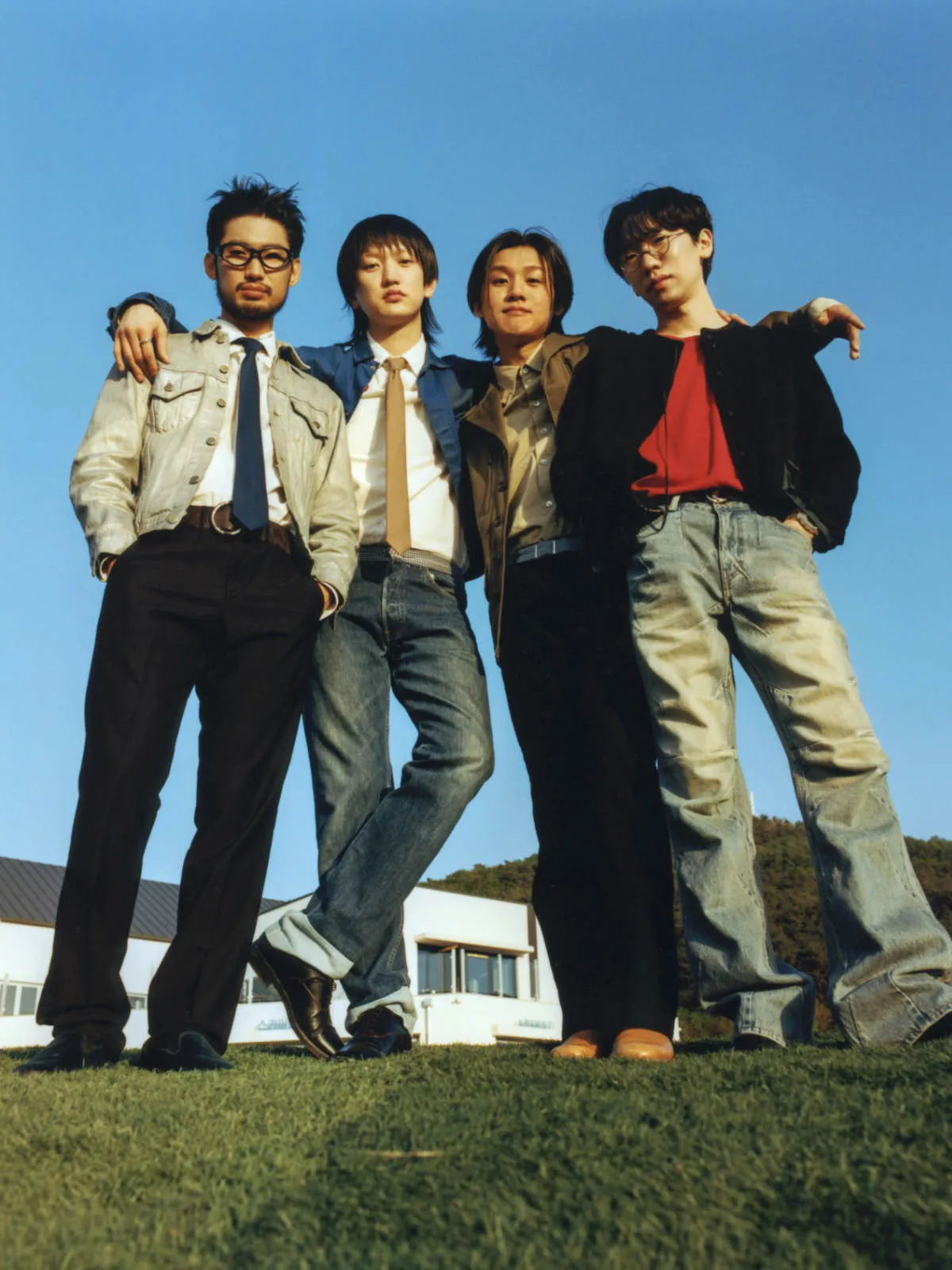
The formula to creating the perfect group representative of all the wonders and gems hidden in the Korean independent music industry is apparently a mystery to everyone but Kim Hanjoo, Kim Chunchu, Kim Geonjay and Choi Woonghee, but we try our best to discover what lies behind a successful, stable and honest career, discovering this and more, finding out a new album is being crafted and a world tour is in the making.
How are you? How is this year starting for you? You just recently released BIG VOID, why did you decide to end the last year and start this one with this song?
Hanjoo: During last summer we did our biggest concert in our career, called Syn.THE.Size X, and BIG VOID was first released at that moment, on the stage, as an encore song. It was like a celebration for our 10th anniversary, but it was also a setlist that represented our whole career, from the beginning to the present, so BIG VOID was some kind of representative of our future. We wanted to show that future to the audience as well. At that moment when we first played that song, the reaction was pretty good, and we thought, "Oh, this song could fit very well in the winter season." So we rushed with the preparation, and we chose to release it during the last winter. With BBIG VOID, we wanted to create a momentum that went into 2026 and show where we're heading musically and as a band.
BIG VOID has a very strong visual universe — the artworks, the puppets and the atmosphere of the video are really interesting and rich. Where did those ideas come from, and how did they connect to the music?
Hanjoo: The video was directed by Song Kiho, who is one of the members of the art collective Azikazin Magic World. He also directed the music video of Tik Tak Tok, and we've been working on our visual and creative ideas with him so far. He did some creative direction for our headline show, so he knows us well. The puppets, like the ones in the video, are one of his signatures, so it was natural to put them into the music video. Besides that, we tried to make the visuals connect and fuse with music. The graphic scores you can see in the music video are meant to convert the music into something visual. The harpsichord in the video was also used in the cover art of the single. As a band, visual art is very important, and it's part of the music almost, so as we are creating the music, we are also thinking about the creative aspect of the visual.
There’s a very psychedelic, colourful energy in both BIG VOID and NamgungFEFERE, your latest release, especially compared to the colder tones of some earlier work. Does that contrast reflect a shift in where your sound or visuals are heading?
Hanjoo: I think I can just say that it's right. (laughs) Definitely. We agree with that.
Noted (laughs). Does the change of the logo in Instagram, the little red sprout that appeared in the graphic, have to do with the new music and the new projects you are working on? Can you give us any hint, maybe?
Hanjoo: So far, our logo, as you can see, is pretty symbolic. We tried to take advantage of it as a branding aspect, so now you can see a subtle transformation, but we might be able to try some kind of bigger or more significant changes, maybe when we are doing promotions for a new album or new concerts.
The international response to your work has been growing, especially after the collaboration with Japanese Breakfast in NamgungFEFERE and the attention from media like Pitchfork. How does this external recognition impact you and your work? Is there any feeling or need to maybe adapt or change your path to cater to the new listeners?
Chunchu: Our intention with Namgung and BIG VOID wasn't to get attention internationally. The intention with this was to announce to our fans and to everyone that this is a start of something new. To show that maybe we are going to tour around the world, or maybe that this is a new direction that we will try. When we monitor the articles or interviews from these kinds of European and/or North American media, we think to ourselves that we are on a good path; we're on the right path. We don't think Namgung and BIG VOID got us a lot of attention per se from a lot of people, like in Europe or around the world, but it is giving us motivation to go into the year 2026 with a tour possibly, not just in Korea, but also potentially going overseas.
When you first started making music, how was your approach and relationship to your instrument — including the voice — and how has that relationship and dynamic to it changed over time?
Chunchu: When I first played and learnt guitar, I did it just to have fun. Actually, I first learned piano, but I didn't enjoy it, so I thought maybe playing guitar would be more fun. After that, I think I just wanted to play as a jazz guitarist or something, but when I met these guys, our band members, I learned the feeling of being in a rock band and also making our own songs rather than just playing guitar for other musicians. The first time I played guitar, I just wanted to be a guitarist. But now I think I'm more like a songwriter and more like a producer.
Woonghee: This is not about my relationship with music but my parents. My dad didn't like me doing music at first. He didn't really like music. But right now, listening to the music we do with the band, he has switched sides. He supports me and loves the music.
Woonghee: This is not about my relationship with music but my parents. My dad didn't like me doing music at first. He didn't really like music. But right now, listening to the music we do with the band, he has switched sides. He supports me and loves the music.
I'm very curious about your process of creation. How do you develop your ideas? I know it may change from song to song, so I want to ask about a particular one just to get an idea of how you work. I want to ask about Realize, one of my favourite songs.
Chunchu: Oh, thank you! Our usual process starts with one member making a well-made demo; we listen to it, and we learn that song. We don't create songs during our practices or rehearsals; the first demo is usually an already arranged one. So we started from that, and we play the instruments with each other's styles. For example, I made Realize and recorded the drums and the bass for the demo. But then when we start the recording of the actual song, the drum part is up to Geonjay's playing, his style and his habits. And the same goes for the bass for Woonghee or the synths and other electronic instruments for Hanjoo. We also record ourselves in our studio, so it's easier to work with what we create ourselves, rather than having other engineers doing it. That kind of thing makes our Silica Gel sound. For other songs the process is very similar.
There’s always a strong sense of freedom in your music and in how you present yourselves. How much of what you do is instinctive, and how much is shaped by strategy — thinking about audiences, timing, or visibility?
Chunchu: I trust more of my instinct when it comes to music and releases. Strategy is important, but if you put too much priority on strategy, you will miss out on a lot of musical parts. I don't know what the ideal ratio of instinct and strategy is. Every time we are going to release music, we do have talks of how much strategy would go in and how much we want to put in our instincts or make it strategic, like, 'Would this song be likeable for the public, or is this song more for our fans?' We do try to think about this. But we sway more towards our instincts and what we want to do with our music rather than strategising it so that everyone in this world can listen to it.
Geonjay: To put it simply, I feel that instinctive choices are the basis, and the rest is built up afterwards. In other words, we don't do things we don't like. So whenever we put out music, we first talk about what we love, and if it's a song that we don't like or are particularly drawn to, then we can't put a strategy around that song. We can't support it. So whenever we put out music, instinct is our base.
Geonjay: To put it simply, I feel that instinctive choices are the basis, and the rest is built up afterwards. In other words, we don't do things we don't like. So whenever we put out music, we first talk about what we love, and if it's a song that we don't like or are particularly drawn to, then we can't put a strategy around that song. We can't support it. So whenever we put out music, instinct is our base.
You’ve played in very intimate underground venues, but also in huge open spaces like Primavera Sound or Fuji Rock, surrounded by nature. How does your music respond to those different environments, and how does your energy change on stage?
Geonjay: In my case, with the drums, it's a little different from the other members. I'm in the position of playing while looking at the backs of the members. Therefore, rather than the external environment, I feel differently depending on the members' condition, rather than the location. Maybe I can think, "Oh, nice view," or "Oh, it's pretty hot," but that's all for me.
Chunchu: In my memory, Primavera was so big, and I was kind of worried about our show (laughs). But after the main stage, we had a city live in another venue, a smaller one. It was more comfortable than a large venue because I personally prefer this kind of live house ambiance. The audience may be smaller, but it creates a more intimate connection between us and them. So I think that makes a more exciting mood for me.
Chunchu: In my memory, Primavera was so big, and I was kind of worried about our show (laughs). But after the main stage, we had a city live in another venue, a smaller one. It was more comfortable than a large venue because I personally prefer this kind of live house ambiance. The audience may be smaller, but it creates a more intimate connection between us and them. So I think that makes a more exciting mood for me.
Through touring and festivals abroad, you’ve experienced what it’s like to be musicians outside Korea. Has that shaped any international ambitions or curiosities, or does Silica Gel still feel most rooted at home?
Chunchu: The experience for the other countries' lives is very exciting. I think the Korean music scene, especially the Korean indie music scene, is very small; the market is very small. It is hard to make lives or other content just in Seoul; I think it is too hard for the musician, so we think we should expand more of our markets and our fans to other countries, other global fans and other festivals or tours. I think it's important to take into account the global fans as much as our Korean fans. For example, Koreans, Japanese and even Spanish — we should think they are all the same.
You’ve been a band for a long time now. When you look back at your trajectory, does it resemble what you imagined at the beginning, or has it moved in directions you couldn’t have predicted?
Hanjoo: In the beginning, Silica Gel was a multimedia group with a videographer as a member. Only with that could we say it looks pretty different from the very first moment. But I also think what we are now can be sort of predictable. We don't try to predict our future from now on because it feels like we're limiting our potential or possibilities. Right now we want to let the members do whatever they want to with their freedom, and we try to support or push ourselves to be better. So rather than concentrating on the future, we are trying to stay present.
You move between Korean and English in your lyrics, and even Spanish in Eres Tú. How do you work with languages? Do they allow you to change what you’re able to express emotionally?
Hanjoo: First of all, it definitely depends on the language. There is a certain perception already made for each language that humans have built up over time, because languages are a product of culture. So, it's more than just listening to it and reading it. I think there are very different emotions in each language. So rather than simply listening or using other languages, we think about the different emotions that each one of them is filled with. It is very interesting, and we feel pretty joyful to bring those kinds of different feelings from different languages into our music.
Before Power Andre 99 (2023), there was a long gap of time without releasing a full-length album, around seven years, but now you’re saying you are working on your next one. How has your relationship with time, deadlines, and long-form releases changed since then?
Hanjoo: I feel like things have changed a lot since our work with Power Andre, especially the sense of schedule. At that time it was actually a bit difficult for the members because we were working in a very busy situation; it was hard to balance our personal schedules with the production of the album. I thought from that moment on we should try to find time to stay healthy and avoid such incidents, but even as I think about it now, I realise that is not easy. I feel pressure with this third album coming up, and we have learnt how every project feels different and how the timeline also feels different; it's something that can't be averaged out.
Your music often feels like it creates its own worlds. If those worlds were translated into another medium, what would feel most natural to you — a film, a book, a manga, or something else entirely?
Chunchu: I'm a book guy, so I personally think manga fits more with our music. And everyone likes manga and anime as well.
At this point in your journey, what is your intention as musicians?
Chunchu: Focusing on our instinct.
To finish this nice conversation, could you please give us and the readers some music recommendations?
Chunchu: I want to recommend Daryl Johns. He's a bassist, but he's also a producer and singer-songwriter. He is the bass player of Mac DeMarco. Also Daryl's friend, I think his name is Pedro Martins; his music is also so good. But yeah, I was just listening to the album Daryl released in 2024, so I want to recommend that.
Geonjay: I want to recommend Noridogam. He's a singer-songwriter. He is not close to me or anything (laughs). (Noridogam is the side project of Chunchu). I would recommend a song called Truthbuster, even though he released a new single called Hazard Course recently, but I think I prefer Truthbuster. I was really shocked with his live performance. So anyways, I recommend it.
Woonghee: Spectacle Of Ritual by Kali Malone. I think I like music that has elements that allow me to think while I listen to it. It's not something I search for intentionally, but that kind of attitude is ingrained in me as a musician. With that in mind, I also like listening to drone music these days.
Hanjoo: I'm recommending an album that hasn't been released yet. Now, there is a pre-released song by Arcing Monkeys called Opening Night, which is part of the compilation album HELP(2) by War Child Records that will be out on March 6th. This album is a project that supports children who have been affected by war. The musicians who participated in the compilation form a very strong lineup, and I want to listen to it as soon as it's out.
Thank you so much! Anything left to say?
Chunchu: Like we mentioned, we're planning to release our third album in August! We're also planning our tour. We don't have a fixed route yet, but we hope to go around some European cities; please look forward to it!