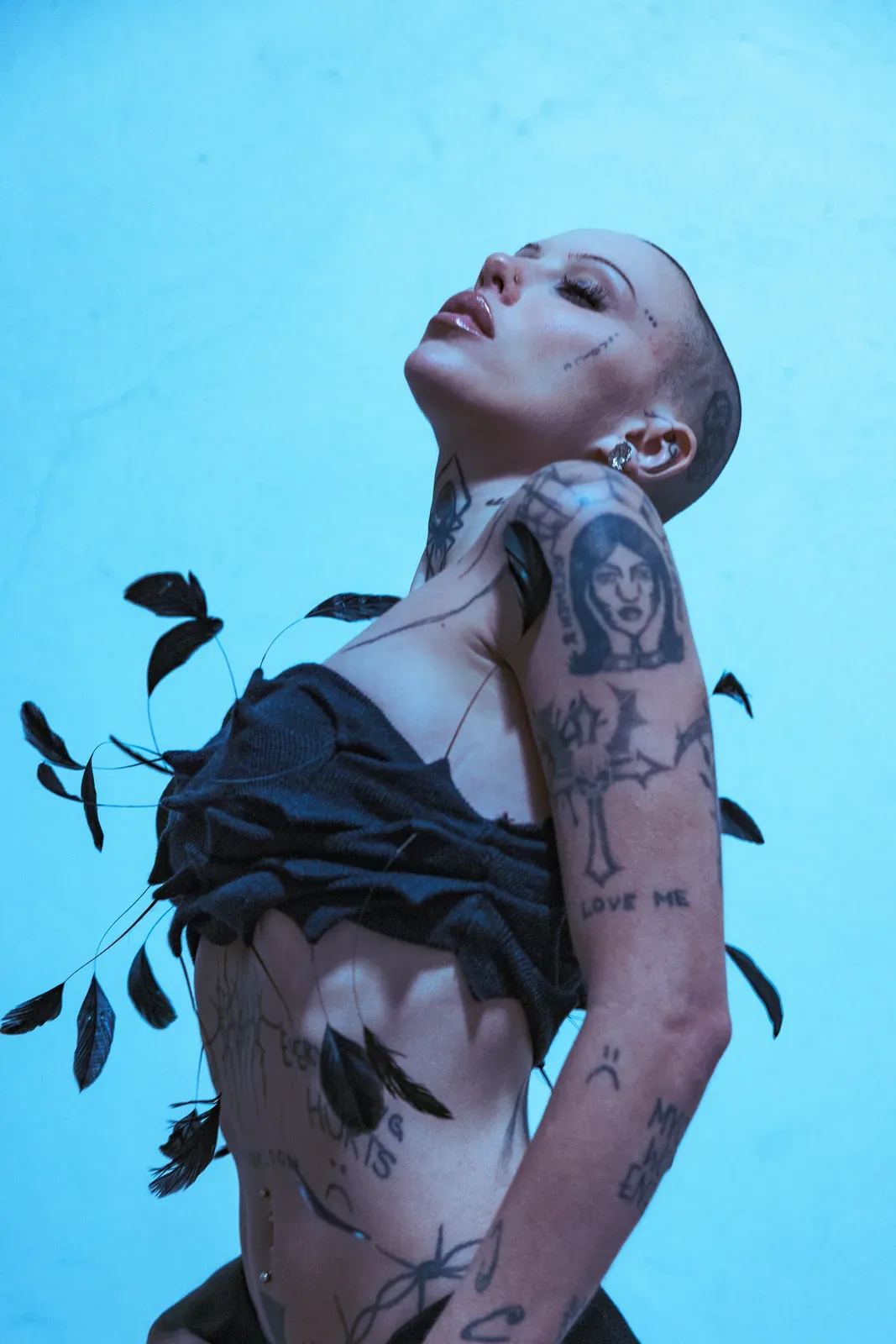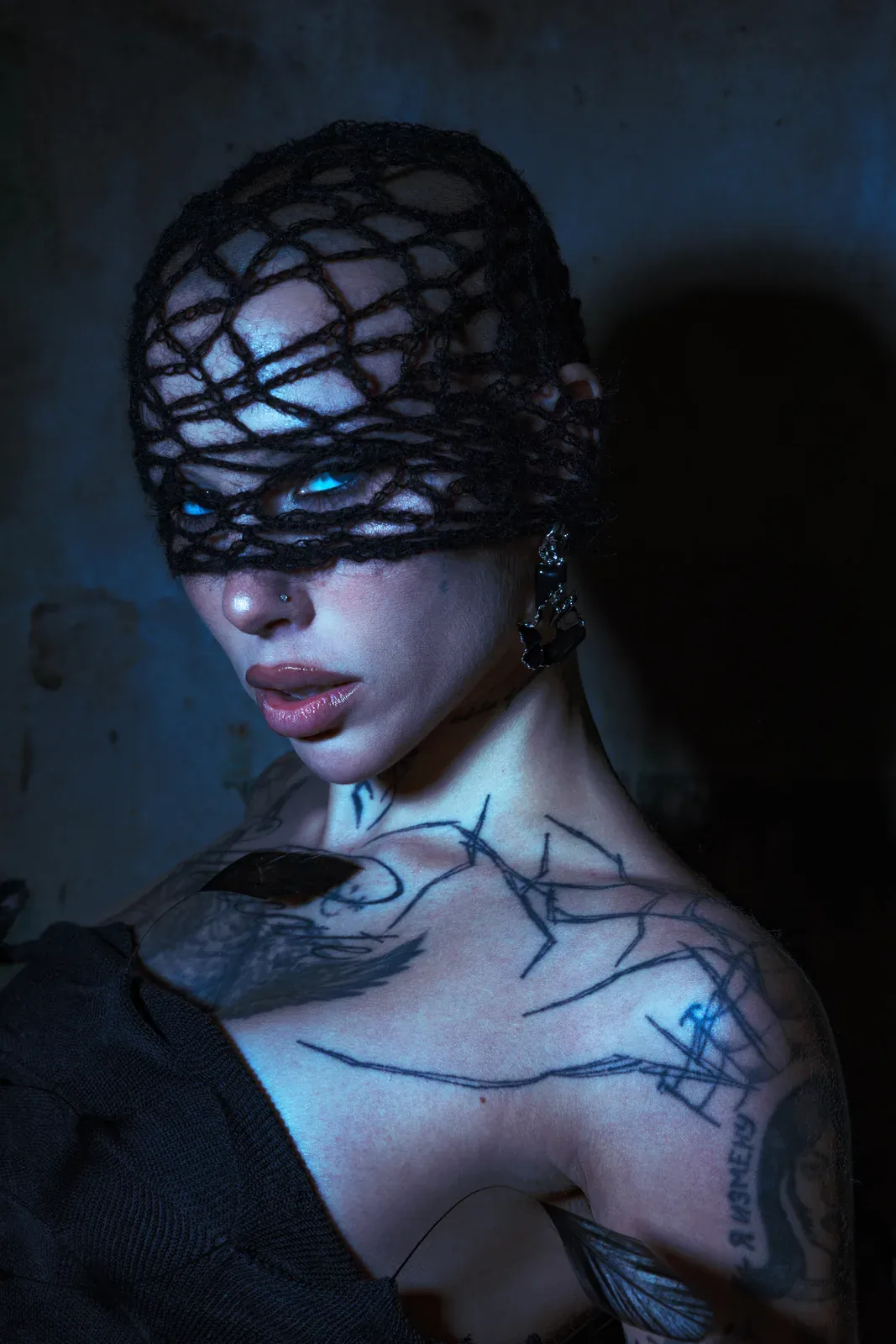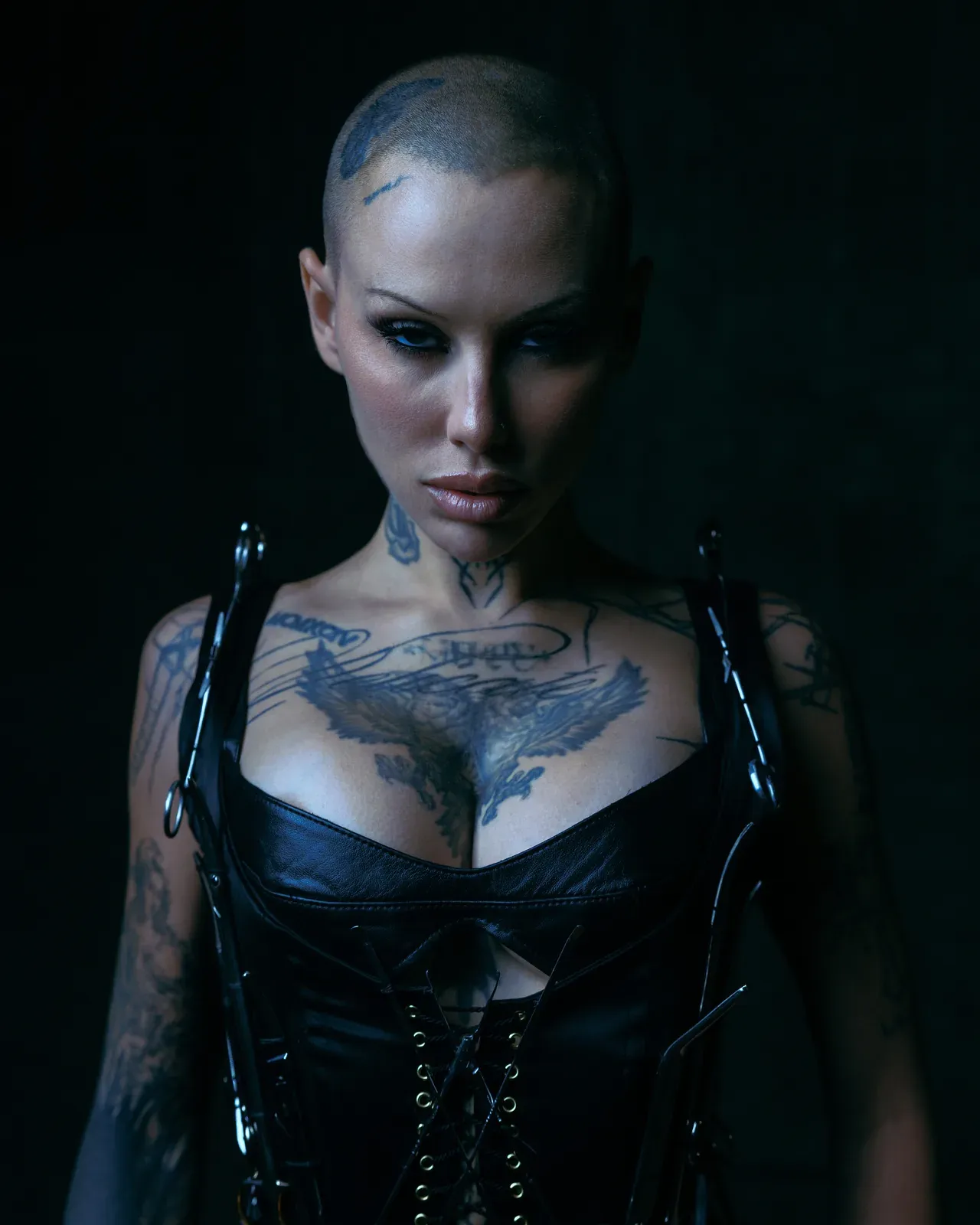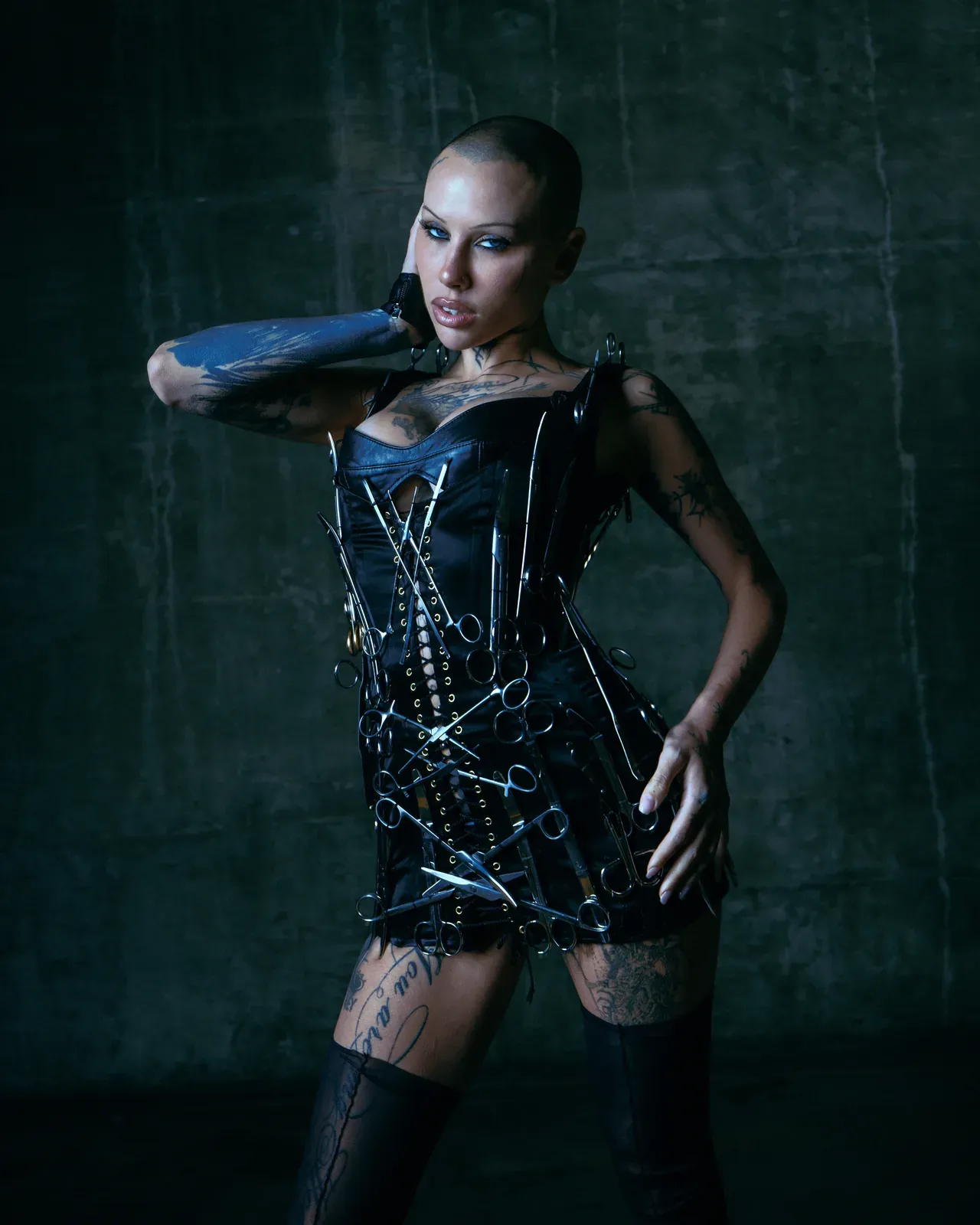
Siiickbrain makes music for the part of the body that reacts before the brain can translate. With Houndstooth, her new album, the Los Angeles artist sharpens the violent elegance of her world: industrial pressure, warped electronics, hip-hop instincts, heavy guitars and a voice that can move from a scream to a confession without asking for permission.
In conversation, she speaks about breaking patterns, reclaiming control in a world that keeps tightening its grip, and turning fear, vulnerability and resistance into something physical. From Control and Palo Santo to her collaboration with Fetish on Filthy, the record feels like a ritual of release, but also a document of instinct: visual, abrasive, intimate and strangely freeing. Here, Siiickbrain opens up about genre, power, image, collaboration and the energy that only appears when songs leave the studio.
Outside of music, what has been making you feel most alive lately: a film, a place, a person, a habit, a tiny obsession?
Outside of music, I feel most alive when I’m out at night, surrounded by my friends or partner, feeling completely free and surrounded by love and good energy, and discovering new music.
Your music often sits between industrial, electronic, alternative, hip-hop and heavy sounds. Do you think in terms of genre at all, or is it more about texture and instinct?
I don’t think about genre when I make music; it’s definitely more about the feeling and what comes naturally. I think when artists get too caught up in genre, it can hold them back creatively.
You have a very recognisable vocal presence: screams, spoken moments, melody, distortion, attitude. How do you know what a song needs from your voice?
I honestly had to learn over the past few years what a song called for, rather than trying to turn it into something that I felt like it should be. It’s super easy to ruin a song with things that it doesn’t need, and it’s important to exercise that instinct.
Houndstooth feels like a very physical title: sharp, patterned, almost animalistic. What did that word unlock for you when you were building the album?
I really wanted it to reflect the themes of the album, like exactly what you said: breaking patterns and the sharp reality that comes with breaking free from old habits. When I think about my personal experience with that, it’s a lot of emotion, like strength, power, vulnerability and freedom, but also a bit of fear.
“I don’t think about genre when I make music; it’s definitely more about the feeling and what comes naturally.”
Across the album, there seems to be a tension between being dehumanised and reclaiming power. Was duality something you were consciously writing towards?
Duality for me comes so naturally that it wasn’t something I was consciously writing towards, more so just how I exist.
You have described Control as a response to the current state of the world and the feeling that people are losing control over parts of their lives. When did that idea become personal enough to turn into a song?
It was the build-up of ICE arrests becoming a reality and women losing more rights to make decisions about our bodies.
The production on Control has this driving, almost relentless energy. Did you want the track to feel like panic, resistance, release, or all of those things at once?
It actually started as a slower song, originally called Reset, before we amped up the energy and speed. I think the song definitely needed to feel more like resistance rather than mourning.
The video moves between vulnerability and defiance, especially with the masked figures cutting away pieces of your hoodie. How much of that visual world came directly from the emotional world of the song?
The video was actually inspired by Yoko Ono’s Cut Piece. During that time in history, people were faced with similar challenges, and I wanted to lean into the theme of patterns repeating.
Palo Santo has a title connected to cleansing and ritual. What did you feel needed to be burned away, spiritually or creatively, on this record?
This project was actually released with almost an entirely new team, so I think leaning into the new versus the old felt right, along with the manifestation chant on the chorus to signify my need for change.
Filthy, featuring Fetish, sounds like it belongs to the more abrasive side of your world. What made Fetish the right person to bring into that song?
I have always loved her and how she writes and expresses herself, so when I made this song, I immediately knew I wanted to ask if she wanted to be a part of it. I also have so many hip-hop and rap elements on the project, and I thought maybe this could help listeners understand where my mind was during the recording process.
You have worked with artists from very different worlds, from Skrillex to Willow and Maggie Lindemann. What do you look for in a collaborator?
I honestly have only collaborated with friends and people that I truly love as a person, as well as the art they create. I’m very blessed for my collaborations to all feel very natural.
Compared with My Masochistic Mind, where do you feel Houndstooth is harsher, and where do you feel it is more vulnerable?
I think they both have vulnerable elements and elements that come from a place of expelling emotion and expressing them in different ways, whether it is lyricism, vocal delivery or production. I do, however, think Houndstooth is more fun and energetic.
“It’s super easy to ruin a song with things that it doesn’t need, and it’s important to exercise that instinct.”
Fashion, image and performance seem inseparable from Siiickbrain as a project. Do clothes and visuals help you access parts of yourself that music alone cannot?
I just see visuals as such an important part of the music as a whole, and fashion is so important for imagery as well. I don’t really think about it too much; it’s more of a natural presence in my art that I feel is a necessary part of my world.
You started out in modelling and make-up before music became the centre of your work. Do you still think visually first when you are creating songs?
Yes, I absolutely think visually. As I’m recording a song, I see the visuals in my head like a movie, which is super helpful for the process and also when it comes to creating videos and ideas for the imagery surrounding the project.
There is a lot of intensity in your work, but also humour, confidence and playfulness in the way you inhabit your persona. What do people often misunderstand about you?
People think I’m much rougher around the edges when it comes to my personality before they meet me. That’s something I hear all the time, and I fully understand why. But my music is still so me; it is just where I feel safe enough to let my emotion out, rather than vulnerably in a conversation or room with someone I have just met. But I have always been this way: I keep those things tucked away.
You have recently joined Royal & the Serpent on a small tour across the US. What changes in these songs when they move from the studio into a room full of people?
The energy, for sure. Being in a room full of people makes the songs hit even harder for me, because the energy of all of us together listening, versus in a studio of two to four people, is just so powerful.