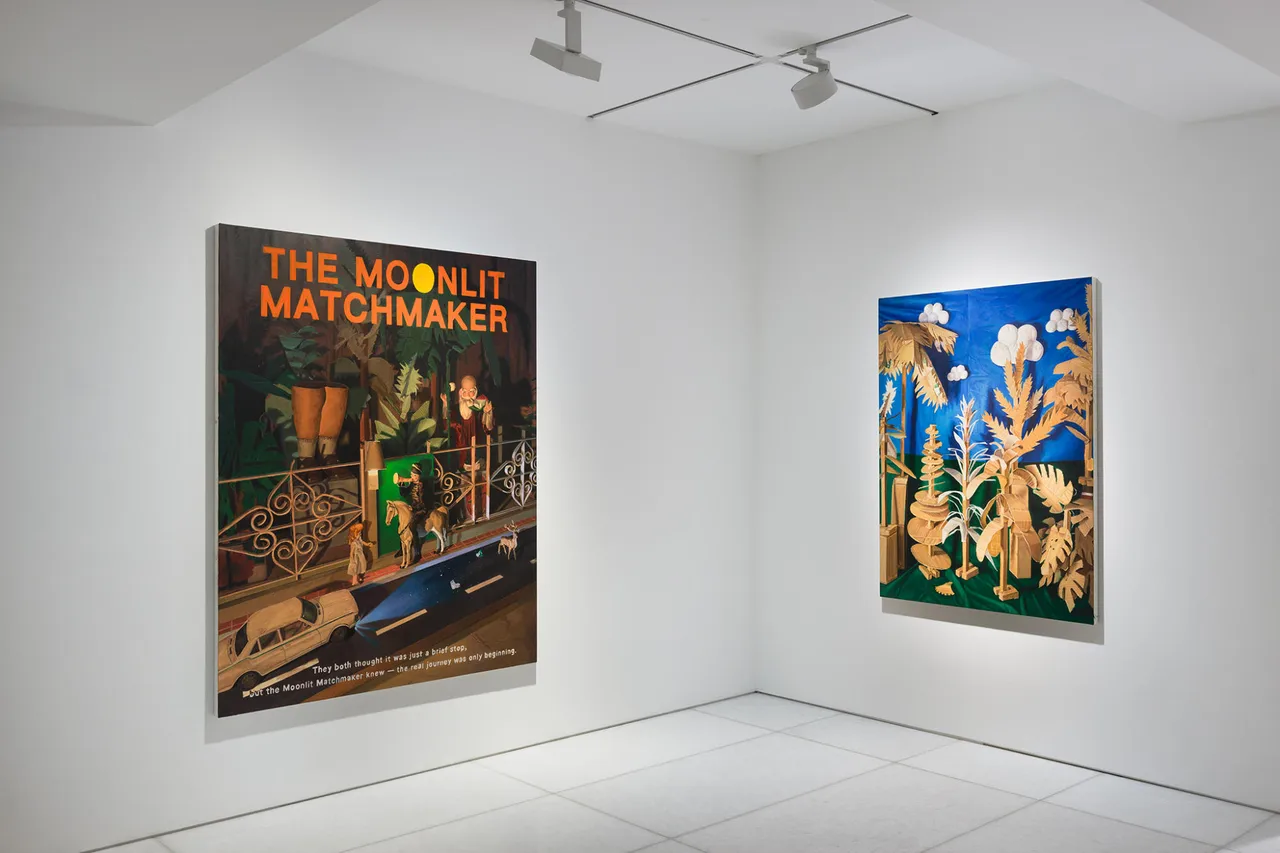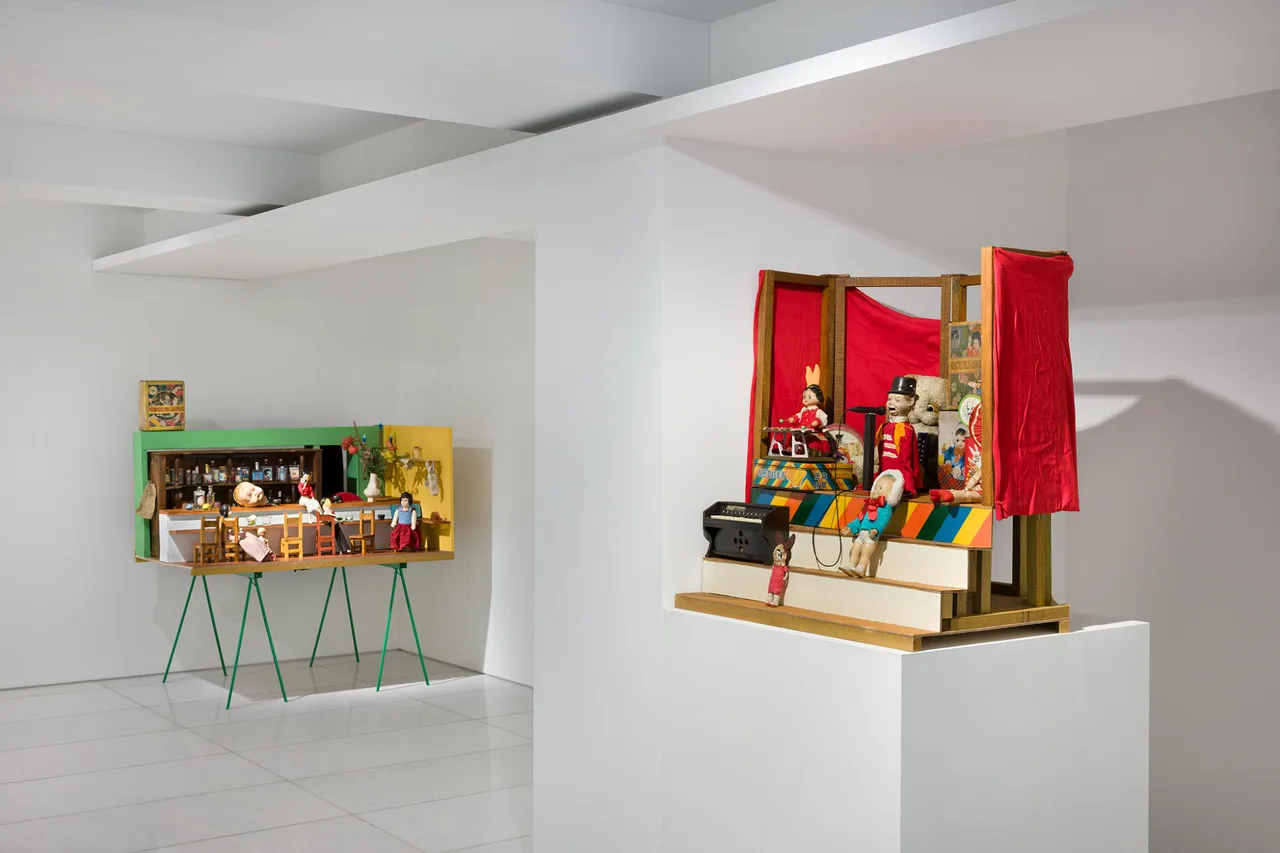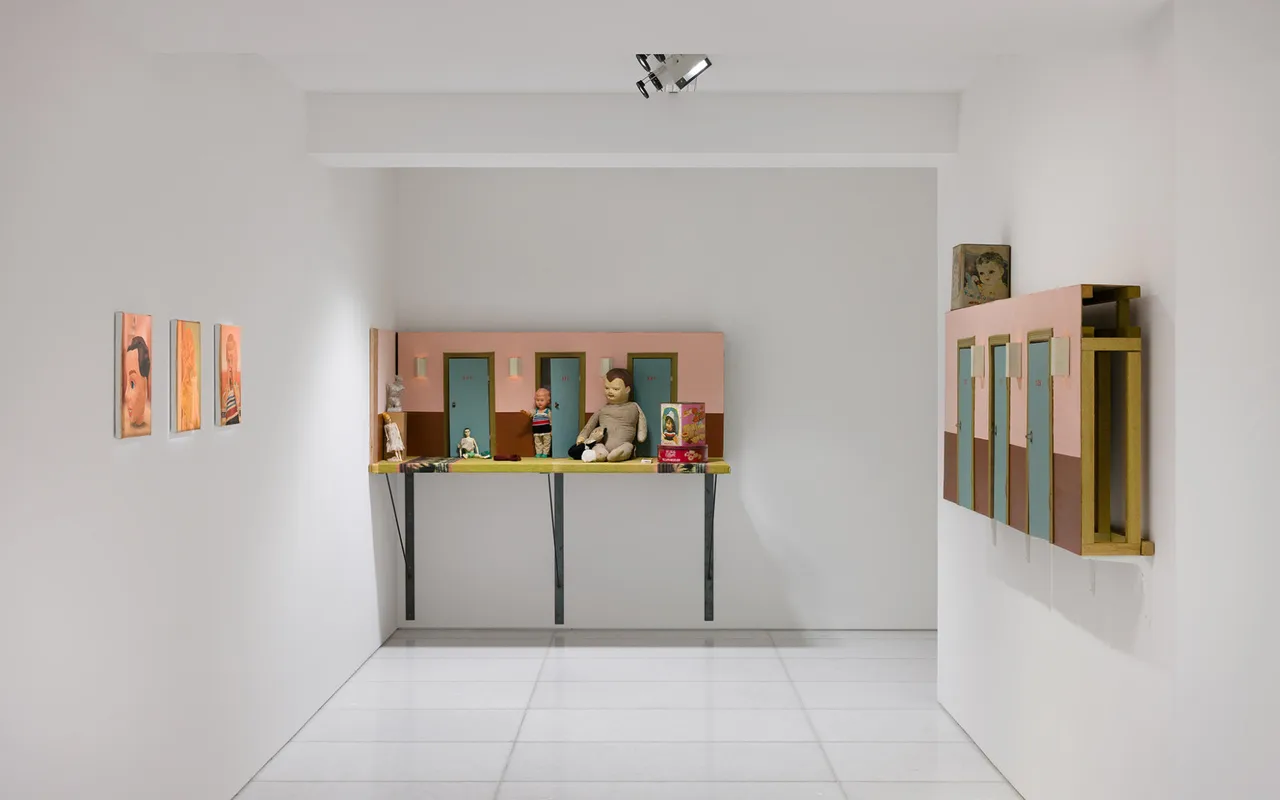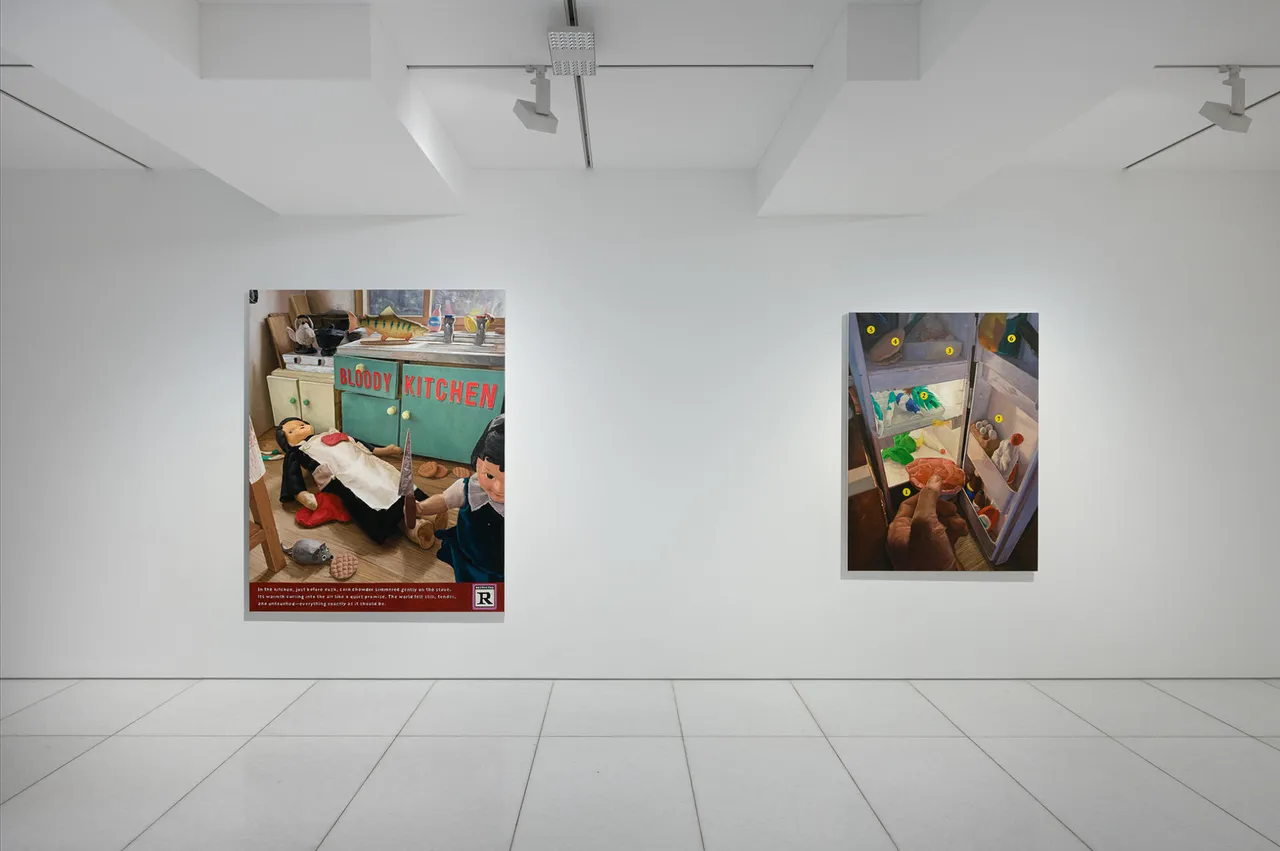
If you’re a fan of horror, you’re in for a treat thanks to the work of Shih Yung-Chun. In his most recent exhibition in Seoul, Forbidden Love, at the Arario Museum odds and ends make up detailed scenes of murder, desire, rage, and betrayal. Creepy dolls stare out at you from all sides — whether they’re painted on the canvas in a horror movie poster style or physically staged in a hotel hallway — giving the sense that Chucky is around the corner with a knife or a possessed Annabelle is going to pop out and torment you at any given moment.
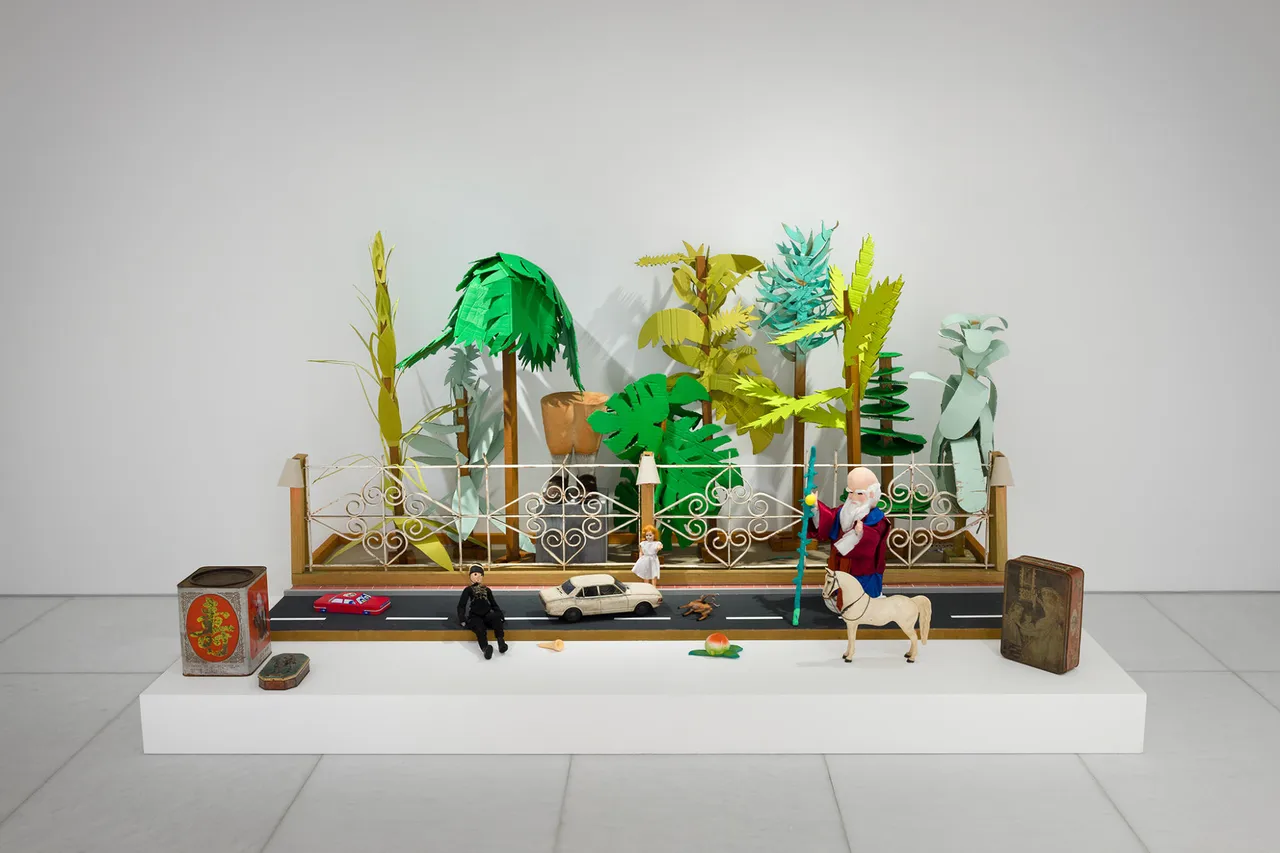
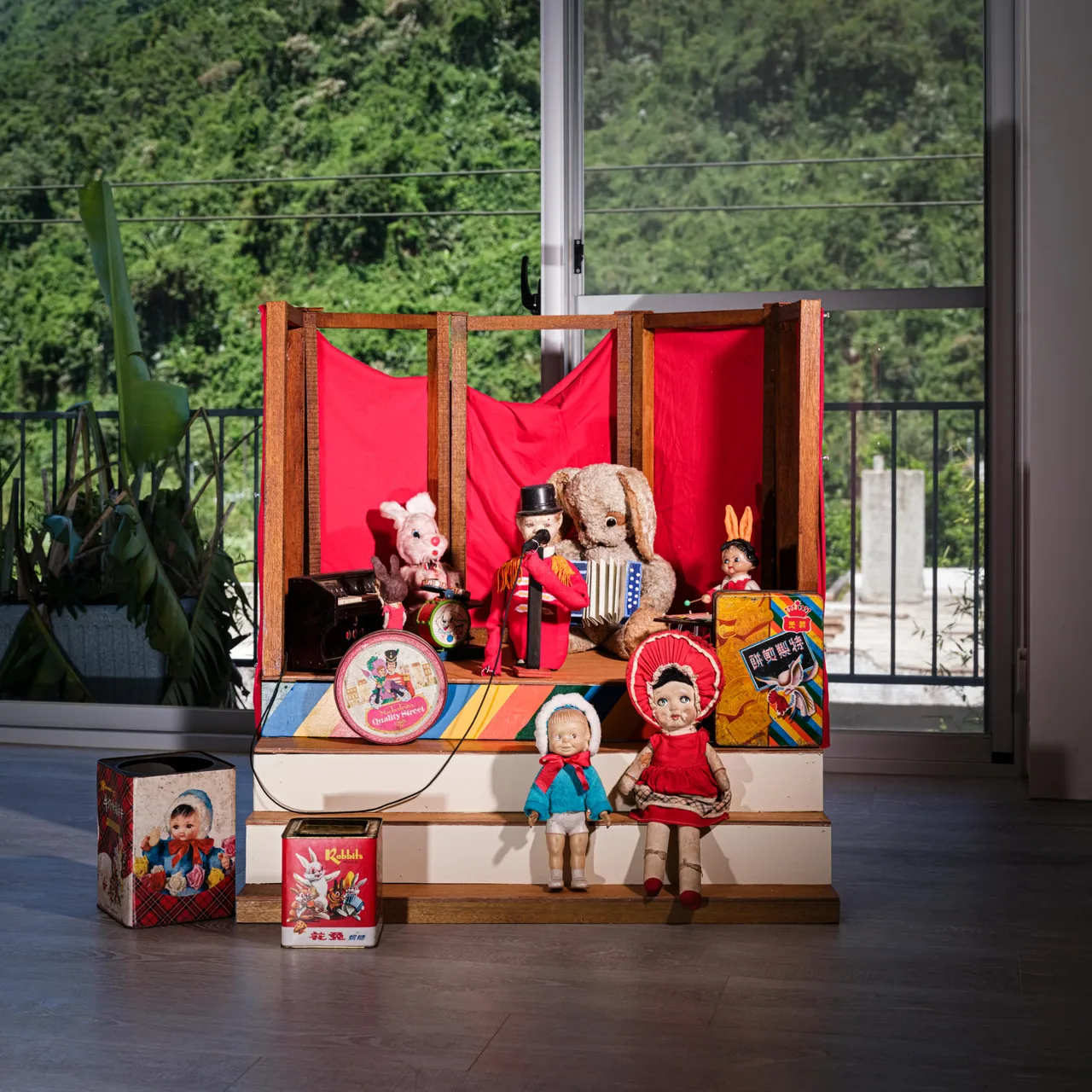
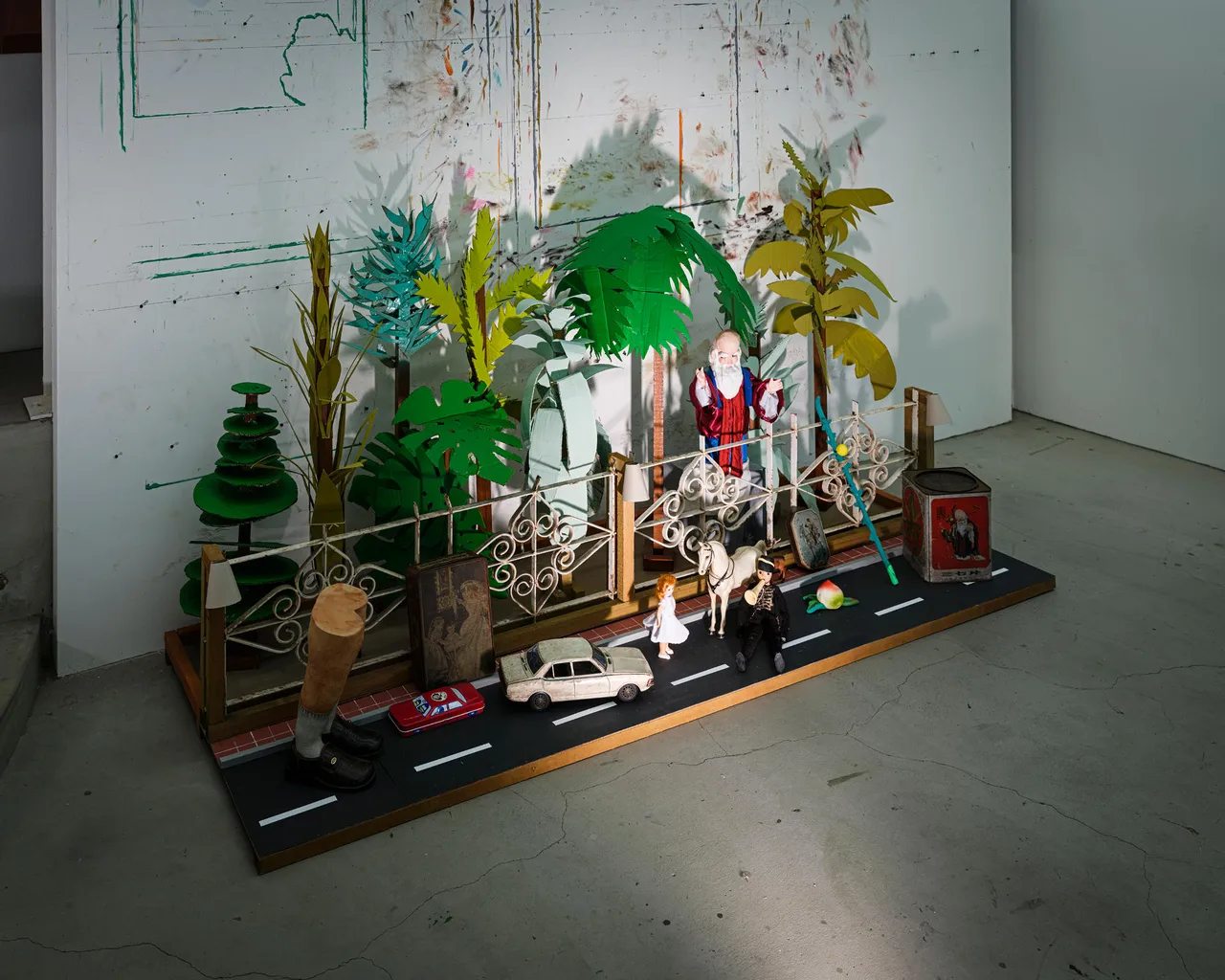
Yung-Chun creates the backdrop, sets the scene, and paints it. The entire process is laid out, through this mixed-media exhibition where he displays side by side the 3D set-ups and their corresponding film poster. While some of the stages may not look menacing and merely like a child’s play corner, pairing them with the paintings offers another perspective with which to see these outwardly cute toys.
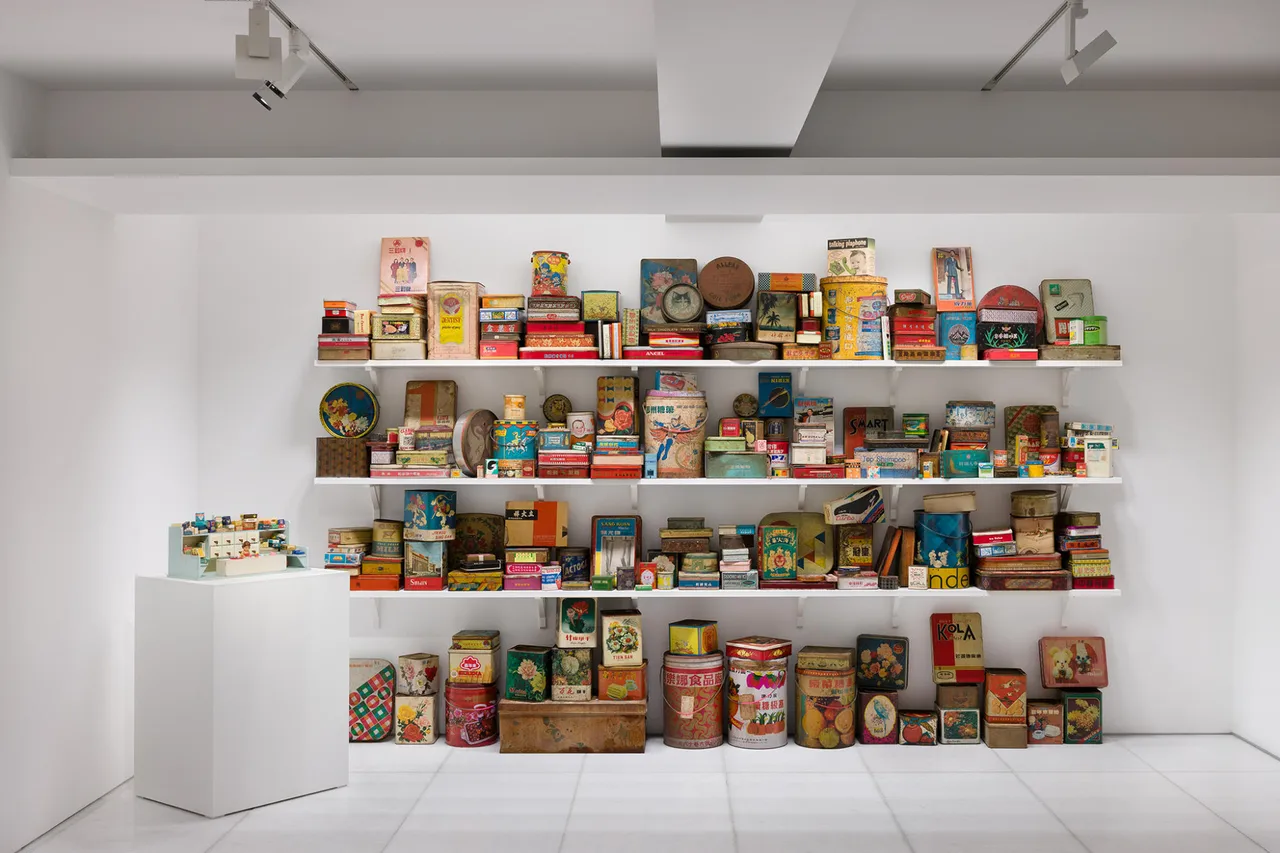
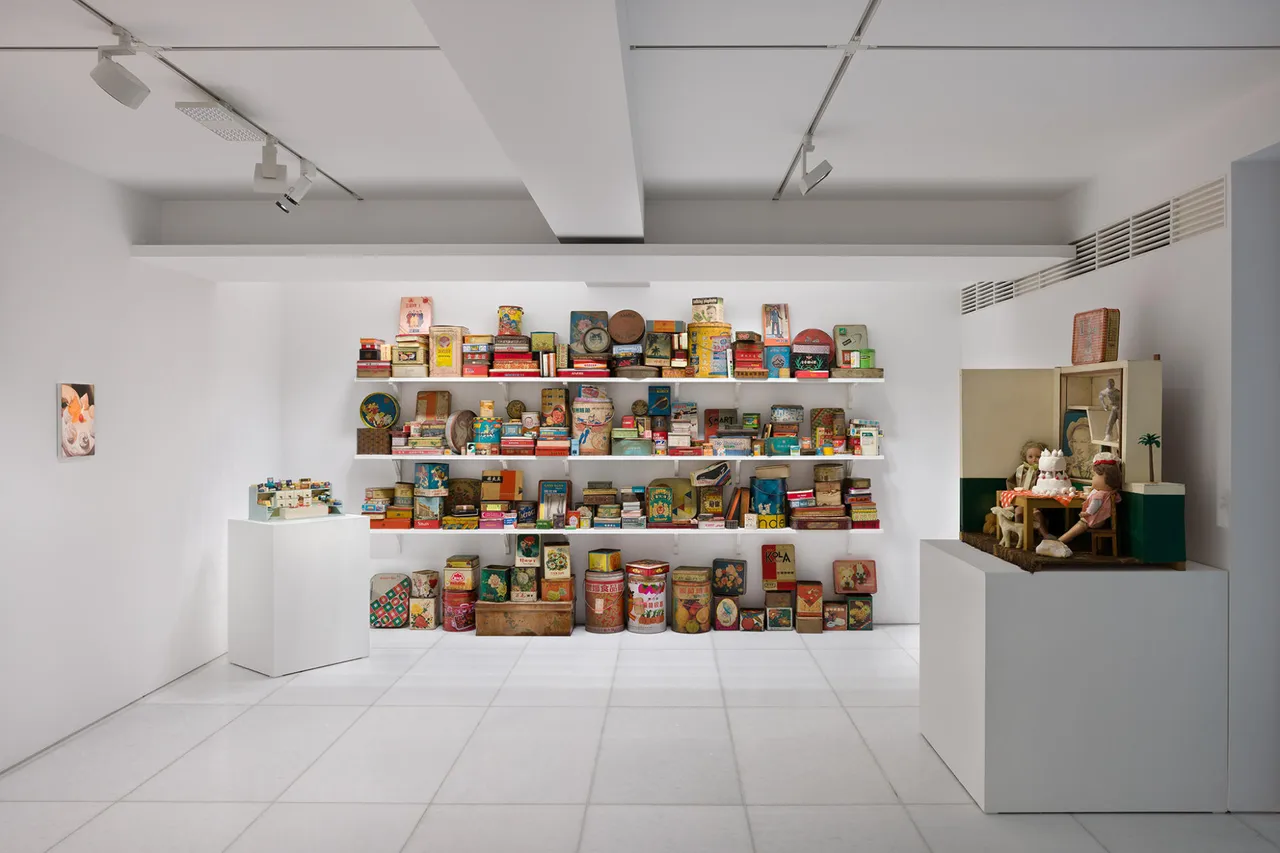
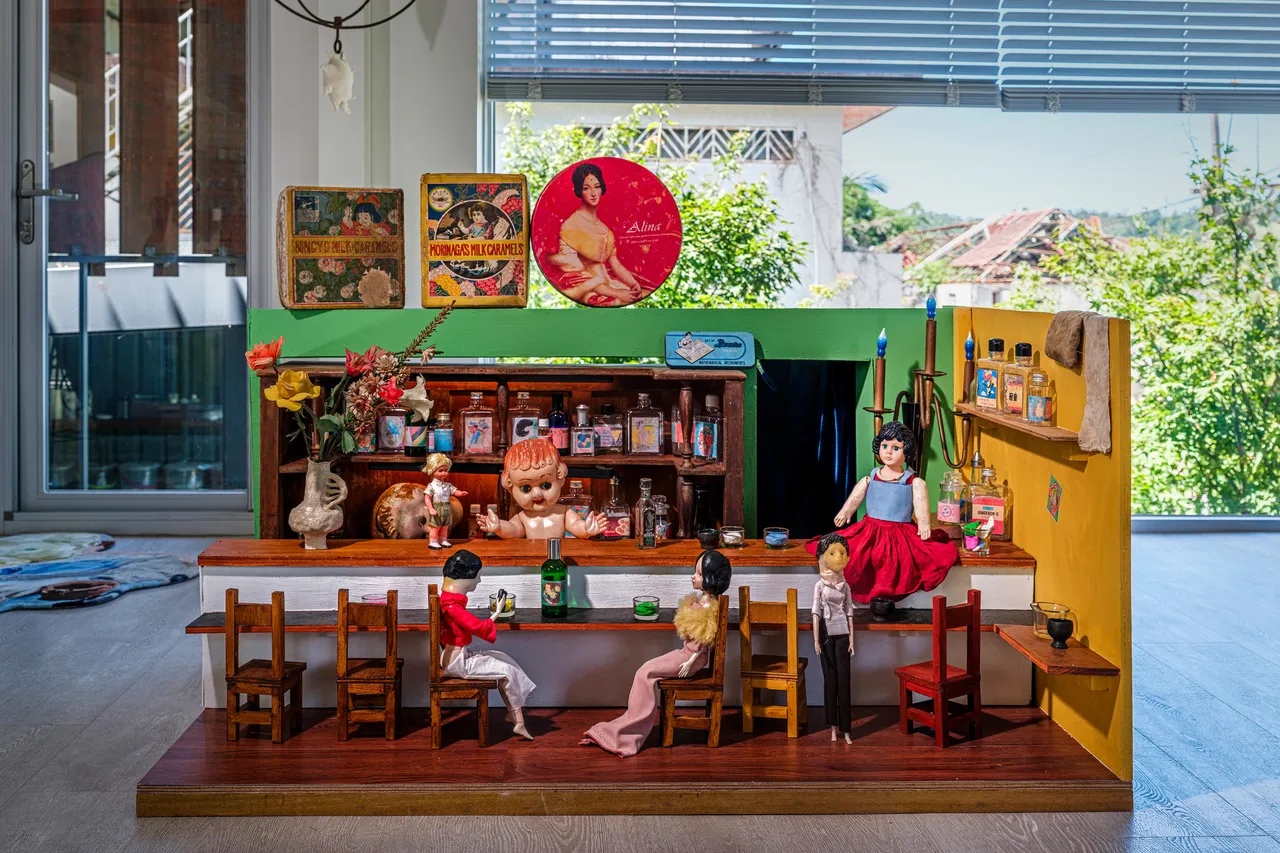
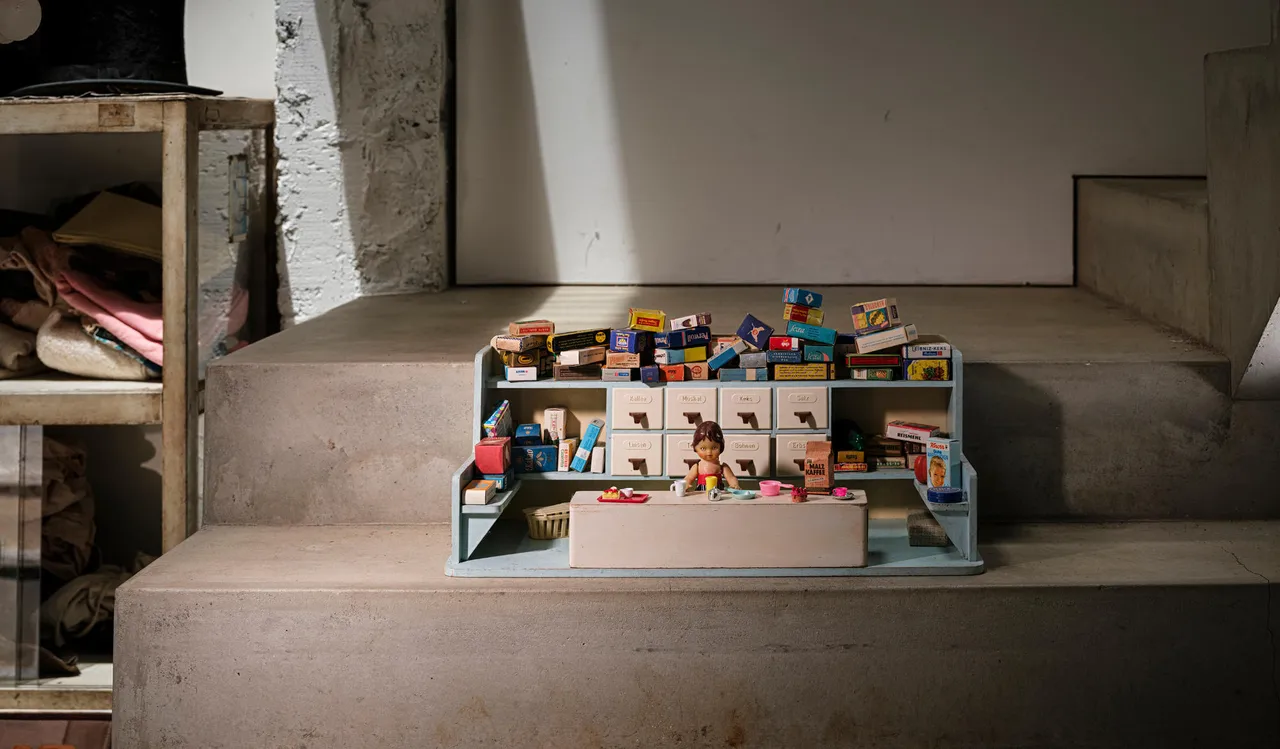
His personal collection of toys, trinkets, and tin boxes are front and centre in Antique Tin Boxes (2025), where he mimics the layout of a grocery store with boxes of canned milk, fruits, cookies, and so much more. Alongside, his small-scale rendition complete with a store clerk, a checkout counter, and shelves with miniature products, shows his deep devotion to giving these toys a new life, even if it’s uncanny. Yung-Chun talks with us about collecting trinkets, how he wields the genre of horror, and the responsibility of artists to (cautiously) embrace AI as a tool.
Your latest project, Forbidden Love, contains your personal collection of tins and toys. Do you collect anything else?
My collection also includes antique furniture, second-hand magazines, vintage black-and-white photographs, and various early household items and decorative objects. In addition, I’m very interested in vintage clothing — more than half of my wardrobe comes from vintage pieces sourced around the world. In the future, I plan to create an exhibition focused specifically on garments.
You’ve said that this collection has taken years to produce. Does it feel finished yet? Could it ever?
For me, it will probably never truly be finished, but who knows? Perhaps one day I’ll feel that it is complete.
The creative process of staging the scenes, photographing, and then painting them gives the audience so many perspectives to look at them from. But the movie posters that you end up with are all made to portray thriller or horror films. Can you tell me about that decision?
First, I want to talk about the very personal feelings I have toward the toys I’ve collected over many years. To me, each of these toys was once someone’s treasure; they carry countless happy memories. Whenever I bring these toys back from different parts of the world, I cherish them deeply, but at the same time I can’t help imagining the various reasons they might have been abandoned. That kind of speculation makes me feel sad. At the same time, I want to give them a role in which they are taken seriously again. To me, each of them is a singular, irreplaceable existence.
When it came to choosing the visual tone of this exhibition, I quickly realised that what I wanted to convey were the stories behind these toys. They appear cute and sweet on the surface, but what truly interests me is the sadness hidden beneath that pleasant exterior. That’s why I chose the visual language of thriller and horror films, setting it in contrast with these sweet yet aged toys, in the hope of evoking emotions that are often overlooked.
I can share a small anecdote from the exhibition: I once encountered a visitor who told me, “Thank you for this exhibition, it seems to have healed my childhood fear of dolls.” At that moment, I thought that even though the exhibition takes on a horror or thriller-like form, for some people it may not be frightening at all. Perhaps things that always exist behind a sweet façade are, in some cases, what truly feel unsettling.
When it came to choosing the visual tone of this exhibition, I quickly realised that what I wanted to convey were the stories behind these toys. They appear cute and sweet on the surface, but what truly interests me is the sadness hidden beneath that pleasant exterior. That’s why I chose the visual language of thriller and horror films, setting it in contrast with these sweet yet aged toys, in the hope of evoking emotions that are often overlooked.
I can share a small anecdote from the exhibition: I once encountered a visitor who told me, “Thank you for this exhibition, it seems to have healed my childhood fear of dolls.” At that moment, I thought that even though the exhibition takes on a horror or thriller-like form, for some people it may not be frightening at all. Perhaps things that always exist behind a sweet façade are, in some cases, what truly feel unsettling.
In some of the paintings you include a hand positioning the objects, breaking the fourth wall by acknowledging the impotence of the toys and how the scene is orchestrated. What pushed you to make this decision?
In my work, I place a lot of importance on the idea of participation, especially in the ongoing Toy Packaging series, where I want to emphasise the act of playing itself. However, many times the appearance of my own hand in the image is simply due to practical needs during the shooting process. Some scenes actually originate from accidental moments, but I chose to keep them. This is one aspect of collecting visual material for painting that I consistently find interesting.
You said that in the gallery, the workers play with the dolls to set up the scene so it’s different from the paintings. Why is it important for the 3D scene to be different from the paintings?
As I mentioned earlier, the act of participation is very important to me. By inviting gallery staff to take part in rearranging the scenes, I want to emphasise that toys, by nature, do not have a single correct way of being played with. The paintings present my own version. If viewers can encounter different interpretations on site, I think it makes the overall concept of the exhibition more complete, and also much more interesting.
You play with the emotion of nostalgia in your latest exhibition, Forbidden Love, with toys from the 80s and 90s, movie posters that have a vintage look, and objects collected from years past. What do you think is the danger of nostalgia? How can nostalgia serve as a useful tool?
The danger of nostalgia? I might actually respond by asking: Who doesn’t like nostalgia? At least, that’s how I feel. My practice isn’t driven by the assumption that everyone likes it, but rather by my own experiences growing up, so I’m not entirely sure what the so-called danger is. At the very least, I genuinely enjoy the act of remembering.
For me, using collectibles as creative tools is no different from using my everyday belongings, since my living space has always been filled with various nostalgic objects. As for how they become effective tools in art, that has never been a question with a standard answer. For me, these objects naturally find their way into my work. If I were to identify a thread running through this, I think it relates to my interest in theatre, especially in the construction of stage props. Objects are often what first draw my attention. Over more than a decade of developing my practice, the starting point has often been domestic space — or rather, I’ve always been deeply fascinated by the notion of space. The objects within these spaces are mostly nostalgic ones in my daily life, and in my work they take on roles such as emotional projection, subjects for still-life painting, and materials for researching the background of old objects.
For me, using collectibles as creative tools is no different from using my everyday belongings, since my living space has always been filled with various nostalgic objects. As for how they become effective tools in art, that has never been a question with a standard answer. For me, these objects naturally find their way into my work. If I were to identify a thread running through this, I think it relates to my interest in theatre, especially in the construction of stage props. Objects are often what first draw my attention. Over more than a decade of developing my practice, the starting point has often been domestic space — or rather, I’ve always been deeply fascinated by the notion of space. The objects within these spaces are mostly nostalgic ones in my daily life, and in my work they take on roles such as emotional projection, subjects for still-life painting, and materials for researching the background of old objects.
You’ve noted that many young people and Gen Z are really enthralled by nostalgia and vintage objects, both from their own childhood and before. What has been the reaction so far from young people to your work?
In this recent solo exhibition in Seoul, I received feedback from young artists from art academies, with responses such as “impactful,” “a different way of thinking about exhibitions,” and “an interesting presentation through the mixing of multiple media.” However, I haven’t yet gathered a sufficiently comprehensive range of feedback from younger audiences, so I’m unable to offer an objective conclusion at this point.
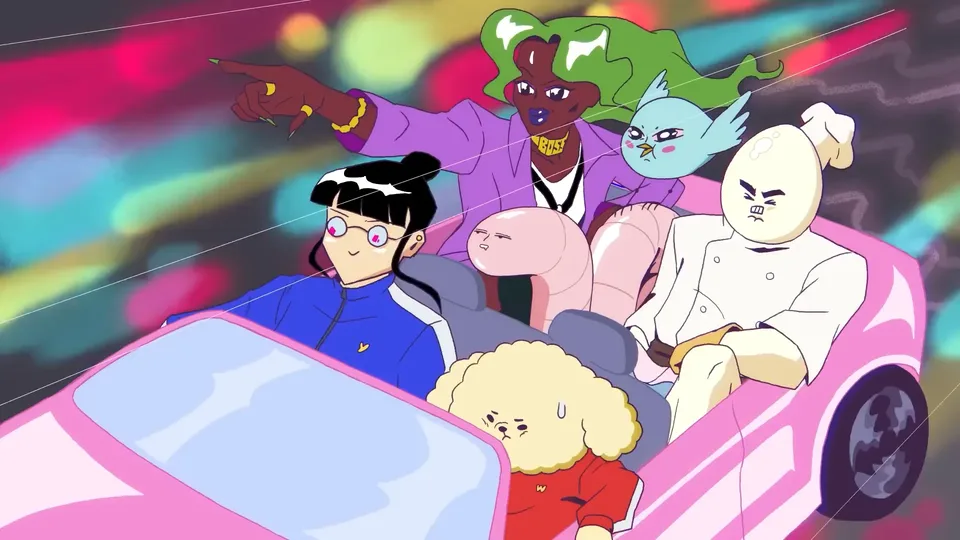
The animated film in the exhibition was made with the help of an AI director. How do you see the future of art now with AI becoming more powerful? Do you think artists have a responsibility to address AI’s effect on their work?
AI’s involvement in art has undoubtedly opened a new chapter in art history, and I believe we will see increasingly diverse artistic forms emerge. I do think artists have a responsibility to respond to these changes. Even though I’m interested in nostalgia, I continue to pay attention to what is happening in the present. AI-generated images or videos are built upon the aggregation and computation of vast amounts of data, so I tend to view AI more as an assistant. That’s also why I often think of the word assemblage or collage: it can quickly generate imaginative results, but at the same time it bypasses many deep emotional experiences. I believe those experiences are precisely what AI cannot replace, and they remain critically important.
You painted some of the mishaps of AI in the editing process. Why was it important for you to capture these failed images?
When I chose a thriller aesthetic as the main tone of the exhibition, my intention was to draw attention to the sadness that often goes unnoticed behind antique toys. So when I encountered a large number of materials during the AI production process that were considered errors, I instead wanted these discarded images to become part of the story.
I therefore positioned some of the paintings as something like behind-the-scenes stills, which is one reason. Another reason is that, as a contemporary tool, AI usually presents us with so-called perfect results. I wanted one of the core concepts of my work — participation — to be manifested at this level as well. This becomes an intervention into AI’s outputs: a deliberate choice of what is not considered perfect. I am always more interested in things that do not exist on the surface.
I therefore positioned some of the paintings as something like behind-the-scenes stills, which is one reason. Another reason is that, as a contemporary tool, AI usually presents us with so-called perfect results. I wanted one of the core concepts of my work — participation — to be manifested at this level as well. This becomes an intervention into AI’s outputs: a deliberate choice of what is not considered perfect. I am always more interested in things that do not exist on the surface.
Finally, what is your favourite horror film?
The Sixth Sense (1999).