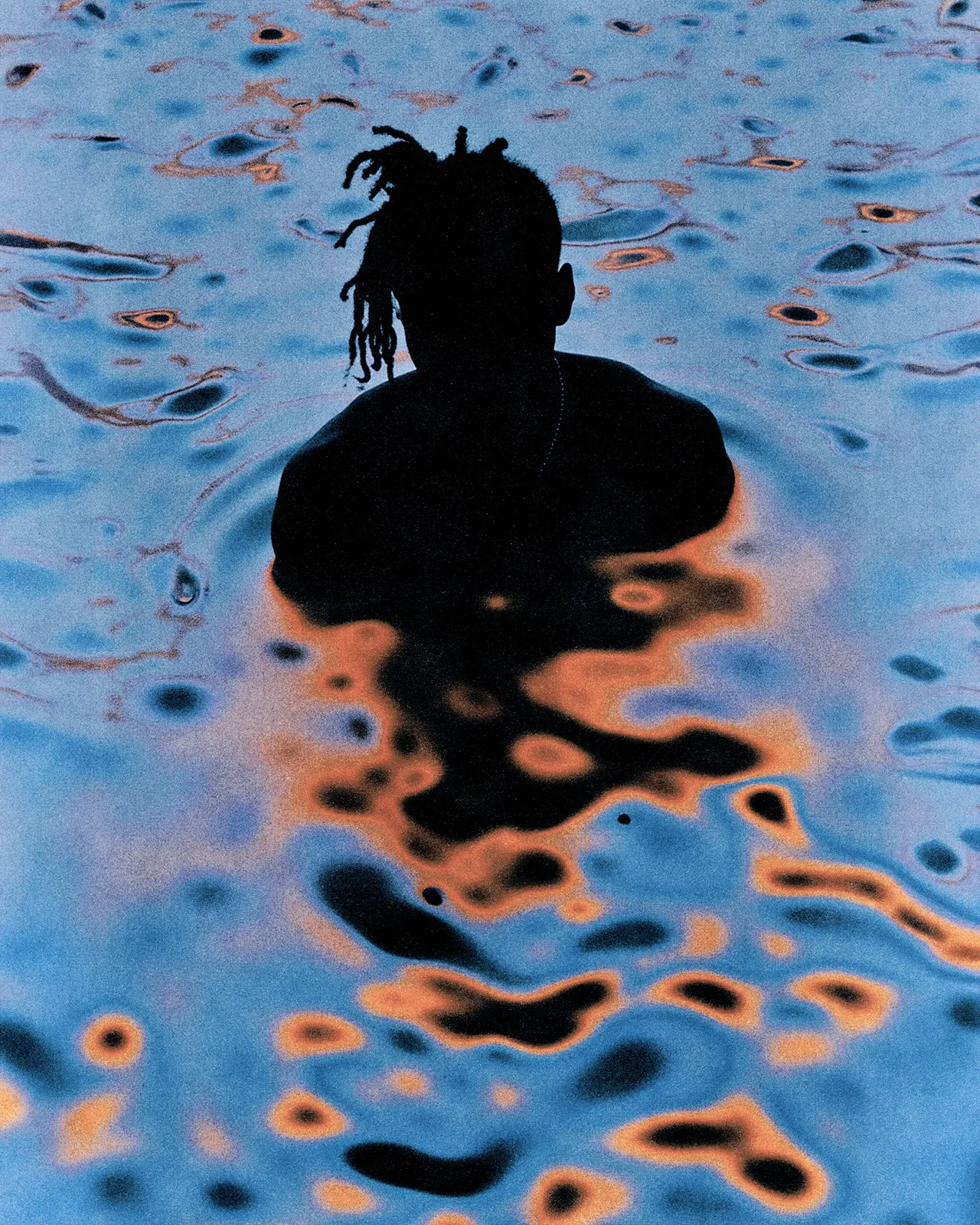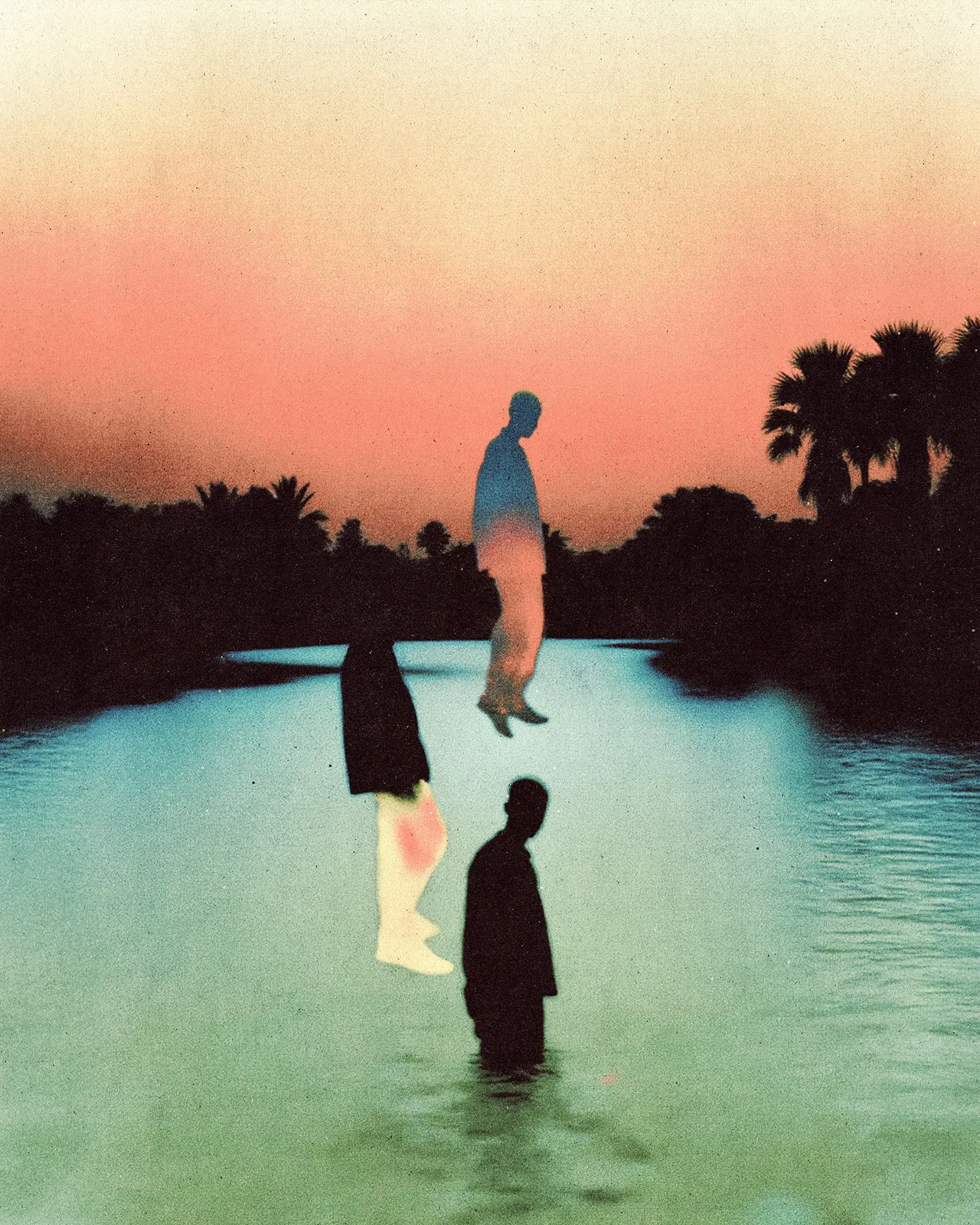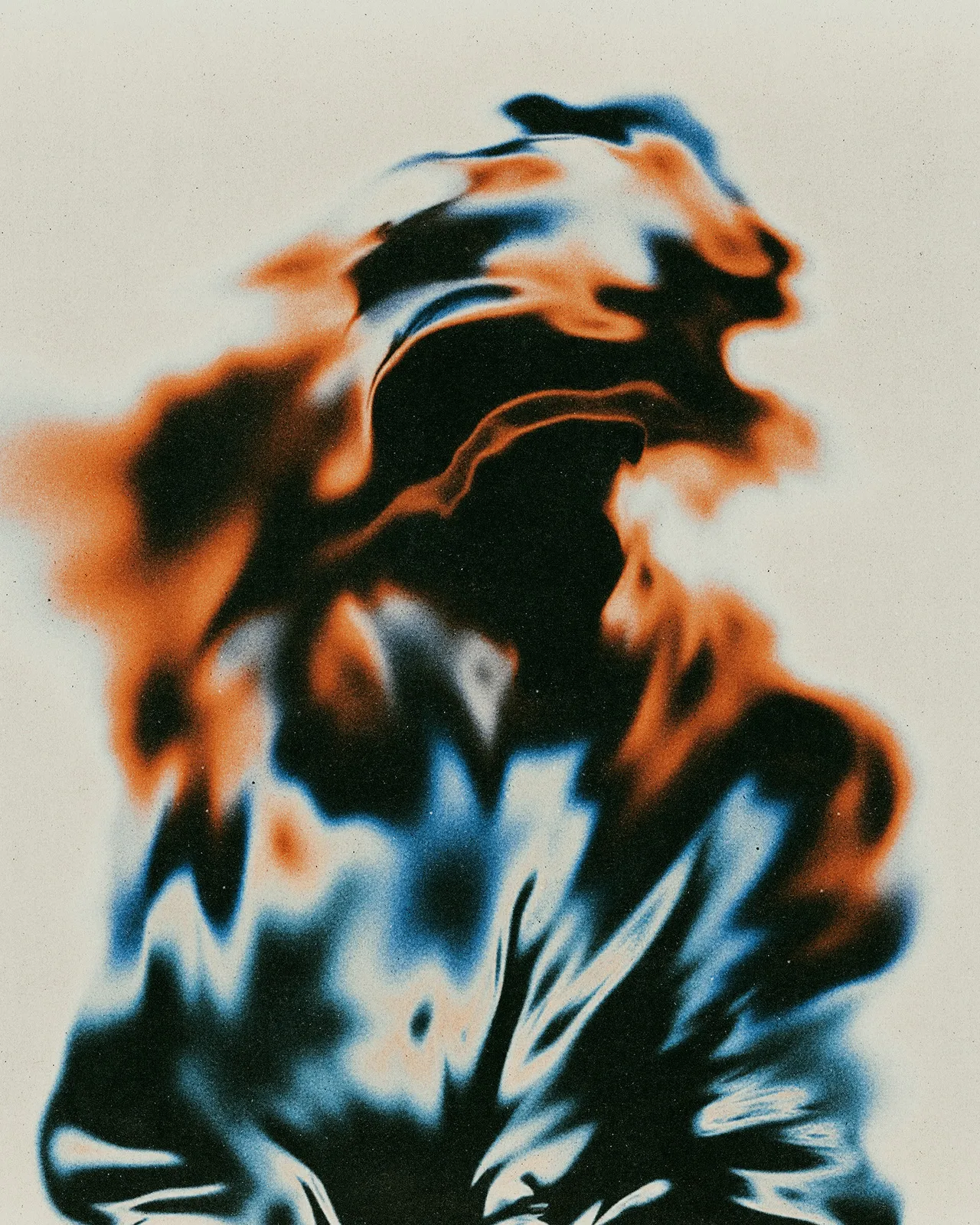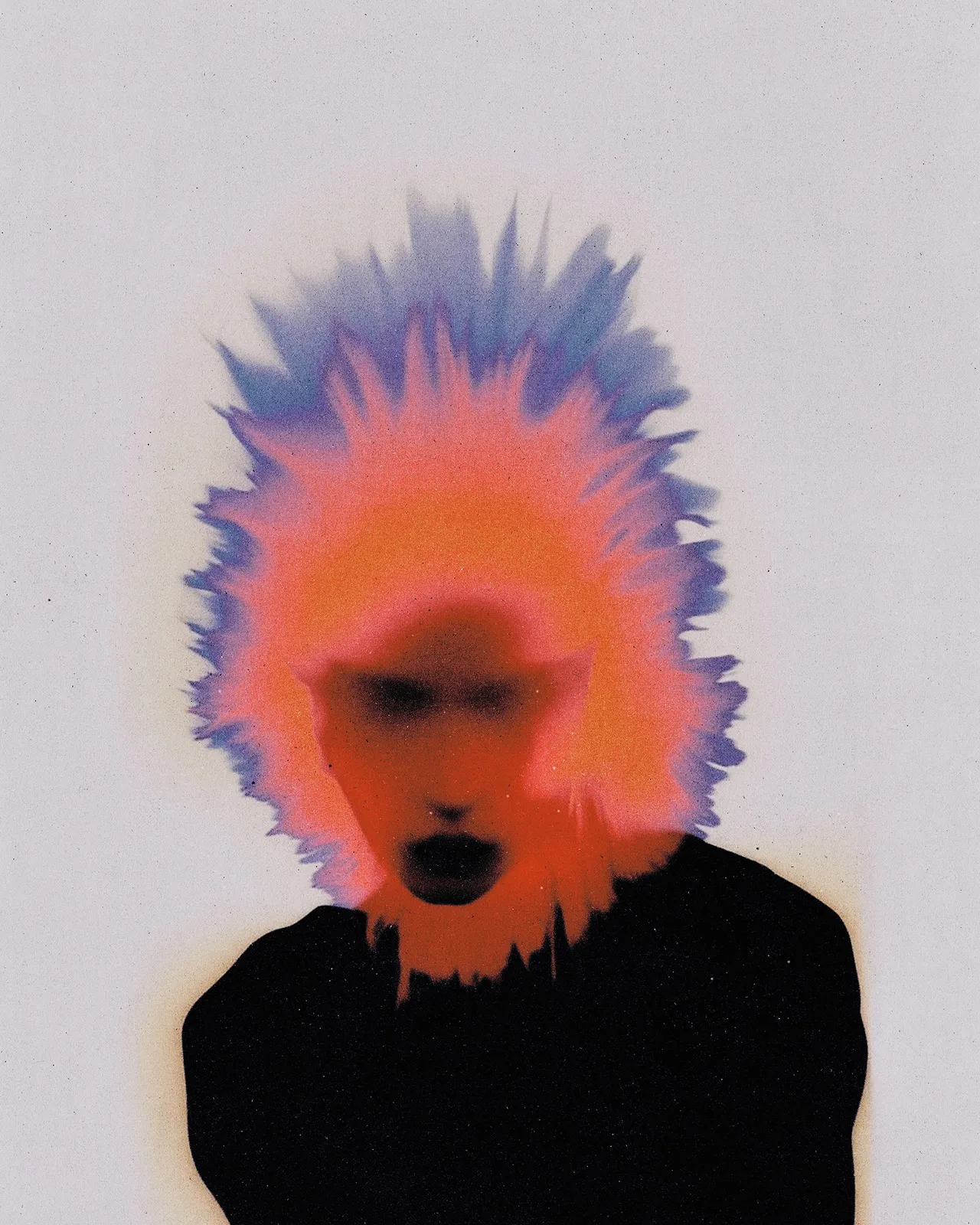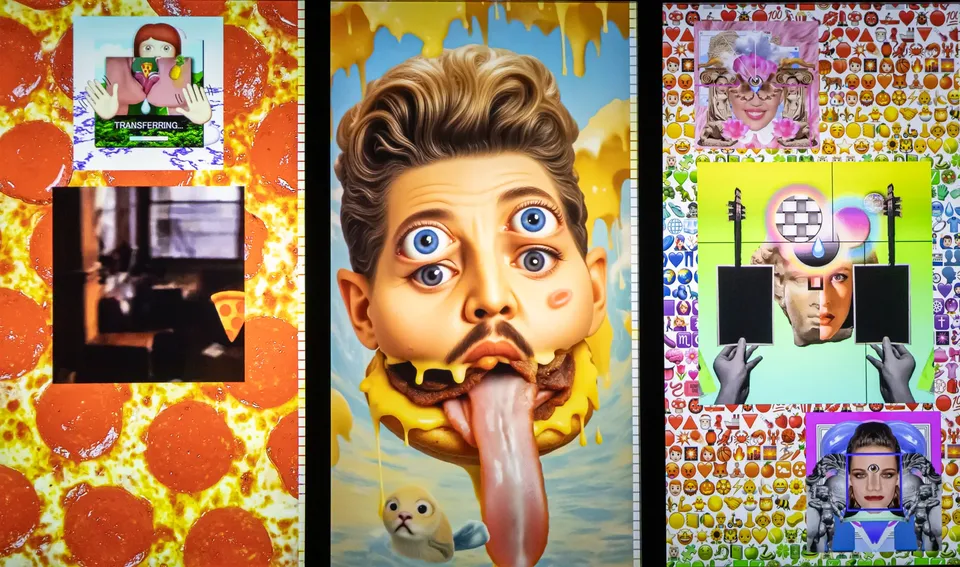
Serifa stands out for its daily production of visual artworks, characterised by ambiguity and abstraction in their expressive form. The studio was founded in 2021 by Nastassja Abel and Christian Otto. After several years of collaboration in the field of graphic and editorial design, they decided to undertake an artistic journey to create a space where they could express themselves more independently and uncompromisingly.
Serifa studio, a visual research space that addresses themes such as “encryption” and “incognito”, engages with influences from different disciplines such as design, music, and fashion to explore new aesthetics. The daily production of their series, extended to more than a thousand images, works both as a creative exercise and as a visual archive. Furthermore, it challenges the way we think about an artist's creative process, where the process is as important as the final result. Unpredictable and innovative, the use of artificial intelligence technology as a tool enhances Nastassja Abel and Christian Otto's experimentation and opens up new possibilities for their visual language.
In this interview, Nastassja Abel and Christian Otto trace their professional trajectory, share their creative process, reflect on the use of artificial intelligence in art, and discuss their visual research through their daily series.
How did your collaboration begin, at what point did you decide to work together and create the studio Serifa?
Nastassja and I had already worked together at a studio I co-founded that specialised in cover design. In 2022, we decided to start a new studio to focus more on a freer approach. We wanted to express ourselves more independently and more uncompromisingly as artists.
Before creating the studio, you both studied and worked in graphic and editorial design. How do these disciplines influence your artistic practice?
We still feel very connected to our design roots. In a lot of our work, we keep noticing traces of our years in editorial design coming back. We also find overlaps with other creative fields like fashion or music really exciting, and these areas are often key sources of inspiration for us. We also do not rule out working as a studio in other creative fields.
On your website, you talk about “defining new aesthetics.” How would you define the aesthetics you are developing at Serifa?
At the beginning of the studio, we were looking for a DNA that would give us real freedom in our visual language. We wanted to create something that had not been seen before. That is how DNA became “Defining New Aesthetics.”
“We are drawn to the utopian and the unreal, to that space where reality and fiction collide.”
I am interested in the anecdote that initiated your daily series: “During a visit to the Perrotin Gallery in New York, we found a pin that said, art every day.” What moment was Serifa going through when you came across these words, and what was it about it that inspired you?
That pin was the real trigger for our daily series, which has carried the same name ever since, Art Every Day, or AED. As creatives, you are constantly stuck between endless possibilities. You overthink, or you do not even start. This method made us work creatively every day, no matter how the day goes. The pin was the spark that made us actually do it. The fact that we have kept it up for more than a thousand days shows how important it remains to our development.
In your practice, you have been specialising in the use of artificial intelligence. How do you integrate this technology into your creative process?
AI lets us experiment faster. We generate a lot, select what feels strong, and then usually keep working on it manually. On Instagram, you only see the final daily curation. Over time, that becomes an archive of our development.
Opinions on AI are pretty divided. How do you see the role of artificial intelligence evolving in the future of art and design?
For us, AI is a tool. It supports the creative process, like a photographer using a camera while still deciding what to shoot. AI cannot replace intention. It will produce good and bad faster. In a few years, AI will be built into many creative workflows, like it already is in Adobe tools that almost everyone uses. It will be like electricity. Some people play electric guitar, others acoustic, but you still have to decide what you play.
You publish work daily on Instagram, turning your account into both an exhibition platform and an archive of your production. Where do you see this series existing in the future?
We see our daily series as research and as an archive of our creative process. We are already selecting works and exhibiting them worldwide in collaboration with galleries. For example, we exhibited some pieces in the latest edition of Art Basel Miami Beach. We find this transformation from digital works into physical objects really exciting. That means you will see our work more and more in exhibitions and not only digitally.
You present Gerhard Richter’s statement, “I don’t like paintings that I understand,” as part of the philosophy of your practice. Why are ambiguity and abstraction important elements in your work?
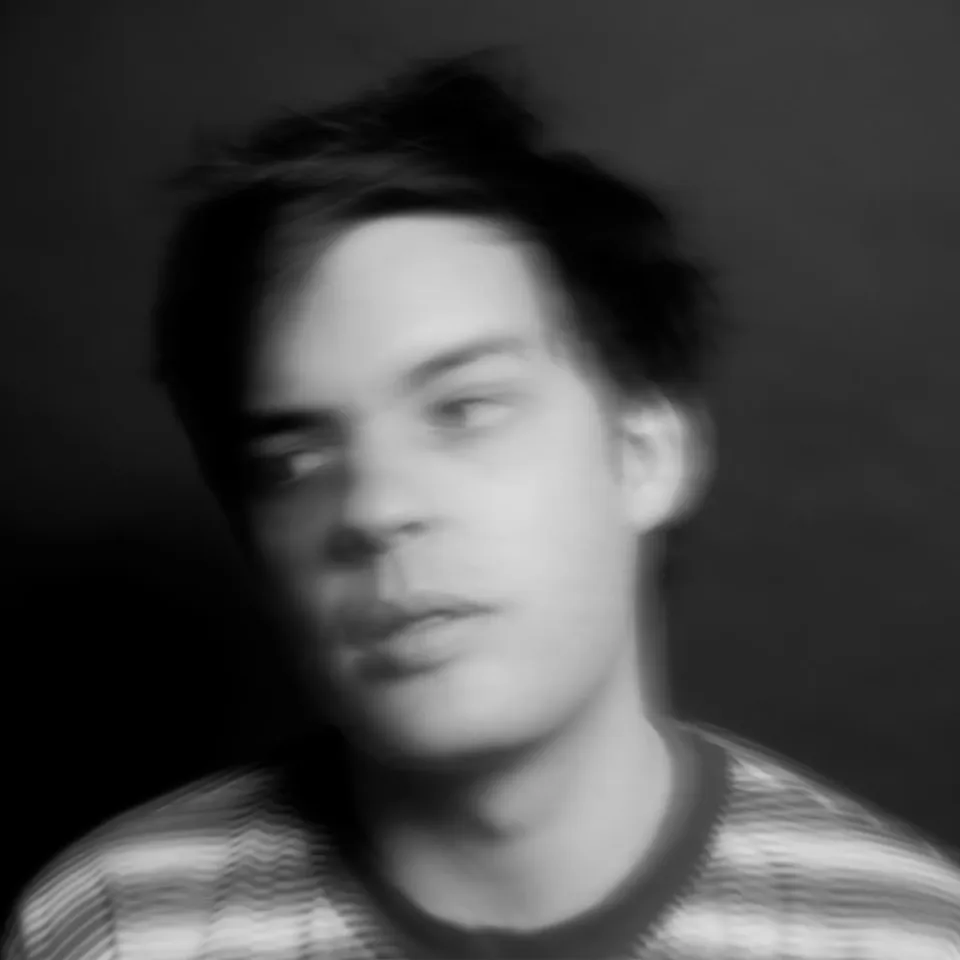
We like it when people can interpret a piece for themselves. We are more interested in blur and imperfection than in chasing perfection. AI tools are designed to become more and more perfect, but we are drawn to the opposite. We are not trying to recreate something. We are looking for outcomes that surprise us.
“We live in a world of cryptic usernames and realities altered through filters. The image of the self is often distorted, blurred, or encrypted, and we try to grasp that visually.”
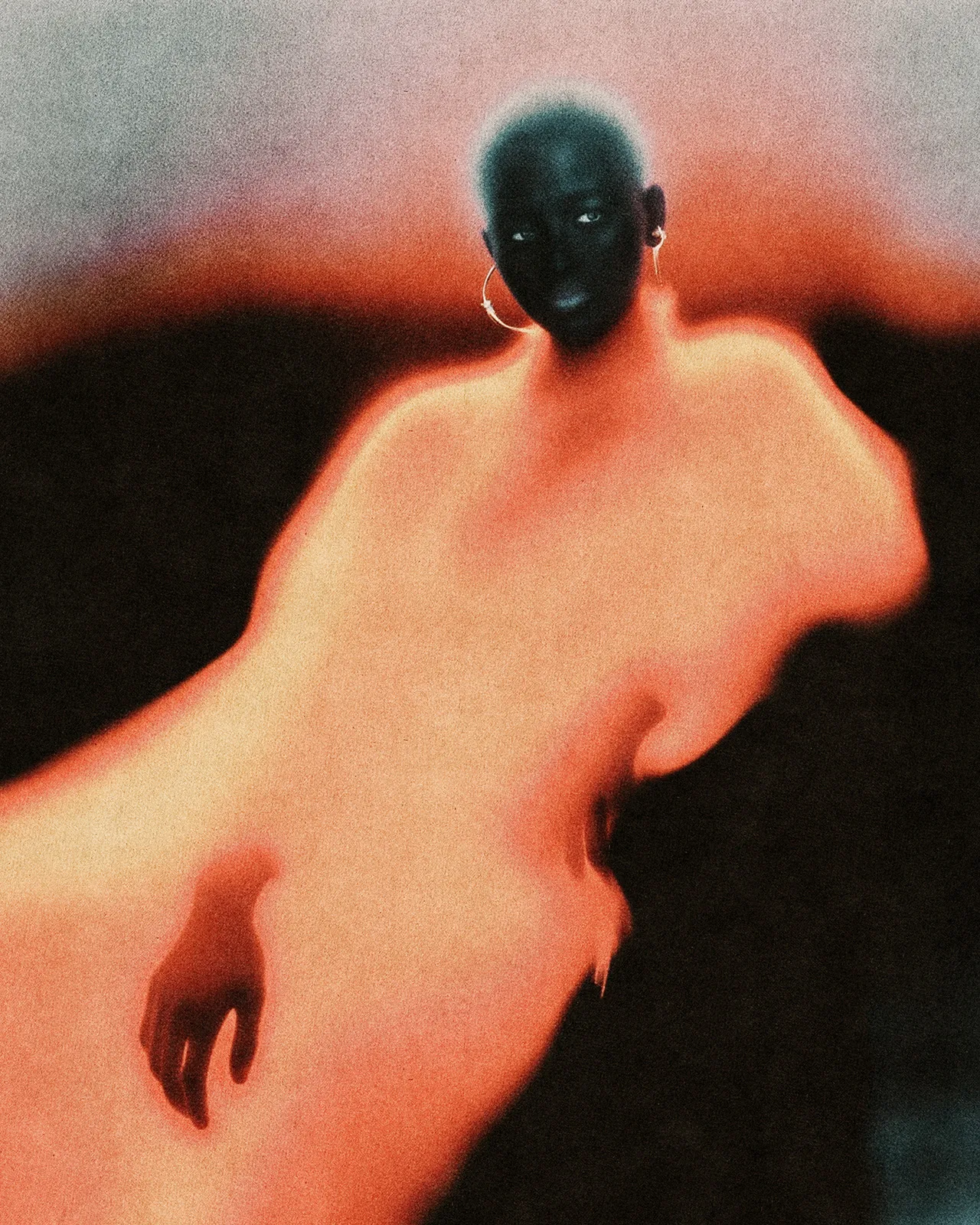
In your daily series, central figures often appear surrounded by blurred, vaporous, or almost liquid landscapes. What does this combination of textures mean to you, and how does it connect with the central concepts of your practice, such as encryption and going incognito?
Working with grain came out of the process. At some point, it just felt right, so we stayed with it. With AI-generated images made with tools like Stable Diffusion, images also start from a base layer of noise and develop step by step into a recognisable final image. That felt conceptually fitting for how we work. We are drawn to the utopian and the unreal, to that space where reality and fiction collide. Many of our pieces feel encrypted, and the figures are not fully legible. We live in a world of cryptic usernames and realities altered through filters. The image of the self is often distorted, blurred, or encrypted, and we try to grasp that visually.
There is also a very distinctive colour palette in your work — red, orange, blue, green, black, gray. What inspires these layers of colour?
We do not really have a fixed palette, but we often return to similar colour schemes.
You have created more than a thousand images in your daily series. How would you describe the aesthetic and conceptual evolution of the series since its beginning, and in what direction do you feel it is moving now?
The work has changed a lot. At the beginning, it was more conceptual. Now it is freer and more emotional rather than intellectual. If you scroll back, you can see how it slowly shifted over time.
The future is uncertain, especially in rapidly changing times like these. Where do you imagine your studio in five or even ten years?
In 2026, we want to share much more about our studio and process. We want to share what we are planning, which drops we have in mind, and who we are collaborating with. We already share some of this through our newsletter, serifa.substack.com. But we do much more behind the scenes than what you can see in the daily Instagram series. Right now, we are thinking about what artists and creatives could be in the future, and we are increasingly realising that creativity cannot be limited to a single discipline. That is why we will explore what else we can create as a studio beyond digital art.