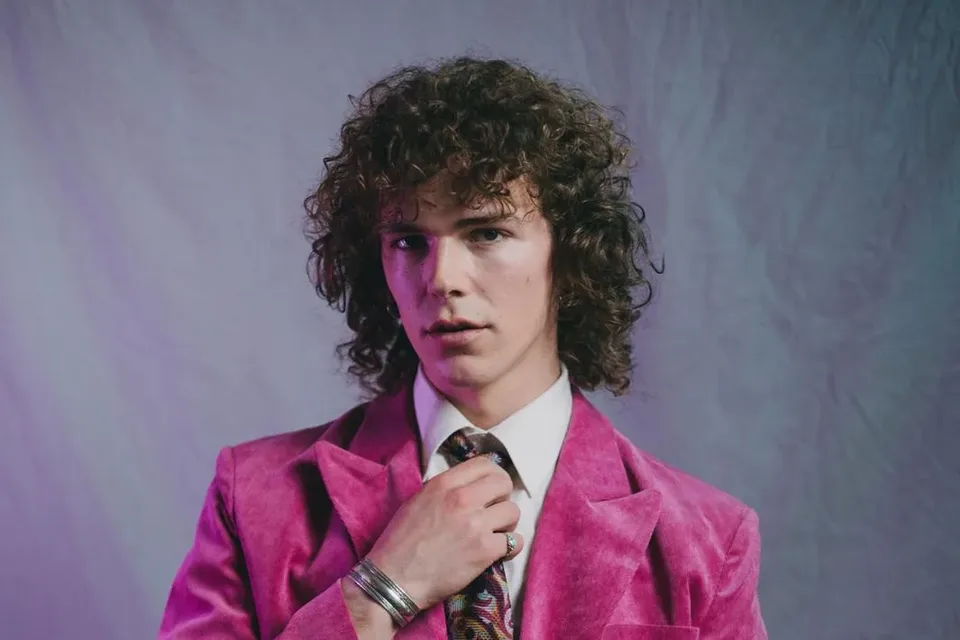
Spice up your summer with a hint of oneiric dreamscapes thanks to Sean Nicholas Savage’s latest album, The Knowing. The twelve-track record proves that his sound is as fresh yet consistent as ever, a perfect addition to his long discography. “There is so much music inside me, I can't hold it in,” he comments in this interview. “But I do love to work on albums and movies and plays — to me, that is a life of adventure,” he adds. In September, he’s embarking on a tour across Europe, and in November, across North America. So in between the album release and his upcoming concerts, we took some of his time to discuss The Knowing, humour and cringe, recording a cover of Iggy Pop, and how he sees his practice.
Hello Sean Nicholas, thank you for speaking with us! First of all, how are you feeling after the release of your latest album?
It’s still settling on my tongue. I’m not sure what happened, I love this record. I think it’s something unforgettable.
The last time we interviewed you was in 2015, when you released Other Death. Ten years later, you’ve published seven more albums, which is a lot. You’re a very prolific artist. Is it because you like to work a lot, or just because there’s so much music in you that you can’t hold it?
You’re right, there is so much music inside me, I can't hold it in. But I do love to work on albums and movies and plays — to me, that is a life of adventure. I think my pace is pretty… natural? I don’t perceive that I am prolific. Thank you though.
Let’s talk The Knowing, your latest album. How long has it taken you to put together? Because if I’m not wrong, you’ve also been busy with some plays like The Plumber.
I completed The Plumber, a short musical, the year before, so they didn’t cross over much. The Knowing happened from about May till December from inception to completion.
There is an overarching dreamy quality to the album; all of the songs sound like they come from a different, more joyous, somewhat oneiric dimension. How did you and the producers work on the sound?
That’s kind of the sound that Pascal Chenard and I had in our live performances, or close to it. I don’t think that we came up with anything costume wise, the music isn’t really about that. Though I can't speak for Pascal.
“I don't confuse my artistic practice with industry norms. My practice is ancient and deeply personal. Music isn't entertainment, it’s so much more powerful than that.”
I can’t avoid asking about Lust for Life, a cover of Iggy Pop’s 1970s theme. What about that song moves you, and how did you approach making such a personal, different cover of it?
That’s just how I play Lust for Life. I mean, I grew up with that song, so I know it. I didn't do anything, just recorded that in the basement of my dad’s house late one night.
The dreamy sound we discussed earlier takes me back to 80s ballads, and somehow, it gives me an instant feeling of nostalgia. And I know you recorded some bits of the album in Canada, where you grew up. Did that feeling of nostalgia play any part in the making of The Knowing?
No, I don't really care about the 80s sound — it doesn't sound 80s to me. We were really interested in this nuanced, delicate performance and lyricism. I think we got that perfect, but you have to listen for that.
The music video for Part 2 is so over-the-top — I love it! I guess you’re taking the piss out of those exaggerated 80s music videos and their acting. What role would you say humour plays in your music and visual language?
No, I’m not taking the piss — I don't do that. This is just real. If you can’t handle cringe, that's your problem. You’re taking the piss with your ears.
The Lust for Life music video is recorded vertically, perfect for our phone screens. So there’s this battle between embracing nostalgia and adapting to today’s needs. How do you keep that balance?
I'm on the phone like most people, and I think it can look good when an image is made for that, so we tried a vertical video, which I am really happy with. Although it's proven a little tricky to share a full music video that way.
Speaking of the current times, I’d like to know how much do social media and the culture of streams affect the way you approach music-making, if at all?
I don't confuse my artistic practice with industry norms. My practice is ancient and deeply personal. I have kept it with me since I was young. It takes precedence over everything. Music isn't entertainment, it’s so much more powerful than that. I understand what you mean, and I’m comfortable being an advertiser or trying to get creative in the race, but my art is not like that — it doesn't cross over, it could not be influenced by that, only obstructed.
In September, you’re kicking off your European tour in Glasgow. What will The Knowing look like on stage?
I'm touring with a new group: percussionist Luke Graves and singer-songwriter Kaan Gunesberk. We’re playing a lot of the new album in the set, and also some older songs I've actually never played live before, like Darkness for example.
You’ll later visit cities like Manchester, London, Stockholm, Berlin, Paris, Lausanne, and Warsaw. And in November, you’re heading to North America. How do you prepare both physically and mentally for such an exhausting endeavour?
We’ll rehearse relentlessly. I’ll be sober and working out physically. I’m absolutely thrilled and honoured to tour this new music.