What if garments became conscious? That’s the question Satoshi Kondo asked himself in his most recent Issey Miyake collection. A quality inherently attributed to humans, projected onto something allegedly inanimate we share almost all of our lives with — if we really think about it, it is not that crazy of a question. Clothing and bodies have one of the strongest symbiotic dynamics that exist. We bring them to life, and they bring life to us in multiple ways, from protecting us from the elements to making us feel all sorts of emotions, mostly positive ones. When designing, this importance given to how humans feel should be the North Star that guides the creative process; after all, there’s not a bigger act of love than caring about others and working with them in mind.
This interview is taken from Issue 53 and adapted for our digital platform. Order your print copy here.
This has been the never-ending quest of the Japanese label for more than fifty years, first with Issey-san, now with his legacy and values protected, honoured and expanded by Kondo. Do you know the warm feeling when someone says, “I thought of you?” If garments gained consciousness, they would also think about us.
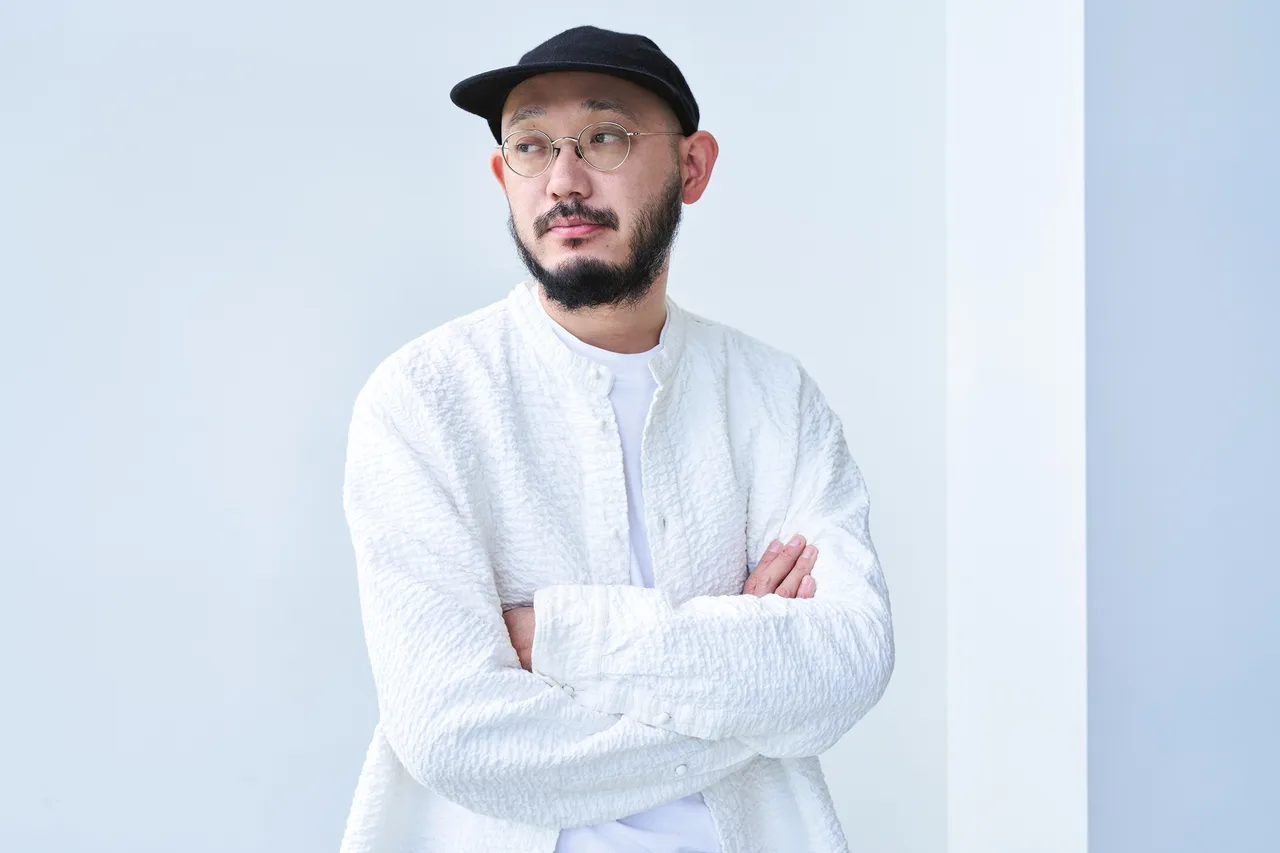
Throughout his years at the helm of Issey Miyake, Satoshi Kondo has made his garments fly, dance, run and now think. In his work there seems to be an underlying goal of starting a conversation with what we wear by teaching it the language we use, the feelings we feel and the life we live. There’s no better place to conduct such a noble exchange than at a house whose founder loved the fashion craft to the point of invention. The paradox of a highly technical brand being one that excels at conveying the tenderness of human touch is a quality that has made it stand the test of time, of trends and of opinions. If in the past it was a challenge to find new ways of creation, respecting the anatomy while creating shapes and silhouettes of the future with just a simple piece of clothing, now it’s a necessity. With new technologies putting the natural course of life, art and creation at risk, avoiding what modernity has given to us is not the answer, but rather finding a balance, or even a ratio, in which the human hand, mind and soul prevail over the machine. A creative director who would rather not be called as such, Satoshi Kondo is designing a way to make everything around us feel just as much as we do.
Satoshi, thank you so much for taking the time to speak to METAL. I’m very happy to be with you today.
I’m also honoured. Thank you very much.
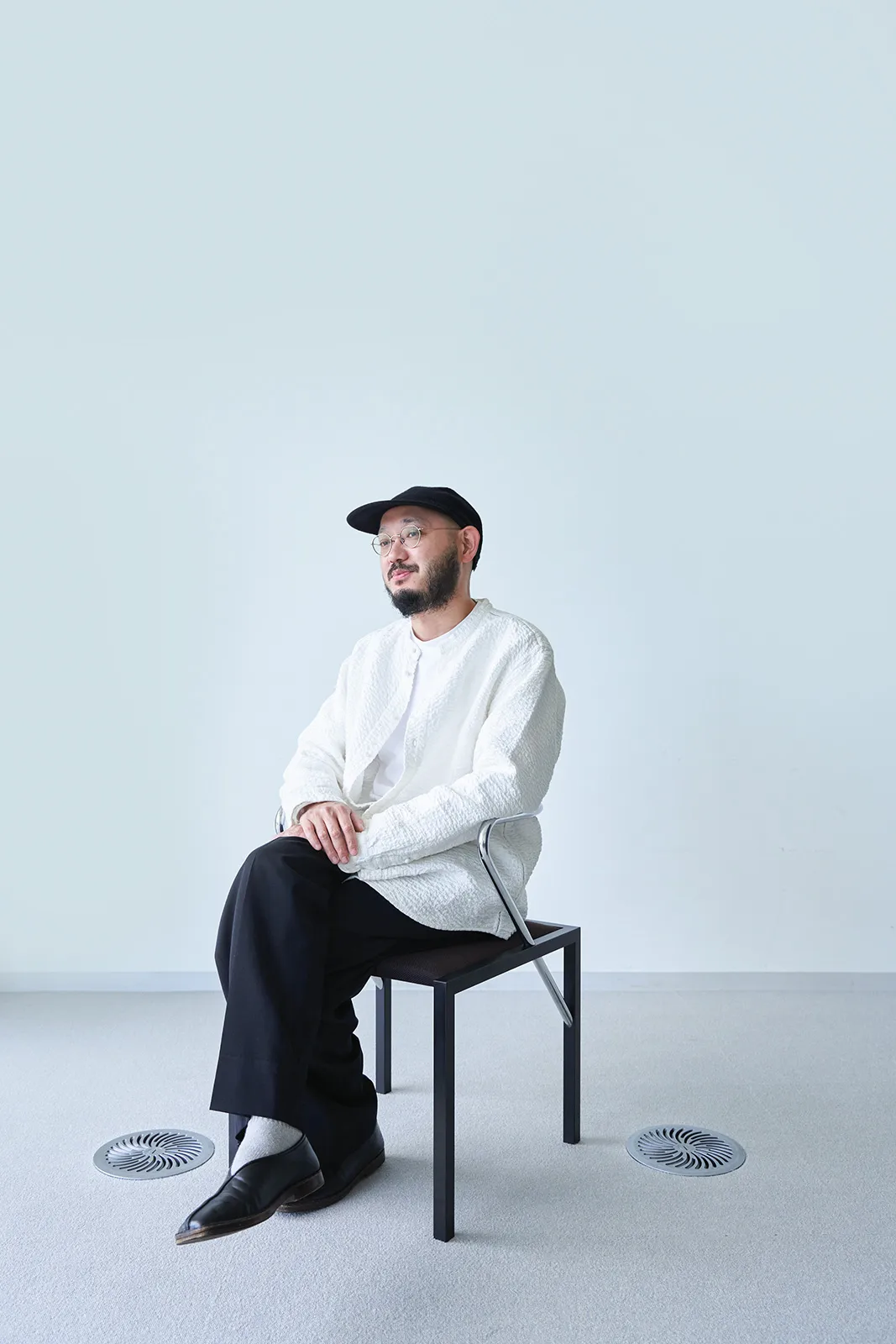
First of all, you’ve talked before about the joy of getting dressed every day. What are you wearing today, and how did you choose it?
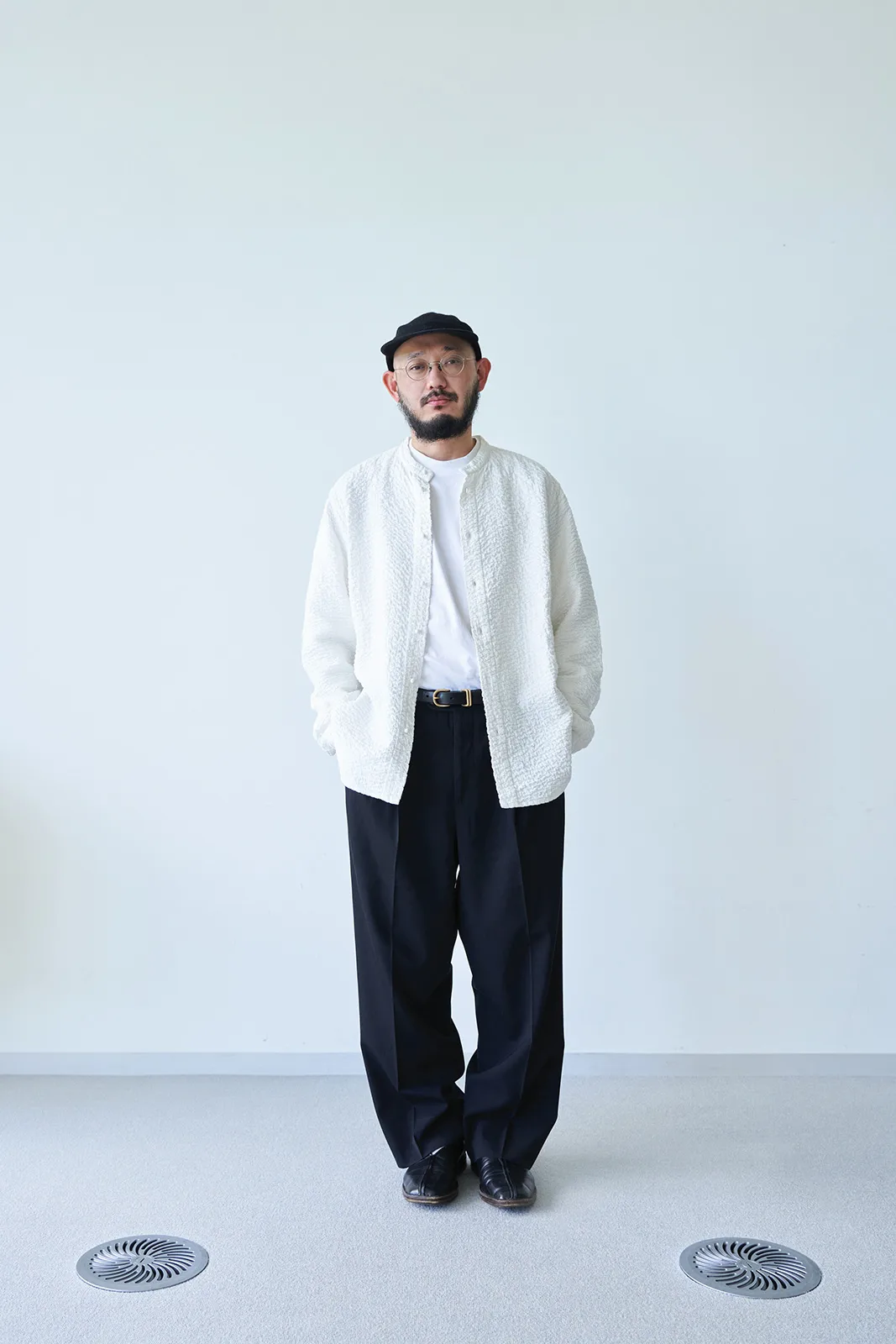
For today, I actually wore one of my favourite shirts over this t-shirt, but it’s getting warmer in the afternoon, so I don’t have that shirt with me now.
What colour was the shirt you took off?
It’s a white shirt by one of the Issey Miyake brands, HaaT. In terms of the way I dress, if it is for work, I tend to dress more with the idea of wearing a uniform. But if I consider maybe seasons like spring or summer, I always try to wear a white t-shirt or something white for a top and maybe just simple black trousers or slacks. But for winter, when it’s getting colder, I tend to want to wear something colourful, not just a simple black sweater, but maybe a colourful one with simple black or white trousers.
When did you start giving clothing emotional meaning? When did garments begin to carry that kind of personal weight for you?
I think there is a phase before I started working with Issey-san and after I started working with Issey-san. Before I started working, as a young adult, I liked to dress myself in a more expressive way, in a more colourful way. I saw myself more as a person who enjoys fashion and enjoys the act of dressing myself. But after I joined the company and started working with Issey-san, I had a shift in my role. Instead of being the dresser or someone who simply enjoys fashion, I’m now on the other side. I’m now the one who designs and makes clothing. This shift in the role I play in fashion or in clothes making has changed the way I dress.
Did it become more simple?
Yes, I became someone who tends to dress more simply, maybe more in a uniform type of way. There’s not a definite time, but I think it is because of my practice as a designer that I started to consider what clothing is exactly, and I started to brainstorm and to imagine what I could do as a designer and what the clothing I design can do as well. That’s where I had the idea of, going back to your first question, the joy of getting dressed. Clothing itself has this emotional aspect. You will feel happy wearing your favourite shirt. You’ll feel that there’s this emotional attachment to the things that you do and use, I would say.
Following that idea you mentioned of how you used to dress before working for the brand, I recently came back from Japan for the first time and was struck by how naturally people seem to wear what they like. Even the most extravagant outfits never feel forced. Does that ease of self-expression have something to do with Japan itself? Is it purely a cultural thing, or is there something else?
Thank you for the question because I also wonder why there’s this sense of fashion in Tokyo. I’m sure there’s no definite answer for this; I’m only offering my opinion here. They express themselves through fashion in a really individual but personalised, natural way. I wonder why too. In general, there are many people who enjoy fashion. For me, if it’s not the clothing I designed, I often wear vintage clothing or second-hand clothing, and one thing that I noticed whenever I am in other countries and I go to these stores is that I see how Tokyo has quite a range and a variety of vintage clothing. It seems like Japan and Tokyo have a bigger range of selected clothing for you to play around with, for you to explore. So, it’s not just one clean cut. Also, I would like to say that maybe Japanese people, myself included, are really conscious of their body shape. Having this variety of selections you can choose from is a way of better presenting yourself. I think it’s a means of being able to express yourself in the right way.
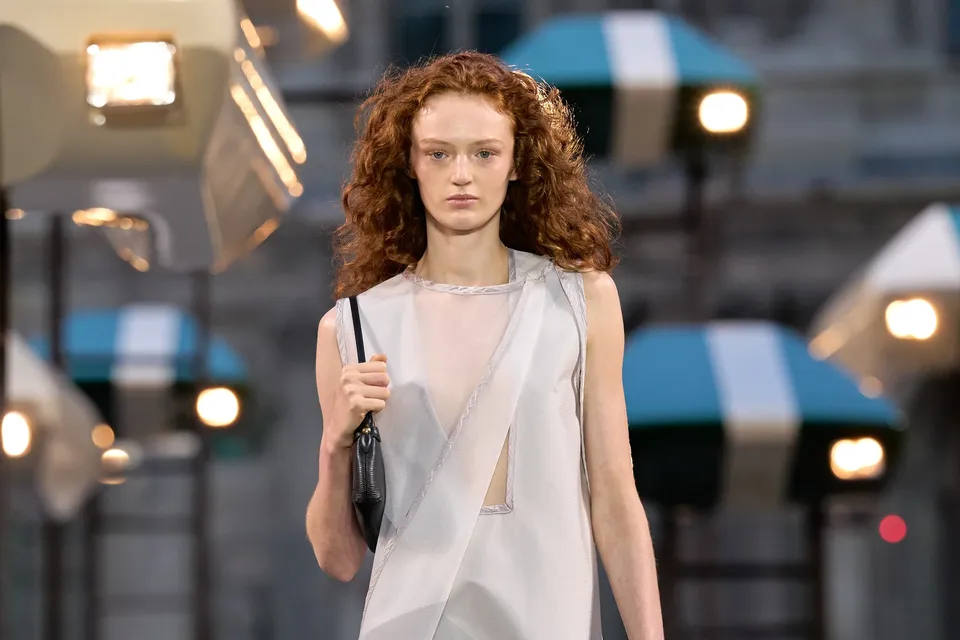
Congratulations on your latest show! This new collection feels wonderfully chaotic; there are sleeves and arms appearing in many places, patterns transformed, references to shopping in an uncontrollable way; it’s all very wild. With this idea of, “What if garments are conscious?” I feel like you think of the consciousness of garments as one closer to the mind of an animal, more impulsive and more savage, rather than maybe the more rational consciousness of humans. Is that so? Or is that how humans are starting to look?
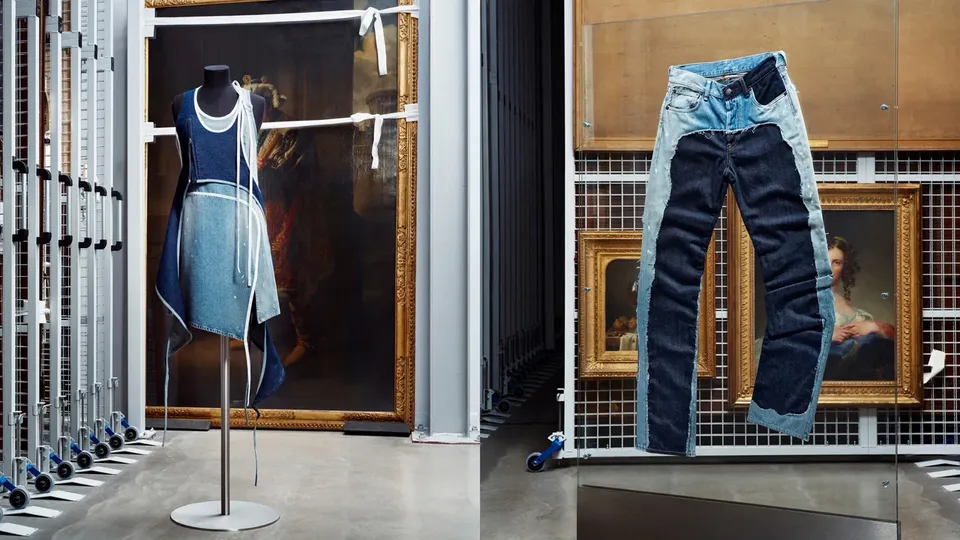
Your take is pretty appropriate because when we created the collection, we didn’t specify if it’s a human or if it’s an animal, so, of course, it can be something that’s really wild. We only say, “What if a piece of clothing comes to life?” We only say it’s a living being. We were trying to introduce what we call biological features or elements into clothing, so your interpretation is quite appropriate in seeing that it’s more than just human beings. What we’re exploring here is not seeing the clothing as an object. It’s more than something you wear every day. It has consciousness, it has arms and legs, there’s more to a garment.
“Can clothing be free? Can we design clothing outside of the conventions?”
I want to know how this idea came to your mind in the first place. These types of ‘what if’ questions are something that appear when you’re maybe bored or with friends, just chilling, and wondering, what if this insane thing happens? How did it happen for you?
Lately, for my practice as a designer, through clothes making, I’ve been wanting to explore and introduce a new value and offer my audience a new perspective of looking at what fashion is. Maybe if you look at fashion, at a collection or at a garment with a new perspective, there could be a sense of a new aesthetic, a new value, a new type of beauty. I think this is the foundation of this approach of asking myself questions. As a designer lately, I tend to ask myself questions like this again and again: what if this? What if that?
What answers have you found through this?
I found that if I start with these “what if” questions, more often than not they lead me to somewhere that I don’t expect myself to be. This approach is really important to my practice lately. For this collection specifically, if you see or if you perceive a piece of clothing as something that’s alive, that’s conscious, maybe that piece of clothing wants to do something on its own. Maybe the clothing itself wants to be free. This opens a new discussion: can clothing be free? Can we design clothing outside of the conventions? Outside of the preconceptions? If the clothing can be reinterpreted as something that has more freedom, then the wearer can also be more free. If what you are wearing is different and it’s really new and original, you will look at that piece of clothing with a new perspective, and you will enjoy fashion in a different way. That’s something that I want to communicate through this collection. People should enjoy fashion with a freer mind; maybe that will eventually enrich or make their life more colourful.
In the press release it is mentioned how the clothes become autonomous while the body becomes an object. What would happen if instead of the garments becoming autonomous and the body becoming an object, the body stayed right as it is, also autonomous? Would we fight to death with our jacket and trousers?
Maybe we’ll be friends if we’re both autonomous (laughs).
Everything you mention about your process and your approach with this new type of mindset feels like a very surreal way of working. You’ve mentioned consciousness and liminal states as well — was there any theoretical or philosophical research behind the collection? It all feels very Jungian.
I would say that as I was creating the collection itself, I didn’t think too much about the philosophical aspect of it. I was more concentrated on the act of creating clothing and really focusing on the question of, can clothing be conscious? But you brought up a really interesting point in that this collection and also my previous collection are meant to leave room for the audience and for the viewer to interpret. There is not always a clean cut where we are telling you this is what it is. In my practice as a designer, I’m always interested in this in-between, or, as we wrote in the press release, the liminal: something that’s about to become another thing, this sense of being ambiguous. When things are less defined, there’s this beauty of you having your own interpretation. I didn’t think too much about the philosophy, but it’s good that you see that part, because that’s something that I didn’t expect.
The exploration and experimentation were particularly highlightable this season; it feels like with every part of the collection, you built an entire ecosystem that represents an alternate reality where garments are the rulers. Was your initial idea to include all these different elements in the same collection, or was it something that just kept sparking more and more inspiration for you?
I’m not sure if the complete collection is the same as the first idea; it is a really long and thorough process that included lots of trials and errors because when I originally had this idea maybe six months ago, it wasn’t like this at all. The more you work on a collection, the more ideas you will have, and then you will want to try new things. The collection itself and the end result are an accumulation of a lot of ideas. I kind of went with the flow, but for example, the order of the looks on the runway is the key to this collection. The first look represented myself as a designer. Going back to your first question, it is the white t-shirt and black pants I was mentioning. That’s sort of a starting point.
This first look you mention has a big lump on the shoulders. Is this about you feeling like you are carrying some sort of symbolic weight?
I’m not familiar with insects in Spain, but this idea actually comes from a cicada, this insect that, when it’s about to grow, sheds its exoskeleton. The style can look a little odd with the shoulder rising, but the construction itself is the construction of a t-shirt that has an inner layer, and if you unbutton it, you can wear it like this simple t-shirt I’m wearing today. It’s just a way that we’re presenting it on the runway, where we need to show the possibility of this shoulder, of this thing being alive. The idea is not just simply asking the question of what if clothing is conscious; it’s more about offering the versatility. You just take a simple t-shirt, and you can wear it two ways; depending on how you feel that day, you can have it up, or you can have it just the regular way. So, while the idea or the concept might be really abstract and maybe a little difficult to understand, if you look at each garment, you will find that they offer more than one way of wearing them, and that would be up to the wearer.
What do you believe is the relationship a designer must have with bodies, especially the body of a woman? There’s been a discussion lately about how some creations seen recently often seem to be more of a boundary for a woman than a way to improve her life or benefit her. How do you approach designing for the female body?
The way that I think about, not just a female, but the wearer’s body is that, at Issey Miyake women’s line, even now after fifty years, we are still working with a piece of cloth and exploring its relationship with the body. You might be familiar with this idea of the Japanese concept of ma, which is the unfilled space. It can also be used in architecture or other contexts, but in our term, we are talking about the space that’s between you and the fabric. We’re all human beings, and we are all beautiful in our own way, in our individual way. What I do is create clothing that has some ma, or has some space to allow each individual to be able to express him or her or themself. Not to confine, but to just simply wrap or wear this piece of cloth without much tailoring. That would maybe help the beauty of it to emerge.
I believe in just simply the beauty of the human body, so I’m always thinking about what I can do in fashion or in clothes making to really convey it. As a designer, I’m always finding a good balance between covering the human body with a piece of cloth; it’s something that we have always been doing. There’s also this idea of revealing, not just simply showing the skin or a body part but revealing the beauty of the human form. That’s the way that I see the female and the human body.
I believe in just simply the beauty of the human body, so I’m always thinking about what I can do in fashion or in clothes making to really convey it. As a designer, I’m always finding a good balance between covering the human body with a piece of cloth; it’s something that we have always been doing. There’s also this idea of revealing, not just simply showing the skin or a body part but revealing the beauty of the human form. That’s the way that I see the female and the human body.
“We’re all human beings, and we are all beautiful in our own way, in our individual way.”
This answer reaffirms what I’ve always thought about the brand. I see Issey Miyake as a brand of deep sensitivity. Every piece feels human, yet it’s one of the most technical houses in existence. How do you find that balance between the cold precision of machines and the tenderness of human touch?
As a company we’re always doing, regardless of the cycle of fashion or of the collection, research and development of new textiles and materials. We are always finding new materials and new technologies that allow us to do many things that we just could not do before. But on the other hand, you don’t just make anything only with the machine. It has to go through what we call the maker’s hand or the designer’s hand. So, there’s always this presence of the human hand. This can also be said about Issey-san’s work. Whatever we do for our house, there’s always this element of craft; there’s always this presence of our hand somewhere.
You will feel the warmth, and you will feel the texture of something that’s treated and handled by us, it’s not just something that’s come straight out of a machine. For example, for the first premiere of A-POC twenty-five years ago, when it was first presented on the runway using this advanced technology, people were really surprised by how easily it was made. But if you look really into it, you’ll still feel the warmth that, maybe, the pattern of the clothing has this human aspect in its creation. To arrive at that point, there are a lot of thoughts and a lot of experiments that only we, the designers or the design team, can do.
You will feel the warmth, and you will feel the texture of something that’s treated and handled by us, it’s not just something that’s come straight out of a machine. For example, for the first premiere of A-POC twenty-five years ago, when it was first presented on the runway using this advanced technology, people were really surprised by how easily it was made. But if you look really into it, you’ll still feel the warmth that, maybe, the pattern of the clothing has this human aspect in its creation. To arrive at that point, there are a lot of thoughts and a lot of experiments that only we, the designers or the design team, can do.
You’ve mentioned Mr Issey. You’ve lived through two distinct eras, one when he was still involved and one without his direct presence. How has that change shaped your process or way of thinking?
I guess the short answer is there’s not much change to me as a designer. Since before and after Issey-san’s passing, I always try to maintain his spirit, and I always try to keep the spirit of the Issey Miyake women’s line while trying to strike a good balance between that and expressing myself as a designer. The reason why that hasn’t changed for me is because working under and with Issey-san for so many years, I became really aware of his philosophy and the way he approached design and making. That’s something that will always stay. After Issey-san’s passing, I felt more responsible for having to maintain that philosophy or having to keep that spirit. There’s a little bit more pressure because you have to convey that idea and not just be content or satisfied with what we have now, because the spirit can be the same, but the outcome or the execution, the actual clothing you make, should always be original. I feel more responsibility and pressure to keep the brand well and thriving.
Issey Miyake is one of the brands that never cease to receive attention and praise, both from the industry and from the audience. Lately on social media, it seems to be not a resurgence, because it never stopped, but a new wave of enthusiasm. Can you feel it?
After his passing, with all the articles written in memory of his work, and even before that, there seems to be an on-going interest in this fifty-year-old brand. Looking at how Issey-san’s work is and how much he has achieved, I think that also has an effect on the fact that there is this growing attention on all the other designers and how we work at the Miyake brand. That made us realise more how much Issey-san has achieved and how much he has done for the last half-decade. It also makes me believe that I should work harder. This growing attention, or this growing interest, in the Issey Miyake brand and also in Issey-san himself allows me to work with more confidence, and, going back to my last answer, there’s this responsibility that I feel that I have to keep advancing and delivering new things from the brand.
On a similar line, during Tokyo Fashion Week I heard Gaku Tsuyoshi, from the also Japanese brand FDMTL, say that even after more than twenty years, he struggles to call himself a “fashion designer,” he feels the word is too big. How do you define yourself? What does that title mean to you?
I personally don’t feel uncomfortable being called a fashion designer, but I would prefer calling myself a designer. What I’m creating is not just about fashion; it’s more about design and myself being a designer. But there’s something that I would prefer not to be. If I had a choice, I would prefer designer to creative director. Maybe this is a Japanese way of thinking, but creative direction seems to me to be more about the overall control. Of course I’m doing that as well, but designer has this implication or has this connotation of someone who is more hands-on. I also see myself more as a craftsman. By craftsman I’m not saying that I’m someone who specialises in a certain craft, but I’m referring to the fact that I’m hands-on, and I’m always working, whether with fabric or textiles, making design sketches, etc. Going back to my other answer, there’s always this presence of the designer’s hand or the maker’s hand that’s theirs, so I guess if I had a choice, I would prefer designer.
Do you consider the brand as forever young, or does it age with time?
I would say I don’t have this concept of age for the brand, because I tend to consider what I make, or at least I hope what I make, is something that women or people of all age groups can wear. We always have something that’s for someone who is younger or someone who is older. As I design and make my clothing, I tend not to theorise that this is for women of thirty or forty years. There’s not a clear definition of that; this is just simply the way that I approach my practice. I would rather think there’s this kind of neutrality of not being forever young but being timeless. Maybe you will look at something I make now, ten years later, and you will still find it beautiful, and you will still find it interesting.
With all your answers and from what I knew about you, it is clear that you are a designer very attuned to feelings and emotions. I’d love to end with something that relates to this sensitive but also sensible side. I want to try to understand your world through the five senses. What is a taste or flavour you enjoy?
(Laughs) It’s my first time having a question like this. This might not be the answer you want, but I think in terms of taste, I don’t find myself having specific tastes. I am open to eating things that are a little sweet or sour. I’m okay, and I’m comfortable eating a range of different flavours, something that’s spicy, etc. Maybe there’s not a preference.
What is a view or a sight you like to have in front of you?
I appreciate the beauty of a beautiful landscape, but I think I appreciate beautiful scenery as much as something that’s littered on the street that has been crushed and that maybe is a little dirty. I find that beautiful as well. I don’t have a hierarchy of this is beautiful and this is ugly. I tend to appreciate litter on the street and beautiful scenery equally.
Any sound you prefer?
As a person, I can find white noise or any noise beautiful. I love listening to Bach, classical music. I don’t judge before I listen; I don’t have this preconceived idea of what is good or what is bad either for this. For me it’s more about really going through the experience and seeing if you like it or not.
And for texture?
That can be said for texture as well. Just because something is really expensive does not mean that it has a good texture or that it is a good material. You really have to feel it, to touch it. Maybe you find a crumbled piece of paper, and you also appreciate the texture of that too.
Finally, any particular fragrance or smell you like?
Smell maybe is the sense that I have less developed. I’m probably more conservative when it comes to smell. There are certain types of smells that I like, and there are some others that I really don’t like. Maybe I’m not really exploring my senses in terms of my smell. I tend to wear the same smell of fragrance, and I’m not challenging myself enough to try new things. When I do laundry, I will use the same detergent and softener (laughs) and the same perfume; maybe if there’s room fragrance, it would also be the same. Thank you for this question. It makes me think about how maybe I’m not challenging myself enough in terms of smell. I think after today, maybe I should. I should be trying new smells and different fragrances. Thank you; that really allowed me to think. If I can apply this idea of not judging and not having a hierarchy, I should also see smell in that way. Every smell should be equal, and I should try more different smells.
The next time I meet you I will pay attention to what you smell like then (laughs).
(Laughs).