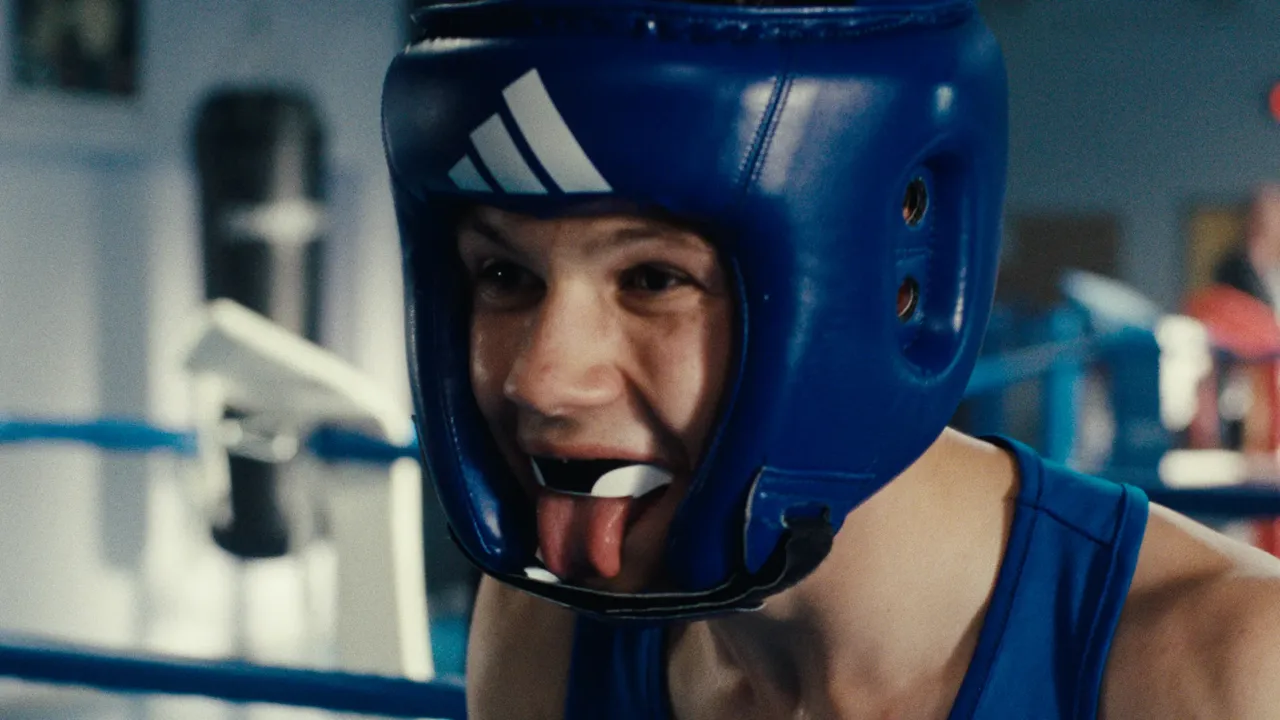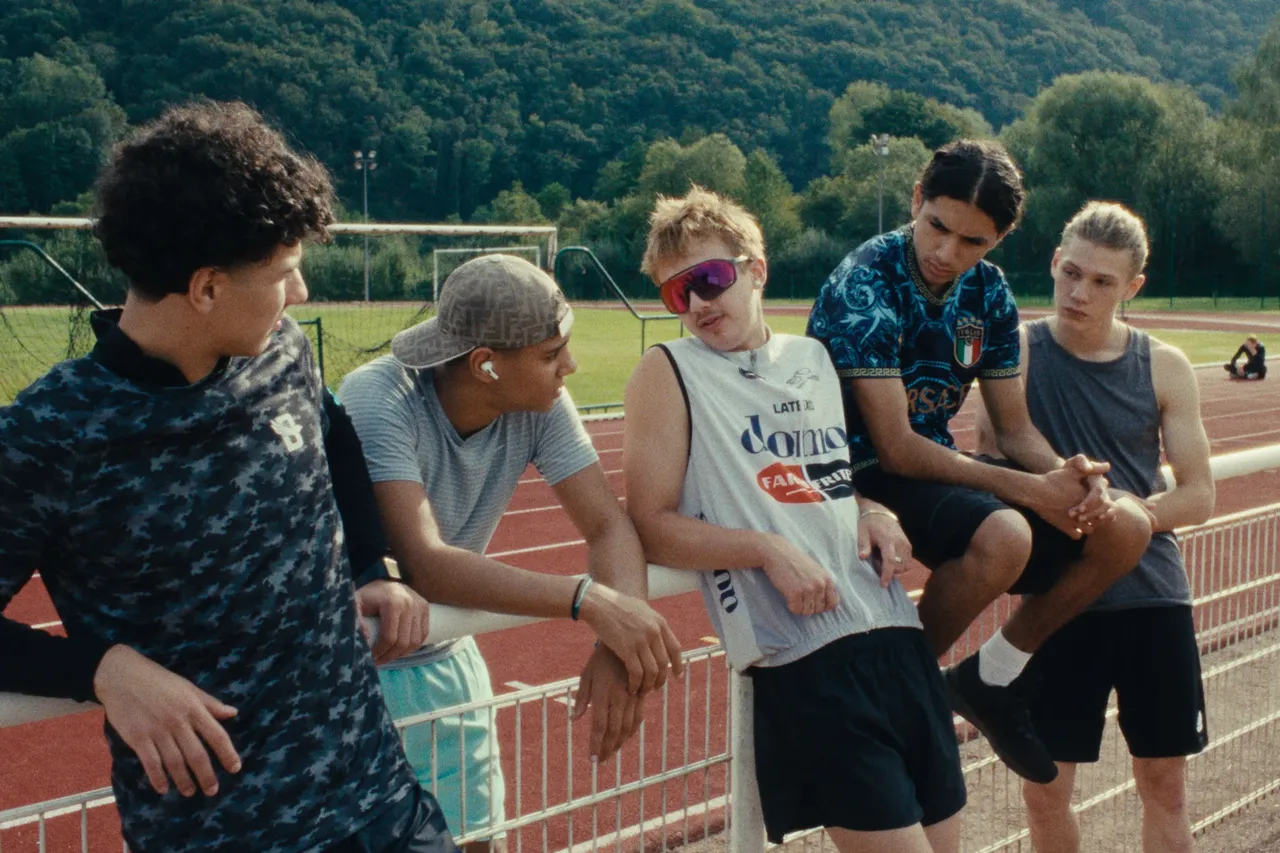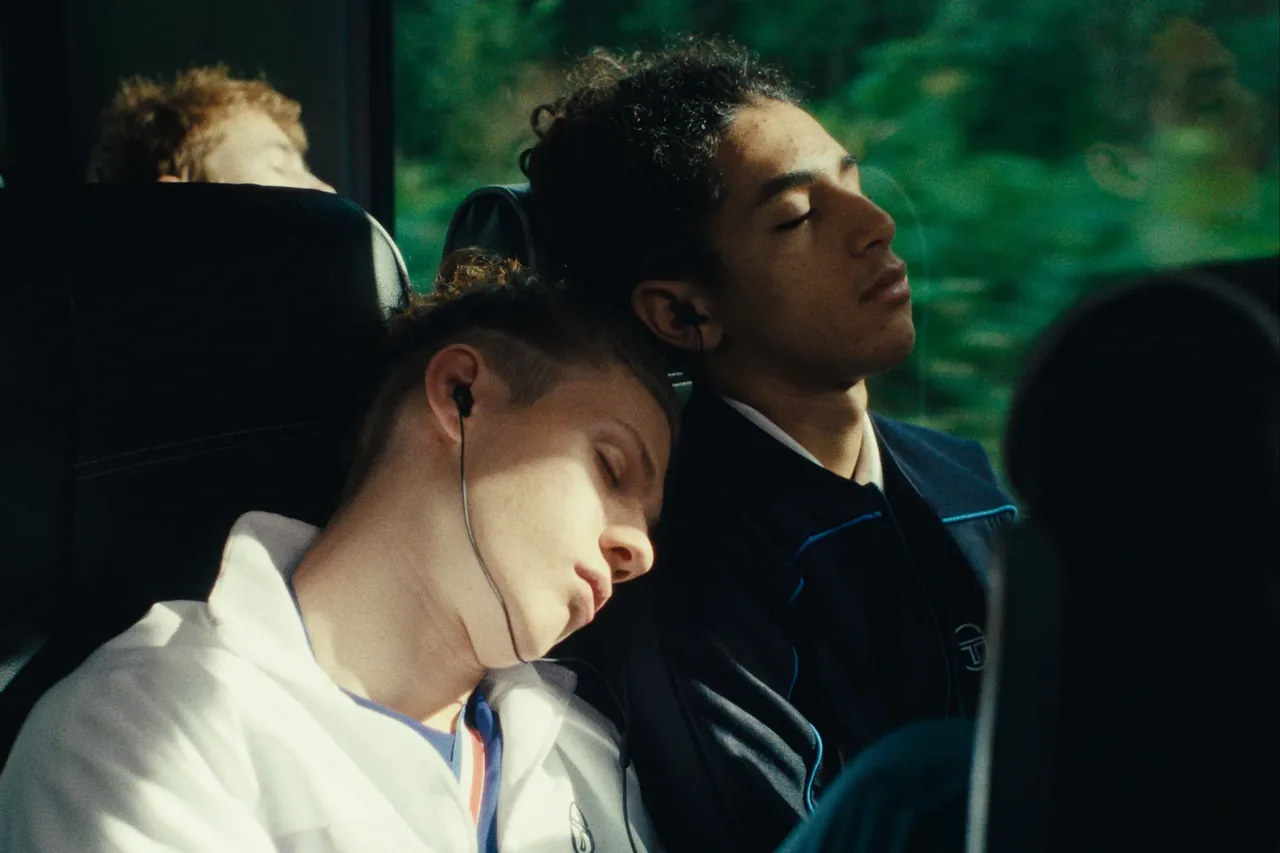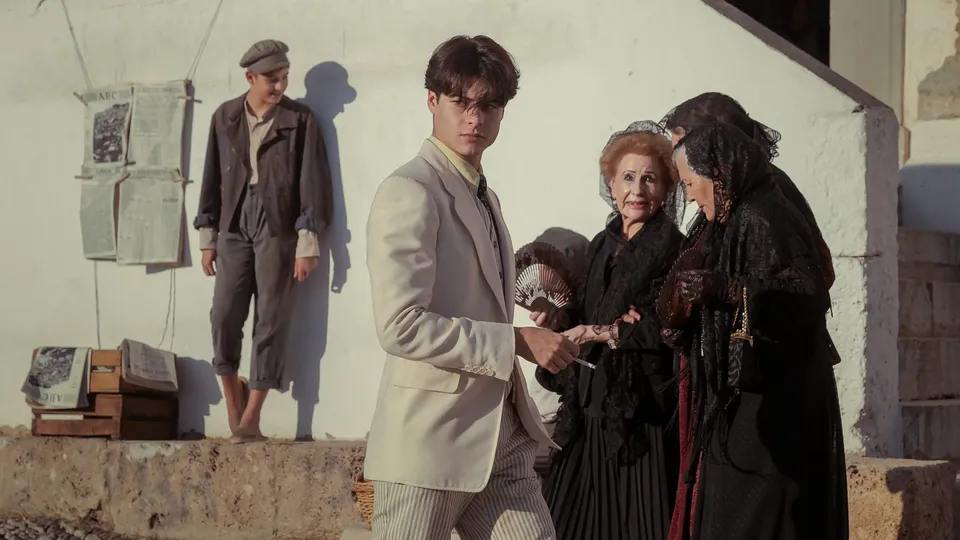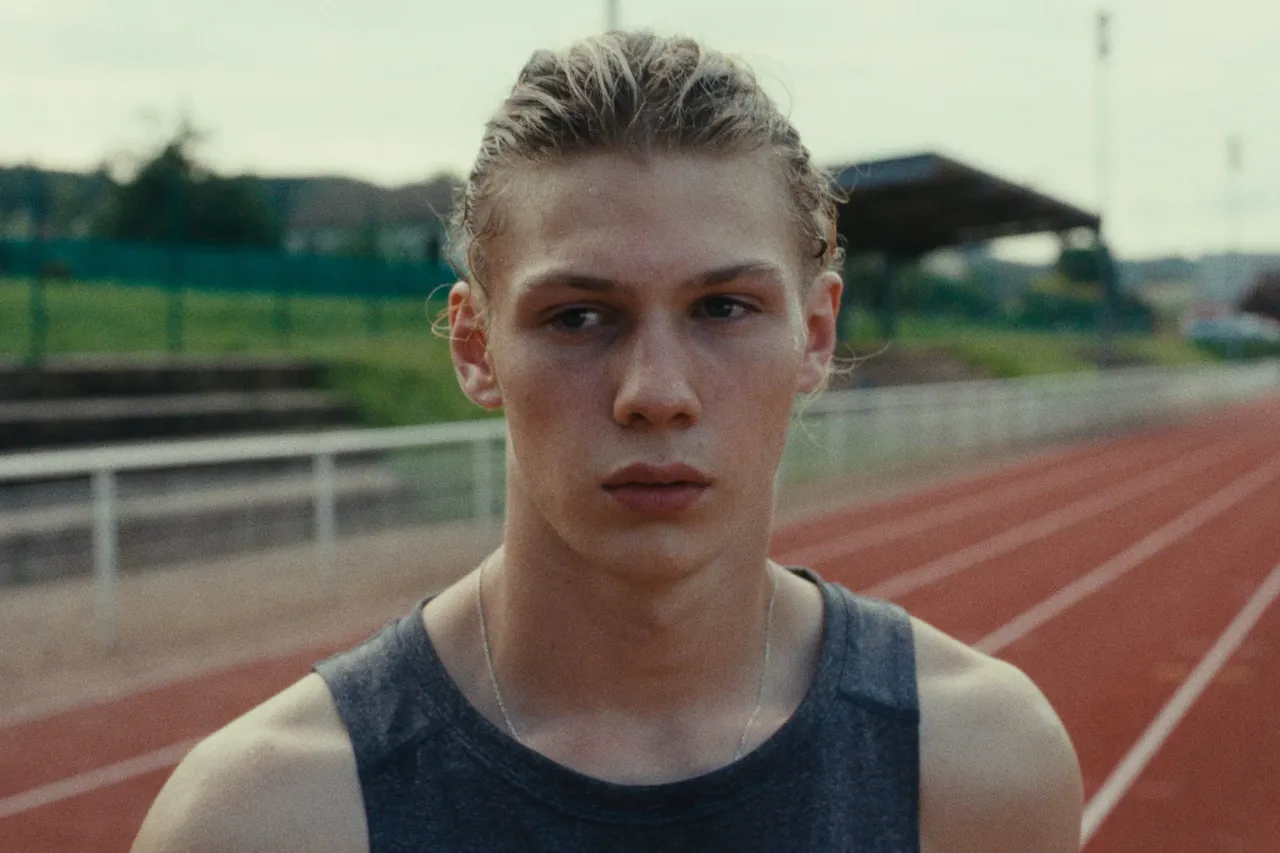
Wild Foxes from Valery Carnoy explores the director’s own experience with pain through Camille, a teenage boxing student who struggles to recuperate after an accident. Samuel Kircher embodies the sorrowful silence of suffering that comes from Camille’s unknown wound. Premiering at Cannes’ Directors’ Fortnight in 2025, Wild Foxes meditates on the fragile state of young boys today as the patriarchy reveals the other edge of its sword – the side that does not solely attack women but makes an example of men considered too feminine and therefore, weak.
Kircher brings an unforgettable performance, balancing the constant tension between Camille, his mind, and his friends as he comes to terms with a life path that no longer represents him. A path that accelerated like a treadmill until he eventually fell off and had to take stock of what his internal goals and desires are. We spoke with the young actor about his favourite moments of the role, the aggressive masculine education of men, and the importance of opening up despite shame.
Because your character Camille is a boxer, I’d love to start off with asking you what your favourite boxing move is that you learned?
My favourite one was the turn on the front foot, and the combo left hook down left hook up. The last one never misses.
How did you prepare and train for this role? What were the emotional versus physical preparations that you took for a character who communicates so much non-verbally?
Men who are educated to always be strong, think they can’t say they are feeling “weak” because they would be mocked about it, so they don’t speak too much so as not to say something they shouldn’t. But it’s still in the body, everything is contracted.
You said that, having never experienced anxiety, you had to create it for yourself on set to portray what Camille was going through. How did you get into that mindset?
The whole team shared their experience with anxiety, it was a beautiful moment.
What was your relationship with Valery Carnoy on set playing a character that was inspired by his own past?
I loved it, he’s a brilliant director. He was coming to us and saying, “Now you have to say…” with a way to act that was so funny, but still giving us the pieces we needed to understand the scene.
I’d like to touch on the difference in how Camille’s problem is spoken about with the boys and Yas. With the boys it was more aggressive and accusatory, whereas Yas was mainly curious — almost like a refuge from his other friends. What was the importance in having her as Camille’s emotional guide?
Yas is fully accepting herself, and doing what she wants. He is locked in obligations that don’t make sense to him anymore. Yas represents a whole new world of acceptance, confidence and pleasure.
“It’s always easier to think that the pain comes from the body rather than it being a psychiatric pain.”
There’s been a larger conversation recently about the importance of male friendships, not just having them, but investing in them emotionally instead of defaulting to toxic competition. How could that kind of male friendship have helped Camille?
Camille just needed to be listened to, and good friends know how to do this!
You are part of the generation of boys Wild Foxes speaks to about overcoming obstacles, asking for help, and, more broadly, masculinity. How was masculinity modelled for you at home versus outside in greater society? How significant are male role models for younger boys?
Stereotypes create a real human body, the Petit Prince is a good example for young people, I think. He explores and protects the world he loves.
The validation of psychological pain, whether you feel it like Camille in his body or if it stays in your mind, is also a central theme in Wild Foxes. What do you think was going through Camille’s mind when the physician referred him to psychology to help with his pain?
It’s always easier to think that the pain comes from the body rather than it being a psychiatric pain. Because in psychiatric pain people believe they are guilty of having it.
How can this film also apply more broadly to the human issue of the process of getting over hardships and the community that you need along the way?
I think the movie is what you do for the image people will have of you, or what you do because it’s good for you. We have to live for us and not for the image of us, it’s so hard. Because we want to be perfect, to be competitive and for that we don’t listen to our body.
Wild Foxes is now in select cinemas and is available to rent or buy on major platforms from 15 June.