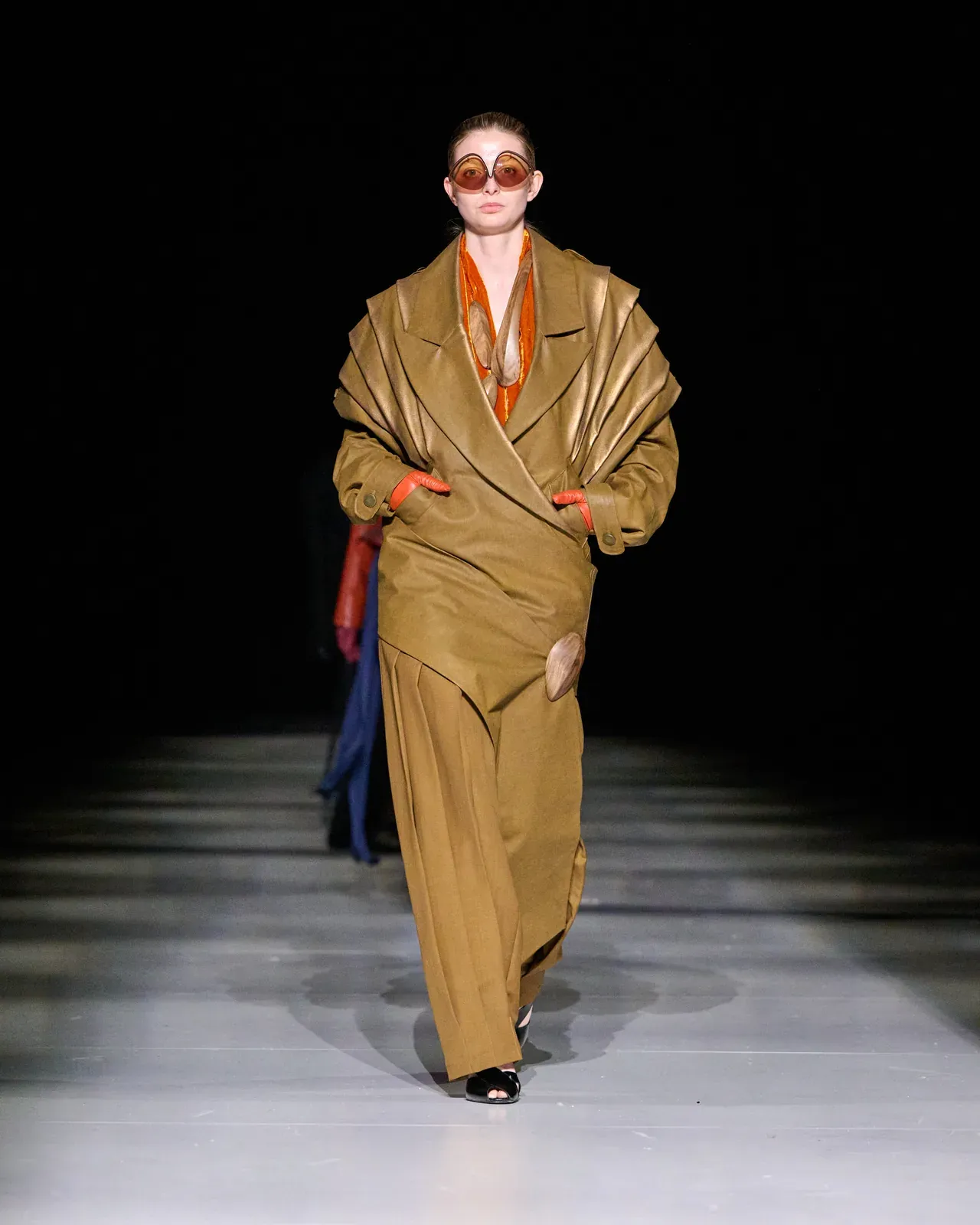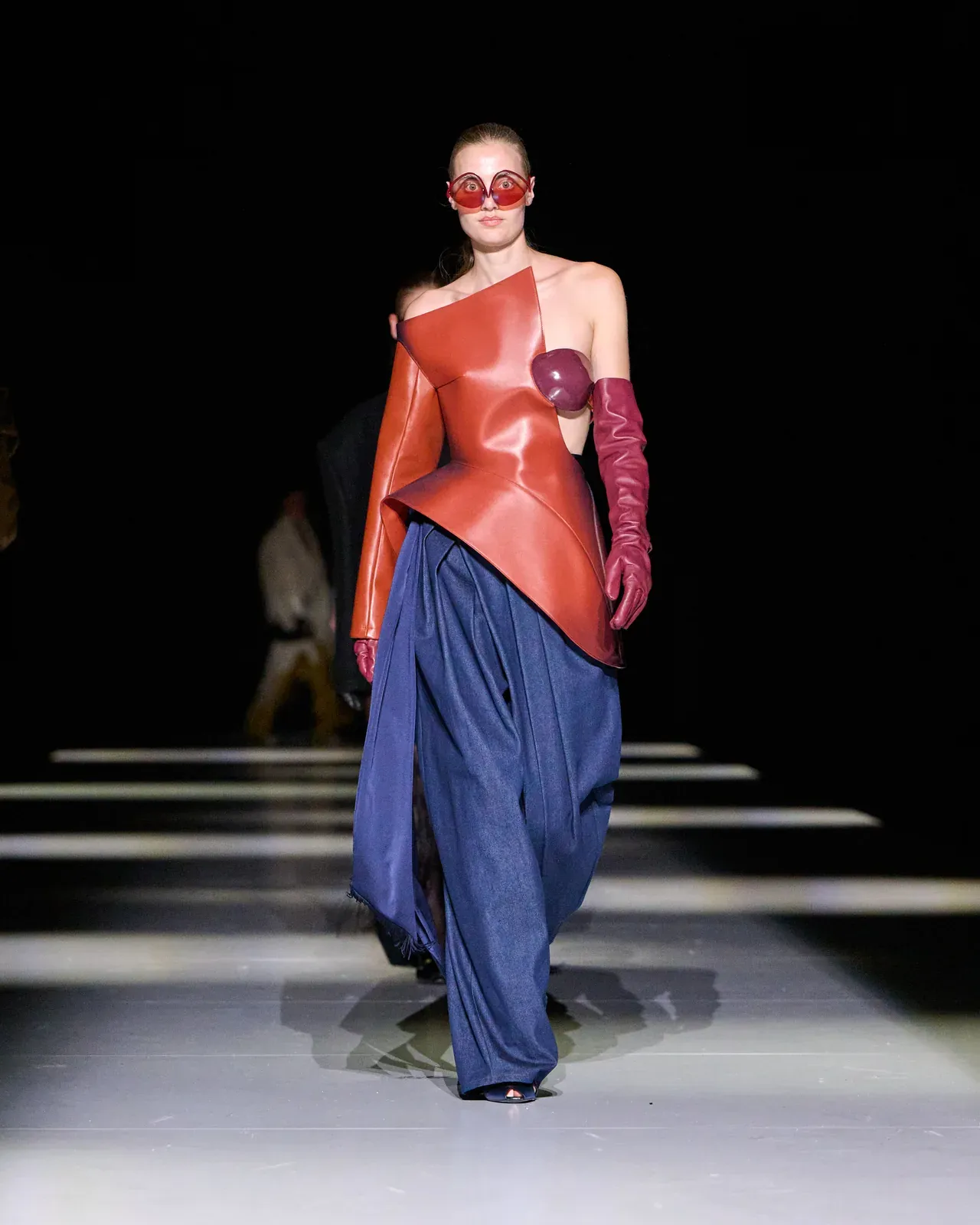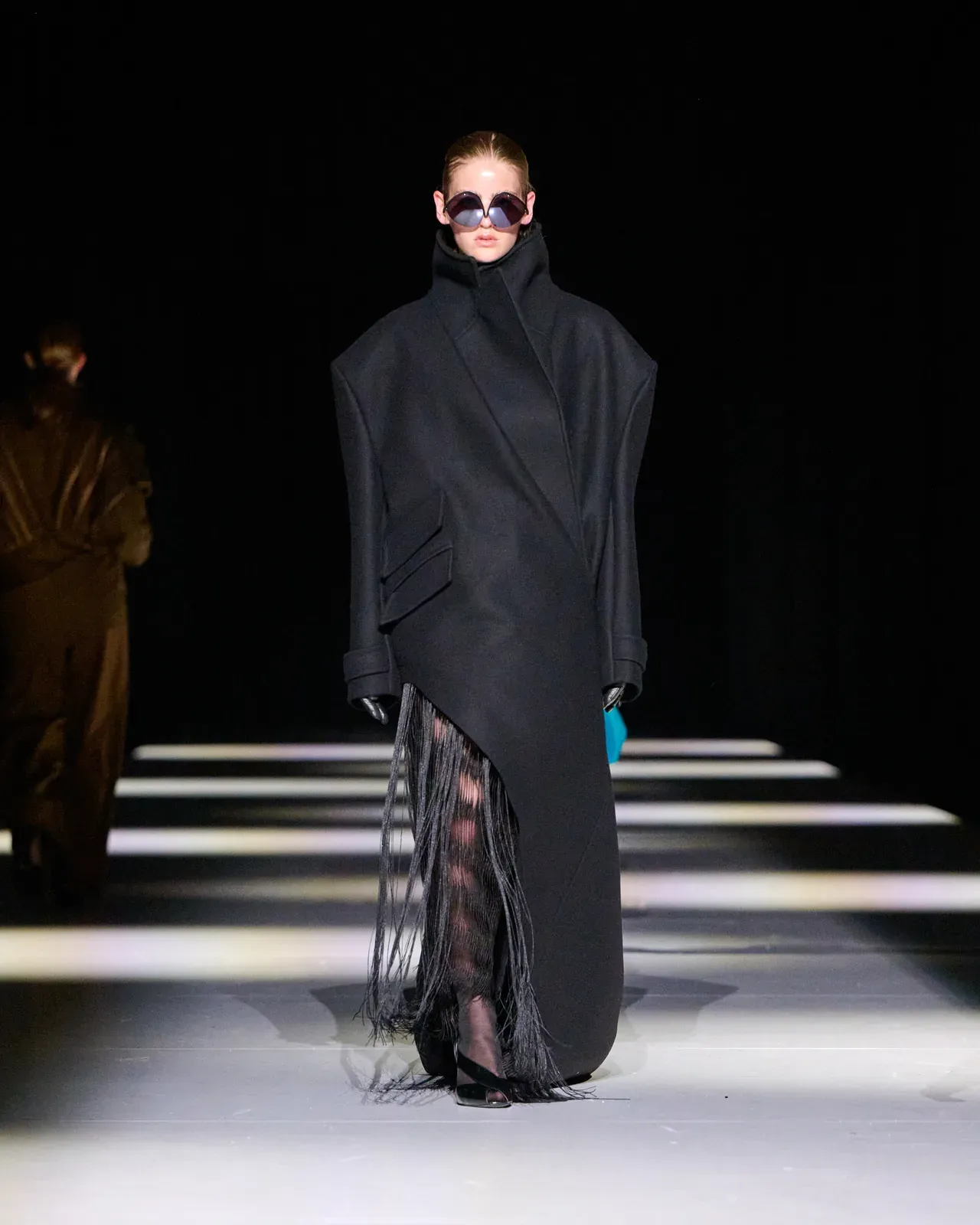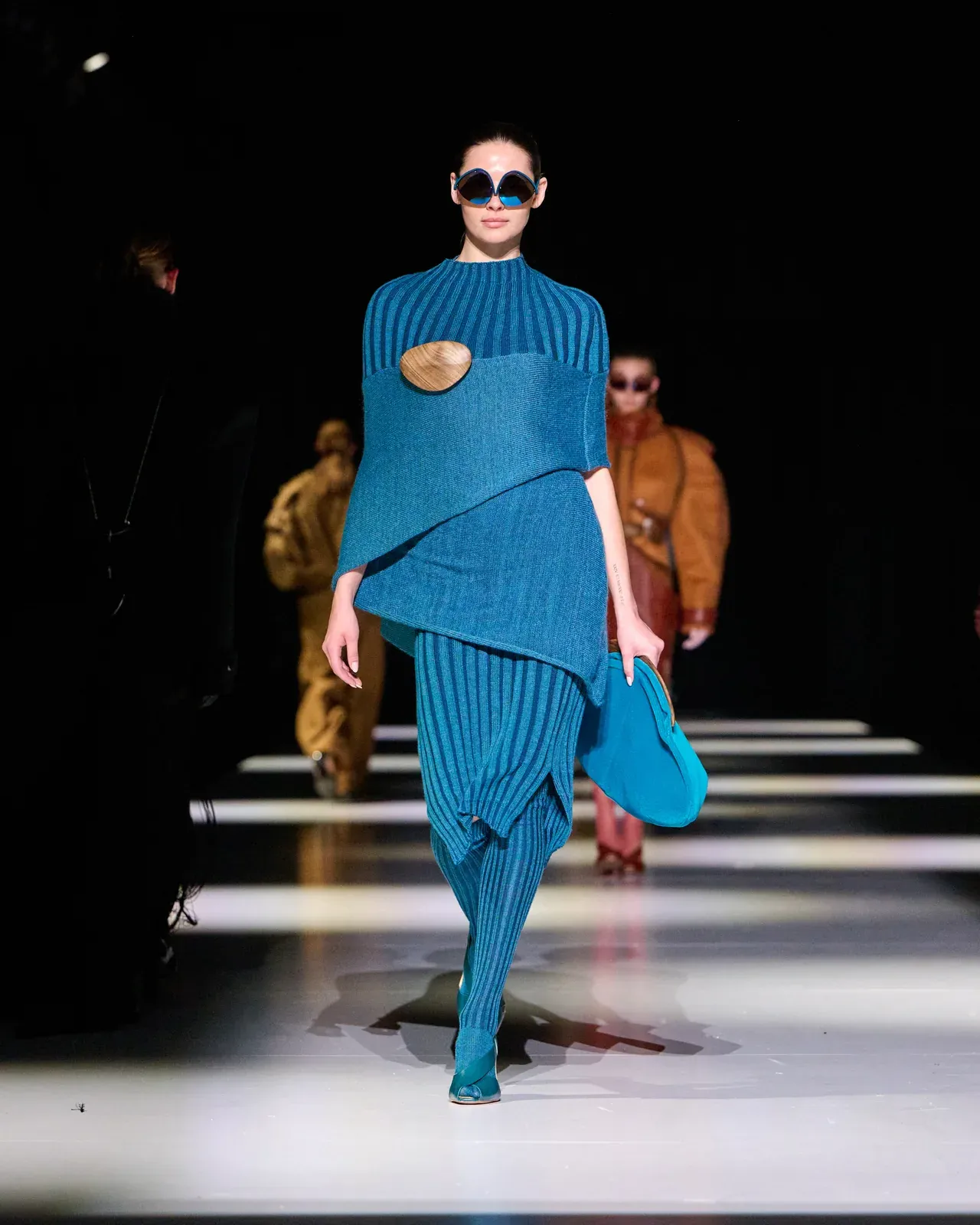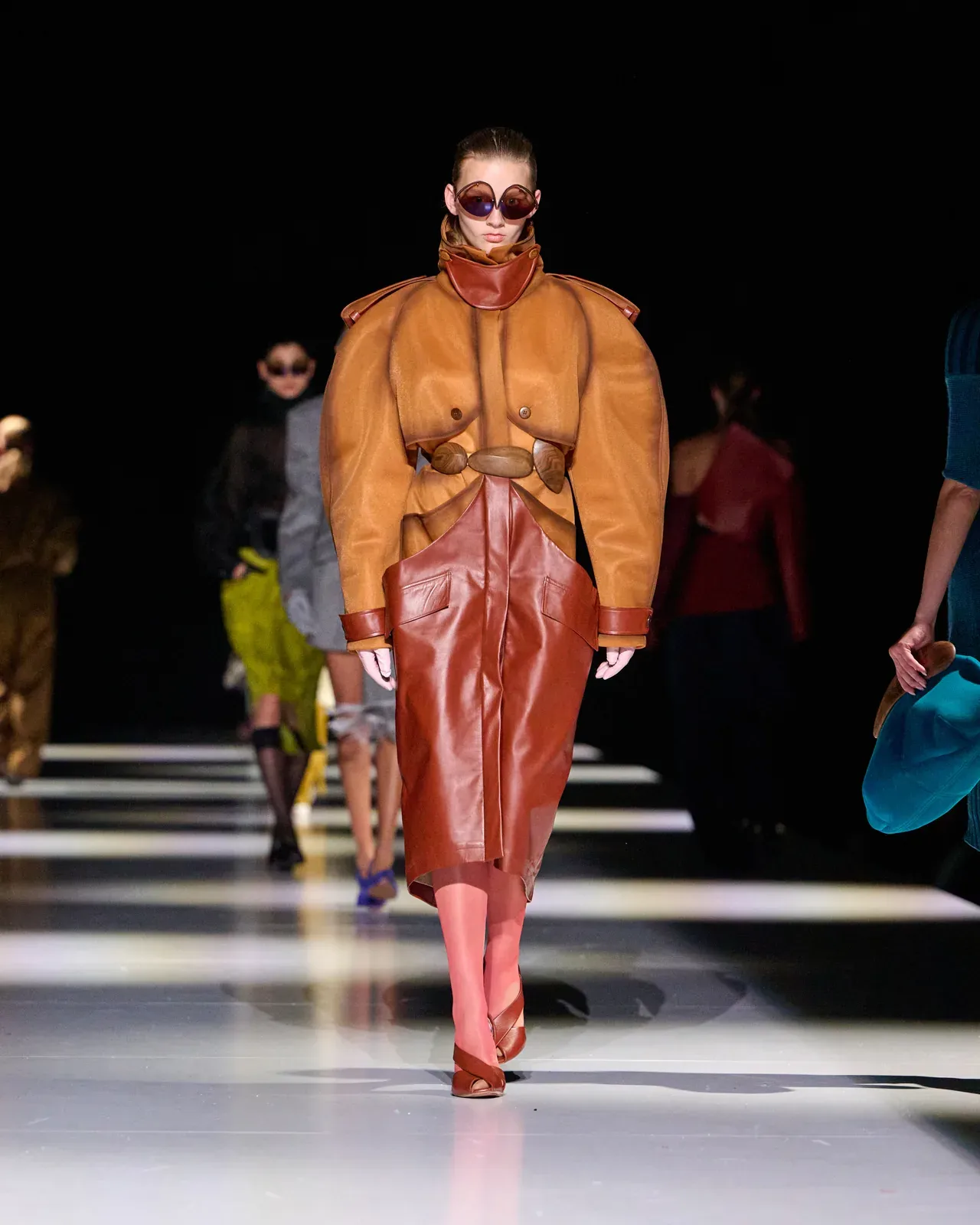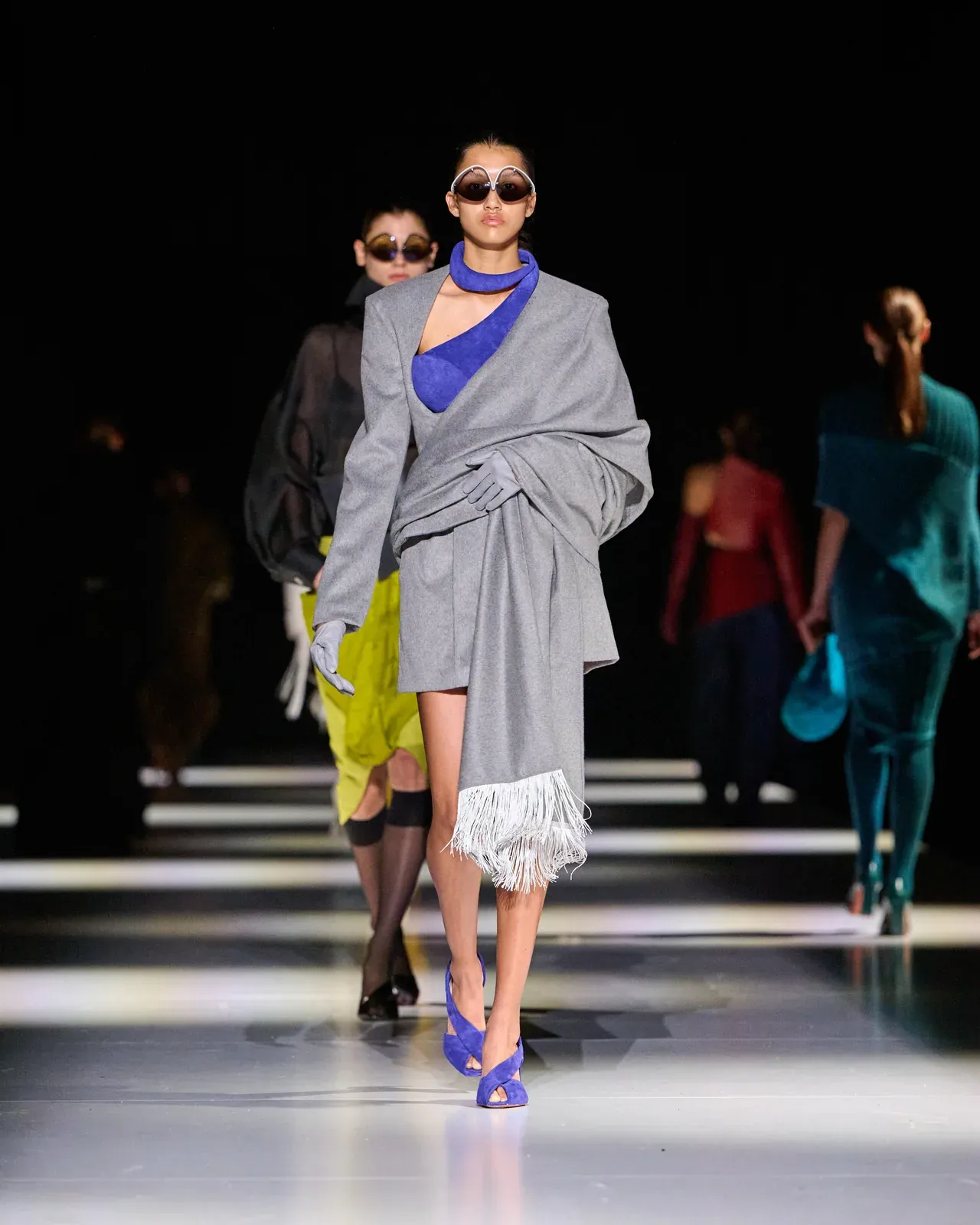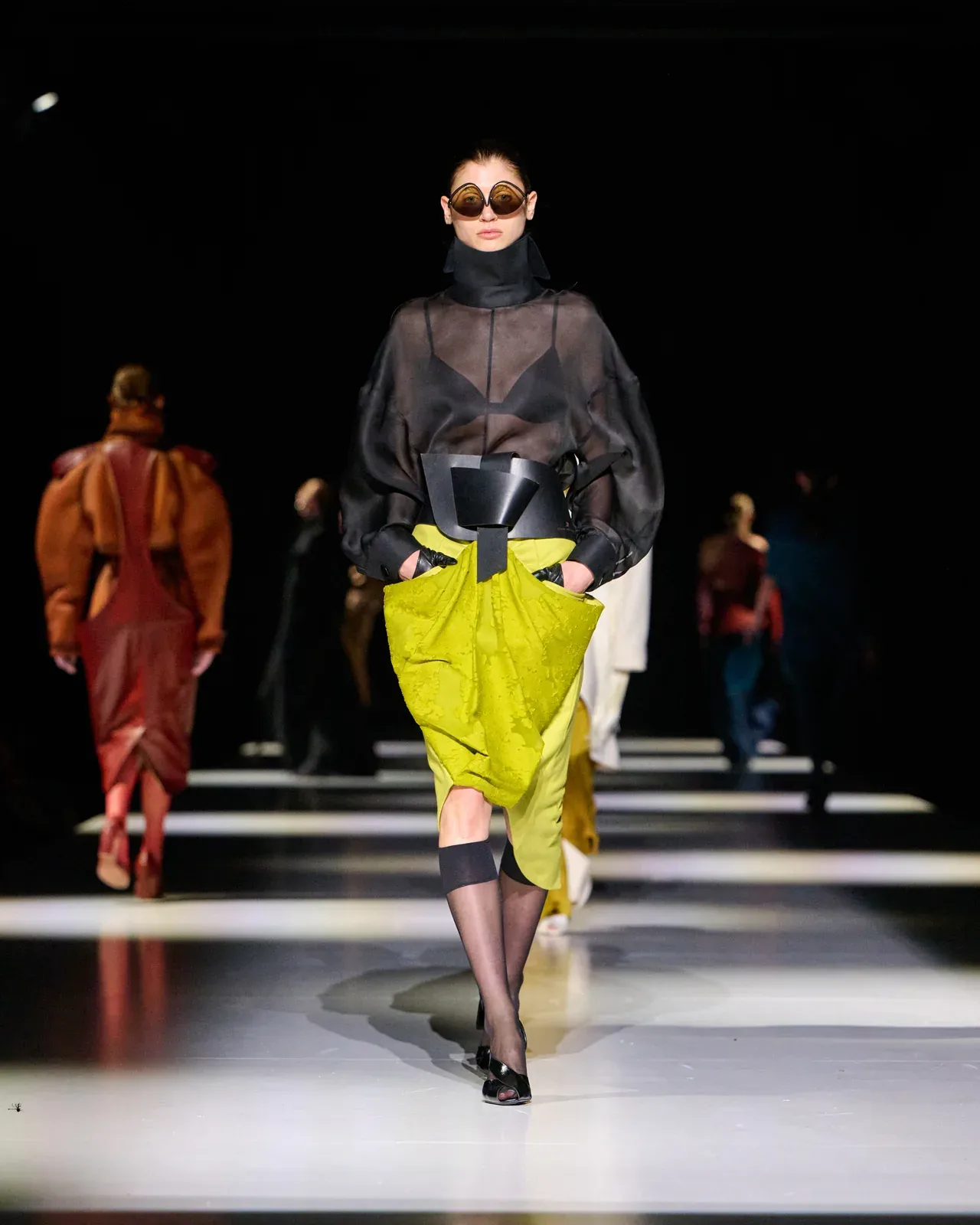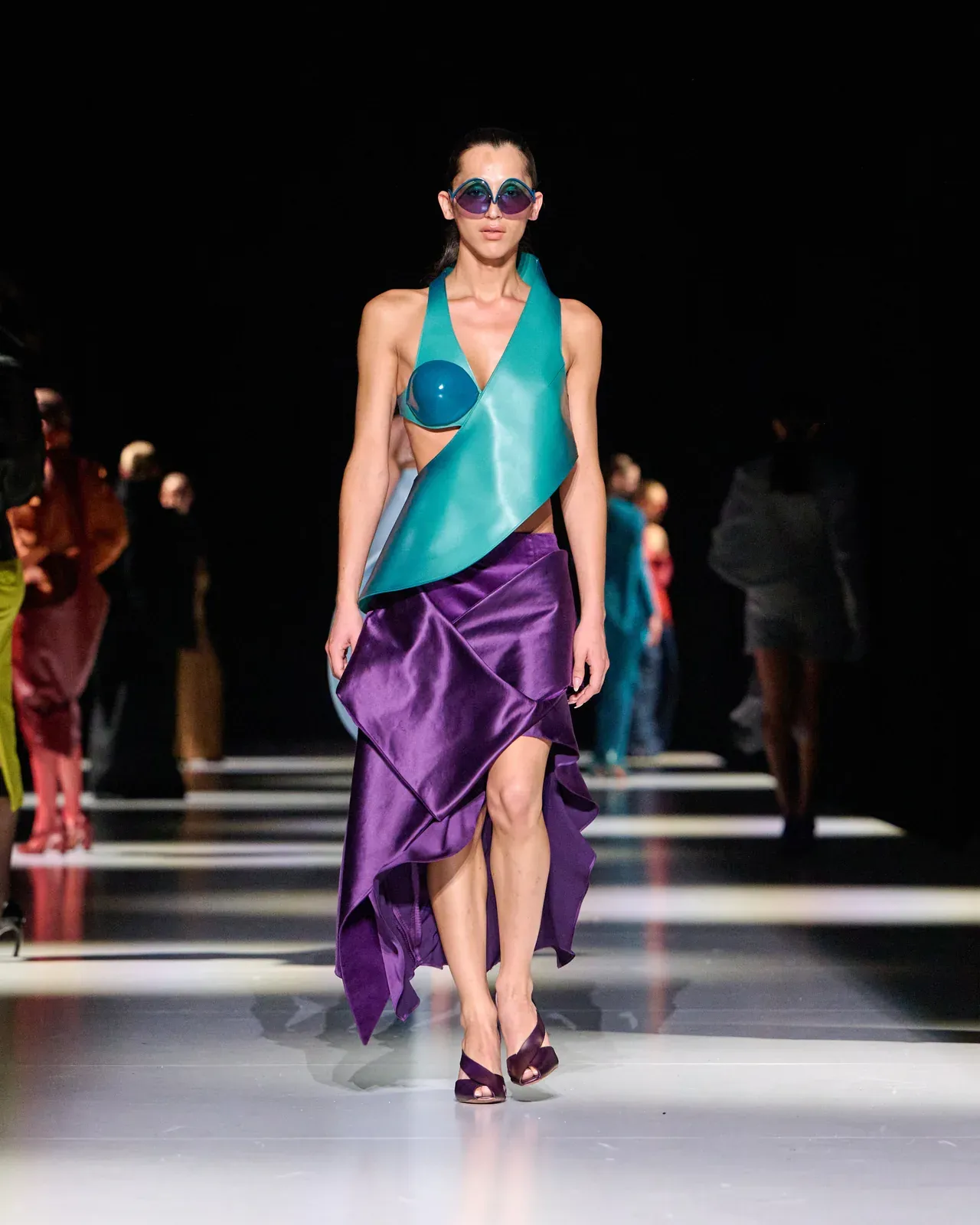
Our visit to Antwerp was more extensive than usual, thanks to the new and very promising Antwerp.Fashion Festival. We saw and enjoyed the genuine and incredibly rich Belgian creative industry from all kinds of angles: exhibitions, performances, installations, parties and shows. However, the event that has long represented the essence of the fashion industry in Antwerp remains probably the most important fashion encounter for both the city and the country: the Royal Academy Fashion Department Show. One more year, it showcased the fuel, future, and promises of the young fashion industry that will eventually shape the cultural landscape, just as the former alumni have been doing for decades.
During the approximately three hours that the show lasts, with a full house on both days, the show serves as a showcase slash celebration of what all the students of the Fashion Department have been working on during the past year. From first year to master, each and every one has the chance to see their pieces on the runway, being cheered and applauded by a crowd that is the ideal crowd to have in any fashion show: one that genuinely wants to be there, that cares about what they are seeing and that understands what it means for the creators. After many impressive toile pieces, the iconic world costume projects and the proposals of the third-year students that give hints of what their final year will look like, the climax arrives with the awaited presentation of the Masters 2026 collections.
The class this year consists of sixteen graduates from all around the world: Poland, Germany, Austria, Spain, China, the USA, Ireland, Taiwan, China, and, of course, Belgium. We arrive looking forward to the best from them, but our expectations are always exceeded with flying colours. Getting familiar with their work up close and with their personalities in the Expo that takes place prior to the show on the Royal Academy premises, we get to understand in detail where their ideas are coming from, how their thinking process occurred and the details and intricacies of the garments that often get lost when seeing them from a distance.
From there we already fall for some specific proposals; there's a special connection that happens when you see certain pieces or collections and you think, "Yeah, this is it," and then, when seeing them on the big-scale runway, you notice that what was already good looks even better. That what they show in static mannequins doesn't lose detail when being worn by a person and that, on the contrary, they gain all the life a garment needs to live.
Although we loved every single one of them, with this feeling of connection, we chose our favourite collections of this year's Masters. An idealistic and introspective work of contemplation about our reality with complex craftsmanship work behind it; a deep exploration of the being of thirteen different characters that manage to coexist in the same collection, working excellently as a whole; and a precise study of bodies and space with an architectural approach that, even in its sculptural geometry, hides the organic. Because a collection is more than the few minutes we see it on the runway, we asked them about their inspiration, process and reflection on the result.
The inspiration:
What was the inspiration behind the collection? When did you know this was the topic for you to start working on?
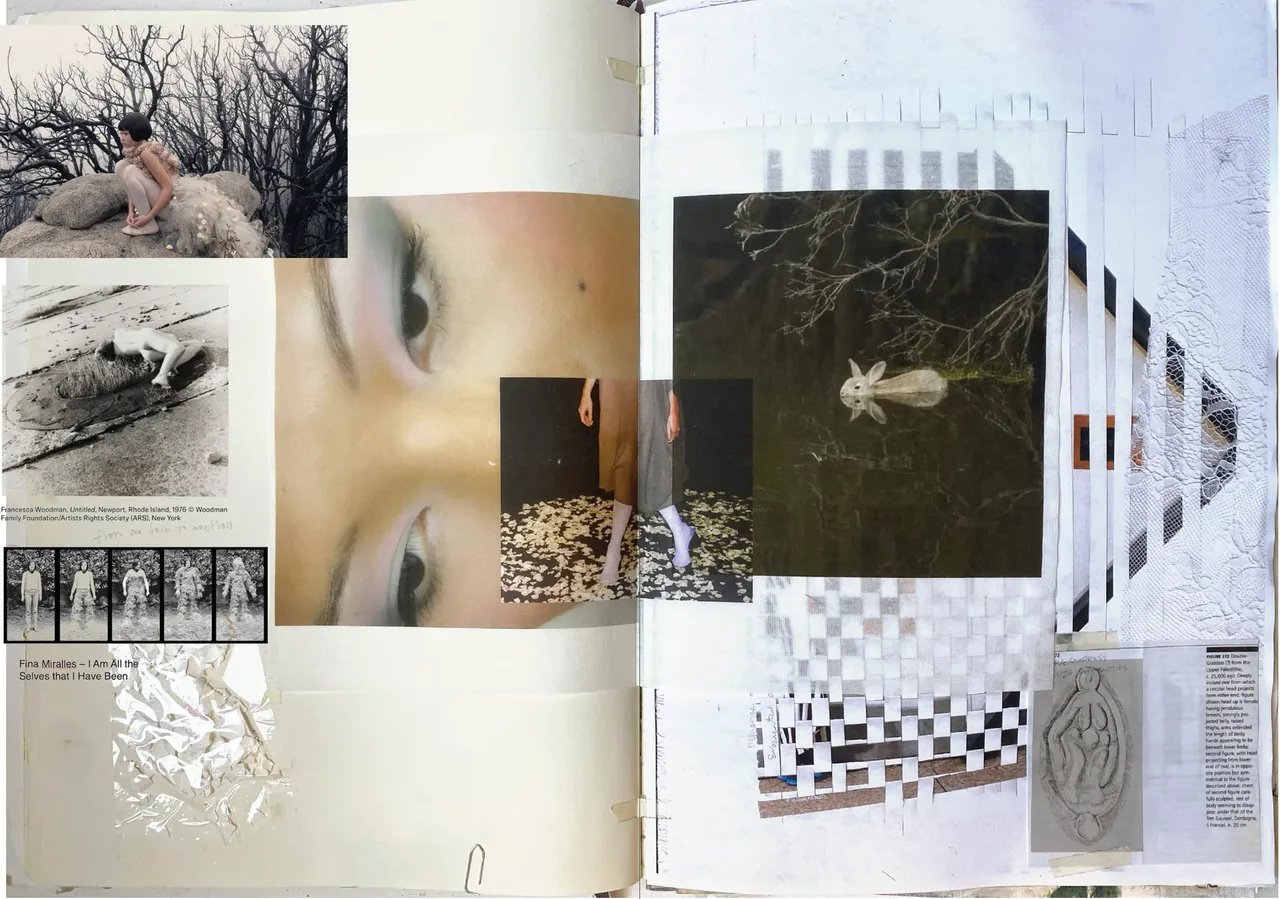
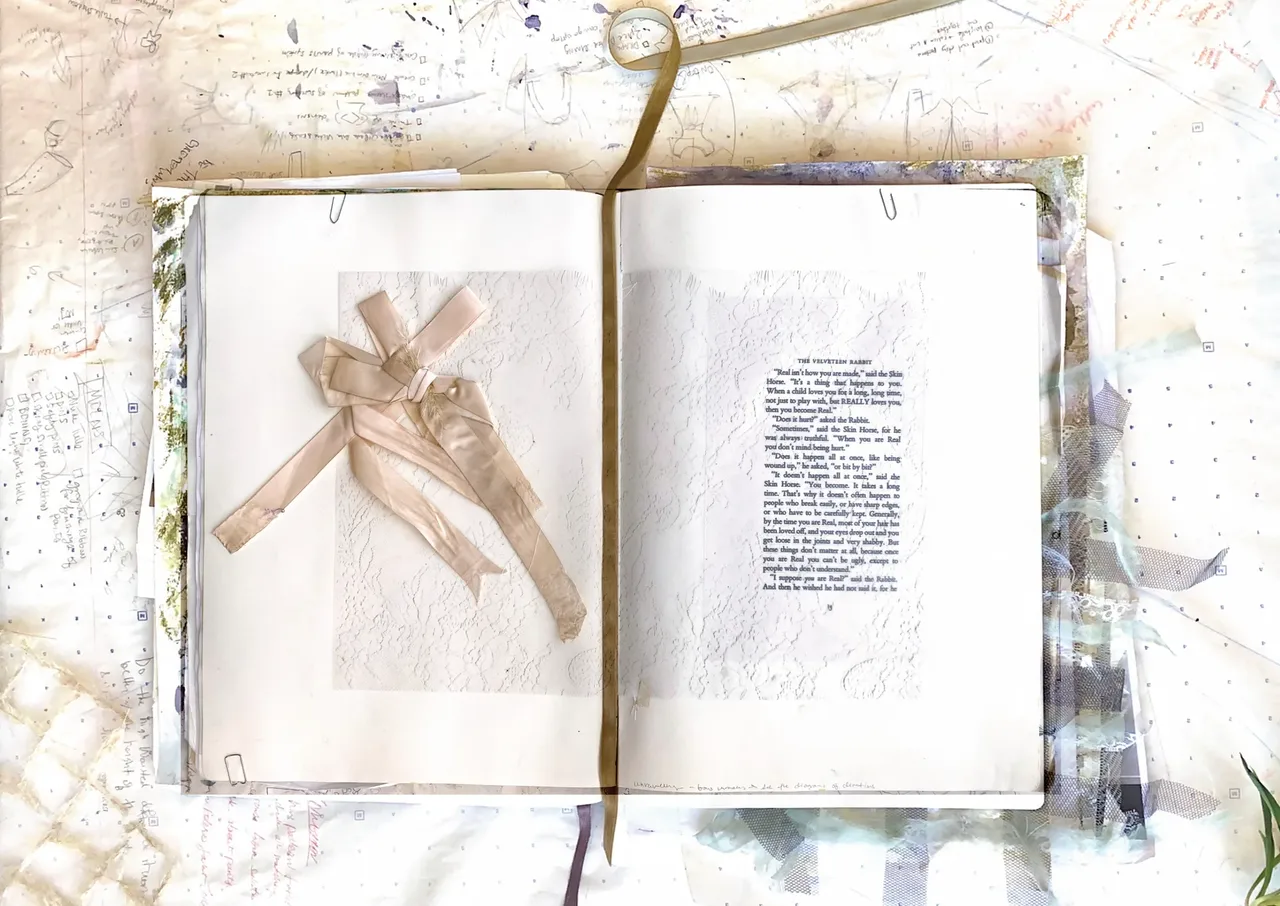
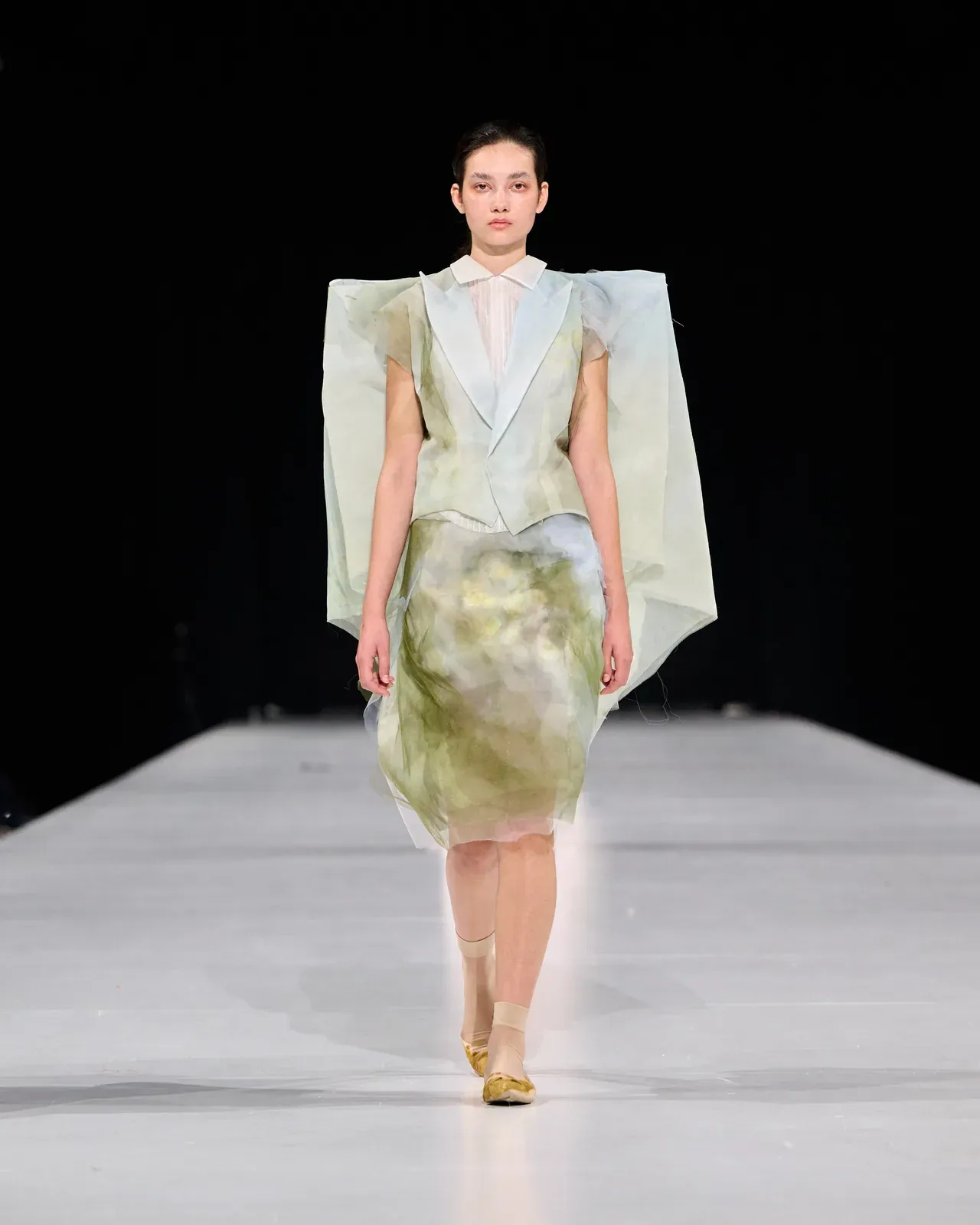
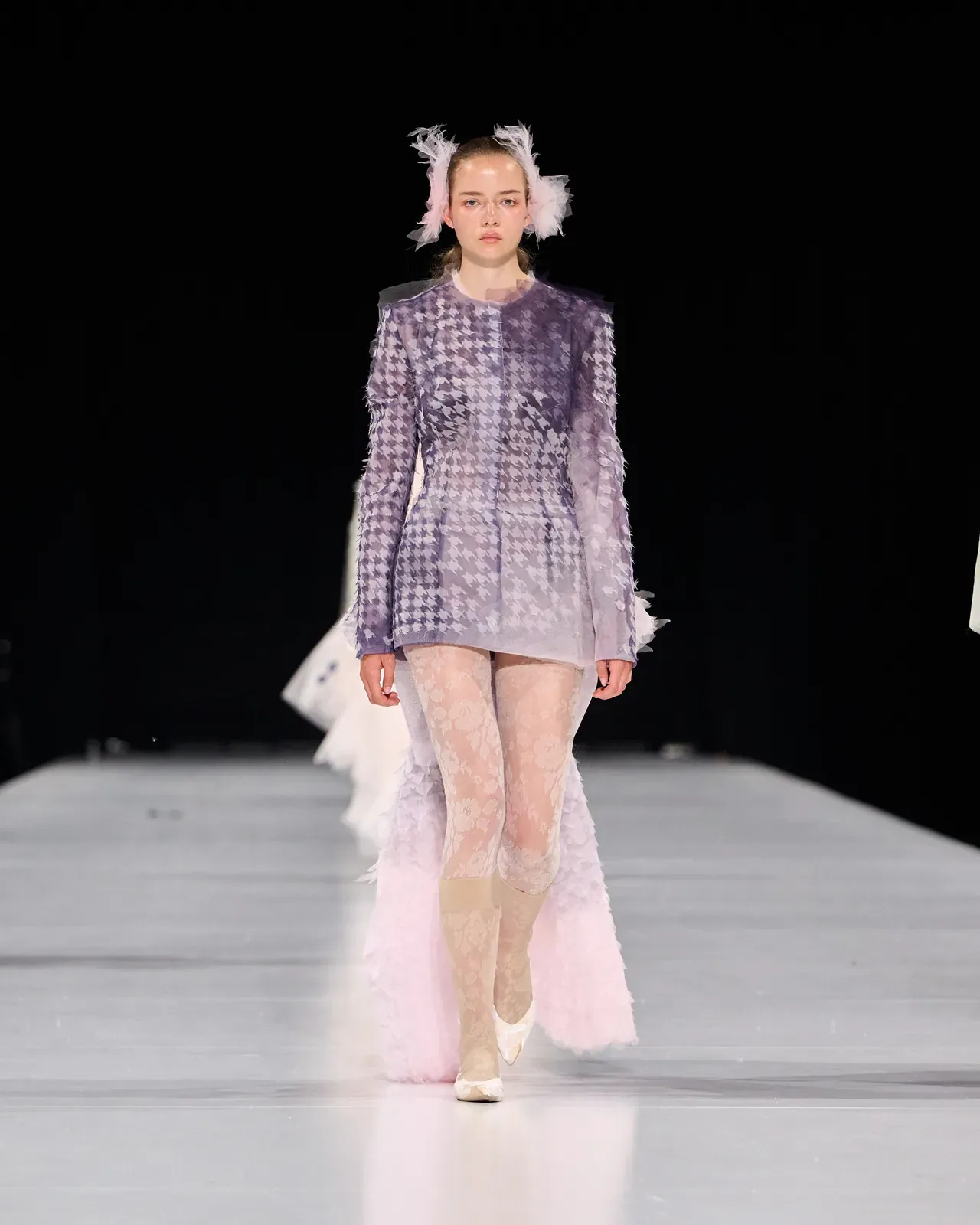
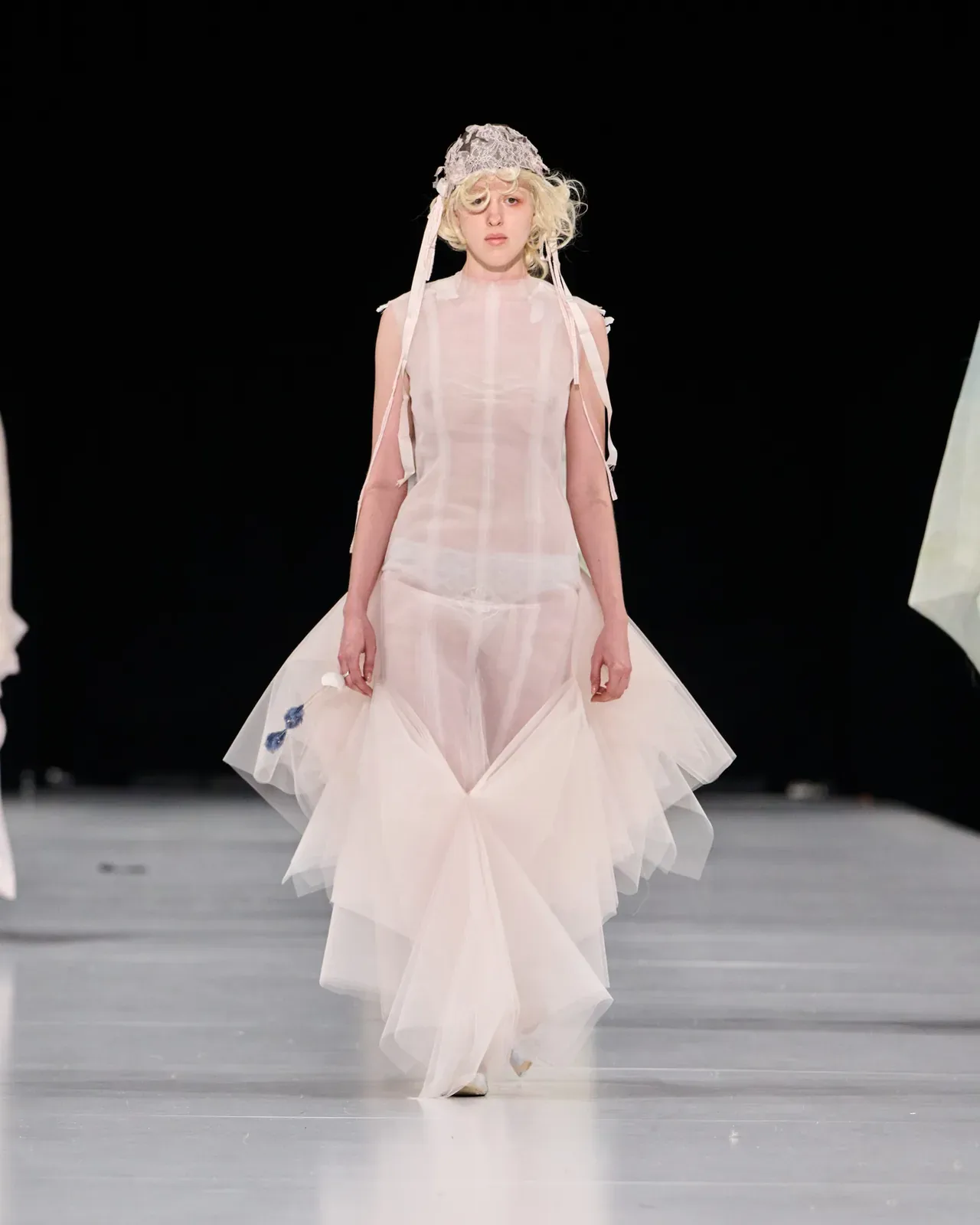
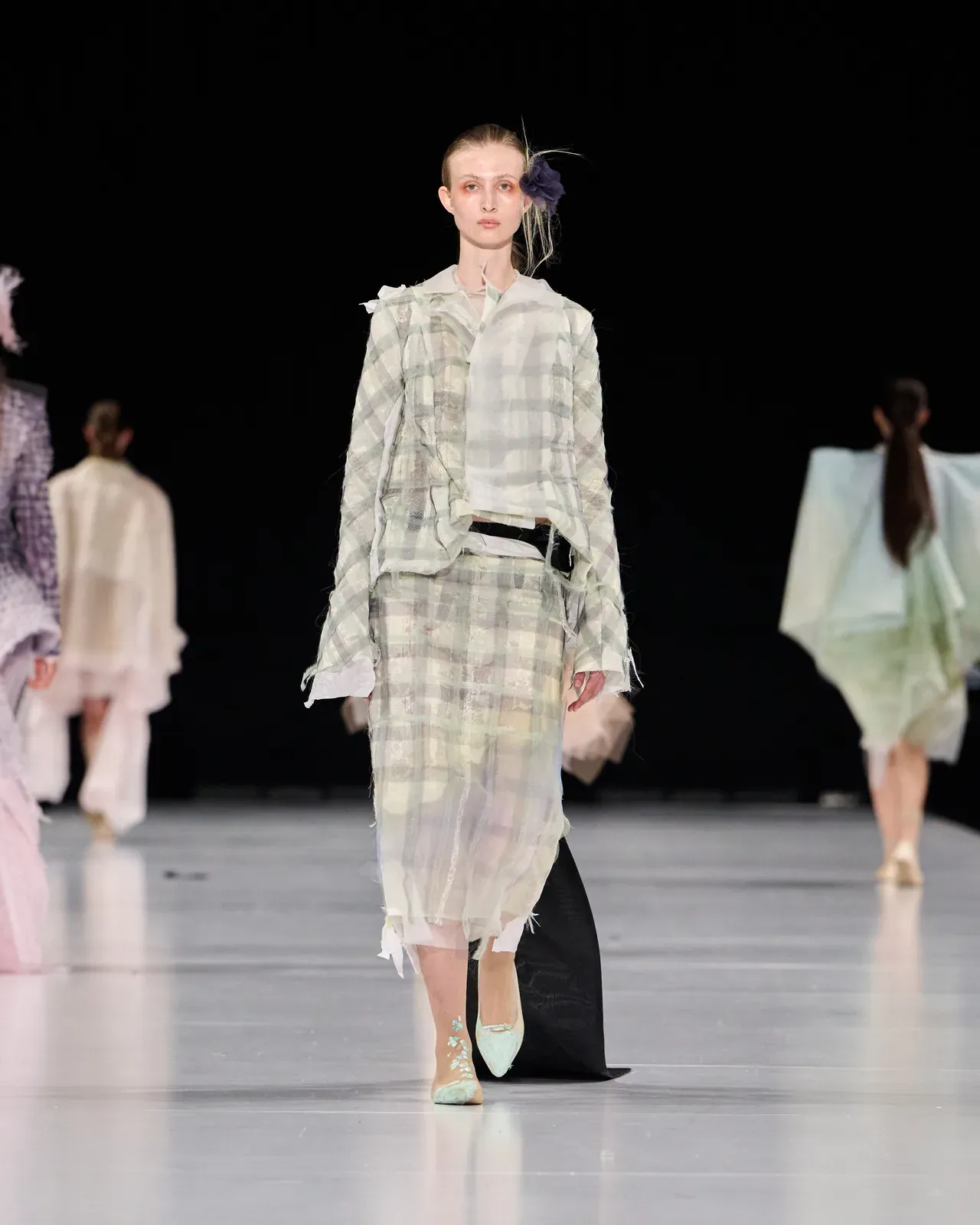
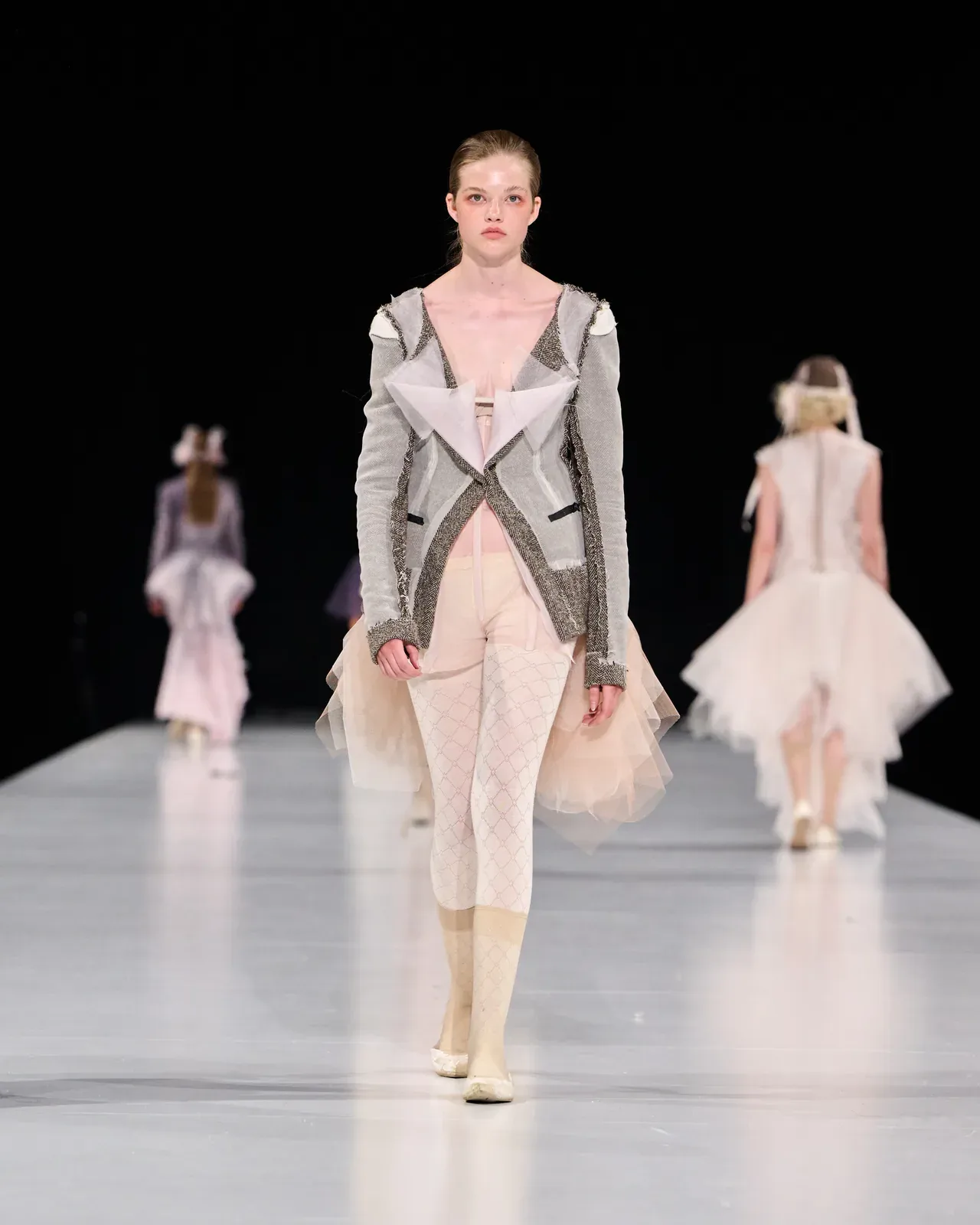
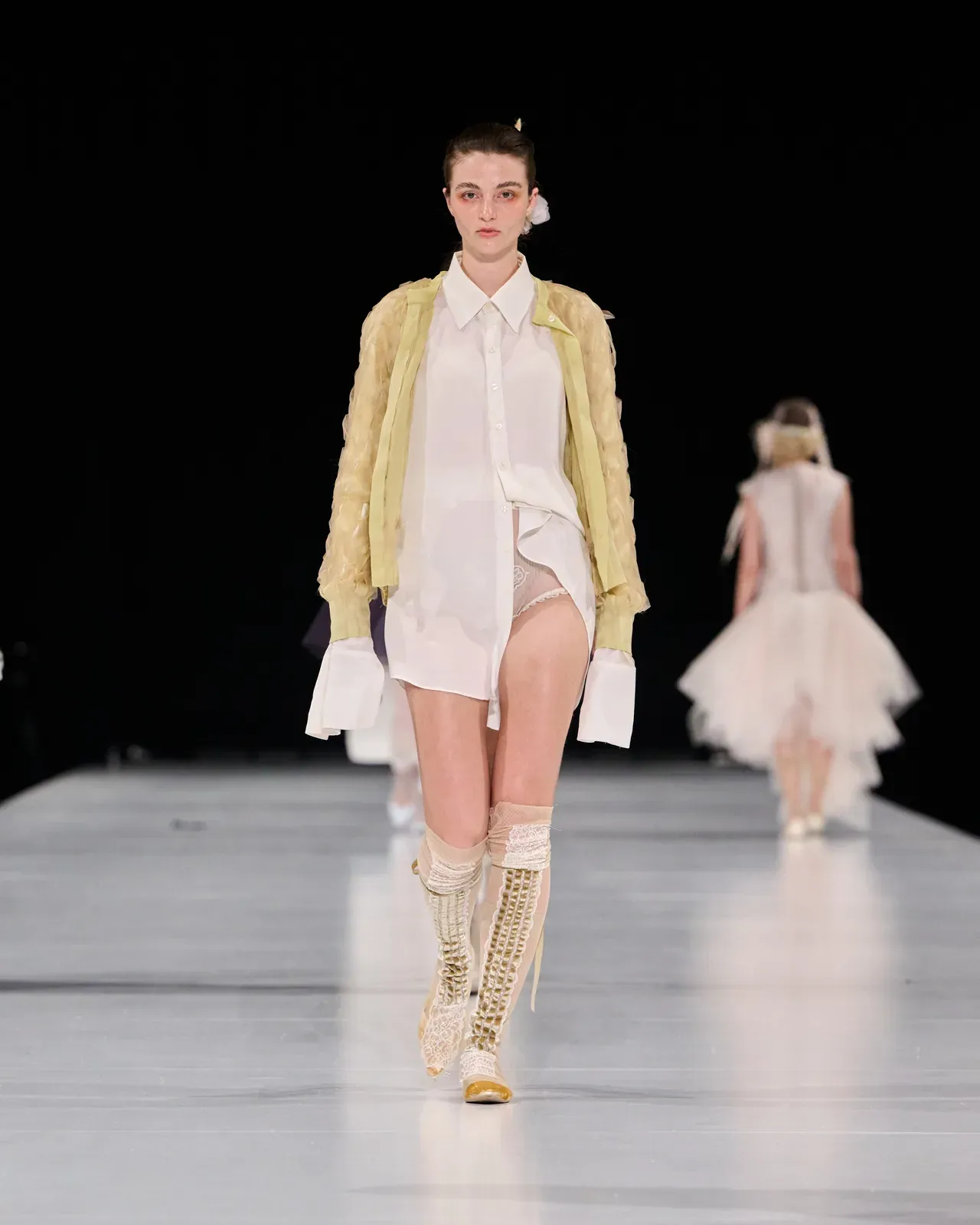
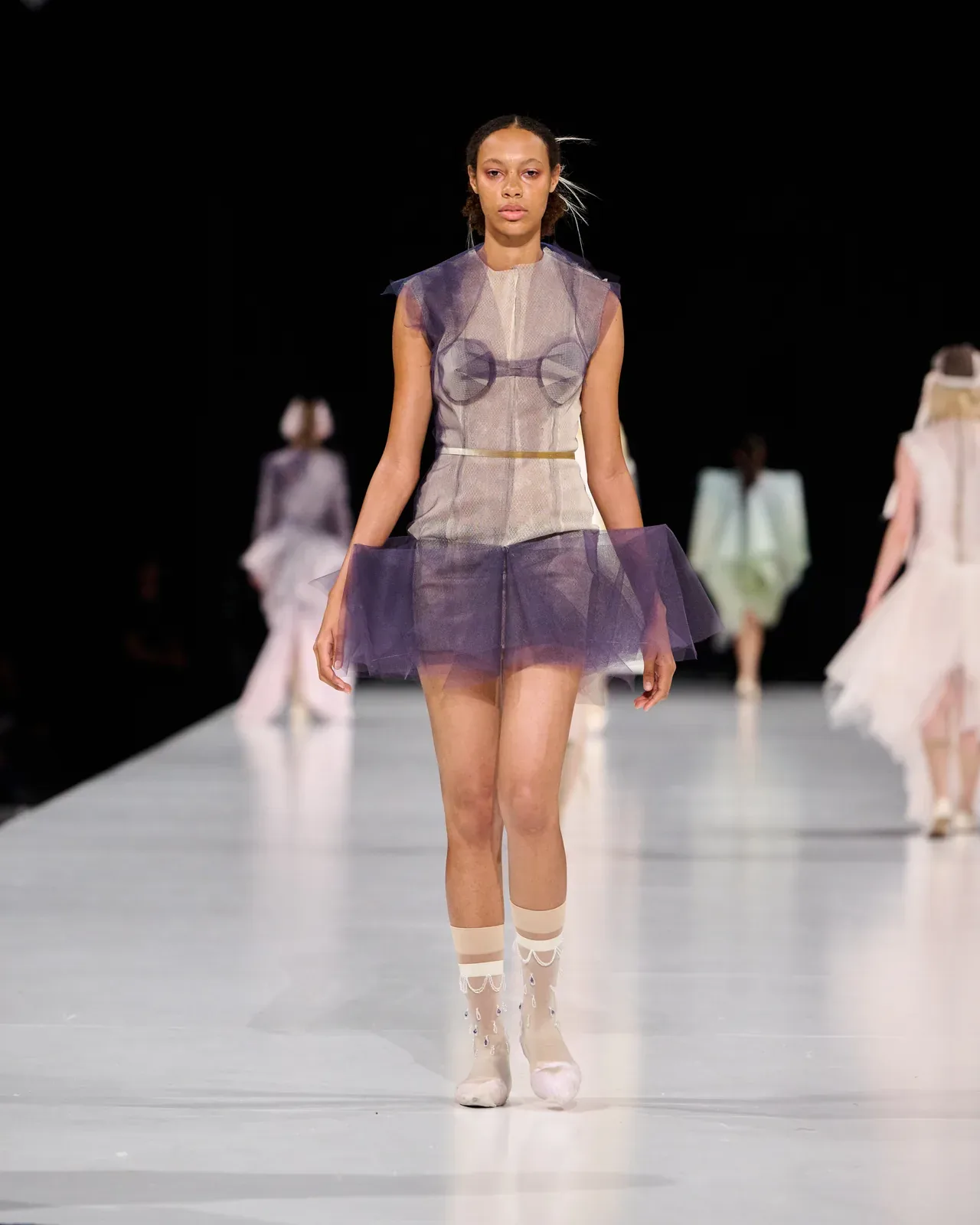
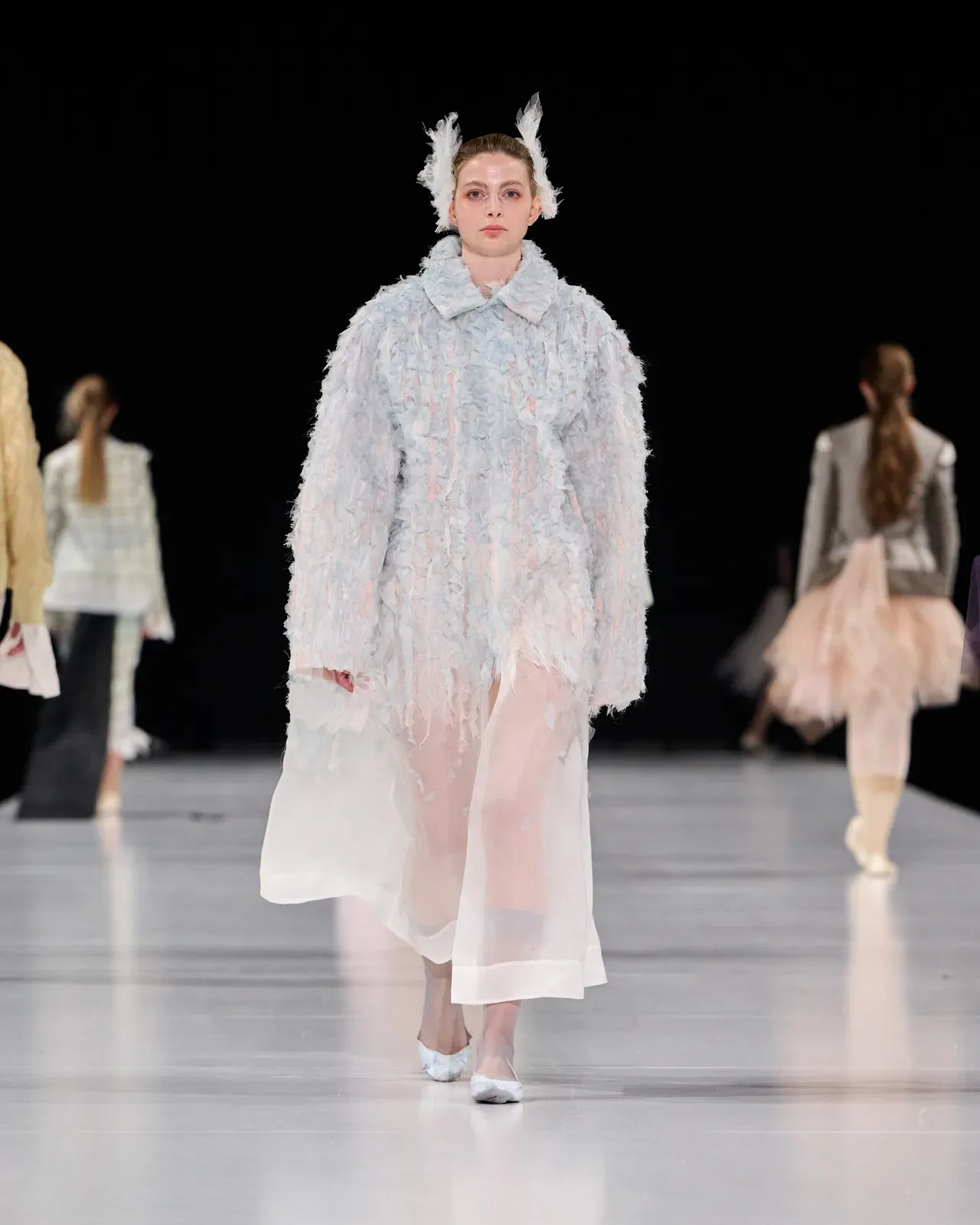
I started thinking about my collection when I was back home in Colorado for the summer. I was exhausted and just kept having this feeling of wanting to sink and disappear into the earth and nature. It came together for me when I learnt about the work of archaeologist Marija Gimbutas, whose work theorised we used to have a matrilineal, peaceful, and sedentary society in Old Europe before the Kurgans took over, bringing forth the war culture we still exist in today. I thought, "If systems are collapsing, we might restart in this way." I was also thinking a lot about the Velveteen Rabbit by Margery Williams, a story about a stuffed bunny who becomes “real” because it has been loved so much. The idea that things also degrade and change not just because of bad things but also because of love really touched me.
The process:
What part of the process do you consider key for your collection? In what moment or what detail or element did you feel that was holding a really important part of the becoming of your collection?
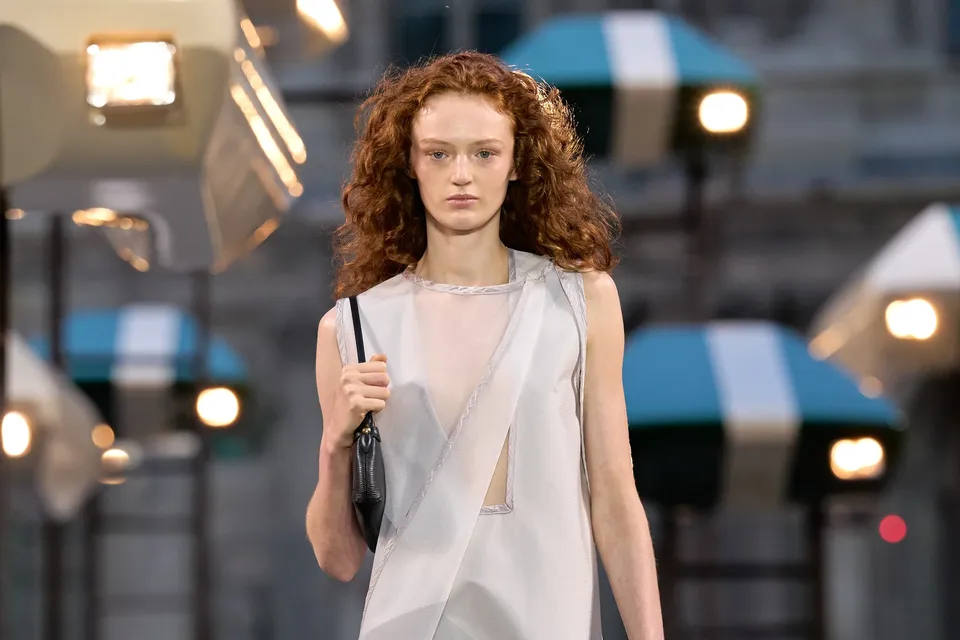
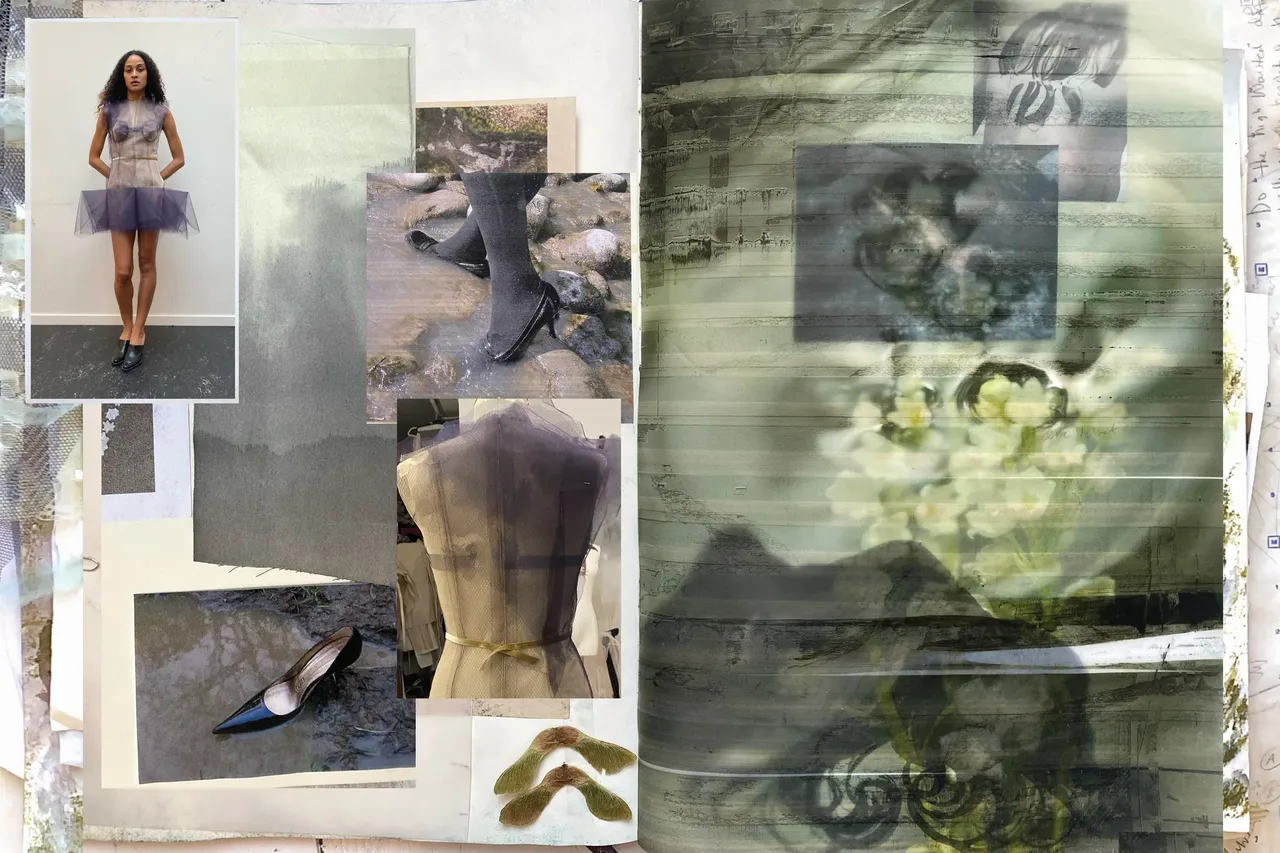
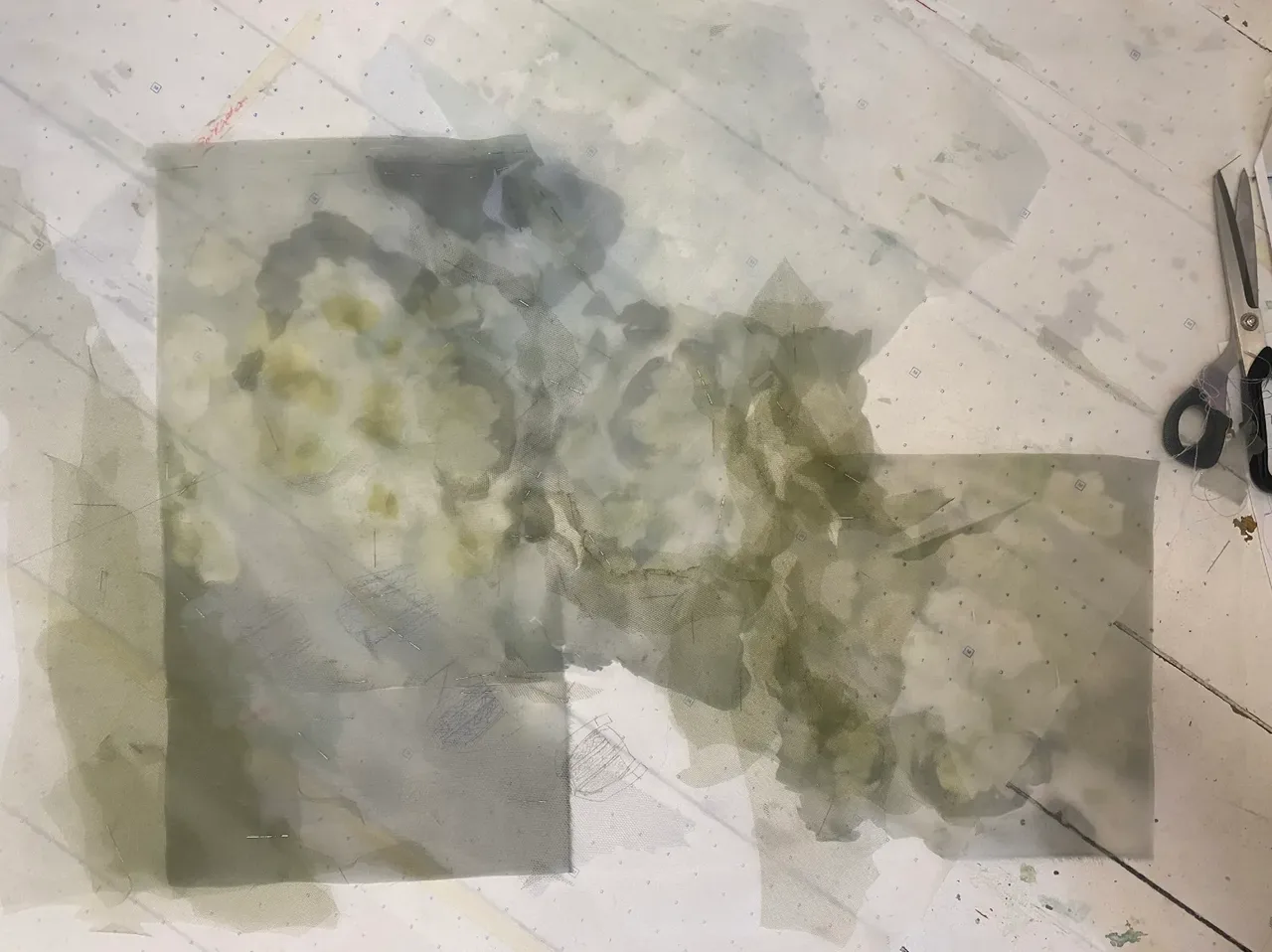
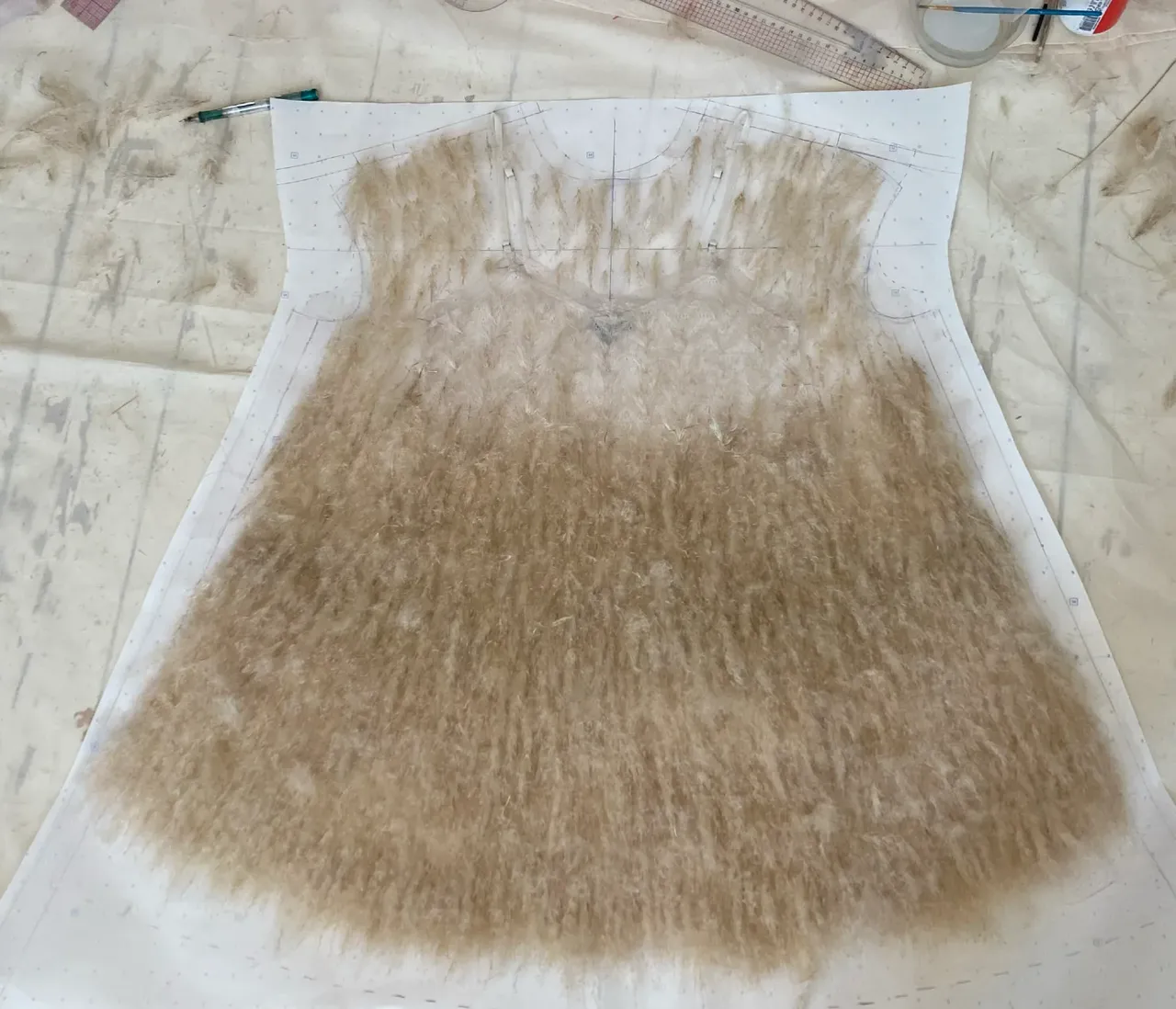
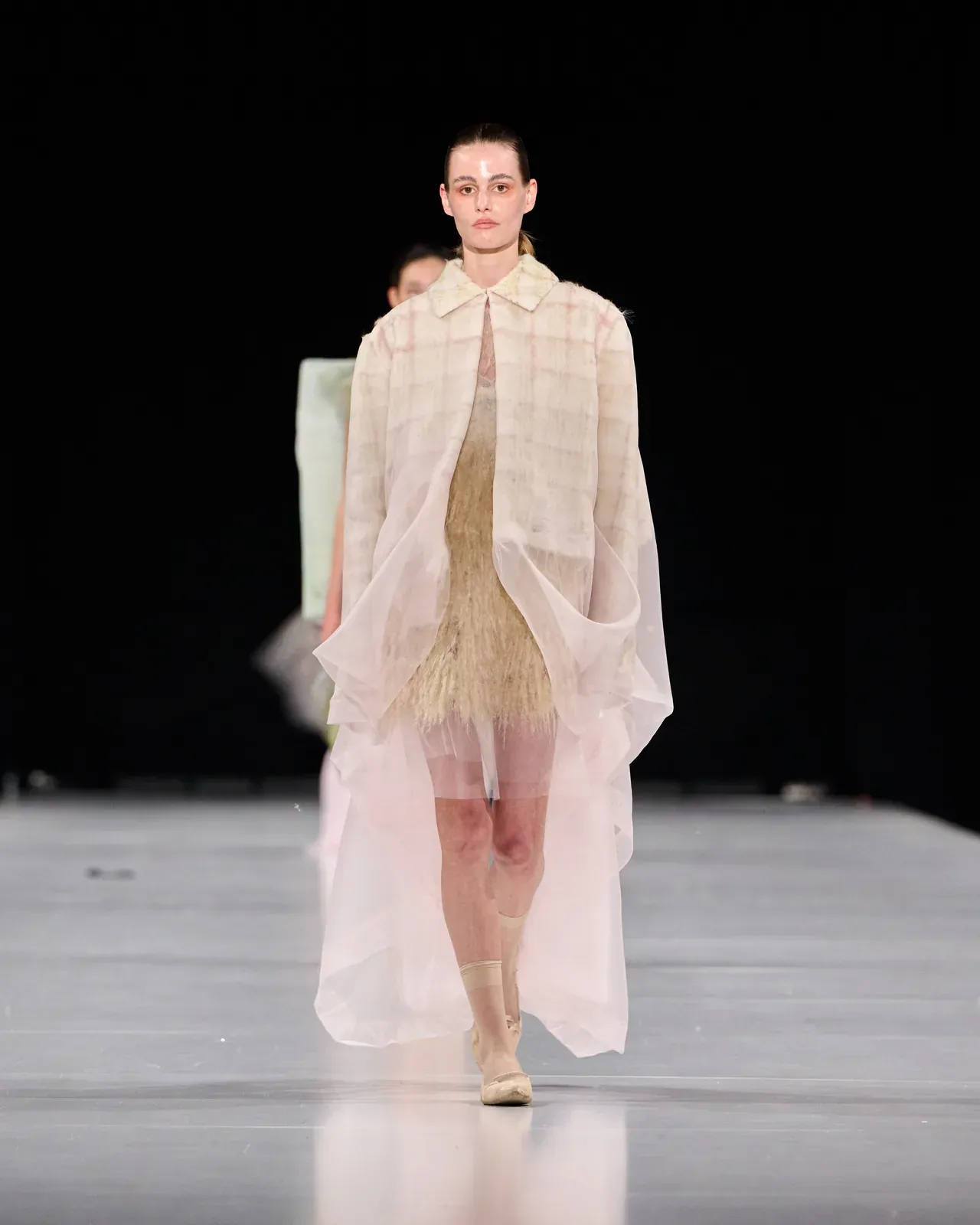
Near the beginning I created a system of folding to create the bow-like triangular tulle shapes, inspired by the triangles often found on the goddess artefacts Gimbutas recorded. I wanted to reimagine femininity and the female form in a different way than is typically proposed in society. I loved seeing these artefacts because they highlight and appreciate the body rather than the sexuality that is often in turn the same word for femininity. I was also searching for the whole year for how to capture the intuitive and light nature of how I paint. I always struggled translating my vision into the normal fabric of a final garment because it appeared so one-dimensional and flat. I had a breakthrough when I started treating my fabrics as such; layering fabrics let me control exactly the colour and depth I wanted to propose. It’s a hassle, but I dye almost all my fabrics, even the tulle, to get the exact colour I am searching for. When it came down to it, the essence of the collection is that everything was recreated by my hands. After a long and unfruitful search for the perfect plaid wool, I ended up felting the plaid by myself, which then led me to the perfect degrade method into organza.
The result:
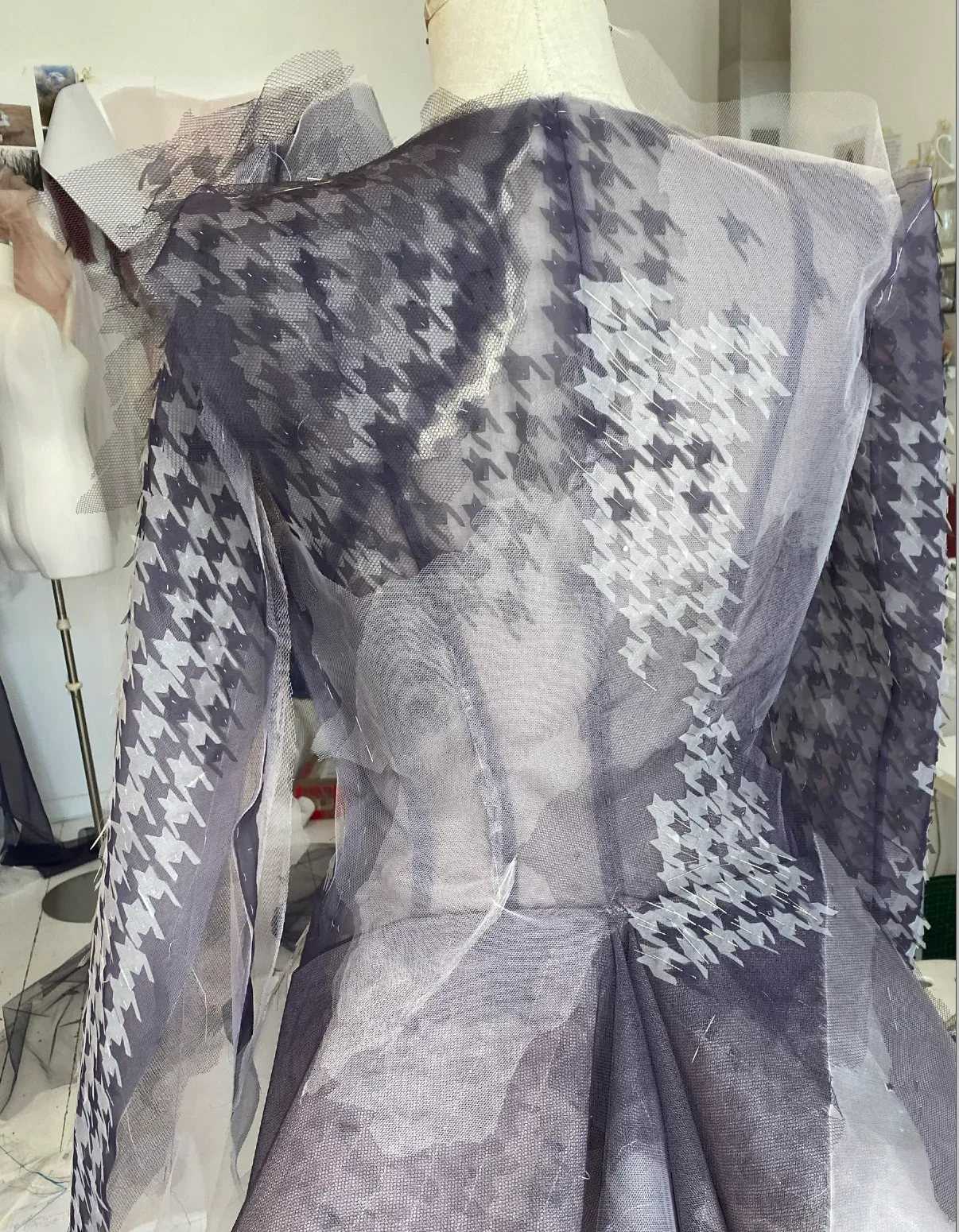
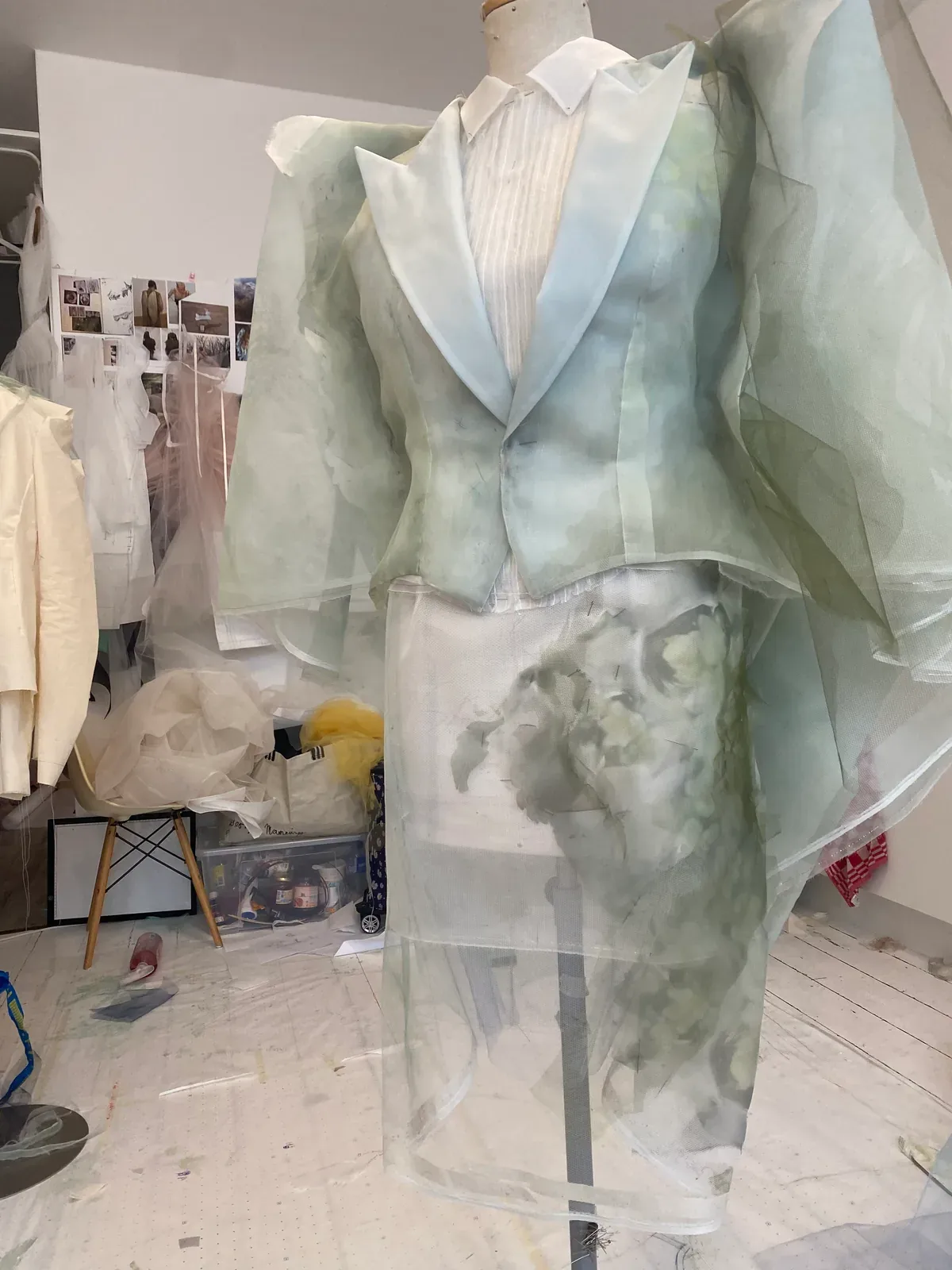
You mentioned how through reimagining sartorial codes for the feminine, you are proposing an alternative way of life. How does this alternative look, and does it fit the current landscape of society, or is it more like a utopia we can only dream about?
The reason Gimbutas’ work is so important (and that she was recently vindicated after being criticised for years) is that it gives us an example that we once existed in a less aggressive way — and more so, that it is possible. The way we are going… it’s not working. Systems are collapsing; the earth is hurting. When we start again, we might start this way. Her work showed us that everything is cyclical. I believe in healing, and I believe the earth will heal after all this devastation. Nothing is ever lost; it just transforms.
The inspiration
What was the inspiration behind the collection? When did you know this was the topic for you to start working on?
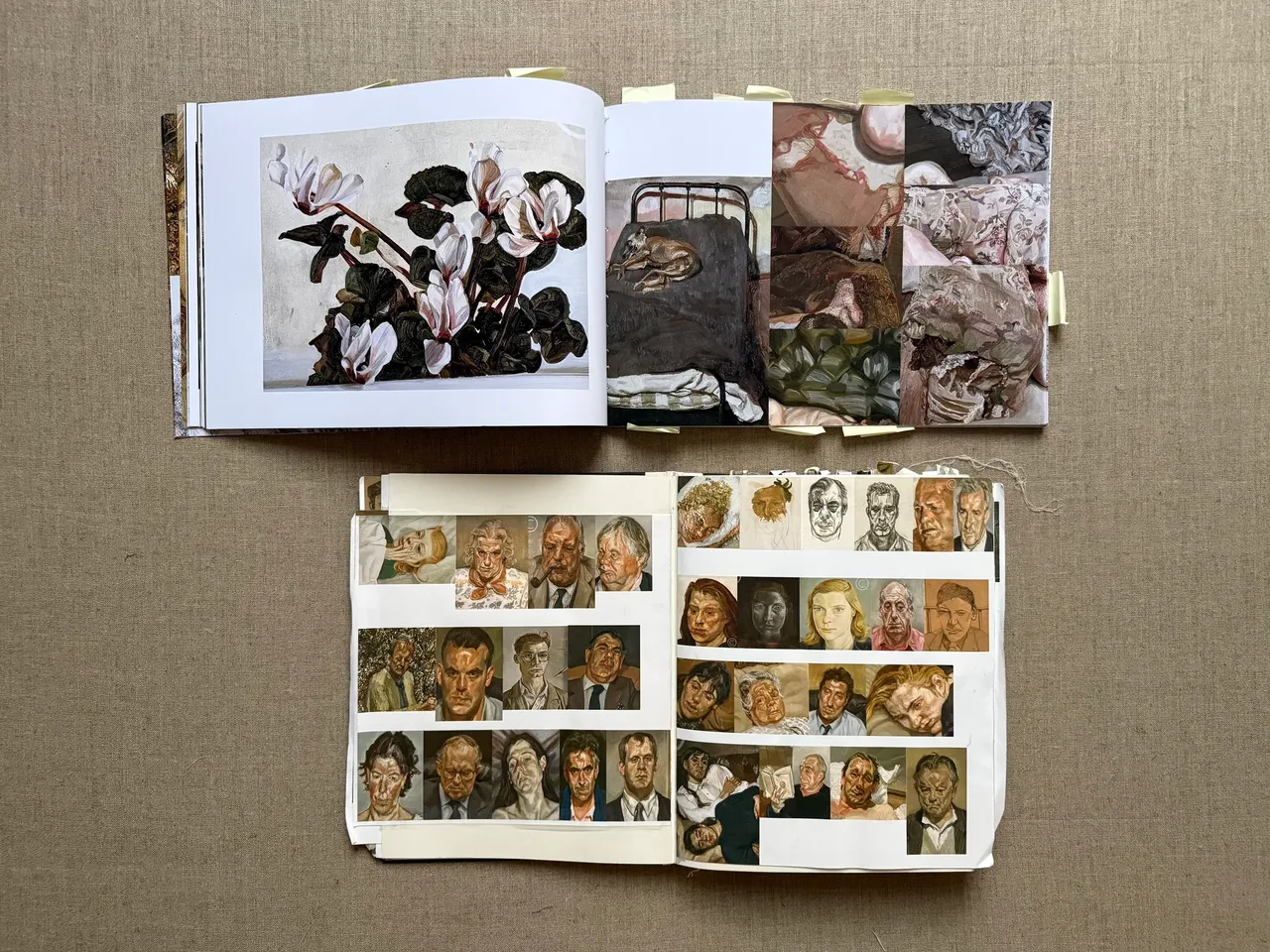
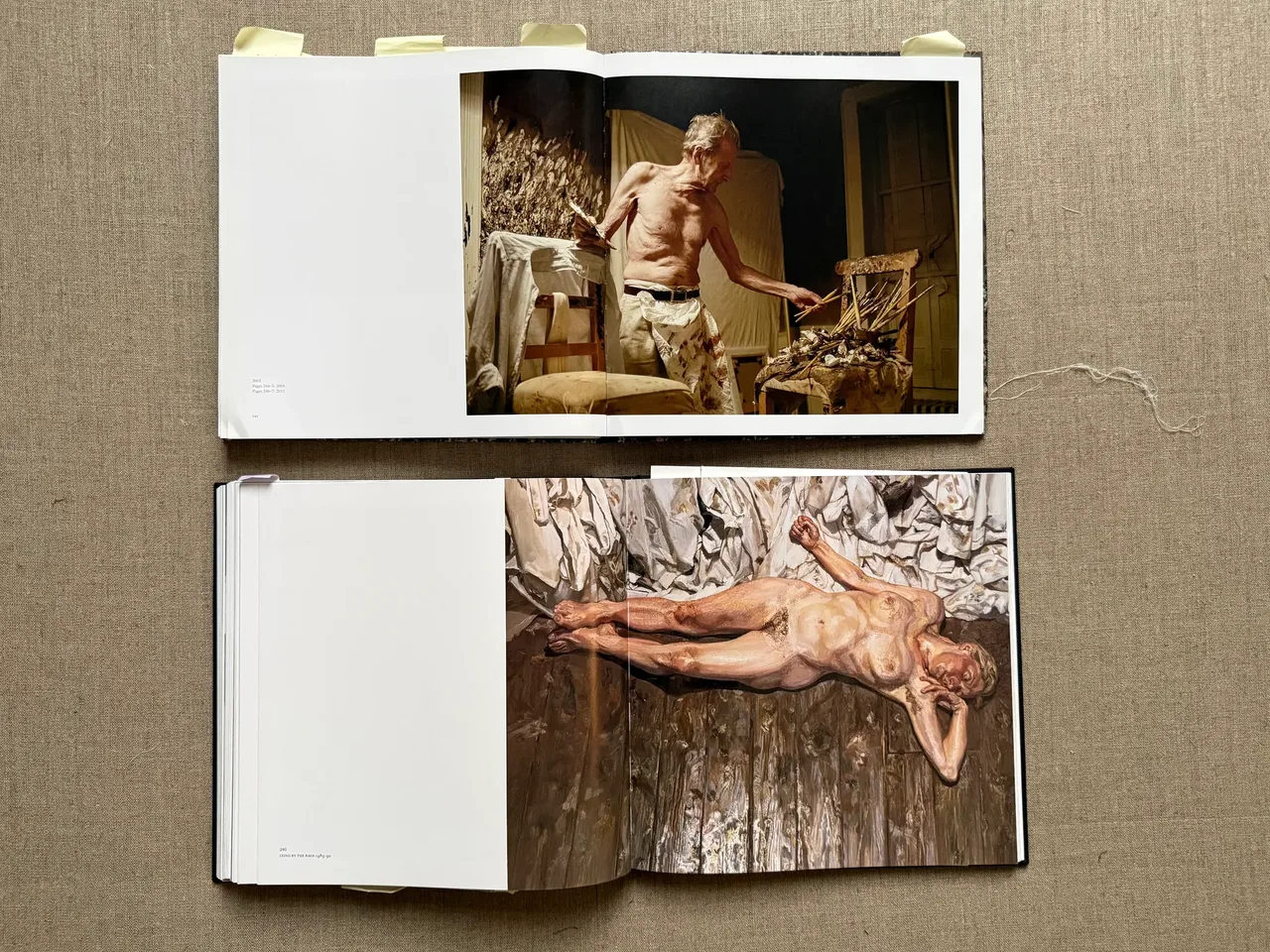
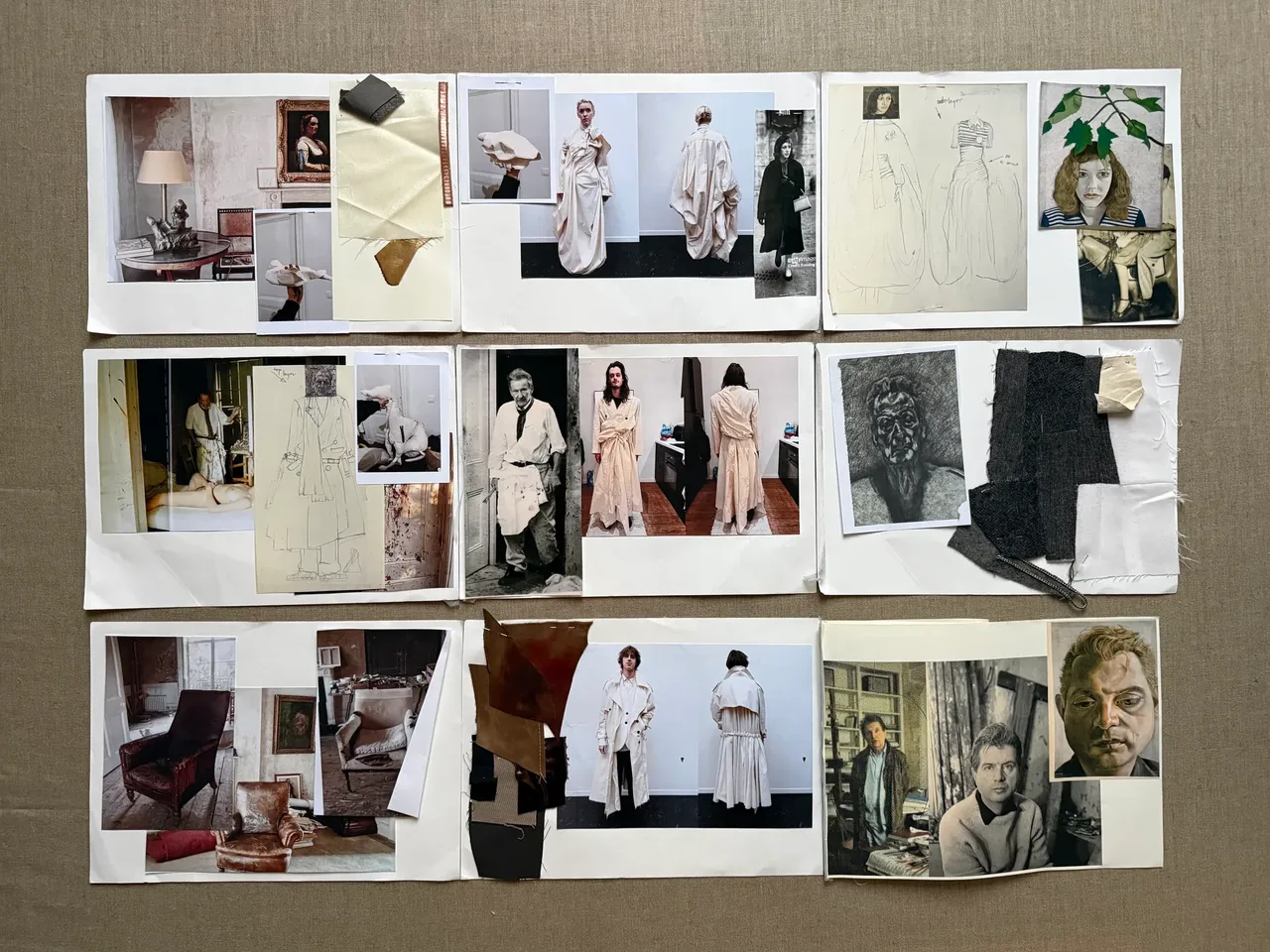
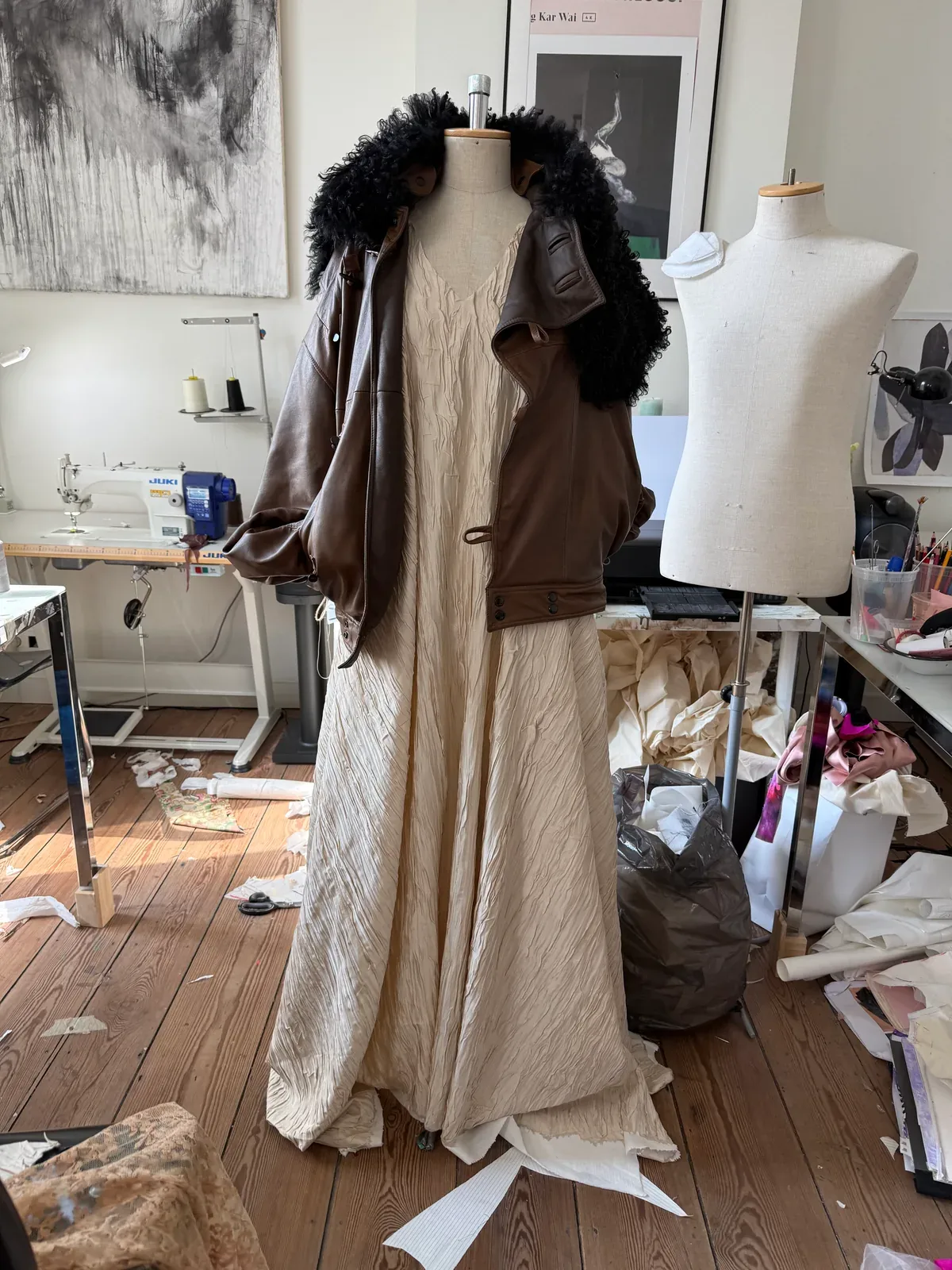
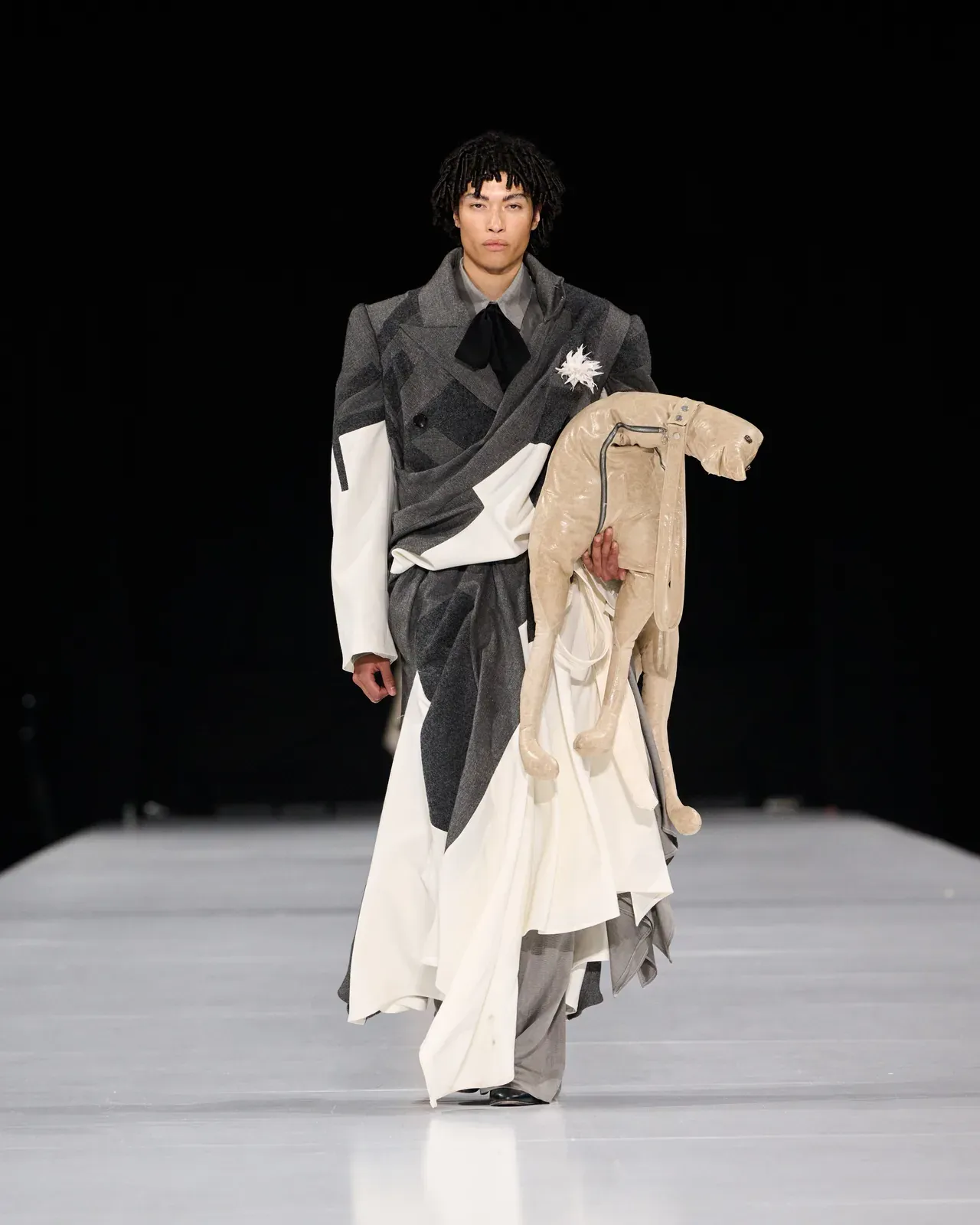
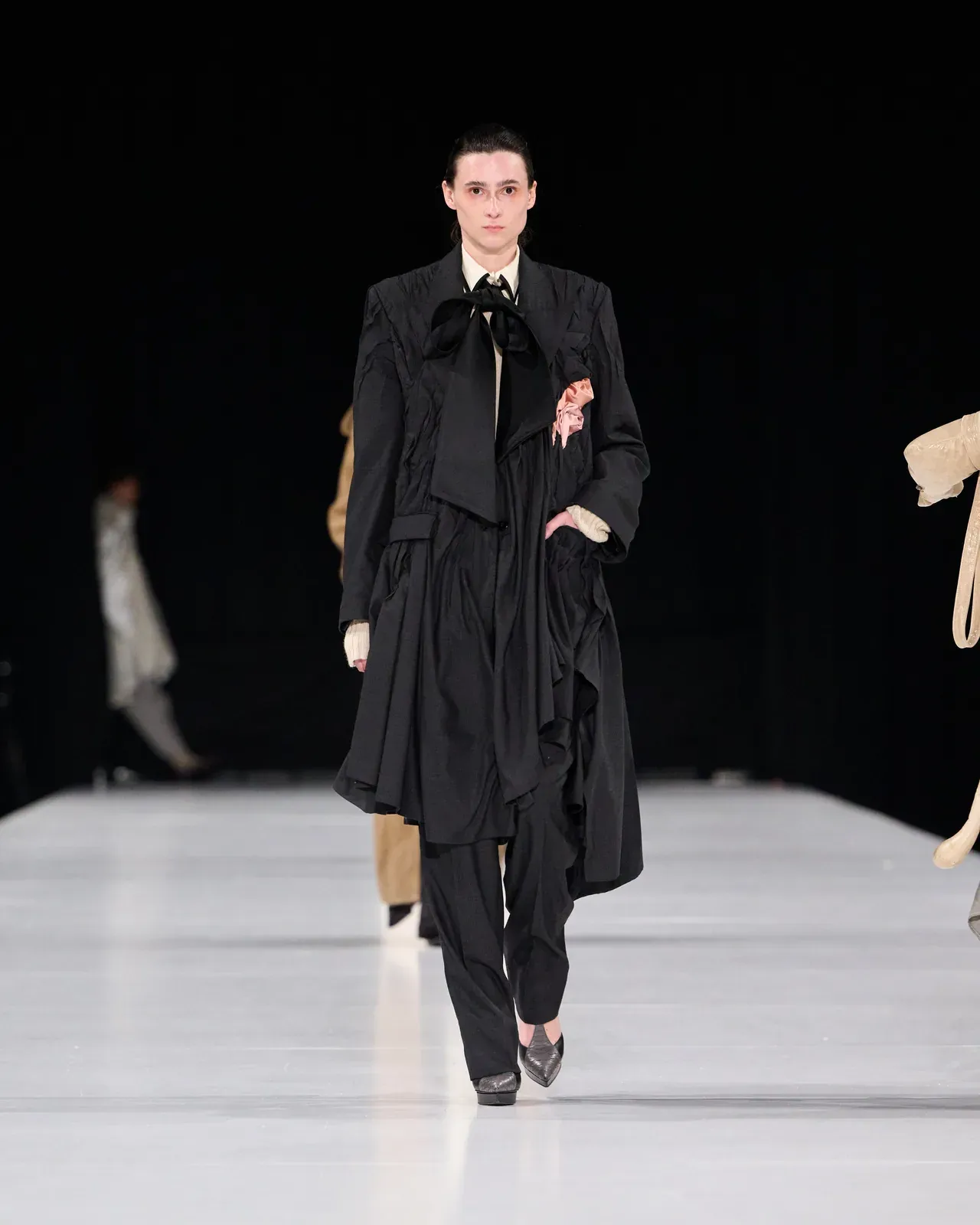
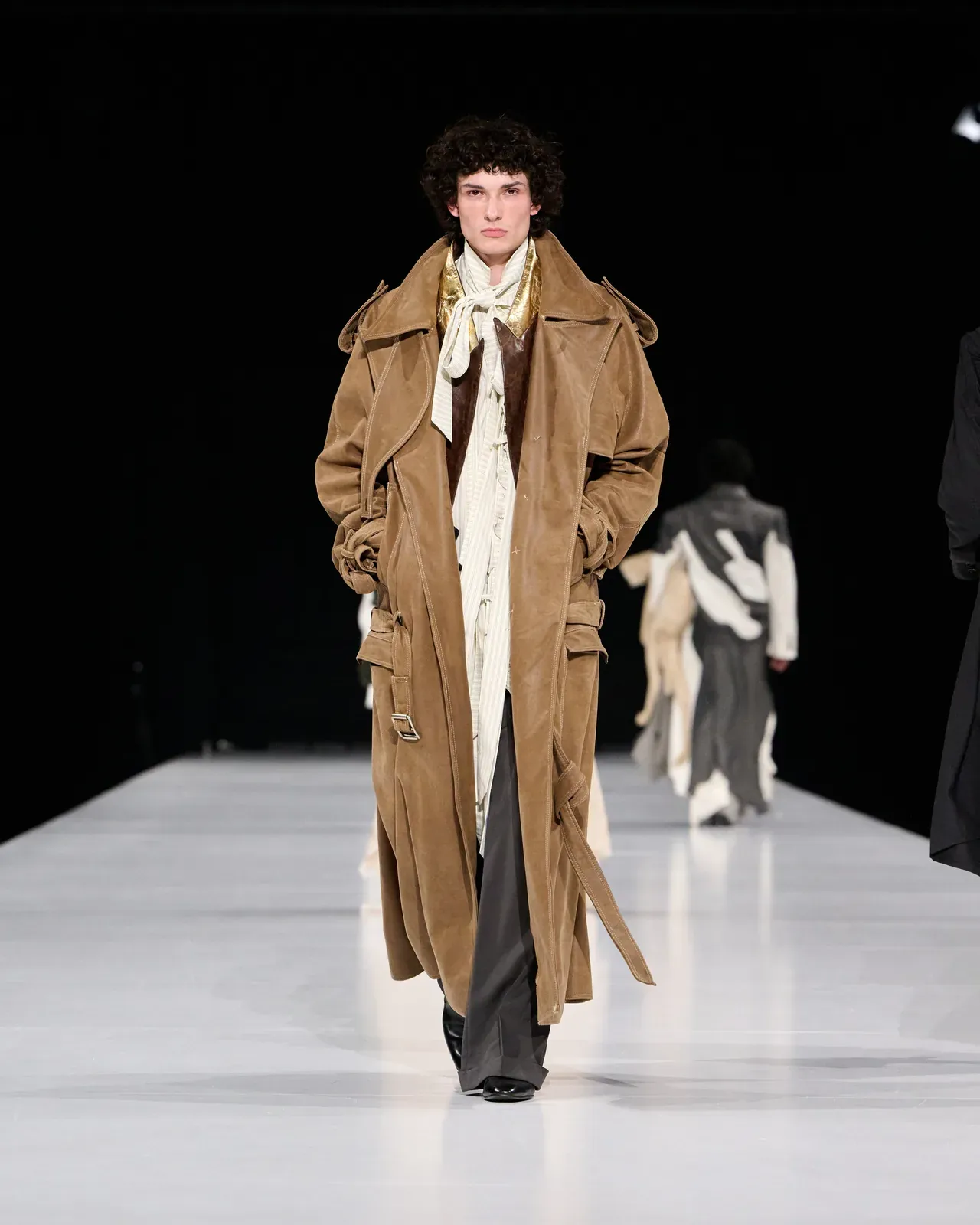
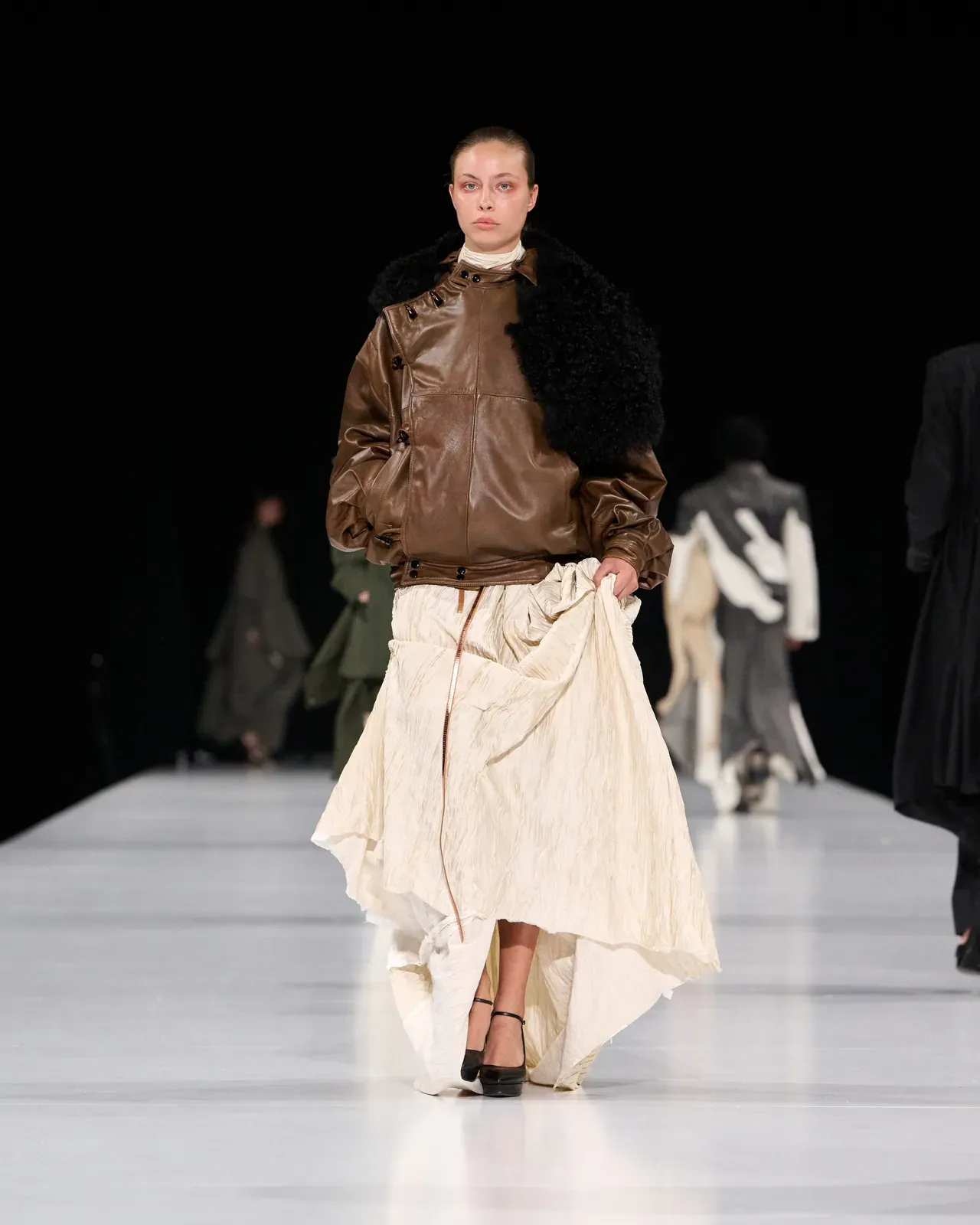
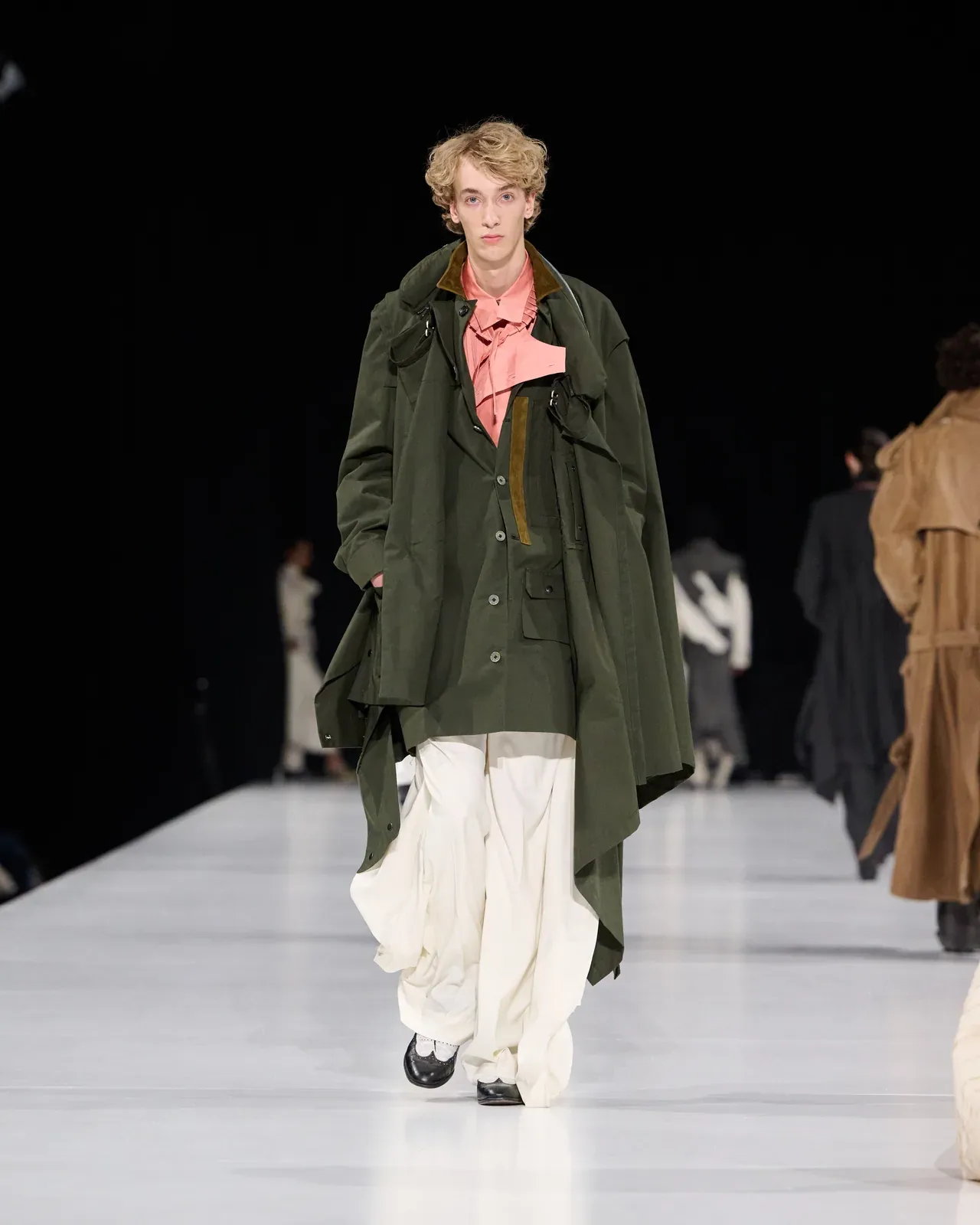
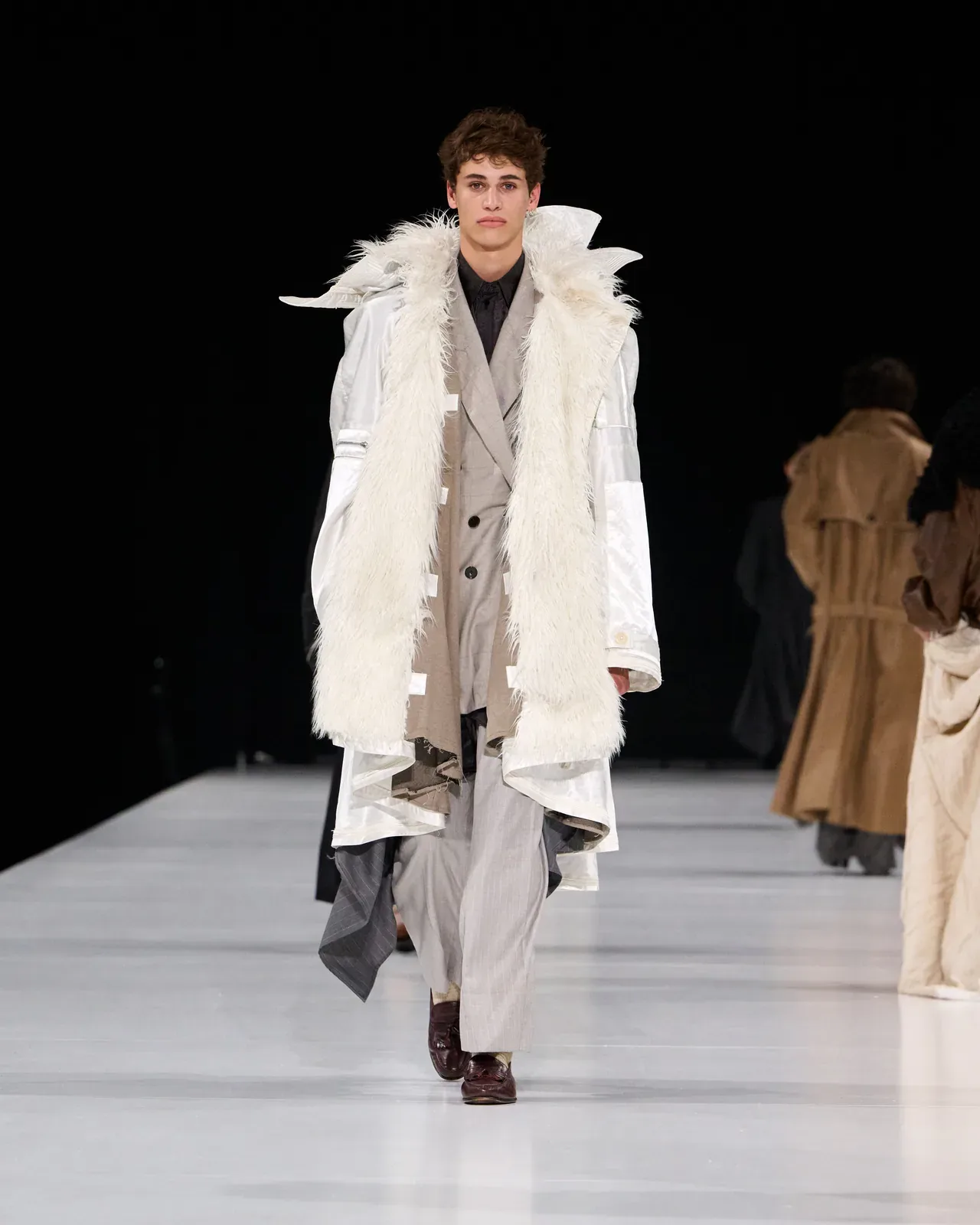
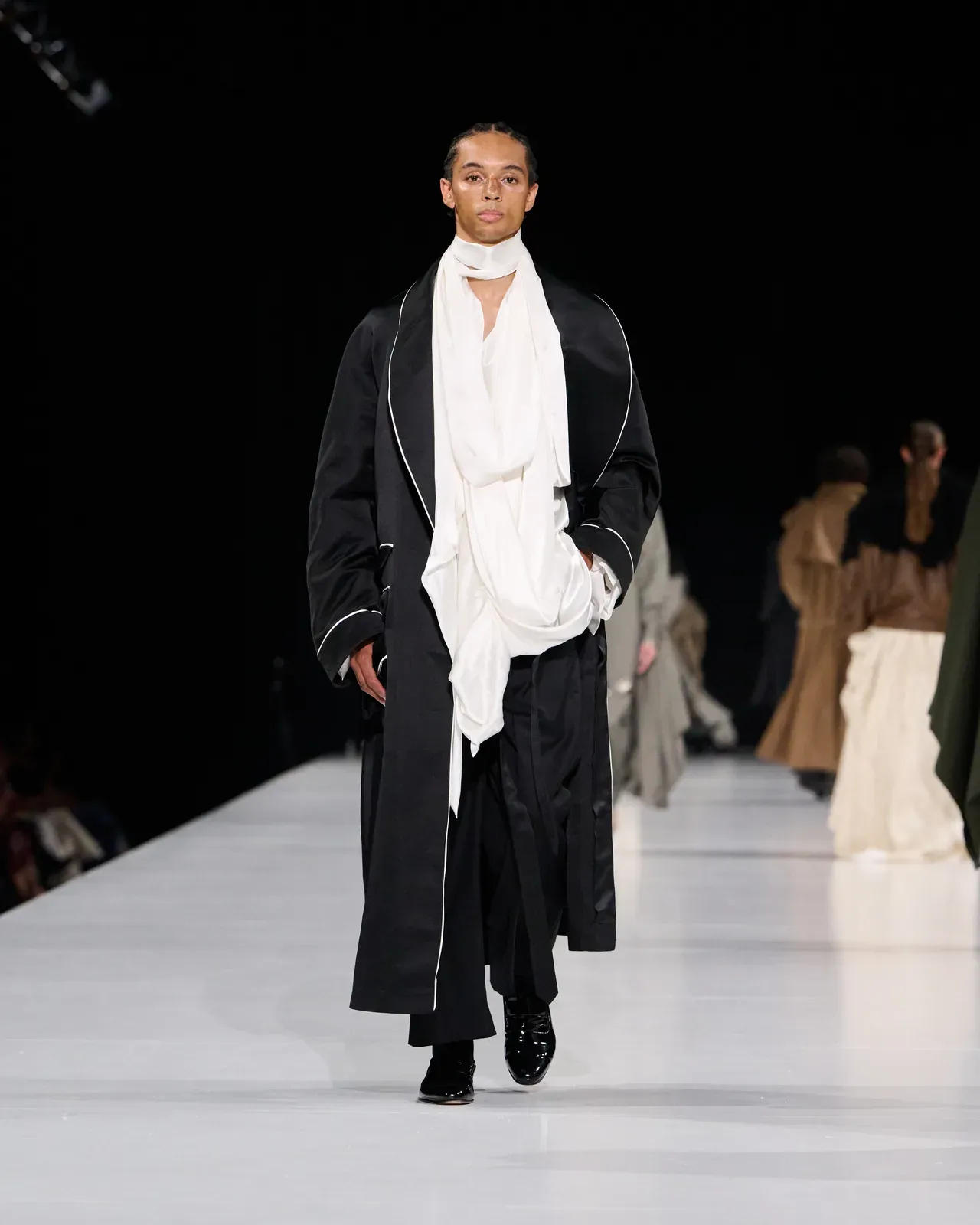
The inspiration behind the collection was Lucian Freud and twelve characters he depicted in his paintings. For each of the twelve characters, I looked up who they were. I did deep research on what they were doing for a living, how they dressed, and what their attitude was. Throughout the creation of the pieces I also tried to reflect on how I feel about them. All of that I connected to the research I did on Lucian Freud, the way he used to dress, the style of his house and his studio. What played a key role in the development of the collection were the piles of fabric that can be seen lying in the corners of his studio and in his paintings and the way he depicted textures of garments and bodies.
The process:
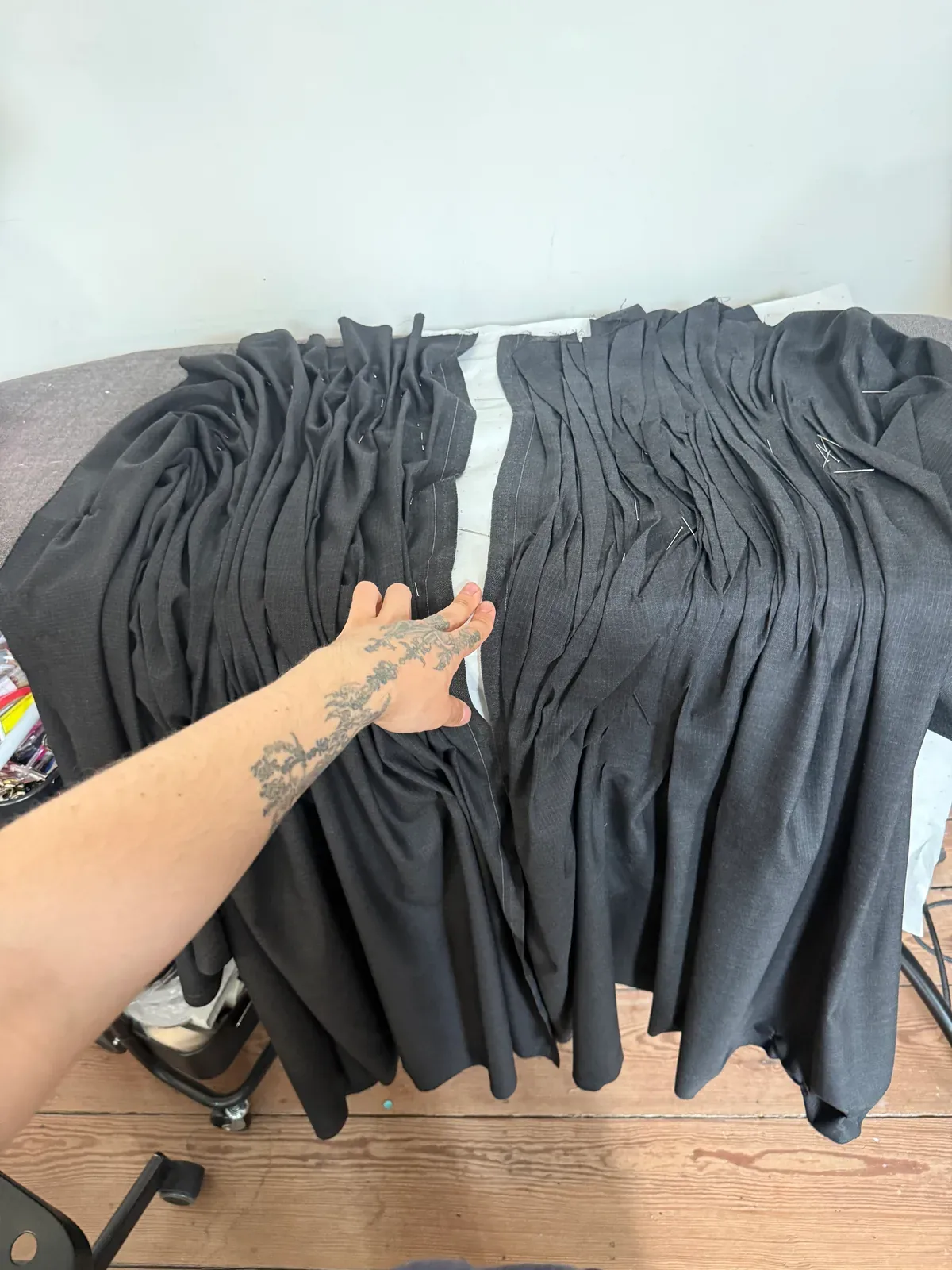
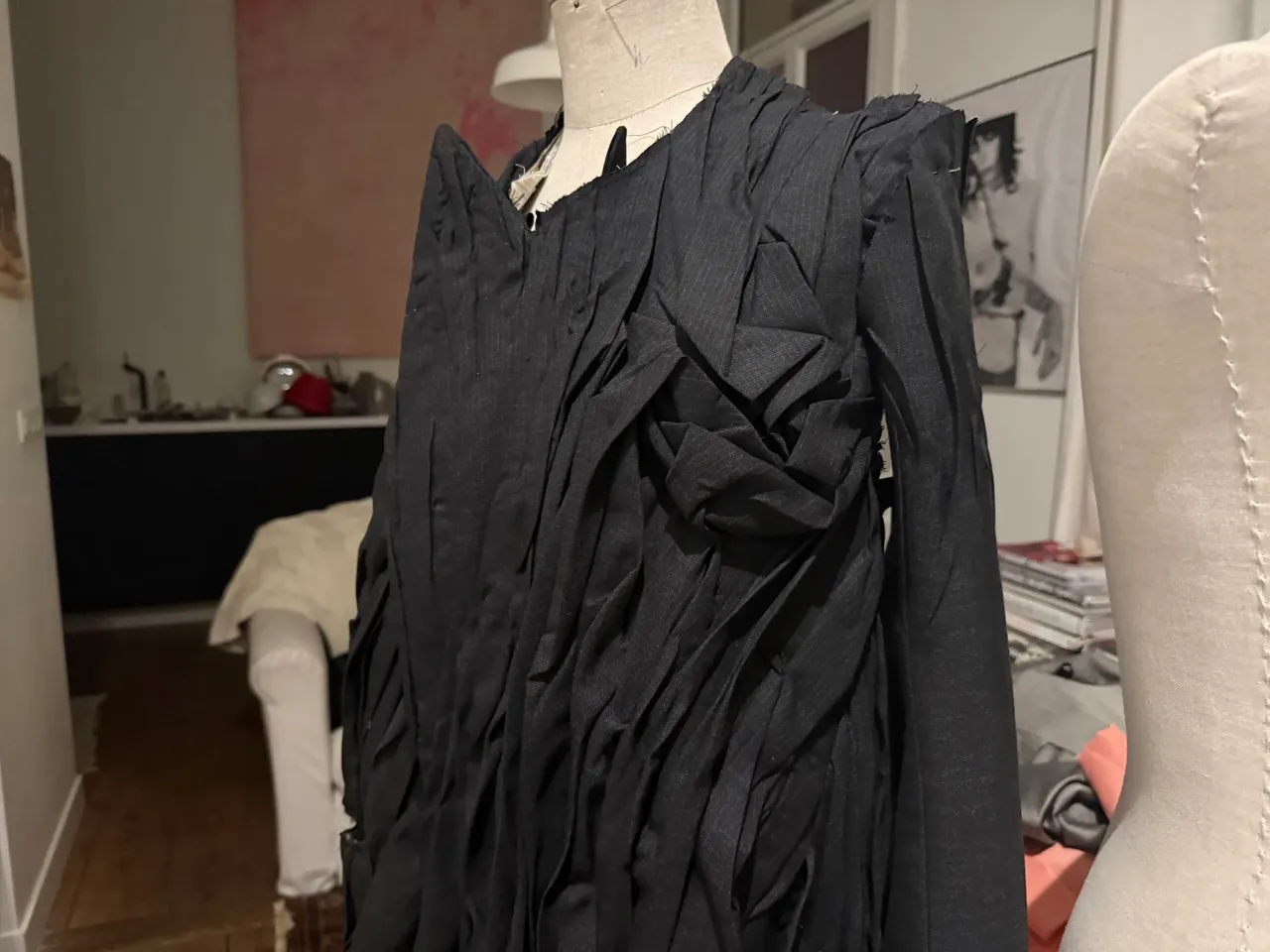
What part of the process do you consider key for your collection? In what moment or what detail or element did you feel that was holding a really important part of the becoming of your collection?
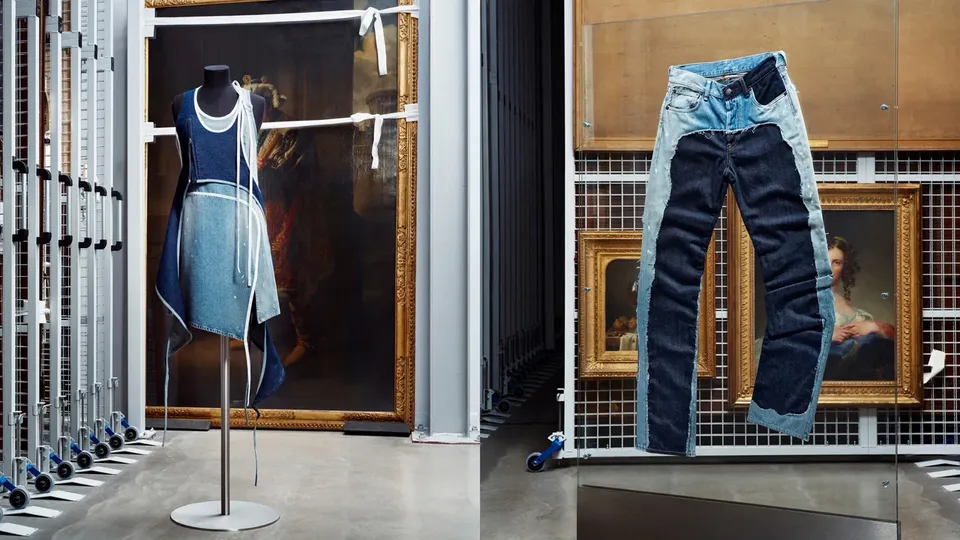
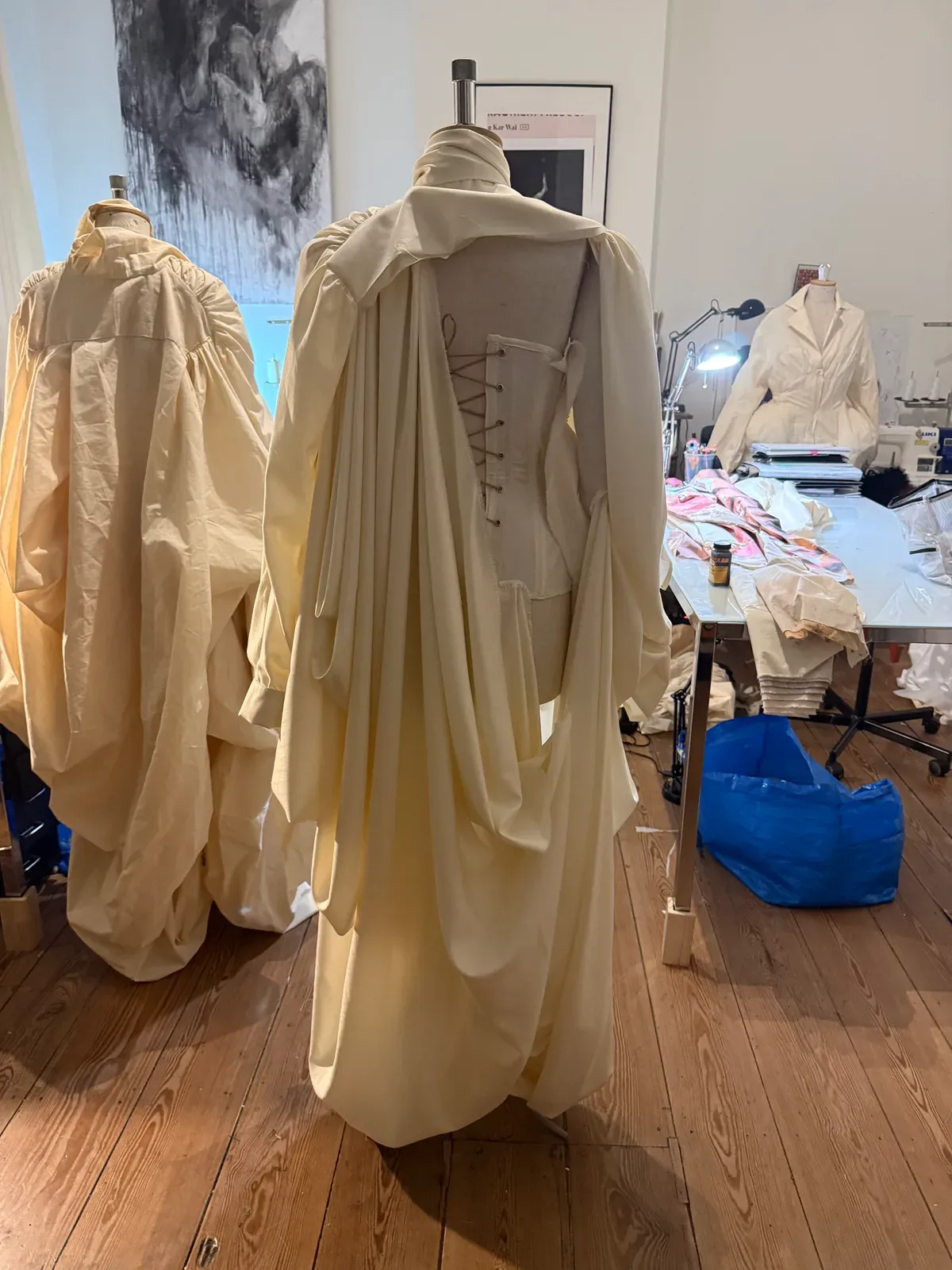
For me the most important part of the process is the moment when I start toiling and the ideas become reality. I especially started to feel confident with the idea of this collection when I made the first dress for the collection. I discovered that I really enjoy working with big volumes of fabric and finding a nice balance between the drape and construction. In this collection I created pieces both from zero to a finished piece as well as from thrifted finds that I dissected.
The result:
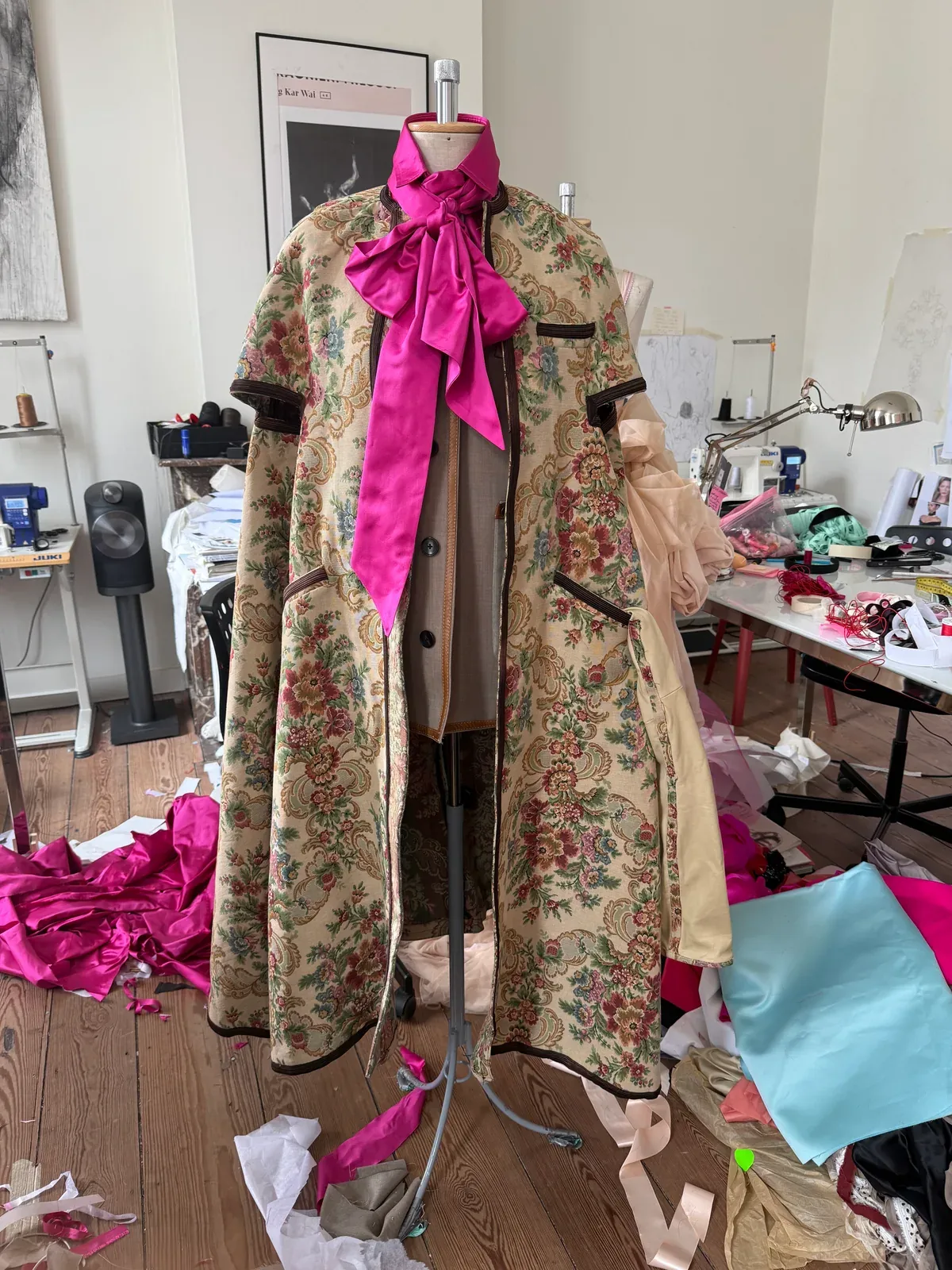
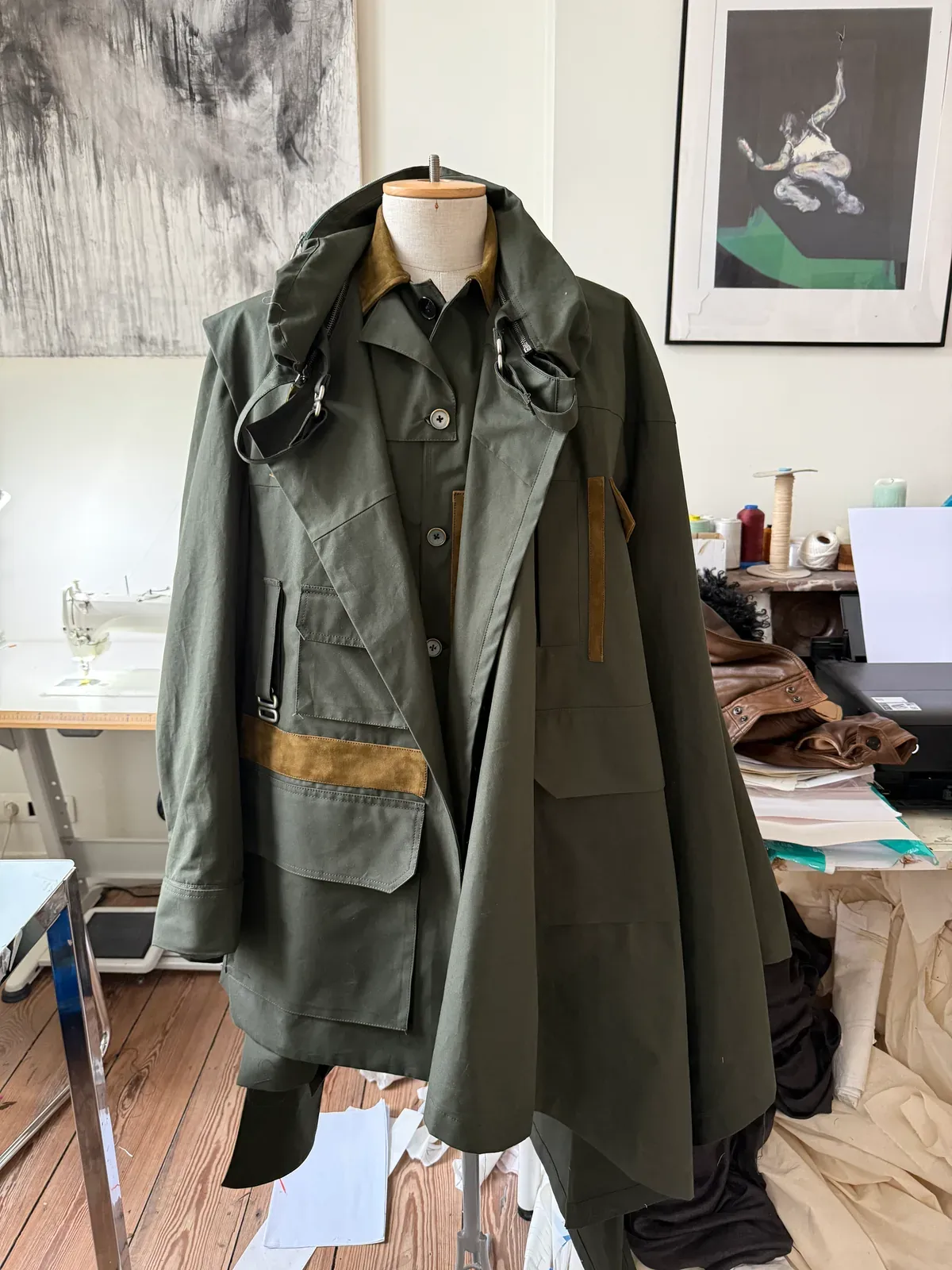
The idea of exploring different characters in the same collection allowed you to travel around different styles, typologies of garments, and ways of creating. Among this variety, where did you feel the most comfortable, or where did you feel the strongest match to who you are as a designer?
Personally, it's very hard for me to choose which style, garment, or way of creating I like the most, since I really enjoy the variety that designing both menswear and womenswear gives me. I approach creating each of the garments with the same principles and attitude regardless of whether it's a draped corset dress or a tailored blazer. I rely heavily on what I see on a doll at a certain moment, and I reflect on it. Asking myself if it belongs to the collection or not, if it's already the best it can be or not. I really like the idea of creating a collection and finding different ways to link garments to each other from different categories. I make it happen through tailoring, garment details, etc., creating a consistent, powerful overall image.
The inspiration:
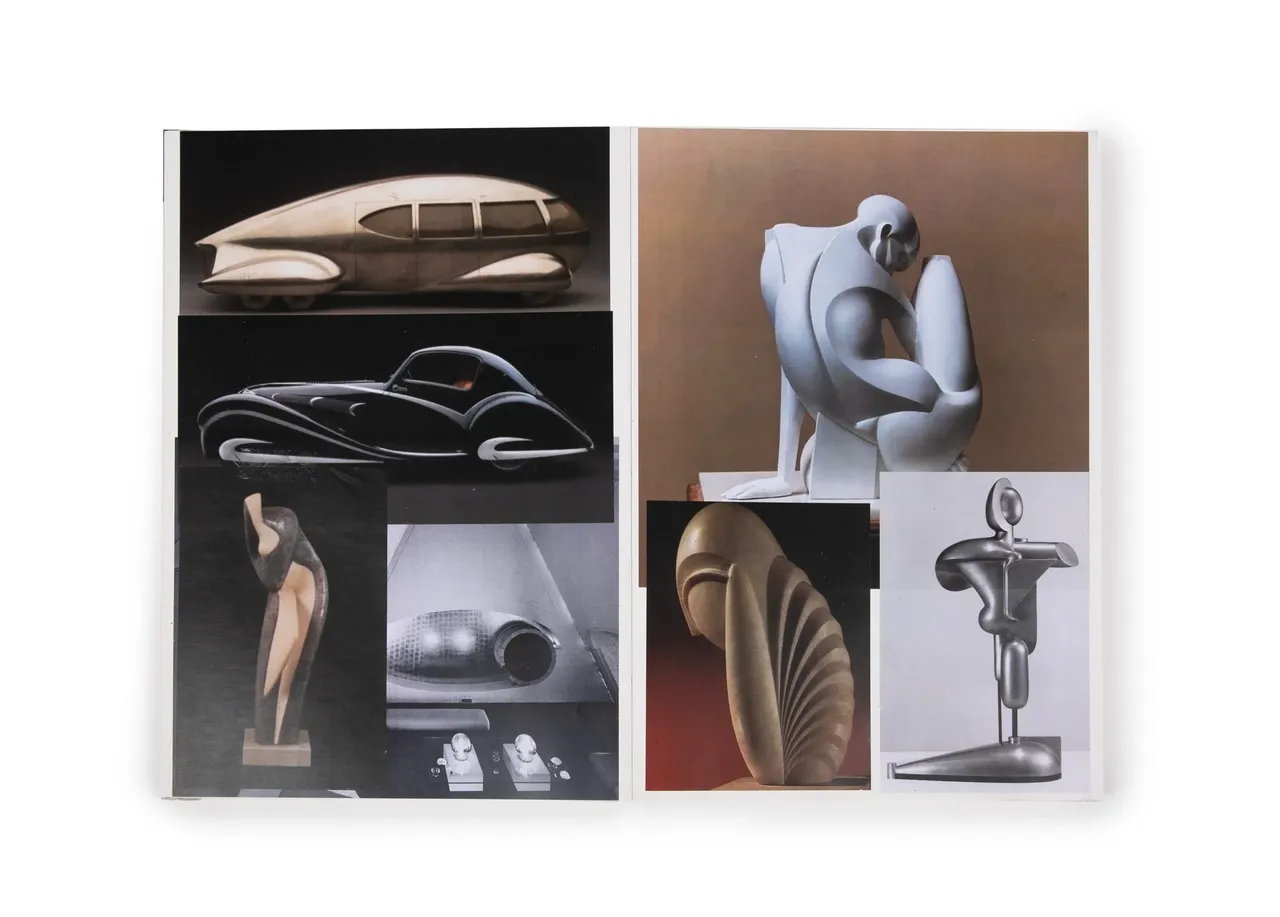
What was the inspiration behind the collection? When did you know this was the topic for you to start working on?
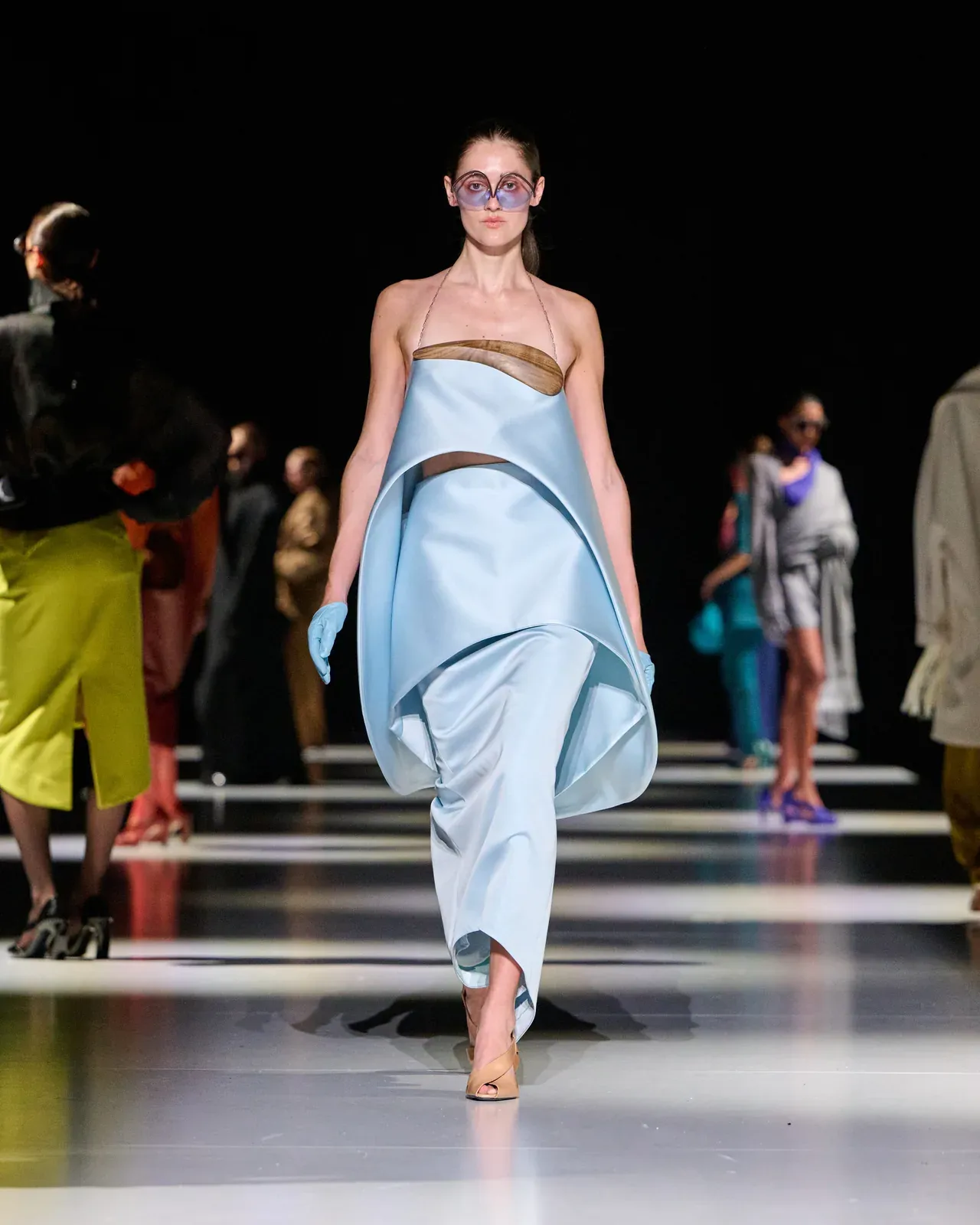
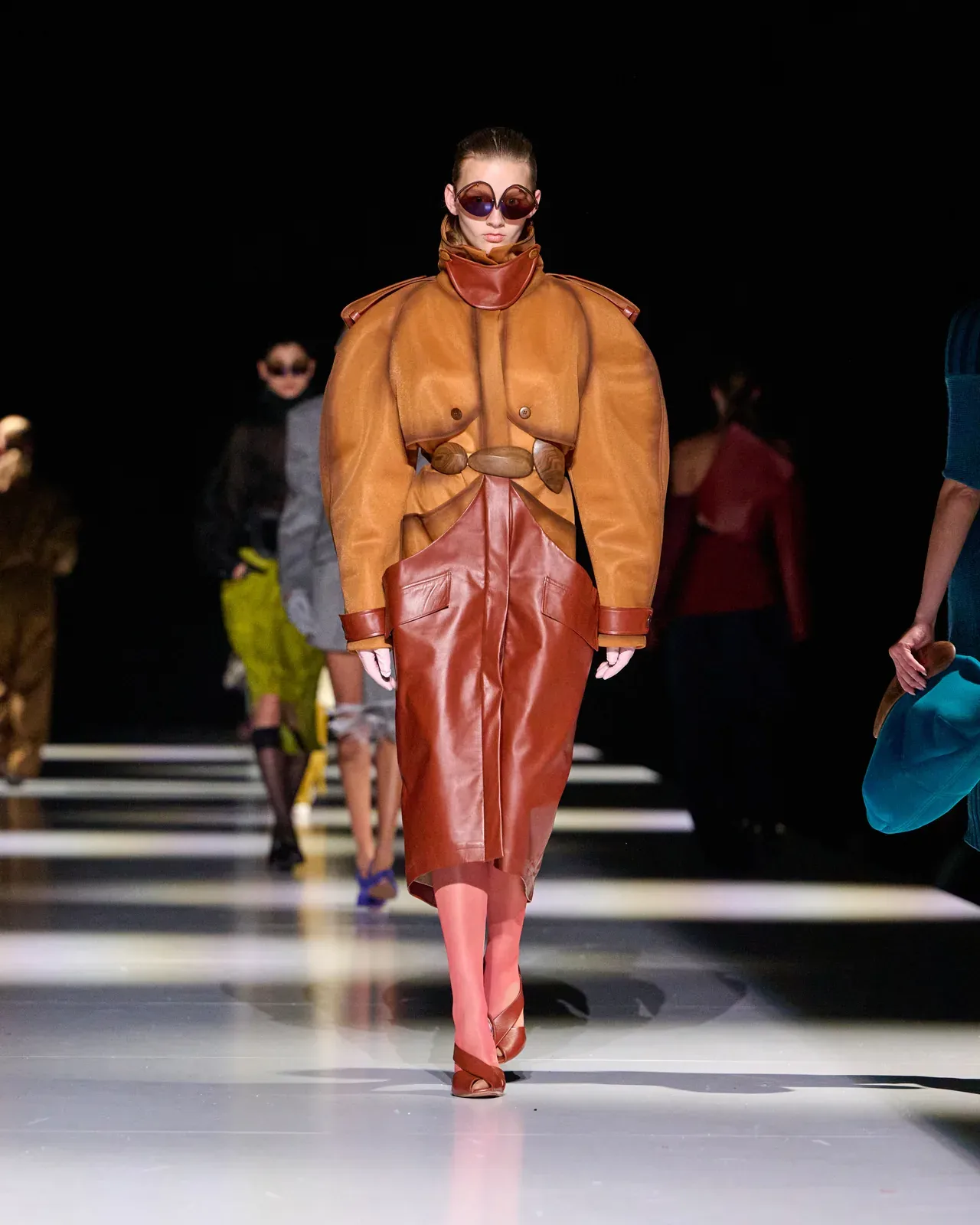
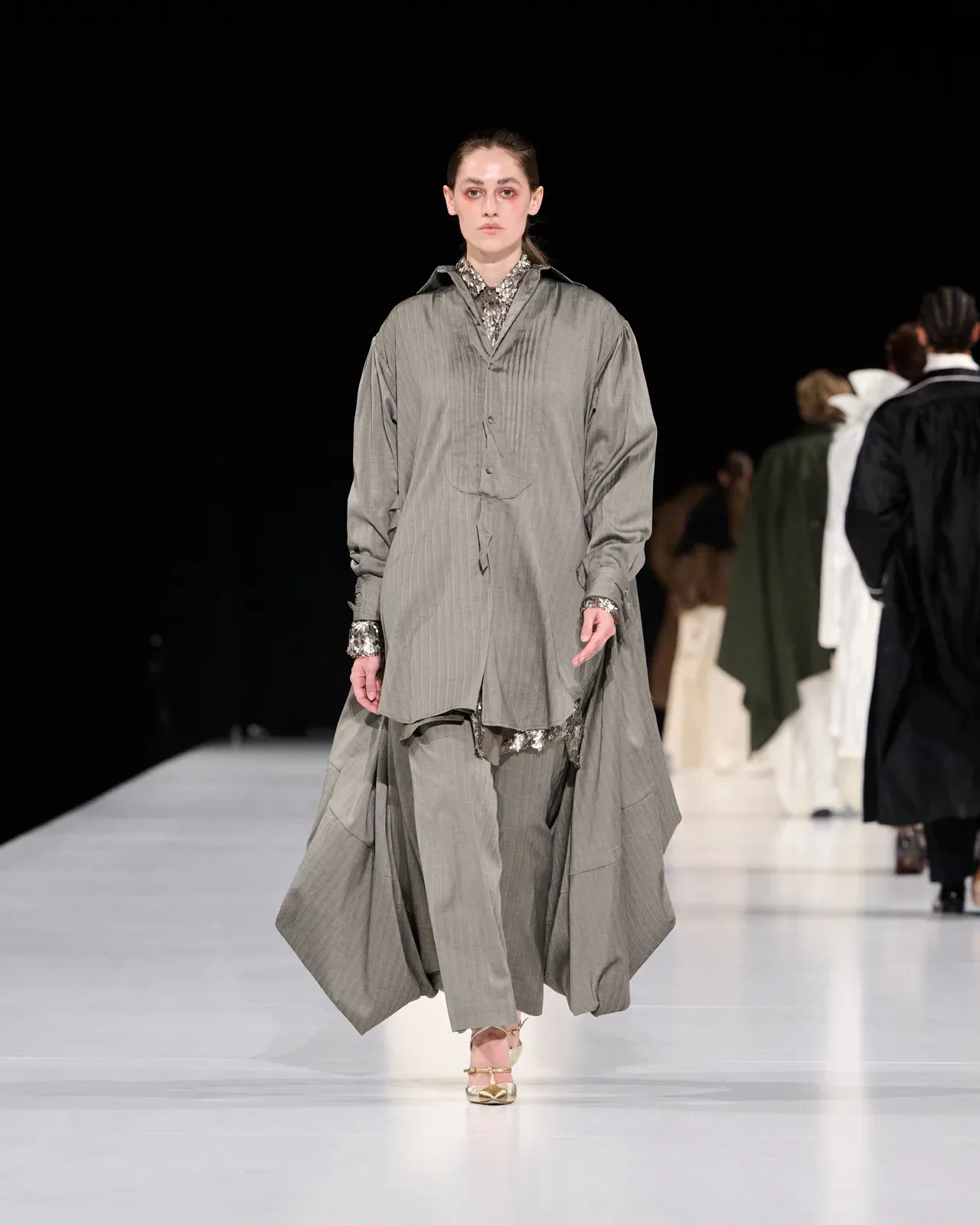
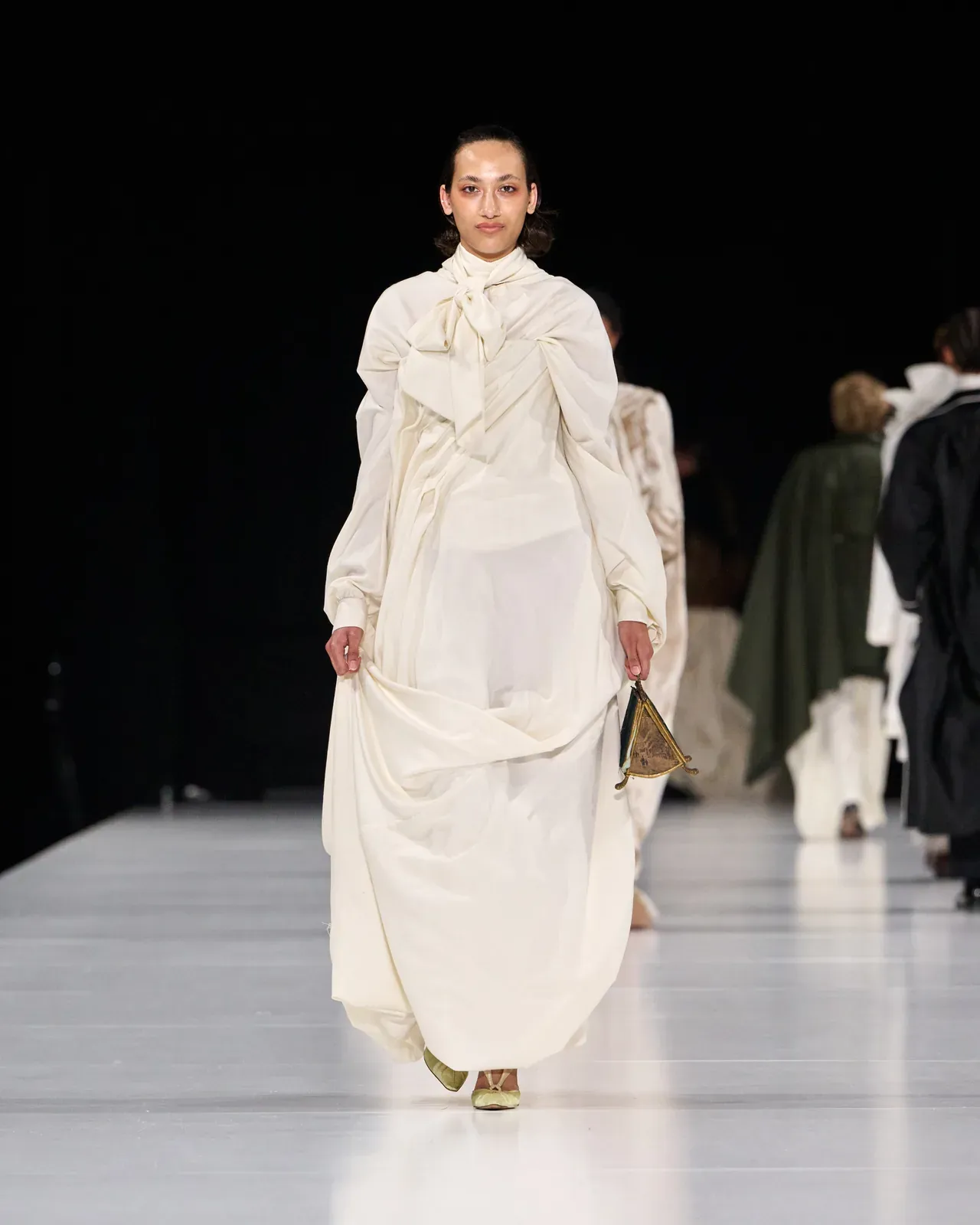
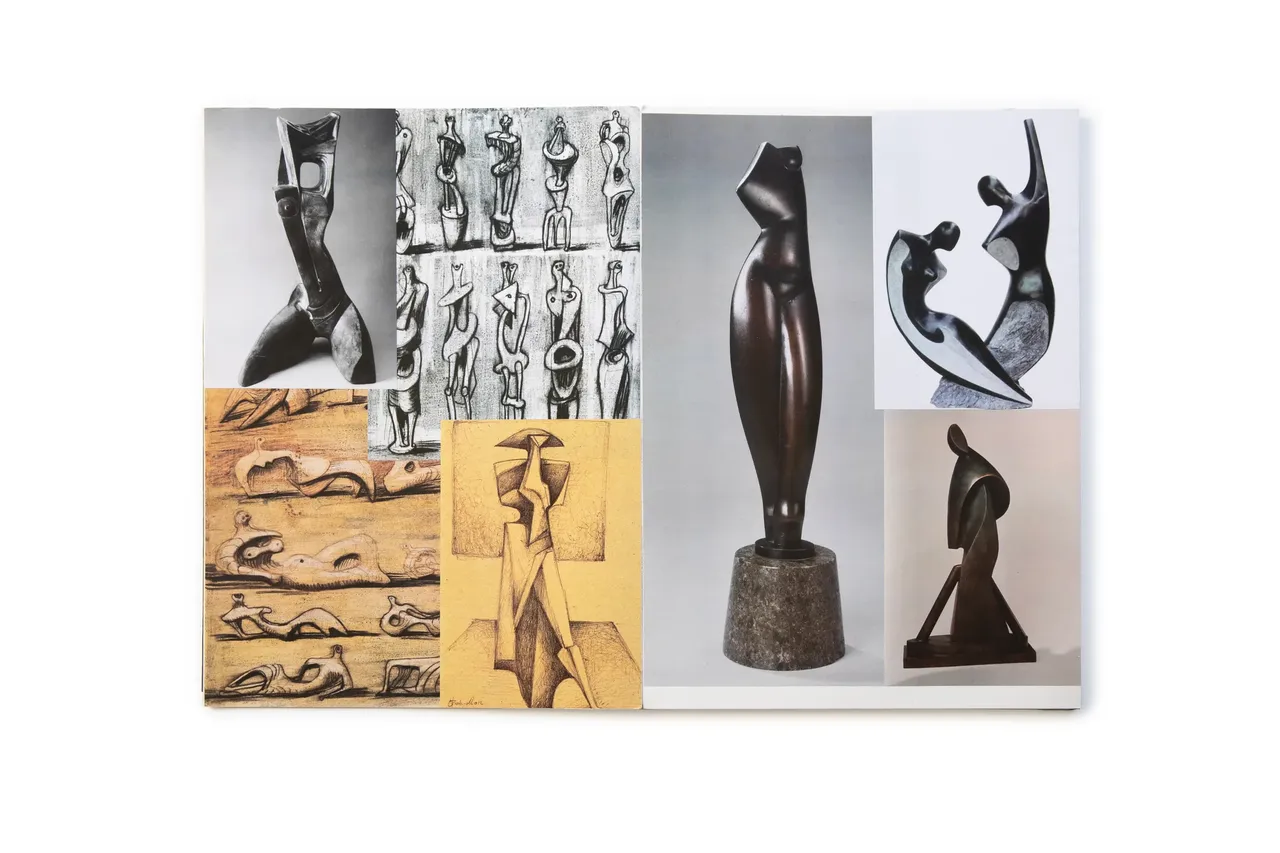
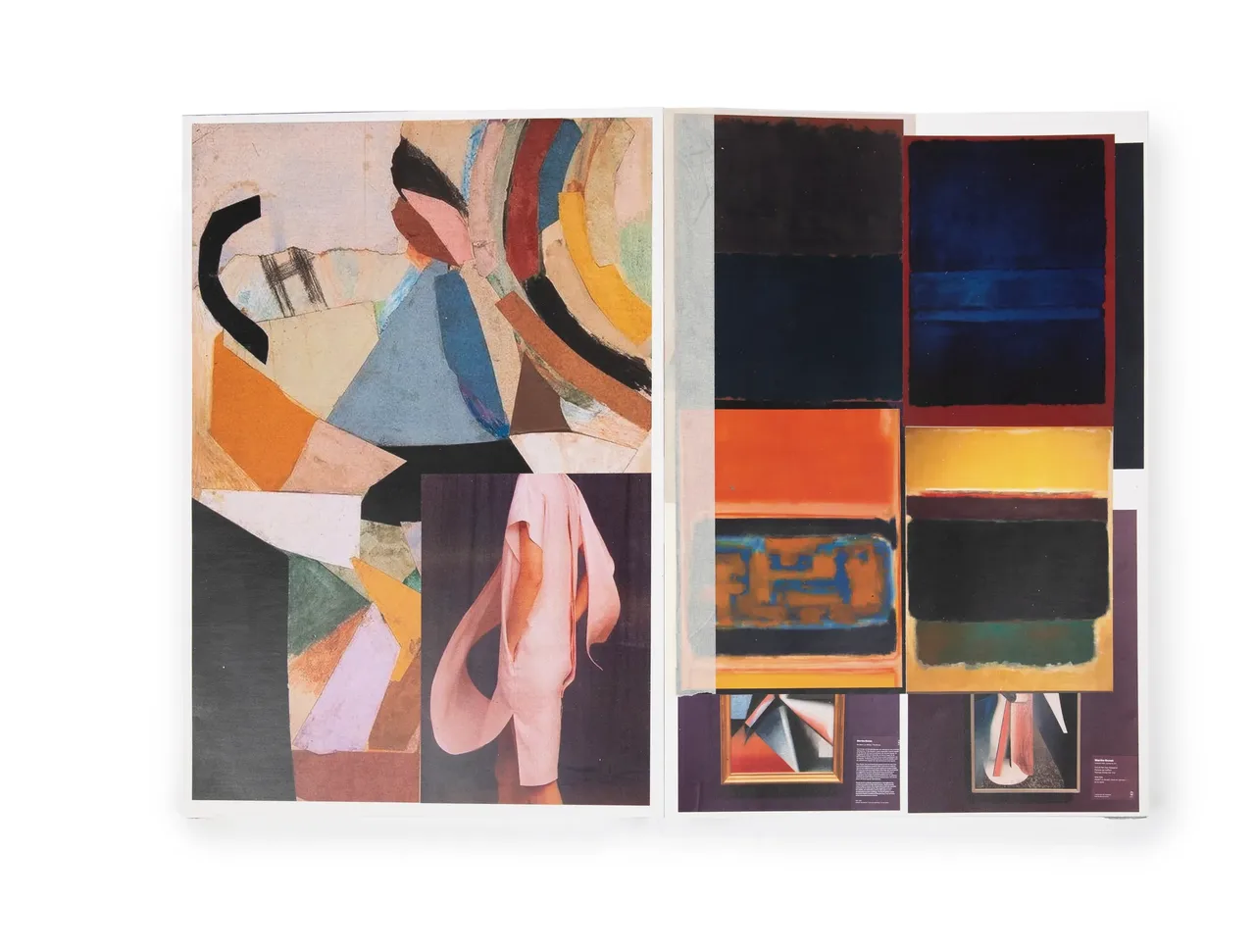
With my master collection Sculpted Space, I continue exploring the silhouette as an architectural composition, examining the relationship between body, space, and sculpture. Through a clean interplay of lines, structure and elegance merge to transform and enhance the female form. The collection is inspired by artists Alexander Archipenko and Marthe Donas, who challenged traditional representations of the body within modernism. I saw an exhibition about them at the KMSKA museum in Antwerp at the beginning of the school year. Archipenko’s Cubist sculptures, particularly his use of voids, volumes, and open and closed forms, strongly influenced my designs. His
The process:
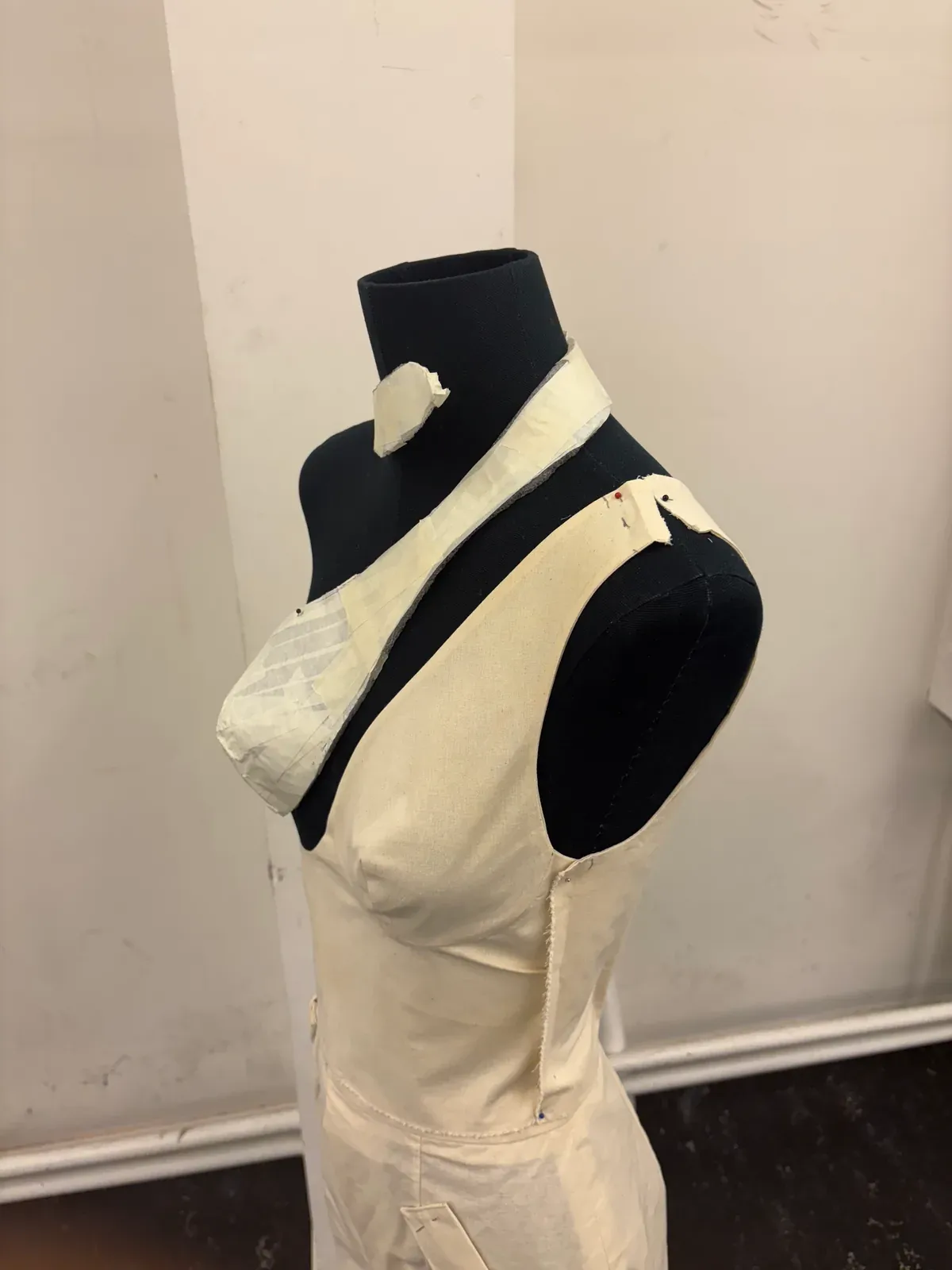
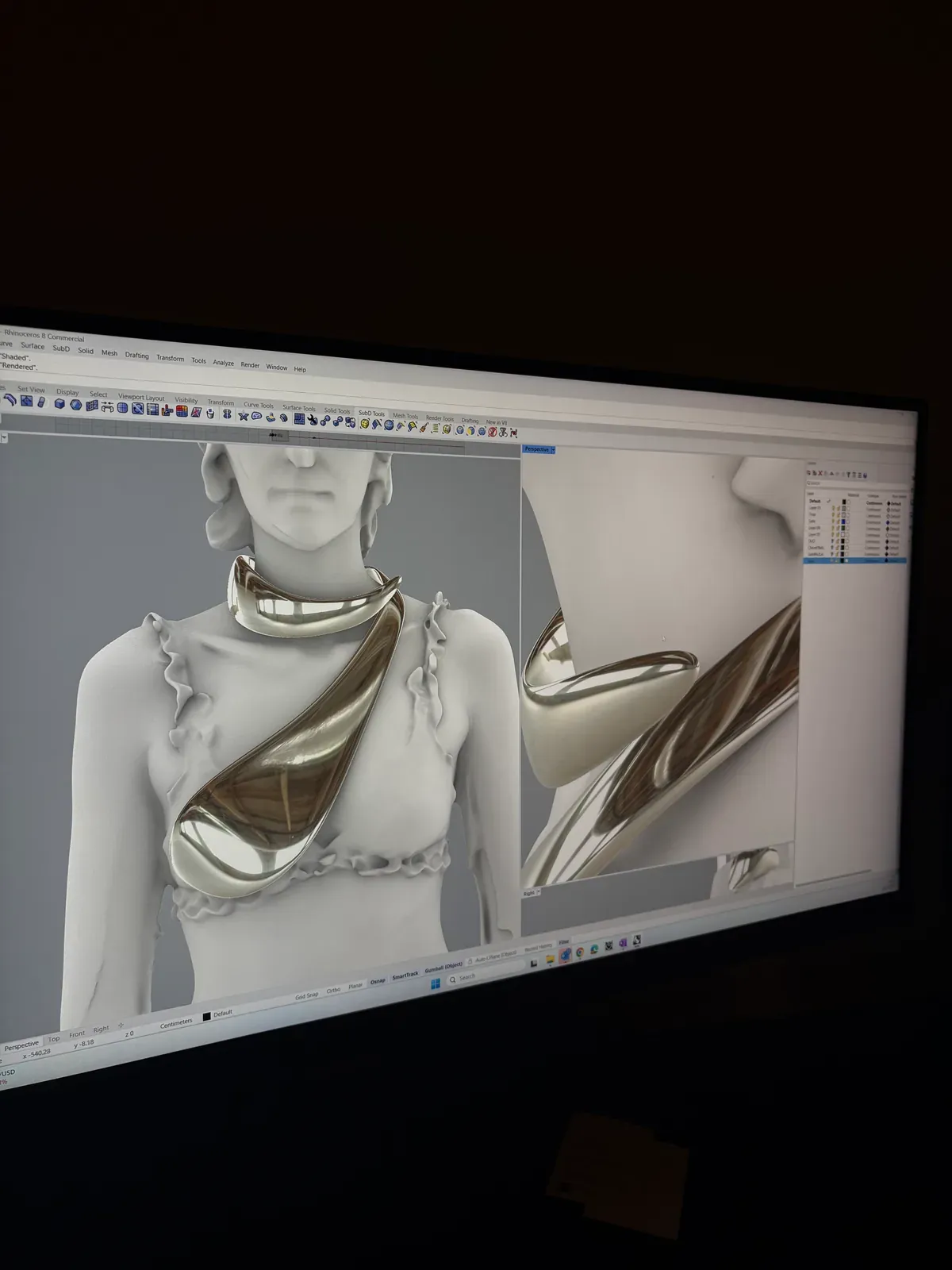
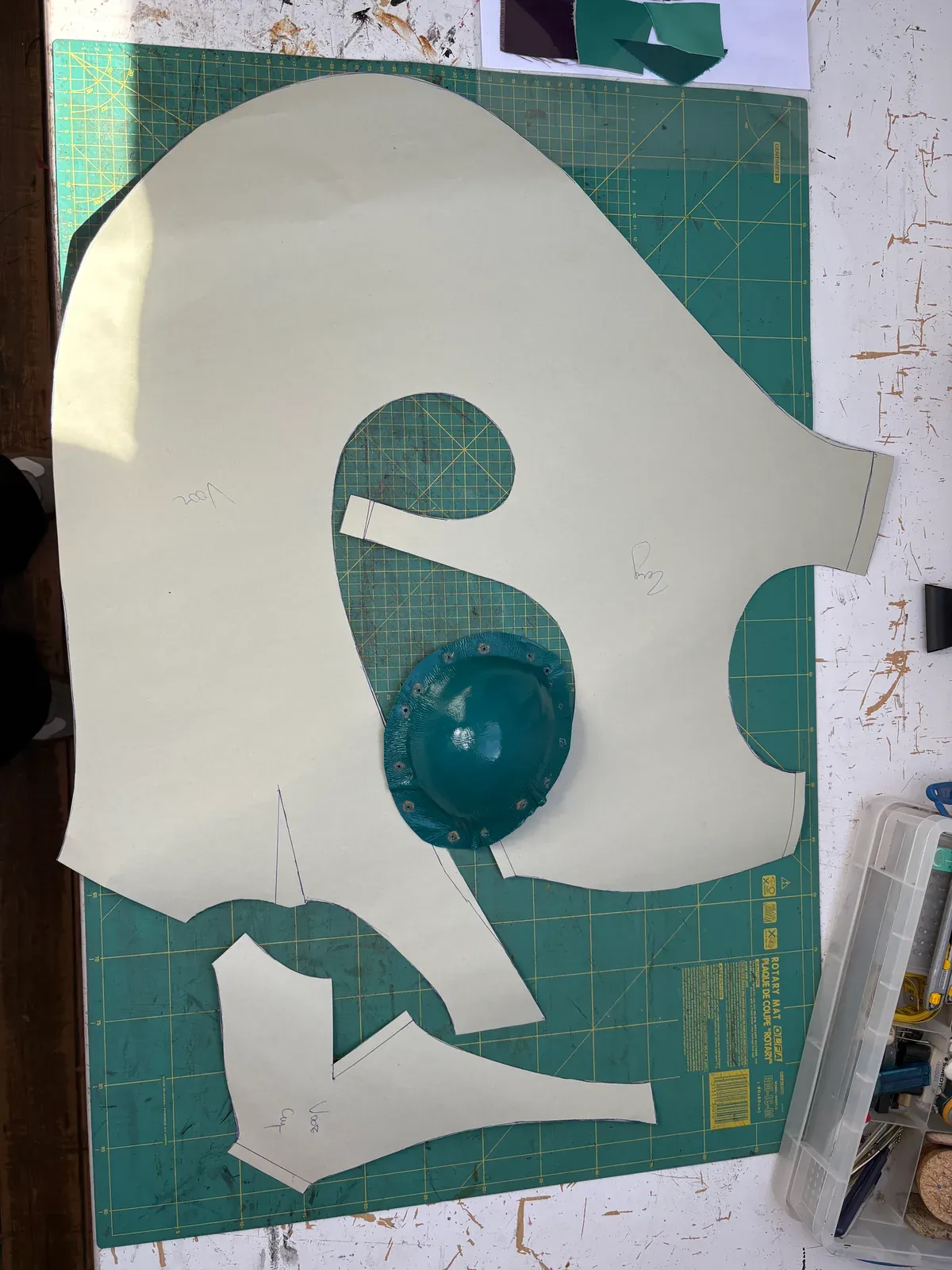
What part of the process do you consider key for your collection? In what moment or what detail or element did you feel that was holding a really important part of the becoming of your collection?
For me, the moulage process and experimenting with different shapes are very important for my collection. I’m someone who really likes to see things in 3D right away. I find it difficult, for example, to start experimenting blindly from a pattern — simply because I really work with form. Gathering foundational research is also of great importance for the development of the collection.
The result:
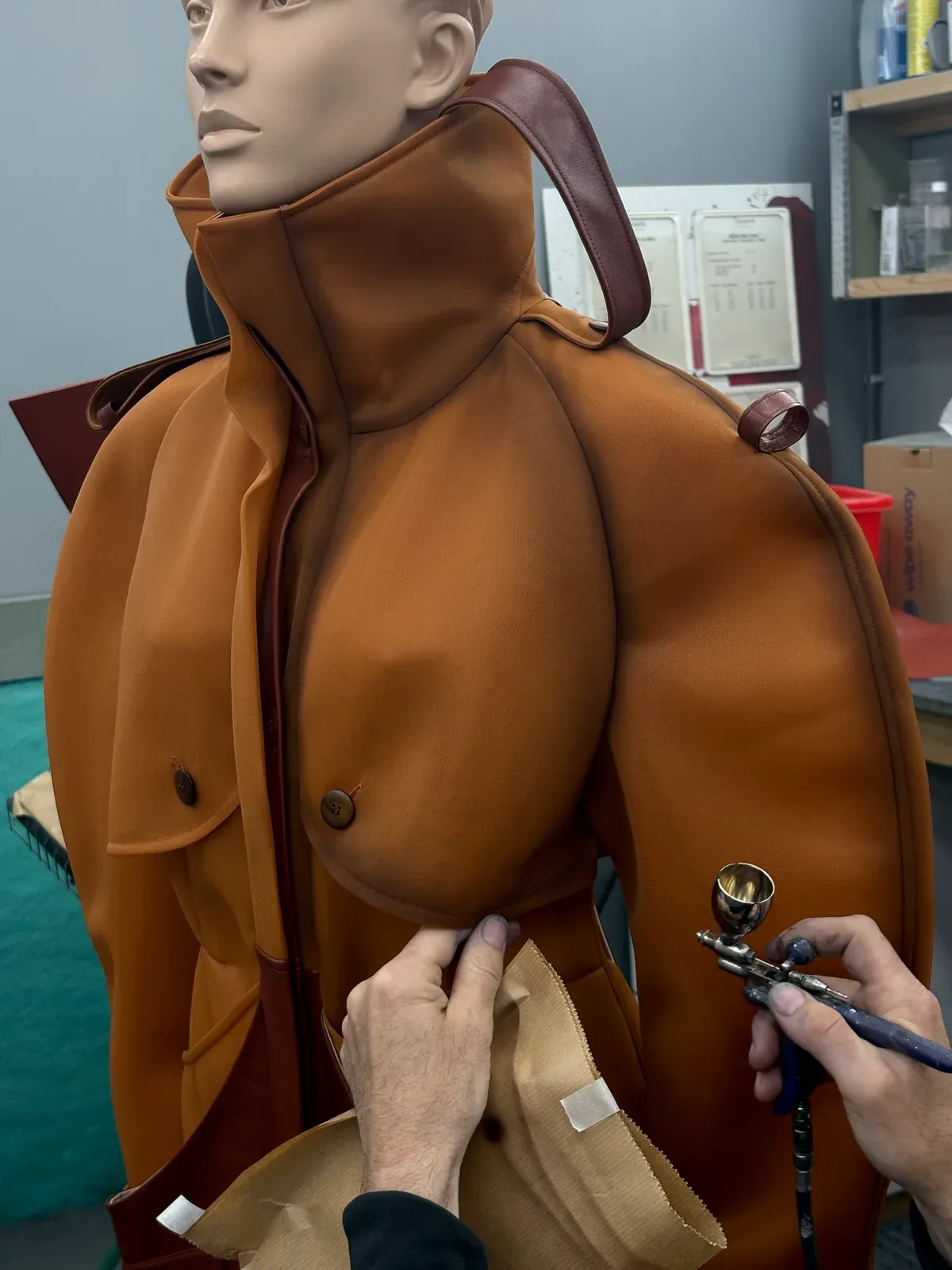
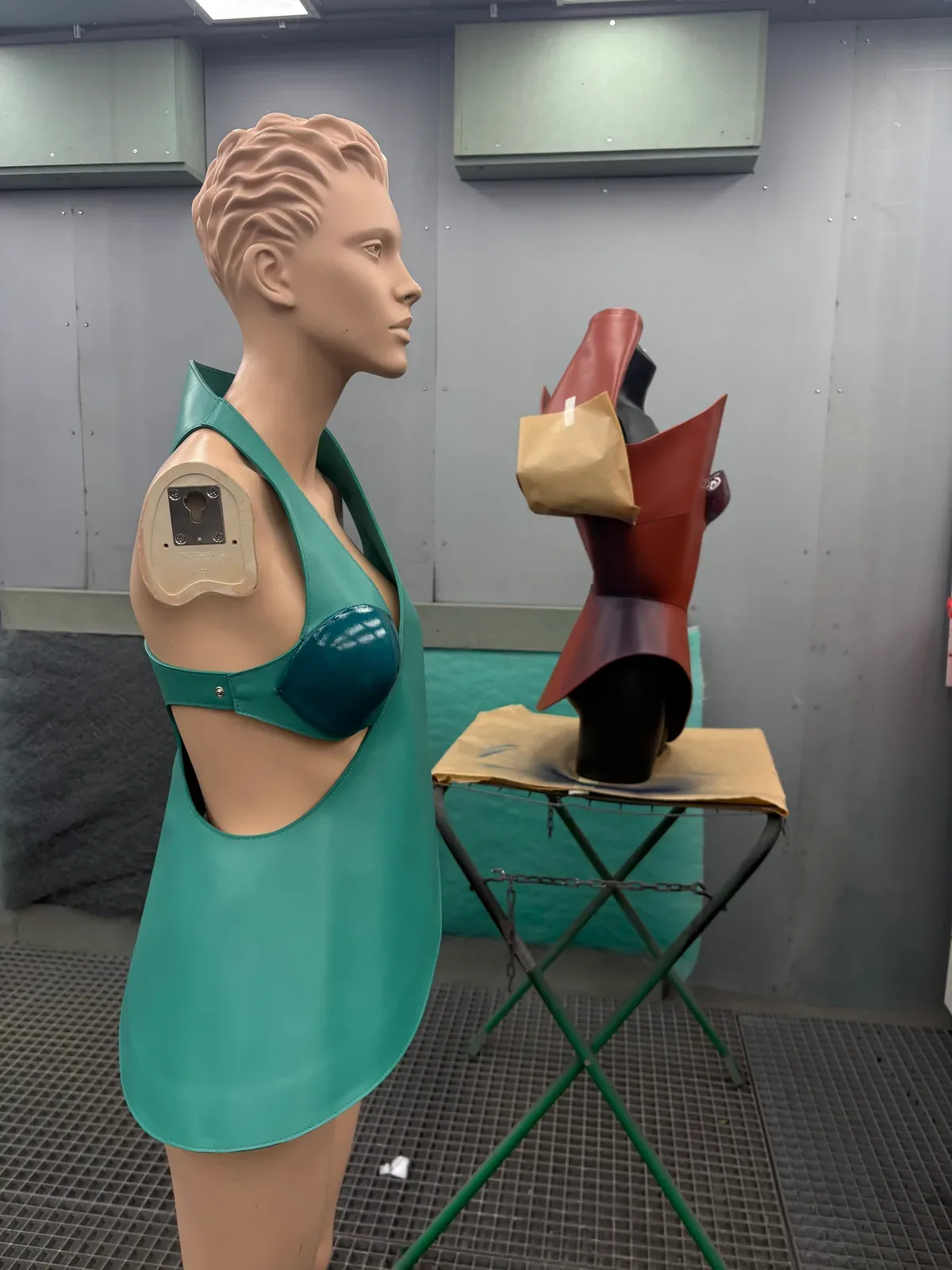
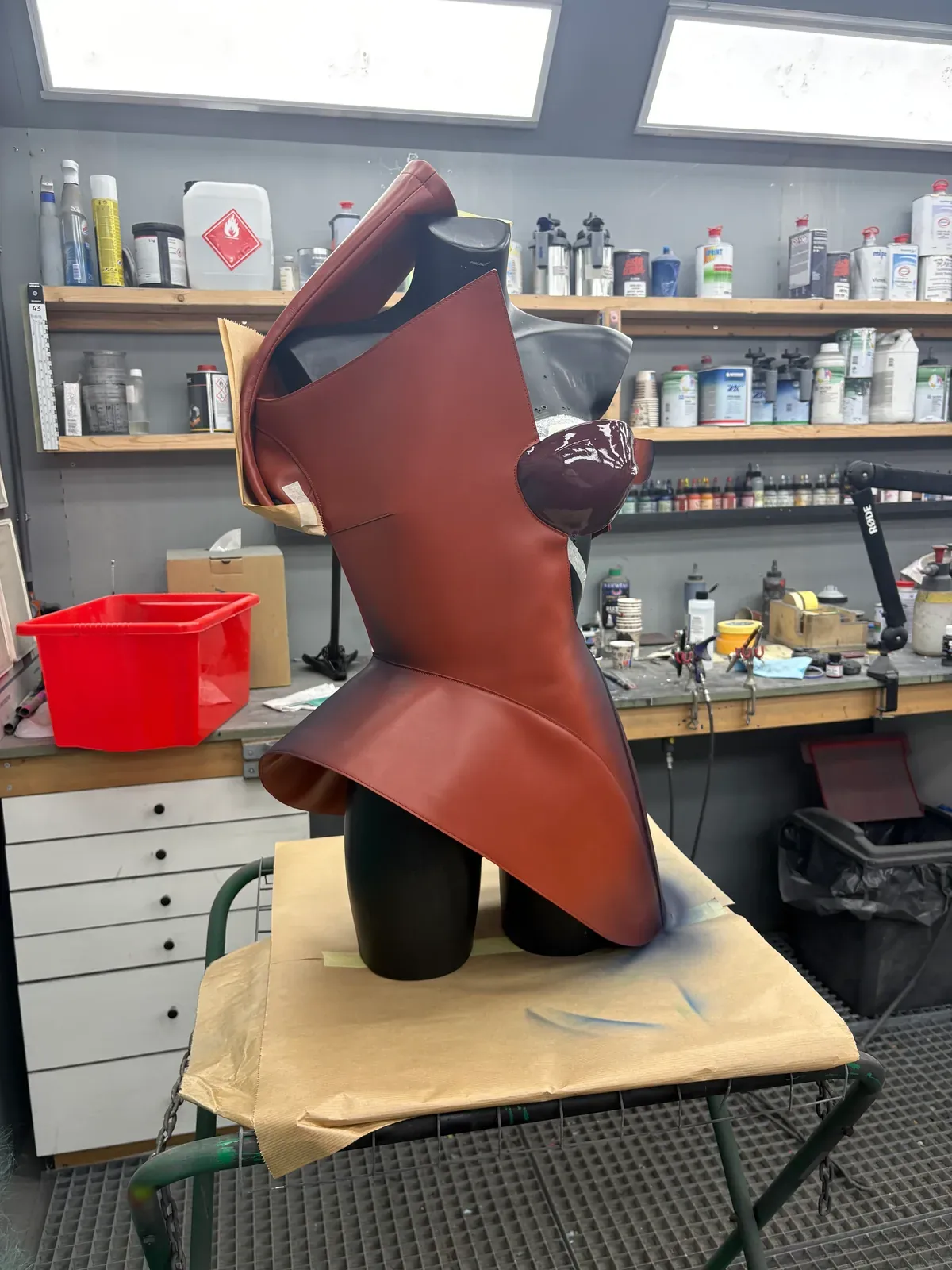
The concept of "an architectural composition" you work with is very interesting; it intrinsically implies a defiance of what has already been established. In terms of fashion, of the body and of the space, what are you defying with your collection?
I am defying the idea that fashion should simply dress the body. In Sculpted Space, the body becomes part of an architectural composition where volume, void, and movement are equally important. By treating negative space as a design element and blurring the boundaries between fashion and sculpture, I challenge conventional perceptions of silhouette, femininity, and how the body occupies space.