Just across the tracks from Berghain, Rosalía’s Lux tour arrives in Berlin on a notoriously hedonistic May Day, dissolving the boundaries between concert, church and club. Conceived with her sister, Pilar Vila, choreographed by French collective (LA)Horde, and styled by José Carayol, the show is shaped through an intricate wardrobe of layered tulle, sculpted silhouettes, and statement headpieces that evoke sacred Spanish iconography. The mood in the Uber Eats Arena is festive and fevered, as Rosalía’s daring fourth studio album becomes a masterpiece of ballet, opera, and spiritual performance, directed by Ferran Echegaray and Dennis Vanderbroeck. Backed by a twenty-two-piece orchestra in a crucifix-shaped pit in the centre of the audience, the Catalan megastar leads a night steeped in tradition, drama and devotion. Here is how it unfolded:
ACT I
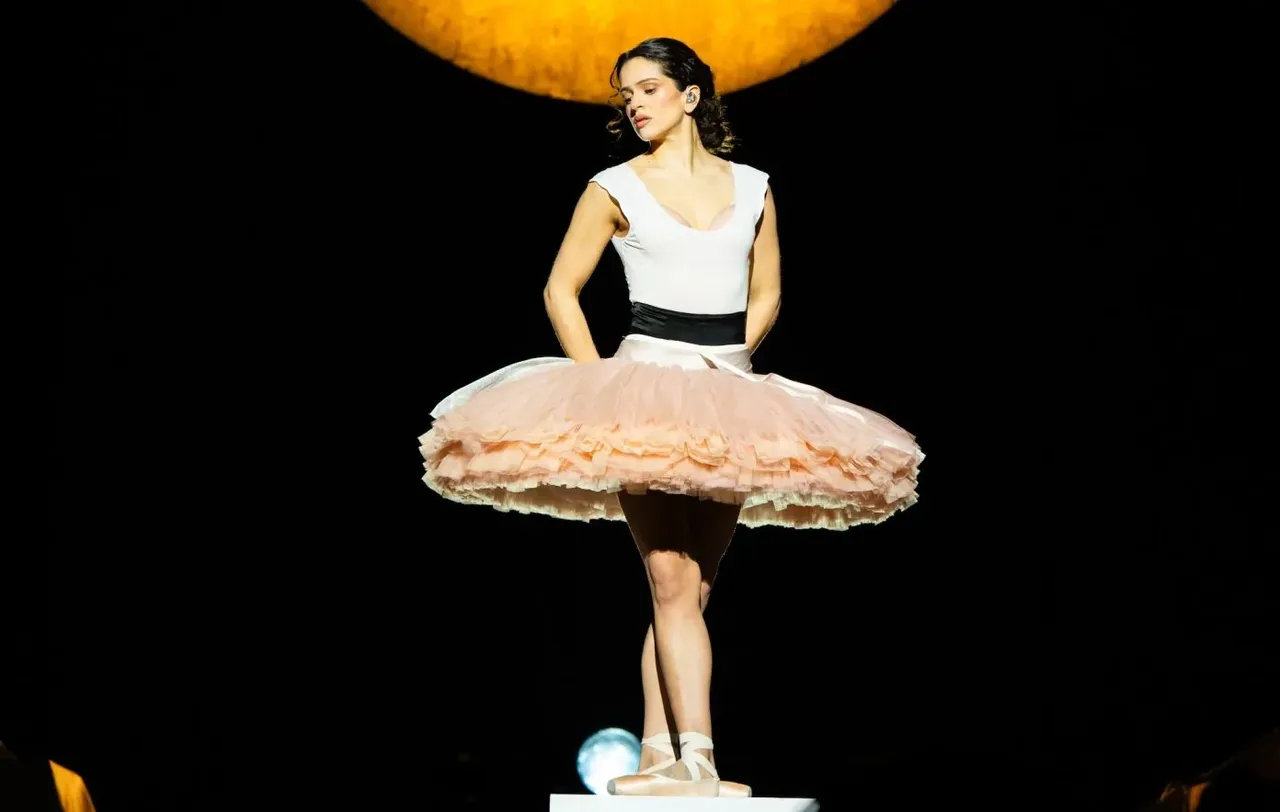
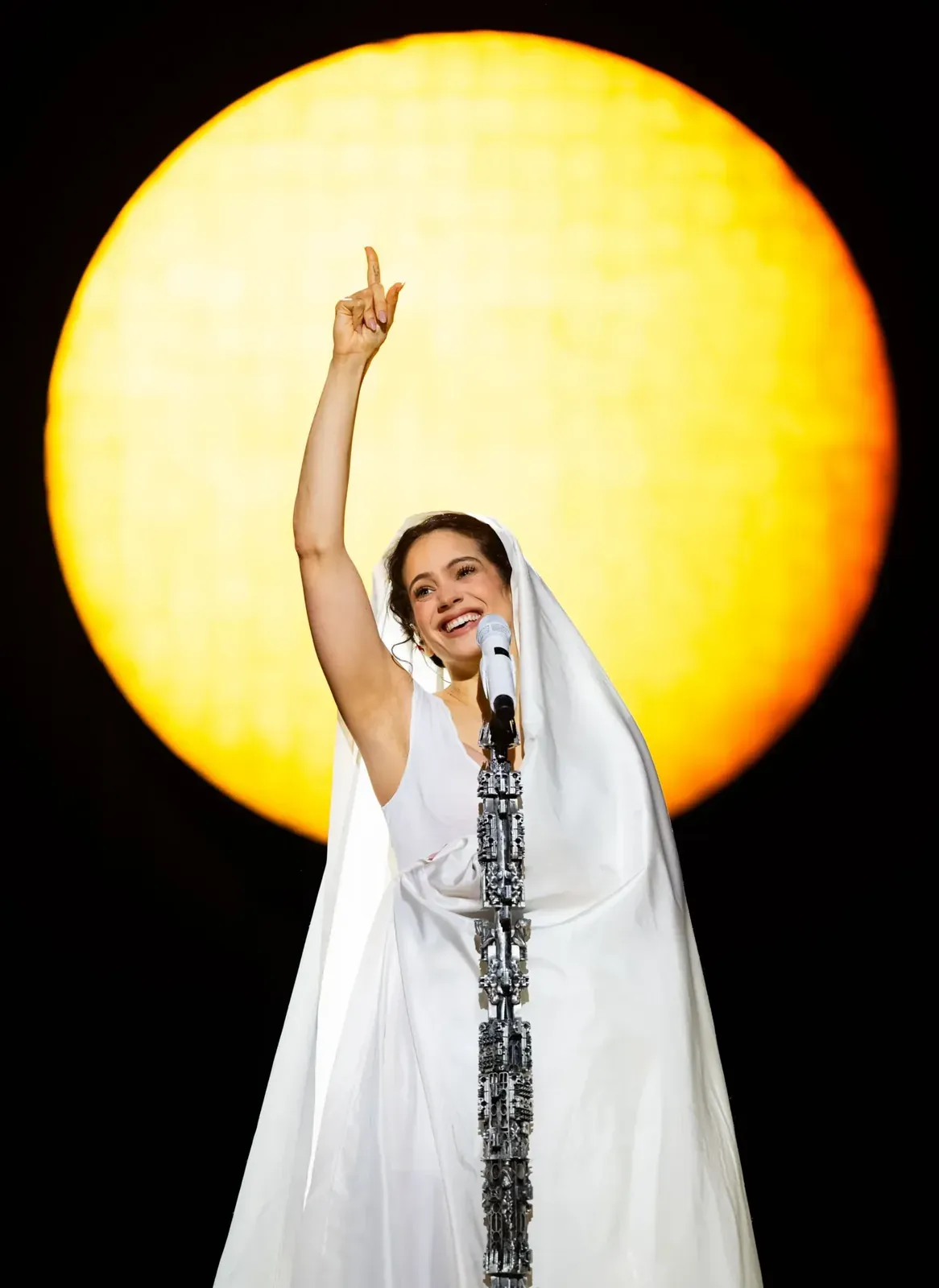
The staging for opener Sexo, violencia y llantas recalls Degas’ dancers and the psychological fracture of Black Swan, as Rosalía rises from a box like a porcelain ballerina wearing custom Ann Demeulemeester, in front of draped stairs and a soft, glowing orb. During electro-classical Reliquia, dancers sweep the stage before aligning in unison for a flamenco-inspired crescendo of hand gestures and pounding bass. Porcelana and Divinize turn the venue into ascension, her voice cutting with crystalline clarity as four veils billow above a now burning orange sun. Suspended in silence and veiled in white, the aria-like Mio Cristo piange diamanti is a pitch-perfect climax to a devastating opening sequence.
ACT II
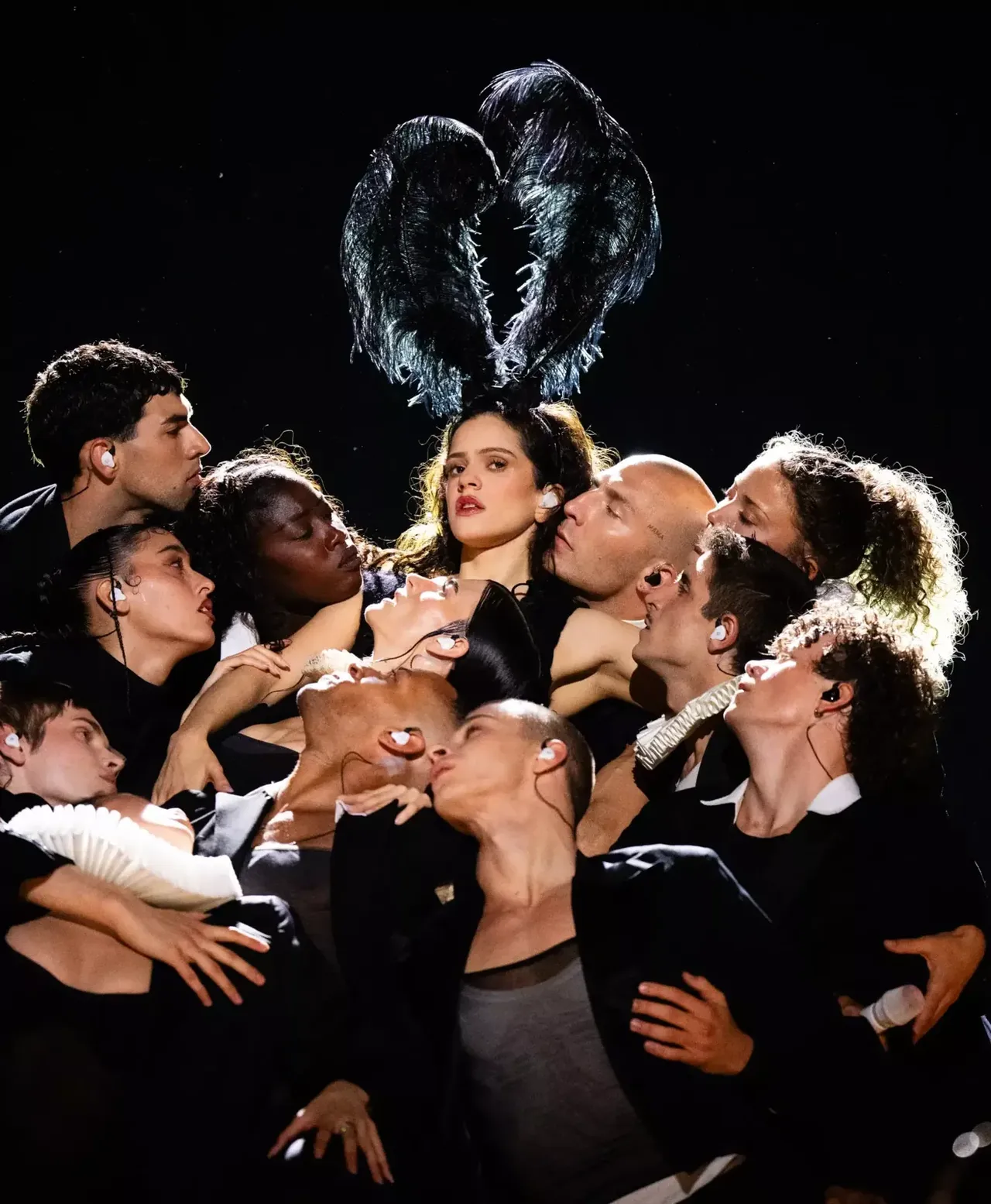
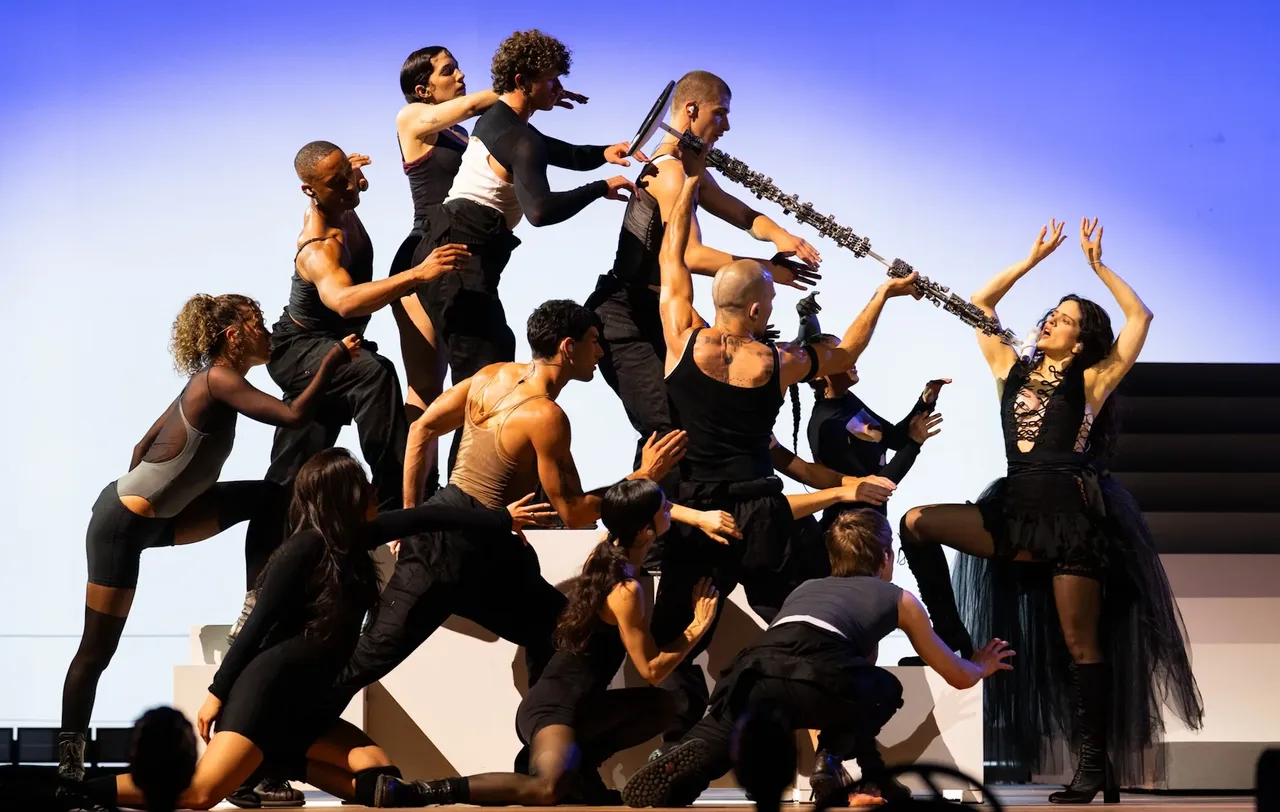
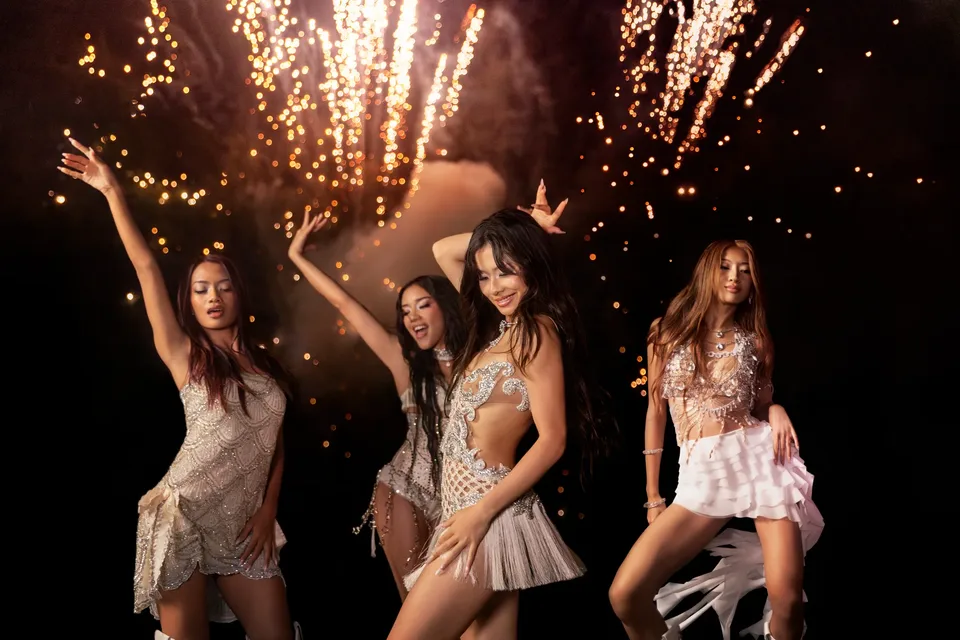
The record’s lead single, Berghain, arrives in deep blue shadow, with Rosalía emerging in a black-knit dress, tulle skirt, and a horned, Goya-esque headpiece. Dancers spill from her orbit and drop one by one as “I’ll fuck you till you love me” echoes through the arena, exploding into a fist-pumping finale of feral techno — a Conrad Taylor remix she first premiered at the Brit Awards. Next up, Saoko, La Fama, and La Combi Versace bring the brooding beats of third album, Motomami, to the forefront, each met with rapturous applause as dancers gyrate on plinths. De Madrugá, Lux’s most sonically adjacent track, carries forward that reggaeton DNA before collapsing into a cacophony of palmas claras, primal drums, and surging strings.
ACT III
Opening with a theatrical rendition of El Redentor from 2017’s Los Ángeles, Rosalía appears in a white sheer Dior haute couture gown, delivering a visceral vocal performance as smoke rises behind her. Frankie Valli’s Can’t Take My Eyes Off You becomes a staged tableau suspended in a gold frame like an Iberian Mona Lisa, with audience members invited onstage as part of a live installation. This is followed by a confessional interlude featuring Spanish actress Úrsula Corberó, before La Perla, choreographed by Dimitris Papaioannou, emerges as the night’s defining set piece. Beautifully executed and entirely mesmerising, she is held in stark light as gloved hands move around her in tightly controlled, ritual-like formations, rendered with poetic abstraction. Sauvignon Blanc offers a moment of release, with Rosalía reclining across a grand piano as golden confetti falls, before La Yugular casts the stage in blood red.
INTERMEZZO
A shift in tone sees Rosalía in an intricate boned dress, styled with an Antsiferova satin bralette and an elaborate sculptural headpiece for Dios Es Un Stalker. The warped, halo-like piece by Spanish milliners Felipe Vivas and Manuel Carrión for Vivascarrion draws on the exaggerated hairstyles of 15th-century court ladies as she moves through the crowd to a small stage set within the orchestra. La Rumba del Perdón emerges as a looping flamenco meditation before she demands the arena “SPRINGEN!” and it duly obliges. CUUUUuuuuuute unfolds ceremonially, a giant illuminated thurible swinging above a makeshift pulpit led by the inimitable Yudania Gómez Heredia, her cascading golden braids adding to the melodrama. Plumes of smoke fill the air as fragments of Sweet Dreams reverberate in a final surge of animalistic ecstasy.
ACT IV
Awash in white, beige and pastel blue, Rosalía and her dancers skip nonchalantly to Bizcochito in angel wings, before descending into a mambo-infused pillow-fight for Despechá, a euphoric coda to the Latin-inflected party spirit of Motomami. As the bilingual, ritual-like breakup song Focu ‘Ranni draws to an emotional close, she climbs to the top of the stairs and falls backwards into the abyss. Moments later she appears for a heavenly rendition of closing Magnolias, disappearing into a glow of white light. A breathtaking work of art.