For many, reading ‘conceptual artist’ is synonymous with a headache: works that are so cryptic they’re almost indecipherable, objects that are apparently metaphors for something so elevated it’s hard to grasp. But that’s not the case with Roman Ondak. The Slovak artist isn’t your usual painter, or sculptor, or photographer — he’s all at once. However, his art is rooted in reality and reflects on concepts we’re all concerned about: freedom, history, identity. That’s what he shows in his major solo exhibition at Kunsthalle Praha, The Day After Yesterday, on view through March 9, 2026.
“Roman’s works are very good at defying the realities of our contemporary art scene. At the same time, they’re universal and understandable,” comments the exhibition curator, Barbora Ropková. Indeed, when visiting the different rooms across two different floors, his pieces speak to us very directly. It doesn’t matter that some of them comment on communism, the system he grew up in with Czechoslovakia was a unified country, because what they truly speak about is society and freedom. On that matter, Ivana Goossen, the Director of Kunsthalle Praha, adds: “Roman’s work starts from communism but is universal. It’s perfect for today’s world, filled with propaganda and growing polarisation. And asks questions like, what do we do (or not do) today that helps history repeat itself? How are we shaped by social structures? This exhibition creates space for participation, reflection, collaboration. It invites us to pay attention.”
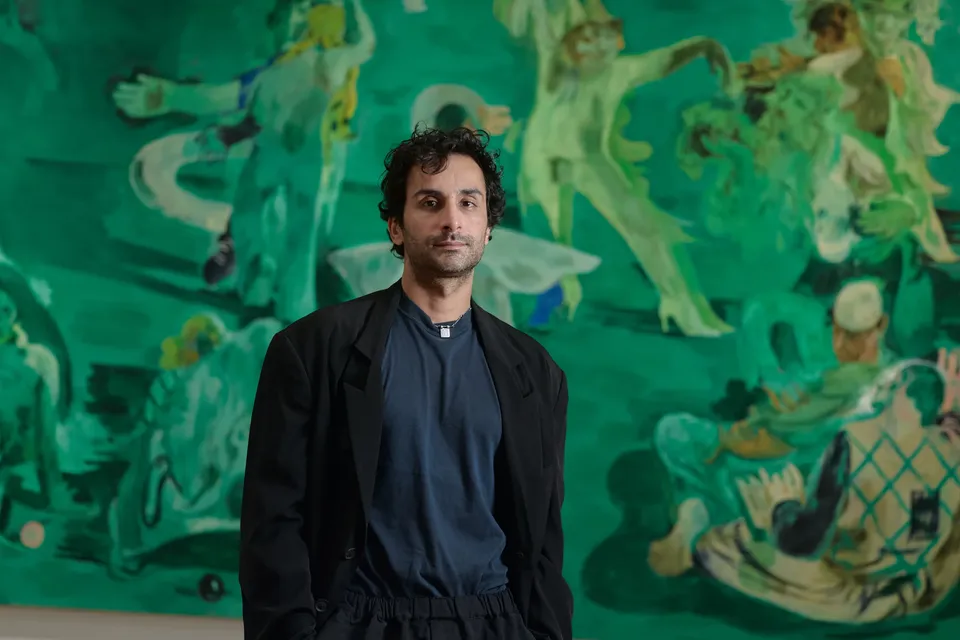
This depth has taken Ondak’s work to celebrated places like the Venice Biennale and NYC’s MoMA museum, to name a few. Now, the Kunsthalle Praha celebrates his biggest exhibition in Eastern and Central Europe after decades. “We are dedicated to creating innovative international programmes that connect people across countries and cultures. This is precisely the vision that made us invite Roman Ondak,” insists Ivana Goosse. Speaking on it, the artist himself says: “With the curator [Barbora Ropková], we spent a year and a half discussing the exhibit. I want to avoid the word retrospective,” insisting that it’s not a revision of all of his work chronologically, but rather, a major show that is testament to his decades-long career.
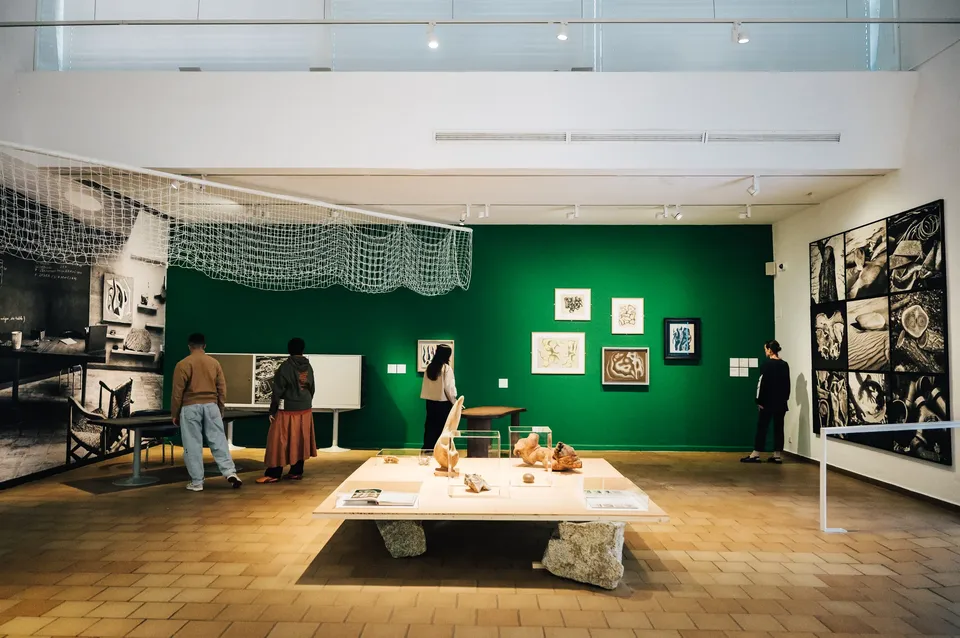
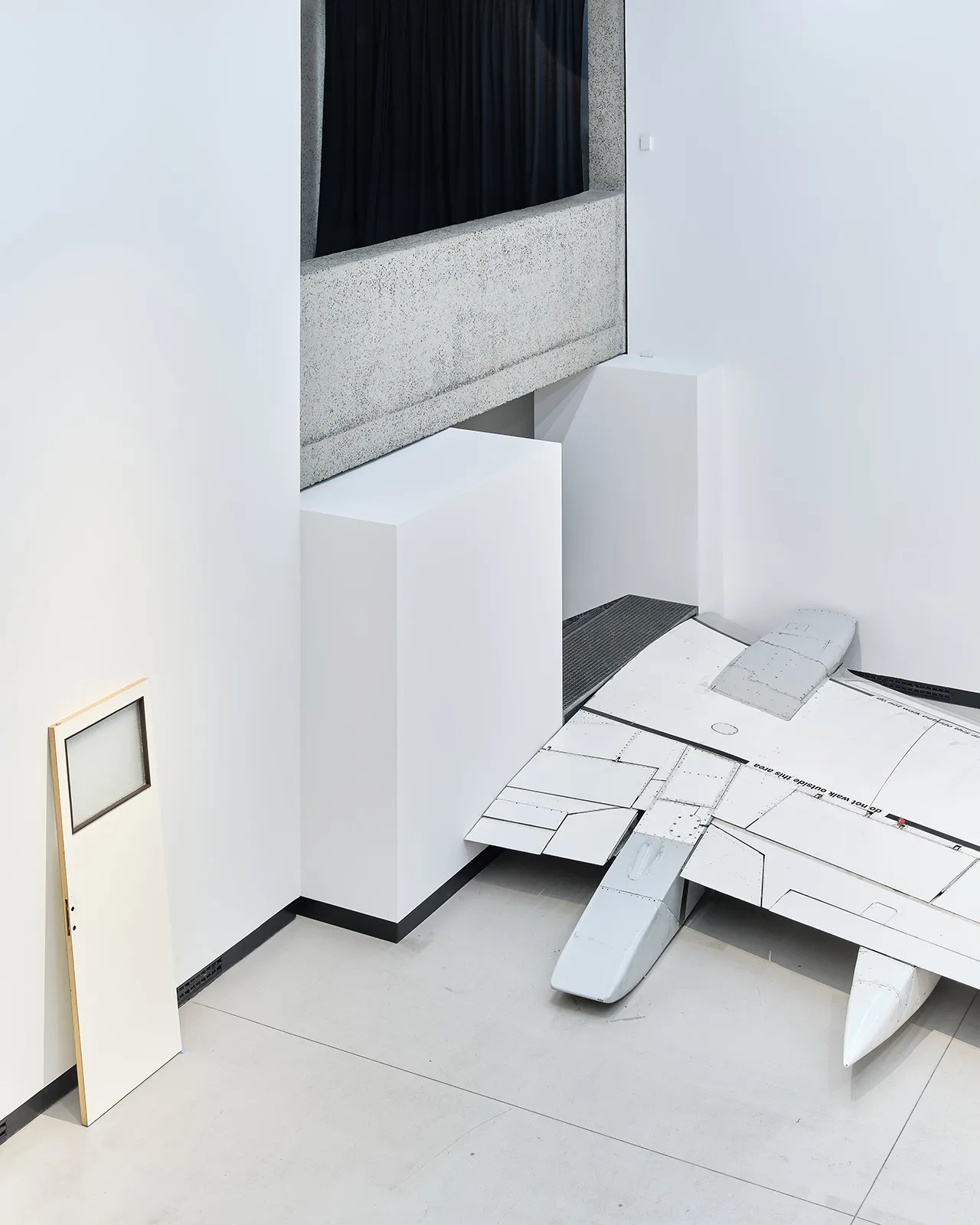
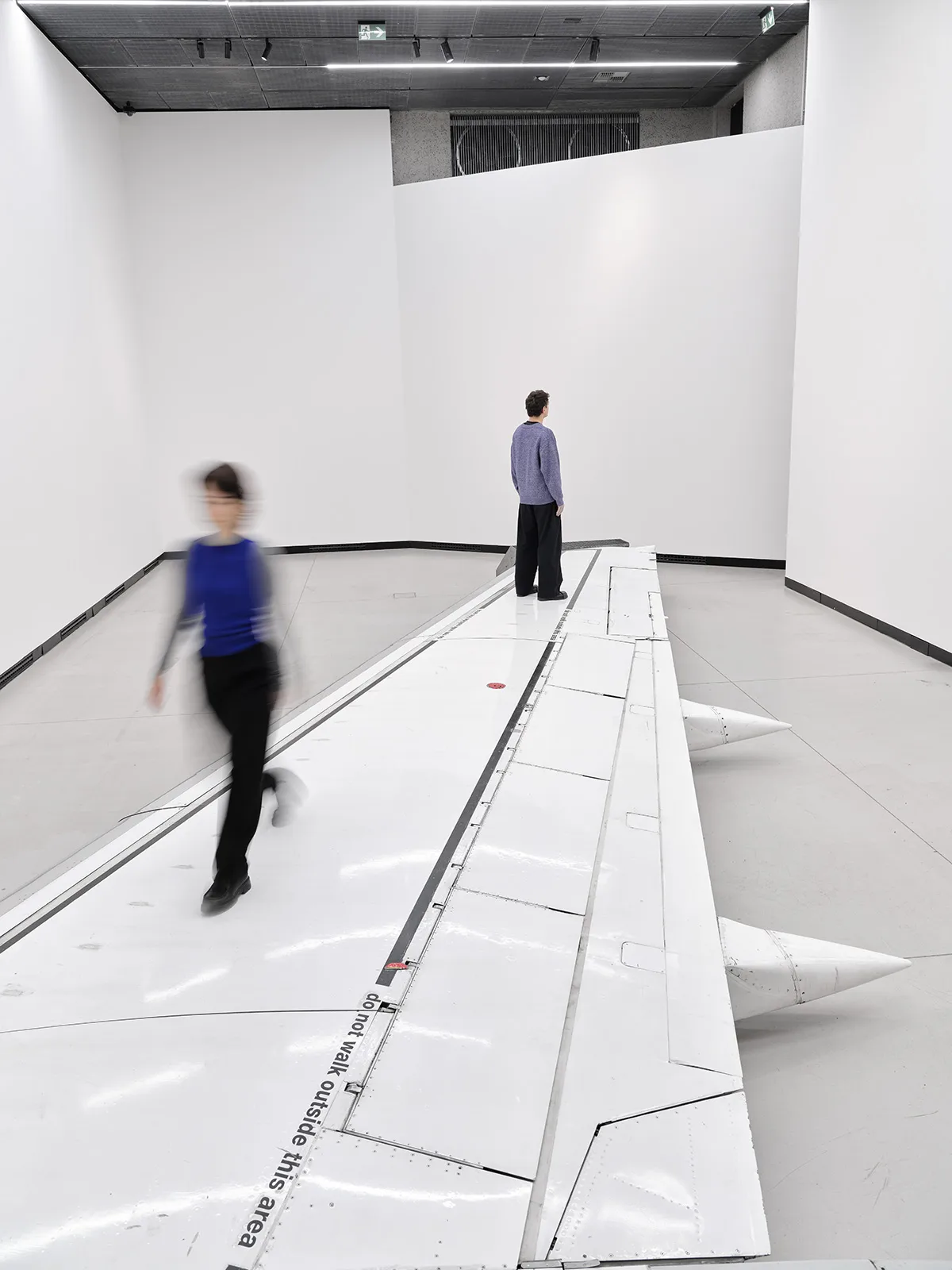
For such an important feat, the Slovak artist has used the museum’s unique rooms to his favour. “Roman plays with the space and knows how to transform it completely,” says Christelle Havranek, Chief Curator of Kunsthalle Praha. As Roman indicates, “you can start anywhere because it’s not based on chronology.” However, the first room you come across draws you in and naturally asks you to go there: a massive airplane wing stands on the floor, surrounded by some sketches, paintings, and photographs. “The wing is a sculptural intervention. It’s something that looks completely out of place but it can become intimate,” Ondak explains. How? Because you can interact with it.
It’s strange that you can do anything in a museum besides look at the works. Well, you can also think about their meaning, takes pictures, or comment it with a friend you might be visiting. But, as we all know, rule number one is “please, do not touch.” Roman Ondak, again, flips the script. Because this wing, titled do not walk outside this area, is actually meant to be stepped on. Of course though, within its limits, as the inscriptions clearly indicate. “There is a social commentary on freedom. Our freedom is constrained in limits, and it’s my way of responding to the totalitarian regime.”
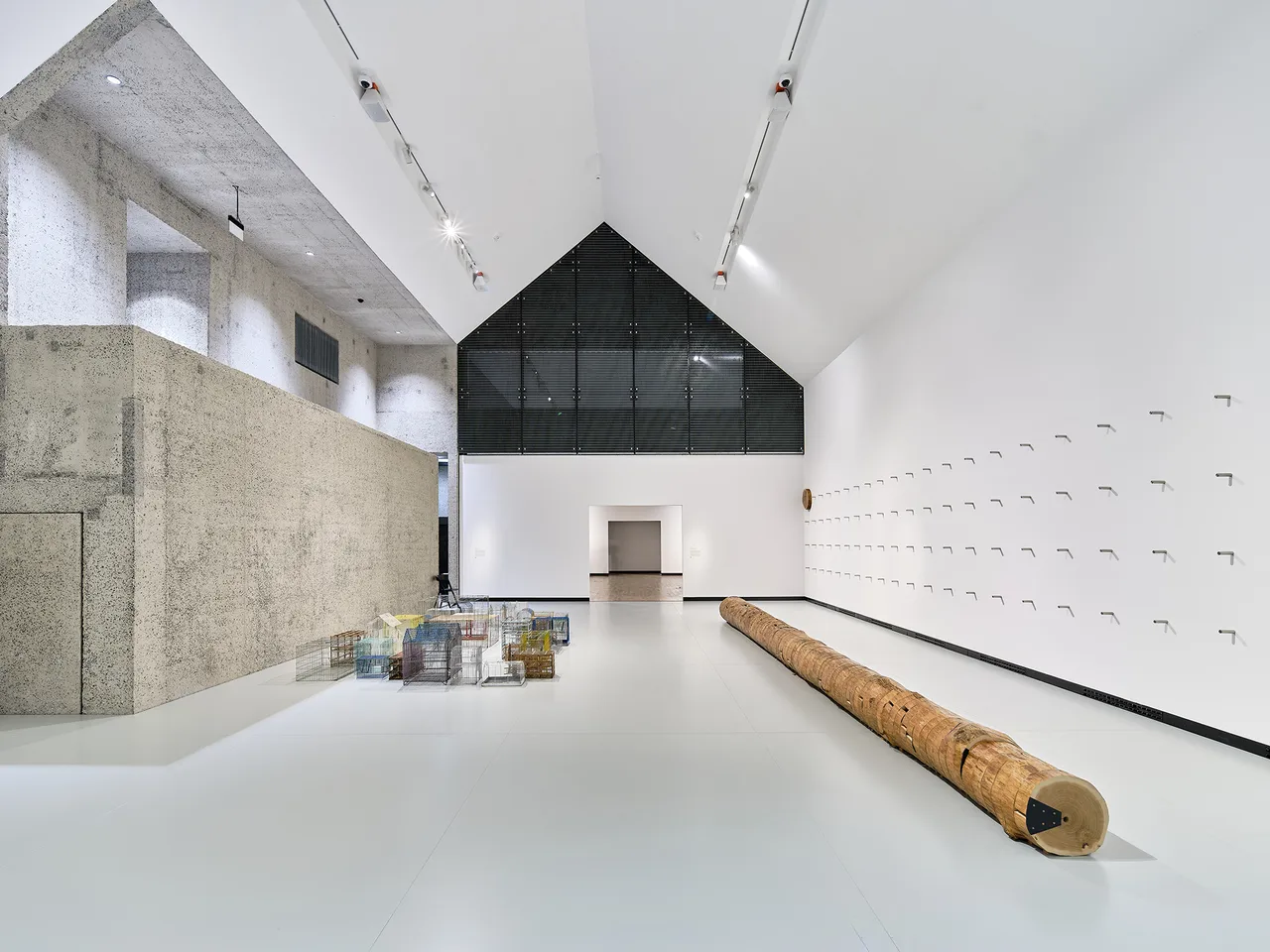
Freedom is a constant thread in his work. For example, in Escape Circuit, a sculpture made of different small animal cages that are interconnected and form a greater circle. The idea behind it is quite simple: if an animal were to be trapped in one of these, it could move to the adjacent cages. But, in the end, it would never be able to escape the greater structure. “There is an open circuit, which joins all the cages, so it’s always another cage, another cage, another cage,” Ondak explains. “It’s kind of symbolic. It’s the idea of how relative freedom can be. It depends from what point you observe it.”
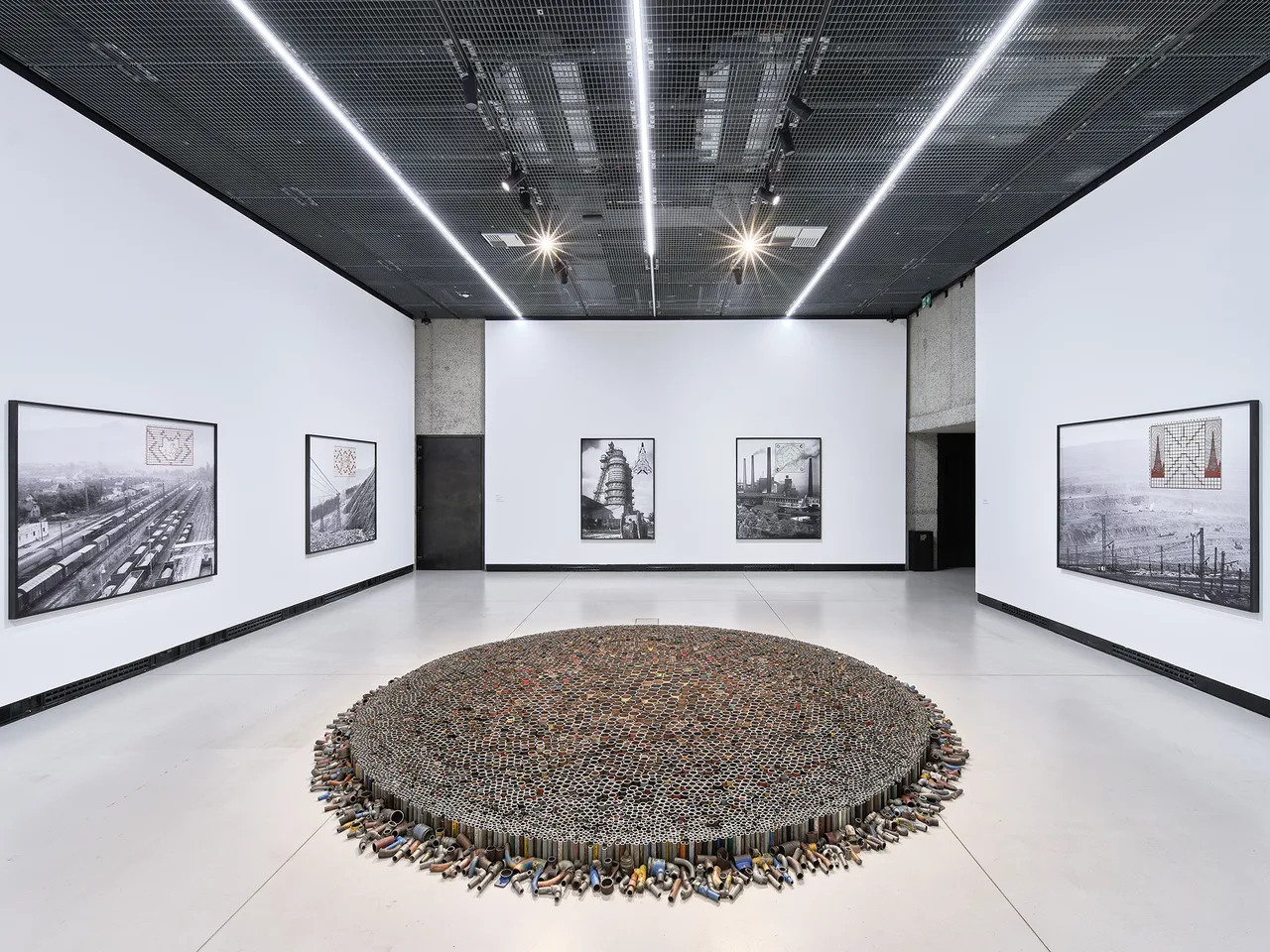
This fixation comes in part from his upbringing under a communist regime. “I don’t pursue this because I’m interested in it but because it’s the time when I was growing up,” he declares. The series Crosswords, for example, illustrates that via vintage snapshots of the industrial environment in Polom limestone quarry, where his father once worked, with overlapped hand-painted crossword puzzles taken from post-war Slovak newspapers. Or in the diptych Bad News Is a Thing of the Past Now (2003), showing his father and himself sitting on the same park bench reading a newspaper from the 22nd of August, 1968, the day after the invasion of Czechoslovakia.
Here, Ondak recreated a fictional story: how he imagined his father received the bad news when he was just twenty-five years old. “I asked him to come to Bratislava, to this park, and read this replica of the very newspaper. Then we swapped positions, I dressed myself in his clothes, and took a picture of myself,” Ondak further explains. “I really meant it, that bad news is a thing of the past. But now, when I look at these photographs, it’s horrifying, we’re back again. We think of a potential invasion of Slovakia or other countries in Europe,” he reflects on the ongoing Ukrainian war.
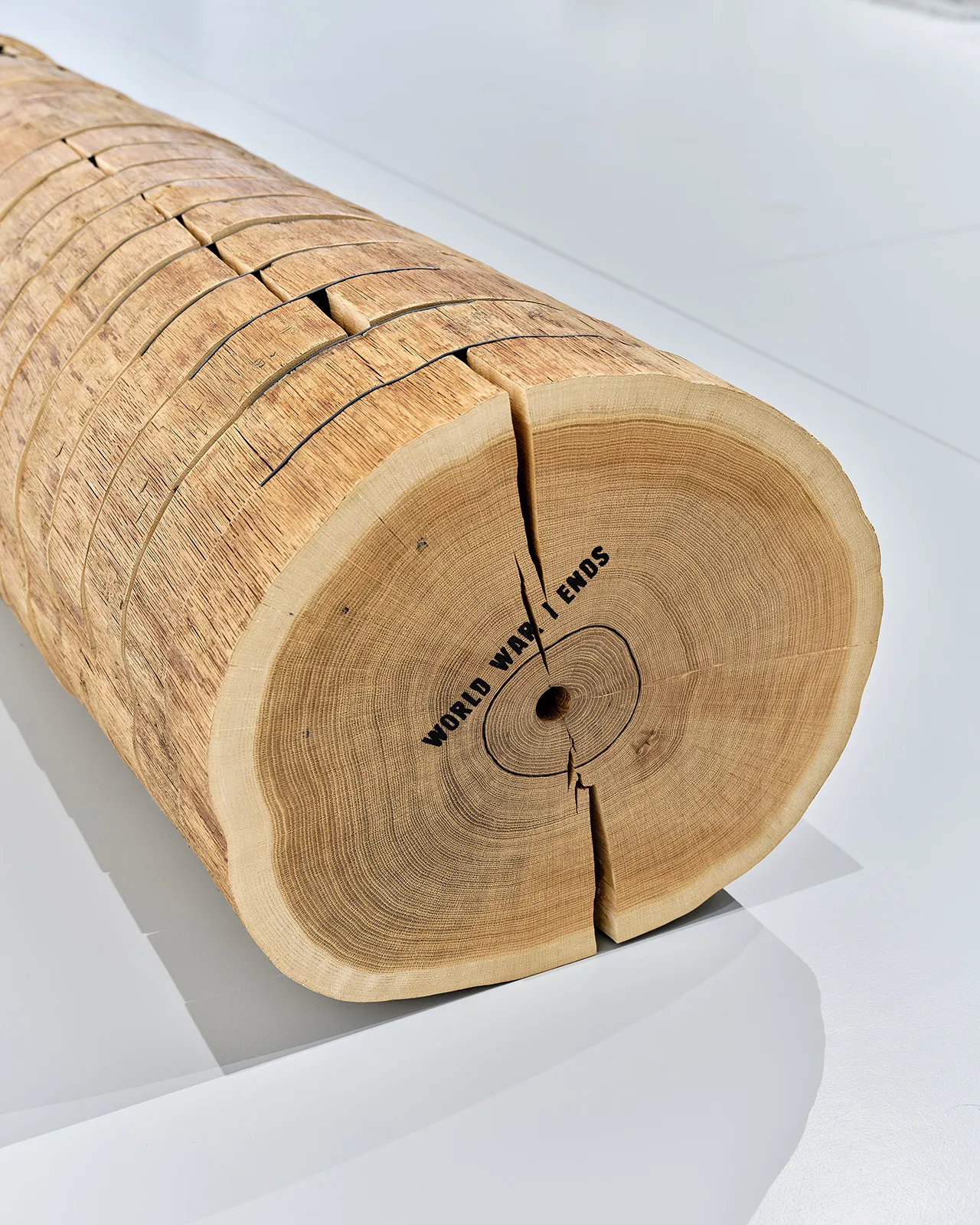
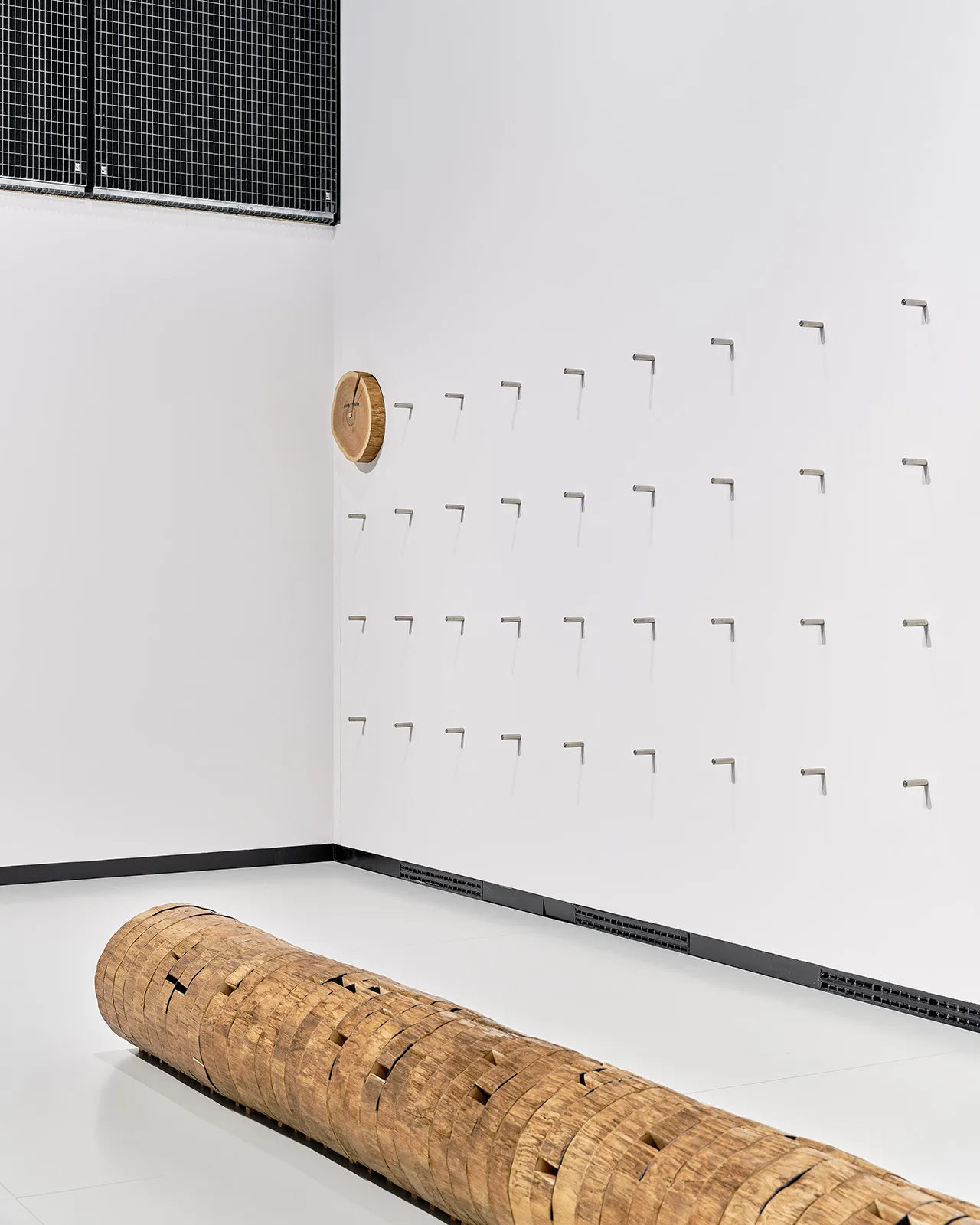
Temporality is another main theme in the artist’s oeuvre. The exhibition’s title gives it away — it’s a play on words about the passage of time, but it also blurs the lines between fiction and reality. His piece Event Horizon (2016), composed of a hundred oak tree discs, involve time, performance, and site-specific installation — again, that idea of playing with the space and adapting to it. “I went back to 1917, to see what phenomena shaped the history before me,” he explains. “But the idea is that no individual can comprehend the complexities of the world.” That history, clearly marked within the trunk’s tree, as well as on humanity’s universal subconscious, is something we can’t escape — even if we haven’t lived it first-hand. The day the exhibition opened, all of the discs were put together as a linear trunk, but each day, the museum staff hangs a disk to the wall, revealing what important events Roman has marked (for example, the end of World War I).
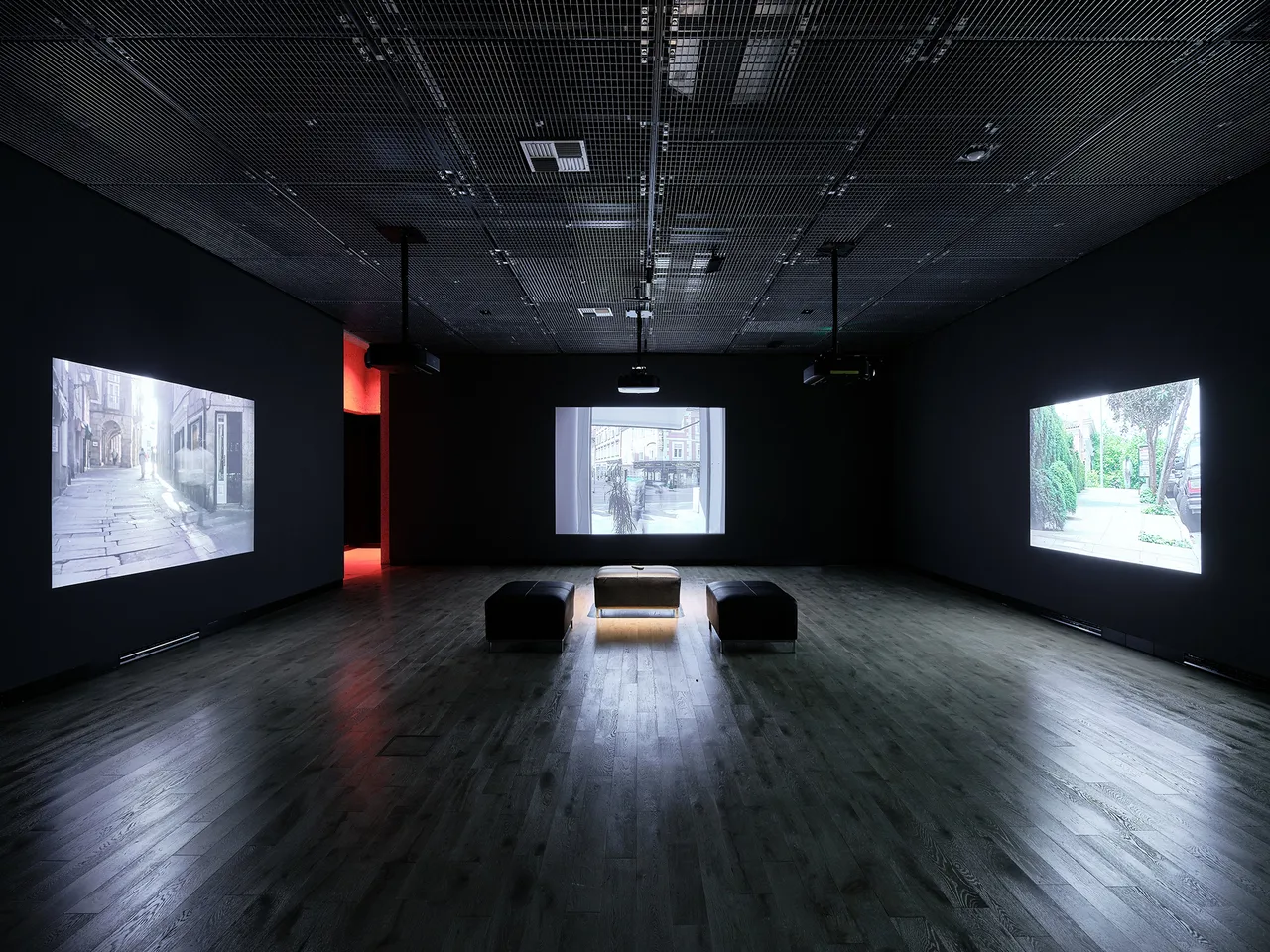
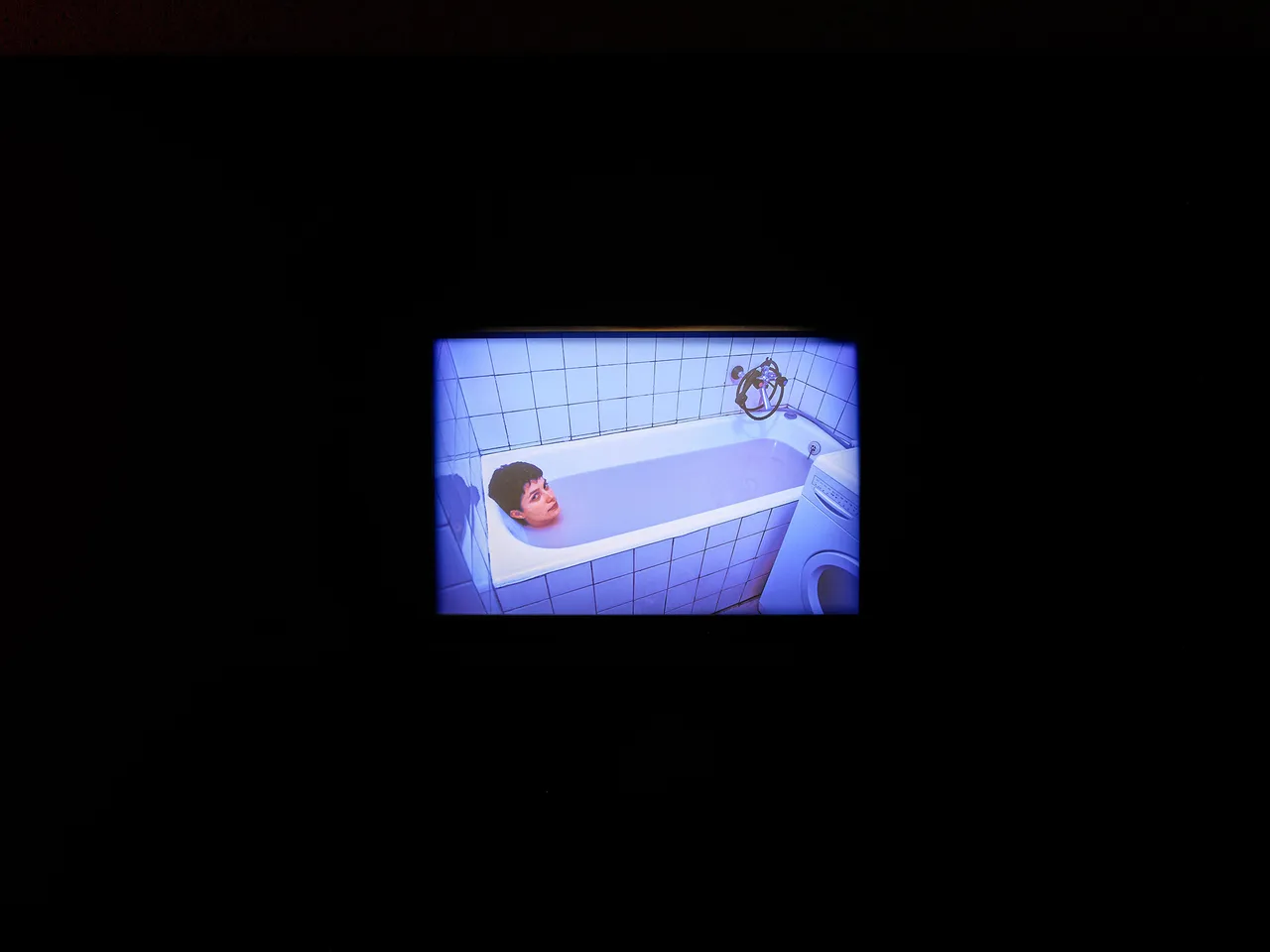
Besides installations and conceptual works, Roman Ondak has famously worked on a lot of video and performance pieces, like Lucky Day (2006), which is why there’s an entire room dedicated to screening them. Chaotic, fun, daring, confusing, humorous — they’re all actions that he’s been doing for years, like observing a museum only from the outside, throwing hundreds of coins to a fountain (asking for hundreds of wishes to be granted, questioning our belief systems and destiny), or having various people with untied shoes walk around an exhibition opening.
So, you see, Roman Ondak is a conceptual artist, but he’s not someone who aims to be hard to read. On the contrary, he demands the audience to be participative, to engage with his works, and to think of them after they’ve left the exhibition. The Dat After Yesterday is an incredible testament to his decades-long career, his wit, and his astonishing capacity to comment on larger-than-life themes like time and freedom in a digestible way. So, if you’re around Prague, make sure you visit.
The exhibition The Dat After Yesterday by Roman Ondak is on view through March 9, 2026, at Kunsthalle Praha, Klárov 5, Prague.