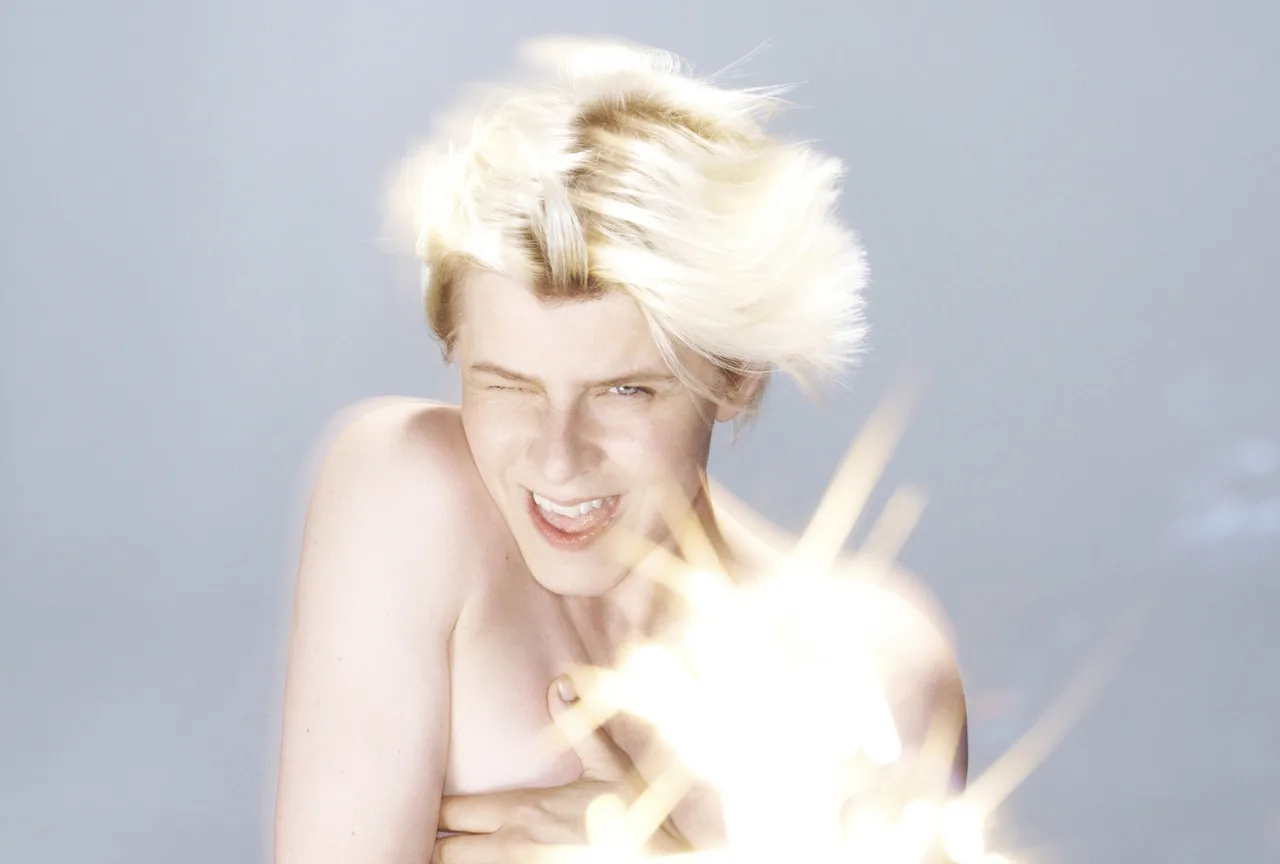
The ecosystem in which we live, fuelled by rushes of dopamine and other self-produced chemical hits, is built upon, among many other concepts, the cult of youth. Discreetly, the neoliberal politics that feed the algorithms we live by have managed to trap us into thinking and acting with one singular goal: to stay young. Consequently, many of us struggle as we reach certain ages, finding ourselves without references for how to simply let nature take its course. Yet, as rigid as the structure is, cracks can open even faster; once in a while, someone finds a way in to sow some disruption. In 2026, through a superb artistic effort, that person is Robyn.
At forty-six, the singer has just released her ninth album, Sexistential. The title, a portmanteau of ‘sex’ and ‘existential,’ reflects a period in her life where desire and introspection have become inextricably linked following her transition to single motherhood. The record’s central themes explore sensuality beyond forty, motherhood, and unfiltered pleasure, alongside her personal journey with in vitro fertilisation (IVF). She has described the album as “emphatic and punchy, defiant about both emotional and biological pleasure.”
It is the third major album this year to feature a female powerhouse singing from the perspective of her own maturity. In February, Peaches released No Lube So Rude, a confrontational, body-first manifesto using explicit sexuality, humour, and provocation to challenge norms surrounding ageing, gender, and power. March saw the arrival of Kim Gordon’s Play Me, a satirical portrait of contemporary life under techno-capitalism, where identity and meaning dissolve into noise and algorithmic control. While both are exceptional albums —and extremely pertinent regarding contemporary gendered worldviews— the cultural landscape often allows women of this age to go curiously unnoticed.
Now, it is Robyn’s time. The singer has staged a flawless comeback following an eight-year hiatus defined by life-altering experiences — most notably, becoming a mother. She condenses these years of reflection into an album whose only real fault might be its brevity. Sexistential was largely co-produced with longtime collaborator Klas Åhlund, though she also reunited with Max Martin for the standout track Talk to Me. Discussing the song, she explained: “I wrote it during the pandemic when there was no way to be physical. I like talkers; that turns me on.” The track is vintage Robyn, where her wordplay remains as witty and playful as ever. “I’m coming fast so guide me in (So guide me in) / Just hit me up and talk to me, work up a vibe / Sometimes I get so lonely (So lonely) / So, baby, won’t you talk to me till I’ve arrived?” she sings, mastering the art of the innuendo. The hit exists in the same rarefied air as icons like Honey, Be Mine, or With Every Heartbeat.
We find more of this on the rework of Blow My Mind, a track originally released in 2002 on her album Don’t Stop the Music. Reclaimed for this record, the song has taken on a profound new resonance since Robyn became a mother. The brilliance of the track lies in how it encapsulates the Swedish icon’s experience of maternity; she toys with themes of devotion, physical proximity, and human contact, crowning it with the lines: “Undeniable, raw emotion / Unconditional naked devotion / Your unbearably cute scrumptious little face.”
“Exploring my sensual life is the same feeling as when I make a good song,” Robyn says of the record’s title. “It’s such a beautiful kind of sensitive vibration that takes so much work to keep afloat. I feel like the purpose of my life is to stay horny — it doesn’t even have to be about sex, but it’s feeling sensual and attracted to things that I enjoy and not letting anything take over that,” she explains in the press release. Throughout the album, the production is impeccable; the bass and synth work is lean and direct, making Sexistential sound crystal clear. Listening through high-quality headphones, the soundscape of this cohesive body of work feels like a sonic map with the listener at the centre. You can feel every element interacting and breathing, coming alive to tell a tale of love and life in the 21st century. Sexistential feels exactly like catching up with the woman who gave us Body Talk sixteen years ago: her ability to craft a sublime, infectious pop album remains entirely intact.
Really Real opens the album with a punch, featuring production that recalls her previous collaborations with Röyksopp. “We checked and there’s been no mistake / Yeah, I’m afraid that feeling’s not going away,” she sings, translating the experience of a relationship where the boundaries are blurred. The track features a highly original bridge that acts as a sort of sanctuary (a simulated phone call with her mother) adding that touch of eccentricity that Robyn so often masterfully pulls off. Dopamine then reflects on reality from a collective perspective, specifically our enslavement to social media. As she explained to Billboard: “It’s almost like we don’t even accept that we’re human anymore... this idea that you can figure out and win life or something.” Once again, through her idiosyncratic sound and unique brand of romantic lyricism, Robyn perfectly captures the tension of the ‘real but fake’ world we inhabit.
Sucker for Love is a quintessential pop anthem about surrendering to a lover — an experience we’ve all shared. You know it’s going to hurt, yet resistance feels impossible. Rather than deceiving herself, Robyn lays out her honesty like a blanket on green grass; her lyrics state clearly how conscious she is of the losing battle, yet she refuses to deny her desire to experience love. It Don’t Mean a Thing is another bop in an album that is entirely no-skip — a record where the fusion of electronic music and pop structures (now ubiquitous across the mainstream) returns to its rightful origins. This is Robyn at her best, her trademark sound expanding while cleverly referencing her own legacy. As she sings: “When you were my baby, you said, Let’s get free, Robyn, let me drive / Big plans, I was your most devoted believer / In the passenger seat for the ride of my life / Know this time, I was just waiting for you to get naked with me, baby.” Here, the singer presents as a woman who owns her desire and expresses her will to enjoy her sex life on her own terms, fully aware of the bigger picture.
Light Up plays in the same league as signature anthems like Dancing On My Own, Call Your Girlfriend, or Missing U. It isn’t just the sound; this time, the track edges the listener by refusing to ever fully explode beat-wise. It fits perfectly into that specific Robyn category: her honesty and expression are instantly relatable. Her ability to guard her feelings while simultaneously offering a hand to a loved one to help them rebuild feels like the kind of truth you only usually tell yourself. There is so much pedagogy in Robyn’s work — they don’t teach this at Harvard or Yale (and it’s Sexistential!). The final track, Into the Sun, feels slightly repetitive by this stage, with the song reflecting on a readiness to get burned by the sun as a metaphor for the risks of falling in love.
The title track is essential to understanding the album’s thesis. A rap delivered while ten weeks pregnant following IVF, the song functions as a direct riposte to André 3000’s claim that no one wants to hear him rap about his colonoscopy. To celebrate the release, Robyn performed the track on The Late Show with Stephen Colbert; reading the comments on the YouTube video, it is clear how vital it was for Robyn to go “into the sun” and risk the burn. Humour has always been a core component of her artistry, and here it is used to sharpen her reflections. She sings: “My body’s a spaceship with the ovaries on hyperdrive / Got a whole universe inside that exists in between my thighs / Do I have a consistent will to persist and finish this ride? / My babymaker’s got twenty in the clip, ready to fire.” It is an ode to the complexity and richness of sex lives for women approaching fifty today — a vernacular that succeeds precisely because it makes some listeners cringe. It is a bold statement on sexual politics and their evolution for women in a world still defined by incel culture and patriarchal norms.
Robyn did not need this album to cement her status as a pop icon — one who hails from the very place that allows outsider anthems to shine within the mainstream: Sweden. Sexistential simply adds another layer to her formidable discography, opening a door to a new pop narrative where mature women navigate a misogynistic world with mastery. If there is one genre Robyn can truly claim as her own, it is the ‘sad banger’: that specific brand of song designed to exorcise loneliness by dancing as if it were the last day on earth. Love and life do not conclude in one’s twenties, and here Robyn reclaims the right to her body and its pleasures while candidly sharing her struggles and desires. Sexistential stands as one of the best albums of 2026 so far, a fun, bold, and authentically contemporary tale, and yet another triumph in Robyn’s singular pop legacy.