Photography is the mirror of the soul, much like the eyes themselves. Through photography, we do not merely freeze a moment in time; we reveal stories, stories not only about the subject held within the frame but also about the photographer behind the lens. Photography becomes an open conversation between the photographer, who leaves traces of themselves in the image, the subject, who offers their presence, and the observer, who completes the work by giving it meaning. From January 15th, 2026, at Gagosian Grosvenor Hill, Richard Avedon: Facing West celebrates the 40th anniversary of one of the American photographer’s most iconic bodies of work, In The American West. A series of images that tells the stories of those who are seen and those who see.
Richard Avedon’s career unfolded under the bright lights of fashion. For decades, his images filled the pages of Vogue and Harper’s Bazaar, shaping the visual language of an era. Through his lens passed some of the most recognisable faces of the twentieth century: artists, writers, musicians, actors, and politicians who came to define their time. By the late 1970s, Avedon was over fifty years old, globally famous, and professionally secure. On paper, it was a flawless résumé. A great CV, really.
And yet, after years spent portraying fame, influence, and visibility, something shifted. The death of his father and the long illness of his mother forced him to confront fragility, loss, and the limits of surface glamour. Success, it turned out, had not exhausted his curiosity. He began to wonder what — and who — had been left outside the frame. He needed to look elsewhere. He needed to widen his gaze.
So he turned west.
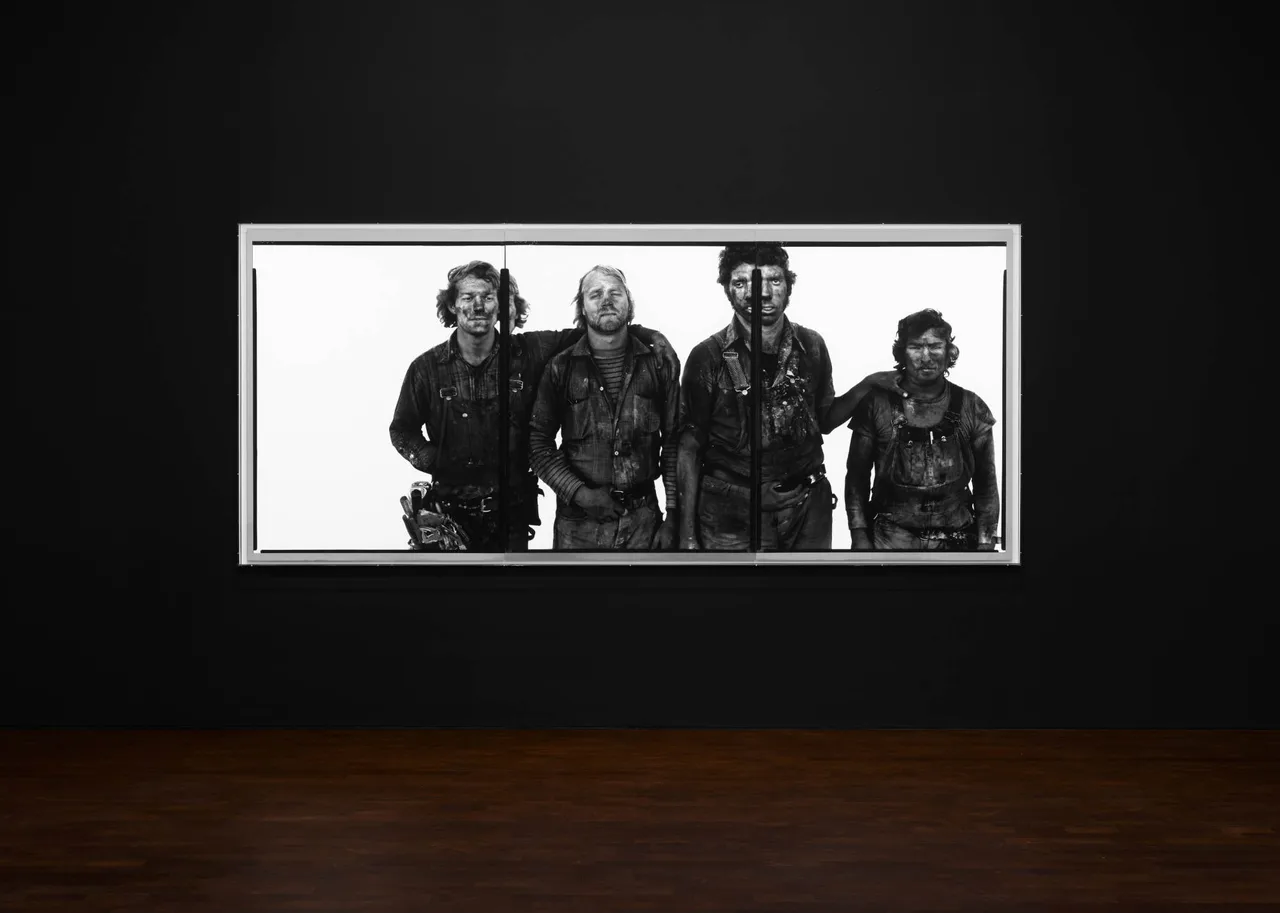
Between 1979 and 1984, Avedon travelled across twenty-one U.S. states, stopping in oil fields, small towns, fairs, mines, and empty roads. He met drifters, coal miners, ranchers, waitresses, teenagers, and workers whose lives rarely entered museums. Over five years, he photographed hundreds of people, hundreds of stories, and hundreds of different social settings.
No landscape, no workplace, no social clues, only the person. Avedon brought the studio to them, setting up outdoors, close to the camera, speaking to his subjects, asking them to stay, to look, to exist fully in front of the lens. What makes these portraits so moving is not how they are composed but how they feel. You sense the silence between photographer and subject. You feel the tension of being seen. These people are not idealised, but they are never diminished. Avedon does not ask us to pity them; he asks us to look at them, to get to know them. He introduces us to his subjects by their names, not by what they represent.
And so we meet James Story, a coal miner whose body carries the marks of labour and time that tell us about exhaustion but also endurance, about what it means to keep going. Then we meet Richard Wheatcroft, a rancher from Montana. Two years apart, he seems unchanged at first glance, but the longer you look, the more life reveals itself: the slight shift in stance, the wear on his clothes, and the quiet transformation written on his face.
In a world saturated with images, Facing West feels surprisingly contemporary. It speaks about class, identity, labour, and belonging without shouting. It reminds us that every face carries a story, and that sometimes all it takes is attention, real attention, for those stories to emerge. Forty years later, these photographs have not aged. They have grown. And as we stand in front of them, we become part of that open conversation between the photographer who once stood there, the people who offered themselves to the camera, and us, who are still learning how to see.
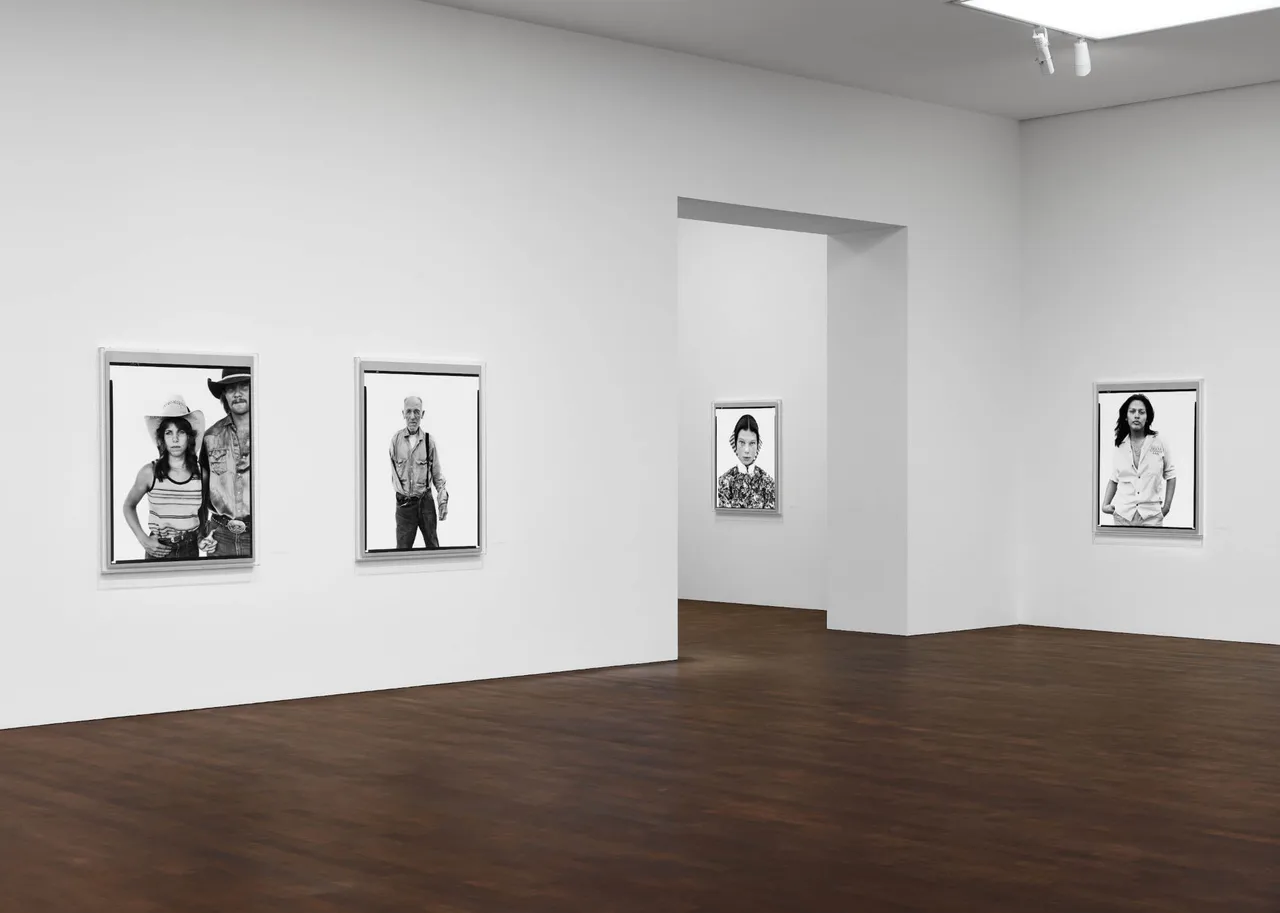
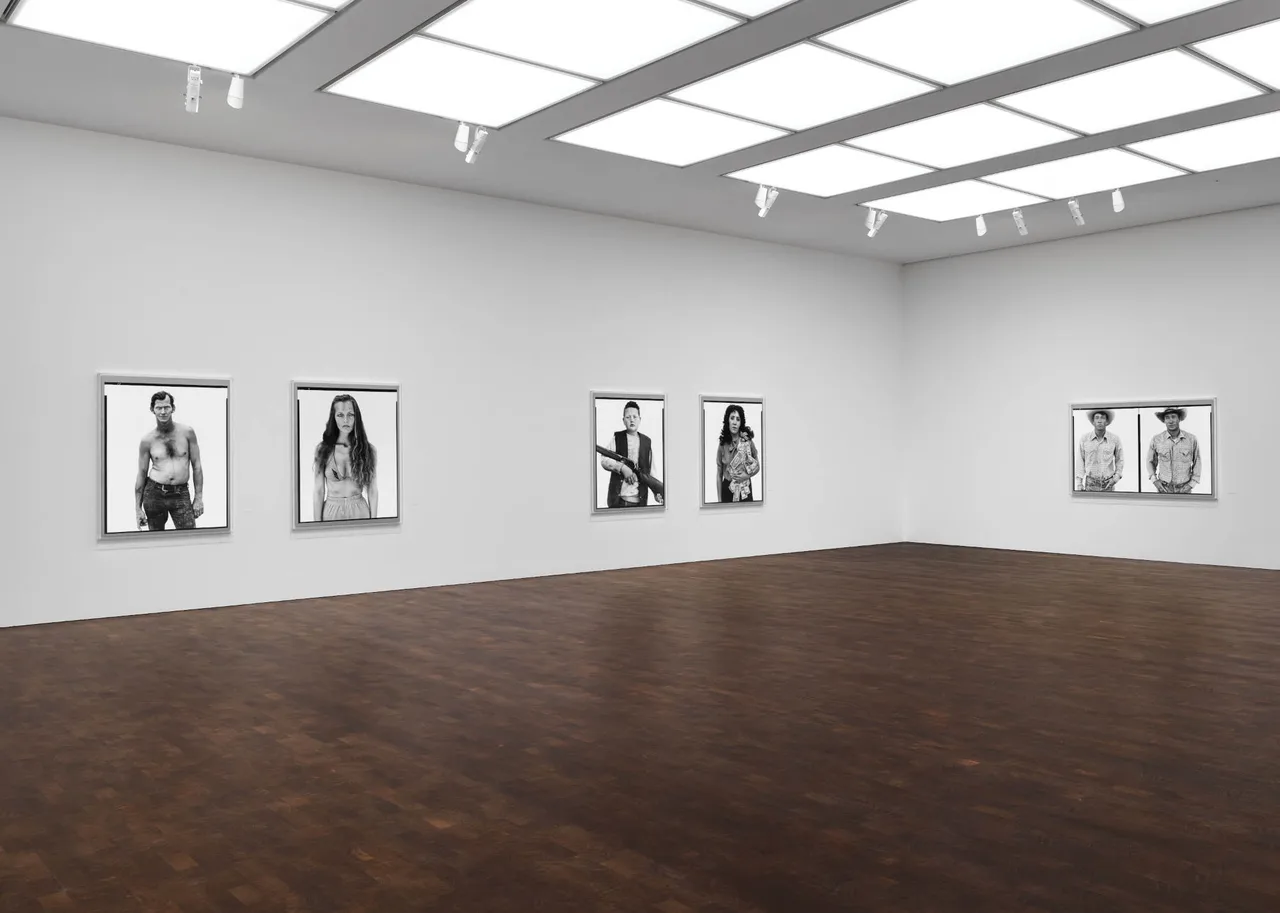
Richard Avedon. Facing West, 2026, installation view.
Artwork © The Richard Avedon Foundation
Photo: Prudence Cuming Associates Ltd
Courtesy Gagosian
Artwork © The Richard Avedon Foundation
Photo: Prudence Cuming Associates Ltd
Courtesy Gagosian