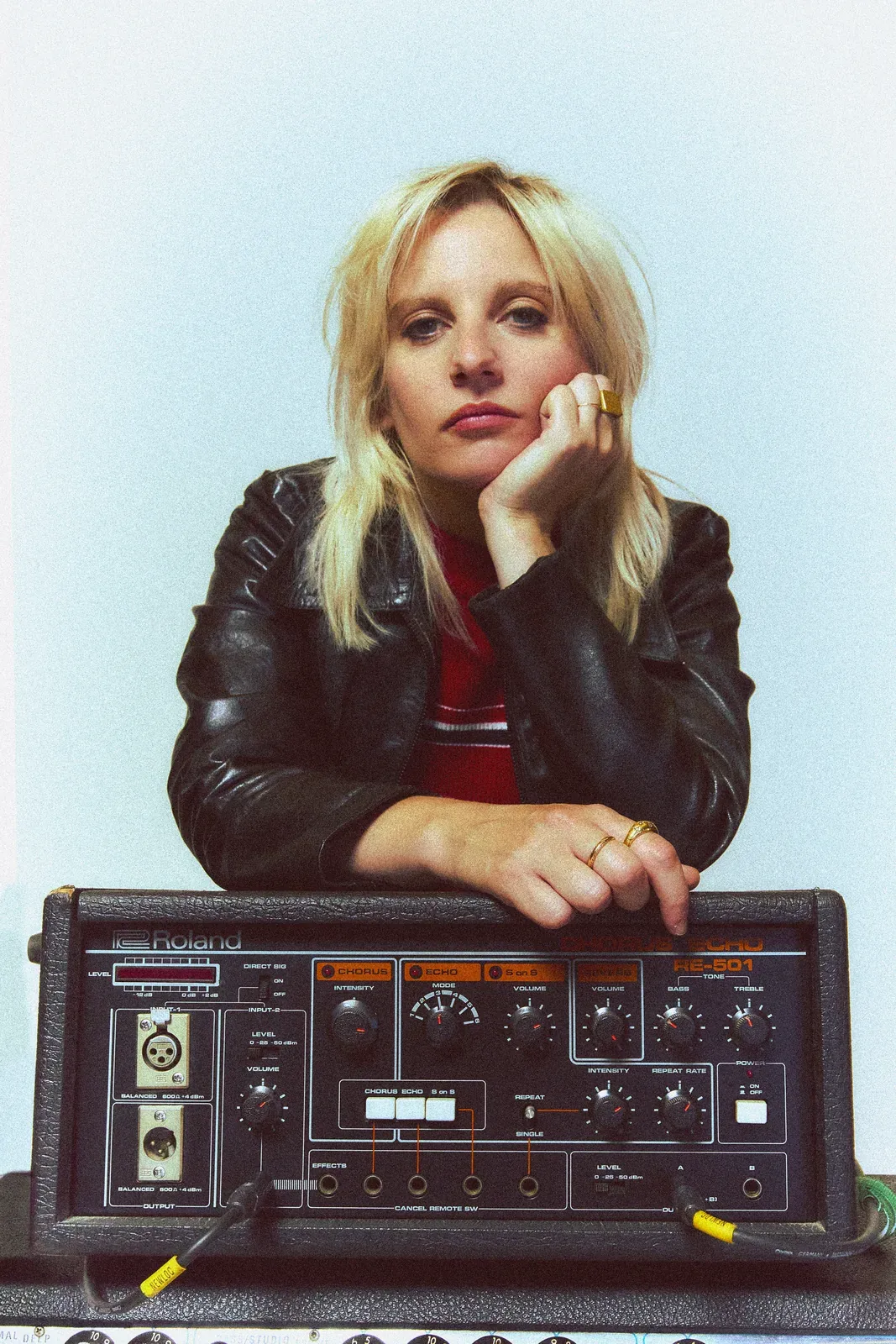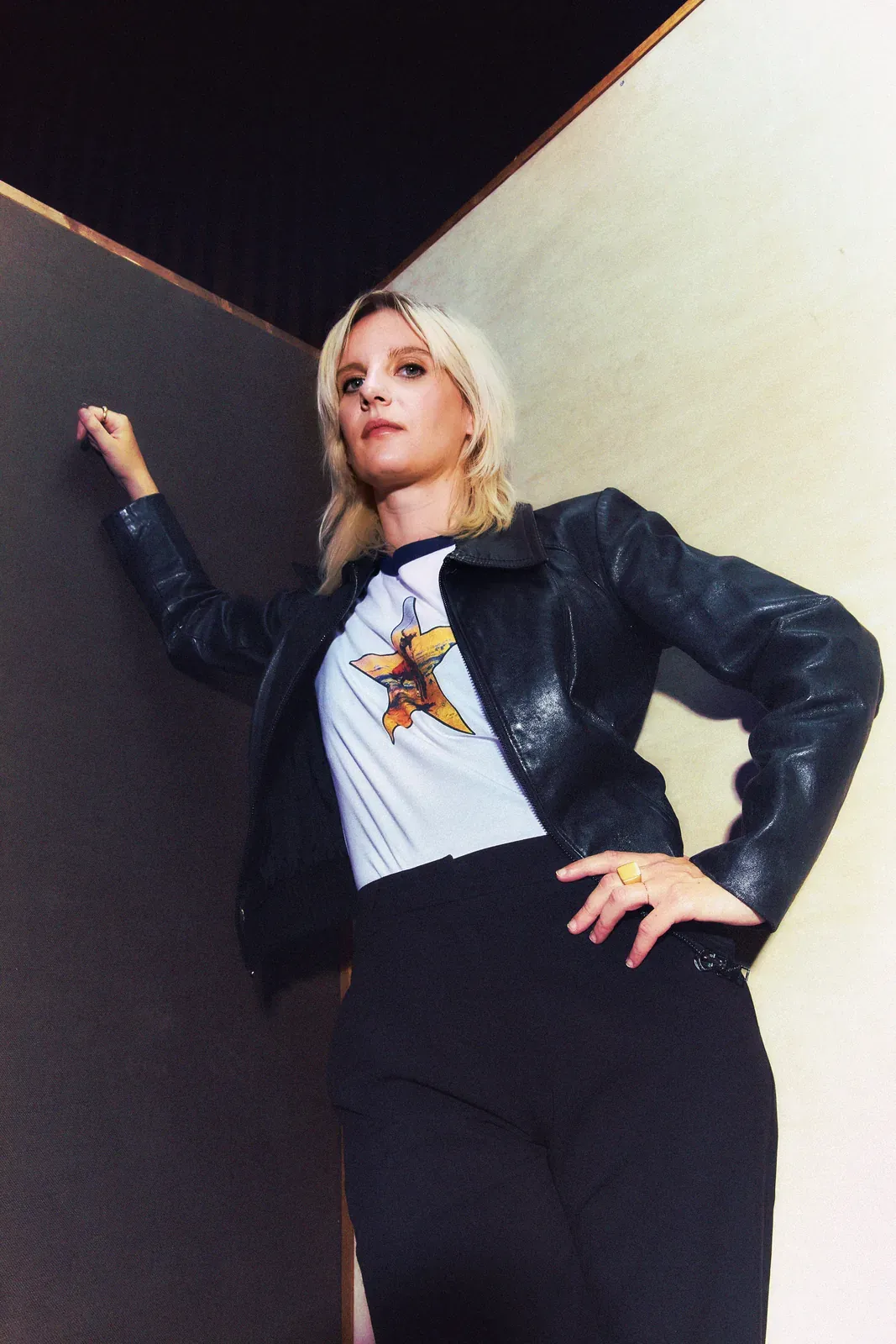
Multi-instrumentalist Marion Brunetto, better known as Requin Chagrin, carries the airy sounds of the Mediterranean Sea in her music. Following in the footsteps of dream-pop icons while collaborating with French musical legends, her fourth record, Décollage, is a masterclass in crafting shimmering, melancholic pop-infused soundscapes. Together, we sit down to discuss gulper sharks, recording every instrument on the album, and how the sun-soaked landscapes of the South of France always find their way into her music.
Hi Requin! How’s it going and where are you in the world?
Hello! I’m fine, and today I’m just hanging out at my place in the north-east of Paris. I grew up in the South of France, in a place called Ramatuelle near Saint-Tropez, but I moved to Paris when I was eighteen. Things are pretty quiet at the moment. My big Parisian headline show was a couple of weeks ago at La Gaîté Lyrique. It was incredible, and I was so happy to reunite with my fans. I had a lot to prepare for it, including the visuals that we projected on stage while we were playing, which was a lot of work. Now I’m taking it easy for a bit.
How was the show?
The last time I performed there was exactly ten years ago, at the very beginning of my career, and I have a few hazy memories of it because I was incredibly nervous. This time, there was still a bit of stage fright, but I enjoyed it a lot more and was happy to be back there to make new memories. The venue is amazing, with the perfect capacity to share the new record, and it was the perfect place for my first Paris comeback date. The album was really well received there, and the Gaîté show sold out a few weeks in advance. Those are cool little signals that mean we can increase capacity for our next Parisian dates. Otherwise, we’ve been touring across France, as well as in Brussels and Switzerland. We also opened for Indochine in Paris twice.
Can we talk about your stage name, Requin Chagrin? Where does it come from?
It’s actually the name of a real shark. I came across it by chance, and I’d always wanted a two-part name. Requin Chagrin, gulper shark in English, perfectly sums up two very distinct sides: on the one hand, the shark, which evokes a landscape, the sun, the beach and the sea, basically where I grew up; and on the other, the chagrin (sorrow) part, which is more related to my lyrics and to a part of my personality that lies somewhere between melancholy and nostalgia. The name stuck with me, so I decided to keep it. Plus, it rhymes.
Now I don’t pay much attention to it anymore because it’s been almost ten years. Physically, the gulper shark is quite striking. It doesn’t look mean and it lives in the deep ocean. It has great big eyes that make it look a bit sad but also endearing, which I find quite relatable.
Now I don’t pay much attention to it anymore because it’s been almost ten years. Physically, the gulper shark is quite striking. It doesn’t look mean and it lives in the deep ocean. It has great big eyes that make it look a bit sad but also endearing, which I find quite relatable.
Are your fans mostly based in French-speaking countries, or have you built an international audience as well?
Mostly, yes, but recently I’ve been getting more and more messages from people in Latin America, in places like Mexico and Brazil, which is really surprising to me and makes me really happy. When I played at La Gaîté Lyrique, two people had come all the way from Chile and Mexico, and I found that incredibly moving. I really hope we’ll be able to go to Latin America soon. We’re going to Montreal at the end of June for the first time to perform at the iconic FrancoFolies Festival, along with another date in Quebec. I’m so happy to finally have the chance to perform in that distant country, which also has a strong Francophone culture. There’s still so much to accomplish, and I really hope to be able to travel more in the future.
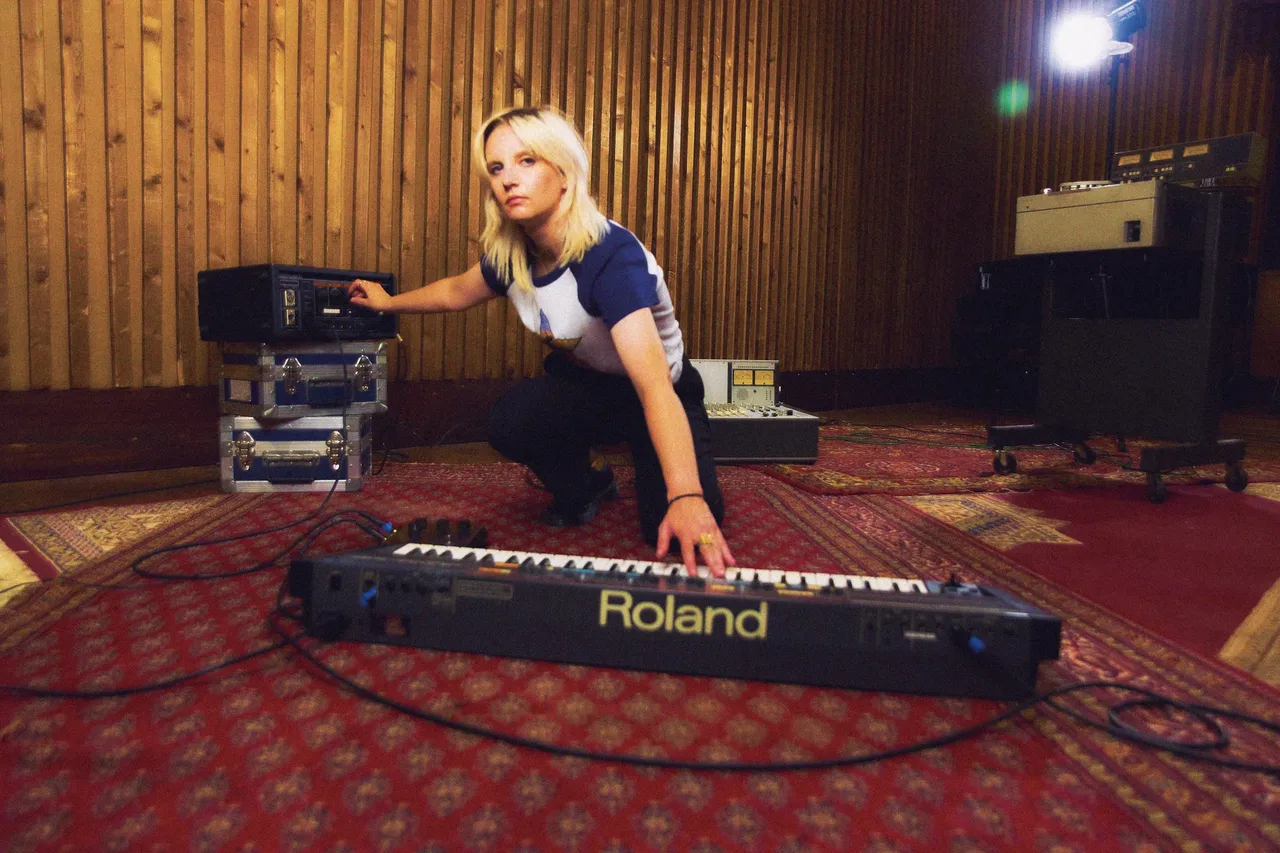
You started playing music at a young age, learning guitar and then moving on to drums, bass and keyboards. You’re a multi-instrumentalist, which has played a huge part in shaping your career. Tell me about that.
I first picked up the guitar when I was twelve and started taking lessons to learn how to play properly. That quickly made me want to explore the other instruments that make up the core of a rock band: drums, bass, and a bit of keyboard as well. The bass is close enough to the guitar, so picking it up came fairly naturally. Drums, on the other hand, were a completely different challenge. I used to watch drummers on live DVDs and try to play along with them. That’s how I learned. To this day, it’s an instrument I absolutely love playing whenever I get the chance.
Before I started Requin Chagrin, I joined two bands in Paris that were looking for a drummer. That’s how I first discovered what it was like to perform on stage behind the kit. At the same time, I wanted to try writing my own songs, and back then a lot of bands would record themselves on cassette recorders or other cheap vintage machines. Thanks to this approach, and a little help from my friends, I managed to record everything myself: first a guitar track, then the bass, followed by the drums, which I’d initially programme and then record later in a studio.
Before I started Requin Chagrin, I joined two bands in Paris that were looking for a drummer. That’s how I first discovered what it was like to perform on stage behind the kit. At the same time, I wanted to try writing my own songs, and back then a lot of bands would record themselves on cassette recorders or other cheap vintage machines. Thanks to this approach, and a little help from my friends, I managed to record everything myself: first a guitar track, then the bass, followed by the drums, which I’d initially programme and then record later in a studio.
How does this feed into the project?
At its core, Requin Chagrin is about how I manage to assemble all these instruments, record them, and learn production tricks album after album. My first record was very raw because it was my first attempt. With every album, I try to improve and work in professional studios, bringing these two worlds together in my music. I’m set on playing all the instruments because that’s what I really enjoy doing. When I play live, I’ve always surrounded myself with a band, and my musicians also play several instruments. But on the records, I’m the one playing every instrument.
That’s really impressive. Speaking of, I love the drum solo at the end of your song Rêverie.
Thank you, it’s really fun to do. When we’re on stage, I get on the drums at that point and we all switch instruments, which is always a blast.
Congrats on the release of your latest album Décollage. Can you tell me about the vision behind it?
The name Décollage (takeoff) came, as album titles often do, once all the songs had been recorded and there was a pretty clear direction. I kept that name because the song Décollage was the last to be composed, along with For You, which arrived towards the end of my time in the studio. I chose Décollage because I thought it was a cool, simple title for an album. It also reflected the mindset I wanted to be in while making these songs, as if a weight had been lifted off me.
I wanted to break away from anything too cerebral. We all tend to overthink before doing, and I was determined to do the opposite: to feel a sense of lift-off, to let my hands take over instead of my head, like I was resisting gravity. Paired with the airy element in my music, I thought the name matched quite well. For this record, I found it harder to get back into that state. I often feel the need to do things organically, and it’s usually by approaching them lightly that I keep my best ideas, the ones I don’t get tired of over time. When you make a lot of music, it’s easy to grow a bit bored. Working that way creates a sense of attachment to what I’ve just created.
This is my fourth album, and with that also comes a whole sense of expectation. One of my goals was to improve and renew myself, to make new sounds and different instruments coexist, because it isn’t always natural to combine a drum machine with a surf-rock guitar sound. The project was slow to get off the ground, with a few small challenges along the way.
I wanted to break away from anything too cerebral. We all tend to overthink before doing, and I was determined to do the opposite: to feel a sense of lift-off, to let my hands take over instead of my head, like I was resisting gravity. Paired with the airy element in my music, I thought the name matched quite well. For this record, I found it harder to get back into that state. I often feel the need to do things organically, and it’s usually by approaching them lightly that I keep my best ideas, the ones I don’t get tired of over time. When you make a lot of music, it’s easy to grow a bit bored. Working that way creates a sense of attachment to what I’ve just created.
This is my fourth album, and with that also comes a whole sense of expectation. One of my goals was to improve and renew myself, to make new sounds and different instruments coexist, because it isn’t always natural to combine a drum machine with a surf-rock guitar sound. The project was slow to get off the ground, with a few small challenges along the way.
“I wanted to break away from anything too cerebral… to let my hands take over instead of my head, like I was resisting gravity.”
How long did it take you to complete the whole thing? And you play every instrument on it, right?
Yes, I play every instrument you can hear on the record, except that Nicola Sirkis, the singer of Indochine, added some backing vocals on Ultra fort and BB, and William Nothin added strings on Forever. Sade Sanchez of L.A. Witch also sings and added guitar on Lucky Star, so overall there are some pretty great collaborators. I finished the album about a year ago and started in early 2023. Between writing, the studio and the mixing, it took about two years.
I love the artwork for the album. In a way, it reminds me of a 1960s poster with Bauhaus-like aquatic elements. But I might be completely wrong. Who’s the artist behind it?
I’m kind of obsessed with figures diving and taking off. I picked out a few silhouettes but wasn’t too happy with the result; it looked too empty. Instead, I called Adrien Ducrocq, a graphic designer who had already worked on a few album covers. He came up with a lot of ideas, including this one: a figure caught in the moment before takeoff rather than in mid-flight. He probably used a vintage photograph, which is funny because it’s hard to date. It’s a bit like my personality and my music, which feel to me like a mix of different eras. The background is really blue, with a minimalist result. I’m used to my record visuals being that colour; I play around with it on purpose. It was the colour of my very first guitar, which was turquoise, and now it’s more of a metallic blue.
The ocean and aquatic themes seem to be really present throughout your lyrics and universe. Do you think that’s linked to where you grew up?
Blue is definitely my favourite colour. From the first album, I was already describing landscapes and oceans, which is funny because I grew up by the Mediterranean Sea, not the ocean. But any aquatic landscape reminds me of where I grew up, and I’m really attached to that. When I had to bring Sémaphore to life visually, a track from my second album, I shot the music video in my hometown of Ramatuelle. The song is set there in my imagination, and the video naturally grew out of that place. There’s always something of the South in my language, my lyrics, and the world I build around my music.
You’ve mentioned being strongly influenced by iconic French artists such as Indochine, La Femme and Étienne Daho. In fact, you sound like you’re walking right in their footsteps, and you mentioned just now that your music isn’t very easy to date. How would you describe your own sound? It definitely has a nostalgic dream-pop element to it.
Those three artists are definitely part of my musical landscape, and I listened to them a lot, especially Indochine when I was a teenager. They’re actually the band I learned guitar with. I used to try to recreate their riffs and play songs from the 1980s, so yes, I still feel very attached to them. At the same time, I was heavily influenced by Anglo-American music, which felt quite exotic to me. Where I grew up is not the kind of place people associate with rock music at all. When you think of rock, you tend to look towards
England: the grey landscapes, factories everywhere, bands like Joy Division, those post-industrial settings. They felt very distant from my reality, and that’s exactly what attracted me. I was fascinated by that kind of music because it was the complete opposite of where I was born. I also listened to Blondie a lot when I was a teenager. I had a greatest-hits compilation, and later I got into bands like Allah-Las and Jay Reatard. I loved that raw garage-rock sound, recorded on cassette recorders, played at full volume, with incredible saturation and a bit of punk energy. Jay Reatard is really a garage-rock icon to me. I would describe my own music as very dream pop. If I had to name my most important influence, it would definitely be Cocteau Twins. They’re the defining band for me. I feel completely at home whenever I listen to them.
England: the grey landscapes, factories everywhere, bands like Joy Division, those post-industrial settings. They felt very distant from my reality, and that’s exactly what attracted me. I was fascinated by that kind of music because it was the complete opposite of where I was born. I also listened to Blondie a lot when I was a teenager. I had a greatest-hits compilation, and later I got into bands like Allah-Las and Jay Reatard. I loved that raw garage-rock sound, recorded on cassette recorders, played at full volume, with incredible saturation and a bit of punk energy. Jay Reatard is really a garage-rock icon to me. I would describe my own music as very dream pop. If I had to name my most important influence, it would definitely be Cocteau Twins. They’re the defining band for me. I feel completely at home whenever I listen to them.
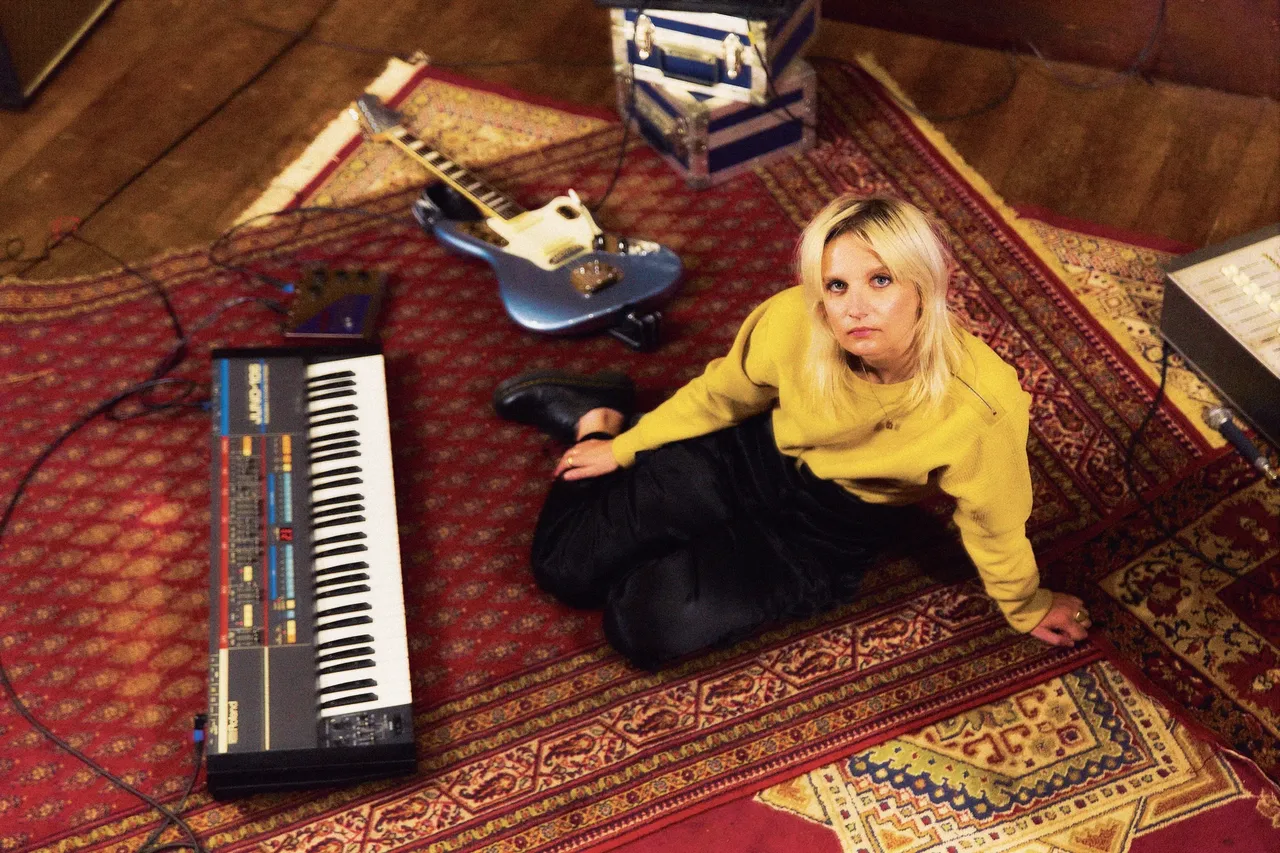
Any other influences that might have seeped into the album, both musical and more broadly?
Outside of music, one film that had a real impact on me during the making of the album was Paris, Texas, which I actually discovered quite late. I loved both the story and the visuals. They’re incredibly beautiful. That film has stayed with me very vividly. I was also influenced by the fact that, at the beginning of the writing process for this album, I moved back in with my parents for a while. I brought all my instruments with me, and I found myself suspended between my previous life and something new. There was a very particular atmosphere. I was quite isolated from the music scene, but surrounded by my family. The weather was beautiful, there was a special quality of light, and that period left a strong impression on me. Around the same time, I discovered Idles’ latest album. I was fascinated by their approach and was genuinely blown away by it. I admired the way they managed to move beyond a certain image people might have of them and focus on something more vulnerable and expressive.
I’m also very inspired by Sharon Van Etten’s journey. She writes incredibly beautiful songs and melodies, and I’m deeply impressed by her career. Her voice is extraordinary, and the world she creates through her music feels very communal and intimate. At her concerts, there’s this remarkable sense of togetherness: nobody is filming or talking, everyone is simply immersed in the music and enjoying the moment.
I’m also very inspired by Sharon Van Etten’s journey. She writes incredibly beautiful songs and melodies, and I’m deeply impressed by her career. Her voice is extraordinary, and the world she creates through her music feels very communal and intimate. At her concerts, there’s this remarkable sense of togetherness: nobody is filming or talking, everyone is simply immersed in the music and enjoying the moment.
Tell me about your lyrics. Your universe feels very dreamlike. I especially love the lyrics of Voyager. Can you talk about your writing process?
With every song I write, I plug in a microphone and start humming melodies. It helps me with the composition and the melodic ideas, to see if something works. From these little hummed fragments, sounds gradually emerge. Lyrics usually come last, when the track is already quite developed. I try not to think too much in a fixed or precise way. I prefer to let my mind wander a bit. Overall, it starts from sensations and images that resonate with things that feel like me, or sometimes don’t. I like the idea that the songs aren’t tied to something too concrete, but can be interpreted by other people through their own stories. There’s enough openness in them for that. Sometimes people write to me saying that a song reminds them of a moment in their own life, which I really like.
Your song Lucky Star has you singing in English and features Sade Sanchez from L.A. Witch, which I love. Can you tell me how that track came about?
I met Sade through Antoine Poyeton, who was working at Studio Ferber, where I partly recorded the album. He put us in touch, and I thought it was a great idea. I really love what she does. She got back to me quite quickly and recorded her vocals and guitar remotely. It was very efficient. I’ve seen her live as well, and I’m really happy with this collaboration. When I first heard her version with her voice on it, it was a million times better. Her voice brought something completely different; it elevated the song. We share the chorus in English and each sing our own verses. We’re both really looking forward to performing it live.
You even featured on Indochine’s latest album, Babel Babel. What was that experience and collaboration like?
I first got to know Nicola Sirkis when he discovered my music around the time of my first album. A fan had sent him one of my songs, and he was particularly committed to supporting new female-led rock projects. Since then, Nicola has founded his own label within Sony, KMS Disques, and he has supported my last three albums through it. At one point, he asked me to send him some songs. A few months later, he got back in touch and asked whether I still had a particular track. I managed to find it again. It was Girlfriend. As someone who had listened to Indochine throughout my teenage years, it felt incredibly exciting to end up collaborating with them on one of their albums. I still remember the original instrumental demo. They added drums, synthesizers and guitars to it. What began as my demo eventually became a kind of Indochine version of the song.
My last question: what are your plans and projects for the summer and the rest of 2026?
A little bit of time off, and then my plan is to take this album on the road. I’ll be playing at Les Francos de Montréal later this month, and then in France over the summer. My main goal right now is to bring this album to life on stage.