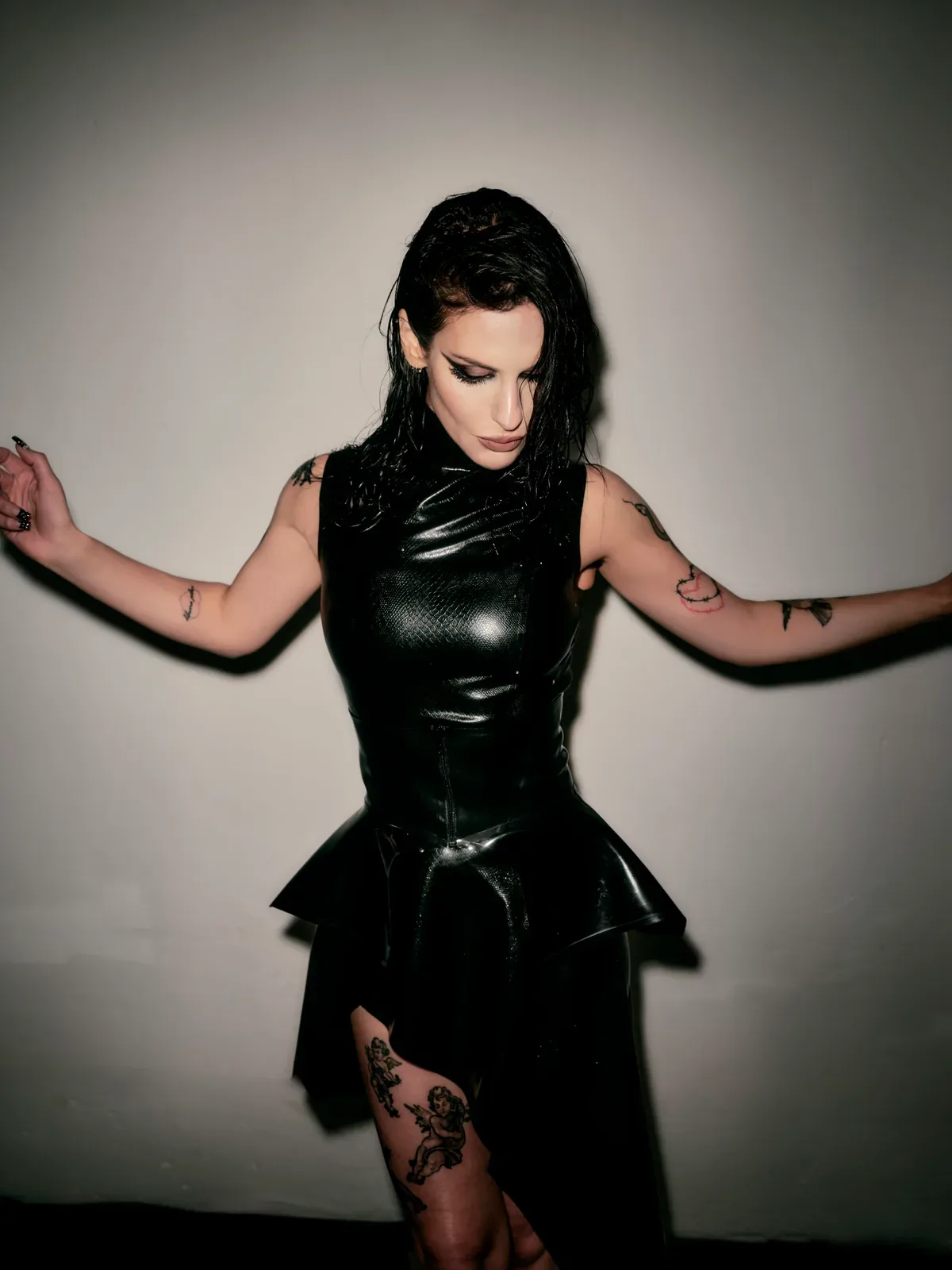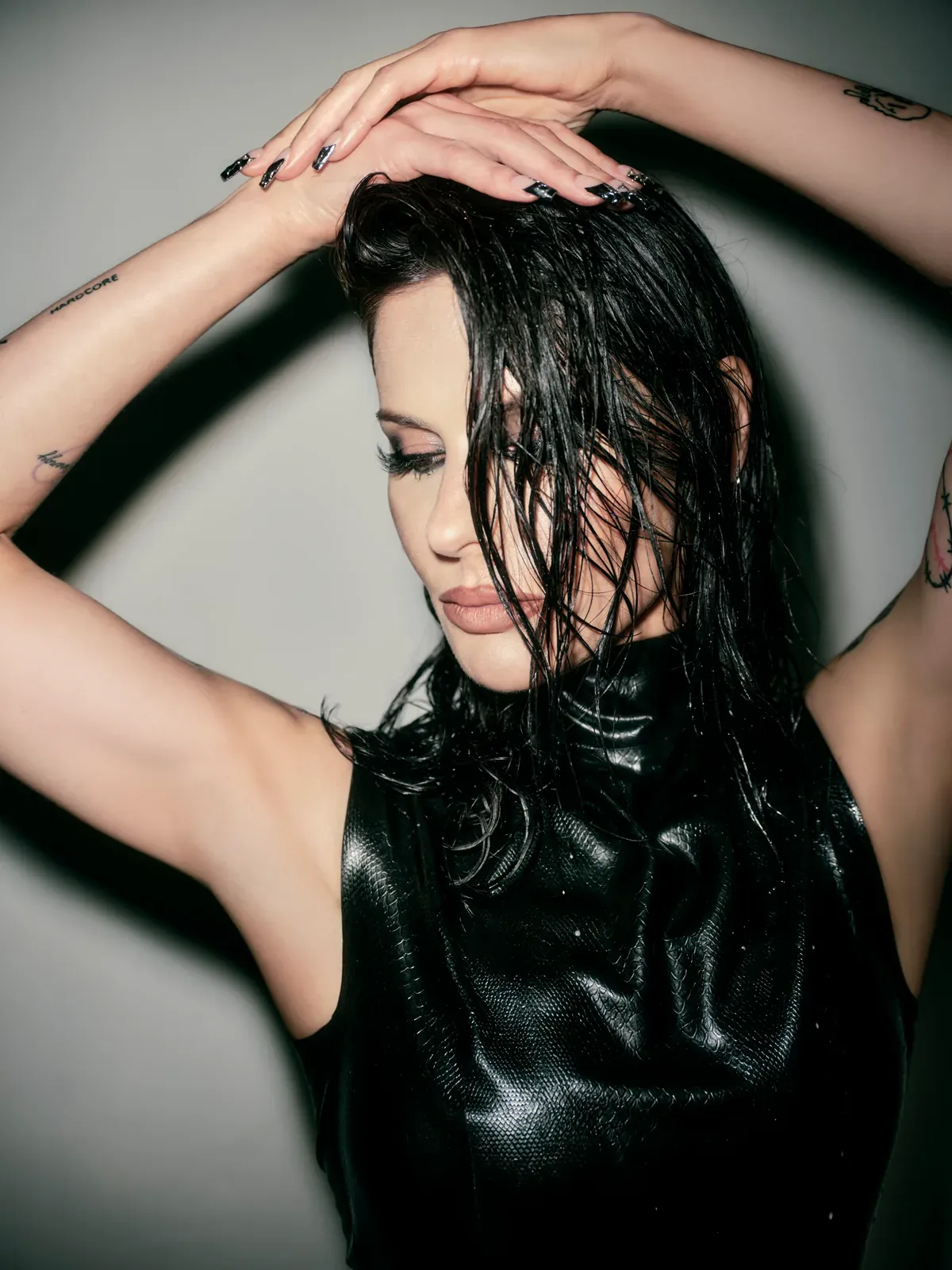
Maybe the strangest thing about speaking with Rebekah a few weeks ago, shortly after her set at Blackworks Weekend Festival in Madrid, was realising that even with Industrial Mind still unreleased at the time, she already seemed mentally somewhere else. “Once it’s out, it doesn’t belong to me anymore,” she said, before laughing about already wanting “to make techno again.” Now that the album is out, that restless energy feels built into the record itself.
Across industrial textures, hardcore eruptions, euphoric flashes and moments of near-collapse, Industrial Mind moves like the work of an artist testing her own limits in real time. “This is me in a fun, playful moment in my career,” Rebekah says, even if the album often sounds anything but comfortable. There is aggression throughout, but also exhaustion, vulnerability and the sense of an artist allowing herself to become less polished, more instinctive and more open than before.
Hello Rebekah, welcome to METAL! First of all, how was your weekend?
Thanks for inviting me for the interview, and everything is well. I’m finishing this from South Beach, Miami. Life is good, and I’m feeling blessed.
How did your Friday set at Blackworks in Madrid feel from your side of the booth?
My last show in Madrid for Blackworks went well, but I knew timing-wise it would be tough as I was playing at the same time as Angerfist and can play similarly in a hard techno setting, so I aligned my set to be more of a harder schranz set to start with, opting to remove breakdowns for a while. This was definitely a big adjustment for the people, changing gears after Kfloma’s set, too.
I would say it worked well, but my favourite part was definitely the last twenty minutes or so, when we crescendoed into hardcore. It seems I definitely overthink and plan my sets in Europe more than in other regions, mainly not to play the same set as everyone else. You wouldn’t believe how many times I play after the DJ plays the remix of Florence and the Machine’s Say My Name as a closing track. I love the original a lot but, after a while, it loses shock value like everything else.
I would say it worked well, but my favourite part was definitely the last twenty minutes or so, when we crescendoed into hardcore. It seems I definitely overthink and plan my sets in Europe more than in other regions, mainly not to play the same set as everyone else. You wouldn’t believe how many times I play after the DJ plays the remix of Florence and the Machine’s Say My Name as a closing track. I love the original a lot but, after a while, it loses shock value like everything else.
That same Friday, you also released Synthetic Collapse, another preview of your new album. How did it feel putting new music out into the world on the very same day you were playing such an intense show?
Having music releases is usually a big team effort from management, label and social media, so all the moving parts are usually taken care of beforehand so the release day can flow smoothly. Synthetic Collapse is one of my favourite tracks from the album, and it was a pleasure to also get to play it to a large audience in Madrid.
The track arrived almost exactly a month after the first single, Don't Let Go, your collaboration with Hellish, released at the end of February. Looking at these two singles together, what different sides of the album do they reveal?
With Don’t Let Go, it felt more of a modern hard techno twist than the obvious distorted kicks of Synthetic Collapse. The vocal and the cleaner kick place it somewhere earlier in the night to play, whereas Synthetic Collapse has this more industrial vocal, which could be from a bygone era, but the kicks and bassline place it in between hard techno and hard industrial.
The album on the whole is a flow of energies and sounds that can all be played during a night out. That was my intention. I will always be more than one sound or just the same drop-after-drop DJ. Celebrating thirty years of DJing in 2026 comes with a history and big education of many genres, and it would be a disservice to the music to stick to only one genre or subgenre.
The album on the whole is a flow of energies and sounds that can all be played during a night out. That was my intention. I will always be more than one sound or just the same drop-after-drop DJ. Celebrating thirty years of DJing in 2026 comes with a history and big education of many genres, and it would be a disservice to the music to stick to only one genre or subgenre.
Last week, you shared a post introducing the album with the words “WELCOME TO MY INDUSTRIAL MIND.” How did it feel writing that message and finally revealing such an important project to the world?
Announcing the album finally felt really great, to be honest. I have been wanting to say more creatively for the past six years or so, but got distracted on a hardcore side quest! I’m happy I took longer and filled my creative well with different music. The soundscapes and melodies that are now apparent in my music have all come from the last few years diving into the harder styles, and even when making more techno-leaning music, I’m much more open and braver with my sound choices. Is it experimental and groundbreaking? Possibly not, but this is me in a fun, playful moment in my career, and the album is meant to capture that essence and also the reckoning that I still can’t escape myself within my productions.
“Celebrating thirty years of DJing in 2026 comes with a history and big education of many genres, and it would be a disservice to the music to stick to only one genre or subgenre.”
You also mentioned that the album has been in the making for around eight months, fitting studio sessions between touring and everything else. What did that period feel like creatively?
Creating the album was more like an opening of time and space to do so, and the right moment where I felt I needed a shift to do something long format. This period was really character-building as I pushed the limits of what was mentally and physically possible. I say this because my weeks were compartmentalised, how I would do creative work, then juggle other aspects of my life. This is still a continuing period where I have not had any real time off or been able to relax fully. My sports and gaming ‘me’ time has been sacrificed to this album campaign, renovating a new apartment and touring. There have been a couple of days where I had a normal Sunday in Berlin, where I go to the markets, meet a friend for lunch and hang out a bit, and these are much needed to ground myself and be able to come back to creative work a little fresher.
In that same post, you joked that after diving deep into different hard dance subgenres, the music still ended up leaning towards industrial. Do you feel like that sound is simply part of your DNA now?
Industrial, or basically the way that I create, will always be present. I do this darker, colder music for some reason, so even when I can play hardstyle tracks, which are warmer in the lower frequencies, they are usually placed within a set to add a different dynamic, with the industrial built around it. The same goes for the reverb bass hard techno tracks. To me, it is bassline that can be used to shift energy. This has always been my work as a DJ. But as an artist, the industrial soundscape of sound design and harsh metals seems to be inescapable. Now, it’s just slightly more open and playful.
You described the tracks as an evolution of your production while keeping the ‘Rebekah energy’ people already know. How would you describe that energy today, and do you feel it has changed much since the beginning of your career?
The album is an evolution of my sound and production. The melodies that are now more apparent are the main development, but it was pushing out of the comfort zone of creating a techno loop or groove and then working with stabs, where I always felt it was a little contrived. For Industrial Mind, I went with the feeling and being in the moment and not worrying if it sounded too obvious or not; this became my new freedom. The only part of this process is that those melodies still came out industrial and aggressive, and that is where I say I can’t escape myself.
If you look at your entire journey in techno so far, how would you define it in three words?
Trust Your Energy.
You grew up around the Birmingham techno scene of the 90s. Do you remember the first night on a dance floor that made you think, ‘This is the world I want to be part of’?
There have been a few defining moments in those early years in the 90s in Birmingham. The first was whilst dancing on a podium to some house music at Bakers Nightclub when I was sixteen years old. I was so happy and uplifted, and I looked at the DJ and was like, ‘That is what I want to do, be in the middle of the room in command of the music’ — the pills were good back then! Another moment was discovering techno for the first time with Dave Clarke at the helm for a night called Atomic Jam. I had never heard music like it.
When you listen back to your earliest productions today, what do you hear in them?
I am very proud of them. Sometimes I don’t listen back to my productions because I spent so many hours on each track that I am just over it, but then, listening back after many years have passed, I’m like, why was I so hard on myself? Why did I believe I wasn’t good enough? I finally get to hear the tracks as others would have heard them. I’m now at an age where I’m challenging all of this and giving very little attention to other people’s opinions, the same way that people should not care about mine.
You have been producing since 2007. When you look at the techno scene today, what changes stand out the most to you, and how do you feel you have changed along the way as an artist?
The main difference now is that techno has become so big as an overarching genre that so many things exist all at once. I’m still hearing interesting pieces of music, but it’s very few and far between. For sound design, something major would have to shift to create something massively unique now.
Your sound has always embraced the harder edges of techno. What attracts you to those more extreme sonic spaces?
I think growing up with a punk rock mama has definitely influenced me into harder sounds. She always had music on in the house, a mixture of punk, 80s and new wave. But most likely it’s my energy. I’m definitely hyper and love when the drops are hard. Before everyone was playing raw hardstyle kicks and hardcore, the elements of shock were something really special. I suppose now the question is: what’s next? What’s going to shock people again?
On Industrial Mind, you collaborate with artists like Hellish and Mimi Barks. How did these collaborations come about, and what did each of them bring to the album creatively?
I am very particular about collaborating in general. I have never been one to just add names to tracks for hype purposes; there has to be something special, a connection, a respect for a different vibe or style that works or adds a new dimension to the music. So, for the album project, the collaborators brought something different to the album. With Hellish, he gave some freedom to a more soulful pop vocal, which I may have shied away from as it was not punk enough, but the vocal was beautiful, and I really connected to it.
“Before everyone was playing raw hardstyle kicks and hardcore, the elements of shock were something really special. I suppose now the question is: what’s next? What’s going to shock people again?”
Do you remember any particular moment in the studio, or even a small accident or idea, that ended up shaping one of the tracks?
Making Cry Baby, when I added in the synth line, I was like, ‘This is either going to massively work or be really shit,’ and that usually is the sign it is veering towards something more commercial and different.
Was there any track that took you longer to finish than the others, or one you weren’t fully convinced about at first and had to keep refining until it finally clicked?
Most of the tracks came together quickly. There were more in progress for the project, and I had a rule: if I was struggling with them, they didn’t work fully, so I scrapped them. It’s important to trust your vision, but also trust another set of ears when you’re so close to the music.
Beyond the music, you have also been very active with the #ForTheMusic campaign. How important is it for you to speak up about issues affecting the scene?
Using my platform to speak about the issues around sexual assault for me came at a point in my life when I was ready to face what had happened to me and understand it was not my fault. Firstly, speaking out is always to show survivors that they are not alone, that as women, most of us have this shared experience in some way or another. Secondly, the more women stand up, the more power we have against abusers. I think we are finally seeing progress happen.
Many younger women in techno now see you as a reference point. Is that something you think about when you are working?
Yes, but I’m not the only one. I made a decision when I spoke out and shared my stories that I had had enough, and it was time, regardless of any consequences that could happen, and trust me, there were many. But do I think about it when I am working? Not consciously, because I just think this is who I am and what I stand for. I am in my forties now, and I know who I am and can live authentically and aligned with my actions and words.
And finally, now that Industrial Mind is out in the world, how do you imagine celebrating that moment?
When the album is out, I think I will probably have a little moment to myself where a goal has been achieved and revel in that feeling, but mainly, I will be excited to see what the feedback is and what tracks connect to people the most. Once it’s out, it doesn’t belong to me anymore. Also, I’m already thinking about the next project. I kind of want to make techno again! Watch this space!