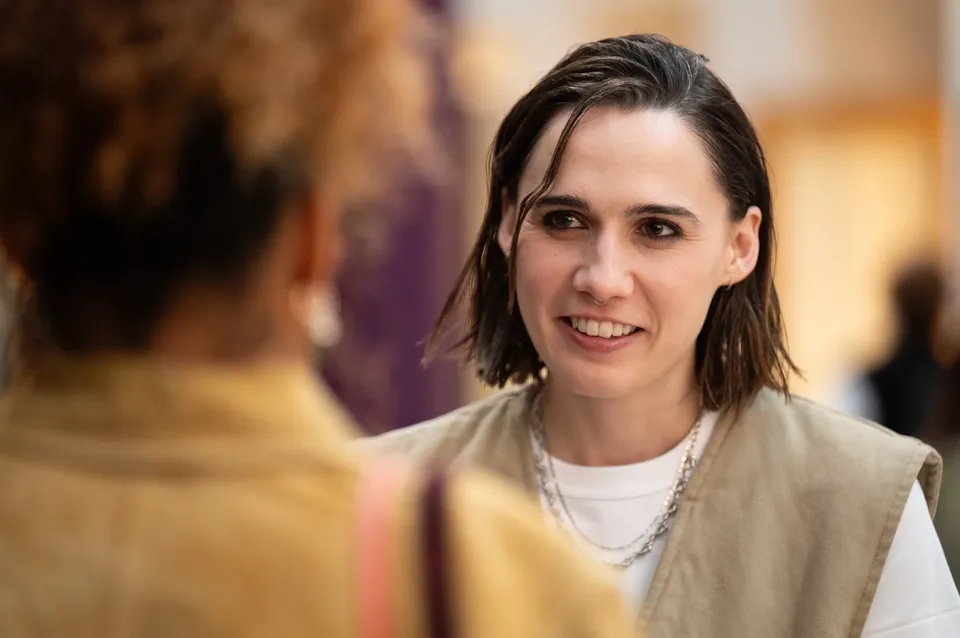
How do you film time? Not as a sequence of minutes and hours, but as something elastic, something that stretches, fractures and folds back onto itself. It’s a question that sits at the centre of Rebecca Salvadori’s latest film, Not Running, and one that has quietly informed much of her practice over the last fifteen years. The filmmaker and video artist has built a body of work shaped by human relationships, experimental music communities and an enduring fascination with the way people experience a particular place or moment in time.
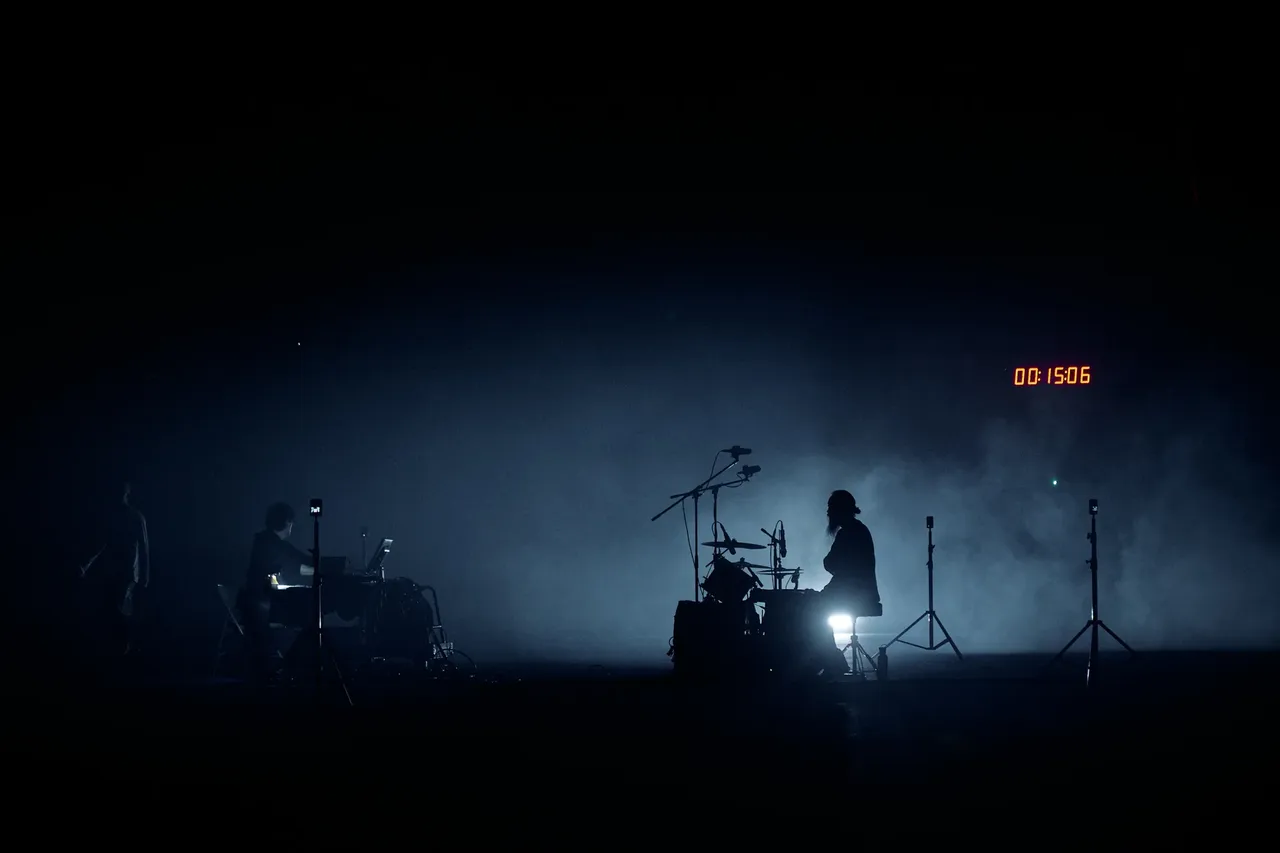
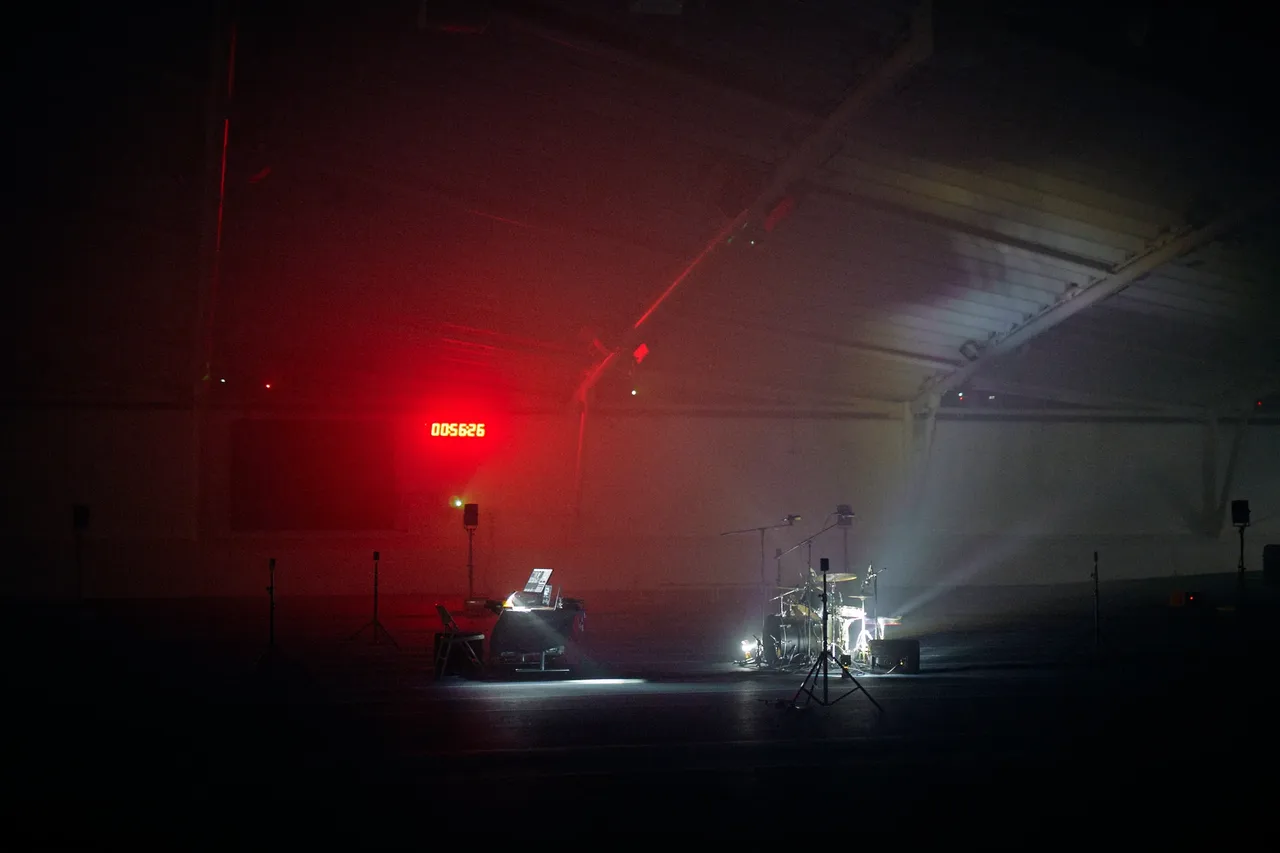
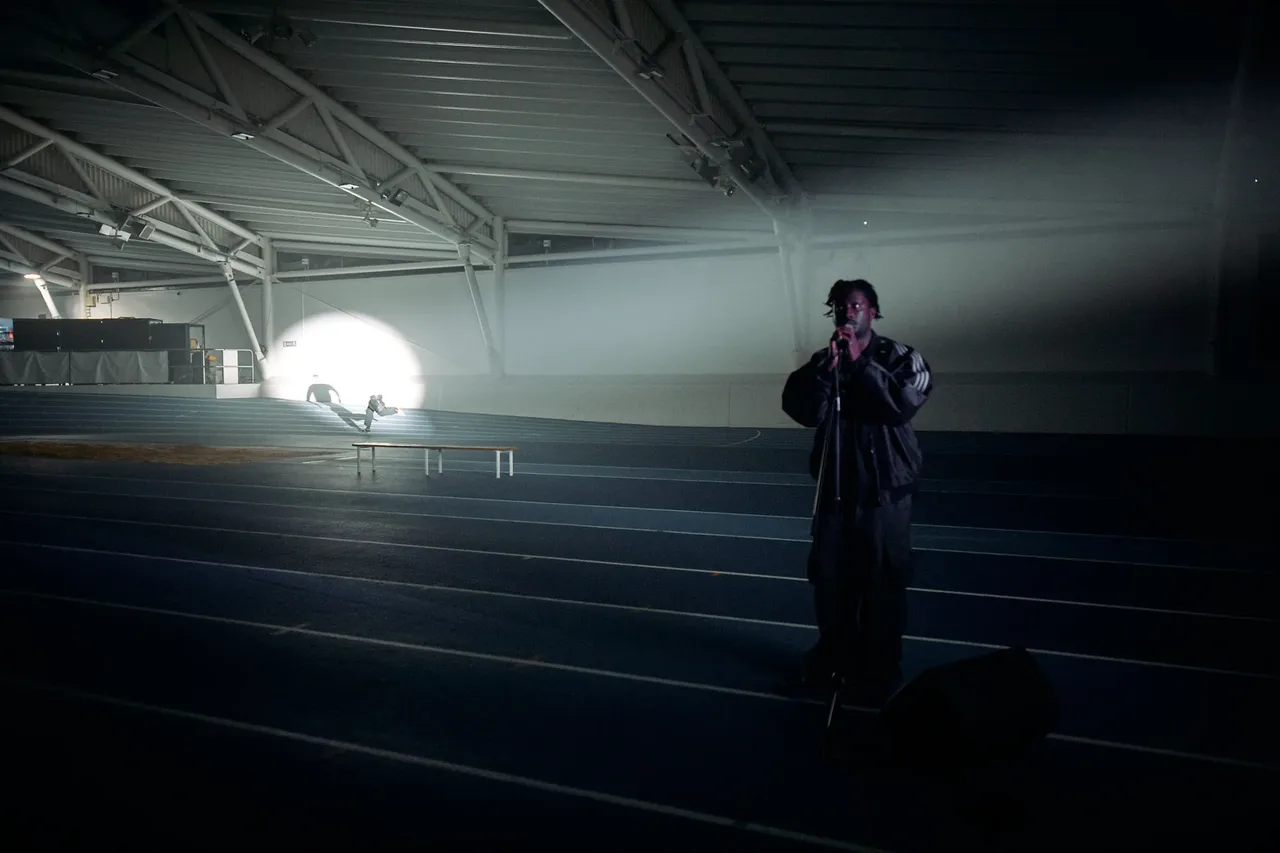
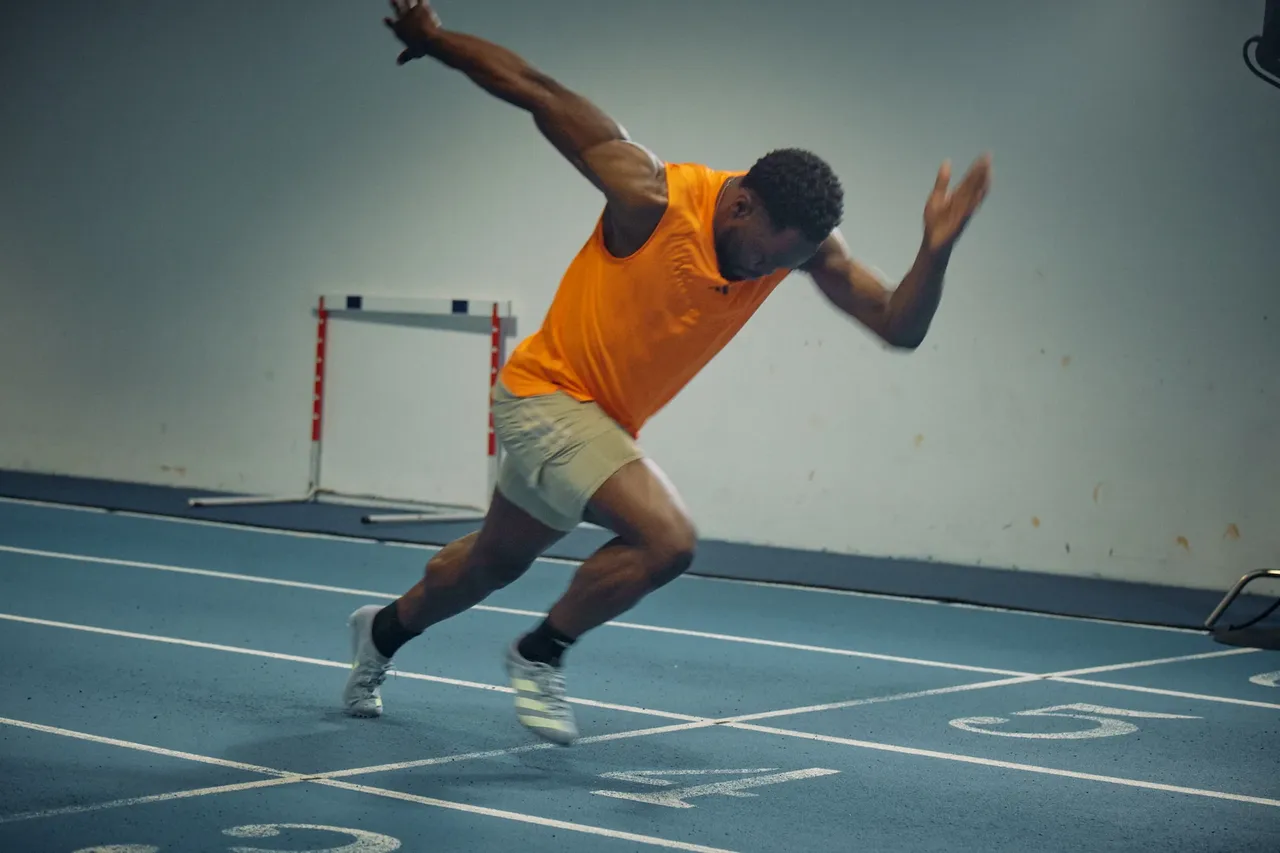
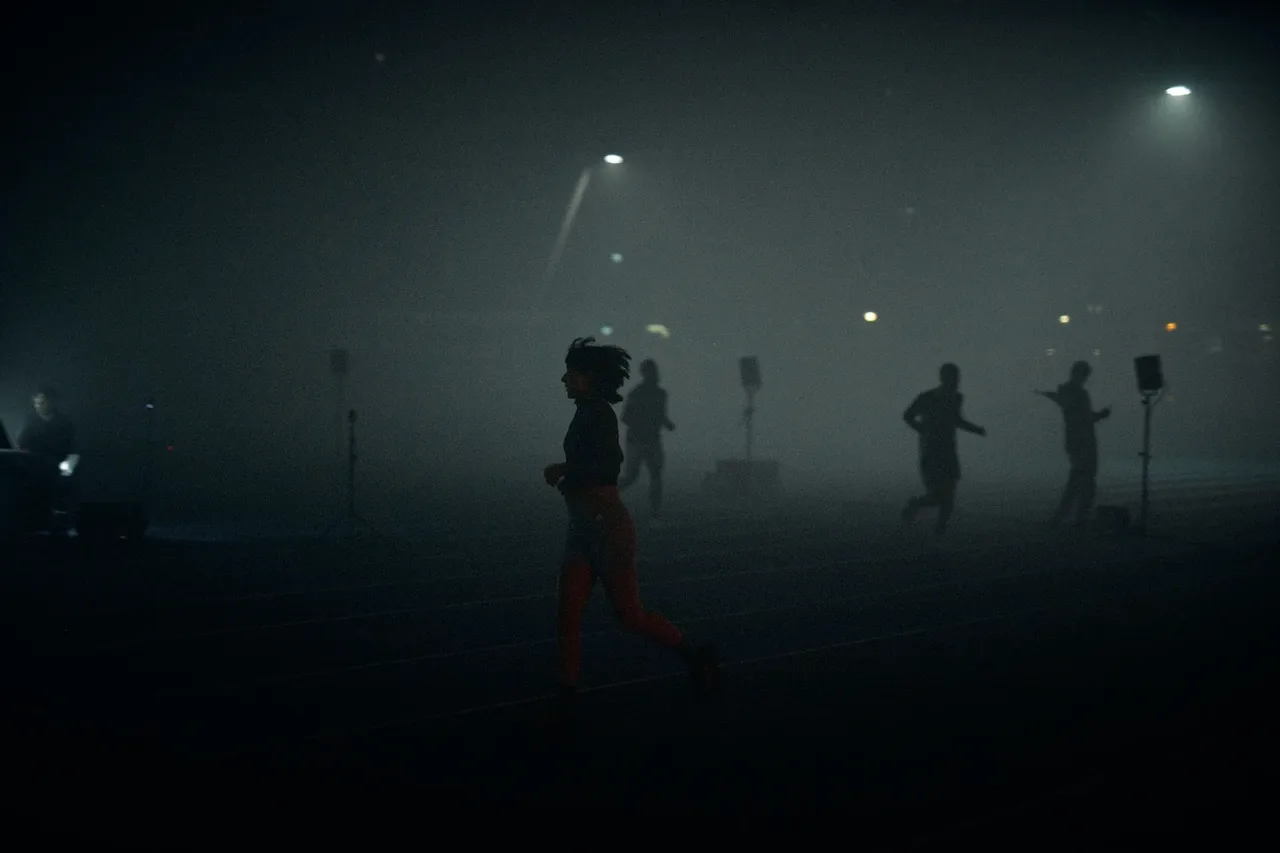
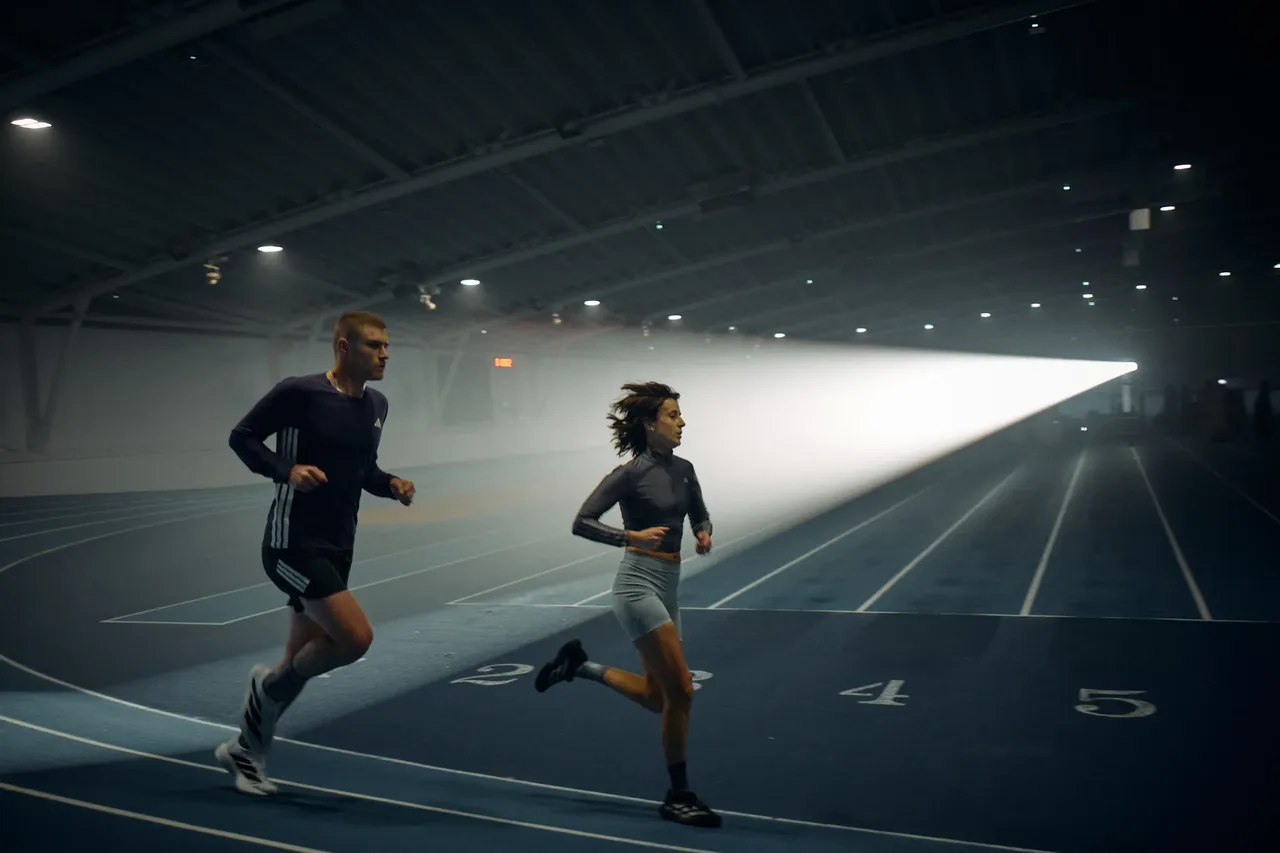
Part essay film and part collective experiment, Not Running unfolds inside London’s Lee Valley Athletics Centre, where runners, musicians and artists come together to explore how sound and light can alter our perception of time. Central to the project is a large-scale rotating light sculpture by Charlie Hope, a long-term collaborator whose work becomes both a physical presence and a conceptual framework for the film. Reflecting on the process, Salvadori tells us: “The film is still searching for itself after it has happened.” It’s a revealing statement for a work that seems less interested in delivering answers than in remaining open to transformation.
Speaking with Salvadori, what began as a conversation about Not Running soon expanded into something broader. We found ourselves discussing trust, collaboration and the strange ways meaning emerges through shared experiences. “Relationships are never the same; they are shaped by constant negotiation and the ongoing decision to choose each other,” she says.
Rebecca, how have the last few months been for you?
The past few months have been particularly intense. Much of my attention has been focused on my latest film, Not Running, which premiered at the Feuerle Collection in Berlin on 26 March. Alongside this, I have been touring with Saint Abdullah and Eomac as part of our collaborative audiovisual project, A Forbidden Distance, while also leading a mentoring programme at FAMU’s Centre for Audiovisual Studies in Prague.
I’m currently working on my first feature film, drawn from sixteen years of archive material from the London music scenes, supported by the Italian Council grant from the Italian Ministry of Culture. After this intensity, I feel different, with a growing desire to allow more space and time within the work. I enjoy developing parallel projects with very different characteristics, some more solitary and some more collaborative, and I am looking forward to both the feature film and more touring.
I’m currently working on my first feature film, drawn from sixteen years of archive material from the London music scenes, supported by the Italian Council grant from the Italian Ministry of Culture. After this intensity, I feel different, with a growing desire to allow more space and time within the work. I enjoy developing parallel projects with very different characteristics, some more solitary and some more collaborative, and I am looking forward to both the feature film and more touring.
Not Running feels like a shift in scale and energy within your practice. Did it grow naturally out of what you were already doing, or did it open up something new for you?
I have been close to conversations around music-making and the different environments in which music exists and is experienced for some time now. I have always been interested in what happens when a group of musicians perform in a space, how the audience affects the music, and how different environments shape what is produced and experienced: ideas of an open “film set,” where one establishes a set of conditions and observes, and documents, what might happen.
For example, Messengers (2022–ongoing) is a film-in-progress built around site-specific encounters with musicians, where performance, filming and sound production take place simultaneously. Each piece functions as a portrait in which musicians respond to and sonify their presence within a given environment, as does my work with the collective Tutto Questo Sentire, where rehearsals and the making of an opera are made open to the audience. There is a flux of reflections that runs through all the different projects and collaborations, and Not Running grew organically from these long-term interests and collaborations, while also pushing me into new territory.
For example, Messengers (2022–ongoing) is a film-in-progress built around site-specific encounters with musicians, where performance, filming and sound production take place simultaneously. Each piece functions as a portrait in which musicians respond to and sonify their presence within a given environment, as does my work with the collective Tutto Questo Sentire, where rehearsals and the making of an opera are made open to the audience. There is a flux of reflections that runs through all the different projects and collaborations, and Not Running grew organically from these long-term interests and collaborations, while also pushing me into new territory.
You’ve described the project as starting as a reflective running workshop, bringing together runners, musicians and artists to explore how sound and light reshape the way we experience time and identity. At what point did that begin to turn into a film?
When I started working on Not Running, I was very focused on understanding different ways of perceiving time within filmmaking: time when shooting, time when watching, time when editing, but also time when running and when performing live. While I was editing A Forbidden Distance, I was going through Saint Abdullah’s family archive, watching him as a child, and I suddenly remembered that I had a VHS from 1994, from a trip to Australia with my family, where I held a camcorder for the first time. I remembered that feeling of excitement vividly, and I started editing my childhood memories alongside Mohammed’s, almost creating a combined past, a shared biography. I kept coming back to this while working on Thank You, My Pain, a film seven years in the making about my friendship with saxophonist Alabaster DePlume, and I wanted to take it further with Not Running.
Thoughts about the experience of time and identity accompanied me throughout the entire process: from building a rotating light sculpture with Charlie Hope, something like a time machine or a time portal, to considering how to structure the running workshop. I knew the end result of all this would be a film, but really, the film happened while I was editing it.
Thoughts about the experience of time and identity accompanied me throughout the entire process: from building a rotating light sculpture with Charlie Hope, something like a time machine or a time portal, to considering how to structure the running workshop. I knew the end result of all this would be a film, but really, the film happened while I was editing it.
“The film is still searching for itself after it has happened.”
The project took over a year to develop, with different things happening at once: the light sculpture being built, the music taking shape, relationships with the runners evolving. How did you stay grounded while everything was moving in parallel?
I’m not sure I stayed grounded. But I thrive when there are multiple things happening at the same time, unfolding at different speeds and with different needs.
You’ve spoken about the process unfolding in three phases: imagining the work, the shoot itself and then the editing. Did those stages feel separate to you, or more like part of the same continuous flow?
What felt unusual was how separate the different stages of the work were from one another. The imagining of the film took me into many different places. My first idea was to shoot in the Czech Republic, then in the north of England, and then in Italy. It definitely felt like the environment for the experiment would shape everything so profoundly that it needed to be the right one. When I walked into the Lee Valley Athletics Centre in London, I knew it was the right place. It felt overpowering, but at the same time strangely familiar and intimate. I remember lying in the middle of it for hours, imagining all that could happen there, as if the space itself was already carrying what would later unfold. I also spent days observing the athletes, watching the different exercises and routines, and learning how to speak with them and move within that environment. After many years of making films, I know how I tend to react in different situations.
For example, I often find myself withdrawing and observing rather than influencing a context through my own decisions or ‘directing’. I prefer to create the conditions for something unexpected to happen, bringing together people whom I trust to make decisions within a given framework, and then observing and filming the different trajectories that unfold. The shoot felt exactly like that. I had done everything I could to create space for the team so that I could withdraw and really focus on the experience itself: to be alone, separated from everything and everyone, and pay attention to what I needed to focus on. But that was never fully possible. There was a tension between observation and participation, between stepping back and being pulled into the situation I had created. That balance shifted continuously throughout the shoot, and in many ways became part of the film itself. The editing process was one of total solitude, a withdrawal from it all. It was a chance to reconnect with my initial desires and to understand what had changed in me throughout the process.
For example, I often find myself withdrawing and observing rather than influencing a context through my own decisions or ‘directing’. I prefer to create the conditions for something unexpected to happen, bringing together people whom I trust to make decisions within a given framework, and then observing and filming the different trajectories that unfold. The shoot felt exactly like that. I had done everything I could to create space for the team so that I could withdraw and really focus on the experience itself: to be alone, separated from everything and everyone, and pay attention to what I needed to focus on. But that was never fully possible. There was a tension between observation and participation, between stepping back and being pulled into the situation I had created. That balance shifted continuously throughout the shoot, and in many ways became part of the film itself. The editing process was one of total solitude, a withdrawal from it all. It was a chance to reconnect with my initial desires and to understand what had changed in me throughout the process.
The shoot is described almost like an event without an audience, something that unfolds in real time. What did it feel like to be inside that kind of space?
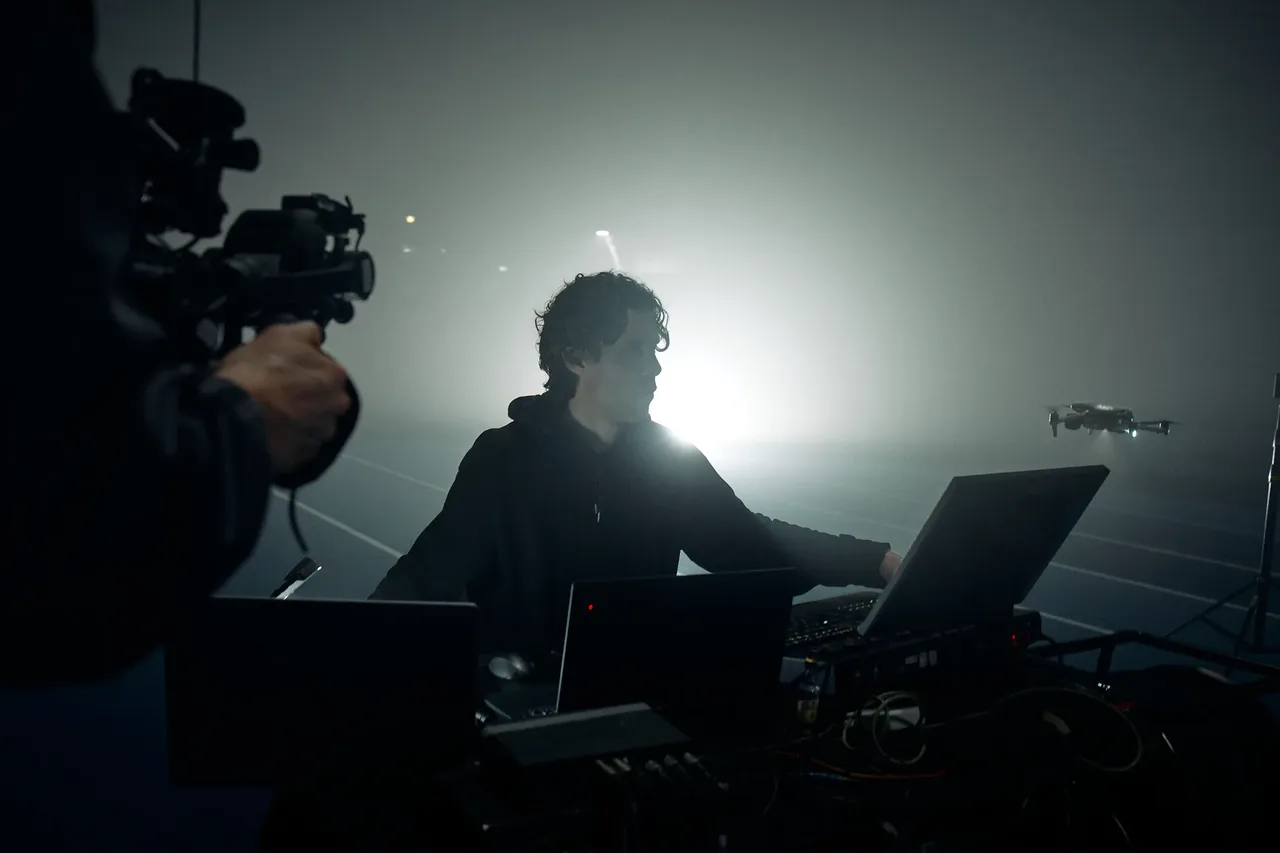
I like everyone to move autonomously. Cinematographer Toby Leary brought in his crew and led that part of the process in his own way. Toby suggested syncing multiple cameras together and focusing on long takes. The same was true of the choreographer and dancer Courtney Deyn (part of Bullyache), who was very attentive to the needs of the runners, when they might need breaks, and when to push through. Charlie Hope was handling all the lights, and Sandro Mussida all the music-related matters. Once everyone felt the sentiment behind the shoot as their own, everything unfolded almost like an event without an audience. While everyone was doing their thing, I would often zone out, almost as if I wasn’t there. That’s why I’ve always enjoyed documenting clubs: the same thing happening over and over again, with time to drift in and out of attention, to step away and then come back, while everyone keeps dancing for hours.
In situations like Not Running, it was a bit different. We had a very concentrated window: twelve hours over two days, and everything needed to happen within that frame. There was much less room for drifting; everything was charged with urgency and presence. Sometimes I was filming, sometimes checking what was happening across the different cameras, sometimes talking with the runners. My role shifted constantly between participation and observation, between being immersed in the situation and stepping outside of it. There were moments where there was more confusion about what exactly was happening, but mostly it was an incredible and organic unfolding of beautiful moments.
In situations like Not Running, it was a bit different. We had a very concentrated window: twelve hours over two days, and everything needed to happen within that frame. There was much less room for drifting; everything was charged with urgency and presence. Sometimes I was filming, sometimes checking what was happening across the different cameras, sometimes talking with the runners. My role shifted constantly between participation and observation, between being immersed in the situation and stepping outside of it. There were moments where there was more confusion about what exactly was happening, but mostly it was an incredible and organic unfolding of beautiful moments.
When did the film start to feel real to you? Was it something you recognised during the shoot, or only later in the edit?
It’s during the editing process that I decide what kind of film I am making.
Running becomes something more than a physical act here; it starts to carry meaning in a different way. When did it begin to function as a way of thinking rather than just doing?
From the very beginning, I’d say.
There’s a moment in the film where the idea of a fable comes up, as something that carries a form of learning or understanding. It feels less like a narrative device and more like a way of framing experience. How do you relate to that idea in your work?
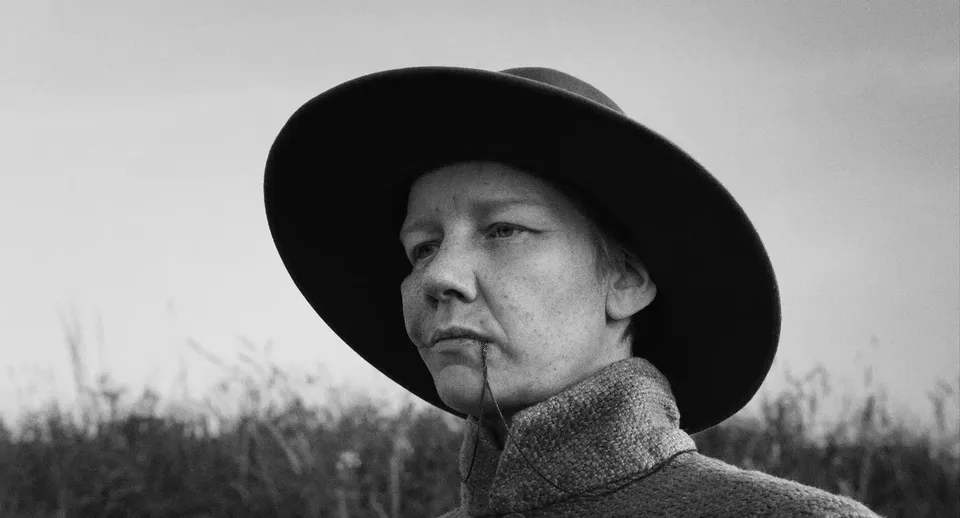
I invited Francisco Gómez de Villaboa, a good friend and photographer, to document the set. After the shoot, I went to his place to choose the images together. There had been so much going on during the shoot days that I hadn’t really had a quiet moment with him, so I decided to ask Fran some questions and record them. I really like asking for feedback and reflections from everyone involved, but also from people not directly involved, such as the taxi driver who took me home after the shoot. He might say something that stays with me and eventually finds its way into the film, even if it seems unrelated at first. Everything becomes part of the process of building meaning. Fran and I were in his room, and I asked him, “What do you think is the meaning of what happened on the shoot?” I could see he was trying to find it, to locate a meaning for himself. He spoke about morality, in connection to the fable, and then asked me back: “What is the moral?”
I thought that was quite revealing: that suspension, that openness, which actually continued after the shoot. The film is still searching for itself after it has happened. There was also an irony I wanted to keep in the film: the question appears exactly in the middle. What is the moral? I prefer to leave that question open to the audience.
I thought that was quite revealing: that suspension, that openness, which actually continued after the shoot. The film is still searching for itself after it has happened. There was also an irony I wanted to keep in the film: the question appears exactly in the middle. What is the moral? I prefer to leave that question open to the audience.
“It is the connection with people, more than with spaces, that I am drawn to.”
Charlie Hope’s rotating light sculpture feels like a presence the whole film revolves around. How did working so closely with that element shape the structure of the piece?
My collaboration with light artist Charlie Hope has been a central part of my work in recent years. We have a strong mutual understanding and appreciation of each other’s skills and sensibilities. We have worked together across the different iterations of my Messengers project, Not a Word from Me with Lucy Railton, Penumbra with Maxwell Sterling and Dali de Saint Paul, Landscapes with Tutto Questo Sentire, as well as a new expanded iteration of A Forbidden Distance with Saint Abdullah and Eomac, where light and image are developed as a shared spatial and temporal system rather than separate elements.
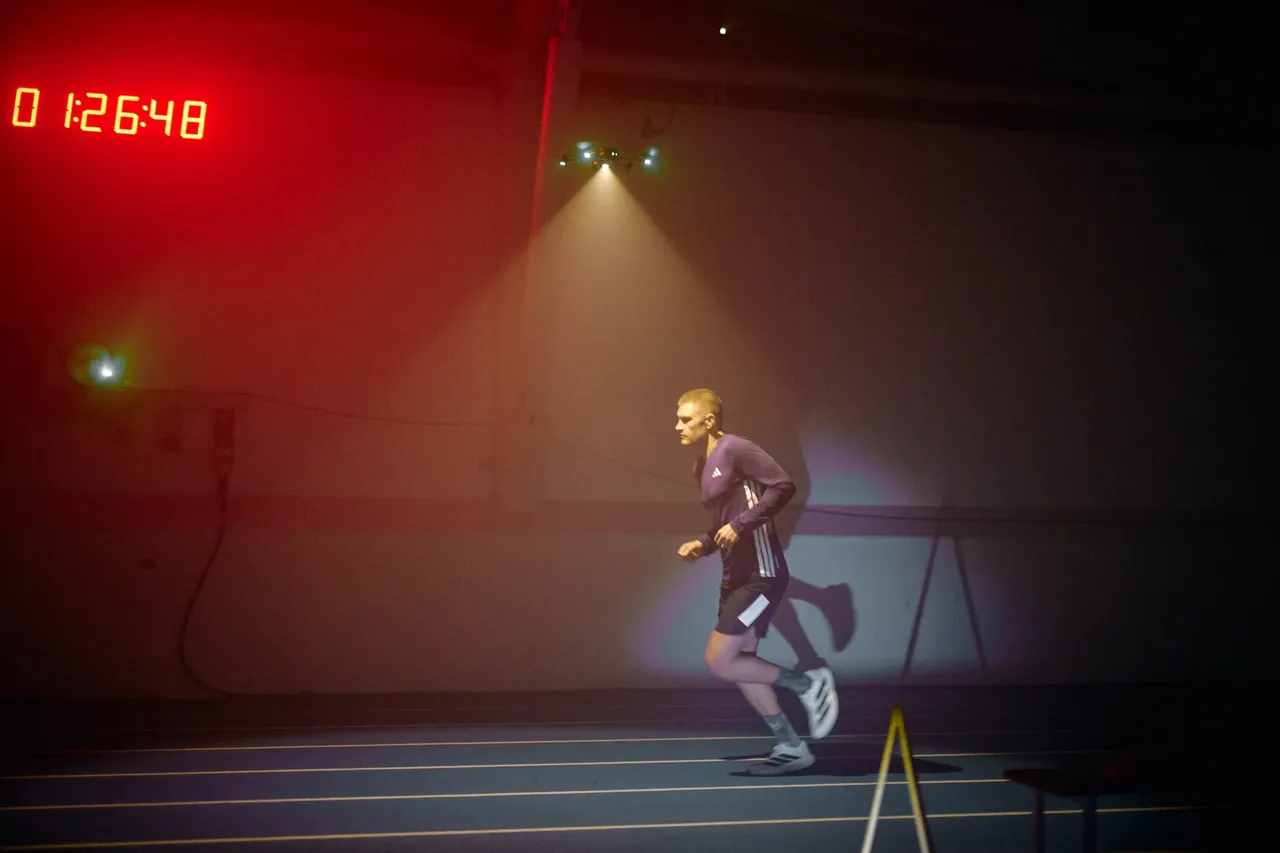
Charlie has the remarkable capacity to build lights that are not objects within a specific environment, but subjects that actively affect the environment itself and the way meaning is produced within it. His rotating light sculpture has been fundamental to Not Running. The idea of time-keeping through a rotating light has been a recurring element in our collaboration, and Not Running allowed this to fully expand within its own context. The making of the light and the making of the film became deeply entangled. In many ways, the process and the result were unfolding simultaneously.
Charlie has the remarkable capacity to build lights that are not objects within a specific environment, but subjects that actively affect the environment itself and the way meaning is produced within it. His rotating light sculpture has been fundamental to Not Running. The idea of time-keeping through a rotating light has been a recurring element in our collaboration, and Not Running allowed this to fully expand within its own context. The making of the light and the making of the film became deeply entangled. In many ways, the process and the result were unfolding simultaneously.
Did your relationship to sound shift while making this film?
I wouldn’t say so.
Toby Leary described the process of filming as “being in the moment to observe and capture feelings that are hard to describe,” and finding those small pockets where the film comes to life. How did you experience that balance between structure and intuition during the shoot?
I believe it has to do with the tension between control and release, between setting a framework and then letting intuition reshape it from within. It wasn’t always easy; I felt a lot of pressure to control things. I think the different relationships I have built over the year I spent making this film are the answer to all of it: the trust and the friendship. When I felt tense, I would look at those there with me; when I felt excited, it was the same. Relationships and teamwork, in the context of something collectively built, are fundamental.
Looking at your wider practice over the past fifteen years, there’s a continuous engagement with sound, performance and moving image, often in close dialogue with electronic and experimental music scenes. How do you see Not Running sitting within that trajectory?
Not Running is a different iteration of my ongoing research. Like every iteration, it has its own specific characteristics, through which I learn different things about myself and my environments. It exists in a hybrid space of in-betweenness, and I actually feel I would like to develop it further. I have some ideas.
Your work has been closely connected to spaces like Tresor and Fold, and to artists such as Andy Stott, Lucy Railton, Okkyung Lee and Explore Ensemble. What is it about these environments and collaborations that continues to shape your way of working?
It is the connection with people, more than with spaces, that I am drawn to. I am interested in artists and environments that continually reinvent the conditions under which they exist. Working with artists whose practices emerge from very different places, from composition and improvisation to electronic music, continually shifts how I think about image, sound and time, and how they can coexist within the same situation. I am drawn to practices that stay in motion, opening new structures for how work can exist, for themselves and for others.
I value long-term collaborations and friendships built on shared experience and mutual trust. My relationship with Lucy Railton is one example. We first worked together in 2014 at PAF in Olomouc, invited by Mark Fell. What began as an encounter between practices became an ongoing exchange: I created artwork for two of her vinyl releases, and more recently, we collaborated on Not a Word from Me with Charlie Hope. Across these works, our exchange has continued to evolve, never taking each other for granted.
My connection with Fold began when the venue first opened. Over time, it became a sustained context for thinking and making, leading to two films: Inside Fold and The Sun Has No Shadow. Built from material gathered across club spaces, raves and live contexts, these works reflect on how such environments shape perception, memory and presence.
Tresor Tapes, commissioned for the 30th anniversary of Tresor at Berlin’s Kraftwerk, extends this line of work. While Fold is a sustained context, Tresor operates as a continuation, a different approach to similar questions through another institutional frame. I was able to make these works thanks to the Fold crew and the Atonal team behind the Tresor exhibition, who trusted my intention to connect two clubs, two cities and two ways of documenting club culture. Ultimately, it is always the people and conversations that matter most to me.
I value long-term collaborations and friendships built on shared experience and mutual trust. My relationship with Lucy Railton is one example. We first worked together in 2014 at PAF in Olomouc, invited by Mark Fell. What began as an encounter between practices became an ongoing exchange: I created artwork for two of her vinyl releases, and more recently, we collaborated on Not a Word from Me with Charlie Hope. Across these works, our exchange has continued to evolve, never taking each other for granted.
My connection with Fold began when the venue first opened. Over time, it became a sustained context for thinking and making, leading to two films: Inside Fold and The Sun Has No Shadow. Built from material gathered across club spaces, raves and live contexts, these works reflect on how such environments shape perception, memory and presence.
Tresor Tapes, commissioned for the 30th anniversary of Tresor at Berlin’s Kraftwerk, extends this line of work. While Fold is a sustained context, Tresor operates as a continuation, a different approach to similar questions through another institutional frame. I was able to make these works thanks to the Fold crew and the Atonal team behind the Tresor exhibition, who trusted my intention to connect two clubs, two cities and two ways of documenting club culture. Ultimately, it is always the people and conversations that matter most to me.
Across these projects, there’s a strong sense of staying close to people and to lived experience. How do those relationships influence the way your films take form?
Since I started making films, I’ve been trying to understand myself through observing others and the situations I find myself in. Relationships are never the same; they are shaped by constant negotiation and the ongoing decision to choose each other, a process I value deeply. The personal can also be universal.
Alongside the film, as you mentioned, Francisco Gómez de Villaboa documents the process through a photographic series that feels both intimate and slightly outside the work. How did that collaboration come about, and what do you feel his images capture that the film cannot?
Francisco and I met many years ago and immediately connected. We met again unexpectedly in Paris, both working on the Bullyache project, and I felt he would be the right person to involve in Not Running. I am drawn to how still images can hold a silence and openness that moving footage does not always carry. I work with sequences of images to construct meaning.
In one sentence, what is the most important thing this project has taught you?
I am still deciding; things are not finished.