I discovered Rare DM during the pandemic. I added her track Send Nudes to a playlist I dramatically titled Fell asleep on a flight from Barcelona, I won’t wake up until I return. I had been through my first series of what felt like adult breakups during the pandemic, and her music was cathartic, dreamy, and packed the punch I needed for a playlist I pretended others (a specific few) would find mysterious and frustrating.
Her music can have this effect. She is a meandering songwriter, a master of the diaristic lyric, and yet is able to share through her music the essential emotions of love, loss, loneliness and yearning. Throughout her oeuvre is a dark, pulsing bass line, sometimes club ready, often primed for a rainy day’s spell. Her debut album, Vanta Black, is about deep heartbreak; on one track, Wholeheart, hypnotic bells seem to break the spell of total and all-consuming love. She now describes the album as a cathartic project and a record of a specific period of her life and music.
Since, her music has explored greater whimsey and a lighter sensibility. The Ring is a punchy track, dripping in catchy arpeggio and bass. It sounds like it crawled out of the early 2000 with a vengeance, ready to drag us back into the tube televisions of our childhood nightmares. Skater Hit Me Harder slides from a droll taunt to clarifying synth and rumbling bass kicks. It’s about the kind of night that makes you feel like a teenager again.
But Rare’s biggest hit to date is undoubtedly Send Nudes. It is almost an anthem for that depressing period of separation. The song came out during the pandemic, when one of our only silver linings was the free passport feature on Tinder which allowed us to quell our loneliness by texting strangers thousands of miles away. Rare DM’s music is a practice of catharsis, one which might help make sense of the longing, alienation, and hope of our time.
We catch up with Rare at the onset of her next chapter. She marked the end of a long lease in one of those New York apartment people dream of: cheap (all things considered) with plenty of space to make her art. There, she built a studio she now refers to as “the spaceship,” decked out with her collection of hardware electronic instruments. Rare DM’s forthcoming album, Attention, is a sprawling collection of songs joined by their history and a central theme of attention paid, attention given, attention collected. Its tracks range in style and sensibility, from the almost symphonic to poppy and from her usually dreamy spell to the most hardcore music we have heard from her.
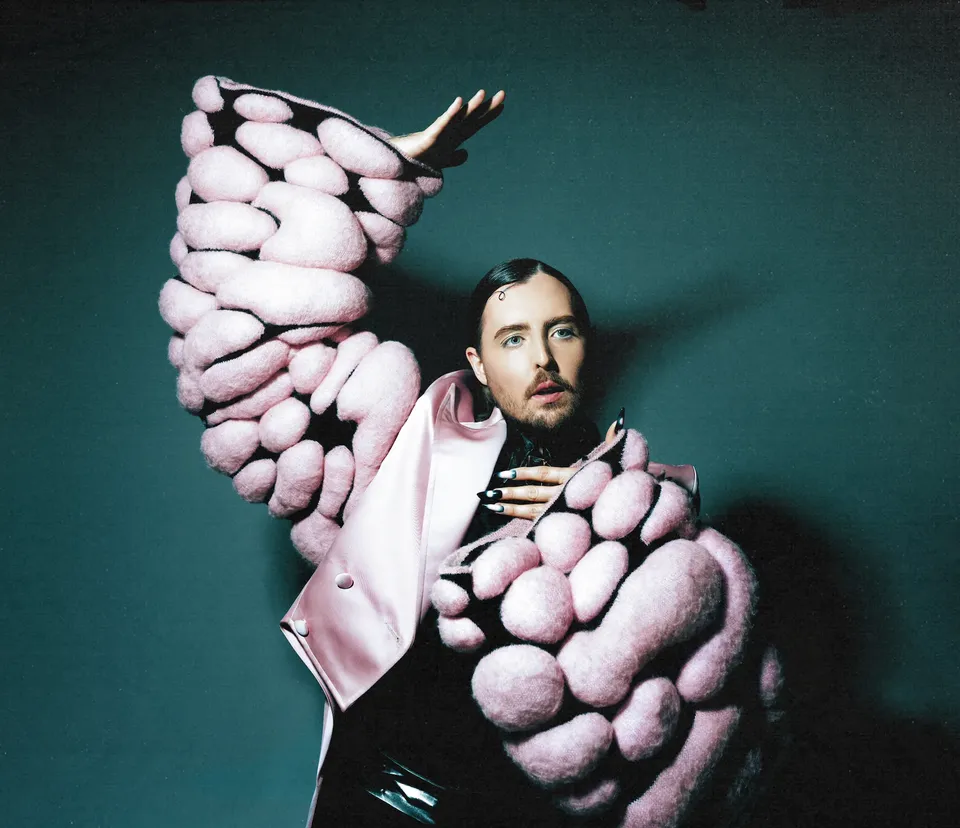
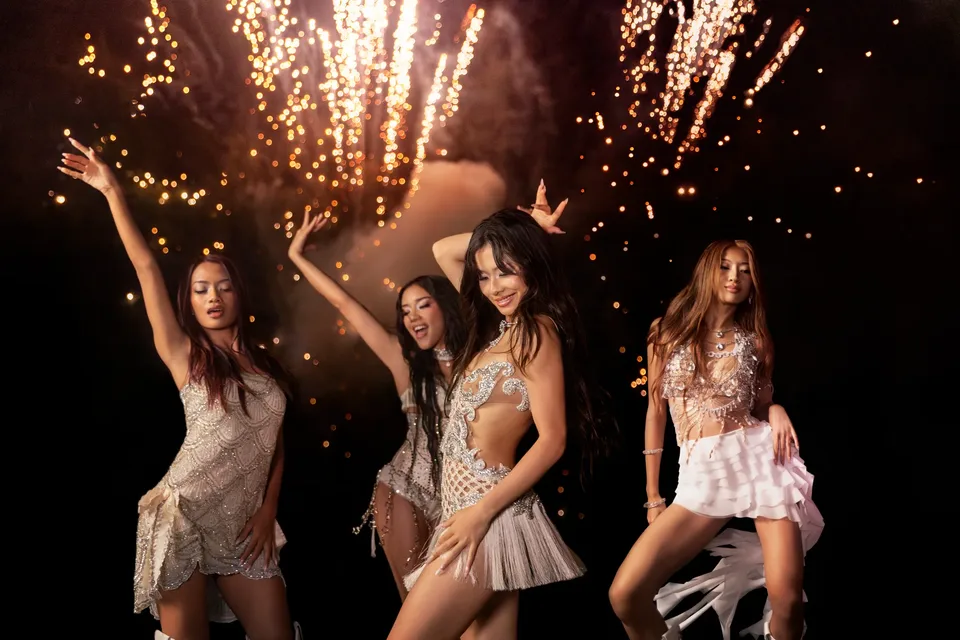
Attention will be released on May 29, 2026, but today we are happy to premiere the music video for Compliment. It is dreamy and surreal, with a broad schedule of visual references from Diego Velázquez and Caravaggio, to Maya Deren and Eadweard Muybridge. Our exclusive shoot draws forward similar references from Minsheng (Jimmy) Ji’s surreal jewellery to Emma Nusbaum’s iconically iconoclastic looks. Below is METAL’s first interview with the artist, who walks us through her process, career to date, and dreams for the future.
When did your artist’s name come about?
I released one single under a different name in 2016. In 2017, I began thinking that it sounded too soft and no longer represented my music, or the direction I wanted to take. One day, I was hanging out with a dear friend and I just said, I like ‘Rare,’ and then, there is something else too, ‘DM.’ It just clicked. Felt magical. We both were like, Rare DM? Rare DM!
What does it mean?
In my opinion, the best things in life are rare: experiences, antiques, synthesisers. As you can see in my home, I consider myself a bit of a collector. That’s how I pursue life: I want love, I want the best of everything, and I consider those things rare.
DM is a little ambiguous, it has many meanings. Some examples could be, Dance Music or Dungeon Master or Direct Message or Distant Memories or Dark Matter — whatever I want. I find it interesting what people think it might be and their first association. Maybe it’s Dungeon Master if they play DND, or Direct Message if they are online a lot. Sometimes people think of Depeche Mode. I have had promoters at shows give me a new idea for the meaning every time they’d see me, which is fun — they were good ideas! Ultimately, I pick the ones that count, it’s my name after all. But you can just call me Rare if you’d like.
DM is a little ambiguous, it has many meanings. Some examples could be, Dance Music or Dungeon Master or Direct Message or Distant Memories or Dark Matter — whatever I want. I find it interesting what people think it might be and their first association. Maybe it’s Dungeon Master if they play DND, or Direct Message if they are online a lot. Sometimes people think of Depeche Mode. I have had promoters at shows give me a new idea for the meaning every time they’d see me, which is fun — they were good ideas! Ultimately, I pick the ones that count, it’s my name after all. But you can just call me Rare if you’d like.
You mentioned rare synthesisers. Tell me about your working relationship with analogue equipment.
For the technical terminology, I should try to say that I work with hardware. They’re kind of interchangeable words in a way, but some people will get hung up on technicalities and be like, not all of those are analogue! Two of my favourite analogue synths are my Juno 60 and my MS 20 mini. I like the sounds that are organic, and love the happy accidents that come with analogue and hardware. I like the fact that they are more prone to error and that weird things can happen with them.
It all started with my background in drums (my wanting to hit physical instruments), but also a lack of being very techy with computers. On top of that, I think it started with getting excited about collecting something that was useful. Synths and drum machines relate to my career and art; they are a much better investment than pretty antiques. I realised that spending money on synthesisers was something that helped me. From there, I got very excited about rare pieces of gear. Not only do they retain their value, but it’s cool to have a unique machine that sounds sick.
It all started with my background in drums (my wanting to hit physical instruments), but also a lack of being very techy with computers. On top of that, I think it started with getting excited about collecting something that was useful. Synths and drum machines relate to my career and art; they are a much better investment than pretty antiques. I realised that spending money on synthesisers was something that helped me. From there, I got very excited about rare pieces of gear. Not only do they retain their value, but it’s cool to have a unique machine that sounds sick.
Do you feel committed to that legacy of music (synth music)?
Yes and no. Not in a strict lane or box because I want to be a pop star! People talk about how you have to be your own type of star. Actually, I don’t even want to be a star, I am a star. I believe in the whole manifestation thing — you need to believe that you already are what you want to be. It does help that I get recognised frequently.
I do think I’m committed to making meandering, weird music. It’s my favourite kind, especially in the synth world. They’re not always the hookiest songs ever. Of course, I love a mega karaoke hit. Like everyone singing along with Whitney Houston or Mr. Brightside. I’d like to write one of those someday. I love writing verses but I don’t always know how to immediately write a great chorus. My music wanders and explores other territories more often than following a traditional structure.
I do think I’m committed to making meandering, weird music. It’s my favourite kind, especially in the synth world. They’re not always the hookiest songs ever. Of course, I love a mega karaoke hit. Like everyone singing along with Whitney Houston or Mr. Brightside. I’d like to write one of those someday. I love writing verses but I don’t always know how to immediately write a great chorus. My music wanders and explores other territories more often than following a traditional structure.
Speaking of pop stars and Whitney Houston, what musical references have shaped your work?
When people ask this question, I think they are usually expecting a more direct list, but I think the most influential music to me is whatever albums I have listened to most in my life. First that comes to mind is Interpol because I have listened to Turn On The Bright Lights more than anything. I also think of The Strokes’ first two records, Ladytron’s 604, The Knife’s Deep Cuts, and Beach House’s Devotion. Things I discovered early on that I can still listen to in any mood.
This being said, I do consider bloghouse to be the most influential genre for me, probably due to the Kitsune compilations. I didn’t have internet for two years before Rare DM started, so I missed the Tame Impala era that everybody got really into. I think that helped preserve my music because I didn’t get hung up on indie rock or catch any trends by mistake during that time. I would say the most influential thing to my music is my background in percussion. Drums are where I started and they led me to synthesisers. When I started making electronic music, I realised that all the music I loved was made with synths. The rest is history!
This being said, I do consider bloghouse to be the most influential genre for me, probably due to the Kitsune compilations. I didn’t have internet for two years before Rare DM started, so I missed the Tame Impala era that everybody got really into. I think that helped preserve my music because I didn’t get hung up on indie rock or catch any trends by mistake during that time. I would say the most influential thing to my music is my background in percussion. Drums are where I started and they led me to synthesisers. When I started making electronic music, I realised that all the music I loved was made with synths. The rest is history!
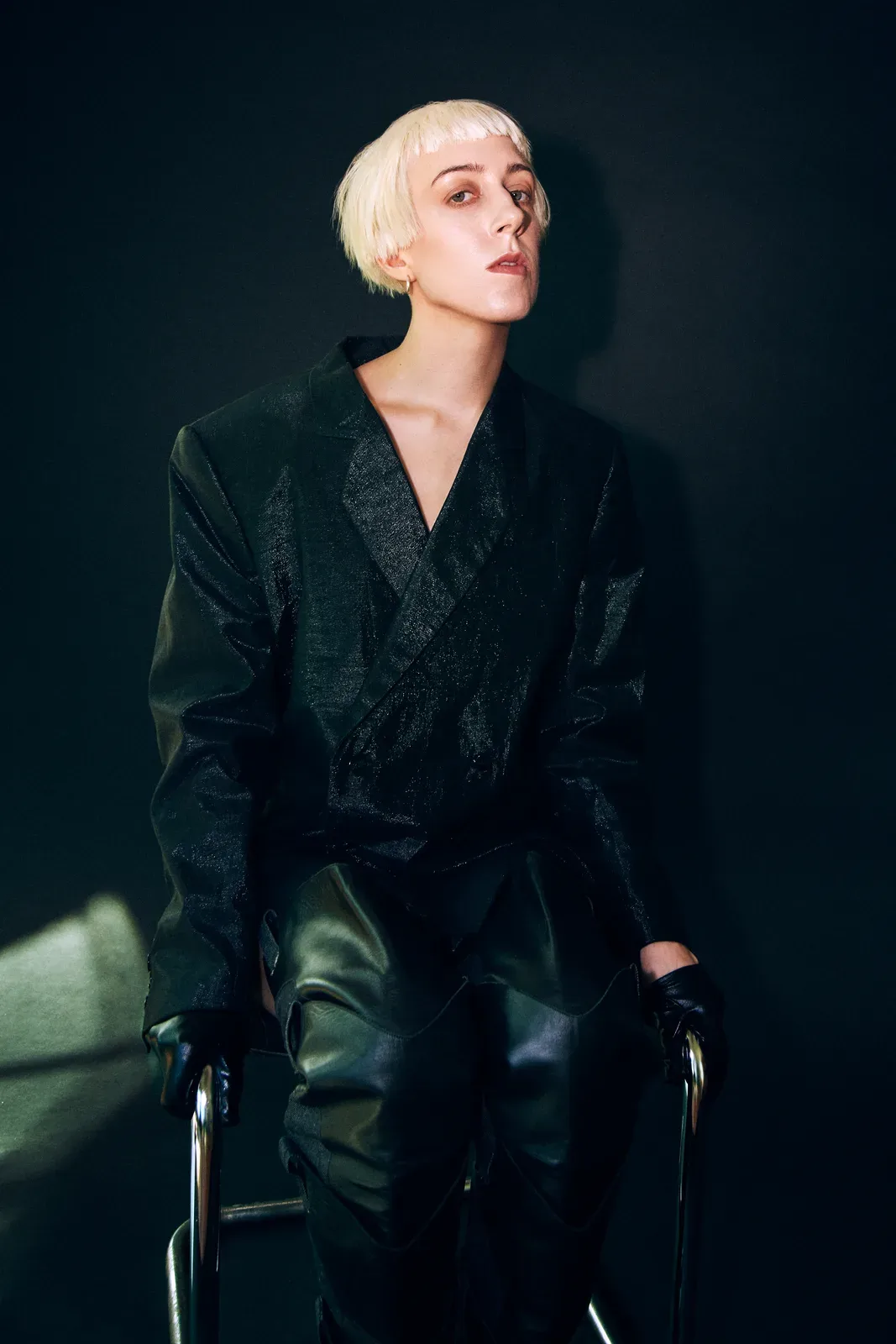
Blazer and boots LARUCCI, bracelet MINSNHENG JEWELRY, gloves stylist’s own.
You were an art student in NYC, which sounds exciting. Tell me more about it.
When I think back on art school, I realise how wealthy people were and how I wasn’t one of them. I had a big moment of realising I didn’t want to work for someone else’s dream. Fashion design school, at least at FIT, was often urging people to get a great steady job at Calvin Klein. I wouldn’t want to ever do that, I’d rather be my own Calvin Klein.
To make art and succeed at it is a privileged experience most of the time. You need capital, so you have to find a way to be your own sugar daddy. Otherwise, it’s really hard to do. You have to put yourself out there and be very strategic. I don’t know. My relationship with the New York City art school scene is feeling like a lot of them aren’t artists, they just have family money. They walk around in cool clothes they found on Pinterest.
To make art and succeed at it is a privileged experience most of the time. You need capital, so you have to find a way to be your own sugar daddy. Otherwise, it’s really hard to do. You have to put yourself out there and be very strategic. I don’t know. My relationship with the New York City art school scene is feeling like a lot of them aren’t artists, they just have family money. They walk around in cool clothes they found on Pinterest.
Do you believe in the role of an art school?
My parents are very classically trained and I think that everybody should learn technique. I come from the school of thought that you should learn technique before you learn how to do your own thing. Picasso is a phenomenal artist [classically]. He could master his own technique and create Cubism because he learned the ‘right way’ first.
At the same time, you’ve talked about frustration with people saying there’s a ‘right way’ to make an album. You do express resistance to that kind of prescriptive thinking when it comes to music.
Think of a Jeff Koons type that has other people fabricate their sculptures for them. I don’t want to be that type of musical artist. I am doing it myself but I’m taking too long to put things out sometimes, and I’m not fitting into a box that others might wish I were able to. I’m not a hater on that, and I have a lot of respect for different artists. I think you can be a great artist and not be my thing.
So, there’s the right way to be a pop artist, and that might conflict with your values around independent music making?
I think that if you want to be a pop artist, you inherently also have to be a performer. So that is important to me. Not all pop artists are good performers; I think stage presence and charisma are two of the most important things. There’s taste, there’s talent, and there’s hard work. Taste is most important to me, but you will get nowhere with good taste if you don’t also have a work ethic. You need to pick two. It’s kind of like the ‘fast, good, cheap’ thing but a bit different — taste, talent, hard work. To me, there are lots of people that have no talent or taste but are really hard workers. You can sometimes get there if you are such a hard worker, so resilient that you just keep on going. But that’s not going to be something that I’ll want to listen to or look at.
Visual art is a completely different conversation because I feel much more pretentious and critical about that world. I am a lot more intuitive with music, whereas I can be a bit more analytical with fine art. I could date a bad musician but I could never date a bad visual artist. What if they want to hang an ugly painting on the wall? I don’t want to look at that every day. With music, you could just be like, can you wear headphones, honey?
Visual art is a completely different conversation because I feel much more pretentious and critical about that world. I am a lot more intuitive with music, whereas I can be a bit more analytical with fine art. I could date a bad musician but I could never date a bad visual artist. What if they want to hang an ugly painting on the wall? I don’t want to look at that every day. With music, you could just be like, can you wear headphones, honey?
“To make art and succeed at it is a privileged experience most of the time. You need capital, so you have to find a way to be your own sugar daddy. Otherwise, it’s really hard to do.”
What makes the perfect pop star?
Charisma, sense of style, audacity, not caring what other people think, and a really good haircut.
How have you navigated that tension between collaboration and independence throughout your career?
It’s hard to give up control. I don’t like doing it because I almost always know what I want. So, I’m a solo musician on purpose. Nobody ever writes my lyrics, and I wouldn’t let that happen. That’s just not for me. This being said, I’ve been slowly finding my team (people that I trust and collaborate with musically), which has made me very happy. Giving up control has been an interesting and fun experience. My friend Ross has been producing music with me for some time now. I am grateful for feeling like somebody understands how I want my vocals to sound and is able to tell me, You have too many low frequency synths happening at once here.
But growing [with a musical collaborator] is like any other relationship. It takes effort and communication. I’ve had times where I’ve needed to be like, hey, I don’t like it when you tell me things in this way. Could you say [it] this way when we are talking about that? Or can you sandwich your critique of my song with a little bit of padding? I think knowing what you want is the most important thing. I’ll tell visual and music collaborators, I know I’m picky, but wouldn’t it be worse if I didn't know what I liked?
But growing [with a musical collaborator] is like any other relationship. It takes effort and communication. I’ve had times where I’ve needed to be like, hey, I don’t like it when you tell me things in this way. Could you say [it] this way when we are talking about that? Or can you sandwich your critique of my song with a little bit of padding? I think knowing what you want is the most important thing. I’ll tell visual and music collaborators, I know I’m picky, but wouldn’t it be worse if I didn't know what I liked?
Where does something usually start? Tell me how you build a song.
My first album started on my bike. I was singing while biking around New York. Recently, and for the last album that I just did, I started with a simple drum beat. Since dialing in my home studio, I’ve been starting with a bassline or drums. I have a little spaceship with all my hardware synths and drum machines. I consider it very ‘work’s process’ (similar to how my parents make their visual art). I make a drum beat on my Perkons HD-01, or bass on my MS20, I’ll dial in other synths one by one to complement whatever the overarching bass/beat is. My Juno 60 comes in from here and I play it live during the jam, seeking out melodies, harps, bridges and alternative ideas. A lot of muting and unmuting happens while I move around the space. When I think I’ve gotten somewhere, I will save the session, and have forty-five minutes of audio to sift through, and begin to build a track in Ableton.
Where do you go from there?
I find special moments, delete things, move them around. I’ll have a ‘frankensteined’ skeleton of a song. I jam again to that skeleton and rinse and repeat that process, focusing on different instruments each time. I move between addition and subtraction from here and then it’s ready for more production and mixing. Since 2024 my main collaborator is Ross Fish (aka Moffenzeef Modular), who produced ninety per cent of the songs on Attention. He’s very specific about audio quality, and I am very particular about my music, but the end result is always a song that I am truly proud of. I benefit from being told to leave it. Left unchecked, I’d be pining over details forever.
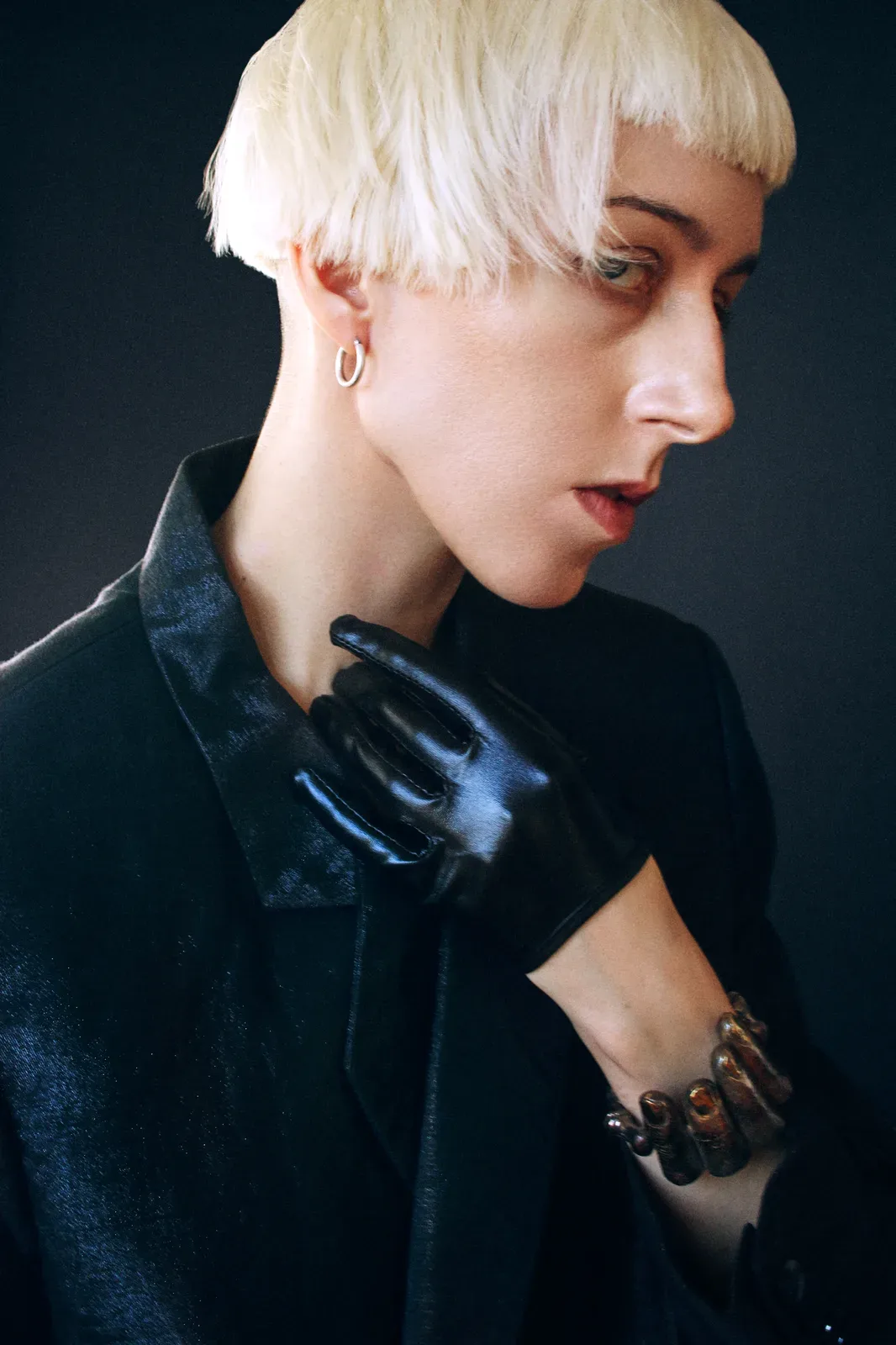
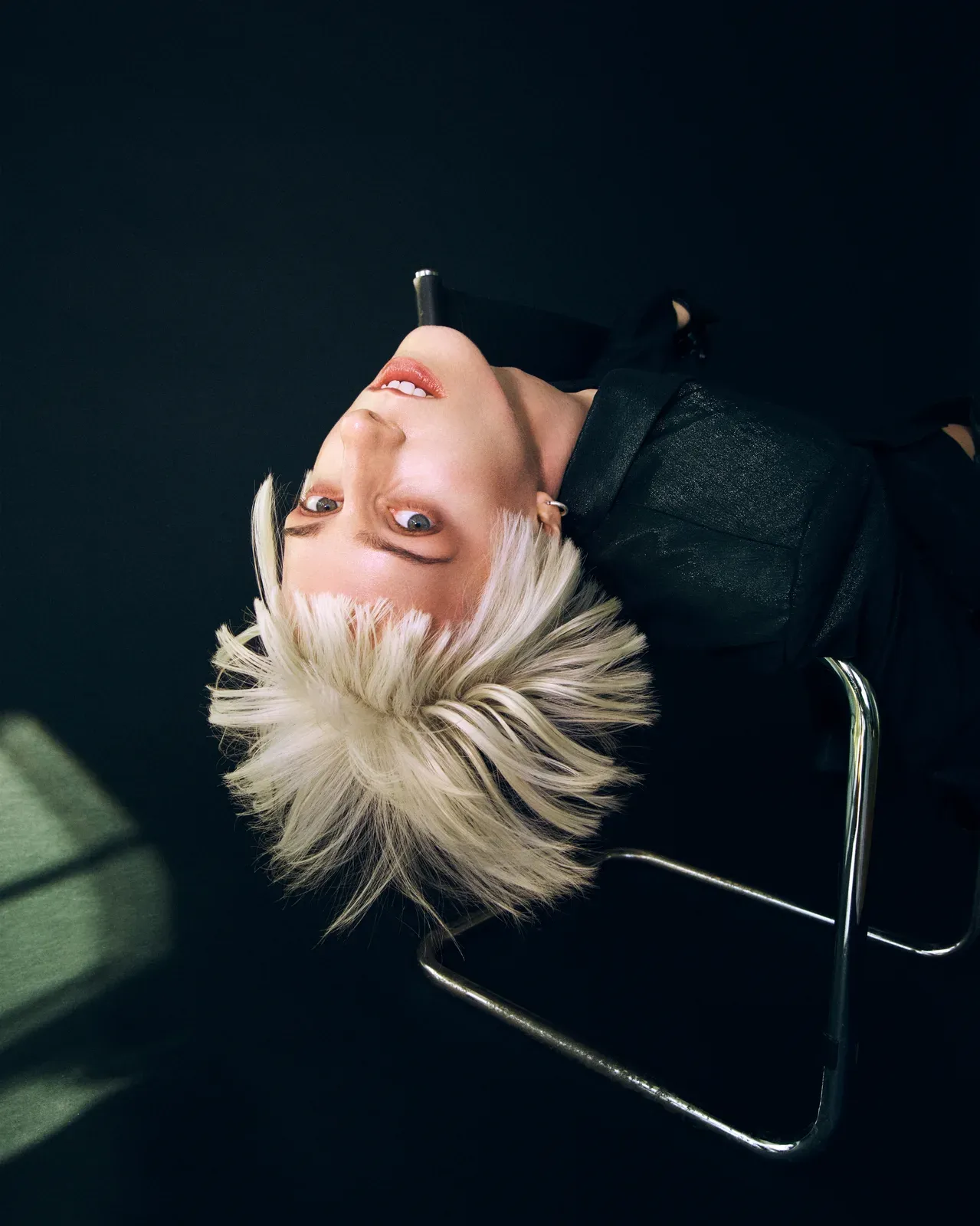
Blazer and boots LARUCCI, bracelet MINSNHENG JEWELRY, gloves stylist’s own.
Tell me the story of Send Nudes.
I went out with a guy —the same that Skater Hits Me Harder is about— right before the pandemic. I sent him a little bit of a sexy picture, but it wasn’t a full nude. So that’s where the “I can send my nudes to someone else” line comes from. We never got to go on a second date because the pandemic happened!
It was literally one drunk text message. I was like, what’s up, we should hang out sometime. And he’s like, maybe Friday. And then the end of the song is “thanks for the night.” That’s the only text I get, and I’m left on read.
I remember looking out my window and watching him smoke a cigarette while he was waiting for his car. And it was like, thanks for the night. That is the exact text message [throughout, Rare DM sang the lyrics which quote the song]. So, most of my songs are quite literal.
It was literally one drunk text message. I was like, what’s up, we should hang out sometime. And he’s like, maybe Friday. And then the end of the song is “thanks for the night.” That’s the only text I get, and I’m left on read.
I remember looking out my window and watching him smoke a cigarette while he was waiting for his car. And it was like, thanks for the night. That is the exact text message [throughout, Rare DM sang the lyrics which quote the song]. So, most of my songs are quite literal.
Why do you think that song resonated so much?
I think everybody has sent nudes to someone, had it not work out, and then thought, fine! I can send my nudes to someone else. It’s also a dreamy song that has such a loneliness to it — a comforting loneliness. The magic I put into that song was dealing with the loneliness of the pandemic, with wanting something to work out and not knowing how to make it happen. On top of that, everyone’s had a person they’ve dated who they do not know well enough to be deep diving into socials as much as they do. But you still find their future girlfriends on Instagram and think, why did you date her? Why don’t you want to date me? I think that’s the energy. Everybody’s been there.
Tell me about your relationship with social media now.
It’s a lot less fun because I had a community before. I know that sounds so stupid, but I never really had that before [TikTok]. During the pandemic, I lived alone. I wasn’t dating anybody. I had lots of friends who had significant others. I felt totally fucking isolated. I didn’t get hugged for three months at one point. I would jam in my studio from five pm until two in the morning, five nights a week or so. The reason why the TikTok community felt nice was because I was jamming. I would do live jams and film them, and people would find me. I popularised the hashtag #synthtok in 2020. Those videos blew up, and that was during a time where there weren’t as many people on TikTok. Instead of being a drop in a bucket, you could have your shit reach people who were interested in what you were doing.
You’ve recently left your studio, right? What happened to that?
Rare DM started in my first studio apartment. I was in Prospect Lefferts Gardens and had a long commute and was always singing into my voice memos on the bike ride home. I wrote Almost a Year and Night Watch during this time. Soon after, I moved off of the Halsey J, to a bigger space where I finished Vanta Black. That album mostly revolves around one traumatic breakup — it was a dark and lonely time where music was my escape and only way to survive heartbreak.
After my debut record, everything started to come together. I moved my studio into the shadowy middle room of my apartment. I built a real spaceship and acquired all sorts of analogue synths and hardware. My studio was set up for exploration: had sixteen channels to play with, so much open space to move around, and over three people could comfortably fit with me playing in there.
After my debut record, everything started to come together. I moved my studio into the shadowy middle room of my apartment. I built a real spaceship and acquired all sorts of analogue synths and hardware. My studio was set up for exploration: had sixteen channels to play with, so much open space to move around, and over three people could comfortably fit with me playing in there.
“I could date a bad musician but I could never date a bad visual artist. What if they want to hang an ugly painting on the wall? With music, you could just be like, can you wear headphones, honey?”
That sounds like such a memorable space!
The flow of my music room was very inspiring, but it sometimes felt like too much of a cave with the lack of natural light. Finishing things was often a struggle because I’d be longingly gazing at the glow coming from the living room, craving a breeze. The environment was best at night, where I could use the darkness to my advantage. I armed it with smart lights that could transform the atmosphere when I needed a new headspace.
I’d spent months exclusively jamming solo due to the pandemic, when Send Nudes came out. This time was a different kind of solitude that led to a seductive darkness, experimentation and grit. I developed technical prowess and became methodical with my approach to production and composition. After shows started happening again, this time of practiced isolation bolstered my live sets. I’d flesh out my demos by playing them live and channeled the energy back into my productions. This all contributed to a new era for Rare DM, with my studio as the catalyst.
I wrote all of Attention in that apartment. It feels appropriate to be putting out the album at this time, because after nine years of living on Covert Street, I’ve moved to Manhattan. My studio is a third of the size now, with two windows and one door. It’s cosy, gets wonderful morning light, and already more intentionally set up than the last studio. I’m so excited to write my next album here.
I’d spent months exclusively jamming solo due to the pandemic, when Send Nudes came out. This time was a different kind of solitude that led to a seductive darkness, experimentation and grit. I developed technical prowess and became methodical with my approach to production and composition. After shows started happening again, this time of practiced isolation bolstered my live sets. I’d flesh out my demos by playing them live and channeled the energy back into my productions. This all contributed to a new era for Rare DM, with my studio as the catalyst.
I wrote all of Attention in that apartment. It feels appropriate to be putting out the album at this time, because after nine years of living on Covert Street, I’ve moved to Manhattan. My studio is a third of the size now, with two windows and one door. It’s cosy, gets wonderful morning light, and already more intentionally set up than the last studio. I’m so excited to write my next album here.
We are excited to announce your album! What’s the main theme of the project?
The album is called Attention. I would say that the through line is that either you want attention, or you’re not paying enough attention, or you are paying attention to the wrong things. A lot of it comes from struggles with social situations or with internal battles of self-worth. I have one song, Mean Girled, which is about being mentally preoccupied by someone you don’t even have or want a close relationship with. We're not even fucking, so why am I worried about you? Honey is the most romantic on the record, and that’s my only happy love song to date. That’s about finally getting the love and attention you’ve been seeking.
Tell me about the music video! I understand you have worked with the director before.
Yes! Before Lisa Saeboe directed Compliment, she did Rolex with her husband, Jake Moore, who also did the cinematography for both videos. Jake also edited Send Nudes and shot Softboy. I also scored Lisa’s short film, Night of The Tilberi. I have known them for over a decade and consider myself incredibly blessed to call them my collaborators since 2019.
I love working with Lisa because we both worship the details and usually share the same visual instincts. I edited the video for Compliment myself and was very granular with the timing of everything. Lisa is a fine artist and designs worlds specifically for Rare DM. She puts me in situations where I am pushing myself physically and artistically. Filming it started with an exercise in endurance at Fort Tilden in peak winter (I had to keep my composure / my nose from running in eighteen-degree weather) till I was transported from the beach via portal to the shadow realm (studio world), where I was able to lean into my favourite aspect of filming: the performance of it all.
Lisa is fantastic at bringing out my divine feminine side, which I usually keep closer to my chest. In my day to day, I present much more masculine. I should also note that Lisa and I are both Leos, and the video is very Leo-esque. It very much captures a desire to cherish a compliment instead of mourning a missed connection that could have been. Perhaps a cheat code to self-love can be seeing yourself through the lens of someone who wants you…enjoying that attention without engaging in it. I feel the video captures this well.
I love working with Lisa because we both worship the details and usually share the same visual instincts. I edited the video for Compliment myself and was very granular with the timing of everything. Lisa is a fine artist and designs worlds specifically for Rare DM. She puts me in situations where I am pushing myself physically and artistically. Filming it started with an exercise in endurance at Fort Tilden in peak winter (I had to keep my composure / my nose from running in eighteen-degree weather) till I was transported from the beach via portal to the shadow realm (studio world), where I was able to lean into my favourite aspect of filming: the performance of it all.
Lisa is fantastic at bringing out my divine feminine side, which I usually keep closer to my chest. In my day to day, I present much more masculine. I should also note that Lisa and I are both Leos, and the video is very Leo-esque. It very much captures a desire to cherish a compliment instead of mourning a missed connection that could have been. Perhaps a cheat code to self-love can be seeing yourself through the lens of someone who wants you…enjoying that attention without engaging in it. I feel the video captures this well.
What’s next?
I am already thinking through my next body of work, what I’d like to create, the stages I want to be on, where I want to tour. I have a determination to improve every aspect of my life. Musically, I’m determined to use MIDI more effectively, and I plan on centering that in my writing process. I’m being very careful with the habits I am building in my new apartment. After a long stretch of mostly just reading for education (music tech and nonfiction), I’ve been happily reunited with my fantasy books. With my smaller space I’m trying to become a minimalist, and I’m in search of my Steve Jobs uniform so I can stop using my brain for clothes.
I’d like to take dance lessons again and be more acrobatic during my live set. With the scope of my project, I want to reach a level where I have the ability to build things without financial limitations so I can create art in new ways, make even more elaborate videos, explore the world of set design, and design clothing for my live performances. Another goal is to star in a feature film someday, like Marilyn Monroe and Lady Gaga. I had so much fun filming in The Bride! that acting is heavy on my mind right now
I’d like to take dance lessons again and be more acrobatic during my live set. With the scope of my project, I want to reach a level where I have the ability to build things without financial limitations so I can create art in new ways, make even more elaborate videos, explore the world of set design, and design clothing for my live performances. Another goal is to star in a feature film someday, like Marilyn Monroe and Lady Gaga. I had so much fun filming in The Bride! that acting is heavy on my mind right now
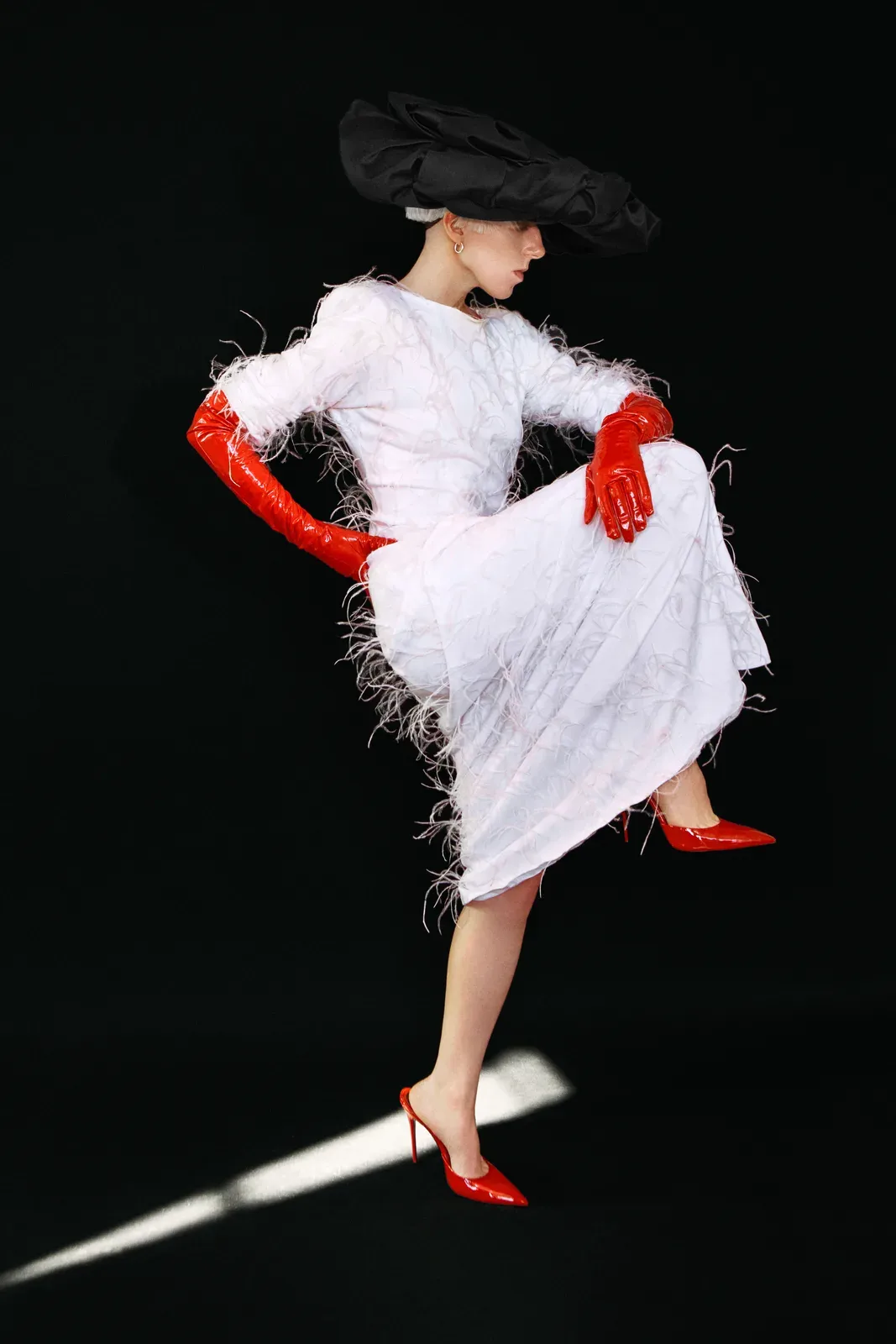
Dress OCEAN SAVAGE, hat HEATHER HUEY, shoes and gloves stylist’s own.
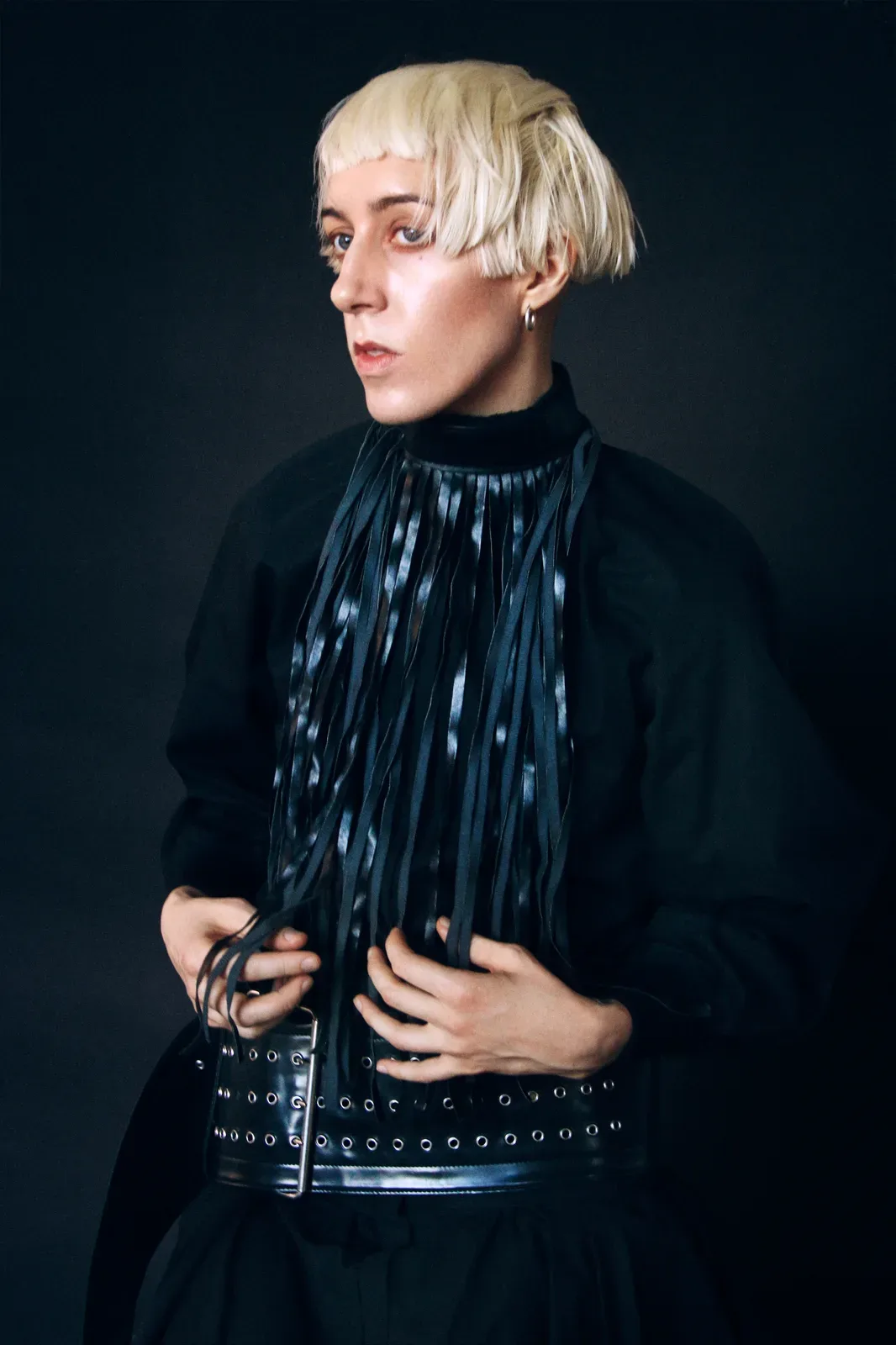
Dress ISEDER, shoes, belt, and necklace stylist’s own.
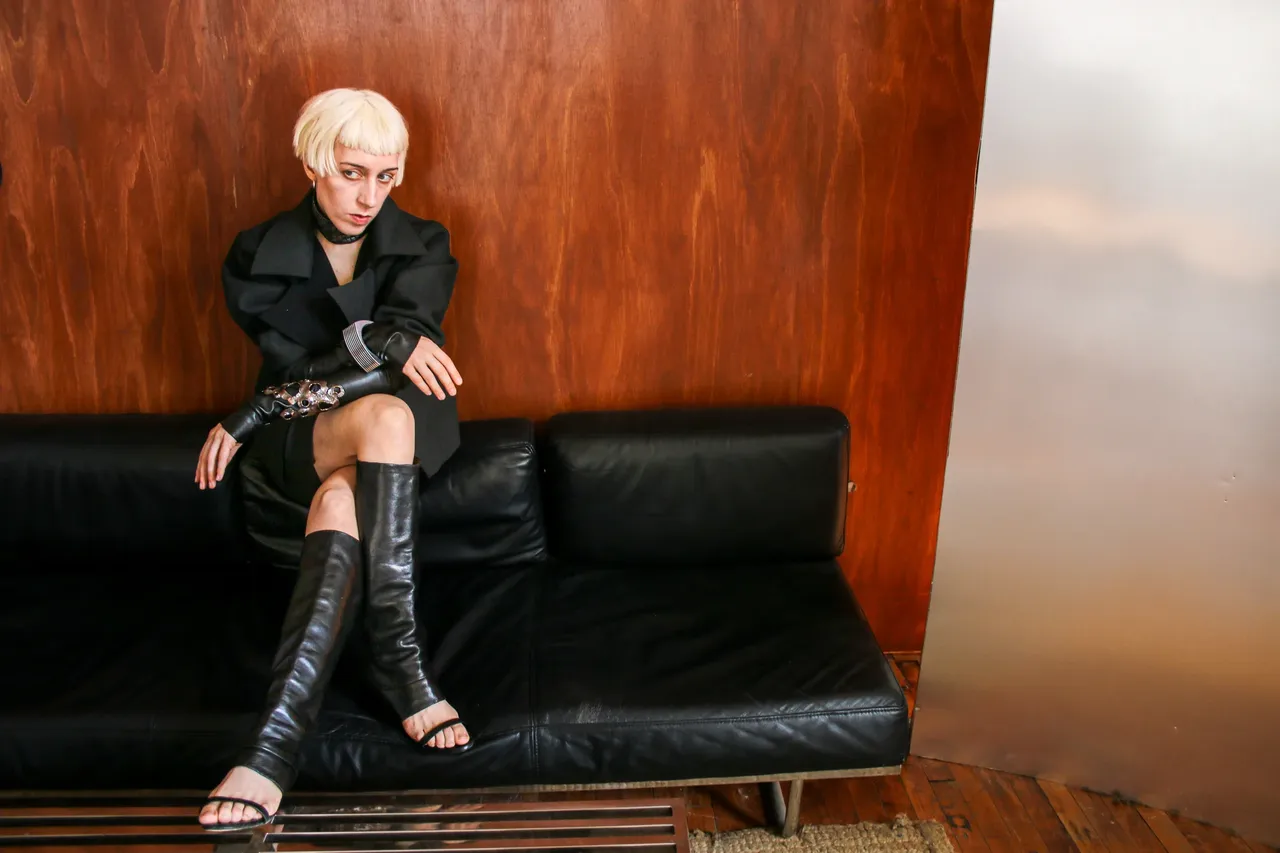
Jacket and skirt ISEDER, cuff MINSHENG JEWELRY, shoes, bracelet, and necklace stylist’s own.
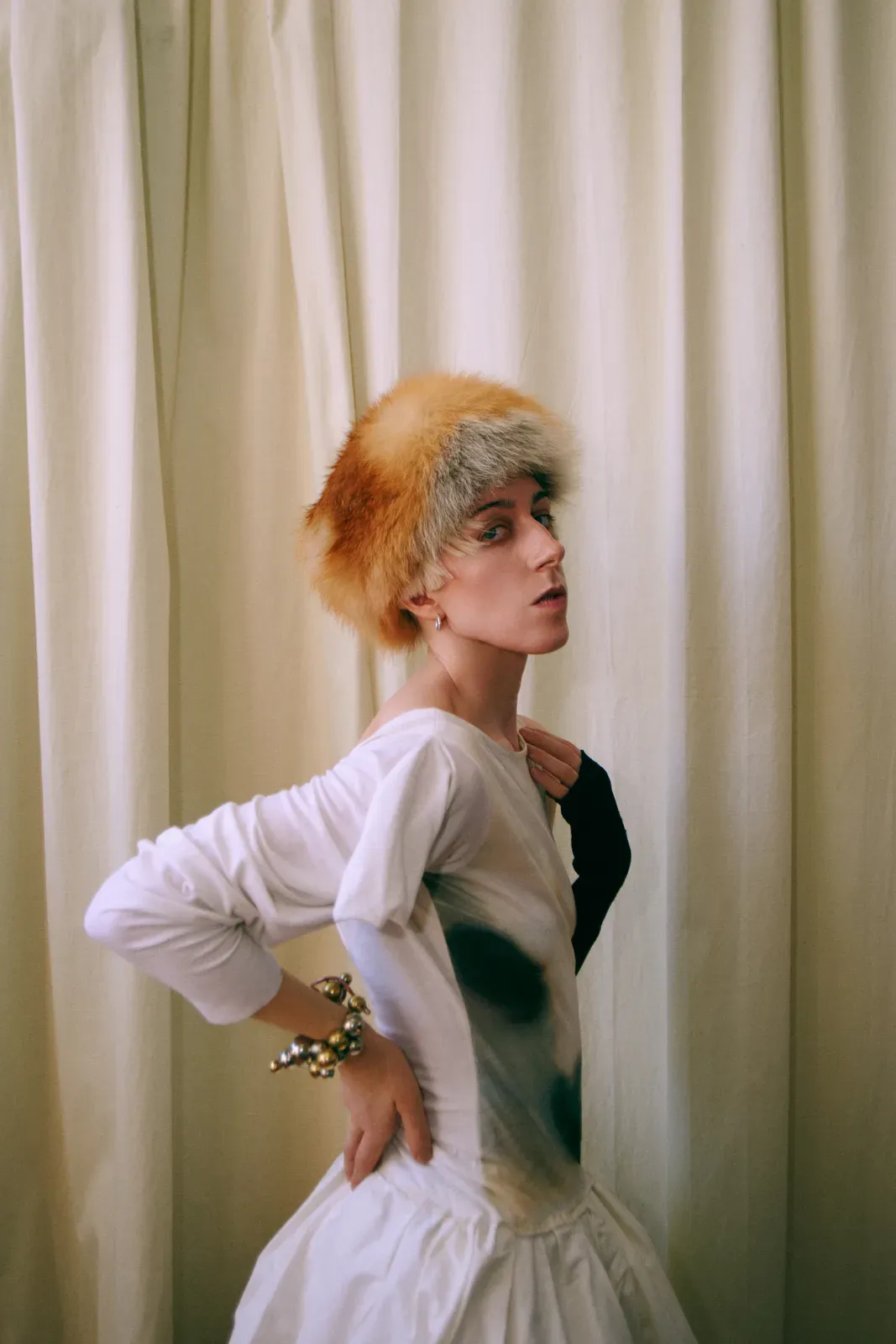
Dress ISEDER, bracelet MINSHENG JEWELRY, shoes, hat, and glove stylist’s own.
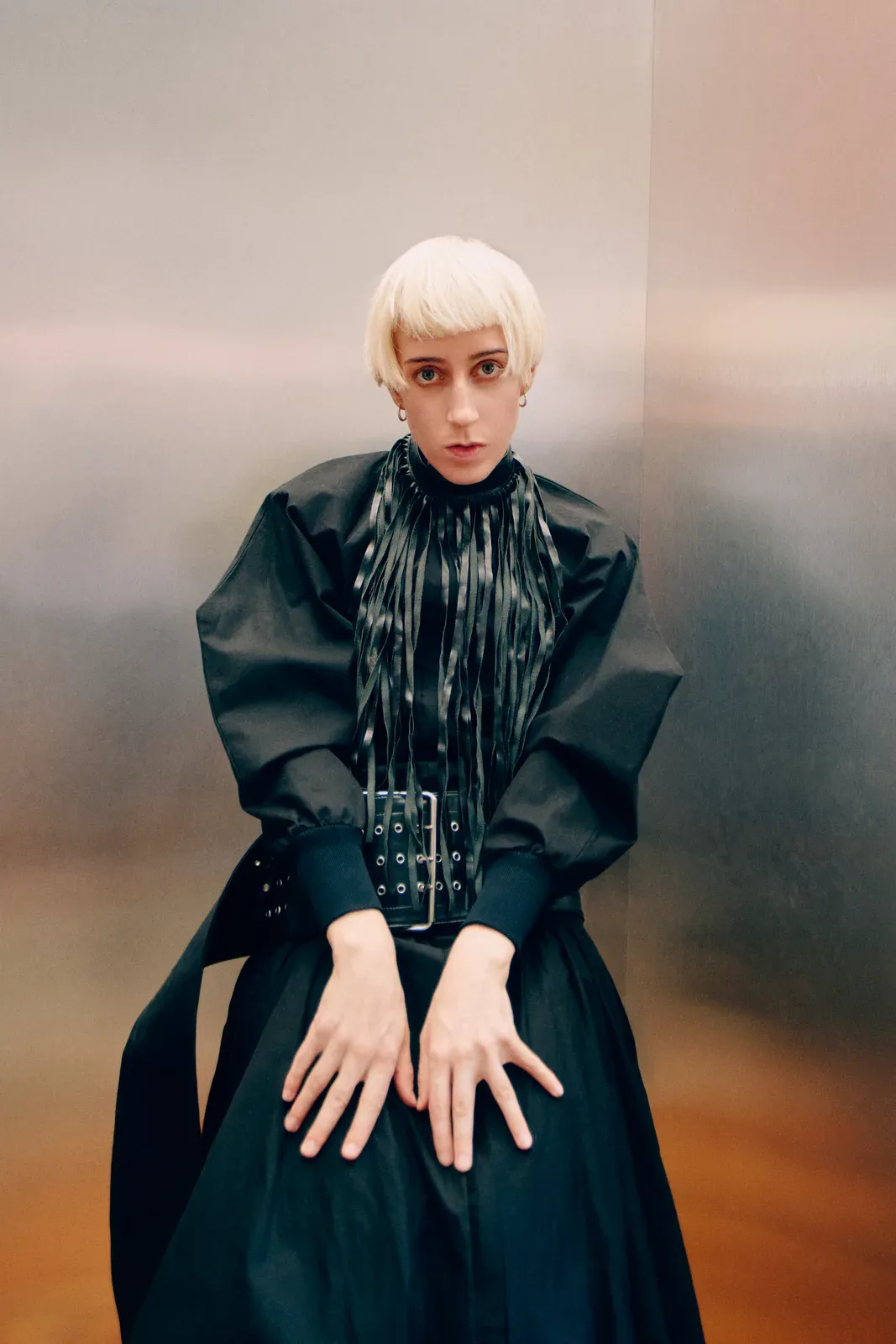
Dress ISEDER, shoes, belt, and necklace stylist’s own.