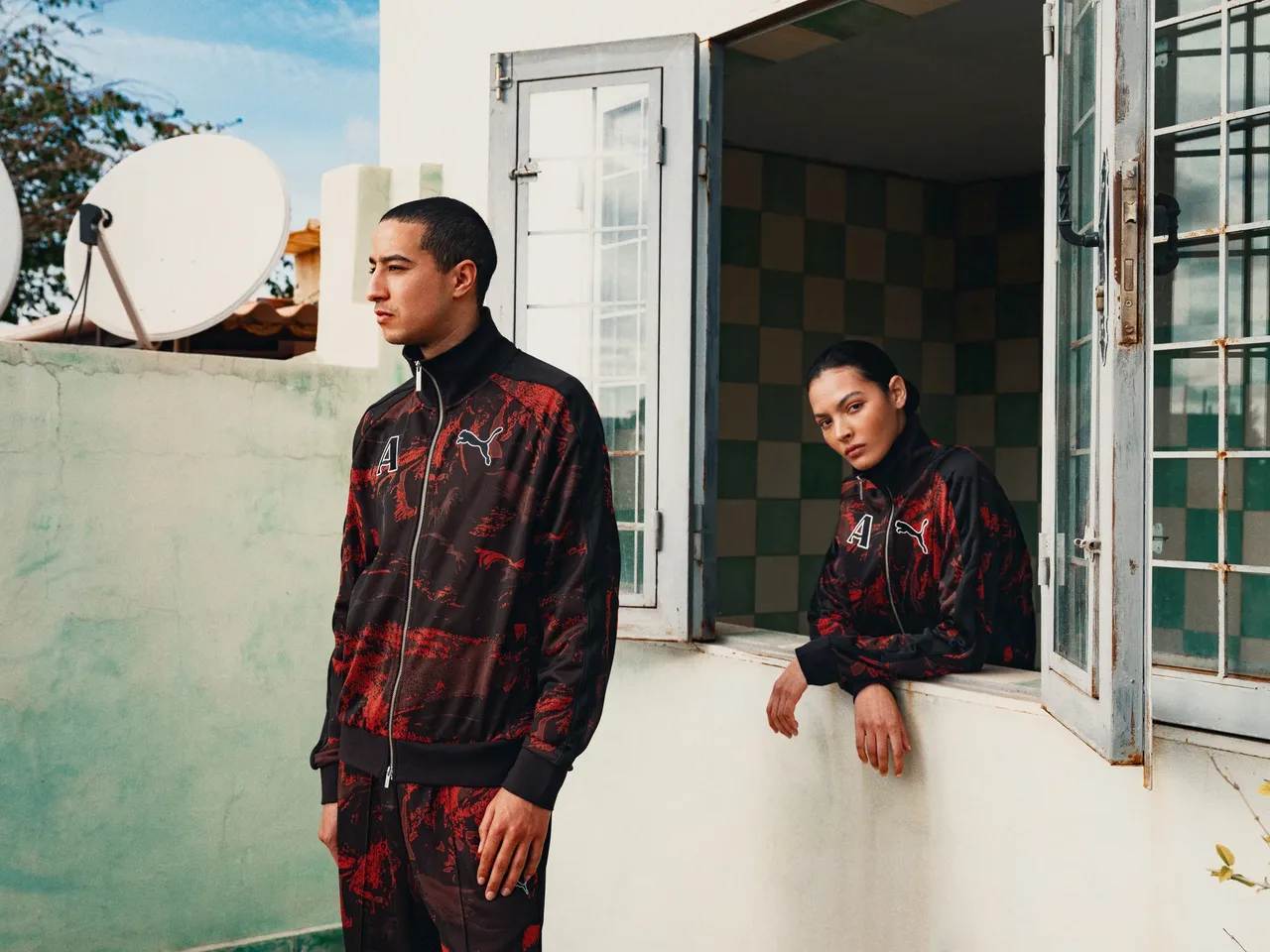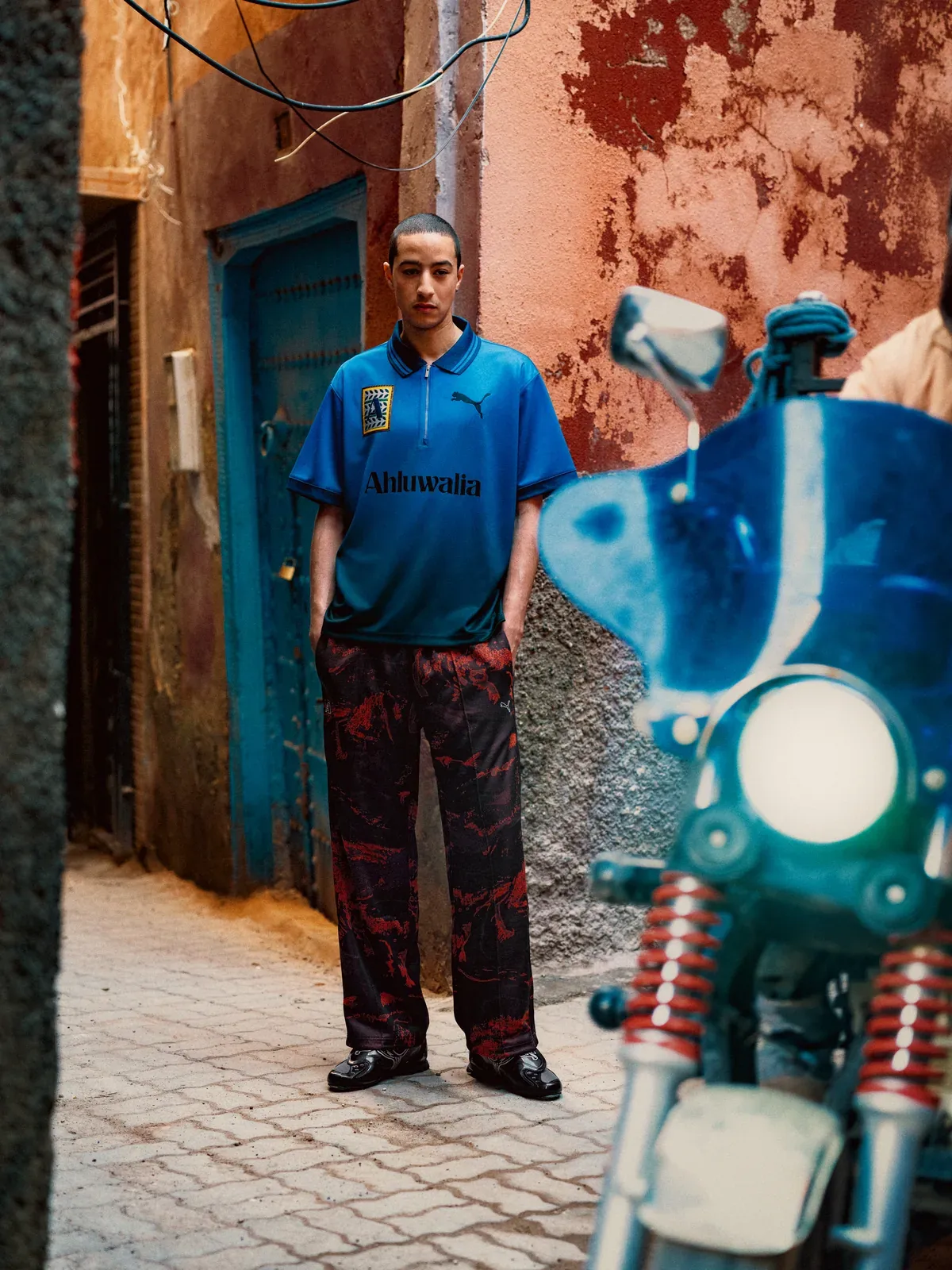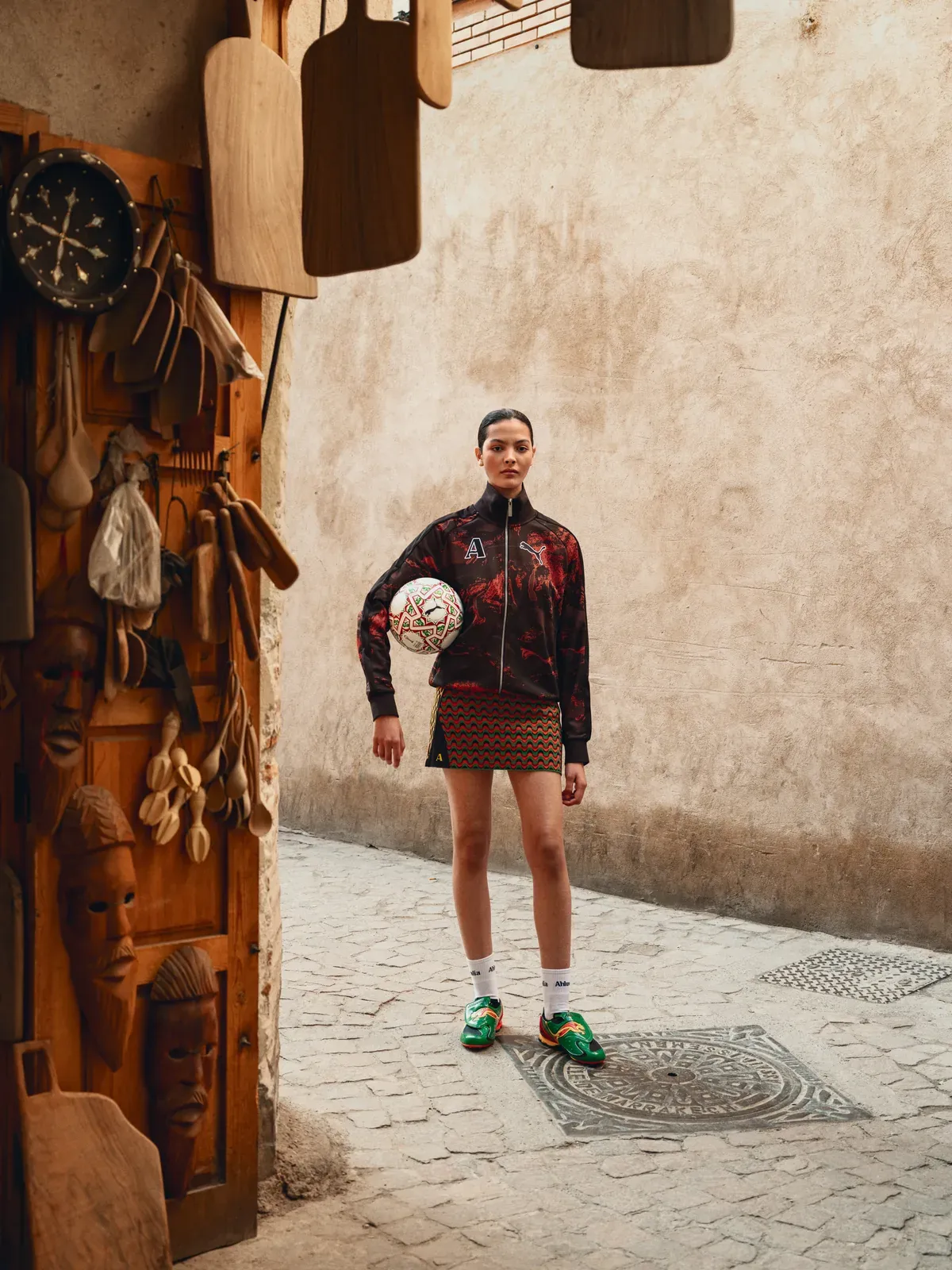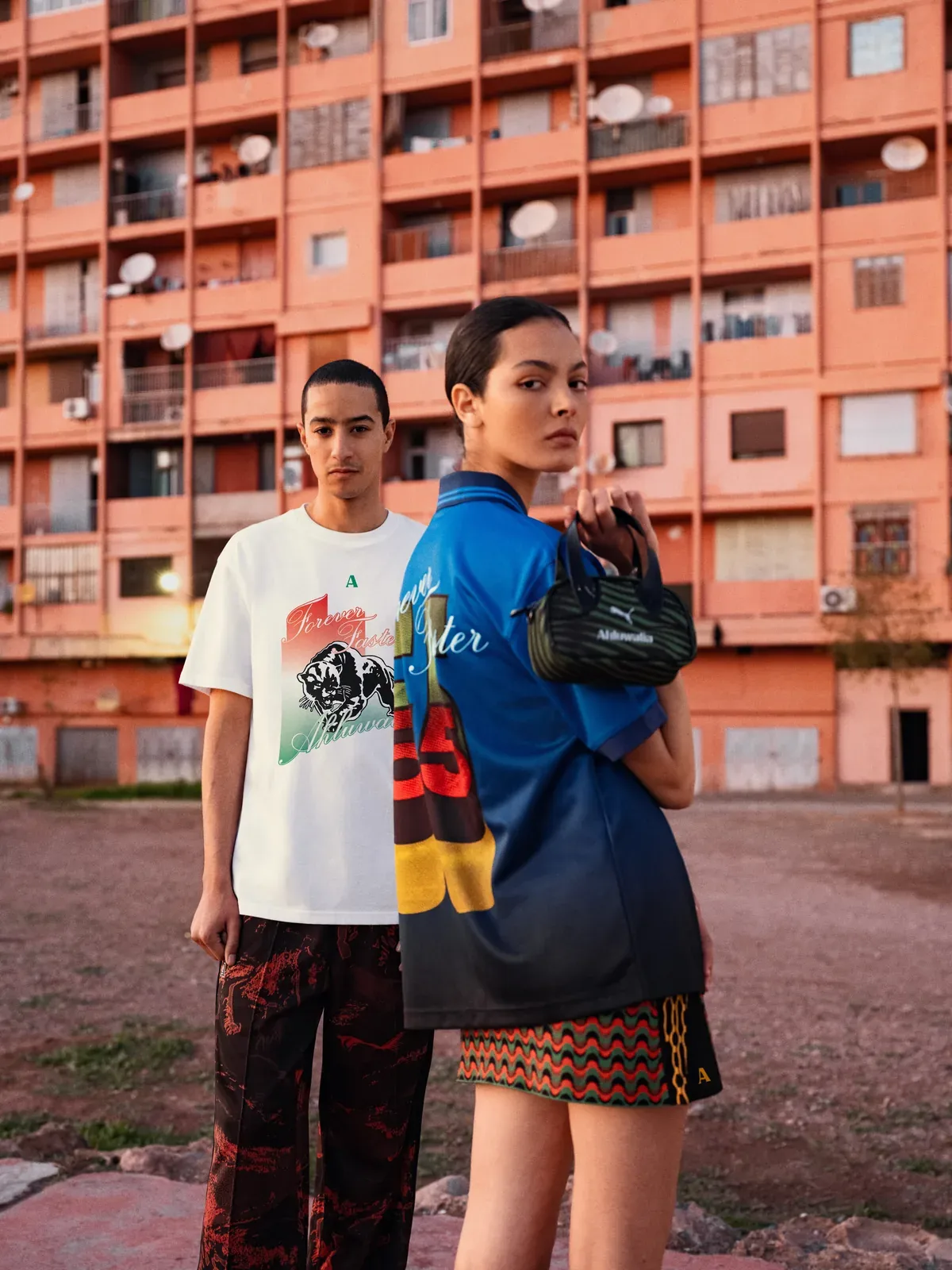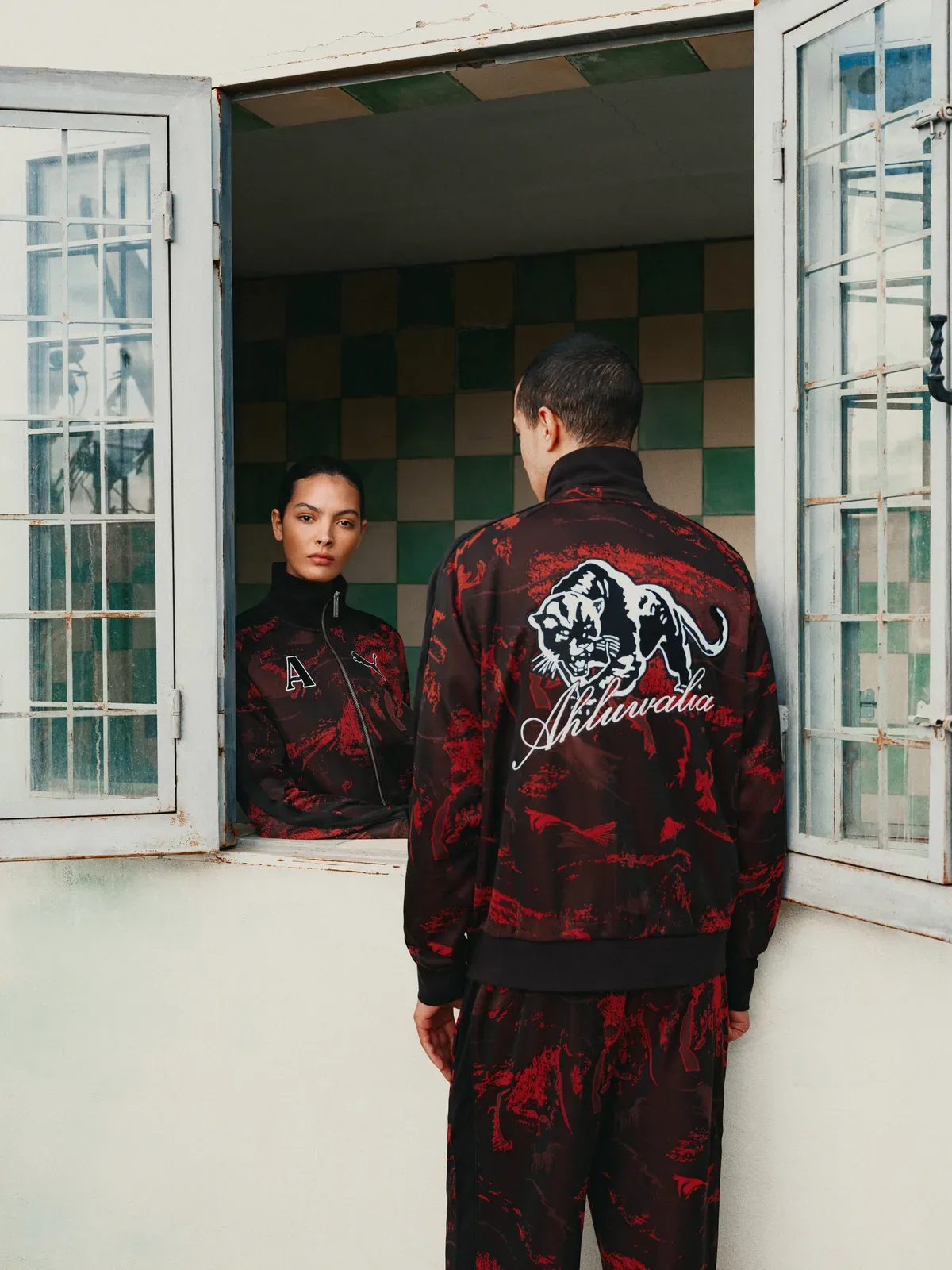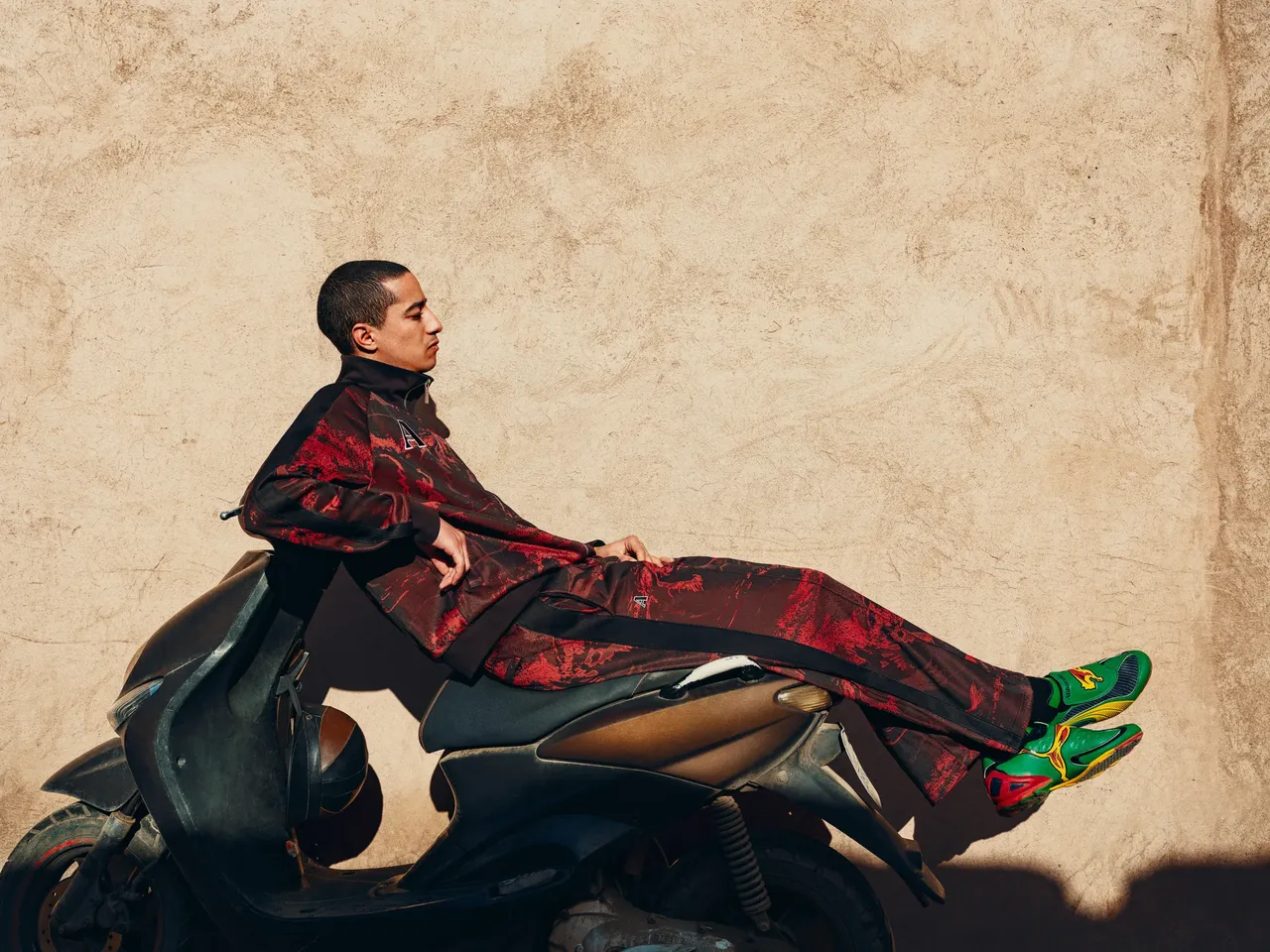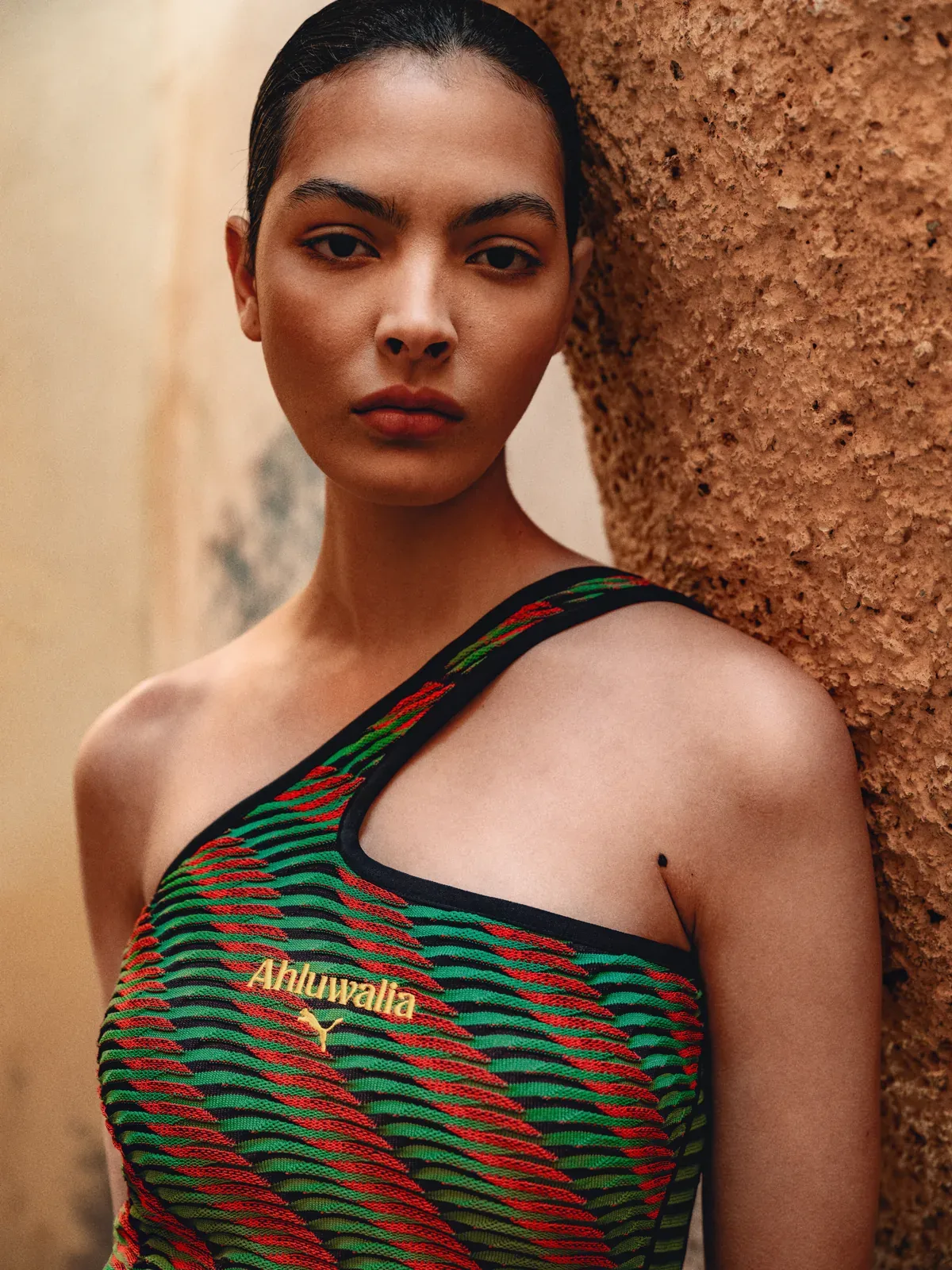
The sunburnt walls of some Moroccan city tremble under the impact of stray shots, the heat finally softening as the sun dips below the horizon and the best players on each side are only just getting started. Who hasn’t blasted a ball straight into a corner shop or a fruit stand? We like to imagine the annoyed neighbours shouting are really just fans cheering from the stands. The second collaboration between sports giant Puma and innovative Indian-Nigerian designer Ahluwalia gives us the perfect attire for these moments. The culture and the colours of Africa can now be worn, represented and celebrated.
While the World Cup rolls around every four years in massive stadiums, across African neighbourhoods, from north to south, every evening under flickering streetlights, on dusty pitches, entire generations of street legends put their names on the line. Puma and Priya Ahluwalia step in as the official kit suppliers because they understand that the right sneakers really do make you strike harder and that the louder the colours and the stronger the retro energy, the more talent and aura a player carries.
If those shameless people we call “friends” are going to clown us by posting our Sunday match fails on their stories, we might as well look outrageously good doing it in the second drop of this collab between the Indian-Nigerian designer and Puma.
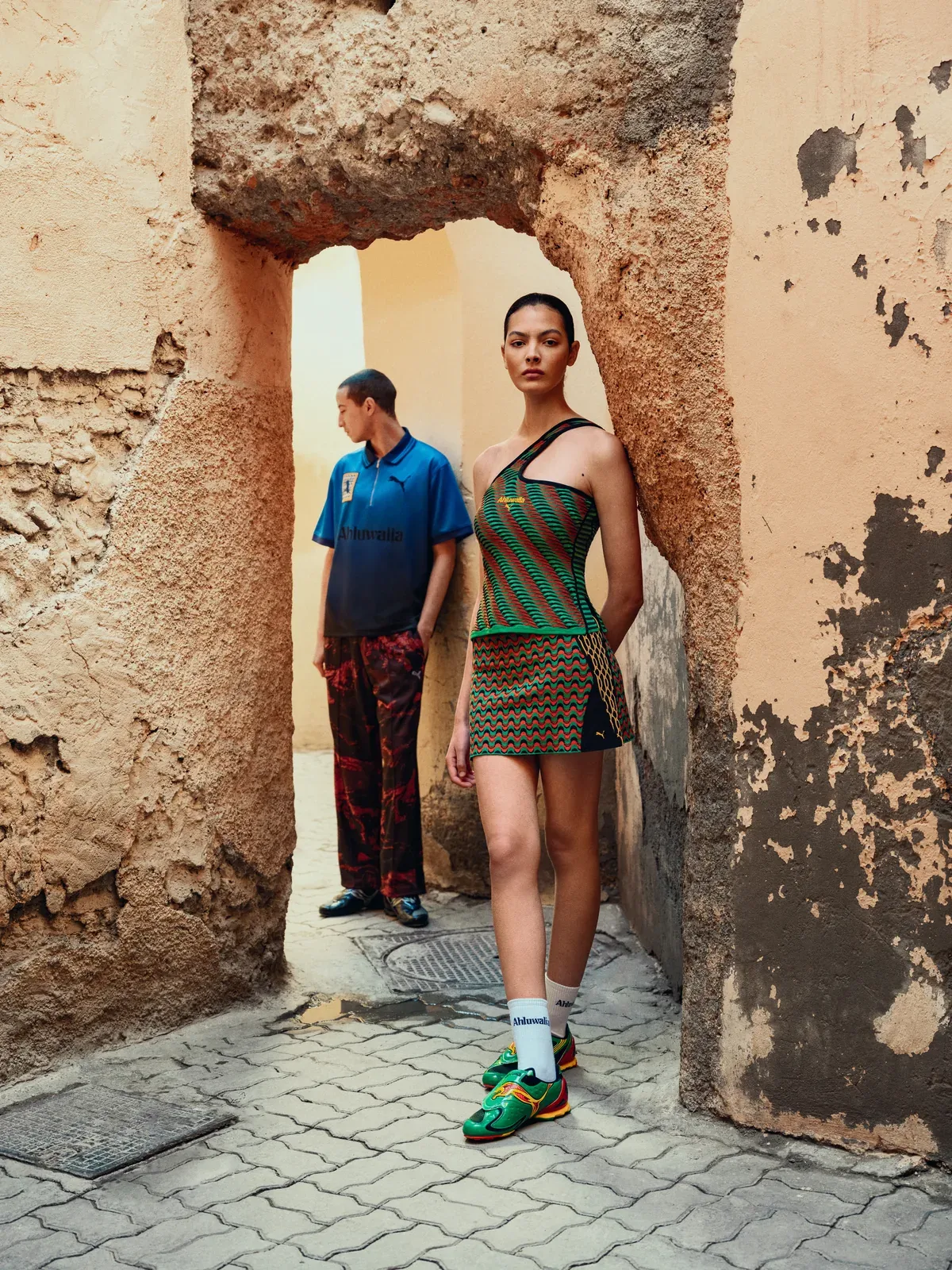
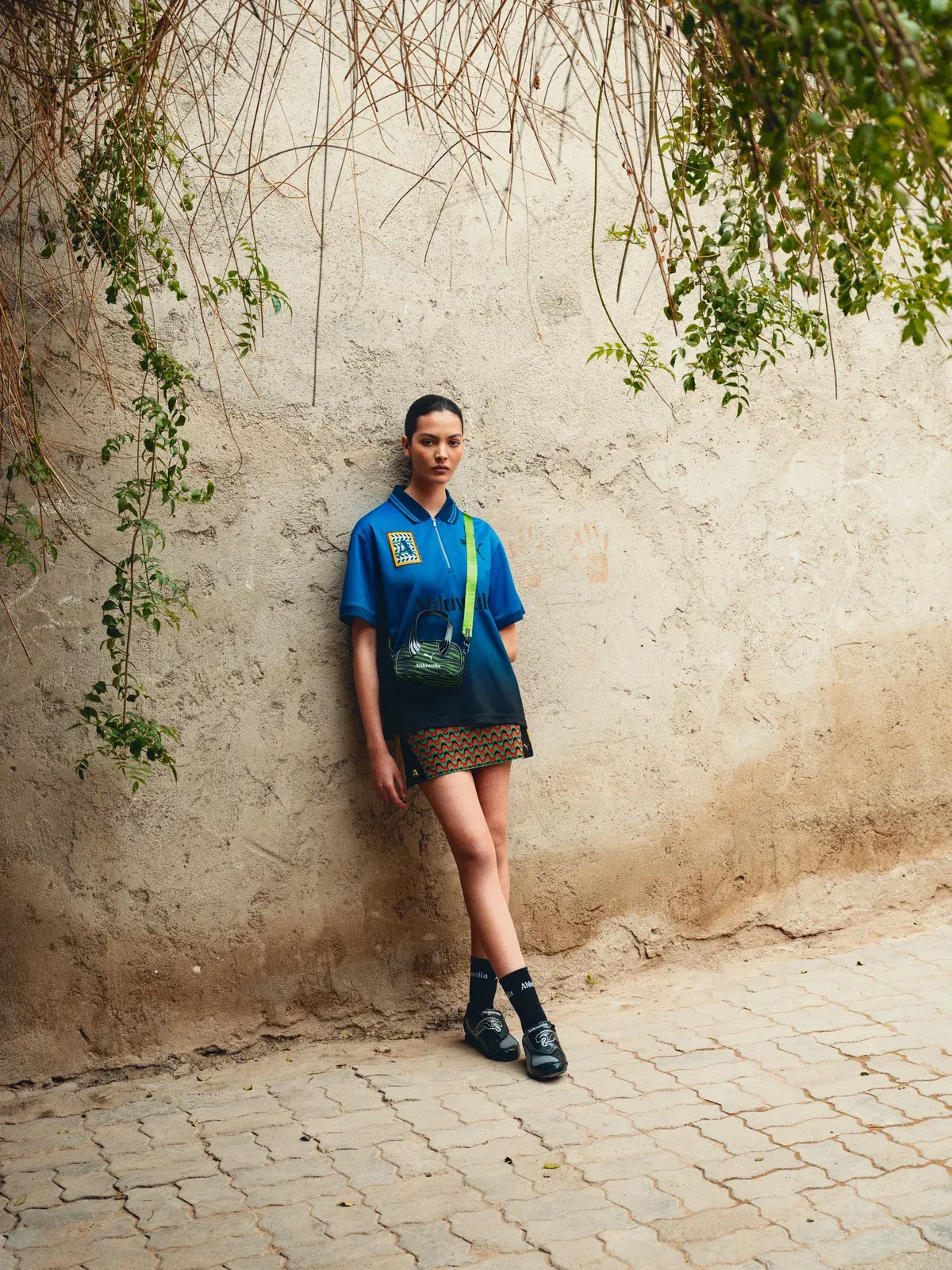
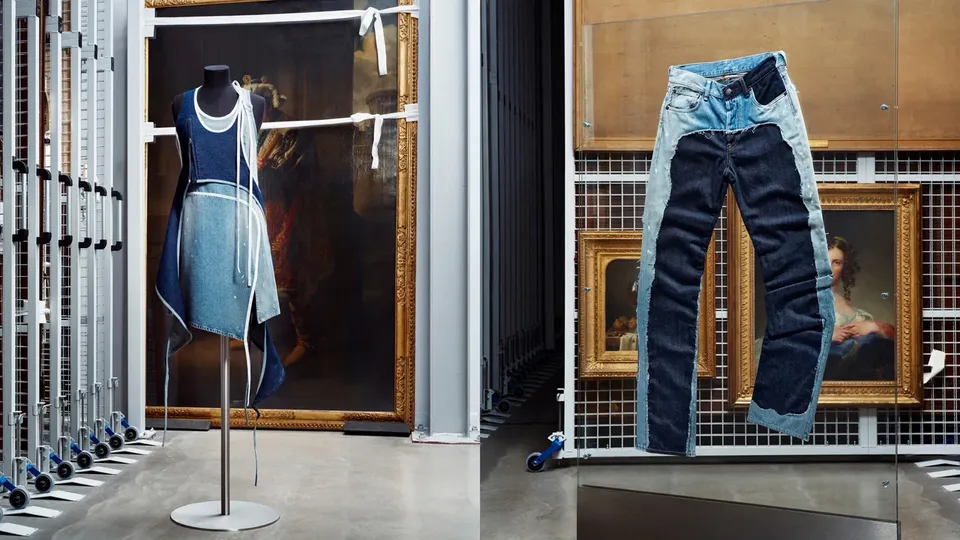
The new drop leans into unexpected details rather than obvious plays: think abstract crowd-inspired prints that feel more like motion than pattern, textured knits that subtly echo national identity, and accessories like a compact grip bag that borrows design cues from classic sports branding without feeling predictable. Even the footwear nods to early-2000s speed-driven silhouettes, reworked with a sharper, almost futuristic minimalism.
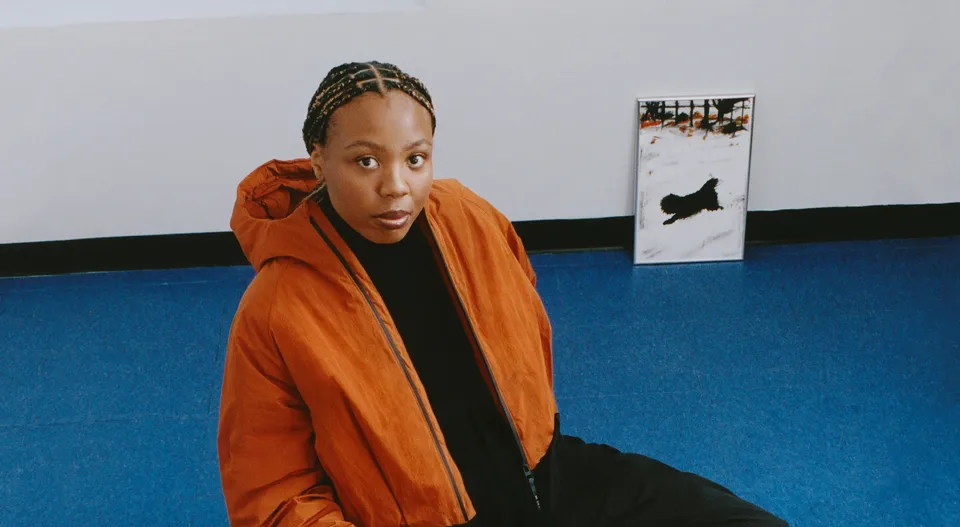
At the centre of it all is Ahluwalia herself, a London-based creative known for blending cultural storytelling with material innovation. Her work often reimagines existing garments and references, and here she channels that approach into a collection shaped by community, memory, and movement. The result is less about football as spectacle and more about football as lived experience: messy, loud, and shared.