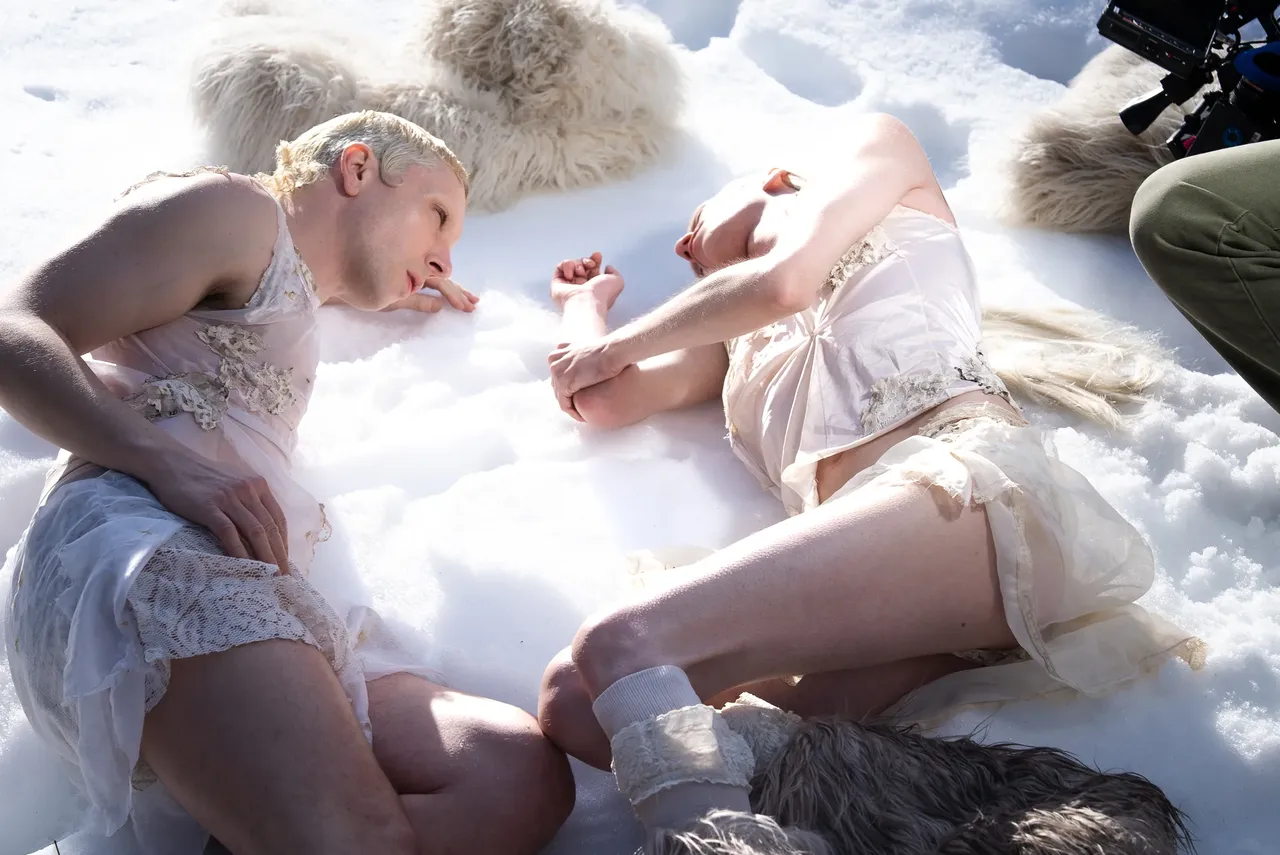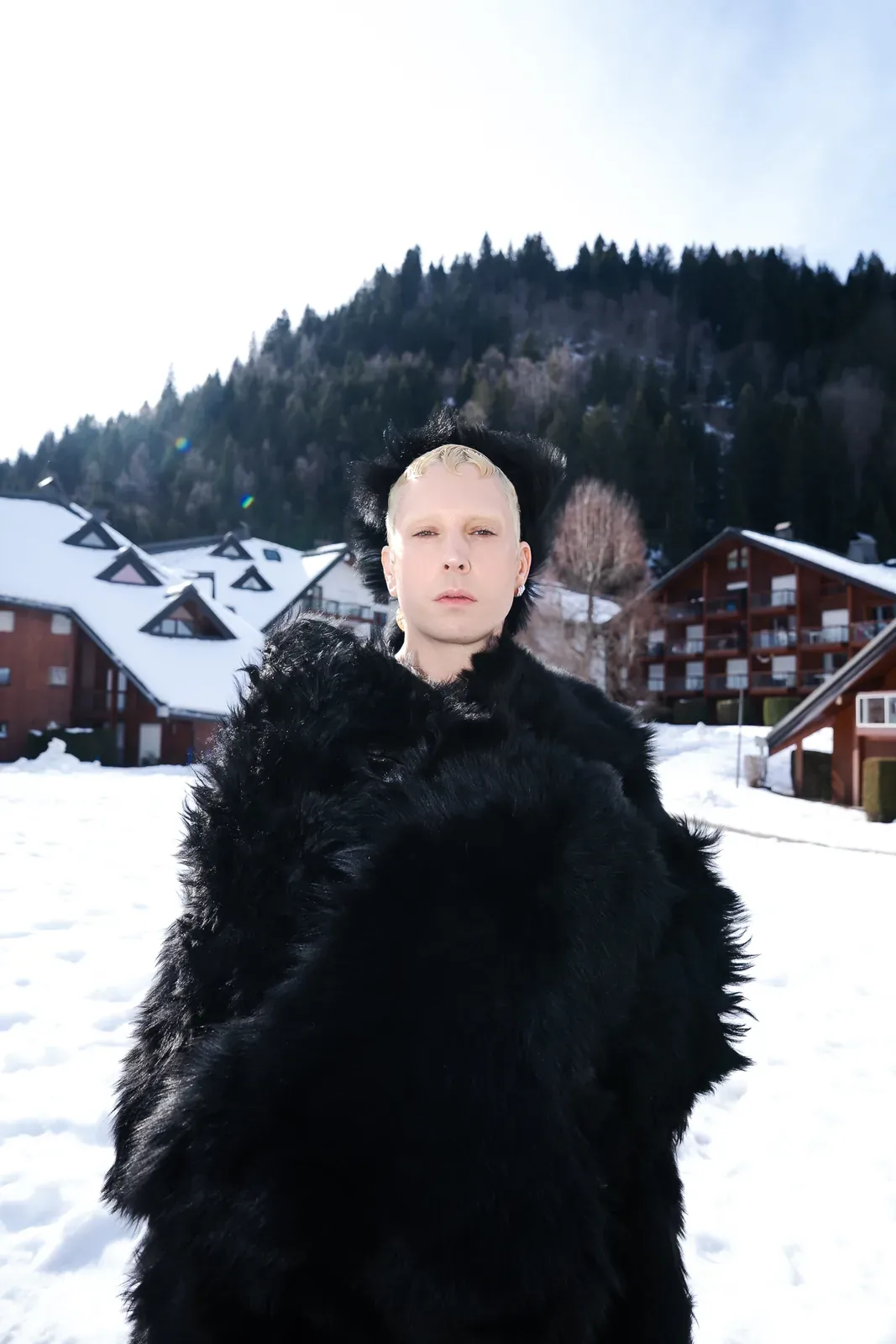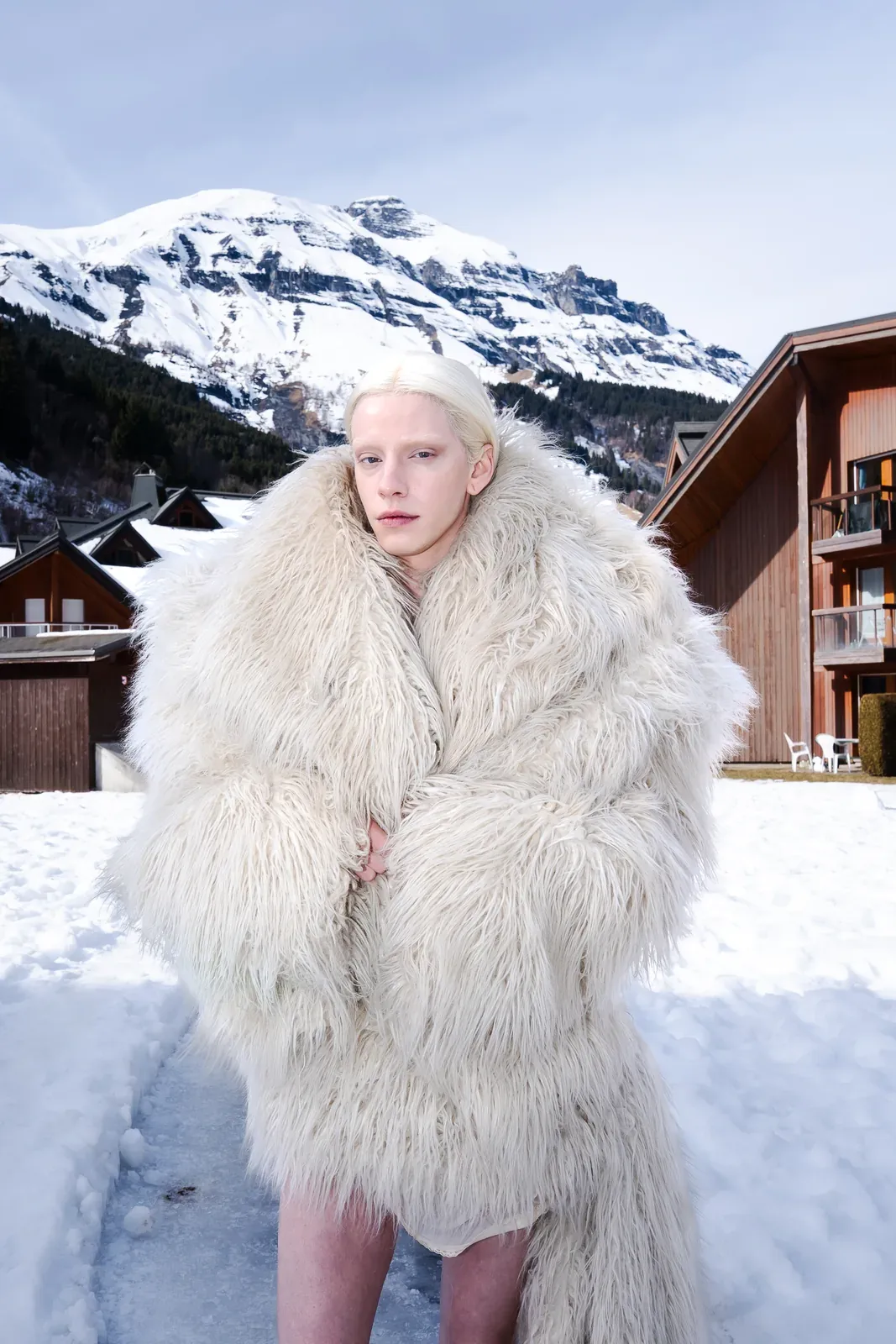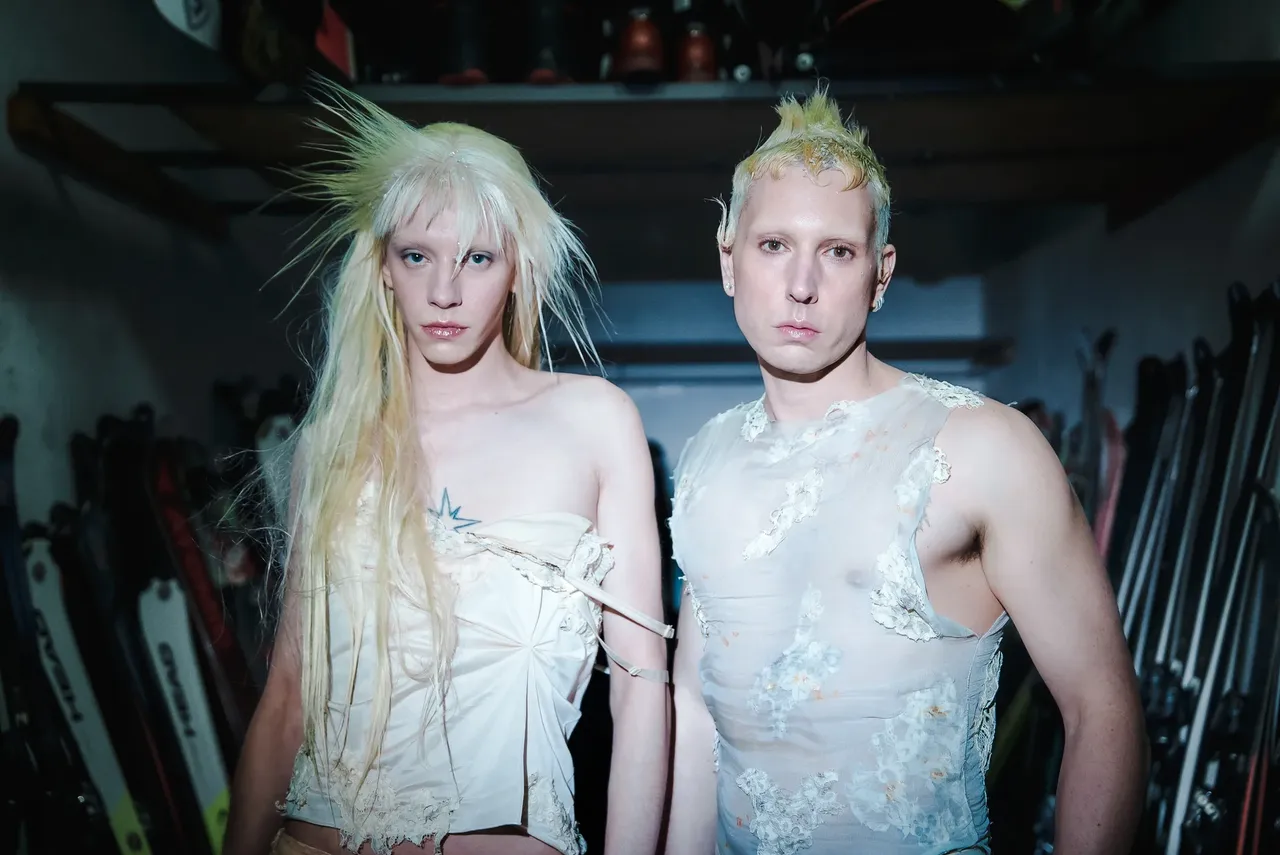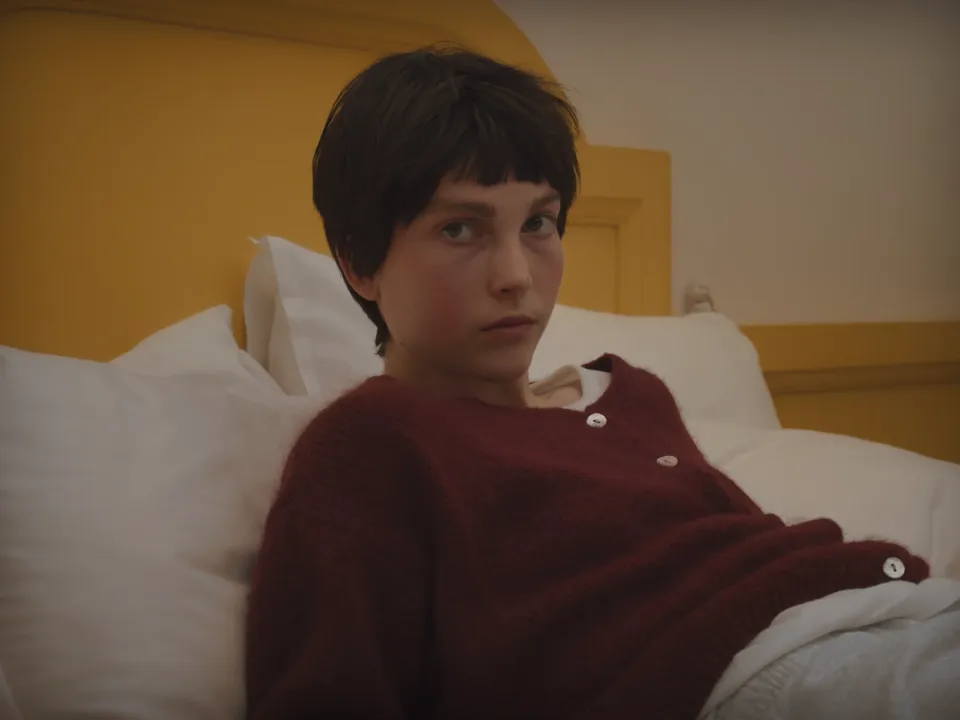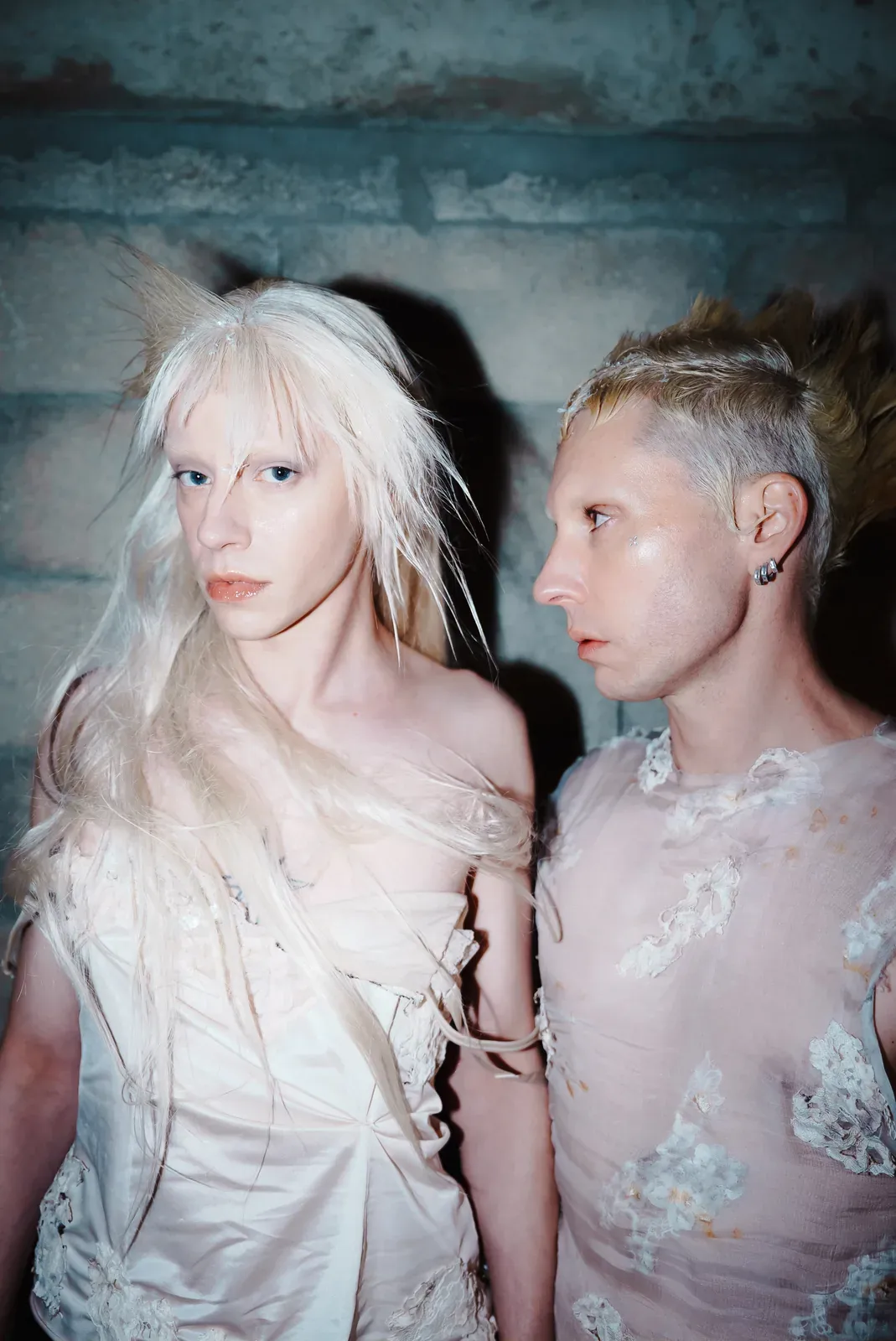
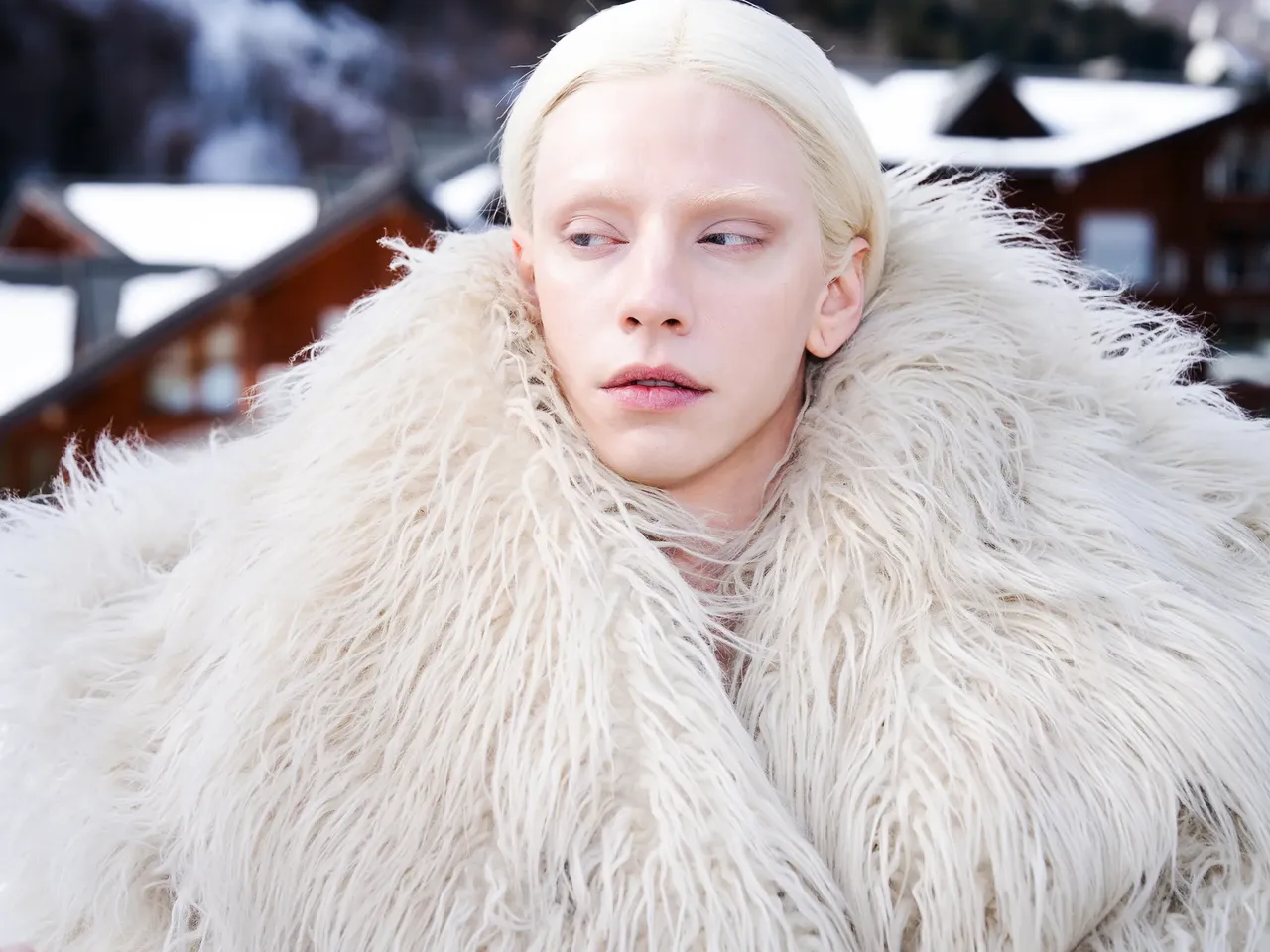
The official video for Jetski has just been released, marking a new chapter for Promis3. Directed by Naïla Guiguet, aka Parfait, and produced by PREMIER CRI, the project moves between Paris and the French Alps, following a narrative shaped by tension, rejection, and transformation. With Camille Cottin at its centre and styling by Nikita Vlassenko, it builds a world that gradually slips out of control.
Introduced through screenings and parties just days ago, including a moment at Silencio (Paris) that felt almost surreal, the project has already started to exist beyond the screen. As they put it, what happened there felt like “the video leaking into real life,” with different worlds colliding in a way that echoed the film itself. That same tension runs through Jetski, where controlled environments give way to something more instinctive and exposed.
After our first conversation with Promis3 in 2021, the shift is hard to ignore, even for them. “We did, however, not imagine Promis3 becoming the way it turned out to be, though, because we were still growing and evolving so much at that point.” What once leaned towards something more atmospheric has moved into a sharper, more physical space — “Promis3 has become a bit more fast paced, aggressive and bold.” Jetski sits right at that intersection, returning to melody while holding onto the intensity that has shaped their recent work.
When we last spoke with you, Promis3 was still in its early days. Looking back now, how do you remember that moment in your lives and careers?
It feels strange because the contrast is so big yet it doesn’t feel that long ago. The lifestyle is so fast that time flies twice as fast as it seems. We remember feeling very excited for all the things that were possibly about to come into our lives if we went all in for this career. We did, however, not imagine Promis3 becoming the way it turned out to be, though, because we were still growing and evolving so much at that point.
Back then, you described your sound as “futuristic pop with a touch of nostalgia and melancholy.” Does that definition still resonate with you today?
The intention still fits that description, although the output is a bit different because we cater more towards a club sound than what we were doing in the beginning. The nostalgia, and melancholy in particular, is what we still take with us into production and writing since we just love classics. But futuristic pop is the part that maybe for right now doesn’t really resonate that strongly anymore. Promis3 has become a bit more fast paced, aggressive and bold rather than floaty, futuristic or poppy.
Your 2022 EP, Atlantis, felt like one of the first moments where the identity of Promis3 really started to take shape. When you think back to that release now, what’s the first thing that comes to mind?
A slight feeling of envy, to be honest. This, to us, was the visual peak era of Promis3, which we kinda want to get back to. It was a matter of the right people at the right time coming together to create magic.
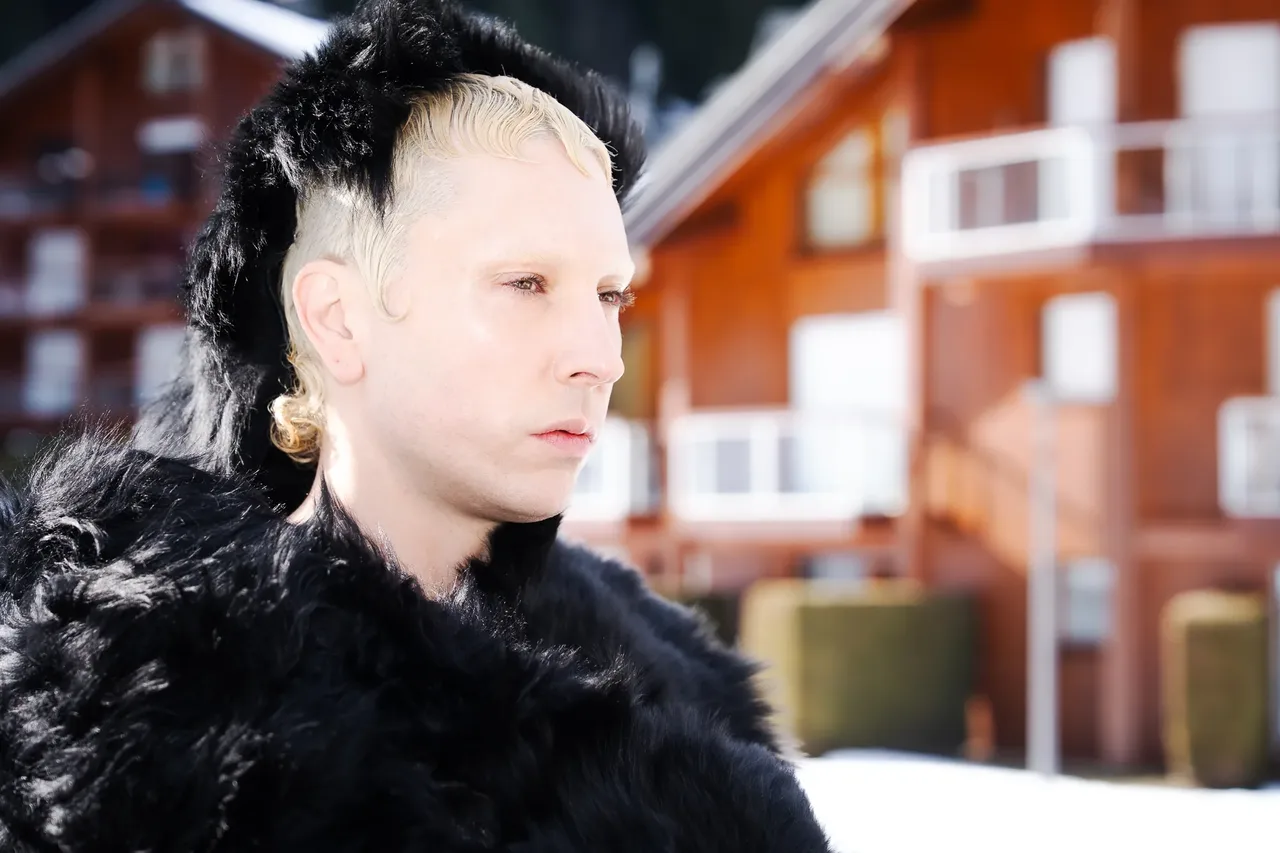
In our previous conversation, you mentioned how visual ideas often guided your music — imagining images, colours, or atmospheres first and then translating them into sound. Has that process changed much since then? What tends to guide your creative decisions now?
Brent: I think the process has changed more in the way we work together. Since we are on tour so much, it is often nice to be creative apart, meaning that Andras could create music at his studio while I could be building concept docs for the next release, for example. I’m personally still a very visually intuitive person when it comes to Promis3 because that’s where my main love exists. So when I get a demo sent to create top lines, I still see the music before I start singing. The production demo gives me a first glimpse of what it could become.
Andras: For me, the process also became more influenced by our shows and club sets, to pay more attention to how a track would work in club and live settings, arrangement and production-wise. Also, collaborating with other artists gave me a new spark. We’ve been working with Zorza on an upcoming EP, which was really fun and inspiring.
Andras: For me, the process also became more influenced by our shows and club sets, to pay more attention to how a track would work in club and live settings, arrangement and production-wise. Also, collaborating with other artists gave me a new spark. We’ve been working with Zorza on an upcoming EP, which was really fun and inspiring.
Fast forward to 2025 and the CLUBTOOLS EP, which leans more directly into club culture with tracks like I’m Blue (Da Ba Dee) and Ça Plane Pour Moi. What pushed you in that direction? And while working on that EP, did you discover anything new about yourselves or about the way you work together?
CLUBTOOLS is essentially a collection of tracks we developed for our live shows and sets. Many are reinterpretations of club classics that shaped us, like I’m Blue, while Ça Plane Pour Moi was different. It’s originally a Belgian punk classic and we made a Promis3 version for Dour Festival as the closing track for our show. The response was so incredible that releasing it felt natural.
Not long after that came the Clubslut EP, which feels darker and a bit more confrontational in tone. What were you exploring with that release?
We were exploring our personal edge. Over the past few years, we have toured clubs all around the world, where, as you can imagine, you’re confronted with a lot of grime and grit. That grime also seeped into our music more and more, resulting in a more dark/harsh exploration of our sound. I wouldn’t say this is our new sound, but more like a club EP that captures this era of our life.
“We love the mystique and otherworldly energy that musicians used to have before the social media bang.”
Then the Clubslut RMX EP followed barely a month later. What prompted you to revisit the project so soon and invite other producers into that world? And what was it like hearing other artists reinterpret your work like that?
Because it was conceived from the inspiration of clubs and born to be for the clubs, we wanted to include the community and expand the possibilities of the music. We looked for artists we love that carry that same club edge and who even inspire us along the way to keep evolving. It is inspiring to get a different perspective on one of your own tracks. It feels like a conversation in a way where you pick up info, learn and apply it later.
Remix culture has always been deeply tied to club communities. Did working on that EP change the way you think about the life of your tracks once they leave the studio?
Definitely! It’s really cool to see how artists that we really adore, like Paul Seul (from Ascendant Vierge), Zorza or Maniken05 reinterpret these tracks, how they approach arrangement, sound design, samples, energy for their own scenes, etc. It’s always super insightful and pushes us further.
Your new single, Jetski, introduces yet another shift in energy. What was the starting point for that track?
Andras: After the Clubslut EP, people were wondering if we were moving fully into that spoken club sound, and Jetski is kind of our answer to that. It goes back to something more melodic and vocal-driven, closer to our earlier sound, with shifts inside it like the hardstyle section and the electro ending.
Brent: At the same time, the starting point was also an old demo of one of my good friends who never really pursued music but made some tunes for fun. One day, he sent me this track about a jetski and I loved it so much that years later, I asked if I could make my own version. There’s something about that word that feels so nostalgic and visual, prompting me to use it for this track.
Brent: At the same time, the starting point was also an old demo of one of my good friends who never really pursued music but made some tunes for fun. One day, he sent me this track about a jetski and I loved it so much that years later, I asked if I could make my own version. There’s something about that word that feels so nostalgic and visual, prompting me to use it for this track.
The music video takes things even further visually. What was the first idea that sparked the narrative behind the film?
The first thing, obviously, was the word ‘jetski’ triggering a storm of ideas in our minds. We shared a concept board with different storylines and showed this to Naïla to give her an idea of the visual intensity we were looking for. She then analysed everything, picked some parts she liked and wrote them into a story. The first idea was to create this kind of hybrid half jetski, half human being, and from then things went from a jetski to a snow scooter, and eventually we decided on this monster becoming half ski, half human.
Your work often involves a very high level of production. In a landscape where something quick and spontaneous, like a simple lip-sync tiktok video, can sometimes travel further than something you’ve spent months developing, how do you deal with that contrast? Do you ever feel pressure to simplify what you do for the algorithm?
We struggle with it since art is such a big part of the music for us. The fast-paced, low-effort content can have a soul-sucking effect because it is also more time-consuming than most people think. It’s all just a matter of balancing things. We will never be the ‘hey, check out how I made this song’ people, but we try to open up to the idea of showing a more real look into who we are as a person. We love the mystique and otherworldly energy that musicians used to have before the social media bang.
The story unfolds between Maxim’s in Paris and the French Alps, which are two very different worlds. Why those locations?
We treated them almost like two artificial worlds. Maxim’s became this fictional ski chalet that is something ultra-elite, almost absurd. It’s this late 1800s Parisian decor placed in a mountain context, which already feels slightly off. It’s beautiful, but in the film it turns into something suffocating. A closed environment where everything is coded and controlled.
Then the Alps do the opposite. It opens everything up: no structure, no rules, just exposure. There’s a clear reversal between the two. In Maxim’s, we’re the ones being perceived as out of place. Outside, that energy flips. We stop trying to belong and start roaming free in this open landscape. Although Maxim’s is a gorgeous-looking place, in the video it is home to the ugly, monstrous people inside this story. In the end, we are free but we’ve become the monster, kinda like becoming possessed by hate.
Then the Alps do the opposite. It opens everything up: no structure, no rules, just exposure. There’s a clear reversal between the two. In Maxim’s, we’re the ones being perceived as out of place. Outside, that energy flips. We stop trying to belong and start roaming free in this open landscape. Although Maxim’s is a gorgeous-looking place, in the video it is home to the ugly, monstrous people inside this story. In the end, we are free but we’ve become the monster, kinda like becoming possessed by hate.
You worked with Parfait as director and with the production studio PREMIER CRI. How did that collaboration come about?
It came through Naïla’s desire to return to film. She’s been deep into DJing and touring for years, but cinema was her starting point. This project was a way for her to reconnect with that in a format that allowed more immediacy. Through CDLF, we were already close, but what made this click is that our project is very performative: vocals, presence, characters. A lot of artists on the label are more club focused, so for a narrative video it made sense to work with us.
PREMIER CRI was a big moment for us. They’ve worked with artists and brands we genuinely look up to: Danny L Harle, Sega Bodega, and fashion brands like Mugler or Matières Fécales. When we heard they were involved, it felt a bit unreal. It immediately gave the project a different scale.
PREMIER CRI was a big moment for us. They’ve worked with artists and brands we genuinely look up to: Danny L Harle, Sega Bodega, and fashion brands like Mugler or Matières Fécales. When we heard they were involved, it felt a bit unreal. It immediately gave the project a different scale.
Camille Cottin also appears in the video, an actress many people know from films like House of Gucci and Killing Eve. How did she end up being part of the project?
Camille and Naïla are quite close, and Jetski felt like a natural first collaboration between them, something quite free, without too much pressure. What made it work for this project is that her presence brings a very specific kind of tension. She’s instantly recognisable but she doesn’t overpower the film. We feel very lucky to have worked with her on this!
You also introduced the project through events in Paris and Antwerp, including a screening and party at Silencio, David Lynch’s venue. Was there a particular moment during the screening or the performances that stayed with you?
The screening at Silencio was quite striking. The club design is incredible with a movie theatre inside, and seeing the film in that context, a space that already has a strong cinematic identity, changed the perception of it. It stopped being just a music video and started to function more like a short film, with a collective attention that you don’t usually get in club settings.
Something quite funny happened at Silencio. After the screening, which was mostly people from our scene, the club opened up to its regular crowd. Suddenly, you had this mix of people in suits, champagne bottles, a very polished, almost exclusive atmosphere. It genuinely felt like the video leaking into real life. Apparently it was the first time they had a techno party there! We were laughing about it because the same tension we built in the film, that clash between worlds, was happening around us in real time. It wasn’t staged but it mirrored the story almost too perfectly. That moment stayed with us more than anything.
Something quite funny happened at Silencio. After the screening, which was mostly people from our scene, the club opened up to its regular crowd. Suddenly, you had this mix of people in suits, champagne bottles, a very polished, almost exclusive atmosphere. It genuinely felt like the video leaking into real life. Apparently it was the first time they had a techno party there! We were laughing about it because the same tension we built in the film, that clash between worlds, was happening around us in real time. It wasn’t staged but it mirrored the story almost too perfectly. That moment stayed with us more than anything.
If you could somehow go back and speak to your 2020 selves, what would you tell them now?
Be prepared that the industry will be exciting at time but also pretty heavy — it’s the heavy moments you just need to keep pushing through.
Finally, what advice would you give to any artist who’s just starting out?
Andras: Give it everything you got and don’t forget to have fun while doing it, try to bring something different to an already crowded scene and think creatively. We made so many things work by thinking outside the box!
Brent: I would say that it is important to realise what this career is actually like. It’s not just about being creative and expressive; it requires a lot of mental strength, a lot of patience, a strong will, and so on. There are so many things to do and so little time, but if you learn to accept the chaos and roll with the waves, you should be good.
Brent: I would say that it is important to realise what this career is actually like. It’s not just about being creative and expressive; it requires a lot of mental strength, a lot of patience, a strong will, and so on. There are so many things to do and so little time, but if you learn to accept the chaos and roll with the waves, you should be good.