Priscilla Delgado was born with a clear calling that, from childhood, led her towards acting. A star she has honoured with the honesty and ease that define her art. Despite her youth, her career is already marked by challenges, memorable roles, work with iconic directors, and a recent international breakthrough. In Priscilla, we glimpse the profound love and genuine curiosity of an artist who wants to embrace everything that is complex, vital, and deep in her profession. Priscilla doesn’t wait for opportunities to come her way; she finds them, guided by intuition and a constant need to go further.
This interview is taken from Issue 53 and adapted for our digital platform. Order your print copy here.
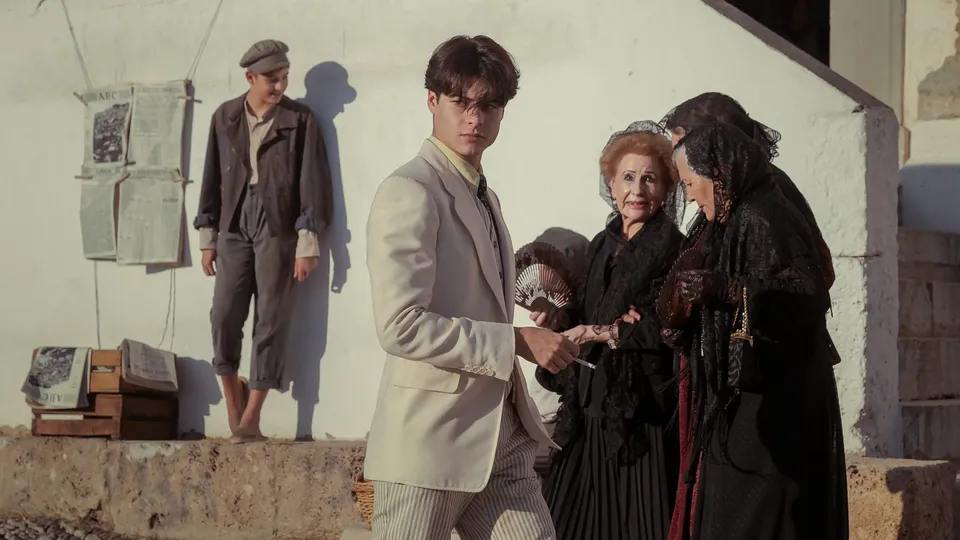
In “Los protegidos,” one of her first works, I came across a sweet and tender Priscilla who moved on set as naturally as a child at play. That’s something special about her: in every project, there’s a sense of harmony, of attunement with the space and the team. Whether it’s a major international production alongside Tom Hanks or a film by Almodóvar himself, she is always exactly where she needs to be.
Now, with the courage of someone stepping into a super-production alongside stars such as Zendaya, Priscilla joins the new cast of “Euphoria.” She takes on the huge responsibility that comes with it, yet she does so with both the vulnerability and awareness that define her. Nothing makes me happier than having the privilege to watch her grow, become, transform into every possible story.
You’ve been acting since you were very young. Was it a clear vocation from the start, or something that happened more casually, for example after a casting or out of a child’s curiosity?
I’ve always been completely sure about it. I wouldn’t say I was born with that clarity, knowing this was my vocation. There wasn’t a specific moment when I realised it or when I watched a film and thought, this is what I want to do. No, it all came very naturally to me, from early on — like being born with a little star. Even though I was still losing my baby teeth, practically a newborn, I had already asked my parents to let me act. When you’re a child, it’s normal to want to make films, right? I want to be on TV, I want to be in movies, I want to do things. But it was natural, something that developed organically and, above all, it was always a wish my family understood.
That’s great that your parents listened to you, right? Most of the time, people don’t take their child’s wishes seriously.
Yes, I was lucky. My parents always understood that being a child, I firstly had to keep up with my studies. But thank God they listened and always took my aspirations and opinions into account. We were born into a different time. When I think of the generations before us, being an actress was much harder. Maybe not stigmatised exactly, but it wasn’t always seen as a respectable profession. I’m talking about, for example, Marisa Paredes’ era.
Of course.
Yes. Now we’ve arrived at a much more positive point in time.
For women in general, yes. Since you’ve mentioned Marisa Paredes, I wanted to ask about your experience filming “Julieta” with Almodóvar. The Almodóvar women have always inspired me — that blend of madness, sadness, vulnerability, yet being so strong and brilliant at the same time. How was your experience, and which character from his filmography would you have liked to play?
My introduction to Almodóvar’s cinema was a little premature, especially considering the dramatic and narrative weight of his films. I remember watching “Talk to Her” when I was nine, secretly, in my room. I was in shock. I couldn’t believe the level of storytelling and excellence that could be achieved. The story was intense, the colours, the music, everything left a mark. Even though the audition for “Julieta” came a few years later, when I was twelve, the dream of working with Pedro had already begun when I saw that film.
When I got the chance to play a character in an Almodóvar film at such a young age, which is funny because his women are usually adults, I saw it as something I simply couldn’t turn down. I had to be there! I remember doing a very dramatic audition, full of tears. Even though I was little, my determination to be part of the project was crystal clear. And which character would I have liked to play? Honestly, the female roles in Almodóvar’s films are irreplaceable.
When I got the chance to play a character in an Almodóvar film at such a young age, which is funny because his women are usually adults, I saw it as something I simply couldn’t turn down. I had to be there! I remember doing a very dramatic audition, full of tears. Even though I was little, my determination to be part of the project was crystal clear. And which character would I have liked to play? Honestly, the female roles in Almodóvar’s films are irreplaceable.
Totally.
It’s not that I wish I’d played them, but I’ve always been fascinated by Victoria Abril in “Kika.” But then again… how could I not say Penélope Cruz in “Volver,” right?
Andrea Scarface, in that Jean Paul Gaultier outfit, wow.
Exactly, that Jean Paul Gaultier outfit, that character just blew my mind. Let’s leave it at that.
You’re living in the US now. I don’t know if permanently or between there and Spain, but I wanted to ask what made you decide to move and how it’s been for you. To me, the US feels like a place of speed, hostility, and strong individualism. How have you felt there, and how has the experience been? Migration is never easy, especially with the culture shock of leaving here.
Totally, you’ve described it perfectly. Our culture has such a strong identity, like those Almodóvar characters, truly inimitable, that it’s hard to find that same essence elsewhere. Maybe in some Latin American countries you feel a similar warmth, but the US is very different from what we experience here. As a Madrilenian, I think Madrid is one of the most special cities in Spain. My arrival was in Orange County, not Los Angeles straight away, where I finished my last year of high school. Since I was little, I’d felt an inner need to explore other places and understand how the world worked in the US. I’ve always been fascinated by American culture and Hollywood cinema, so it was a big opportunity to go and discover it firsthand. But despite the excitement, it was a difficult change. It’s understandable, and I’m not the first to say this, that when you move away from home, it’s starting from scratch: friendships, everything you’ve spent your life building, even small things like learning to do your own shopping or open a bank account. And, above all, speaking a language that isn’t your own. I’ve always been very controlling, and suddenly I felt small, as if I might come across as dumb because of the language barrier.
Yes, totally because of the language.
Exactly. That really got to me. That feeling of, God, I sound stupid.
Sofía Vergara says that in “Modern Family:” “Do you even know how smart I am in Spanish?”
Exactly! There’s no better way to put it, that’s how I felt.
As I said, I associate the United States with speed, hostility, and individualism. I wanted to ask you about those places of tenderness, of care, where you take refuge. It could be coming back to Madrid and going to a particular place, being with certain people, or even in Los Angeles, putting on Cine de Barrio to reconnect with that.
Yes, when I come back to Madrid, it helps me to revisit all the places. When you walk through the streets as a Madrilenian, you can give meaning to every corner, because something has happened there — and that’s incredible. It’s a bit like music, which takes you back to a moment as soon as you hear it. What helps me to reconnect with those tender places, with that tenderness, is coming back to the people I’ve known all my life, being with my family, with those friends I’ve had for years. Going back to the same places, going to the Temple of Debod to have a cigarette while I watch the sunset, those kinds of things. And going to the cinema. My go-to cinema, the one near my house, is Cines Princesa, where they show films in their original version. That’s when I truly come back and suddenly I remember going to the cinema when I was really young, and how my life has changed since then, revisiting the same places but under different circumstances.
Of course, being a different person, cool. And do you ever have moments of anger, frustration, confusion, of feeling out of place, because you’re working in a country that isn’t your own? Sometimes I feel super productive because I’m working nonstop, and then I realise I’m actually angry — it takes a toll. Have you experienced moments of rage, at your limit?
Yes. I like that you’re asking me this, because honestly, older people don’t usually understand these things, and since we’re more or less the same age, we understand each other better. You need an incredible amount of willpower to endure the instability that comes with being an artist. It’s hard, especially when you’re young and still trying to find your place, and they don’t explain this enough in acting school. So of course I have moments of anger, of fear — and more than people might imagine — because the challenges are huge. For example, finding yourself in a production as enormous as the latest one I’m working on, “Euphoria.” What helps me the most is staying in constant touch with my family, who are with me throughout the whole process, and trying not to lose my mind, taking things step by step, doing what I can, little by little.
Does setting a routine help you too?
Yes, finding some kind of routine does. The thing is, you start one, and suddenly you have to go to a set and destroy it completely to give yourself fully to whatever is being asked of you. But, I’m figuring it out little by little. I don’t know how you manage it, but I’m working on it.
Well, sometimes I handle my life better, sometimes worse. Right now, I’m a bit all over the place, tomorrow, who knows.
Yes, it’s also a consequence of living in such a frantic world nowadays.
Yes, and the fact that you can’t stop.
You can’t stop. And you’re watching everyone’s process live and in real time on social media.
It’s overwhelming. One day you can’t even get out of bed, and suddenly you see everyone else doing a million things.
Of course, although the truth is that what you see on social media is sometimes only half, or even a quarter, of what reality is.
Especially for women, there’s this push to project a tougher image. As if femininity, everything to do with care, was somehow punished. We live in a very capitalist, rational world, where everything has to be justified, and emotions seem to have no place. How do you experience that side of things, how do you relate to it? Do you accept it, or feel the urge to hide it? Then again, you have a job where that exact thing is celebrated. There’s nothing better than getting to acting class, letting everything out, falling apart, and being told, “Wow, incredible!”
Honestly, I find great comfort in being able to take refuge in characters and stories that have nothing to do with me. It’s true that I’m still figuring out how to relate to the public sphere. But the place where I find my happiness and my comfort is, really, when I can take shelter in stories that aren’t my own. I’m only twenty-three, I’m still building mine. I don’t know if that answers your question.
“I find great comfort in being able to take refuge in characters and stories that have nothing to do with me.”
Well, I take it that you allow yourself to be more vulnerable through others than you do with yourself, maybe?
Totally. Plus, it’s a great act of vulnerability to be a public person and allow yourself to be vulnerable. It’s very brave but it’s risky too. That’s why I find it more beautiful, easier, and more comforting to do it through a story that isn’t mine. Although there’s always a link, after all, you’re the conduit through which the story and the character are told, but yes.
Have you listened to “Berghain” by Rosalía, the one that came out recently?
Oh, yes.
I really liked it because it touched on this theme of vulnerability. She says she’s like a lump of sugar that melts with heat, that sweetens what’s bitter. That she gives herself, gives love, but melts and loses herself in the giving. Does that idea resonate with you? That sometimes, as women, when we give ourselves to others, when we love and give, it drains us, it sinks us?
It happens to me. Sometimes I think, wow, how much energy I’ve given, how much I’ve yielded. She puts it beautifully, that lump of sugar melting in the coffee. It sweetens it, but disappears, leaving only the essence of the coffee. It happens to me too, sometimes I’m a bit of a good fool. I don’t know where to draw the line. I give everything without expecting anything in return. You need to learn. I don’t mean you need to learn to be bad, but rather to make sure that giving so much doesn’t leave you with nothing. Yes, it happens, but it’s a lifelong learning process, unfortunately. Learning not to give everything, to give, but with limits. I like giving without expecting anything in return and without even realising I’m giving. That’s how we should be.
That’s beautiful, I agree. I’m also more on the giving side than the receiving. But care always has to be mutual, right? Otherwise, it’s difficult.
That’s right, María.
And now that we’re on the topic, and taking advantage of the universe Rosalía has created with her album, I have a question about spirituality. In “Lux” there’s a lot of religious imagery. I’m very spiritual, I’m interested in religion, and in the US, which has huge religious diversity — not like Spain, where we’re deeply Catholic, our culture is Catholic. What’s your relationship with spirituality?
Spain is a Christian country and you can’t escape it. I’m struck when you travel and see those spectacular cathedrals or churches, because every town has its church. If you go out to the farmhouses, you see that they have their own altar of devotion, their own little church. I find Rosalía’s influence powerful, that she can make religious things fashionable.
Even among queer people and those who are a bit more dissident, which is the tricky part. Because making it fashionable among 80-year-olds is not the same.
Yes, totally, among those who listen to her music the most. Personally, I find it funny because someone asked me about this the other day. My family has always been religious, and I’ve always maintained that belief. I’ve had moments of questioning, which is normal in a believer’s path. But God has always been very present in my life, and that connects to your question about religion in the US.
I found it interesting. I think there’s more freedom there. You almost get to choose your religion, whereas in Spain, if you’re a believer, you’re automatically Christian. There’s flexibility to change churches there, and so many different types of temple or holy place. Religion isn’t seen as something static, it’s more multi-religious. But if it hasn’t influenced your life, that’s fine.
No, really, it’s fascinating to arrive somewhere with such multiculturalism, not just religiously. It’s a representation of what exists in the US. Of course, there need to be spaces for all the people who live there, hence all the branches of religion. It surprised me to see the number of options, not just religiously, but in every way, to represent the people who live there.
It has been helpful for me in moments of great uncertainty. I went to a Catholic school and I reject many things, the church as an institution, but it’s true that, for example, in my worst moments, thinking of the Virgin, praying to her, calms me a lot.
Yes, totally. Beyond what God means, I also have my Virgin, the Virgin of Chilla, which has a more powerful and transcendent significance than God himself, if I dare say so. It’s nice to put the image of a woman to that faith, to give it a face. God, you know, the conceived image is Jesus Christ, but giving your faith a face with the image of your town’s Virgin is encouraging.
I think the same. Let’s talk about “Euphoria,” okay? Congratulations, that’s amazing! How did it come into your life? The casting, how the offer reached you… And is the character you ended up playing the same one you originally auditioned for?
Honestly, it came like just another audition. As an actor, you’re used to receiving all kinds of material. Sometimes you feel more connected, sometimes less. It’s much harder to represent something that doesn’t resonate with you at all, that doesn’t stir you inside. And honestly, that’s what happens with most of the material you get. But it’s true that when the “Euphoria” material came to me, I spent much more time reading it, and inevitably the scene they shared moved me, a lot. For that reason, it was very easy for me to perform. Even though it was brief, with little material, what was happening was very well conveyed and written, very deep. I approached it with the greatest humility and understanding of the scene I could. I spent a lot of time preparing and understanding what was happening, because the material is limited for something with so much expectation, where they give you almost no information. With the little information I had, I tried to gather everything and give it back in a heartfelt way. The character I play is very specific, I went to a very particular place to buy the clothes, I prepared it well, even the nails, the makeup, everything.
“What I do in Euphoria has nothing to do with who I am as Priscilla; it’s purely fiction.”
Just for the casting?
Just for a test I recorded on my phone, not knowing if anyone would see it. But apparently, someone saw it and responded. Someone responded to that message. It was divine.
How cool! Damn, of course, you grew up with “Euphoria,” because when it premiered, you were a teenager.
When “Euphoria” came out, I was a kid. In fact, I remember I did the Maddy audition when I was sixteen. Honestly, I don’t know if they know, but I did that test, a very sad Maddy audition. It was impressive, you’ll remember when the series came out. It was a milestone, not just visually and narratively, but it came at a very specific time, just before Covid. It was something necessary, not just for our generation but for others too, to open conversations on many topics. To create more understanding about what it means to be a teenager. That transcends generations. When, suddenly, I saw the opportunity to join the project, I kicked the door really hard, to see if there was any way to open it.
Wow, and how did you feel when they told you yes, they wanted you in, you were starting to shoot?
Imagine it, just imagine it. You can’t believe it. You’ve spent your whole life preparing for this, since five or six years old, working, understanding how a set functions, learning the discipline of being on set surrounded by very professional, adult people. And, having prepared all your life, when the moment comes, you believe or understand that you’re ready
Of course, it’s a very established cast. Did you feel welcomed, or was it scary or more exciting to integrate?
Fear. No, honestly, not fear. I was completely ready to do it, I was…
Euphoric!
Yes, I was euphoric. But with a very rational, objective, and prepared attitude. Because sometimes euphoria can overwhelm you a bit. And these moments, you have to be focused and understand that this is a beloved and acclaimed project, which you have to approach with high standards. So, very focused and, above all, paying homage to what was being told — which is what has always mattered to me and what has transformed me as an actor and as a person: the story of my character, which I’ve insisted on defending and telling.
From the few pictures I’ve seen, the paparazzi shots, I see you in a character with a lot of strength. And I remember other projects, such as Esti in “A League of Their Own.”
Yes, which has nothing to do with this.
Exactly, I’ve seen you in softer roles, and now, suddenly, you’ve moved into a more adult, grittier narrative. I’d love to know how you’ve experienced that change.
That’s the truly exciting part of my profession. Being able to do something completely different from the previous role. That’s why it’s important to me, because I don’t know what would have happened if I had landed only in “Euphoria.” It relieves me that people can see I’m not just “Euphoria,” and that what I do is fiction. What I do in “Euphoria” has nothing to do with who I am as Priscilla; it’s purely fiction. I hope people understand that, because sometimes they can’t distinguish. That a character is just that.
Well, people love complex characters, I’m sure they appreciate it.
It’s been amazing, like seasoning, pure sauce, honestly, to step into this character’s shoes. It’s possibly the work I’ve enjoyed and loved the most in my life. And, as I said, it’s very satisfying to do something completely different from what came before, and that won’t have anything to do with what comes next either.
Of course, I’m so excited to see you there.
I understand that in Spain people also know me from “Los protegidos,” so it’s going to be different. It’s having seen me grow.
It’s going to be a shock.
Yes.
There are movies I love because they show that narrative of tenderness and vulnerability. For example, “Aftersun” I like because you can see that vulnerability on screen that we don’t usually see in everyday life. Men who stay silent, who suffer, who carry their emotions inside. It’s a very powerful engine for change. Can showing vulnerability on screen, especially today, serve as a catalyst for change?
I remember seeing “Aftersun” in the original version at Cine Princesa. I left quite moved. Such a simple film that doesn’t show pain explicitly, but in a silent way, which is much more heartbreaking. Sometimes we understand the implicit better than the explicit. For example, I say that a horror movie isn’t scary because of a jump scare, but when it keeps you in suspense. Normalising on screen what is normal in real life, that people carry their own grief and problems, is very helpful and encouraging. It’s important to understand that we’re all human and that sometimes, behind the glamour, there are people. That helps us come back to reality, more or less, I don’t know if I’m explaining myself.
“You need an incredible amount of willpower to endure the instability that comes with being an artist.”
Yes, you’ve explained it perfectly. And which movie would you say you watch and imagine: this could change someone?
One that comes to mind, which is completely different, is “Past Lives.” It’s very simple. Extremely simple, but it speaks about the possibilities of life. How sometimes we meet someone we could be with forever, but in the end, it doesn’t happen. And that’s something I’m understanding. The concept of relationships in our generation today is very volatile.
Do people not value what’s special? It’s not considered the way it used to be?
Maybe not. I don’t know. Maybe there’s always that feeling behind us of expecting something…
Something more.
I don’t know to what extent that can stay just as an idea and not become reality. But well, these are things we’re still learning. And we’ll see with life, because these are also very important decisions: understanding who you want to ultimately become your family, and having someone who takes care of you when maybe you can’t take care of yourself. But that is hard, it’s a task. May God protect us and watch over us along the way, really.
Besides, it’s beautiful to stay close to friends, even with partners who have been important to you, and if someone was family one day, they continue being family. No matter how much time passes, the bond remains. It transforms, but love doesn’t end.
It’s very hard for love to fade, or it can be experienced with more or less intensity, but once love exists, it’s very hard to erase it or make it disappear. These are unforgettable things. But experiences make you stronger and teach you for next time.
I feel as if everything is always a clean slate. You might consider you’ve learned everything, and it’s a lie, the next time will always be different.
Exactly. It’s going to be totally different, totally new, totally crazy, and you’ll never be fully prepared. Inevitably, we’re a collection of everything we’ve experienced, and we carry it with us, even if we don’t understand it right away. For me, I sometimes think: how is it possible that I feel this is the first time all over again?
Of course, it’s about avoiding making the same mistakes repeatedly, yes, but everything is so unpredictable. When two worlds come together, what emerges is something unrepeatable. And now I wanted to ask: which stories attract you the most, and which directors or actors would you like to work with next?
Honestly, I don’t have a type of story. Sometimes it’s hard to feel surprised or captivated today. I don’t have a specific story I always turn to or like. I try to look for the origin of things and go through the classics little by little to understand who did it first, and from whom inspirations were drawn. Because there was always someone who did it first, and for me, it’s very important to understand that. I’m interested in stories with significance. I don’t care which ones.
And directors or actors you’d like to work with?
Oh, I have so many people in mind. The whole world. I’ll throw one out to see if it comes true, just to dream, right? I’d say Quentin Tarantino. I’d love to meet him and get to know him in person.
Oh, wow. I see you very much in that universe.
Yes, totally. I like those powerful directors, so why not? Just to dream.
Finally, what would you say to little Priscilla, who was just starting to act, not knowing all the changes and transformations she would experience?
Wow, what a question! You’re hitting me right in the heart. I’d tell her I hope she’s proud of herself. To be proud of what older Priscilla has accomplished, to try to be as happy as she can and not be so… I’ve never been hard on myself, but to stay present on the journey.
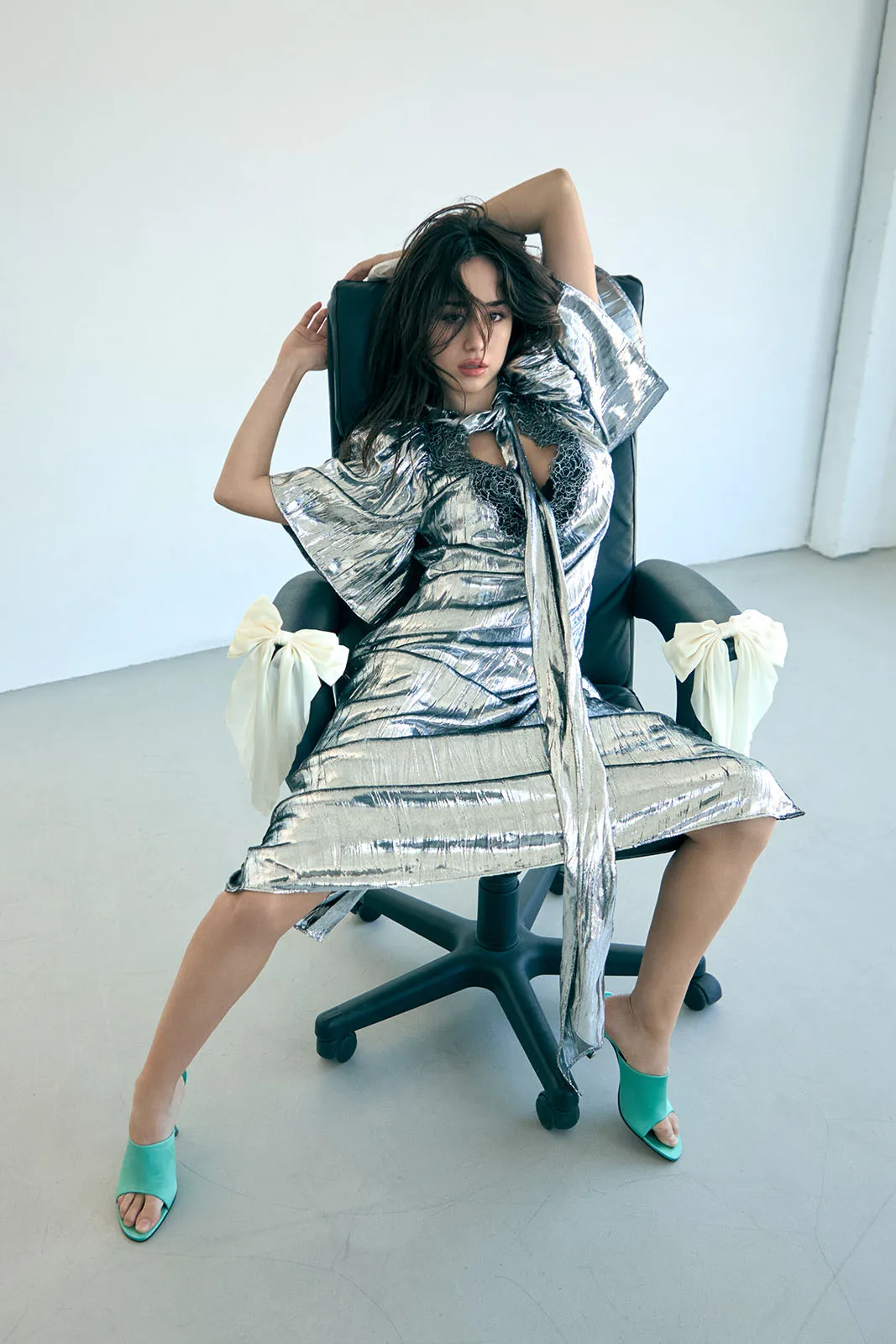
Full look GUCCI.
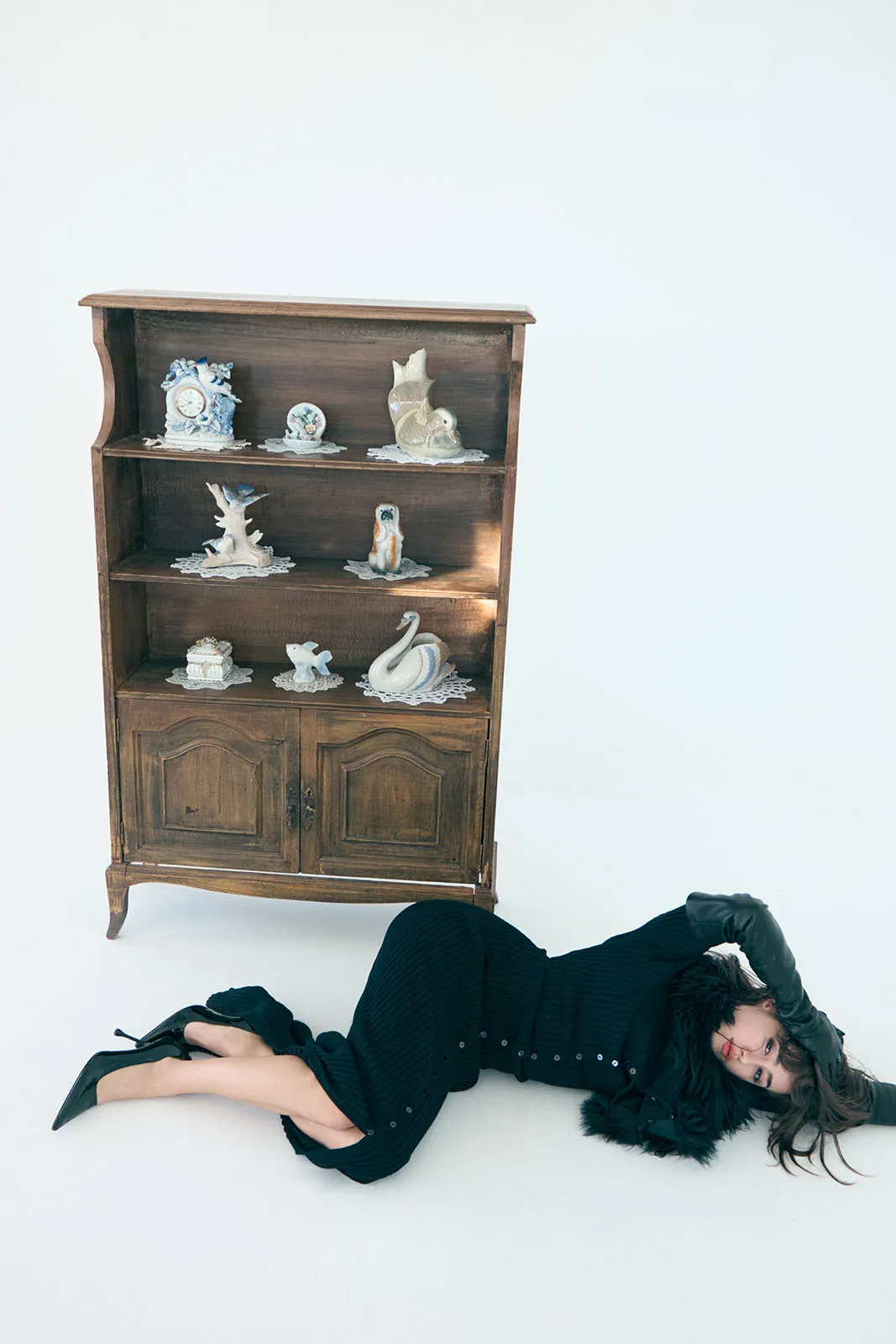
Dress BLUMARINE, gloves GIVENCHY BY SARAH BURTON, shoes JIMMY CHOO.
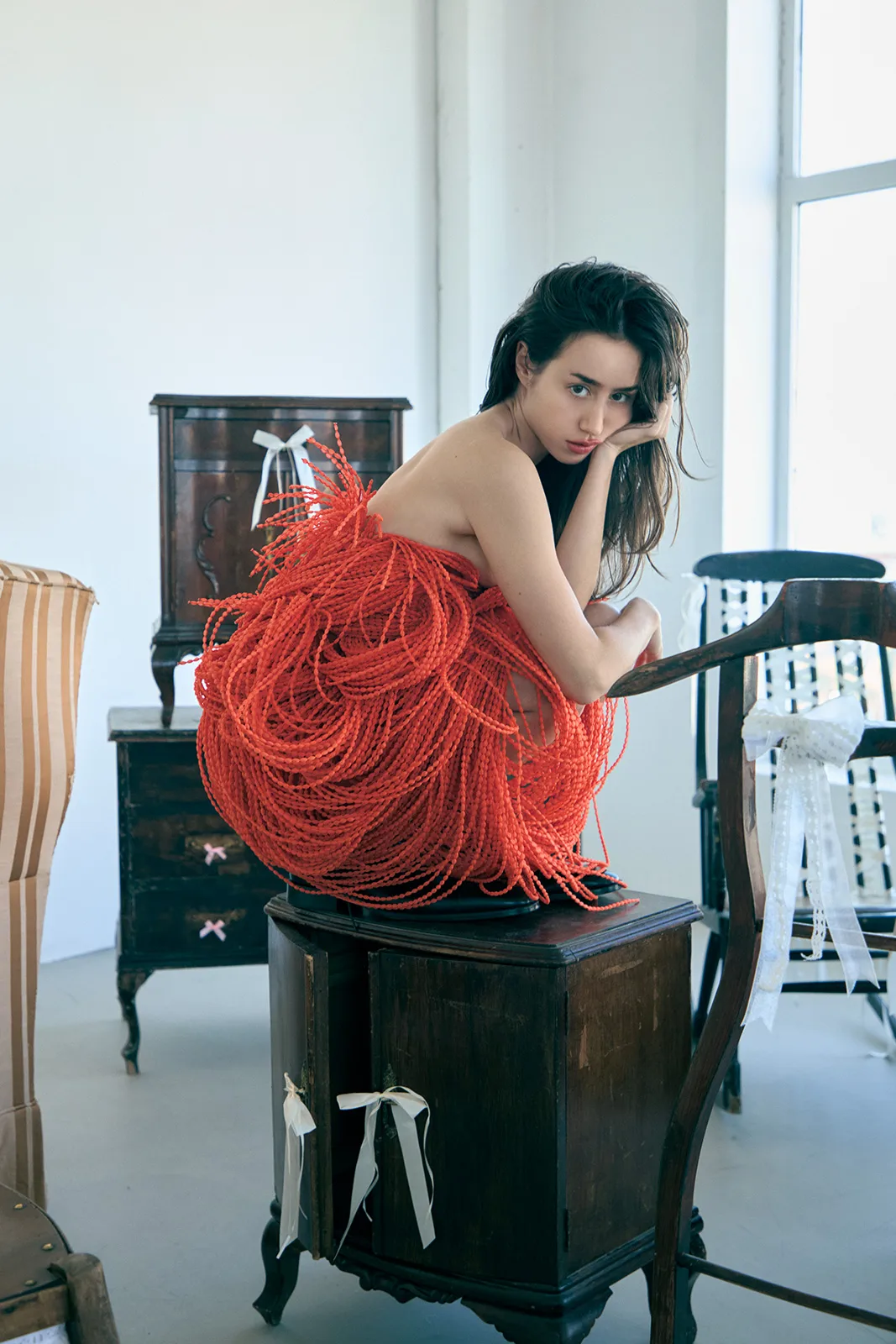
Full look LOEWE.
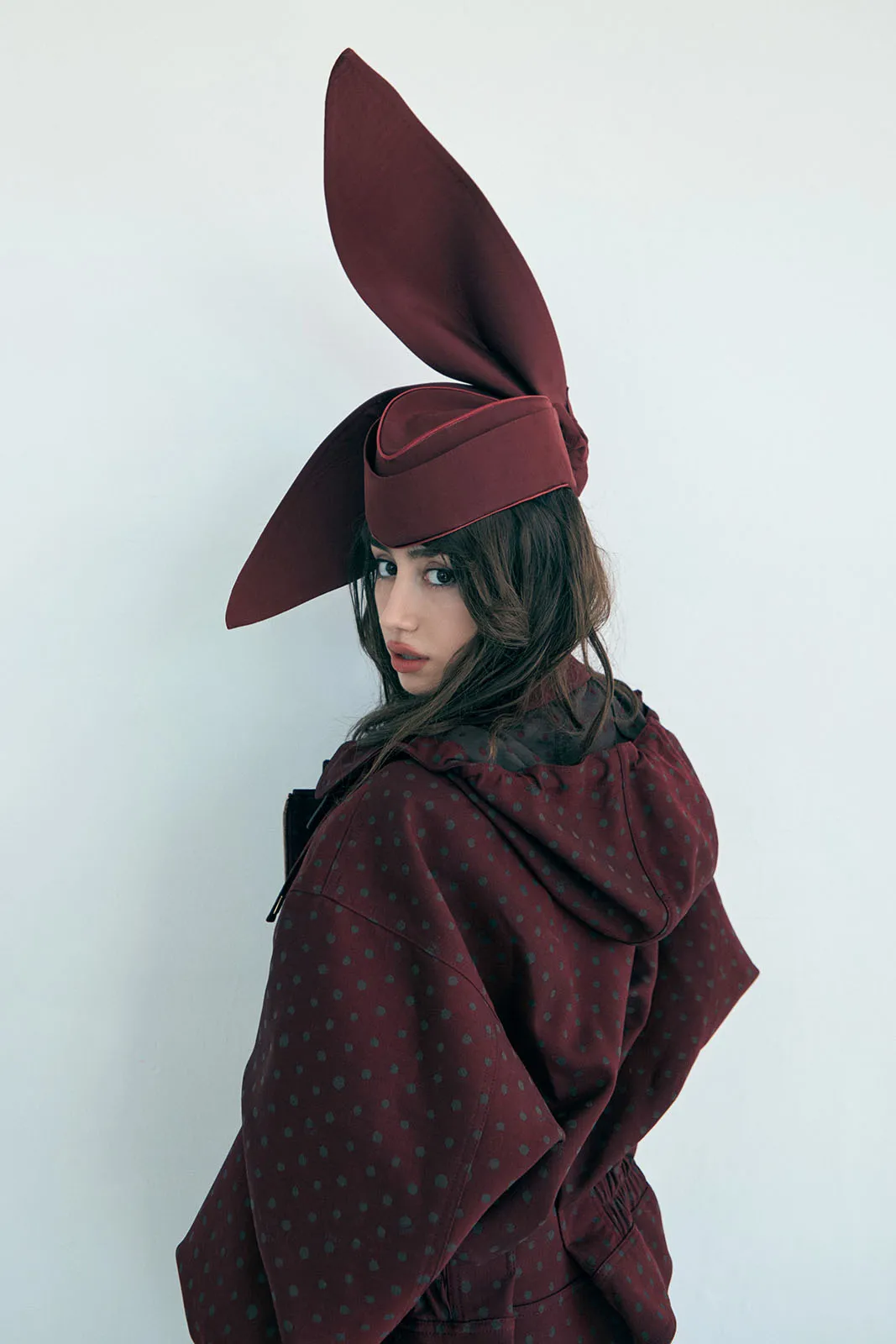
Jacket FENDI, hat PALOMO SPAIN.
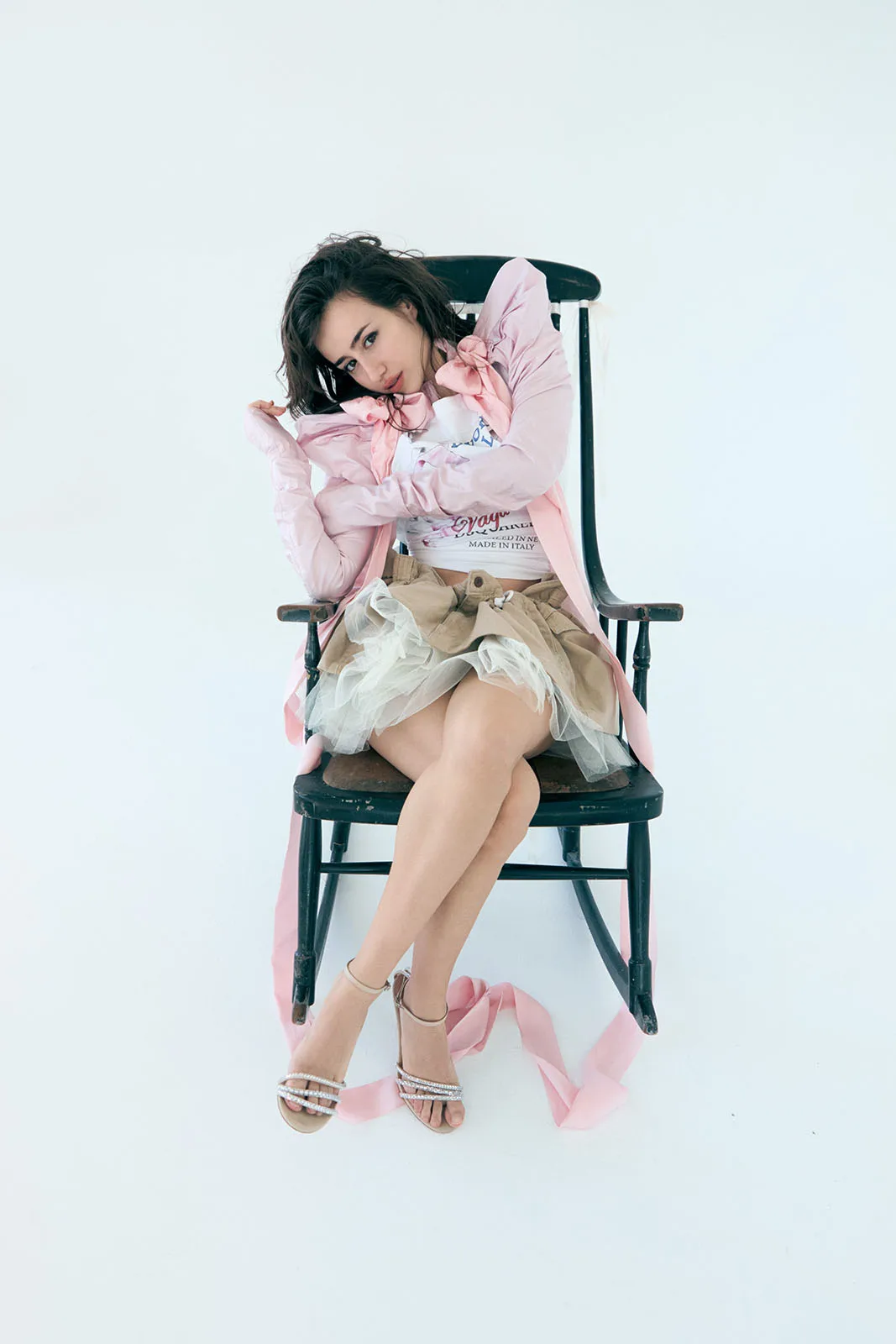
Top and shrug DSQUARED2, skirt AUGUST BARRON, sandals AQUAZZURA.
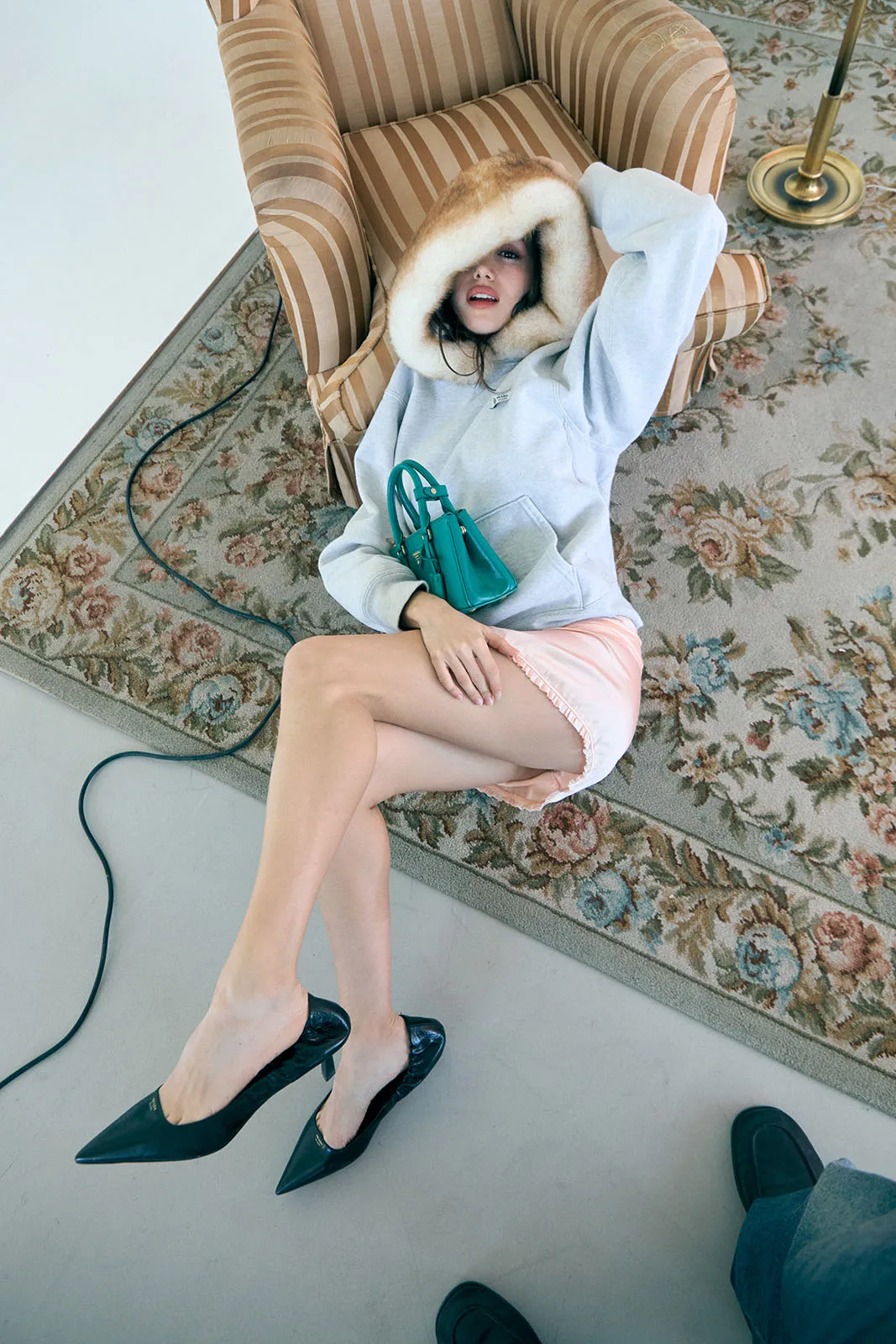
Full look PRADA.
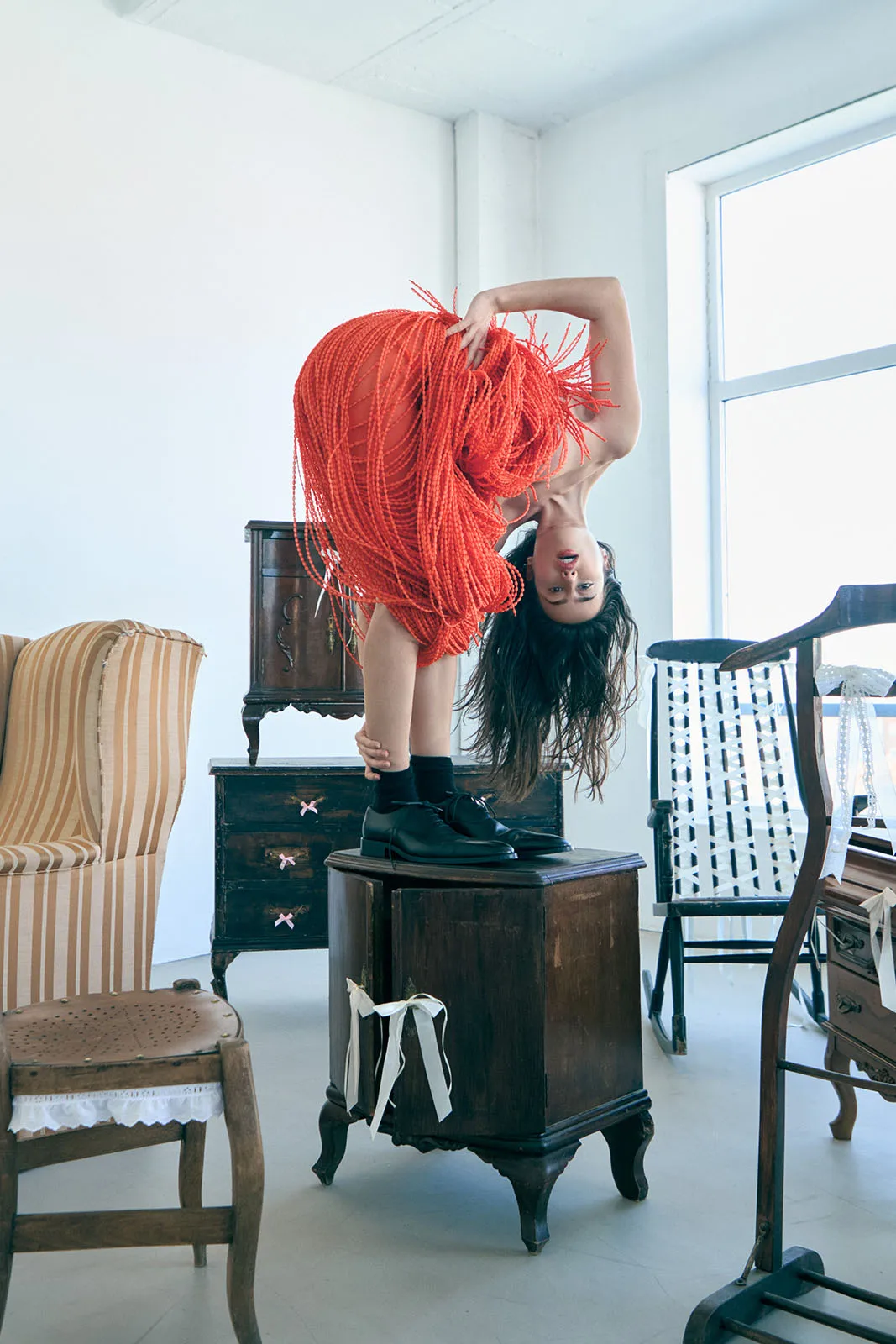
Full look LOEWE.
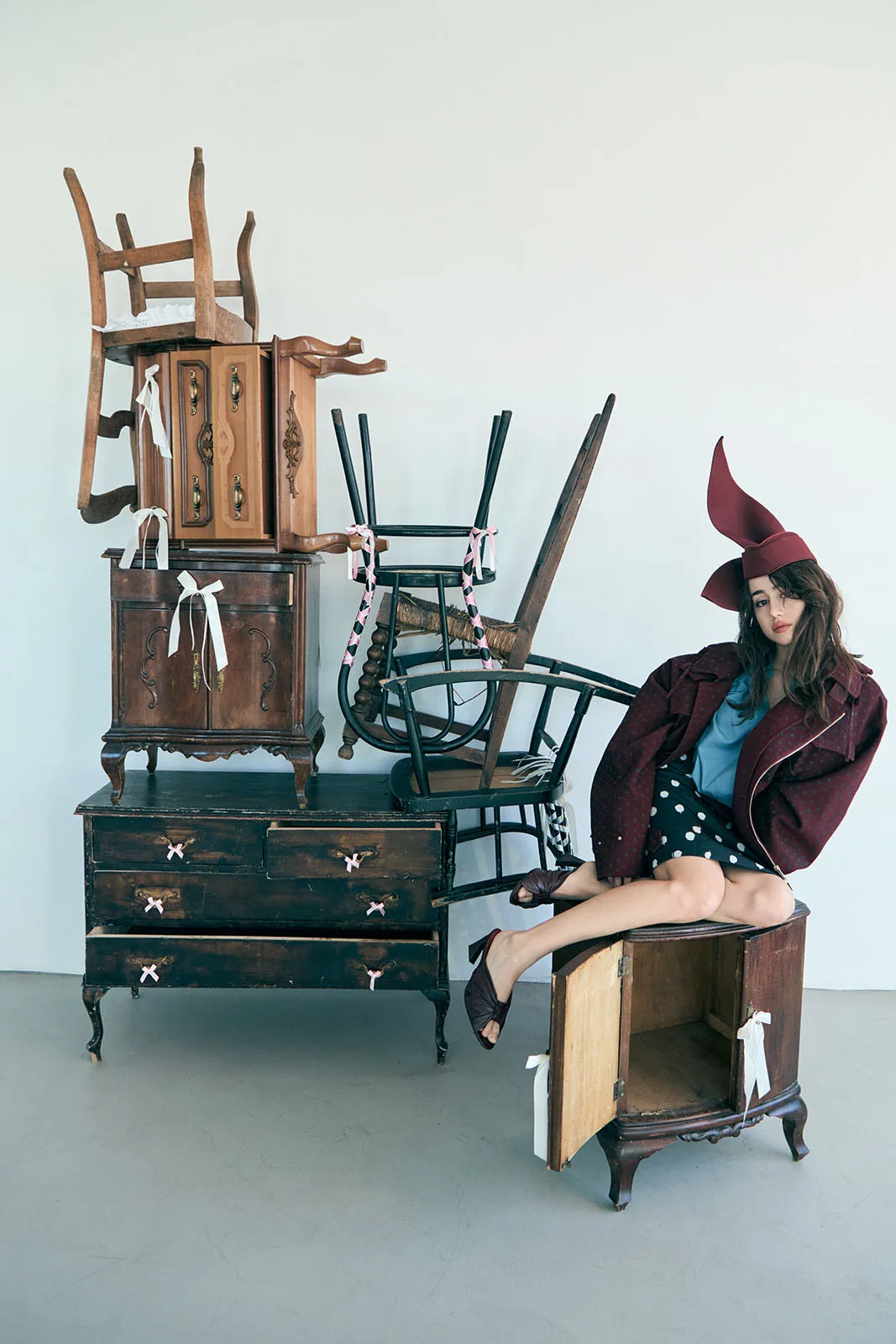
Jacket FENDI, hat PALOMO SPAIN.
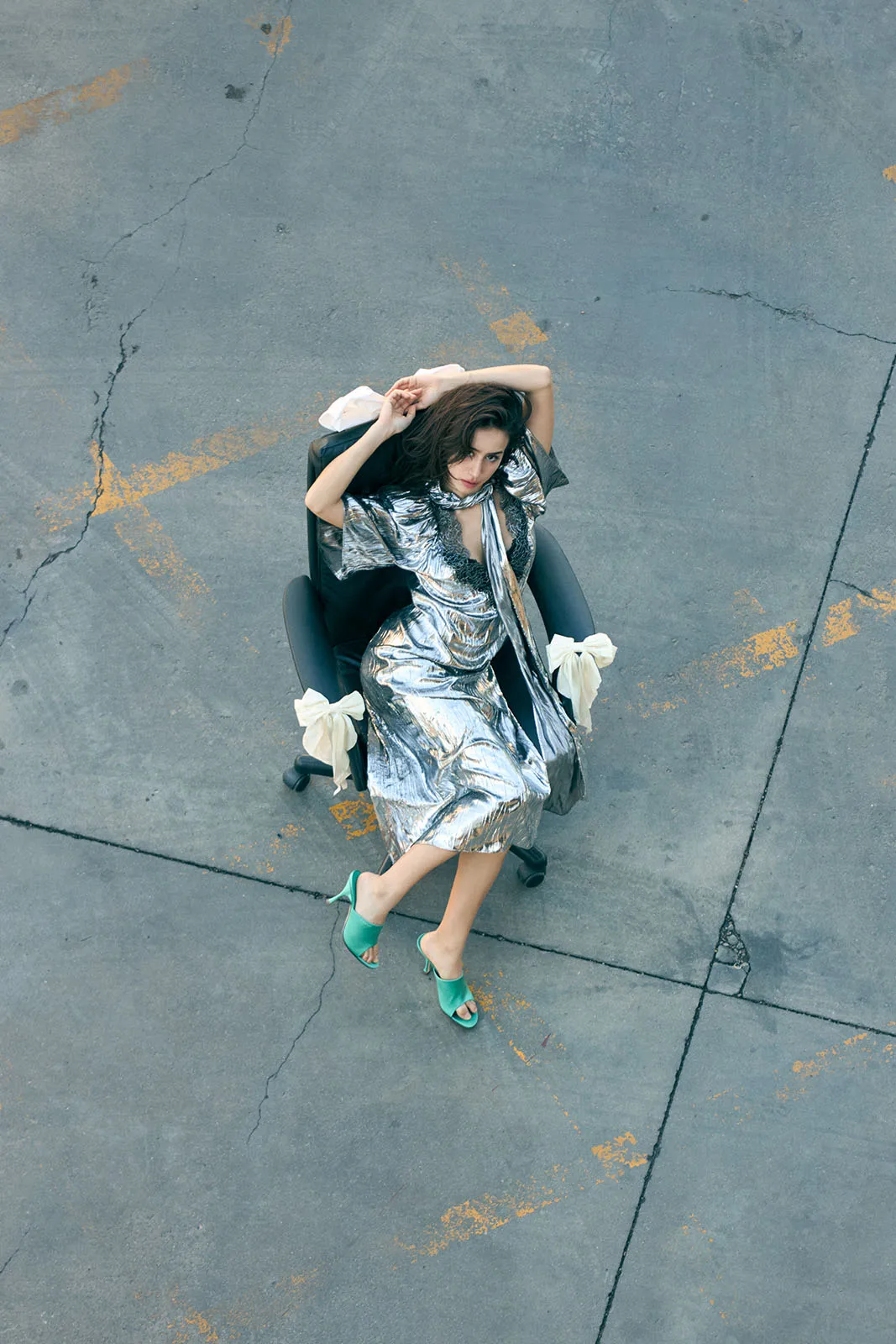
Full look GUCCI.
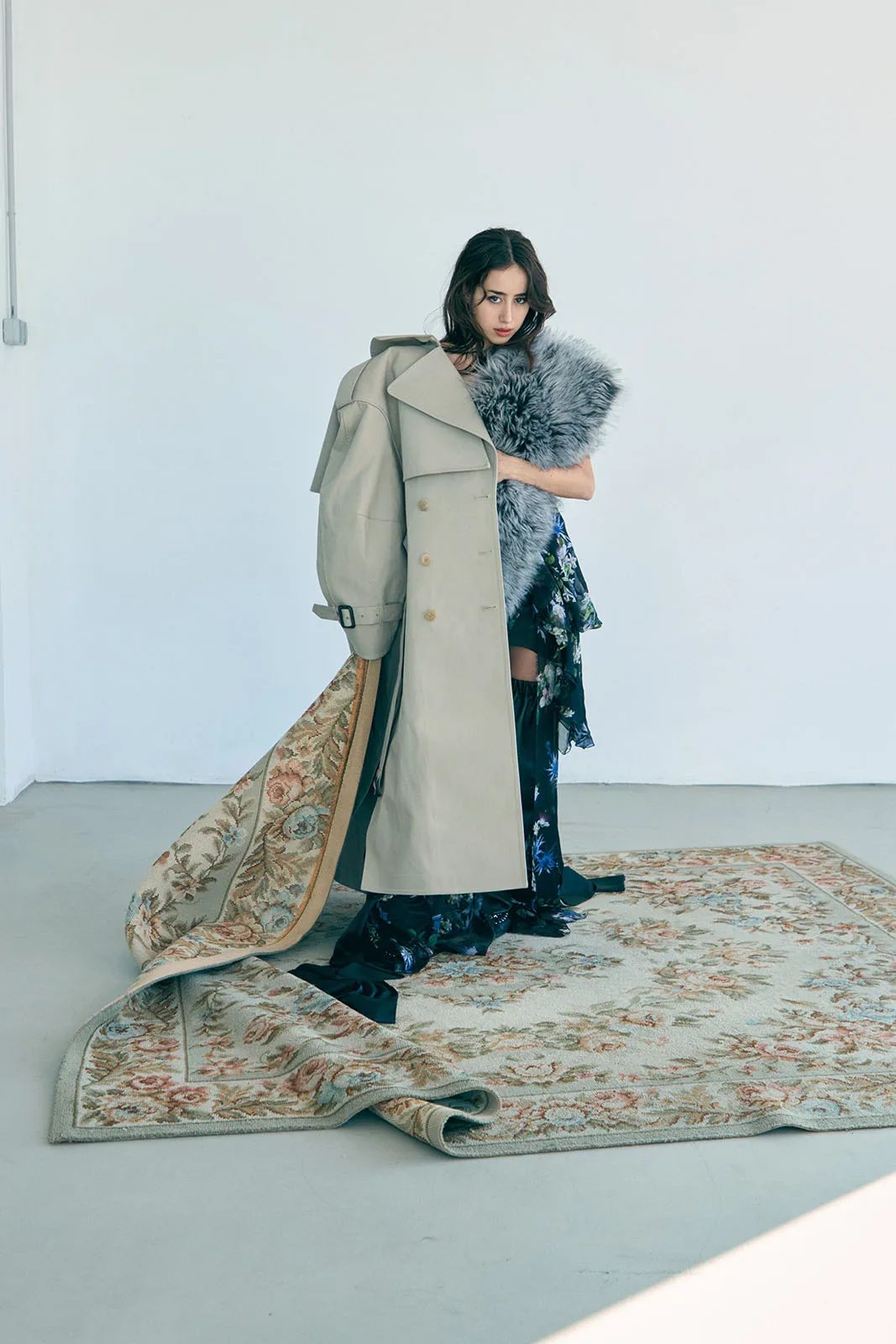
Trench coat GIVENCHY, skirt and scarf BLUMARINE.
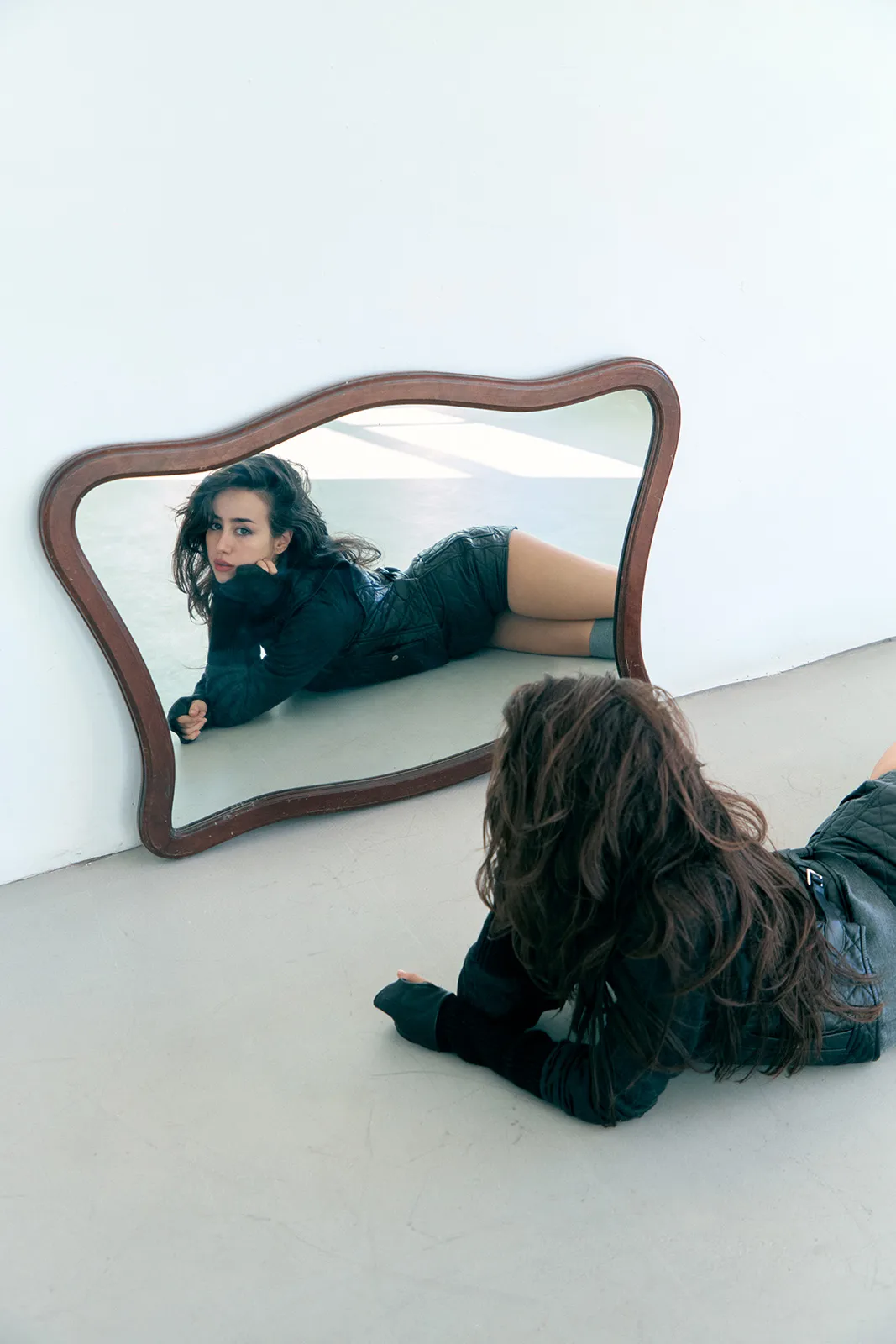
Full look HERMÈS.
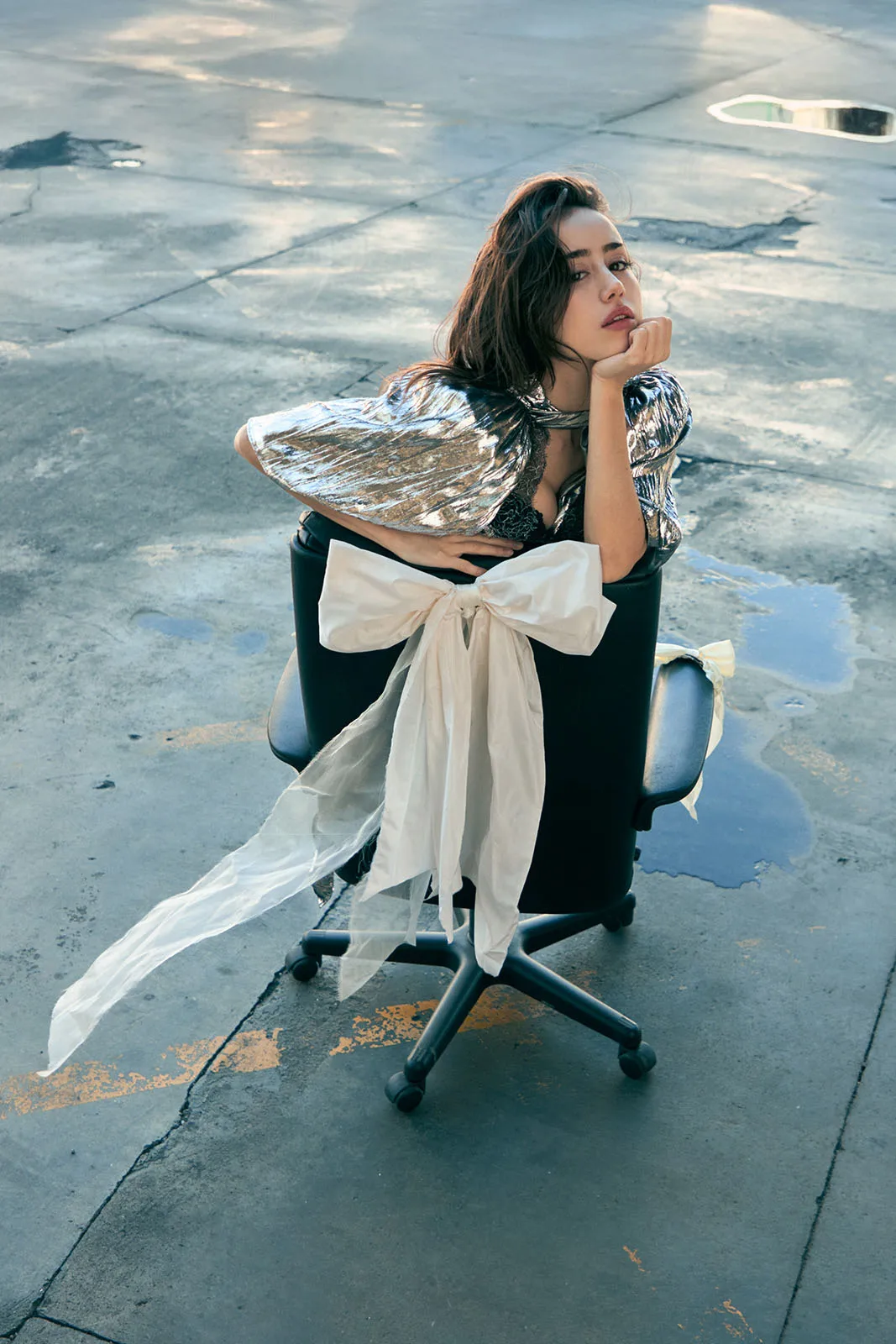
Full look GUCCI.
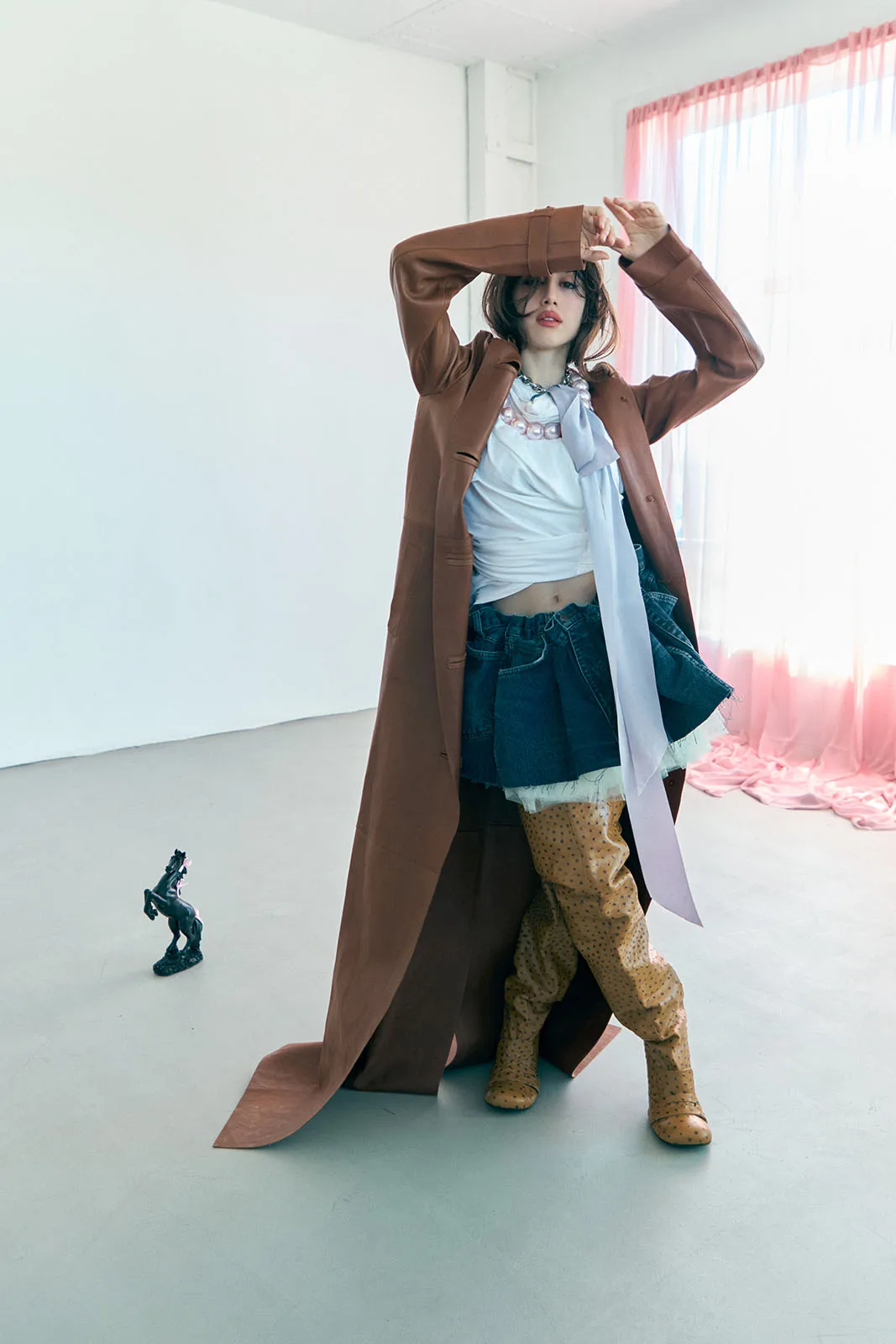
Coat, necklace and boots ACNE STUDIOS, top and skirt AUGUST BARRON.