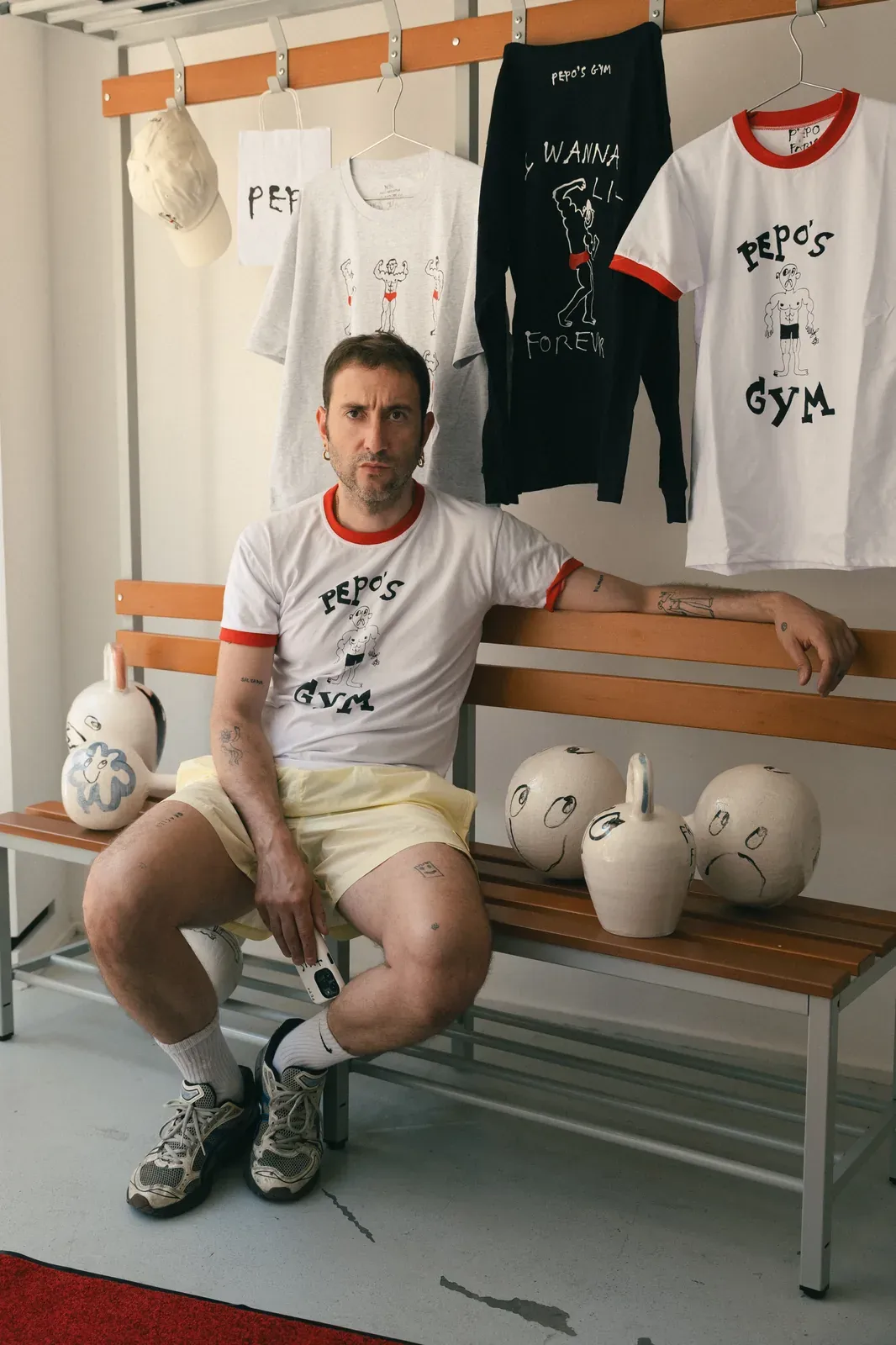
What’s the first word that comes to mind when I mention a gym? Effort, discipline, torture, muscles, sweat, gains, machines, creatine, selfies, saunas… The list is endless. Pepo Moreno defines these spaces as “little theatres in a way. Performance spaces rather than training spaces.”
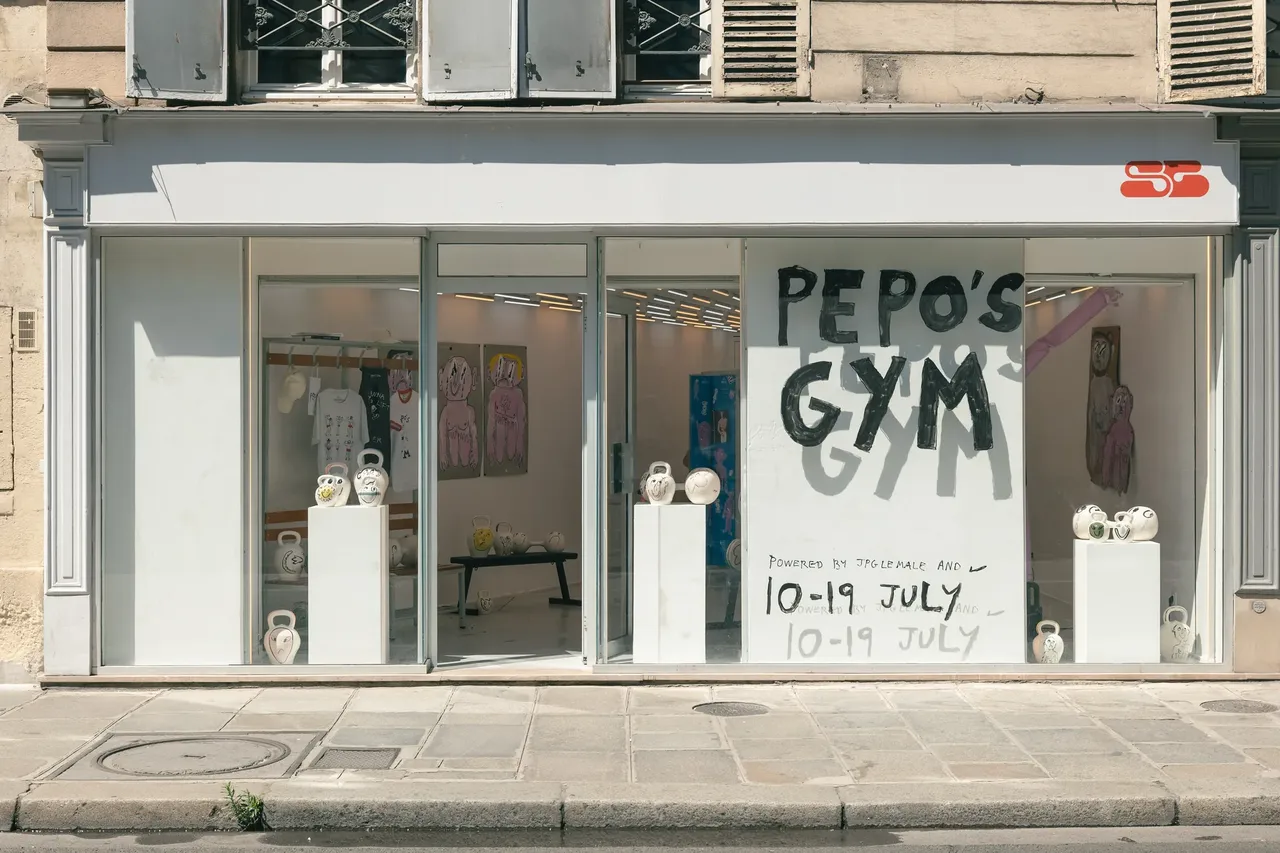
Besides the usual –lifting weights, running on the treadmill, or joining a class–, gyms have become these highly performative spaces where people observe and are observed. Even more so than that, they’ve even become places of trade: you trade time, energy, sweat and tears, and in return, you get social acceptance, higher self-confidence, or the promise of being desirable. It might sound deep (it is, actually), but Pepo Moreno doesn’t want you to be too concerned. At least, not when you step into Pepo’s Gym, his new exhibition at Sheriff Gallery in Paris, on view until 19 July.
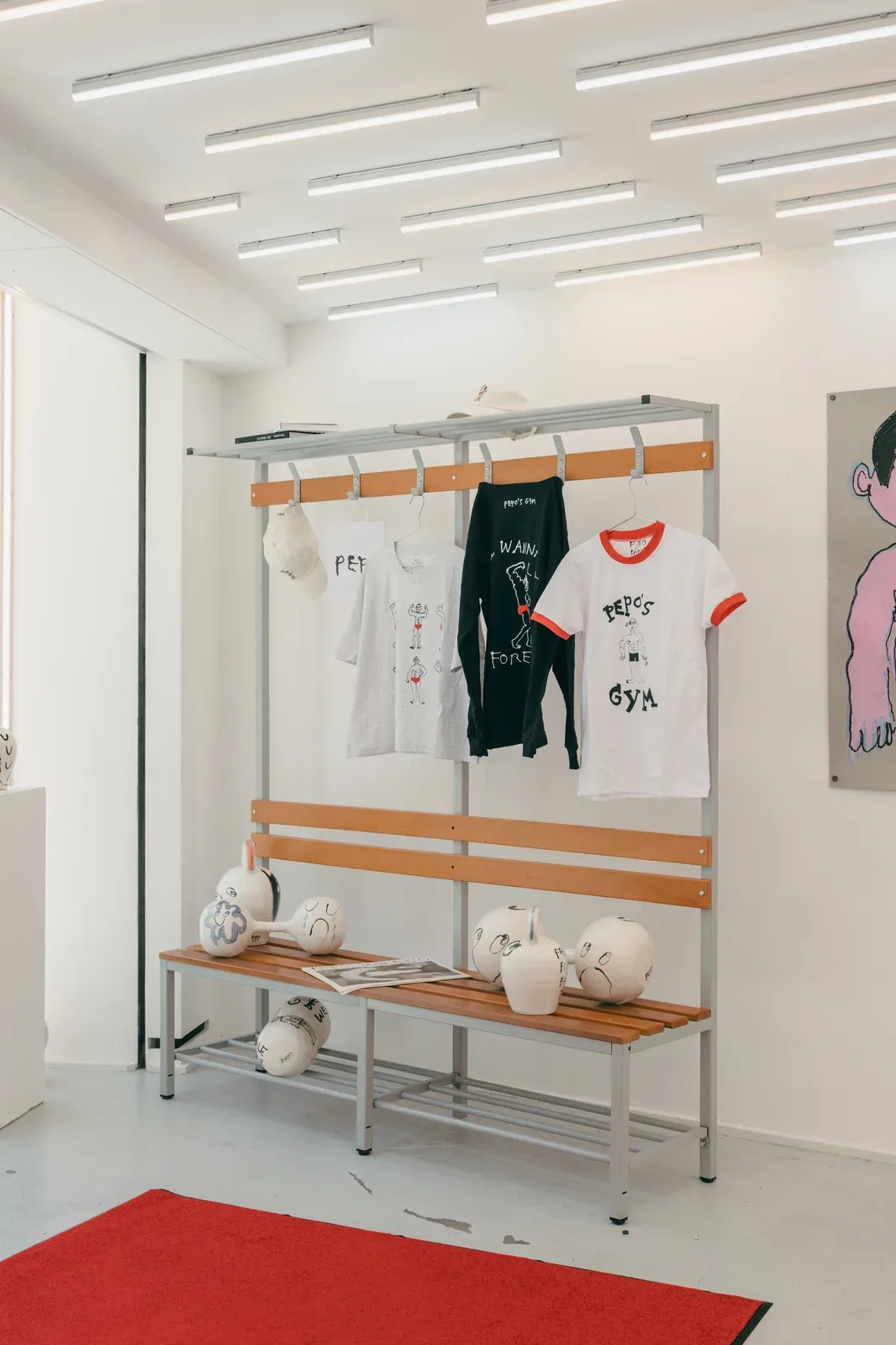
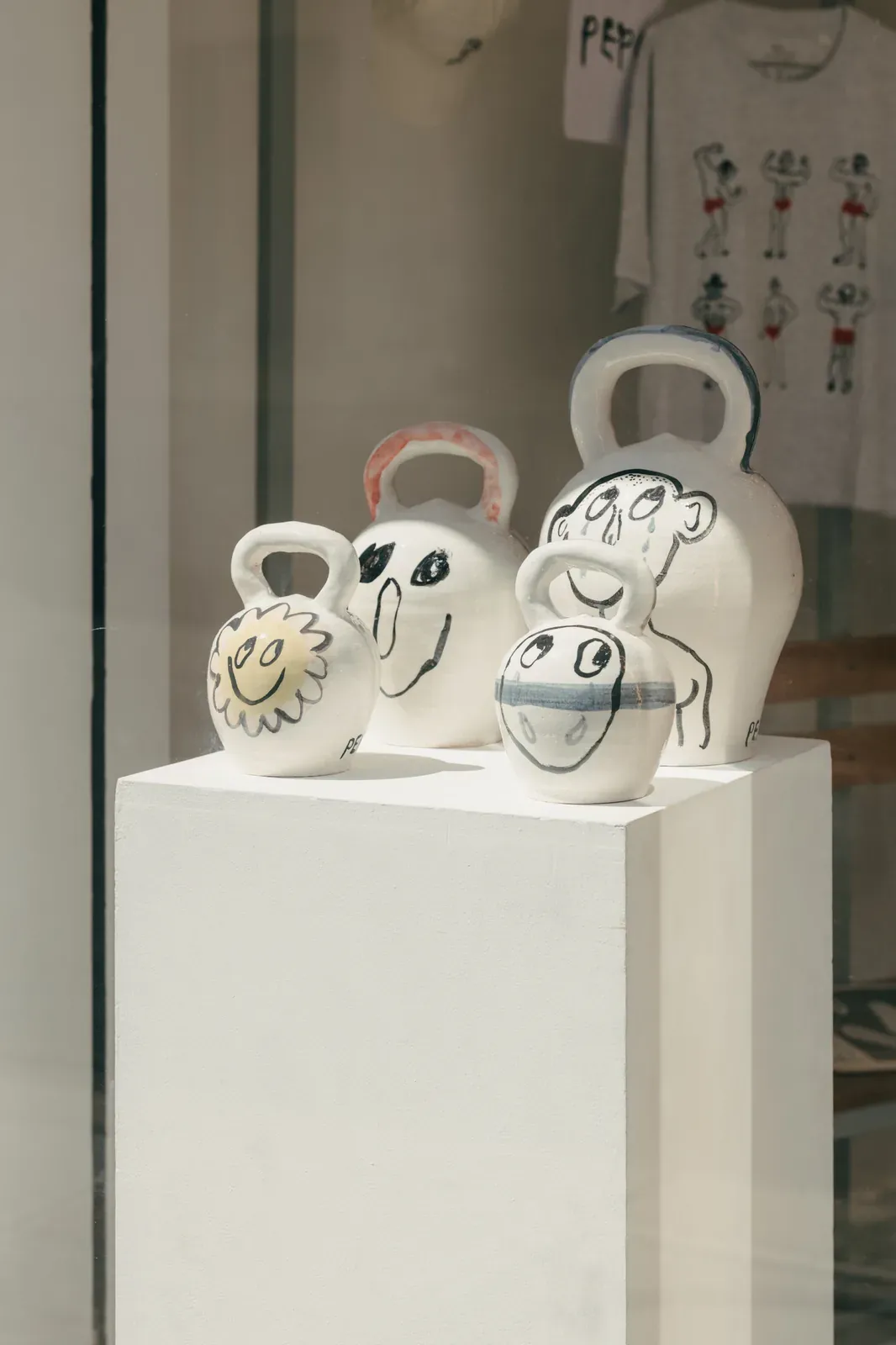
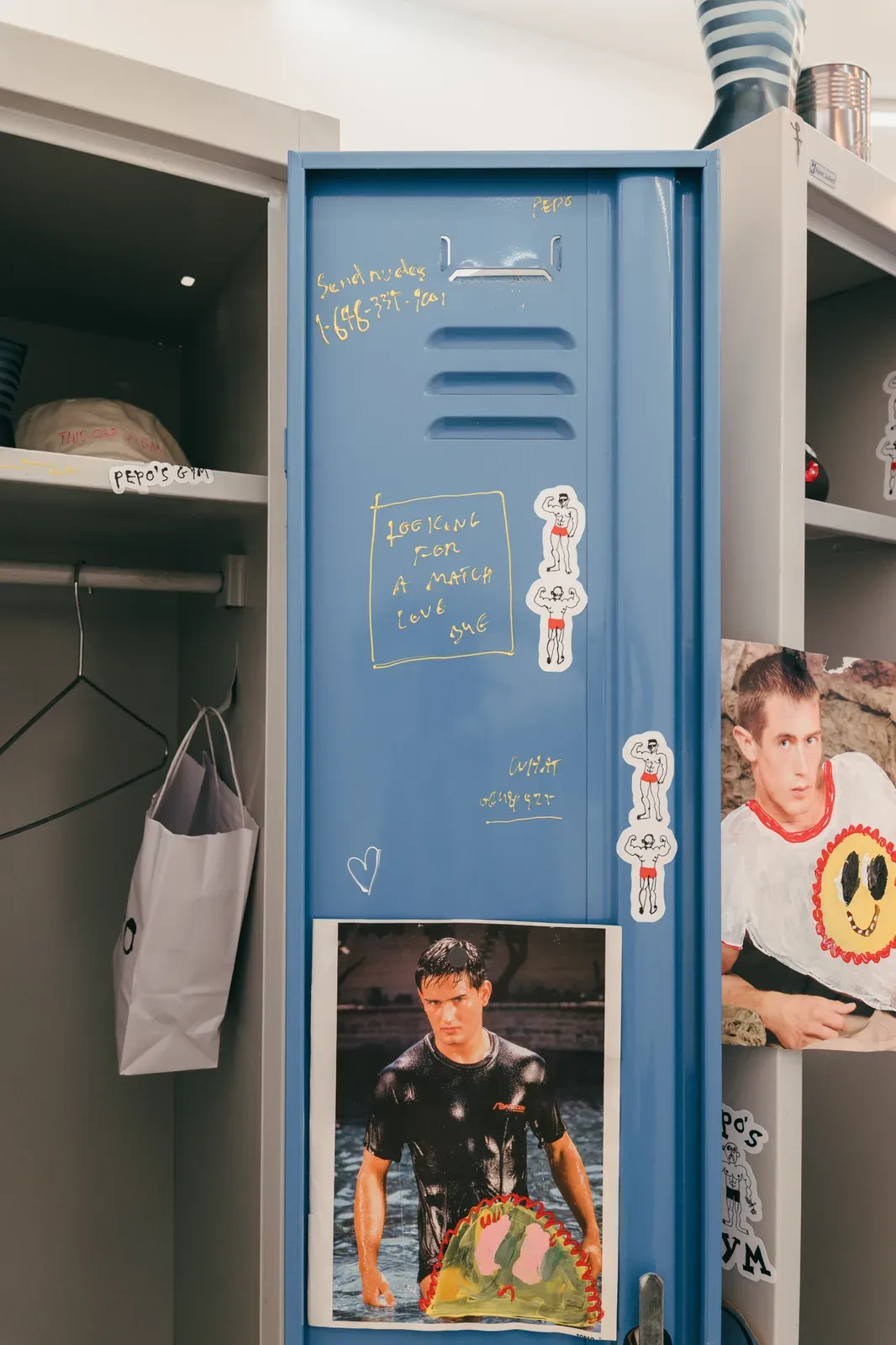
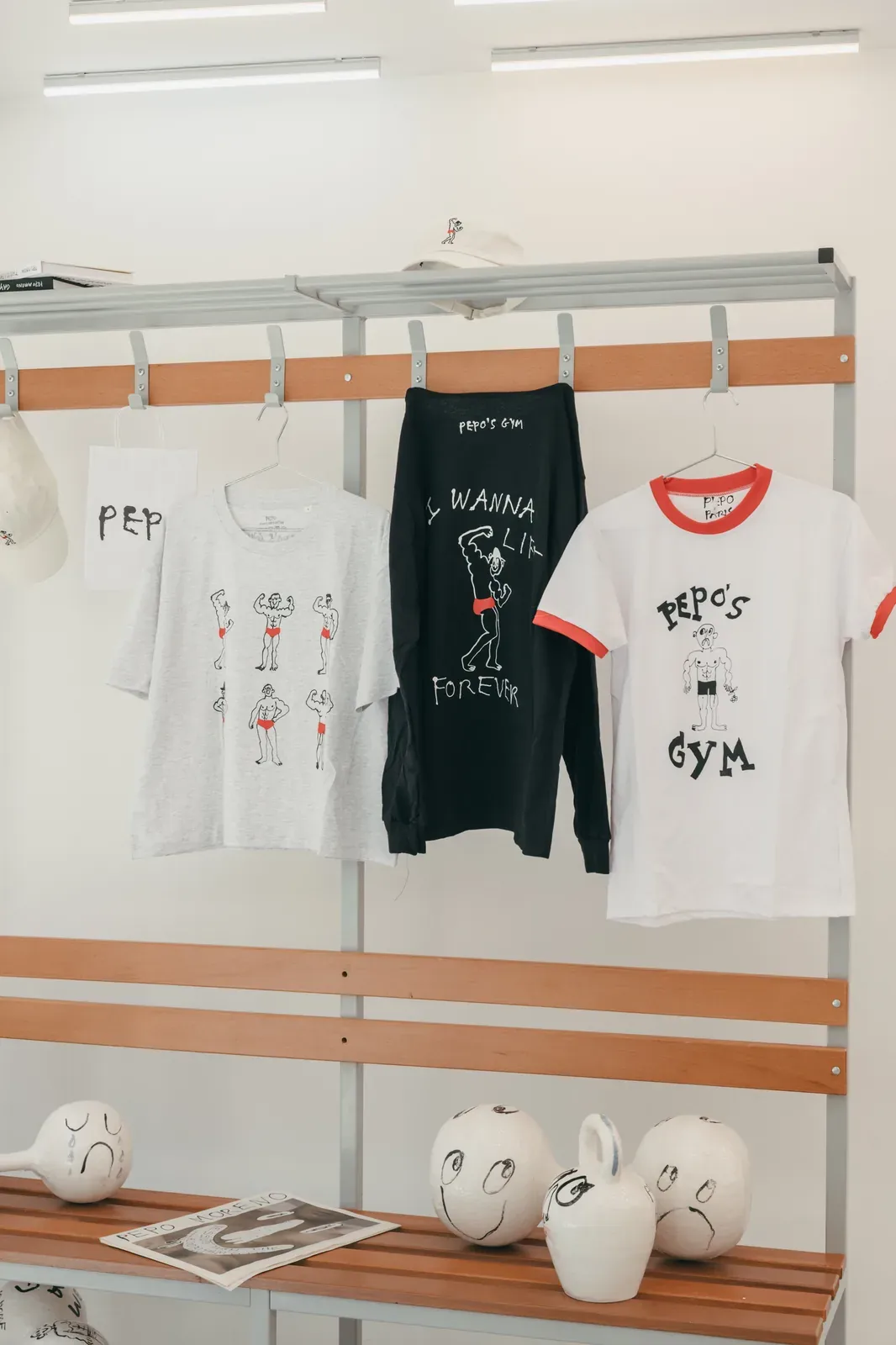
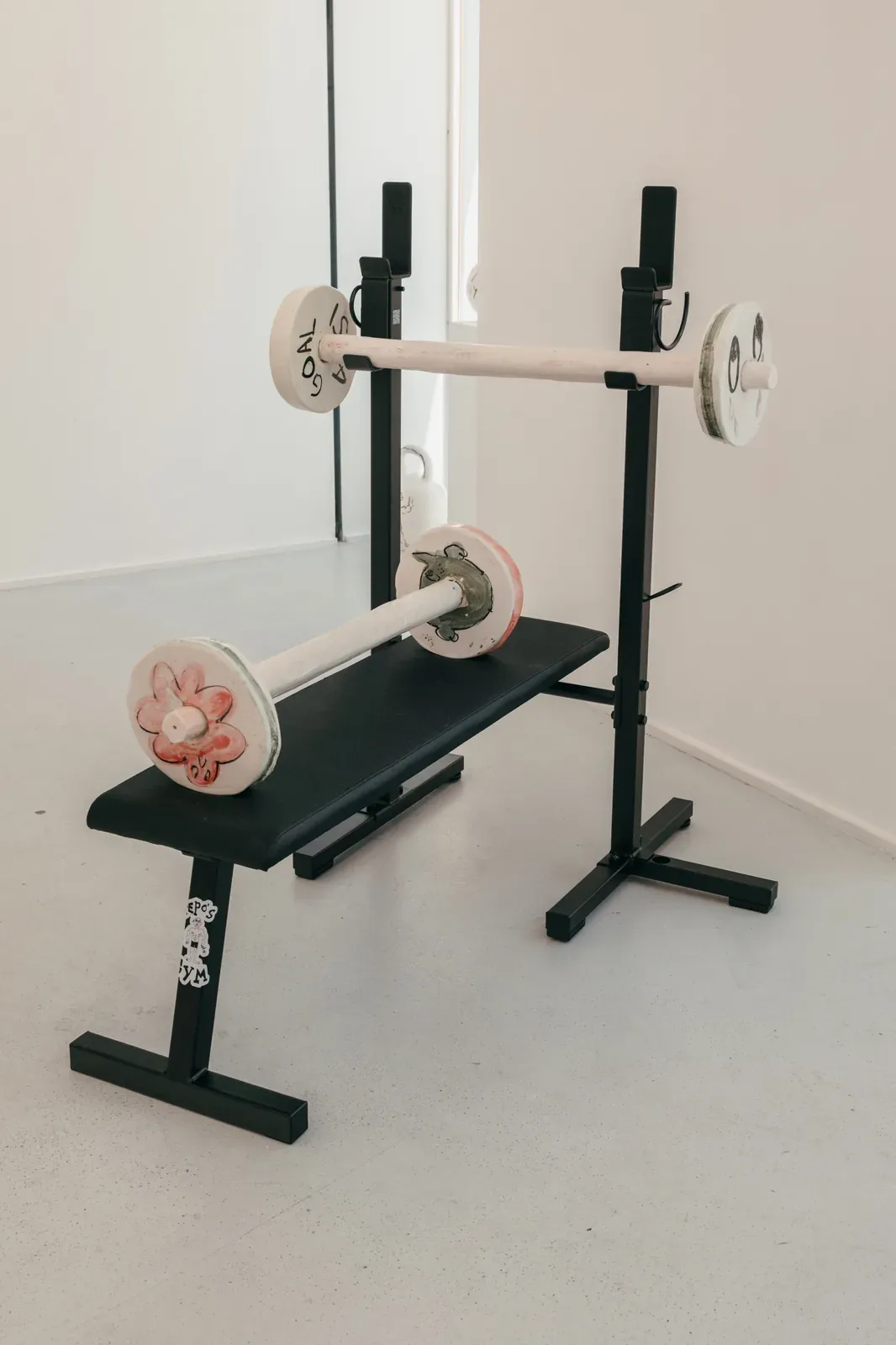
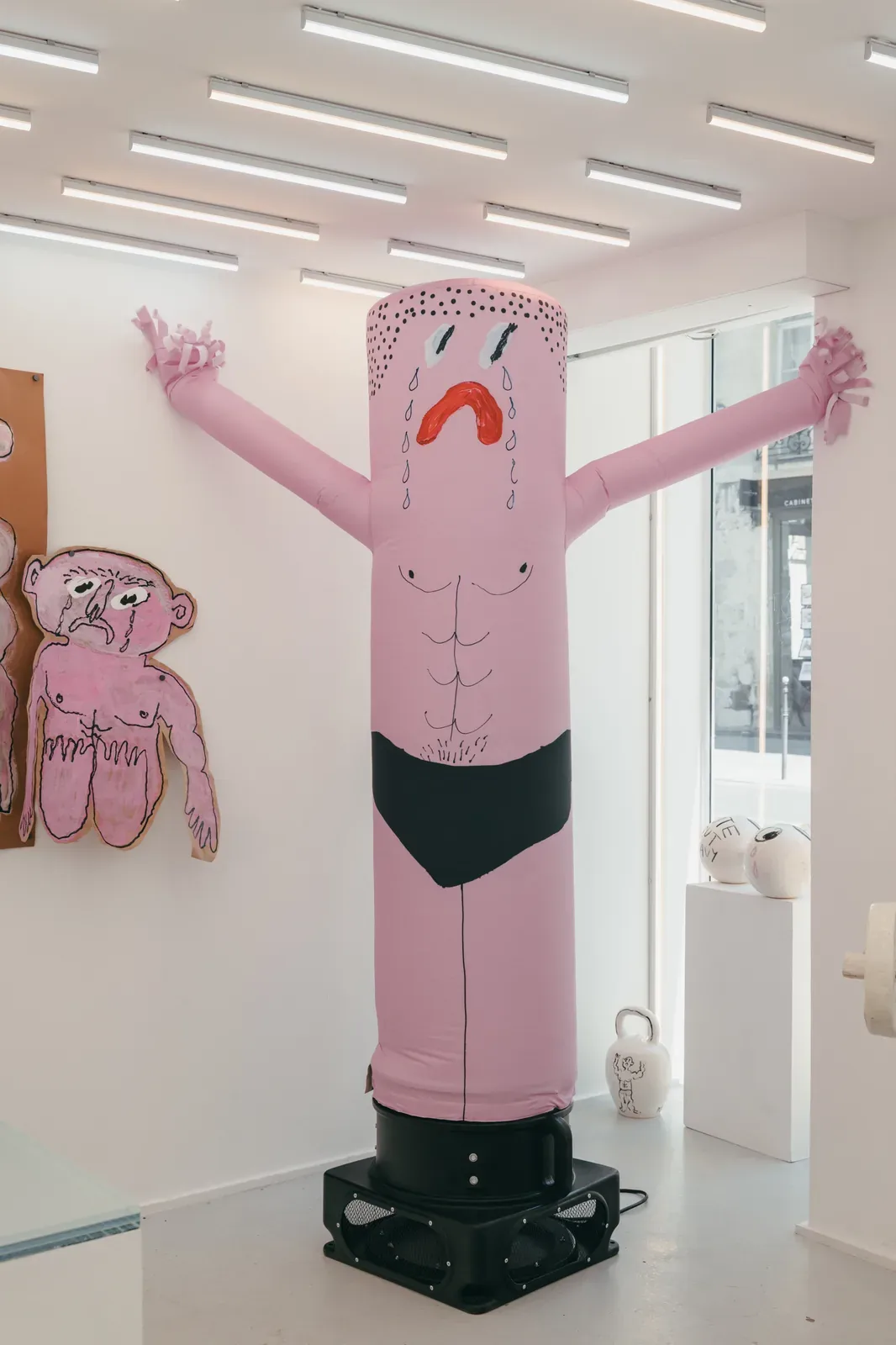
Cutie-patootie kettlebells, a crying tube man with a six-pack, or lockers decorated with stickers and pictures of hotties altered by Pepo; that’s what you can expect to see at Pepo’s Gym. There are also t-shirts, weights, and pink mirrors with messages in the artist’s characteristic writing. You may not leave with bigger arms or thicker thighs, but you’ll surely leave inspired. Today, we sit down with the artist to discuss the rules of his imaginary gym, looksmaxxing, feeling accepted, and helping people confront their struggles through laughing.
Hey Pepo, I can’t think of anything else to start: what does your gym routine look like?
I go to the gym three to four times a week. I usually start with ten to fifteen minutes of stretching and cardio, followed by thirty to forty minutes of moderate weight training or a more intense workout. When my schedule allows, I also like to join a cross-training class or something similar. Enough? I guess so. On top of that, I ride my bike every day, which is by far my favourite form of exercise.
Pepo’s Gym reflects on the gym as a ‘non-place’: somewhere between a waiting room, an airport terminal and a site of display. What about it inspires your creativity?
I love the way fitness centres have become such an active part of our daily routines, but also a kind of performance space, so deeply integrated into pop culture that we can all picture them instantly without even trying. Movies, music, and social media have transformed gyms into much more than places to exercise. They have become stages where identity, aspiration, discipline, and self-expression all come together. They are like little theatres in a way. Performance spaces rather than training spaces.
If Pepo’s Gym had a list of rules on the wall, what would the first three be? And what behaviour would result in immediate expulsion?
Be soft. Be fun. Be gay.
We don’t tolerate bigotry here. Don’t try me!
We don’t tolerate bigotry here. Don’t try me!
The exhibition brings together muscular bodies, selfie mirrors, ceramic kettlebells and a rather sad inflatable doll. How do you decide when an image should be sexy, pathetic, or even both at once?
What is there to decide? We can be sexy and pathetic, I am up for both at the same time.
“Humans will do whatever it takes to feel accepted, to belong, to be loved. And fitness promises all of that.”
Your work has long used the gay stereotype as both celebration and parody. Here, the ‘gym body’ seems to have become an aspiration for a heterosexual masculinity shaped by algorithms too. What has really changed: bodies themselves, or who is allowed to desire them?
Both are correct! I think today’s body standards are absolutely out of control: looksmaxxing, extreme protein intake, steroids, etc. The pressure to constantly optimise and transform ourselves has reached a whole new level. But at the same time, straight gym bros and social media are showing that men can compliment other men in a non-sexual way (yes, guys, this is possible). There’s a whole new culture of bros complimenting bros — maybe sometimes for the wrong reasons, but honestly, I’ll take it anyway.
You have previously spoken about embracing error rather than polishing it away. Is the gym also a perfect setting for that — a place where people try to optimise themselves to the point of absurdity?
They absolutely are. Humans will do whatever it takes to feel accepted, to belong, to be loved. And fitness promises all of that. In exchange for your sweat, it offers a sense of control, identity, and belonging, even when the pursuit itself can come at the cost of our mental and physical well-being. We are a mess. But aren’t we fascinating?
Humour in your work is never simply there for a laugh; it also makes room for loneliness, insecurity and exclusion without turning everything into solemn drama. What can a joke say that seriousness cannot?
As a teenager, I used humour as a way to get closer to other people. Growing up being different, being funny and witty became one of my greatest assets. It was my way of connecting with others while also creating a little distance from the things that felt too serious to face in that moment. I suppose that’s still what humour does for me today. It makes reality a little easier to swallow.
Between mirrors, filters and looksmaxxing culture, looking at oneself has become almost a full-time job. Does the exhibition offer a way out of that obsession, or simply a comfortable place to laugh at it while continuing to pout?
I’d like to think I’m offering people the chance to step into a softer, more creative, slightly absurd universe, one where nothing seems that serious, but somehow everything is. I want people to confront their own struggles with a laugh. I want them to feel less alone. I want to allow them the freedom to be a little sillier, a little dumber, every now and then. Artists are a bit like drug dealers, in a way. We sell illusion and fantasy for a little while, and then, voilà, it’s back to reality, hopefully carrying a small dose of that fantasy with you. Laugh until your next rep comes.