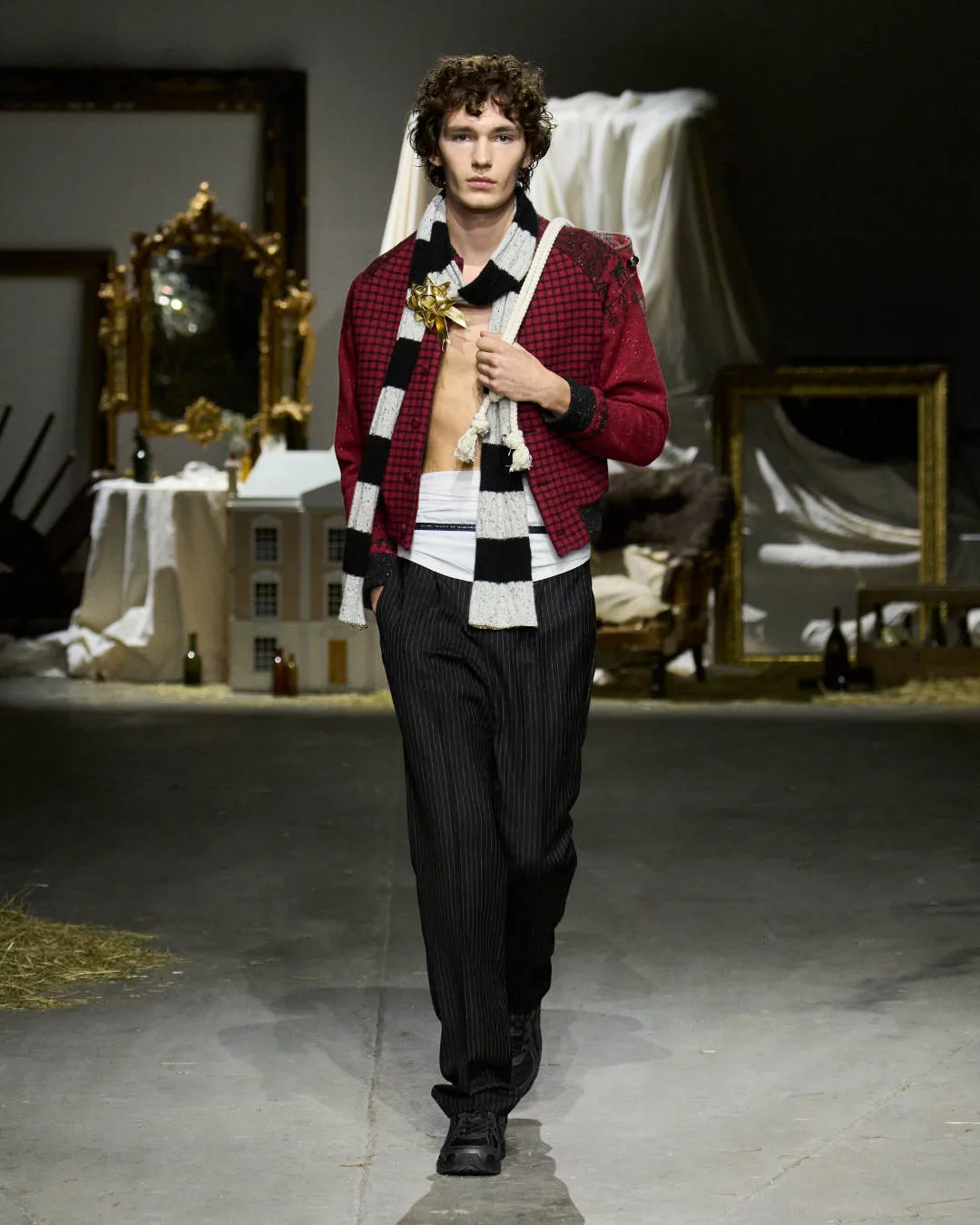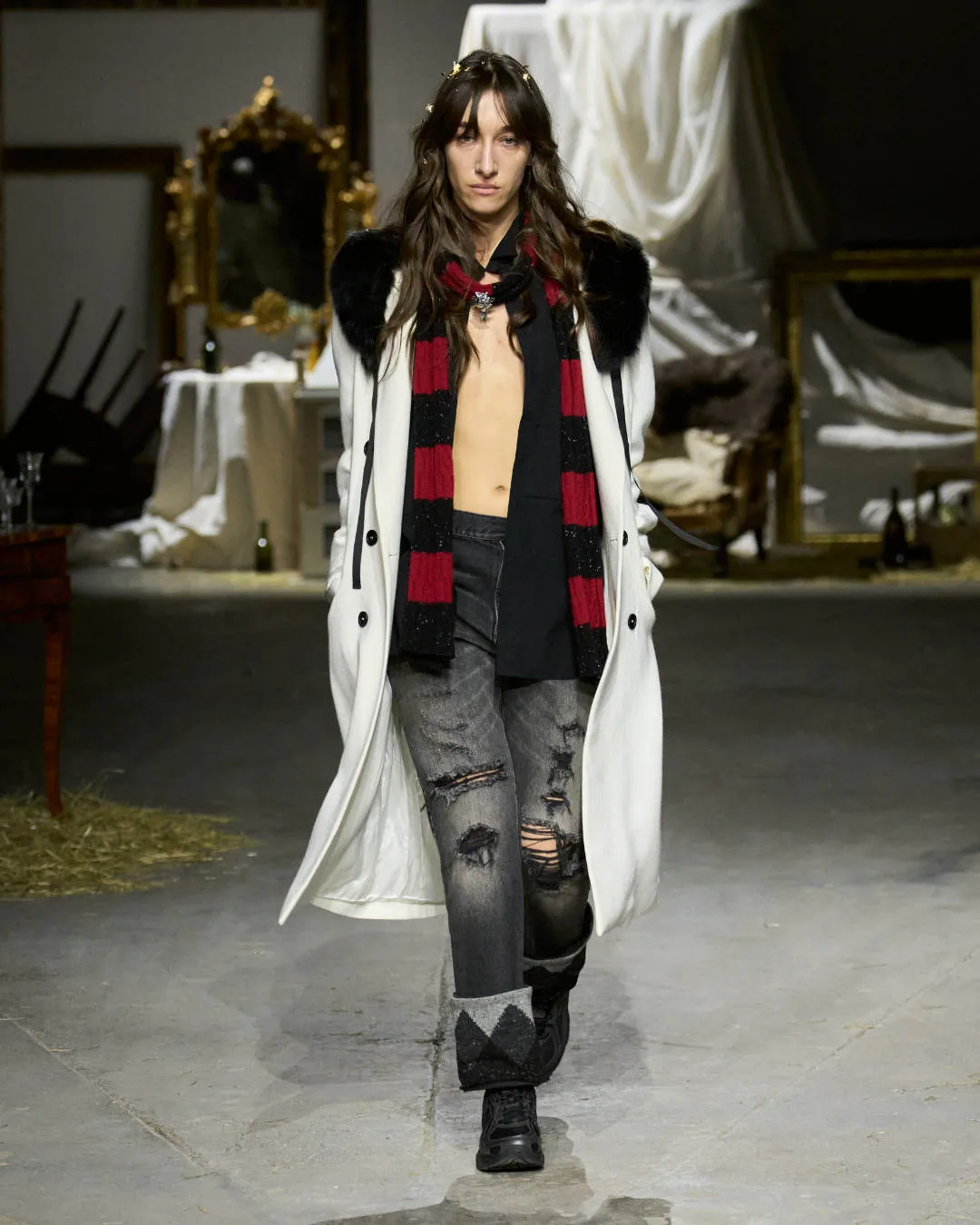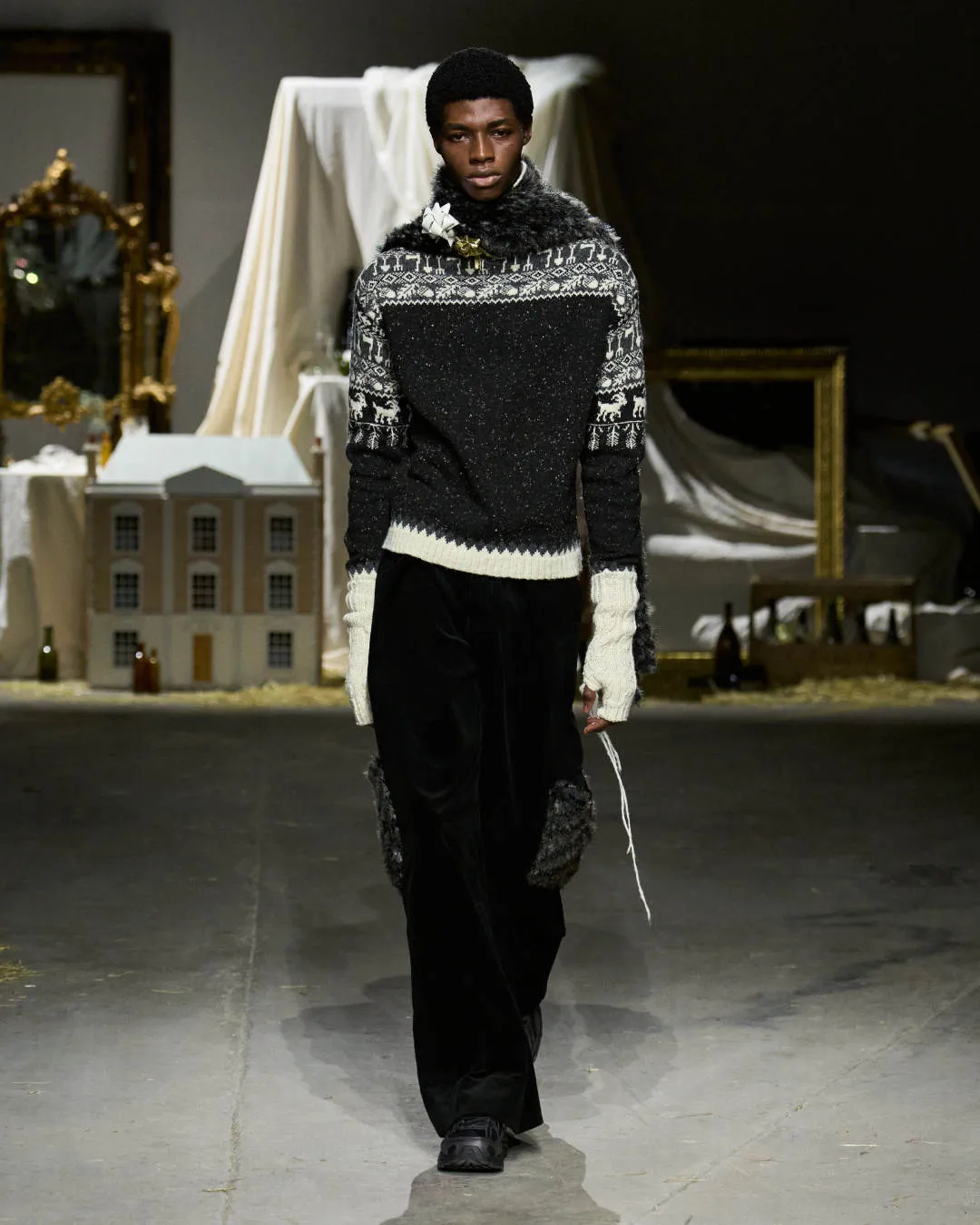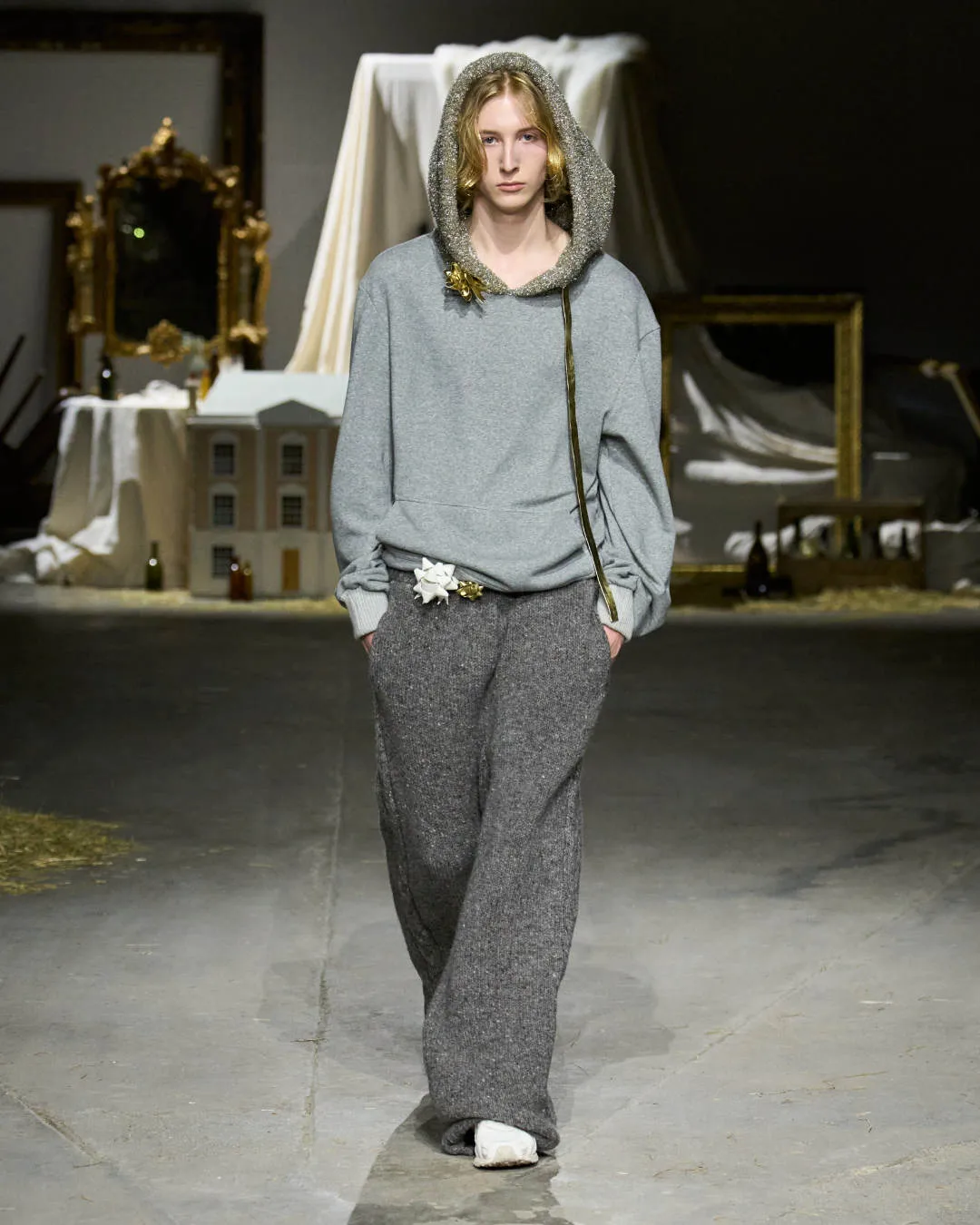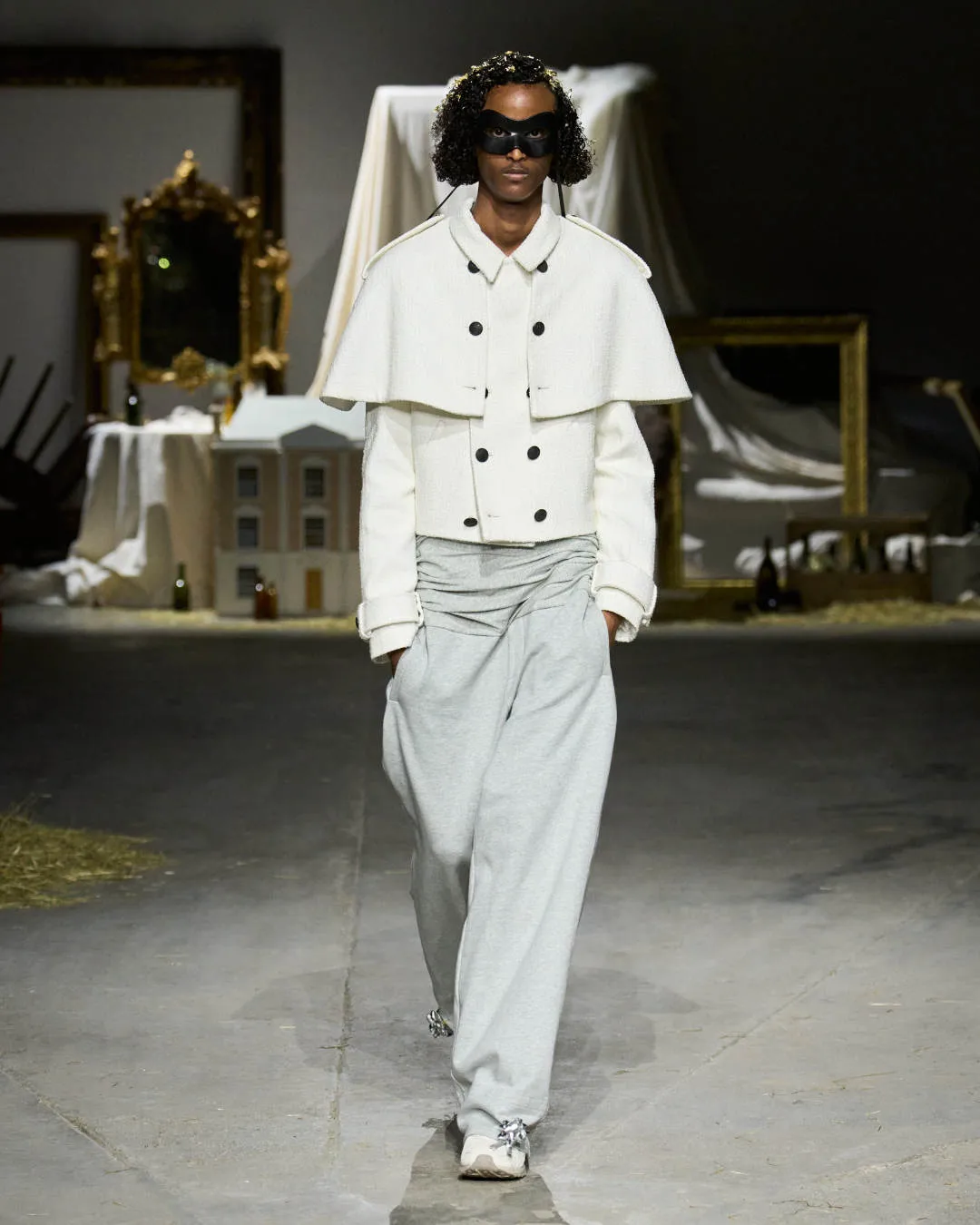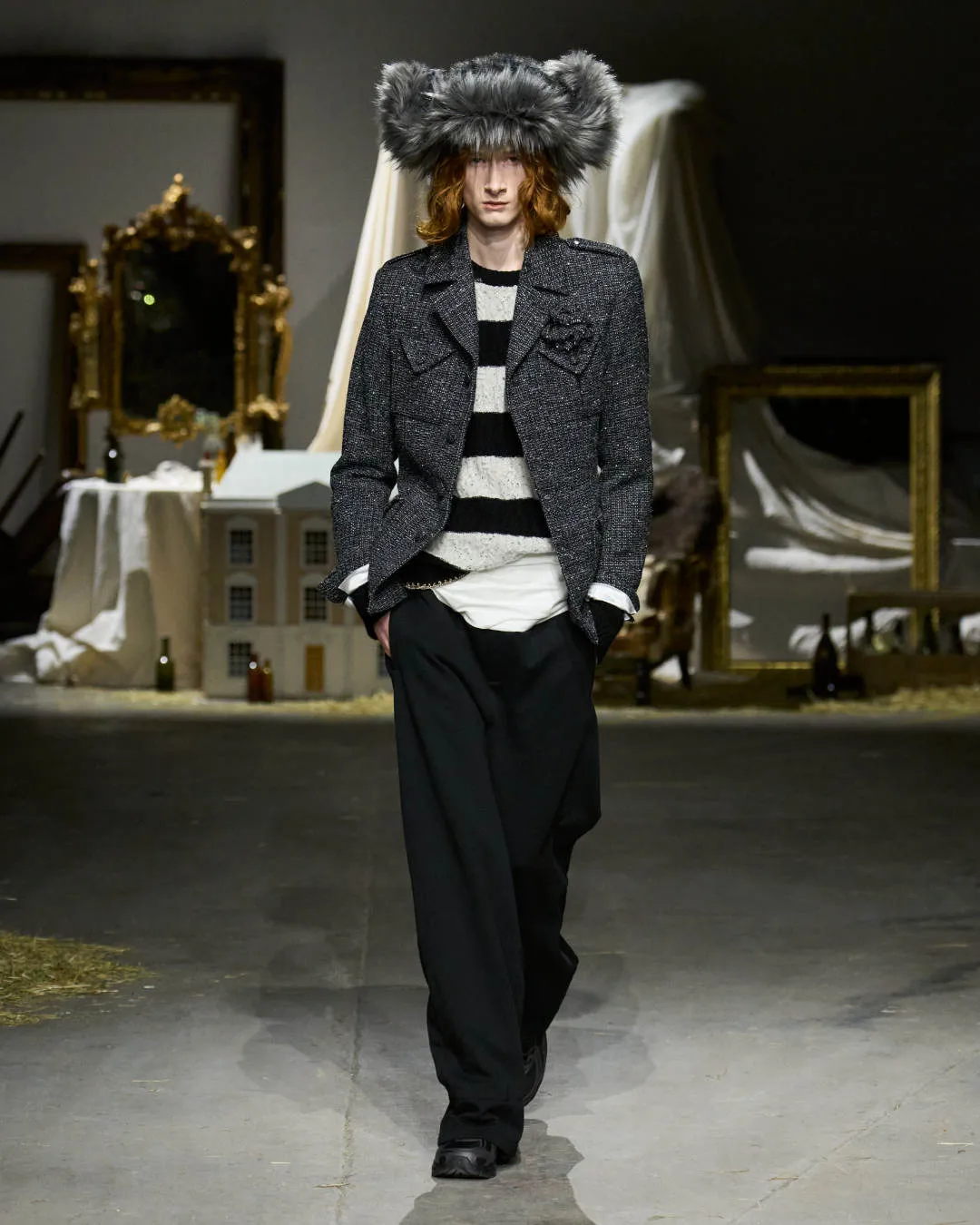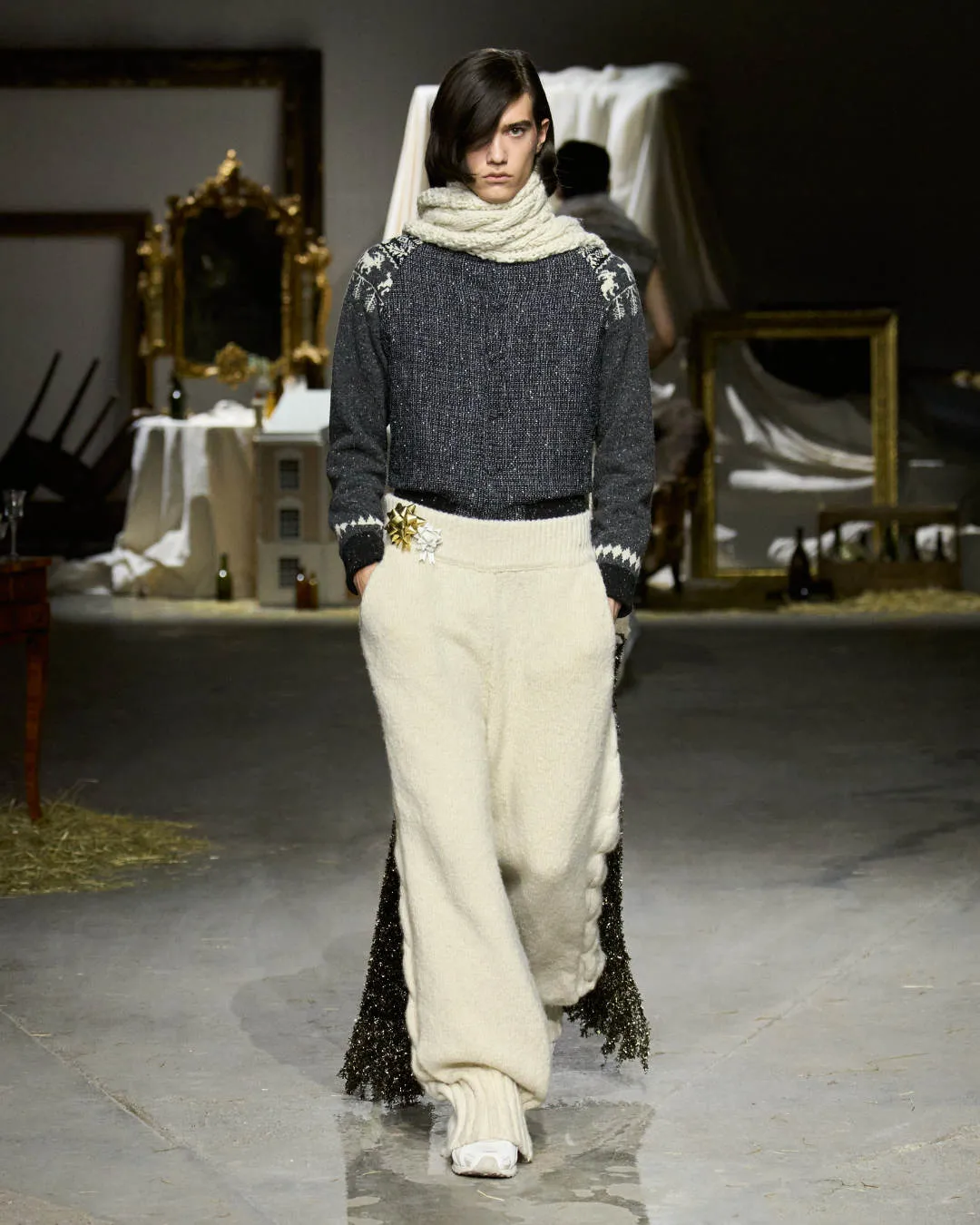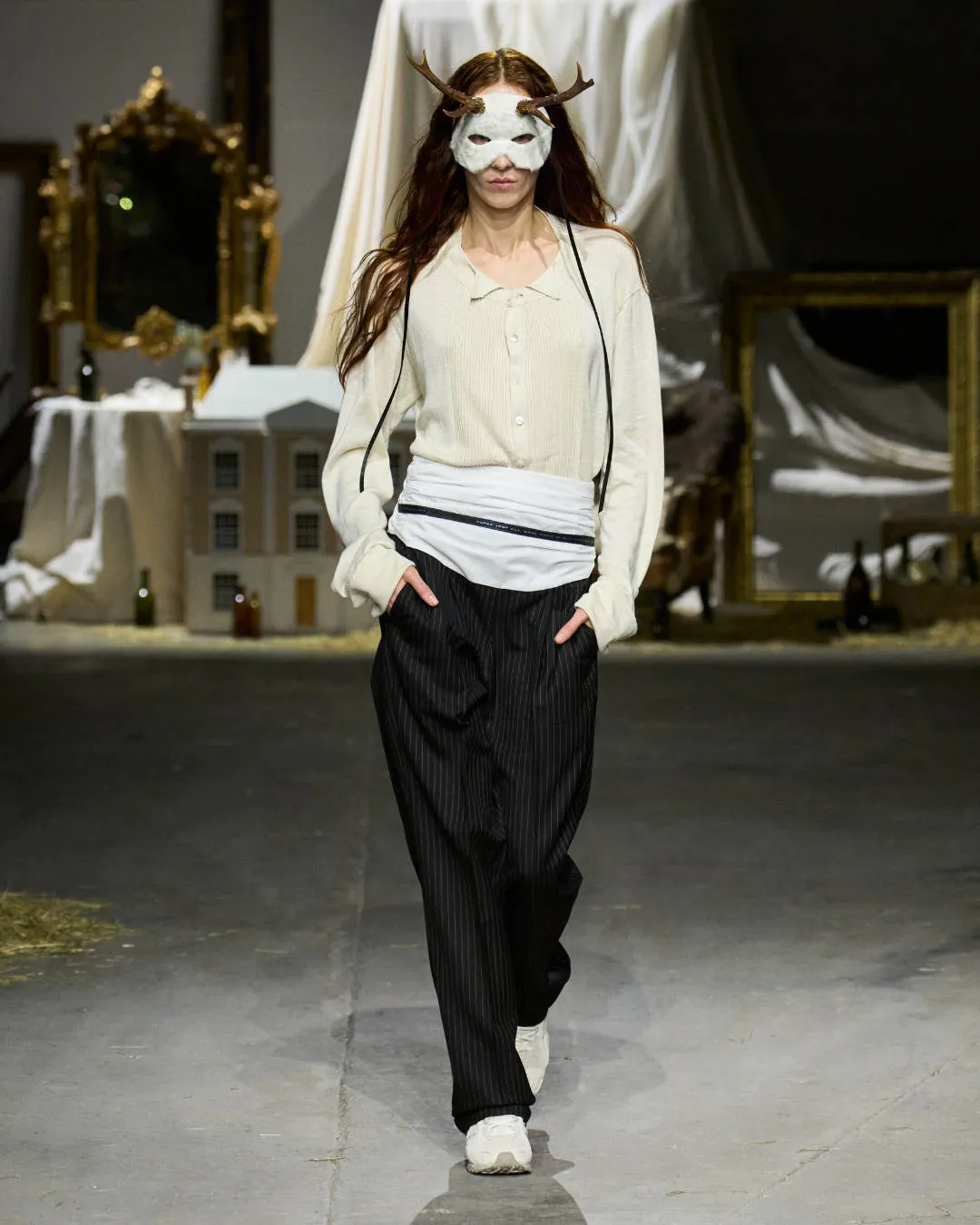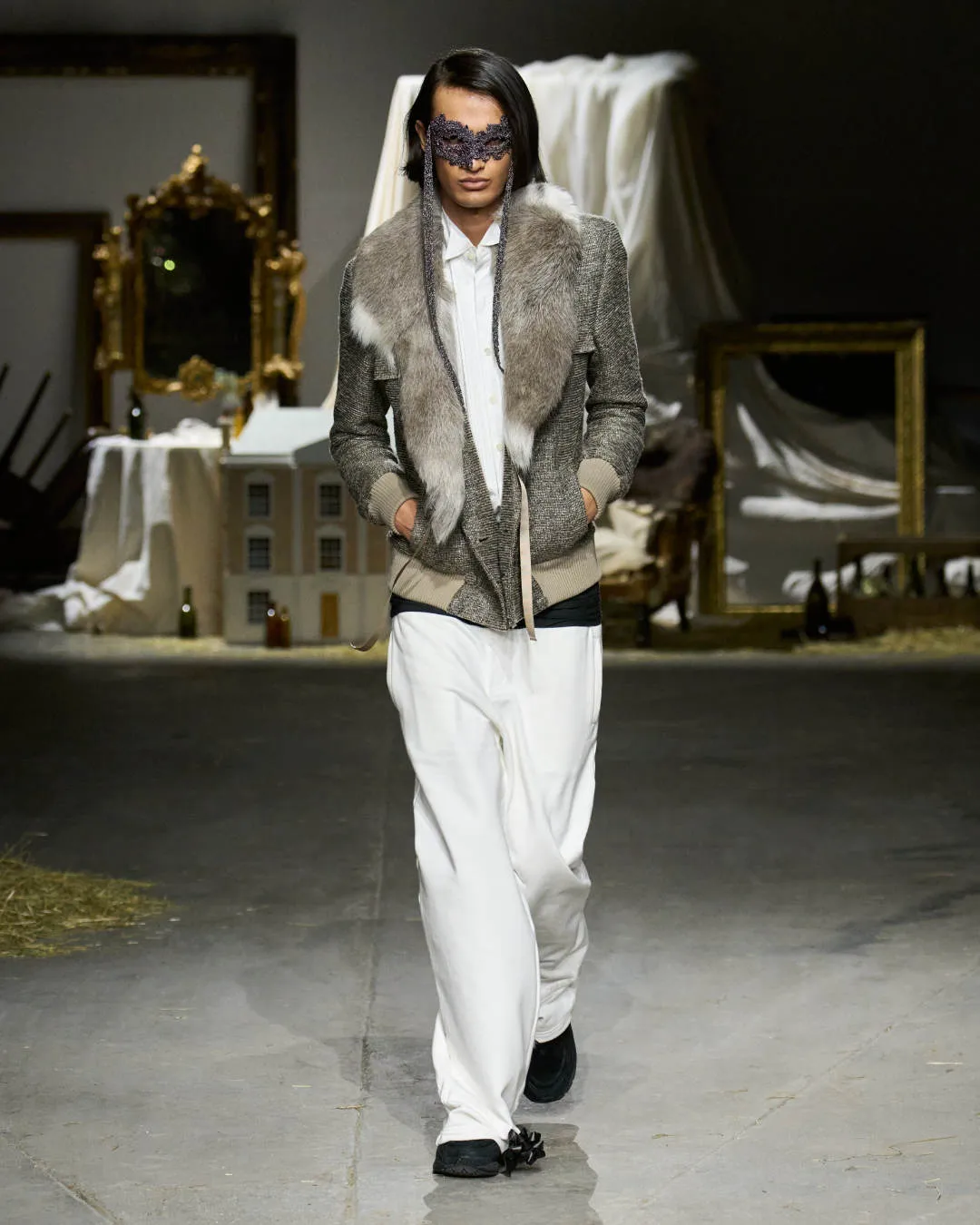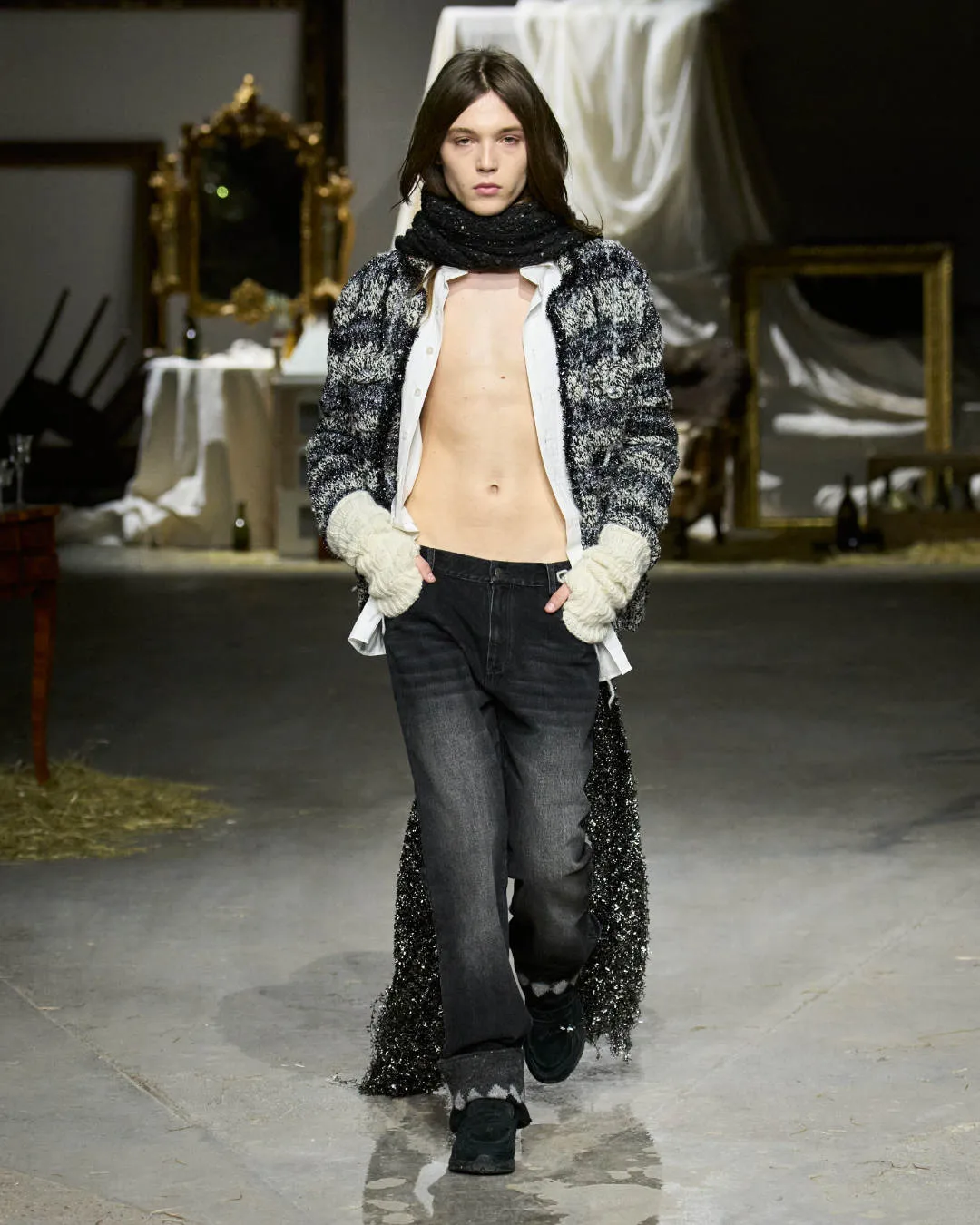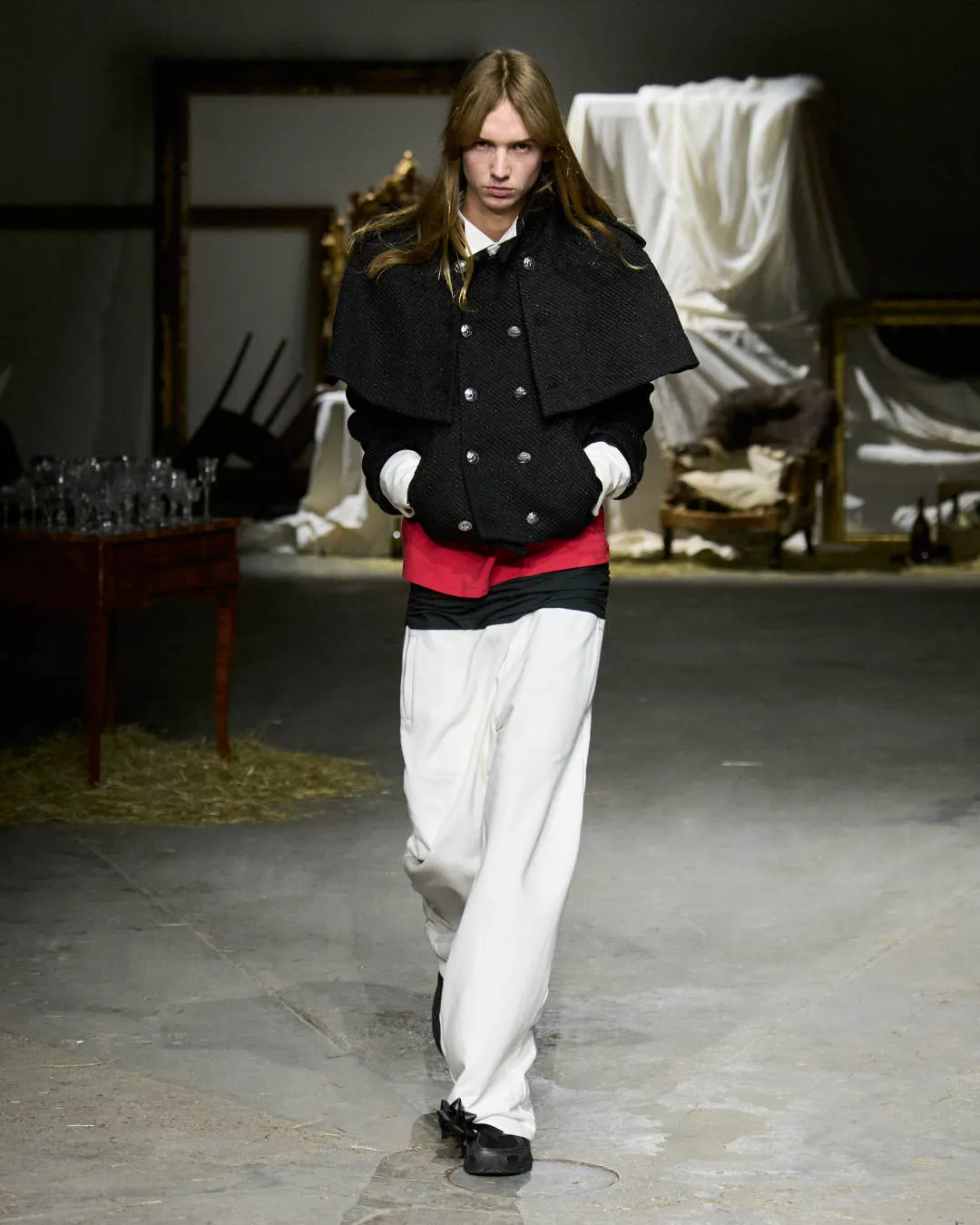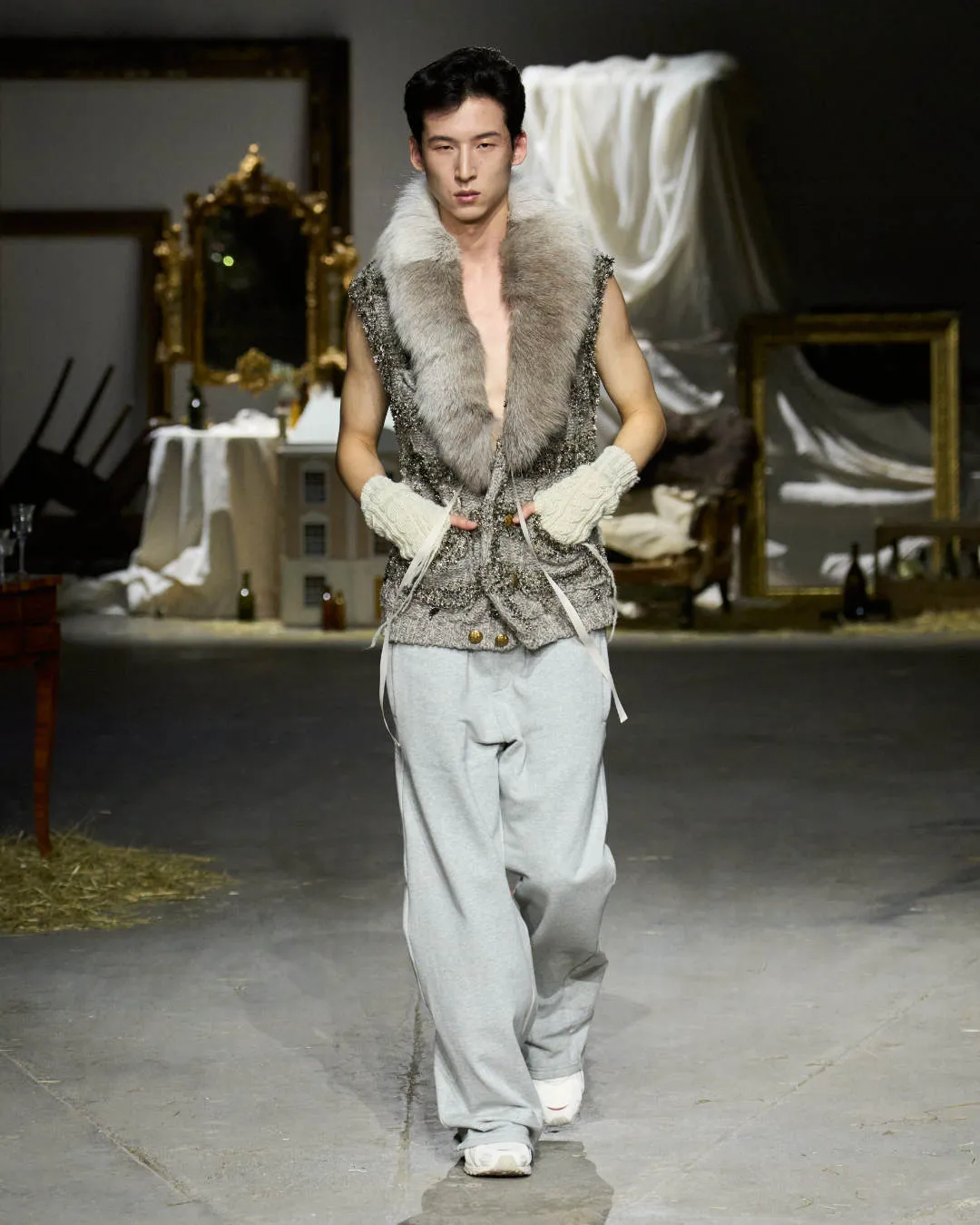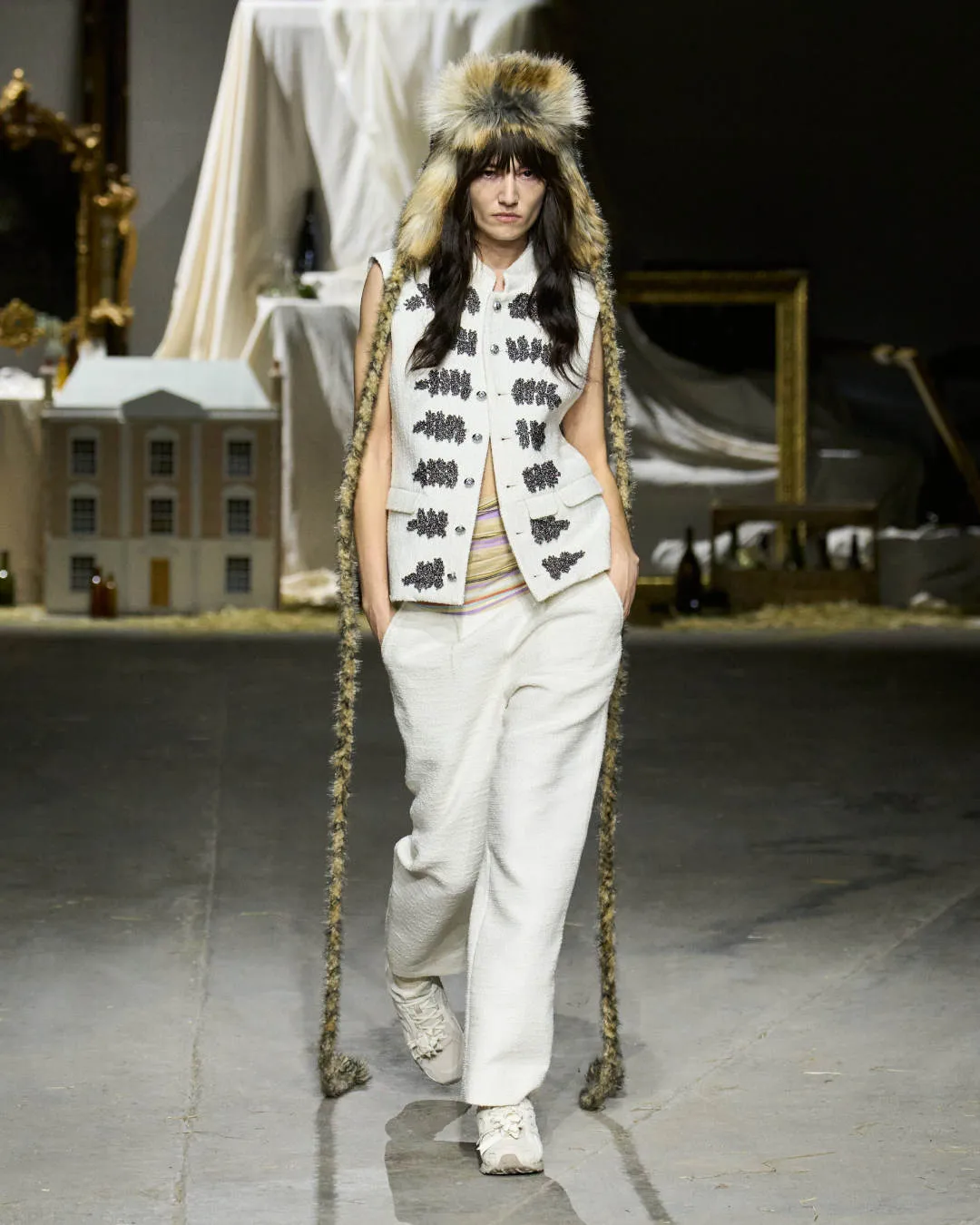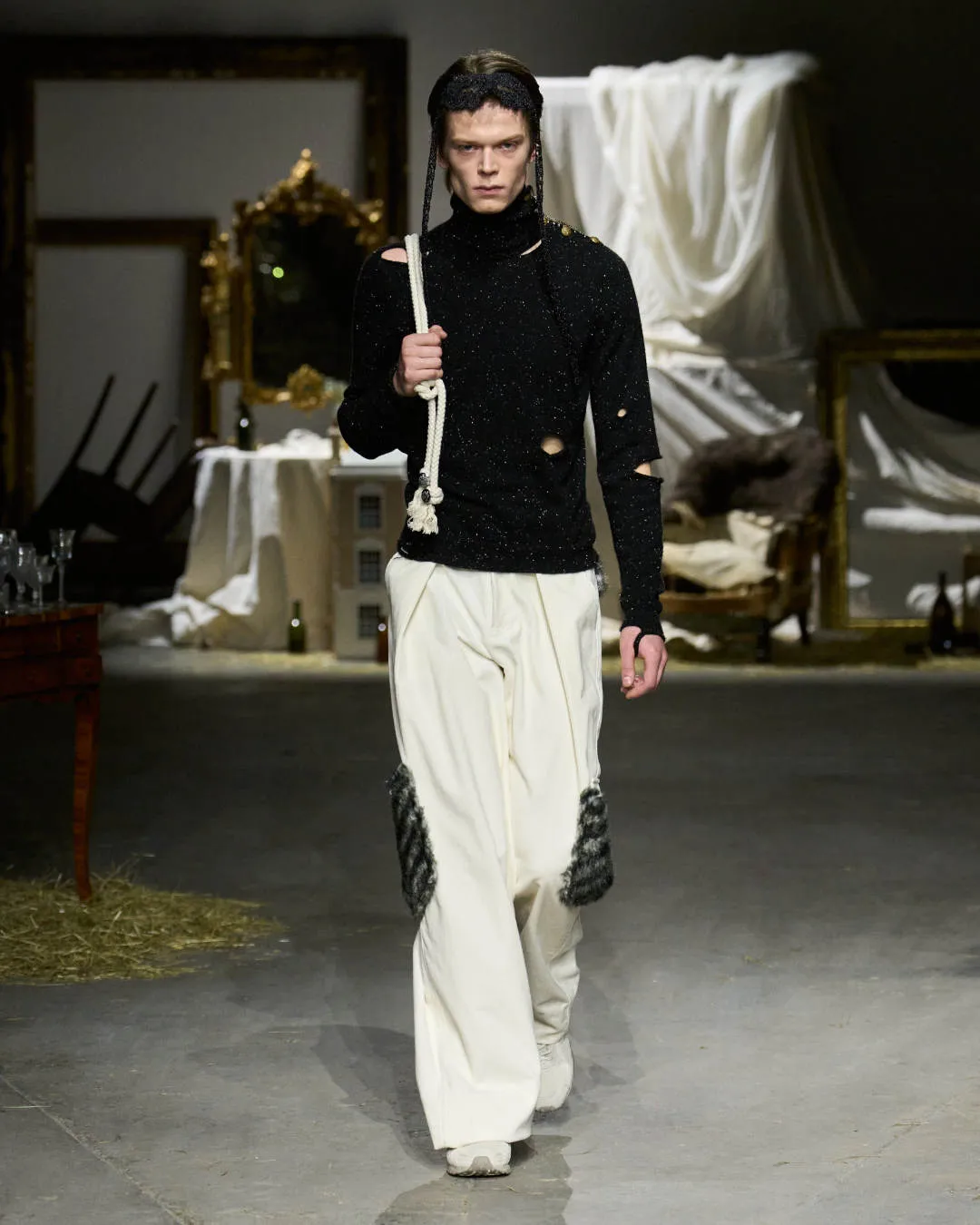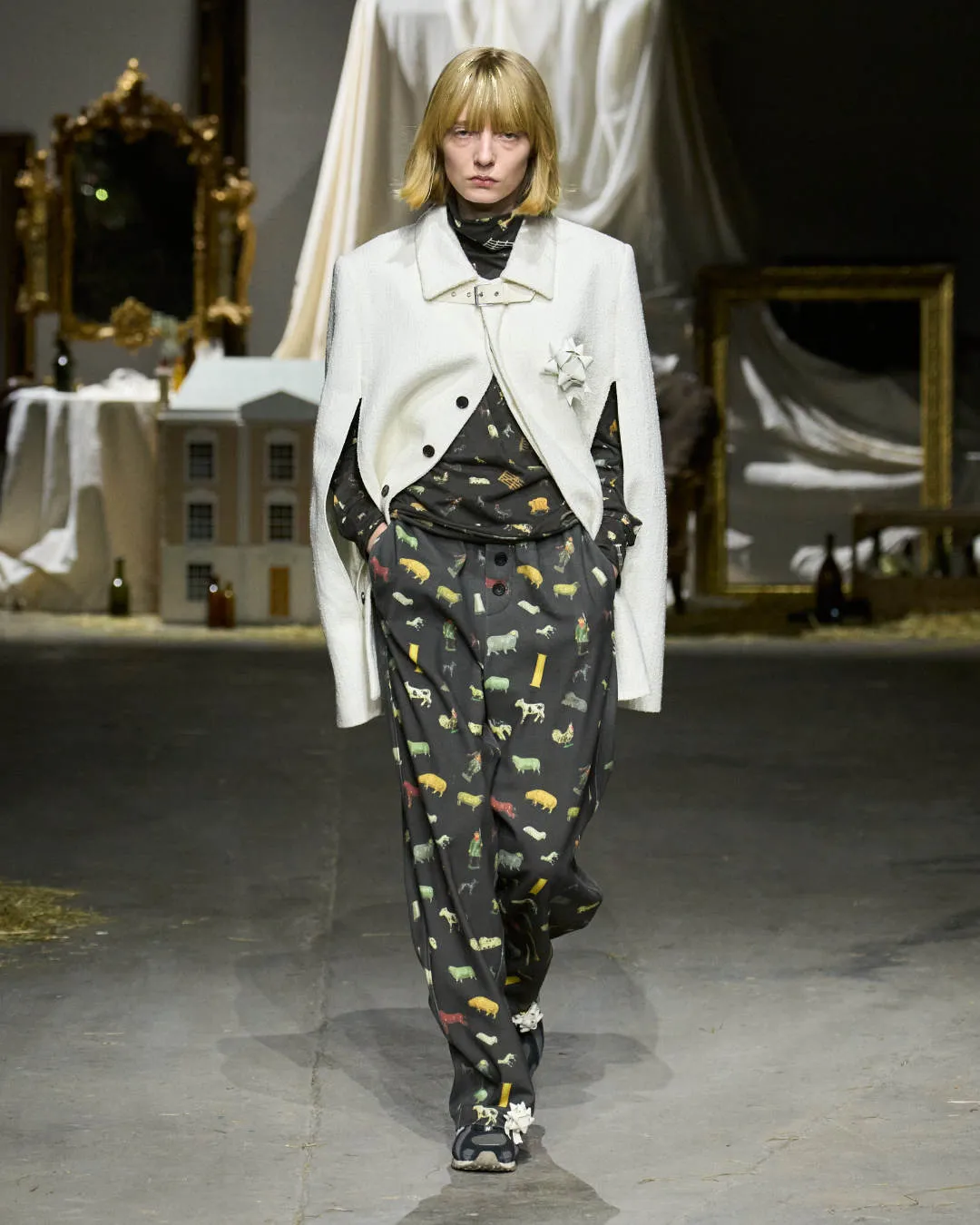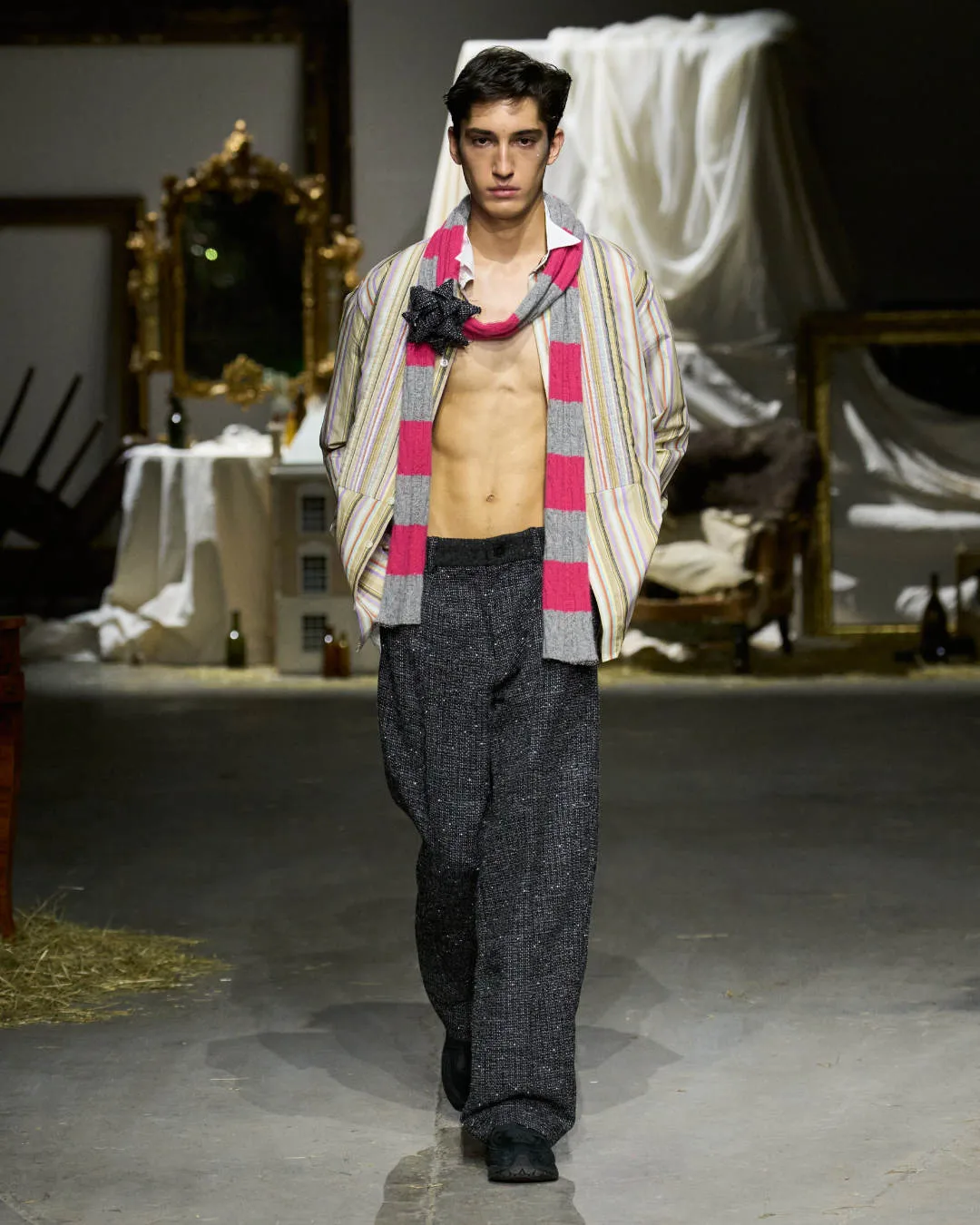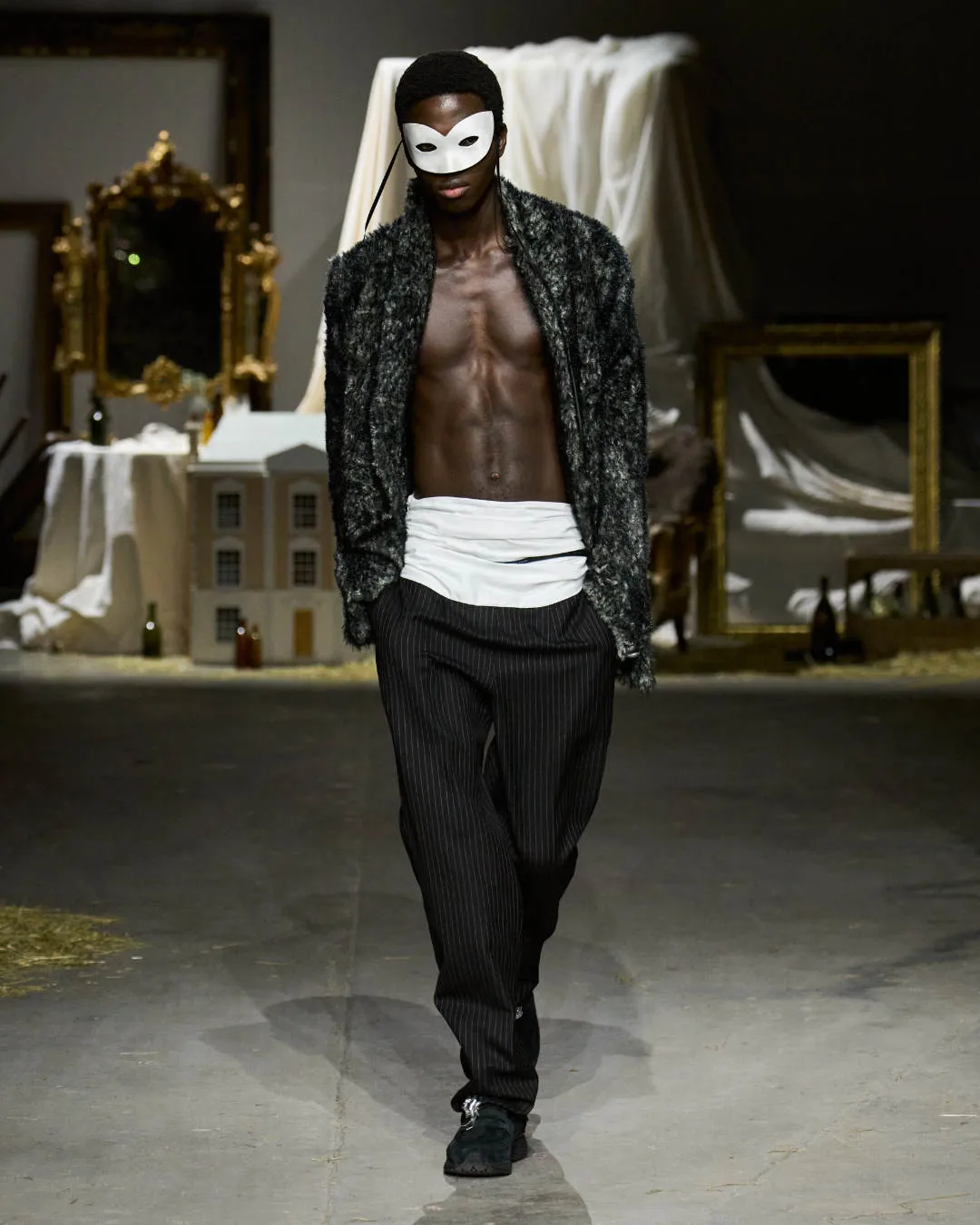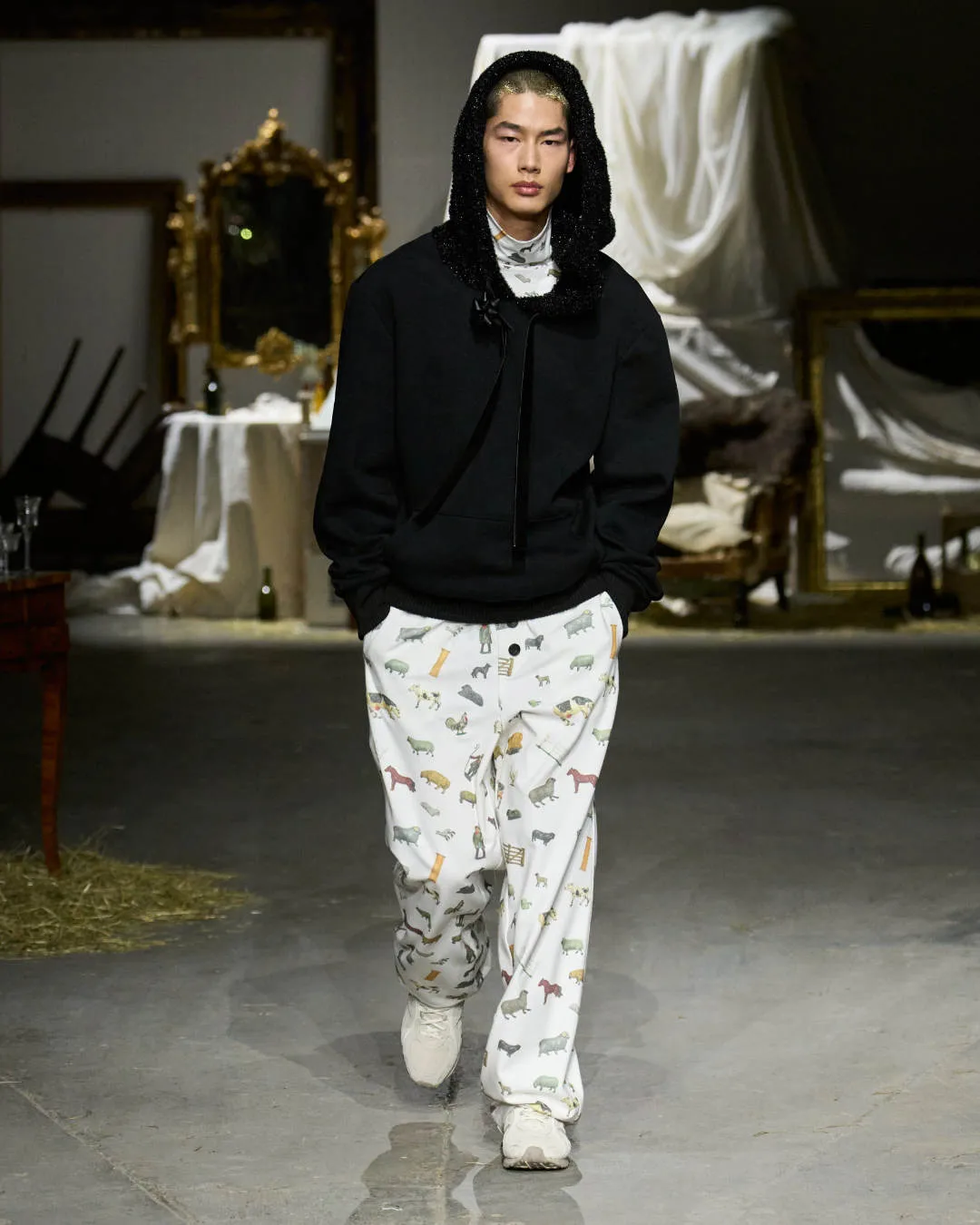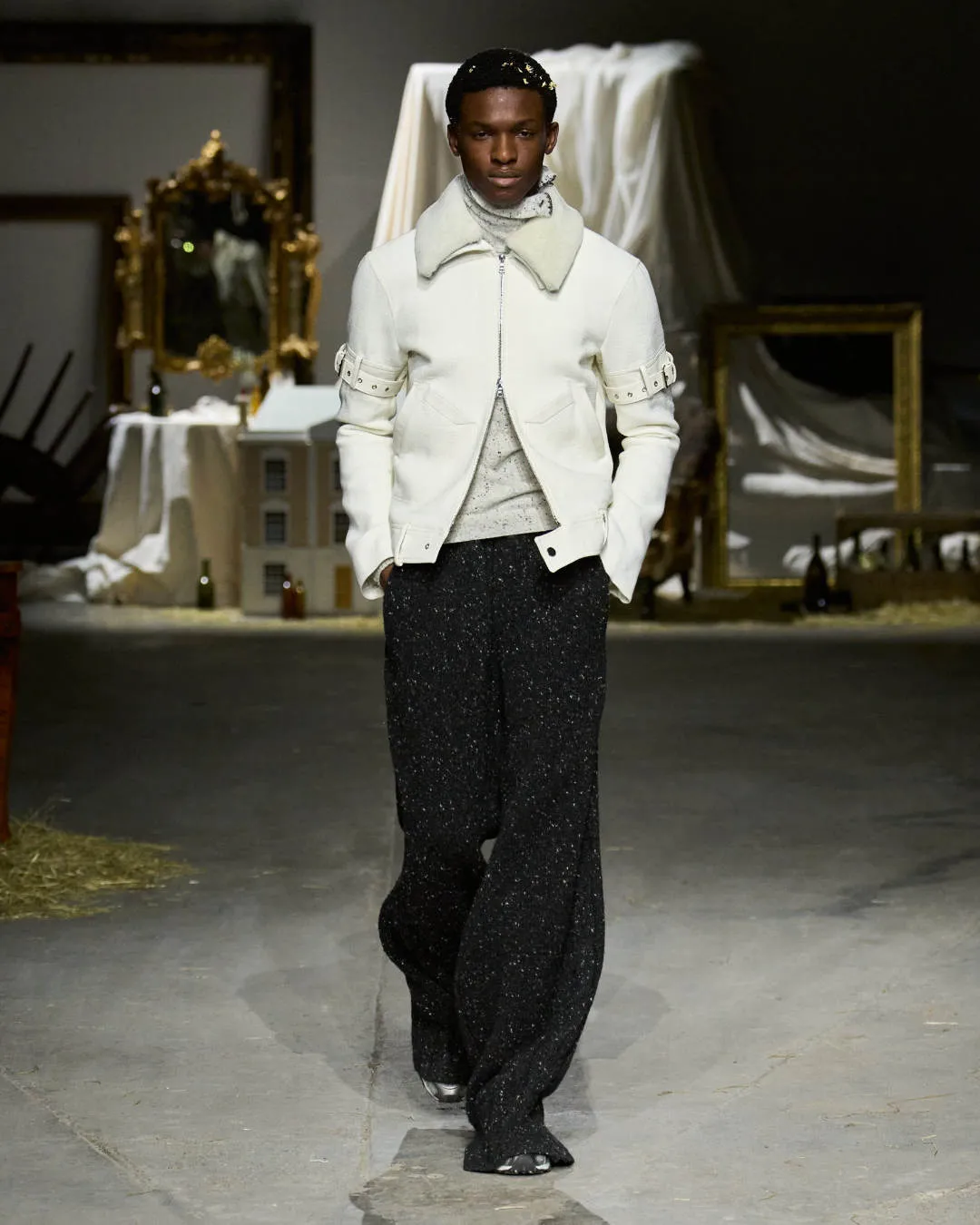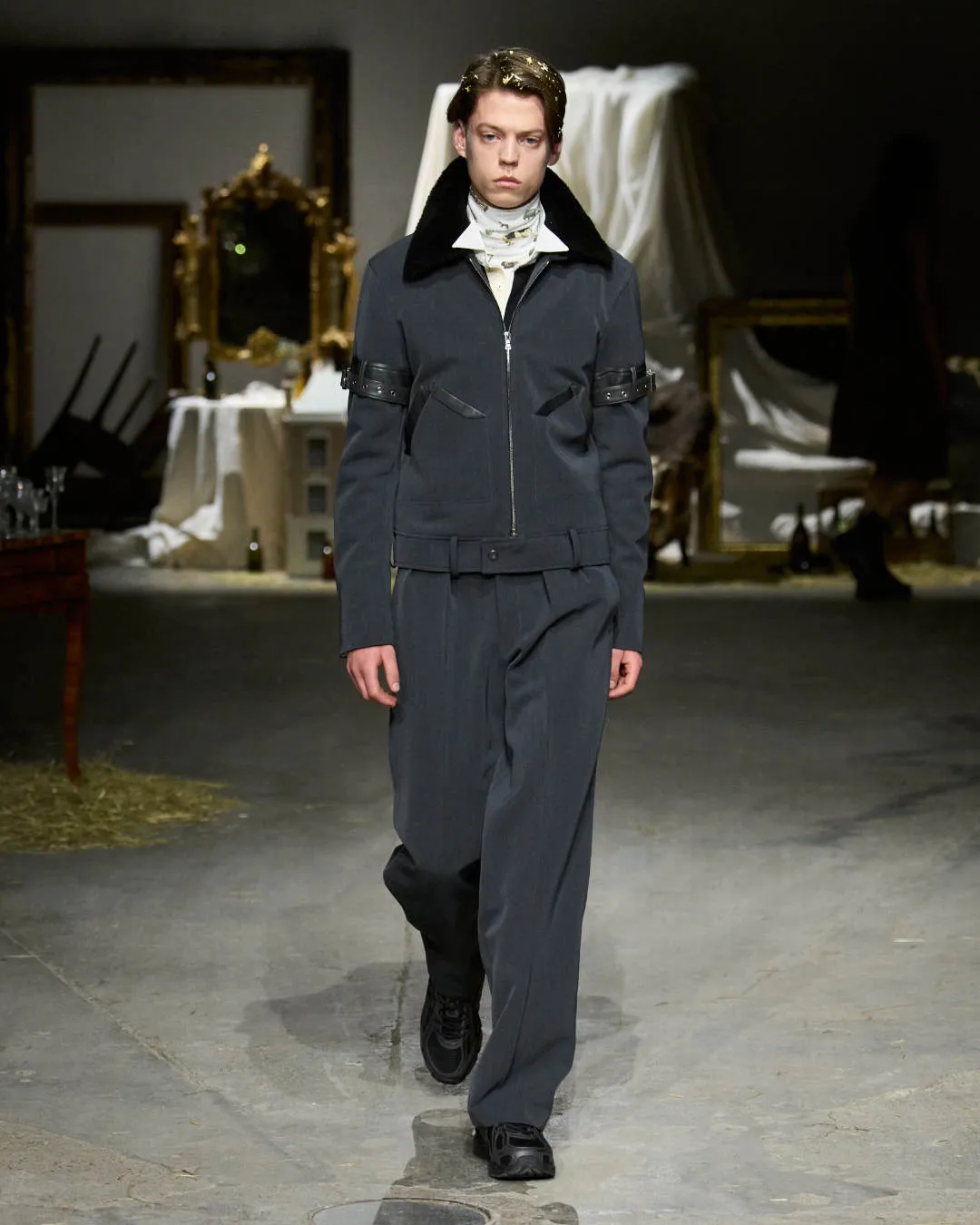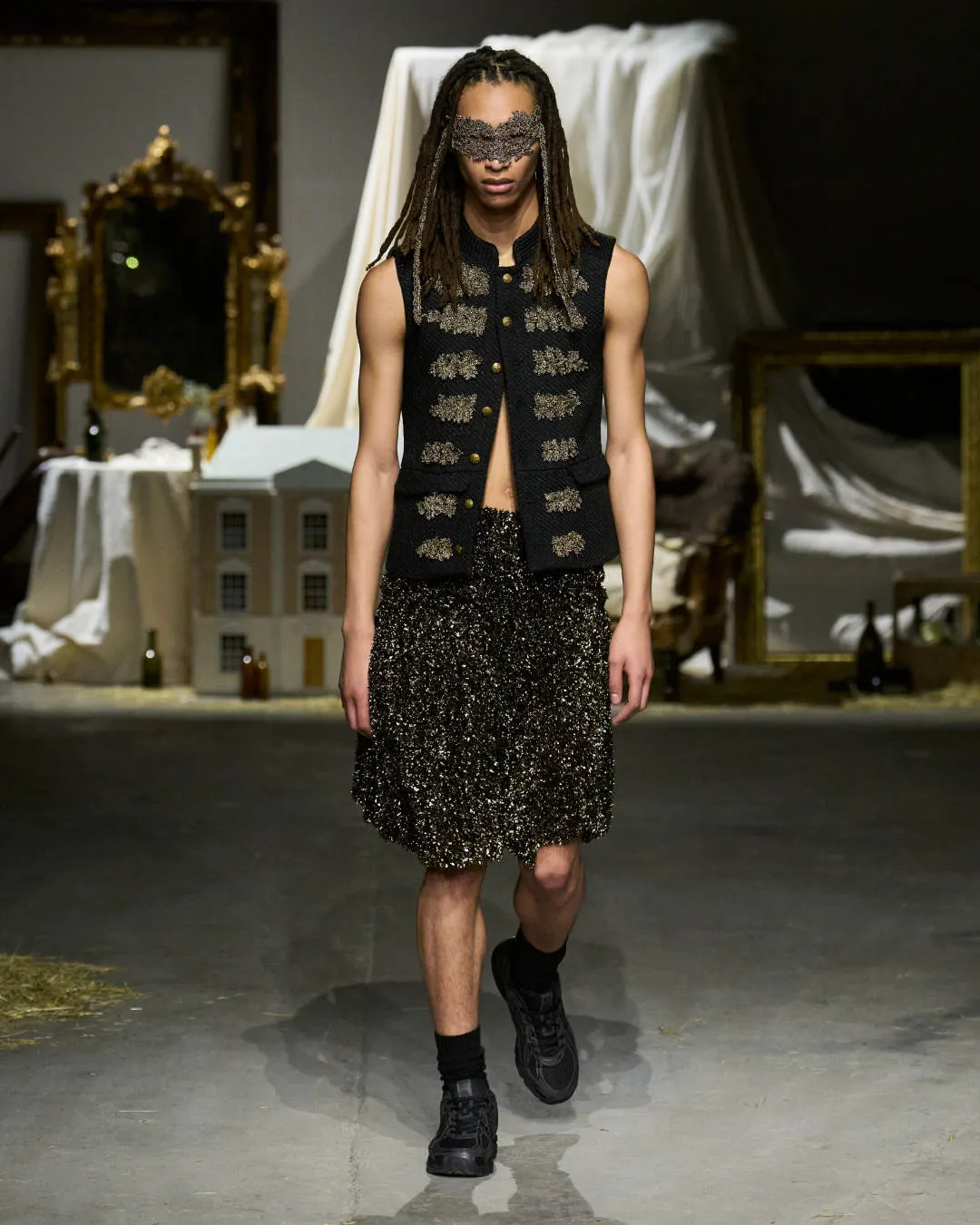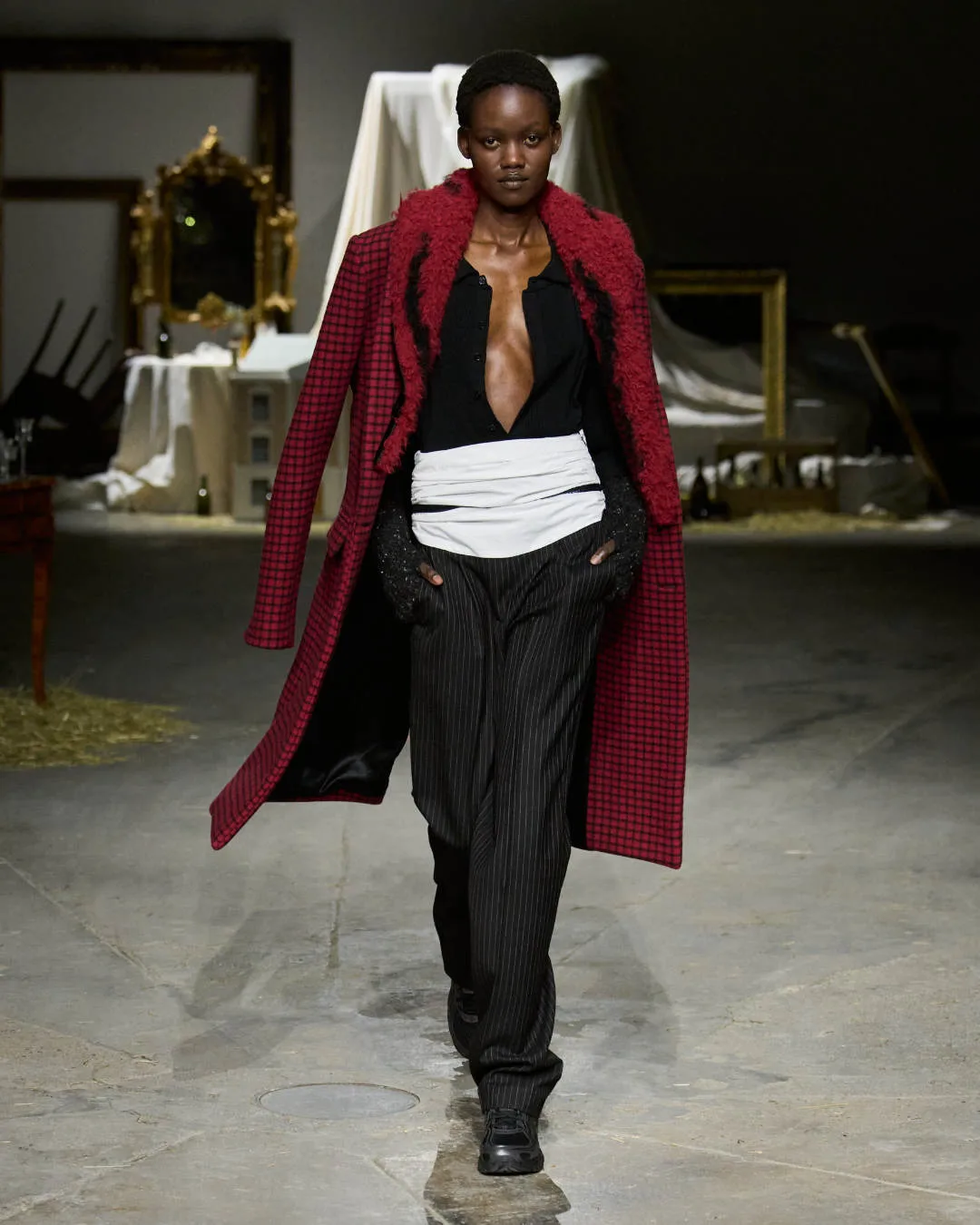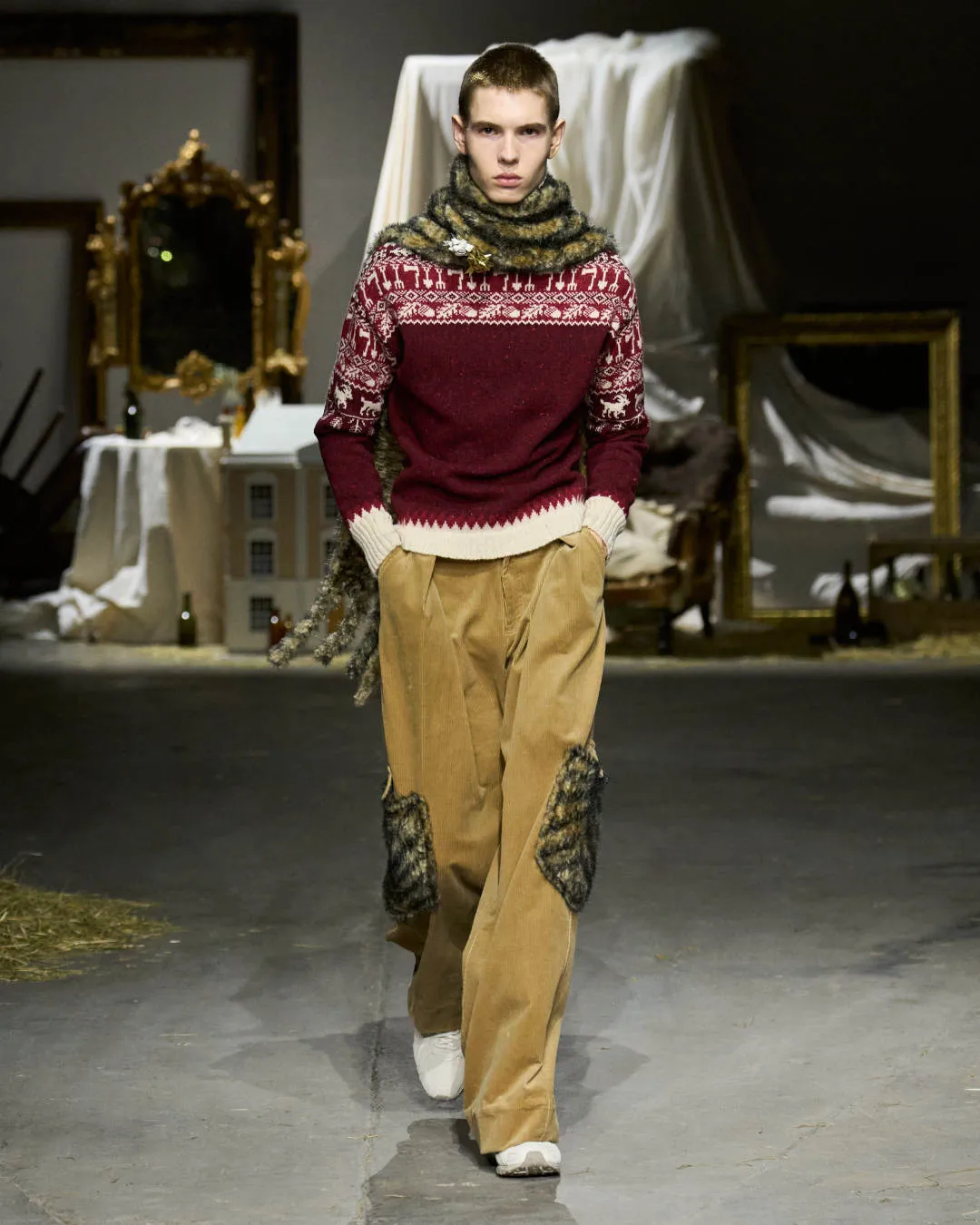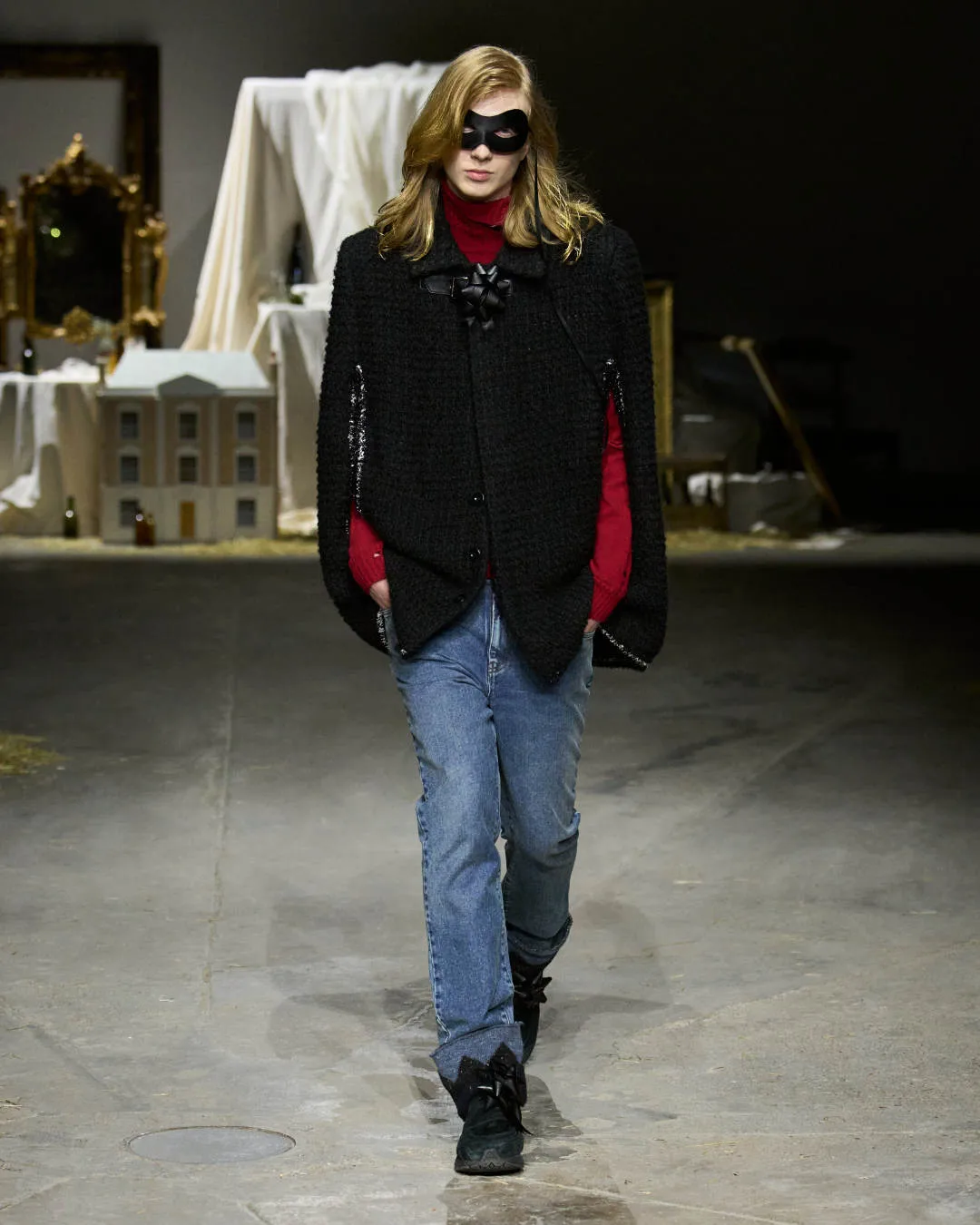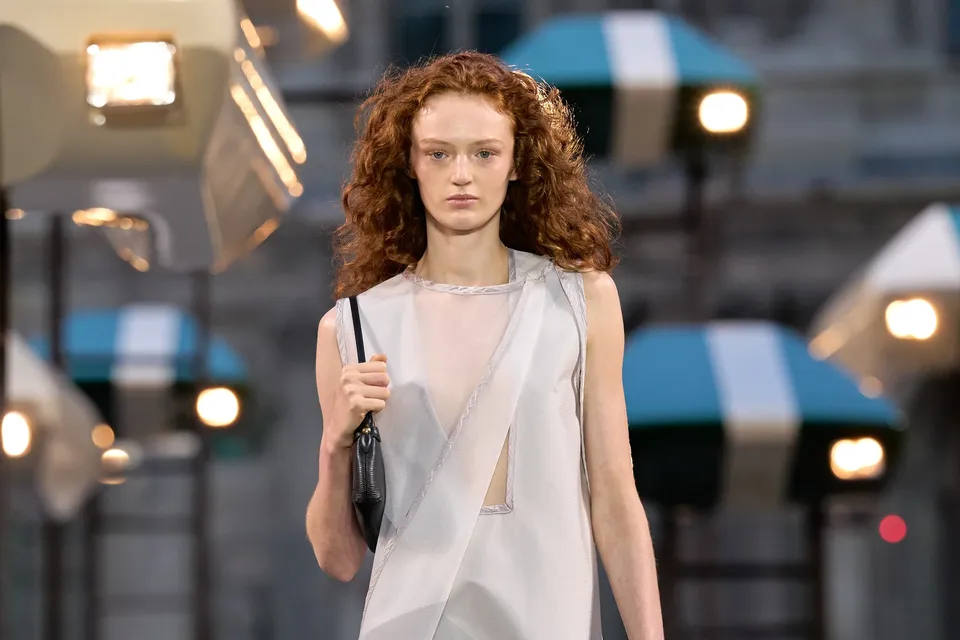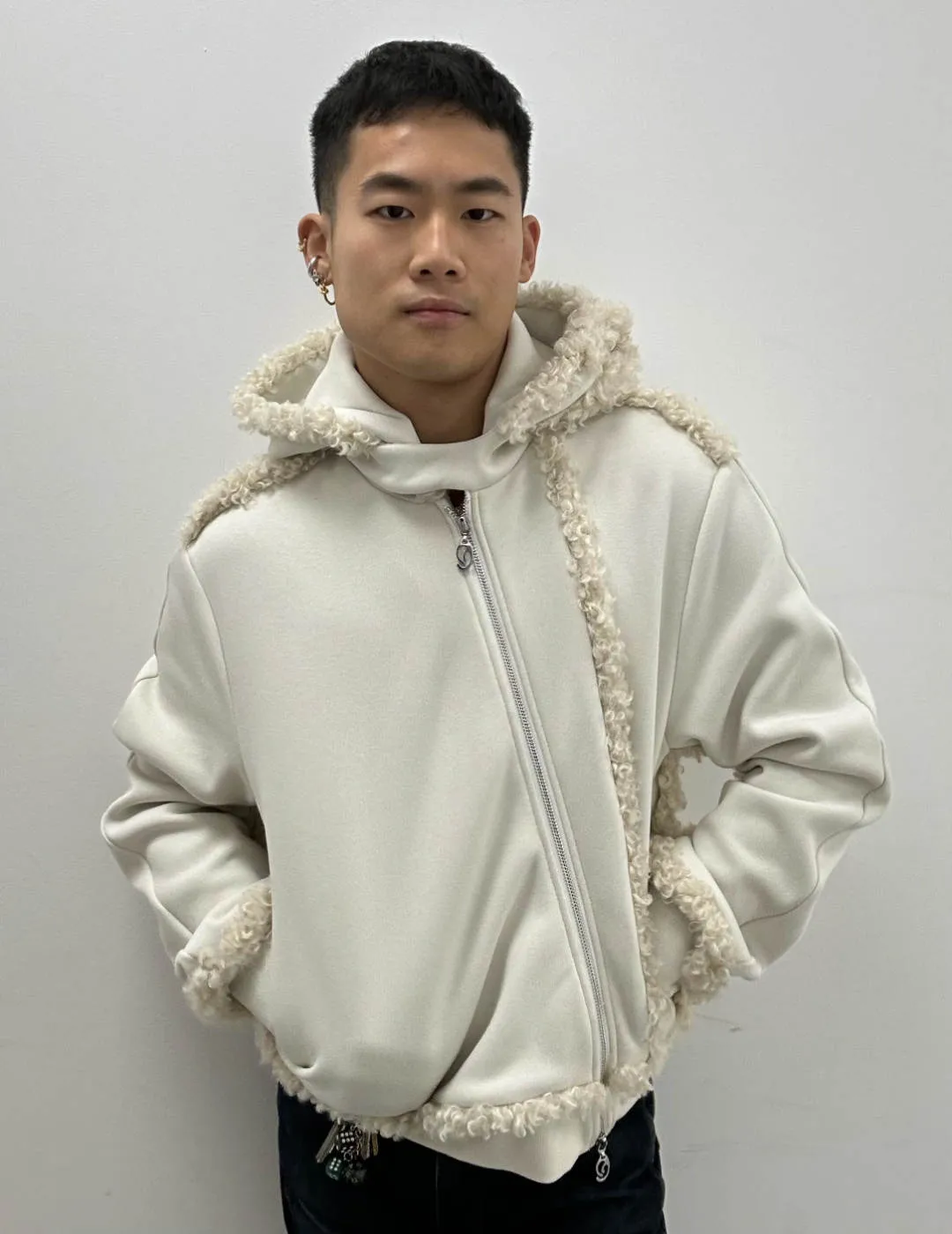
In Oscar Ouyang's practice, knitting emerges as a space for contemplation where time slows down and emotions and intuitions spread along the thread, becoming form. By weaving each strand, Ouyang transforms the design process into a layered narrative. As the stitches multiply, the thinking deepens; softness, chance, and imperfection become elements that define the character of the garment. This aesthetic sensibility, shaped between China and London, breaks the rigid moulds of masculinity, creating a balanced space between fragility and durability.
When you begin a piece from a single thread, what emotion or idea usually becomes the first knot that everything else grows out of?
It’s quite metaphoric. When you create with knitwear, you’re forming a stitch from threads, then loop after loop, building layers through pattern and structure. It’s very different from working with fabric, where you drape, create folds or pleats. Knitwear is a much slower process.
Because of that slowness, you have more time to reflect on what the next step should be. Even within a single stitch, or a small swatch, you can embed a lot of emotion. With fabric, things are more predefined. Silk, tulle, gabardine, wool, all of them already come with a texture and a function. You use thick double layer wool for coats, silk chiffon for bias cut dresses.
Knitwear, on the other hand, allows more possibility during the act of making. There’s more emotion and a more personal touch when you can read a piece through a stitch, even a mistake stitch or a bit of randomness.
Because of that slowness, you have more time to reflect on what the next step should be. Even within a single stitch, or a small swatch, you can embed a lot of emotion. With fabric, things are more predefined. Silk, tulle, gabardine, wool, all of them already come with a texture and a function. You use thick double layer wool for coats, silk chiffon for bias cut dresses.
Knitwear, on the other hand, allows more possibility during the act of making. There’s more emotion and a more personal touch when you can read a piece through a stitch, even a mistake stitch or a bit of randomness.
Is there a specific fabric or yarn that you love working with?
Wool is a big part of our practice. This season, for Autumn/Winter 2026, we also experimented with more playful yarns, such as sparkling, tin-like yarns that feel festive and slightly silly. But usually we work with natural fibres like silk, linen, lightweight cotton, and mostly wool. For fabrics, we also primarily use wool for coats and jackets. It’s more structural.
How do you translate atmospheric sensations such as humidity, dusk, or silence into textile structure rather than print or colour?
For dusk, I would choose a dotted yarn, one where different fibres or sparkly elements are already mixed during the spinning process. Irish Donegal yarn is a good example. It comes with messy dots that feel dusty and atmospheric.
Humidity is harder to translate. It’s more abstract and closer to the sensation of moisture or a drop of water touching the skin.
Silence is less about the garment alone and more about atmosphere. It’s similar to how Rick Owens approaches sound in his shows, where the combination of space, sound, and movement creates a moment of stillness.
Humidity is harder to translate. It’s more abstract and closer to the sensation of moisture or a drop of water touching the skin.
Silence is less about the garment alone and more about atmosphere. It’s similar to how Rick Owens approaches sound in his shows, where the combination of space, sound, and movement creates a moment of stillness.
Moving between China and London, when do you feel your aesthetic sensibility is most misunderstood? And does that friction feed your creativity?
That tension gives me an edge. It allows me to look at things from both perspectives. Culturally, the way people dress and perceive fashion in China is very different from London. At the same time, globalisation has created a shared idea of cool. Certain cultural references are now understood almost everywhere. The challenge is finding common ground between cultures and communicating across them. I also return to Asia often. I grew up mostly in Beijing, but my family is from different parts of China and Singapore. Every visit connects me to a different place.
If you could archive one personal memory inside a textile, the way trees archive time in their rings, which memory would you choose and why?
I often think about the summer after I graduated, before the brand fully took off. We went to a lot of festivals during that time. I imagine that memory as a simple cotton piece, like a T-shirt or tank top you’d wear to a festival, or a small knitted piece that fits into that context. Something casual and worn-in.
Working with yarns and deadstock materials, what kinds of narratives become possible only through limitation?
Limitations create a grounded, down-to-earth feeling. There’s a sense of craftsmanship and honesty. It gives a timeless, slightly vintage quality, suggesting that a piece should last, be preserved, worn, and passed on. That’s a narrative some fashion pieces don’t always communicate.
Many of your silhouettes feel both tender and defensive. Do you see vulnerability itself as a form of armour in your design?
I do. Right now, we’re very focused on menswear, and introducing softness feels important. Showing tenderness can also be a form of strength. That softer approach to masculinity is something I find empowering, and I think it’s what menswear needs right now.
You waited deliberately before debuting on the runway. What did that decision teach you about pacing and survival in fashion’s current cycle?
The cycle is incredibly fast. You think you’re ready, and then you realise how quickly everything moves. Our last show was in September, and we’re already deep into preparing the next one. It really teaches you about timing, endurance, and sustainability.
Lastly, if your next collection had to be built around a single non-visual sense such as sound, touch, smell, or taste, which would you choose and what would its first look embody?
I would choose touch. I imagine the feeling of hay, standing in a field surrounded by rolled hay. There’s roughness, but also peace and quiet. That balance between softness and masculinity, calm and rawness, is something I’d want the collection to embody.