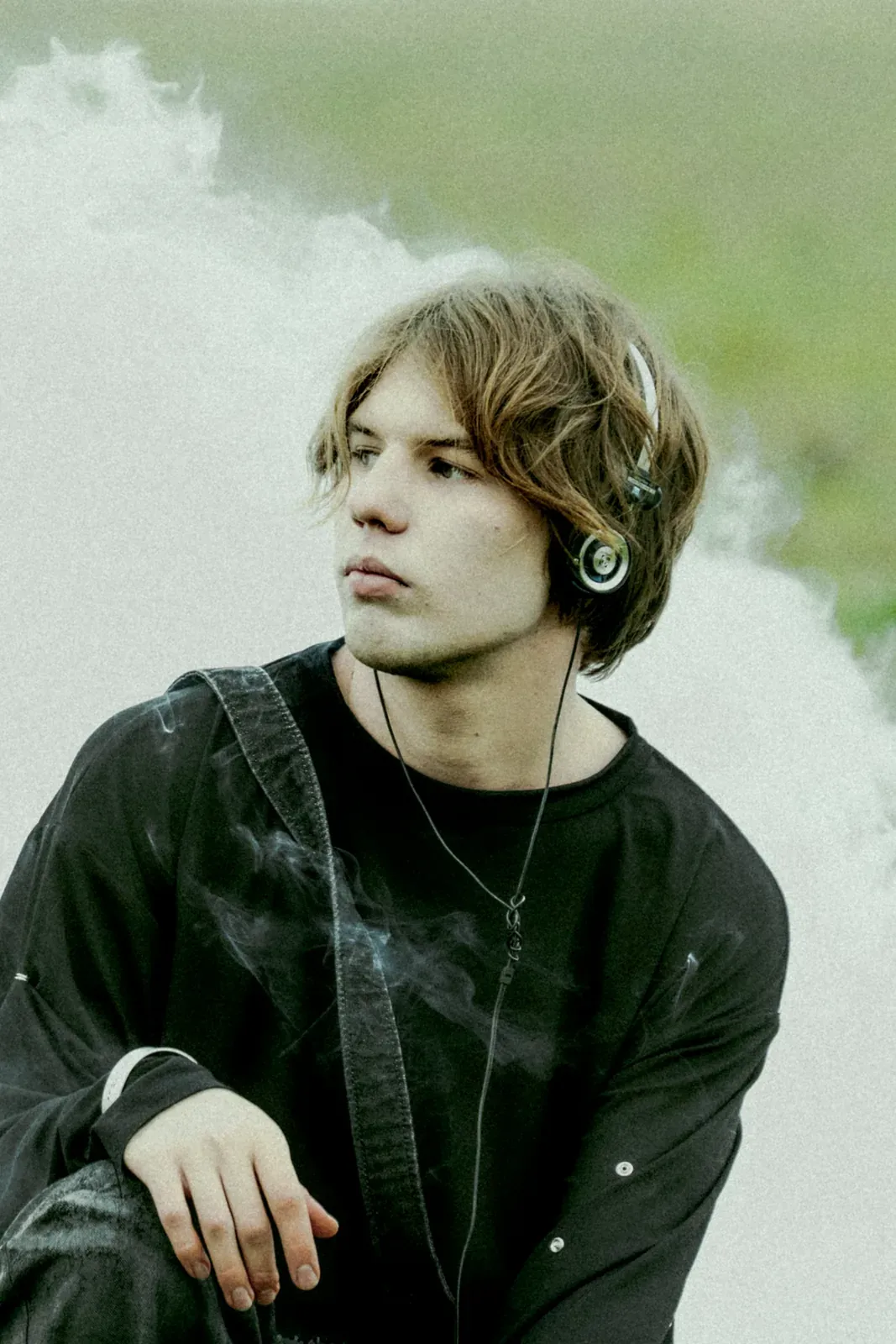
Have you ever felt completely lost, unsure of who you were becoming, but equally aware that there was no way back to the person you used to be? That feeling sits at the centre of find yourself, the new EP released today by Øneheart. Ever since snowfall unexpectedly turned him into one of the most emotionally resonant names in contemporary ambient music, the young producer has been navigating the strange space between global attention and personal uncertainty.
Last month’s fixing myself already hinted at a shift, reintroducing tension and movement into a sound previously defined by stillness. When we spoke with him a few days ago, before the EP was finally released, Øneheart described the track as “the emotional peak of the album, as if you could feel a storm coming in.” Our conversation also moved toward subjects rarely discussed openly in music, like the reality that many records reflect a past version of an artist rather than who they are now.
Elsewhere, he talks about making music alone, often in complete darkness, quietly changing things while nobody watches. “Sometimes I listen back to my songs after release and realise I don’t feel anything,” he admits, touching on a feeling many artists experience but rarely acknowledge publicly. More than simply repeating the success of snowfall, find yourself confirms there is still much more to discover in Øneheart’s world: a young artist with a rare emotional sensitivity, still searching for new ways to connect with people through his own experiences and uncertainties.
How are you feeling these days now that fixing myself is out in the world?
I’m so happy to finally share fixing myself because it’s the first track I’ve produced in a long time that has drums in it. It feels like I’ve returned to my roots, back in 2018 when I was making future garage.
What has the response been like so far? Have you been checking reactions or trying to stay a bit distant from it?
There were a lot of reactions, but mostly I saw so many people recognise themselves in it, which gives me some relief knowing that I wasn’t the only one going through a similar period. So it feels good!
You shared that you wrote it at a moment when you felt completely lost and didn’t know what to do next. What did that period look like for you, beyond the music?
Yeah, I really felt lost during that period, and I couldn’t shake the feeling that I’d run out of ideas, so I wanted to try something new. For several years, I constantly asked myself what I wanted to do and which direction to take next. I felt like a lot had happened, but deep down, I still felt a sense of emptiness. There was a lot going on back then, but looking back on it now, I’m glad I got through it because I’ve learned a lot.
Do you feel like writing the track actually helped you move through that, or was it more about documenting the feeling?
Yeah, I think it’s mostly about documenting the feeling.
There’s something very fluid in how the track moves between ambient, future garage, and IDM textures. Do you think about sound in terms of genres at all, or is it more instinctive?
I don’t really think about genres, and often when someone asks me what genre my music is, I find it so hard to give a single answer because it’s really a mix of everything.
find yourself is coming very soon. How does fixing myself fit into the emotional arc of the EP?
I would describe it as the emotional peak of the album, as if you could feel a storm coming in.
When you look at the EP as a whole, is there a thread that connects all the tracks, or are they more like different states of mind?
find yourself is a story about searching, about the dissolution of my former identity and the first cautious steps toward a new one. I feel like it captures that state of uncertainty when you haven’t found yourself yet but already understand that there’s no returning to who you used to be. With this project, I tried to preserve my melancholic ambient signature while gradually expanding it through elements of electronic music like hyperpop, botanica, IDM, future garage, and more.
You come from a small town, from a family with a strong musical background. Looking back, how much do you think that environment shaped the way you understand music today?
I think it really helped shape who I am today. I still remember that feeling I got from the music when my dad and I used to listen to some Russian rock songs, and recently, my grandma sent me some photos of me when I was trying to play something on a toy piano back when I was five years old.
Did you always feel connected to the kind of sound you’re making now, or did it take time to arrive there?
I’ll be honest, I finished this EP about a year ago. My perspective on these tracks has changed a bit since then, and right now I’m working on a different sound. I often achieve my sound through trial and error, and just by trying.
Your rise has been incredibly fast, and your music seems to resonate far beyond borders. When was the first moment you realised it was reaching people globally in a way that didn’t belong to just one place?
Actually, it’s so strange to realise that sometimes I don’t even understand how it happens, and I often feel like it’s passing me by, but it truly makes me happy. When I read messages from fans in different countries about how my music helps them get through tough times, it warms my heart, and I’m realising that it’s something more than just music.
snowfall passing a billion streams is such an unreal milestone. Does a number like that mean anything to you on a personal level, or does it feel too abstract to process?
Every time Eugene (reidenshi) and I talk about this, it never ceases to amaze us. We never would have imagined that this track would reach so many people, which is crazy.
Did that moment change your relationship with your own music in any way?
I’d say the doubts about my music haven’t gone away, but it’s given me some sense of hope that what I’m doing means something.
You’ve already moved across different formats, from standalone tracks to collaborations and even scoring for a video game. What draws you to explore different mediums like that?
I just don’t like standing still, and I don’t want to get stuck on one thing, only on my vision.
You once said your music is best experienced alone, with headphones. What do you listen to when you’re in that space yourself?
It depends on my mood. I have to say I’m obsessed with Malibu music and her side projects as well!
And when you come back to your own tracks after releasing them, what do you feel? Do they still belong to you?
It’s actually pretty common for me to listen back to my songs after release and realise I don’t feel anything. I’ve talked about this with other artists I know, and they say it’s a normal thing. Sometimes months or even years later, I come back to it and think, “Dude, I was actually doing something great.”
When you collaborate, what needs to click for it to feel right?
For the most part, it’s the music that should resonate, but for me, a lot also depends on whether we can build a connection with the collaborator and really vibe together.
What’s something about your process that people would probably not expect?
It used to be hard for me to write music when someone was watching, so I often made a lot of changes in silence. I also like working in complete darkness! I enjoy taking unconventional approaches and doing things that might seem wrong but feel right to me and actually work. And yeah, I’m working on an EDM album right now — sorry, I can’t keep it a secret anymore.
If you had to pick three moments from the past few years that felt really special or defining for you, which ones come to mind first?
My first performance in 2023 was at a festival with around 1,500 people, and it was my first DJ set. The moment when I saw my first million listeners on Spotify back in 2022. Meeting Ninajirachi in Amsterdam last year was probably the biggest highlight of the year for me; I really love her music. There might be even more, but these are the first things that came to mind right now.
What do you enjoy the most about your work right now? And what still feels challenging?
I love that feeling when a whole track can come together from a small idea in just a few hours, purely off inspiration, and chasing that feeling when you can replay a track ten times in a row and still nod your head to it. The hardest part comes with working on bigger projects like albums, when you spend months listening to the same thing and constantly feel like you want to delete everything.
And for anyone reading this who might be in that same place you described — feeling lost and not knowing what to do next — what would you say to them?
It’s really important to give yourself time and learn not to put too much pressure on yourself; sometimes you just need to live. I know how hard that is from my own experience, and I haven’t fully figured it out yet either, but I’m trying my best.
And when find yourself is finally out, what’s the very first thing you think you’ll do?
I’ll tell myself, “I did it!”, then continue working on new projects and keep searching for myself, but with a new sense of feeling now.