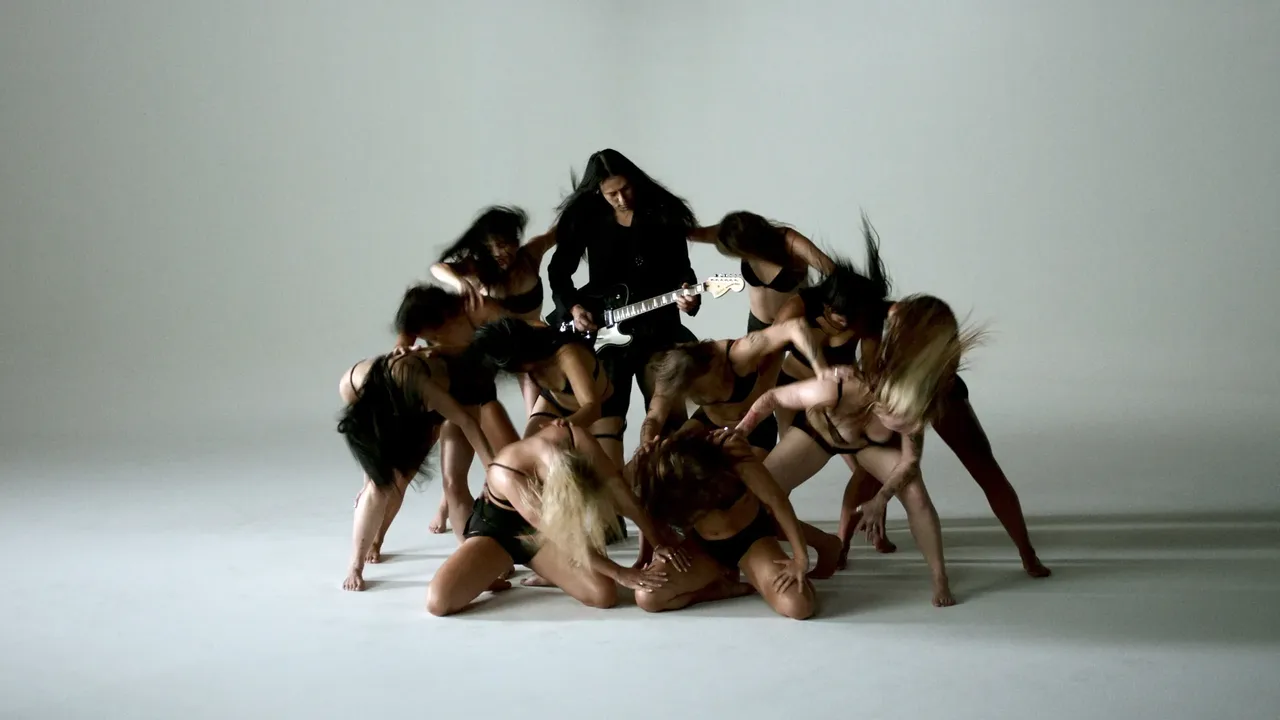
The concept is one we have all heard before. The execution, however, is novel and intriguingly layered. OHHARA places an ancient symbol of temptation within a distinctly contemporary world and, through a cast of expertly choreographed dancers, explores the tension between innocence and knowledge, restraint and desire. This is bit the apple.
The lyric “I know about good about evil” repeats throughout the track, transforming the biblical acquisition of knowledge into something almost mantra-like. There is no remorse in the repetition, nor any desire to return to innocence. Paired with references to miracles, cures and holy signs, the language of temptation begins to take on the quality of devotion — as though biting the apple has opened the door to a new kind of consciousness.
The video’s choreography is perhaps the most impressive element, conceived by Liv Cav. The performers move with a controlled, almost ceremonial precision, creating tableaux that convey the art of ritual rather than conventional pop choreography. Their gestures and positioning give the imagery a sculptural quality, while the modest attire keeps the focus on movement, expression and composition. The performers appear self-possessed rather than exhibitionistic, their bodies presented with sensuality without becoming objects of the gaze.
The song’s hyper-pop production only heightens this sense of excess and transformation. Synthetic, euphoric and deliberately exaggerated, it creates a peculiar collision between religious devotion and dark pop ecstasy. Visually, OHHARA extends this tension through imagery that feels incantatory and otherworldly. The familiar symbolism of Eden is stripped of its historical distance and recast through contemporary fashion, choreography and pop imagery.
In bit the apple, OHHARA gives Eve a new personality. Instead of embodying the archetype of the fallen woman, she becomes a figure of agency: curious, self-possessed and unashamed of what she has discovered.