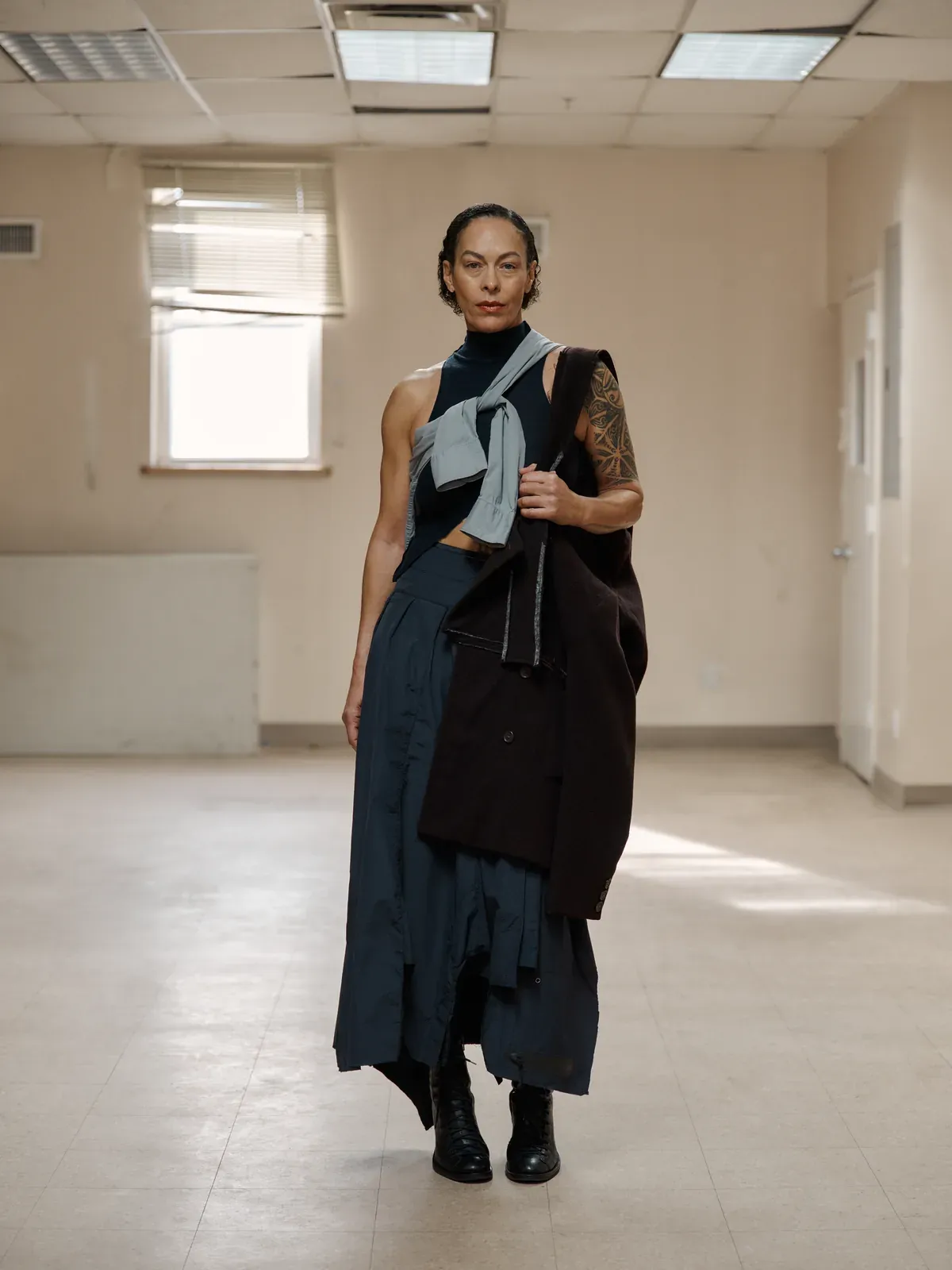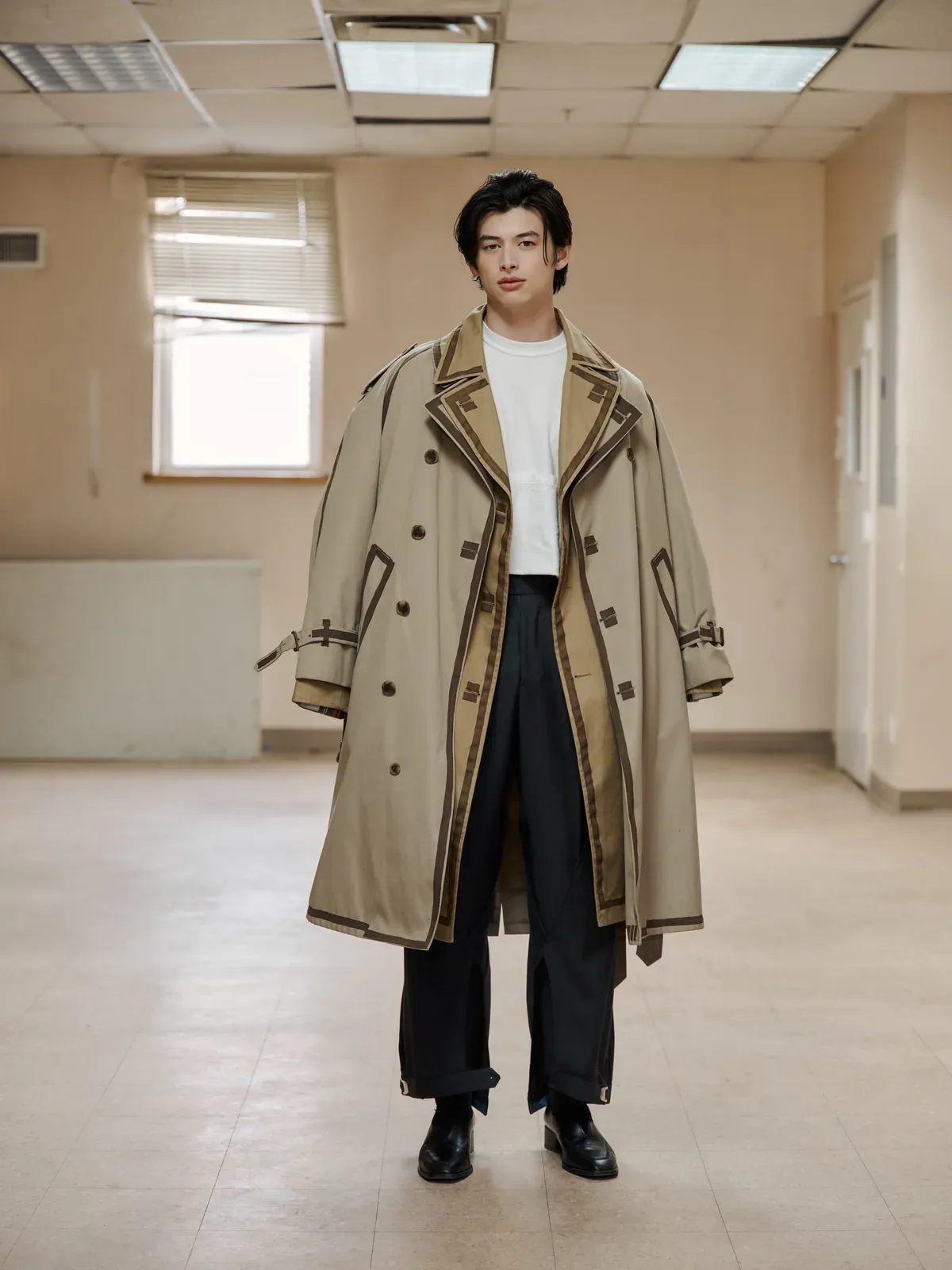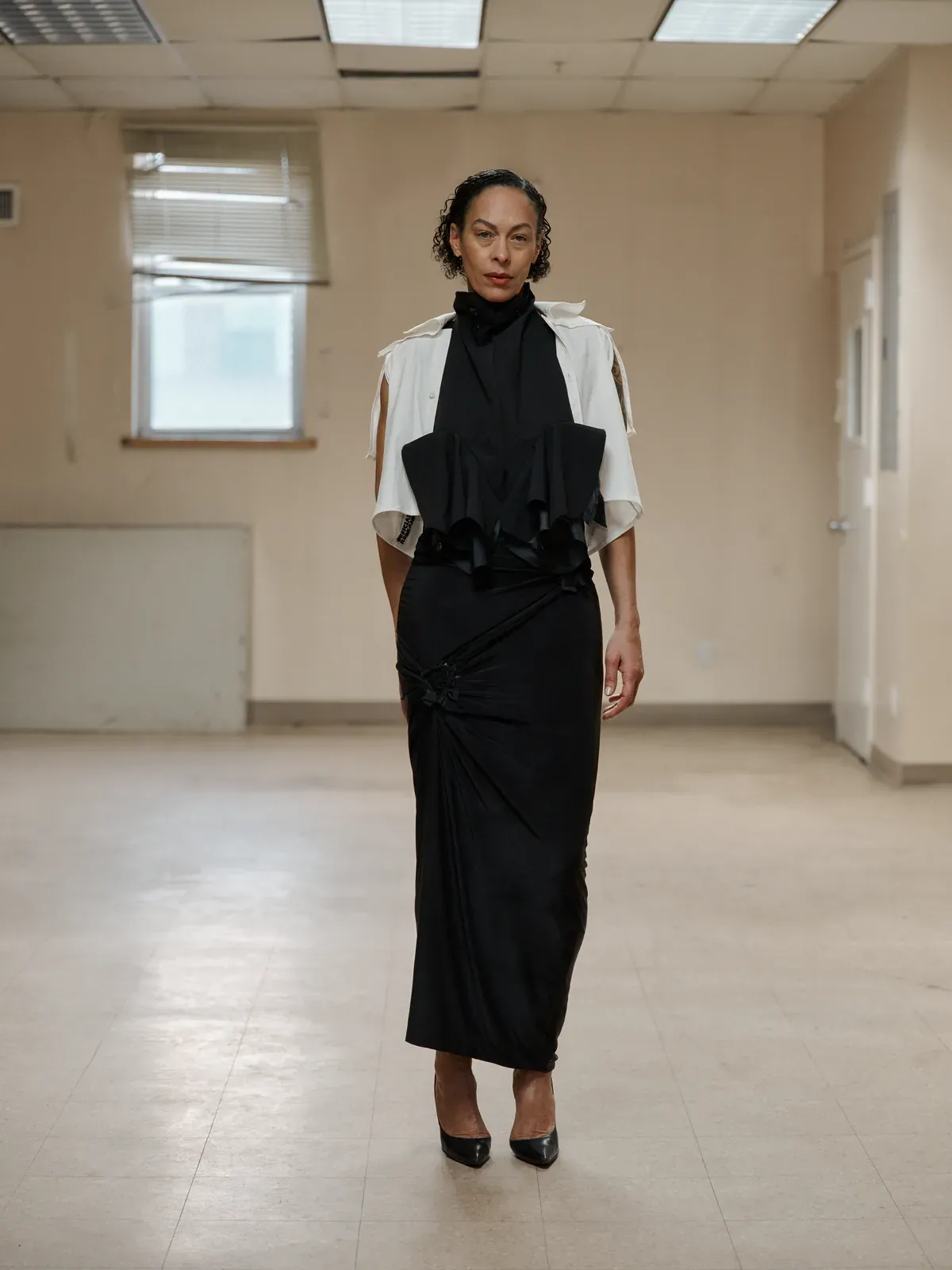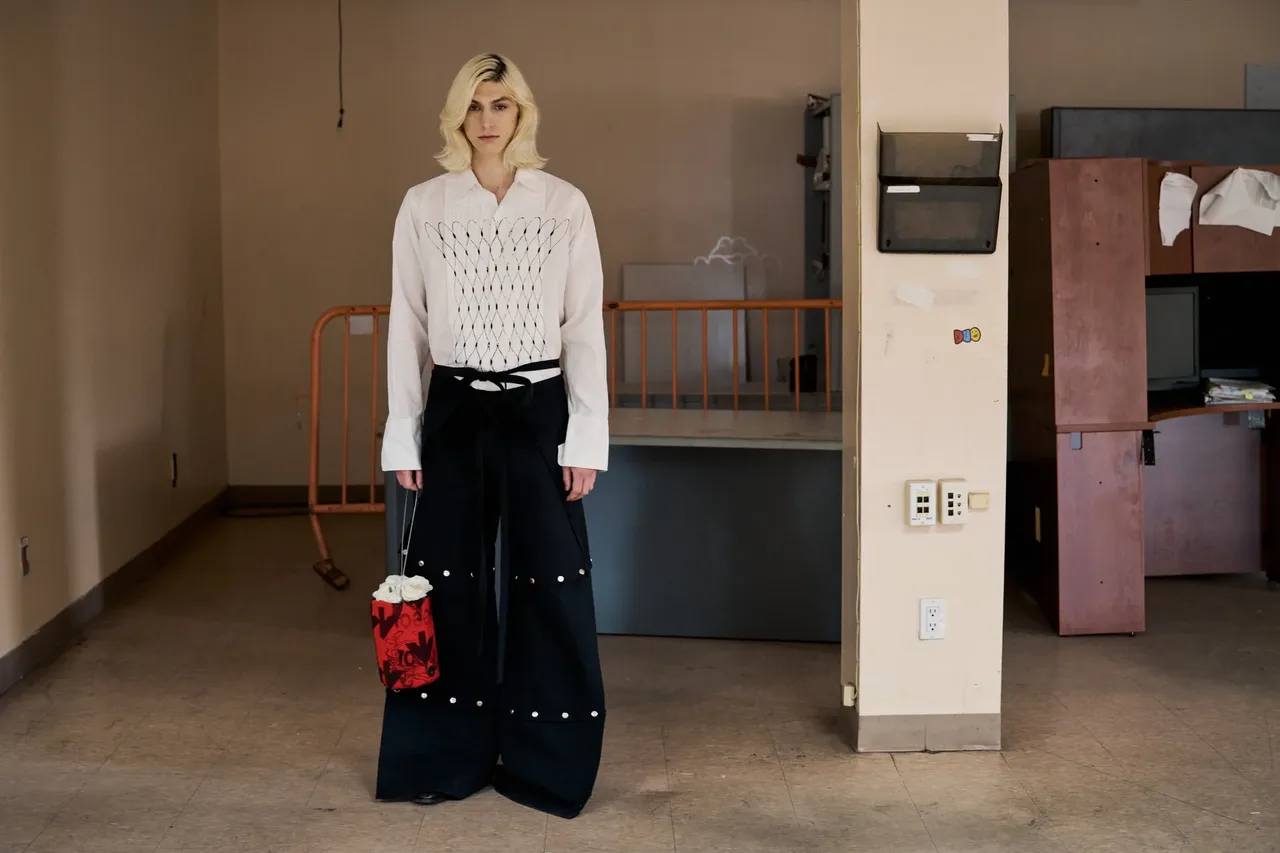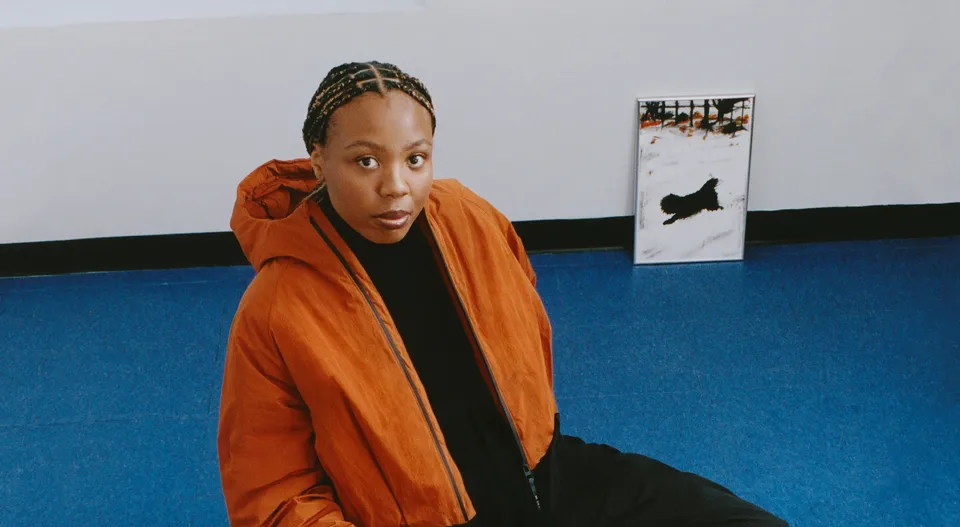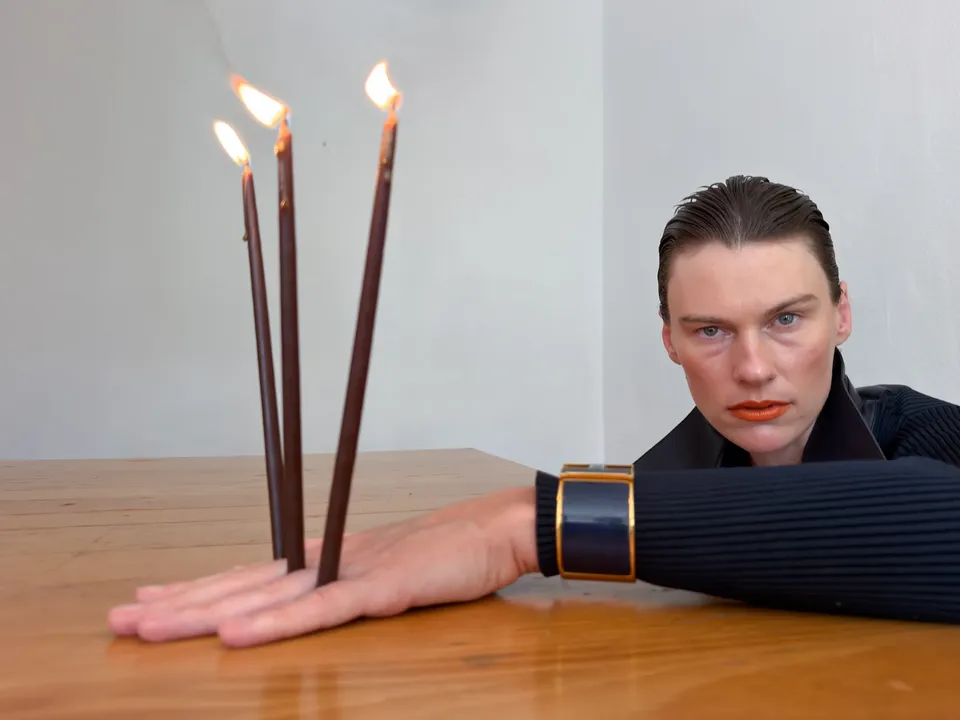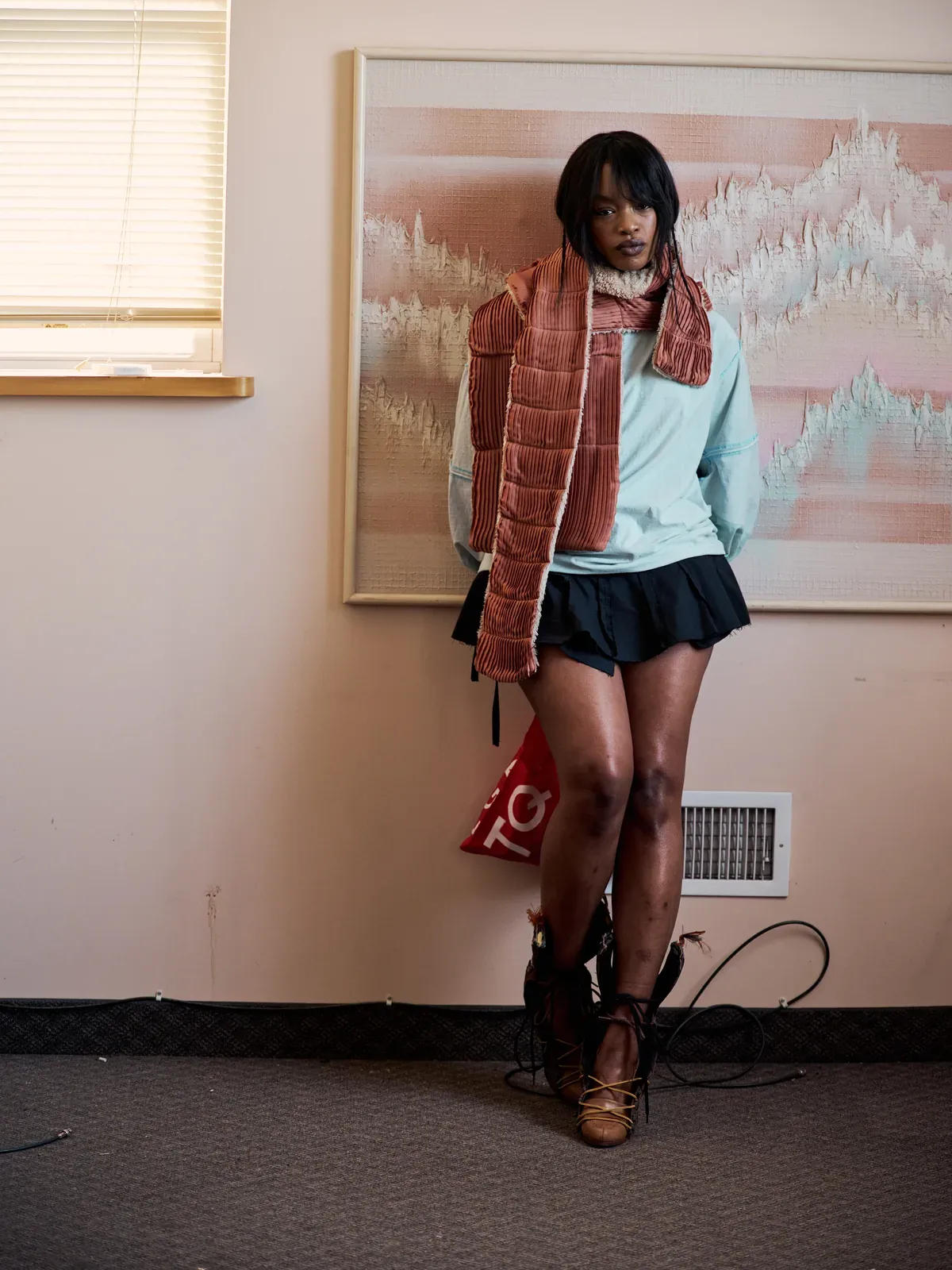
It would be easy to describe MI Leggett through the many worlds they move between: fashion, art, sustainability, queer nightlife and community building. But after speaking with the founder of Official Rebrand, what stands out most is their clarity. Leggett is fully aware of the political tensions, environmental challenges, and general uncertainty shaping contemporary life. Fashion, in their hands, becomes a tool for helping people feel empowered, embodied and a little more at home in themselves.
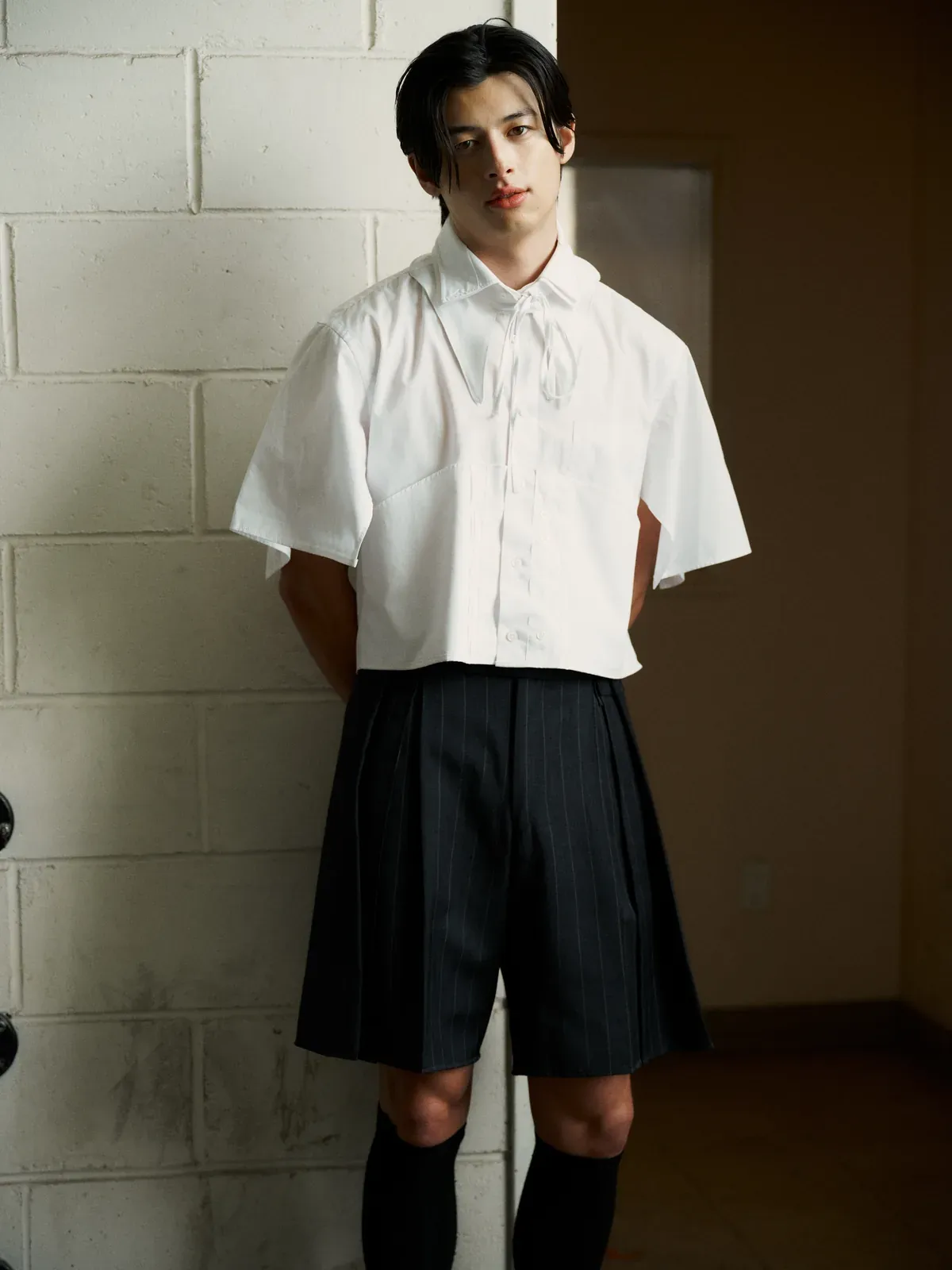
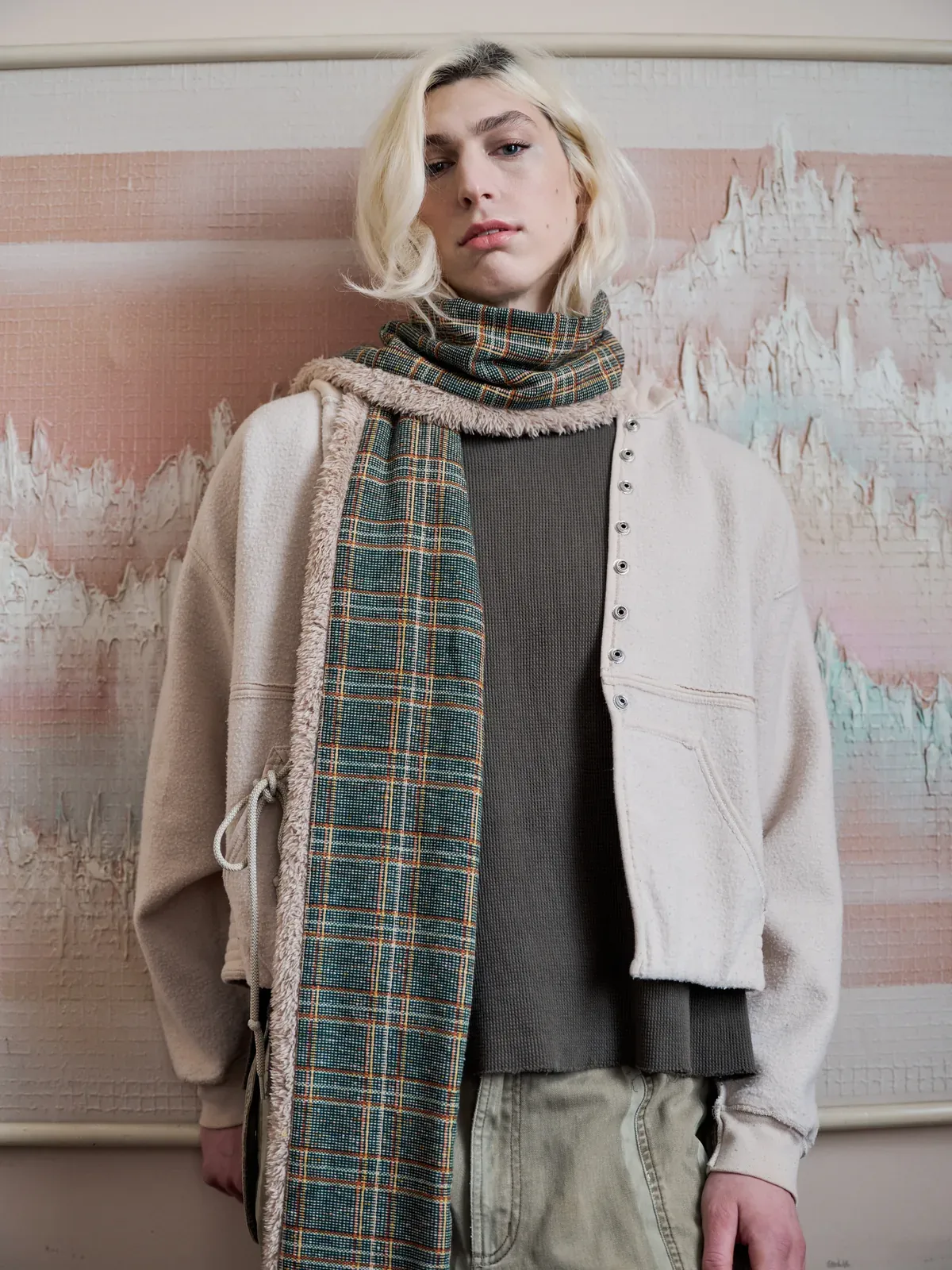
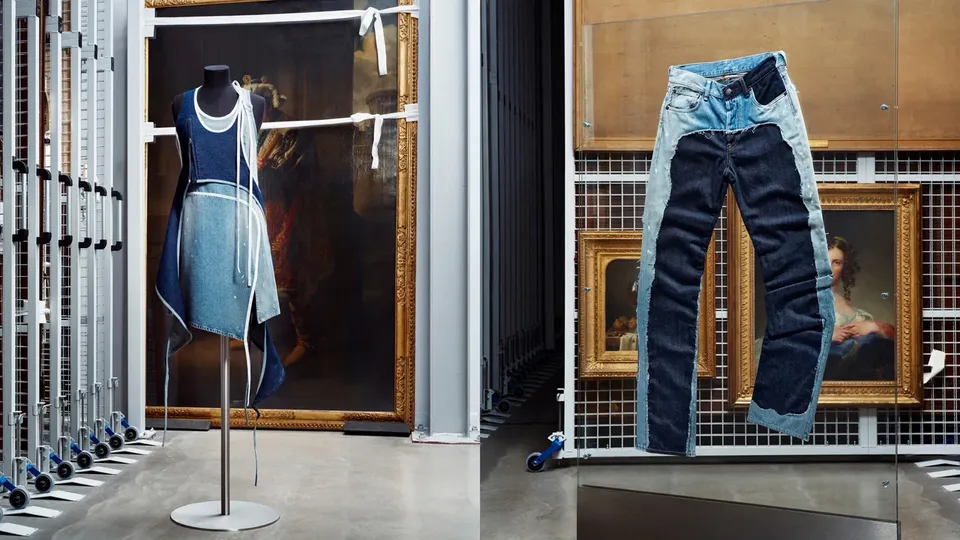
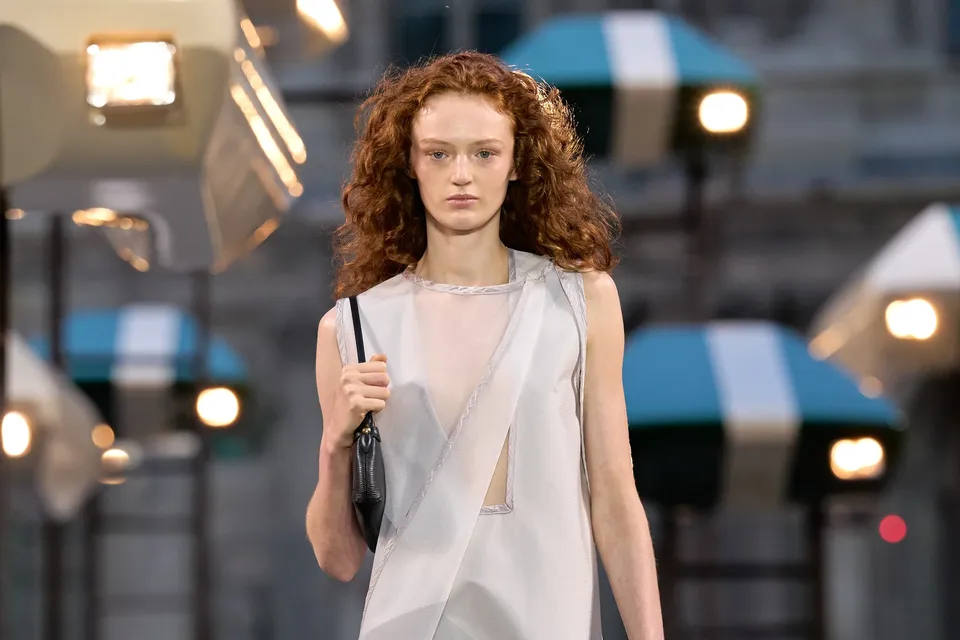
That perspective runs through TS26 (palimpsest), unveiled a few weeks ago. The collection takes its name from a word Leggett stumbled across while reading and instantly recognised as the perfect expression of an idea they had long been obsessed with. It feels like a fitting description of Official Rebrand itself, a project shaped by reinvention, queer community and creative reuse. As they tell us, “When I was a child, I decided to look at everything like it’s art, and that made the world much more interesting to me.”
That mindset informs everything from testing garments on dancefloors to rethinking the pace of fashion. Following a car accident that prompted a reassessment of how they were working, Leggett decided to move towards a single collection each year. What follows is an unfiltered conversation that travels from TS26 (palimpsest) and queer nightlife to creative resilience, personal style, political awareness, burnout, self-expression and the importance of finding your own way to contribute to the world around you.
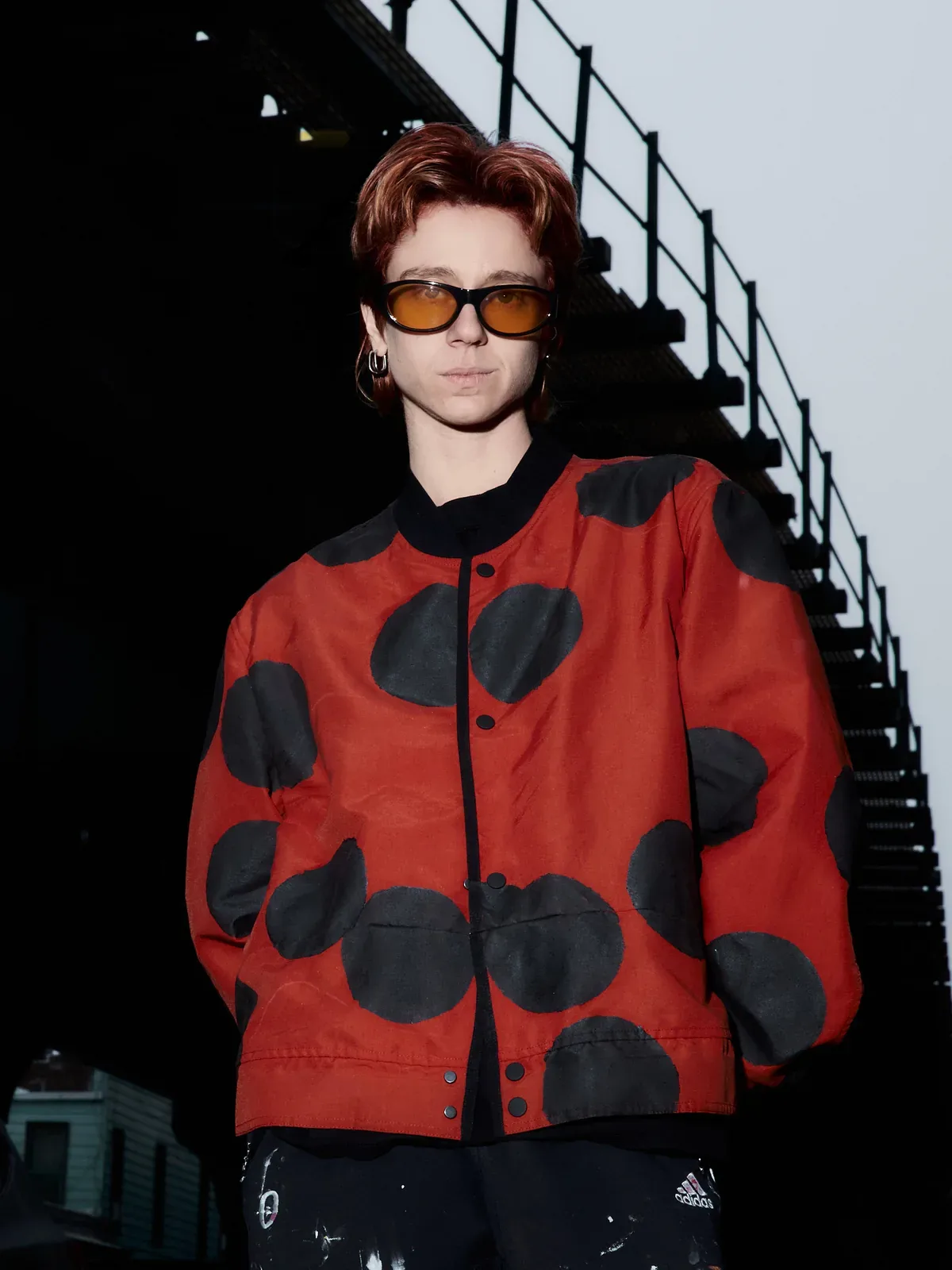
Where in the world are you answering these questions from, and what was the first thing you did when you woke up this morning?
I start every morning the same way, drinking instant coffee, listening to NPR, and stretching while I look out my bedroom window. The news is usually terrible, but the routine is still a nice way to start the day. Right now I’m sitting at my desk in my office/showroom/living room in Queens, NY.
TS26 (palimpsest) has now been out in the world for a little while. How has this period felt for you personally?
This period might be one of the most exciting and fruitful times for me professionally. I aim to always be learning, and I’m constantly gagged by mastering new techniques, honing new designs, and working ever more closely with my beloved clientele. It’s profoundly fulfilling. My personal life, on the other hand, is a different story…
The title suggests layers and histories that never completely disappear. When did that idea first enter the conversation around the collection?
I love learning previously unknown words. Reading in early 2025, I came across the word palimpsest, looked it up, and was like, aha! Finally, a word for a concept I’m obsessed with. That’s the next collection. Done.
You often move between fashion spaces, nightlife, activism and community work. Do those worlds feel separate to you, or are they all part of the same project?
In my art practice, I work across many mediums, but it’s all part of one ever-changing body of work. Work beyond material and visual arts is included in this. When I was a child, I decided to look at everything like it’s art, and that made the world much more interesting to me, and that’s a practice I continue to this day.
For a fashion gay, I’m pretty politically informed, but I wouldn’t describe myself as an activist at this time since I’m not regularly politically organising. I think there’s a misconception right now that posting on Instagram is activism. Online statements can be an important part of activism, but actual organising involves a lot more than that. My politics inform how I show up for my community and my design approach, but I would call it more a politically informed art practice than activism. Right now, I feel like the way I have the most positive impact is helping people feel empowered and embodied, and given my skill set, anti-waste, gender-free clothing is the best way for me to do that.
For a fashion gay, I’m pretty politically informed, but I wouldn’t describe myself as an activist at this time since I’m not regularly politically organising. I think there’s a misconception right now that posting on Instagram is activism. Online statements can be an important part of activism, but actual organising involves a lot more than that. My politics inform how I show up for my community and my design approach, but I would call it more a politically informed art practice than activism. Right now, I feel like the way I have the most positive impact is helping people feel empowered and embodied, and given my skill set, anti-waste, gender-free clothing is the best way for me to do that.
“If something works on the dancefloor, it works anywhere” is such a powerful statement. What is it about the dancefloor that makes it such an honest testing ground?
Going out can be like an endurance sport that demands utility and begets style. When I get to a stopping place with a sample, the next step is to wear it out in the world to see if it’s functioning how I want it to. The club or rave is a perfect test case since dancing is a personal, embodied practice, and the dancefloor is a physical and social space where you often get immediate feedback from both yourself and others on a piece. If I make some busted pockets or pants that are really hard to take on and off, I know immediately because it’s inconvenient. If I made something funny or eye-catching, I also know because people will react to it, and then I’ll feel myself reacting to those reactions and that’s all useful data that’s folded back into my design process.
“For a fashion gay, I’m pretty politically informed, but I wouldn’t describe myself as an activist. I think there’s a misconception right now that posting on Instagram is activism.”
Where does a collection usually begin for you?
It’s all one large, amorphous body of work, but packaging it into collections helps keep it organised. So the new collection starts with my WIP spreadsheet of pieces that didn’t make it into the previous lookbook. A lot of items don’t get to where I want them to be in time for the shoot, so I pick up right where I left off with them for the next collection. The collections are meant to present balanced offerings, while the concept coalesces around a specific word, usually a word that’s relevant to all my work, not simply the current collection. Besides palimpsest, past collections included a-tectonic, boomerang, shift, collapse/convulse, and what is a man?
Do you remember the first piece you developed for TS26? What made you feel it belonged in this collection?
This is a great question. Because the collection is just a container for a larger rolling, amorphous body of work, it’s hard to define the boundaries between my porous design chapters. An important development for this collection was combining two popular designs from previous collections, the folded pocket shirts and the non-binary button shirts, into a non-binary shirt with a folded pocket. I keep selling out of them before I can market them, so hopefully later this year I’ll have time to make a bigger batch and drop them online properly.
Do you have a favourite look or garment from TS26? And if so, what makes it special to you?
Probably the bonus look, look 21, Liam Oh wrapped in the blanket. One side is deadstock fleece from a luxury sporting brand whose remaining stock I bought when they shut down, and the other is inside-out upholstery fabric, which has this subtle texture that I like more than the original ‘right’ side of the print. I hope to have a whole line of home goods one day, so this simple and playful styling by Dylan Keioni nodded to my aspirations while making a great example of the creative reuse at the core of my design process.
Your work often challenges traditional ideas around gender presentation. Do you think clothing still has the power to expand the way people see themselves?
Absolutely! The best way to figure out if something works for you, if something feels good to you, is to try it on. You can’t know it, or knock it as they say, until you’ve tried it. I gravitated towards clothing as a medium since I find myself changing constantly, ‘rebranding’, if you will. Clothing seemed like a more practical and applicable avenue for self-exploration than, say, tattooing or sculpture, which I also dabble in from time to time.
“I feel like the way I have the most positive impact is helping people feel empowered and embodied, and given my skill set, anti-waste, gender-free clothing is the best way for me to do that.”
We live in a moment where people are constantly presenting versions of themselves online. What role does personal style play in expressing identity today?
With the state of the world being depressing, personal style can provide a small respite. If something brings me joy, like Snoopy, or stripes, or plaid currently, I want it on my body. Anything to lighten the mood so we don’t get paralysed by despair. Expressing our identities through how we dress, in a way that brings us joy, is a tool for resilience.
I’d love to hear about the casting process. When you’re choosing the people who will wear the collection, what are you looking for? Is it more about appearance, energy, attitude…?
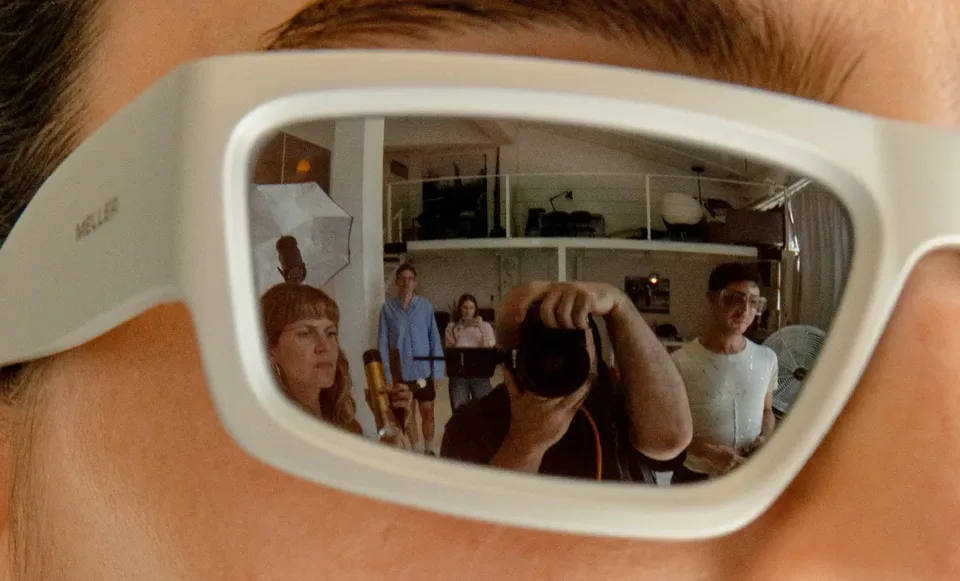
The casting process was super kismet. On Halloween, I finished the Netflix show Boots, then went to Zero Chill and immediately ran into Liam Oh, who had starred in the series, and we hit it off immediately. We shot the lookbook at QNCC, the Zero Chill venue. It was funny when Liam came for his 8am call time. We were like, we met at this exact same place and time of day, but in very different contexts.
Liam was sort of our masculine-of-centre character, and we worked with Kev and Mondays Management to build out the rest of the cast. Carson and I already work together on some dye processes and bringing food and beverage service to my merch booth at QNCC, so it just made sense to have them there too. Mecca and Nadyne both have such singular auras that they really stood out to me from Kev’s roster, and I knew immediately I wanted to work with them.
Liam was sort of our masculine-of-centre character, and we worked with Kev and Mondays Management to build out the rest of the cast. Carson and I already work together on some dye processes and bringing food and beverage service to my merch booth at QNCC, so it just made sense to have them there too. Mecca and Nadyne both have such singular auras that they really stood out to me from Kev’s roster, and I knew immediately I wanted to work with them.
Following a personal turning point, you’ve decided to move towards one collection a year. Was that a difficult decision to make?
I was running myself ragged making two collections a year. As a small team, I felt we hardly had time to properly introduce the world to one collection before it was time to shoot the next one. I was in a car crash right before I was supposed to shoot SS26, and that unfortunate situation catalysed the realisation that my body couldn’t handle two collections a year. And I like the TS (trans-seasonal) label instead of SS or AW more anyway ;)
Running an independent brand can be incredibly rewarding, but it can also be exhausting. What has been the biggest challenge you’ve faced that people on the outside rarely see?
The to-do list is infinite, and time feels increasingly finite. In addition to an infinite to-do list, I also have an infinite to-make list. I have so many ideas for things I want to create and things I must do to keep the business running. So learning to be at peace with the fact that some things simply won’t get done, like S/S 2026, and triaging what’s most essential is an ongoing challenge.
“With the state of the world being depressing, personal style can provide a small respite. If something brings me joy, like Snoopy, or stripes, or plaid currently, I want it on my body.”
Official Rebrand has built a very loyal community around it. Was there a moment when you realised people were connecting with the project on a deeper level than simply buying clothes?
When strangers or friends say how meaningful the work is to them, it really hits. Especially in the harder times, that kind of feedback means the world and is crucial motivation to keep going. People have also expressed that the way I make clothes makes them see fashion, or even themselves, in a whole new way.
If resources, budgets and logistics weren’t a factor, what would your dream collaboration look like?
I’ve always wanted to design for Grace Jones. But right now, the work I’m doing at QNCC feels really special. Since the organisation is new, there’s a lot of room to create and try stuff out. You can take an idea and run with it. They’ve given me a lot of freedom and trust, and that makes the possibilities endless. So let’s say designing costumes for a Grace Jones performance at QNCC, particularly the song Unlimited Capacity for Love. That’s the current dream.
Looking back on the journey of Official Rebrand so far, what are three moments that you remember most fondly or that feel especially significant to you today?
Bathroom Party in 2017 was the show for my studio art thesis in college, which featured a fashion show in an abandoned locker room and various cancellable toilet stall art installations. A few short years later, I was recruited to show a collection at NYFW in early 2020. That was the first time I made a full, somewhat cohesive collection, which in retrospect is crazy that they let me show my very first attempt at a collection on the CFDA calendar.
The third moment would be the overall arc of 2025. At the beginning of the year, it looked like I needed to make a major pivot and become a professor or something, but I decided to make one final collection, F/W 2025 (a-tectonic), first. Creating that collection with my stylist Dylan Keioni and the rest of my amazing team unlocked something, and by the end of 2025, Official Rebrand was stronger than ever, with collaborations with SoundCloud, Penguin Random House, and ongoing projects with essential NYC underground parties and DJs. I feel so grateful for all the ups and downs with Official Rebrand over the past nearly ten years, and I’m looking forward to officially celebrating the decade milestone in 2027.
The third moment would be the overall arc of 2025. At the beginning of the year, it looked like I needed to make a major pivot and become a professor or something, but I decided to make one final collection, F/W 2025 (a-tectonic), first. Creating that collection with my stylist Dylan Keioni and the rest of my amazing team unlocked something, and by the end of 2025, Official Rebrand was stronger than ever, with collaborations with SoundCloud, Penguin Random House, and ongoing projects with essential NYC underground parties and DJs. I feel so grateful for all the ups and downs with Official Rebrand over the past nearly ten years, and I’m looking forward to officially celebrating the decade milestone in 2027.
And finally, what is giving you hope right now?
I’m working on a lot of bridal commissions, and how excited everyone is about being in love gives me hope. Hearing people say “I never knew I could love this much until I met __” is a classic wedding statement for a reason. Love is the most powerful force and an unlimited resource.