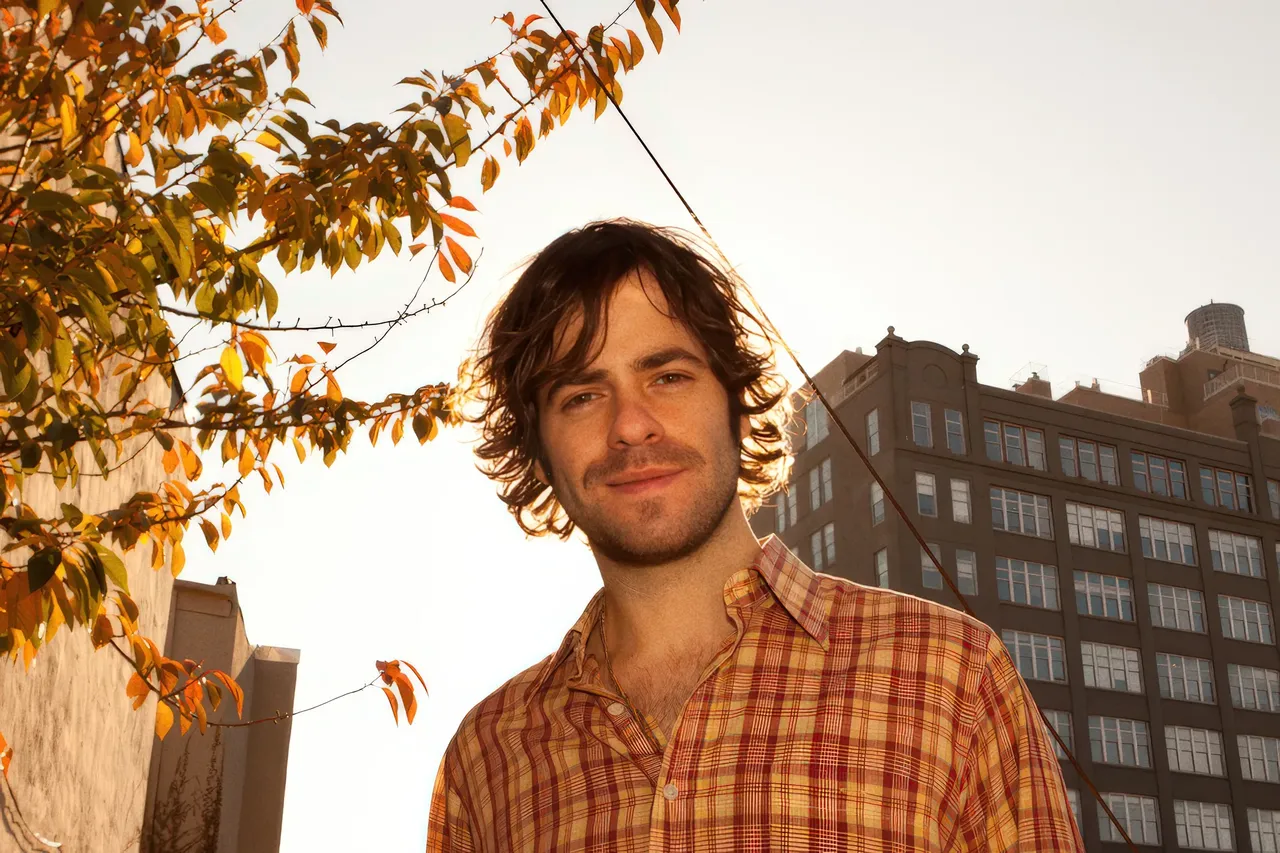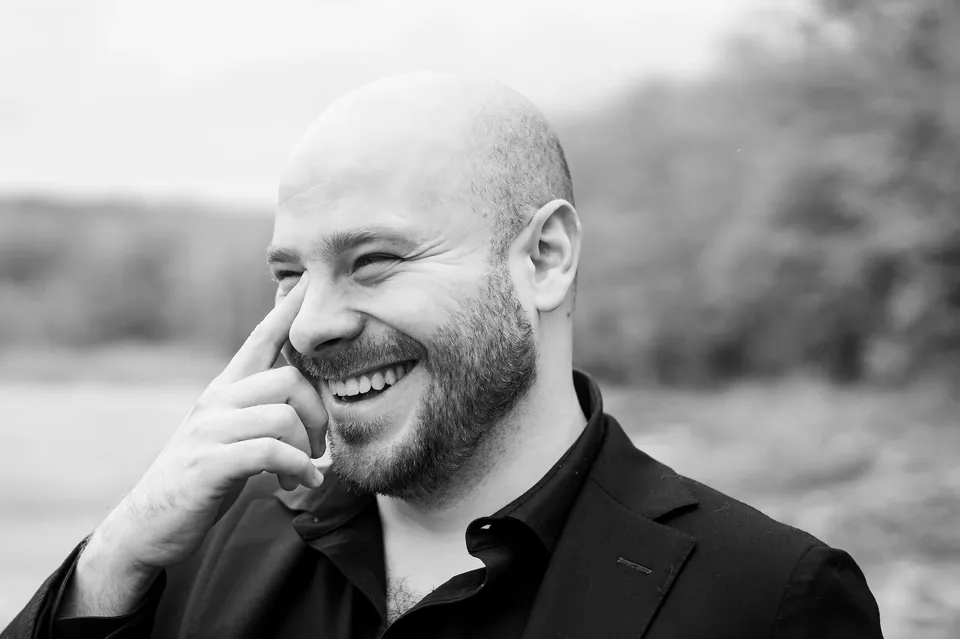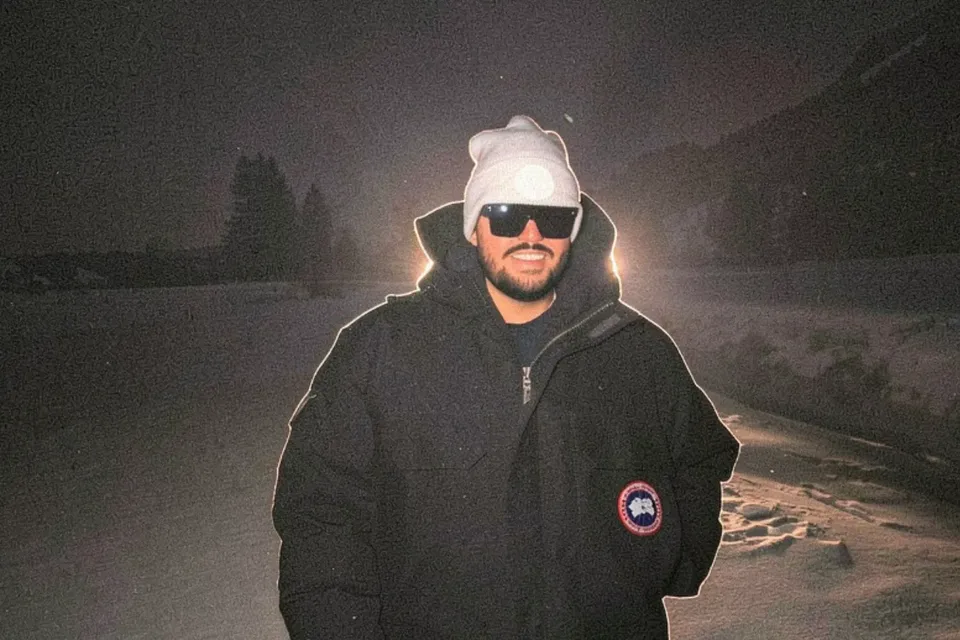
Nutritious released his EP Freefall a couple of weeks ago on his own Liquid Culture imprint, but the conversation you are about to read took place just a few days before the release. We caught him in those final days of anticipation, a moment that felt less like promotion and more like reflection, speaking about the ideas behind the record and the mindset that shaped it before the music entered the world.
From his clear preference for the EP format — “Three to five songs that belong together, that share an emotional logic. Each release is a waypoint for wanderers” — to his thoughts on runway soundtracks and the relationship between sound, space and identity, the more we spoke, the more a deeper artistic universe began to reveal itself. One that looks well beyond numbers and trends, rooted instead in intention, balance and meaning. As he puts it, “The creative work happens when I'm not trying to be creative. The perfect day has no agenda, just presence. That's where the next idea always comes from.”
How are you feeling right now, knowing Freefall is only a few days away from being released?
Honestly, I feel calm. The work is done, and I trust it.
The title Freefall carries a strong sense of surrender and movement. When did that idea first appear while you were making the EP?
I practise meditation. There's a state you reach where control dissolves, and something deeper takes over. This feeling stays with me in the studio and on tour. In physics, the moment you stop resisting gravity, you become weightless. Once I felt the concept, everything clicked. The songs, the sequencing, the naming convention. Freefall is what happens when you stop gripping and trust in love, passion, and faith. Letting go is the only way to actually live.
I'm curious about that initial moment before the music existed: the references, images, or sounds that were on your mood board at the beginning of the project. What kind of atmosphere were you trying to capture from the start?
It's a progression of my previous releases and The Soft Dark. Ether was about spaciousness, open sky, the medium we exist in. Freefall is the path through it. So the atmosphere I created was the interplay of weight and weightlessness occurring at the same time. Symphonic warmth, driving basslines, and intense chord progressions, but also air and suspense. If you've ever surfed, skydived, or fallen deeply in love, you know the feeling. Everything is moving, the thrill is total, and the only way through is to let go into it completely.
The opening of the title song begins almost like an orchestra warming up before the bassline locks everything into place. Did you approach the arrangement almost like a score unfolding?
That's exactly what it is. I scored films early on, and I experience figurative image synaesthesia, so I think in scenes: sounds become visual sequences for me. The orchestral opening is part of how I hear — I've always had a symphonic instinct. I'm a fourth-generation Hungarian American, and I imagine some of that comes from lineage. But I also come from hip-hop, drum and bass, house, and my early New York grounding in soul, funk, and disco. Studying Black American music connected the dots: how so much of what I love is downstream of that innovation. So the arrangement is those worlds meeting. The opening is the room filling with anticipation, and then the bassline locks everything into forward motion. I'm always after that space where the organic and the electronic become inseparable.
Spiral moves in a different direction, with smoky vocals, crisp drums, and something raw and intimate running through it. Can you tell us more about this song?
Spiral is the opposite end of the EP. A smoke-drenched vocal over crisp 808 patterns and a classic house foundation. Raw soul fused with electronic warmth and grit. The title song is about the rush of letting go. Spiral is about what that feels like inside the din of everyday life. It's intimate, physical, close. It's a modern take on the blues. The most tactile thing on the record. I wanted something you could feel in your heart and soul.
And then there's Freefall (Chill Mix), which drifts into a much more weightless space. When people listen to that version, what kind of state of mind would you love them to fall into?
The Chill Mix strips the bass back and lets the atmospheric and orchestral elements shine. If the original is the leap, this version is the suspension. I’d love people to listen to it the way you’d float in the ocean. Present, unhurried, not needing anything to happen. Just being in it. On the dancefloor, that’s inward, lost in the groove. Untethered.
You've released several EPs in a relatively short period of time. What attracts you to the EP format? Does it feel closer to how you naturally think about music?
It does. Three to five songs that belong together, that share an emotional logic. Each release is a waypoint for wanderers. The purpose of my art is to support people’s journey through life, so whether it’s an album, EP, or single, I think in themes. My album Divinity launched my label Liquid Culture and channelled entheogenic experiences. EPs that followed, like Amber, captured the flow between my love for the coast, juxtaposed with my love for nightlife. The Soft Dark explored balance, the heavens and humanity. Freefall expands all of it as a way of living. I appreciate all the formats. The EP lets me say something complete and current, honouring nature, the elements, and the seasons, keeping me present in the work while giving the listener something whole.
You often describe your sets as a kind of cultural alchemy, blending cosmic disco, deep house, indie dance and techno depending on the room. When you're creating music in the studio, do you also imagine the spaces where it might eventually live?
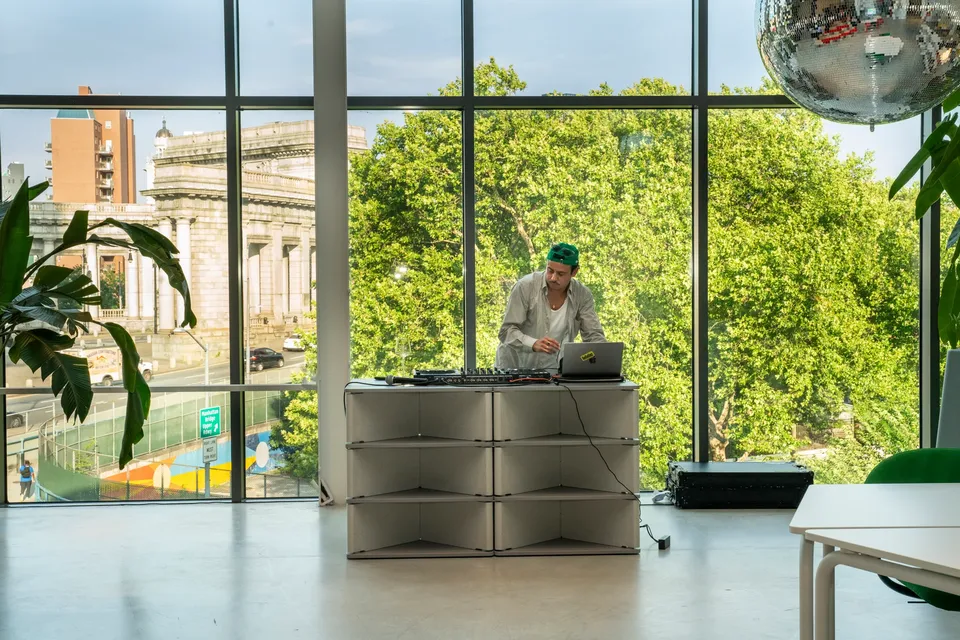
Always. I'm reading the physical space before I read the crowd. Soundsystem, lights, acoustics. I often play extended sets, and the room changes over five or six hours, so I'm performing what's true to me while responding in real time. It's similar to scoring a film. In the studio, I'm thinking about that same relationship. Where does this song live? Is it sunrise on a terrace or 2am in a warehouse? The best songs work in multiple contexts. I'm thinking about headphones on a Tuesday afternoon just as much as a dancefloor at peak hour.
You grew up learning music intuitively, playing drums before you could even talk and discovering DJing through cassette and vinyl culture. Do you think that freedom still defines your relationship with sound?
Completely. Before I could walk, my brother put me behind a toy drum kit, dosed himself with LSD, and jammed with me. At 11, he said "play", and we played, this time behind real drums: rock, funk, soul, disco. No lessons, just improvisation. The world around us was heavy, and music was how we made sense of it. That freedom, little theory, more play are still the foundation. I’ve since self-studied quite a bit, but everything I create starts from a place of experimentation.
Having started so young, with a record deal at sixteen and promoting at the Palladium by seventeen, what's the very first memory from that era that comes to mind?
Dancing at the Palladium. The deep house and techno on that audio and visual system changed me. I was already playing places like CBGBs and Tramps, but dancing all night at the Palladium was different. That was the moment I understood what electronic music and seamless mixing could do to a room, sonically, physically, and spiritually. I started patching together guitar effects pedals into tape decks, Walkmans, and CD players to record my first mixtapes right after that. The obsession was immediate.
You've played in very different environments, from clubs to festivals to museums like the Whitney. Does performing in a cultural institution change the way you think about a DJ set?
The space is the sound. That's true everywhere, but in places like the Whitney, you feel it differently. The architectural design, the intention of the room, and the audience's relationship to art. It heightens everything. But honestly, my approach doesn't change. A great performance is listening. You absorb the sonic world around you, open yourself to the full frequencies and vibrations of the environment, and dance with it. Whether it's a club, a warehouse, a museum, or a festival, when the space locks in, everything else disappears. The path to getting there is always listening.
Fashion has also intersected with your world in different ways, including performances during New York Fashion Week. How important are aesthetics and style within your overall project?
Central. The sounds, the story, and the visuals are all components of the entire artwork. Each release arrives with its own visual language, its own world. That's not decoration; it's how I view my craft. Fashion understands the relationship between environment, identity, and feeling. Performing several times for Rodarte during Fashion Week made sense because the sensibility was aligned. I'm drawn to anyone who treats aesthetics as meaning, not surface.
And thinking about fashion from another angle, are there any designers or brands whose use of music in their shows has particularly impressed you?
Mark Ronson has been building Gucci's runway soundtracks since Sabato De Sarno's debut. Not just pulling songs. He directed and mixed them, working in close dialogue with the collections. The S/S 2025 women's show had Jamie xx, Boys Noize, and Mykki Blanco in the mix. Then, after De Sarno left, Gucci brought in Justin Hurwitz to compose an original orchestral score for Fall 2025. Louis Vuitton is in the same territory. Pharrell opened his men's debut with an original composition performed by Lang Lang and a full orchestra. Ghesquière's S/S 2026 women's show had Tanguy Destable compose a score built around Talking Heads' This Must Be the Place, read by Cate Blanchett. These houses are starting to treat runway music the way directors treat film scores. That's the intersection I've always operated in. The Whitney, Rodarte during Fashion Week, setting the room at Mandarin Oriental for a night with Bloomberg and the SNL cast, 35 floors above Columbus Circle. The clothes and the sound aren't separate experiences. They shape one thing together.
Outside music, your work extends into wellness, writing and cultural projects. Your name itself suggests something holistic. What does "nutritious" music mean to you in today's world?
On the road, well-being wasn’t part of touring culture. This was before yoga lounges and juice bars in airports. I saw a gap between how hard people were going creatively and how little attention they paid to sustaining it, so I built around that. Wellness, culture, creative industries. I was early in a movement that's now mainstream. The name carries both signals. Wellness and taste. Music that's nutritious is music made from a sustainable, embodied practice. It prioritises depth over hype. It's built to nourish, not just stimulate.
You've been involved in projects around mental health, psychedelics and community building. Do those interests influence the way you think about the role of music in people's lives?
They're inseparable. From the founding team of DoubleBlind Magazine, which covers psychedelics, mental health, and cultural transformation, to contributing to the New York Times bestseller Living Well, these aren't side projects. They're the same inquiry: how do we create conditions for people to feel more alive? A great song, a great set, dancing as a ritual shifts your nervous system in real time. That's not a metaphor. That's actual physiology. And that's not new. Every ancient culture understood sound as ceremony and art as communion with the divine. That understanding never disappeared in most of the world. It was suppressed in the West, and now psychedelics and practices like meditation are reintroducing people to what indigenous cultures and contemplative traditions have always known. This shapes how I think about music's role. It's not just entertainment. It's a space where people dissolve separation and remember they're part of something larger. That's divinity. That's love. We all want that.
I've read that you're also a collector of records, synths, and sounds from different eras. What was the last record you found that surprised you?
K-LONE, sorry i thought you were someone else. Made after losing his father. Grief processed through rhythm, not words. One of the most emotional instrumental records I've heard in years. Girls of The Internet, When I Was Lost, I Found Myself. Soulful house rooted in Tom Kerridge’s own framing of house as a queer art form. It's a masterpiece. Caribou, Our Love. Not new, but I keep coming back. A dance record that explores intimacy and connection, its subtle complexity still surprises me every time. And anything Moodymann. He continually surprises me and always reminds me why I started collecting in the first place.
When you're not in the studio or on stage, where do you usually recharge creatively? What does a perfect day away from music look like for you?
Ocean, sun, movement. Surfing when I can. A long walk. A long meal with friends somewhere with real craft behind it. A museum. Meditation. The creative work happens when I'm not trying to be creative. The perfect day has no agenda, just presence. That's where the next idea always comes from.
When March 23 finally arrives and Freefall is officially out in the world, what's the very first thing you'll do? Is there a ritual or celebration you're already looking forward to once the release is finally live?
I'll be deep into the next project by then. But I'll put the music on, go for a walk, and just listen as a stranger would. That's my ritual.