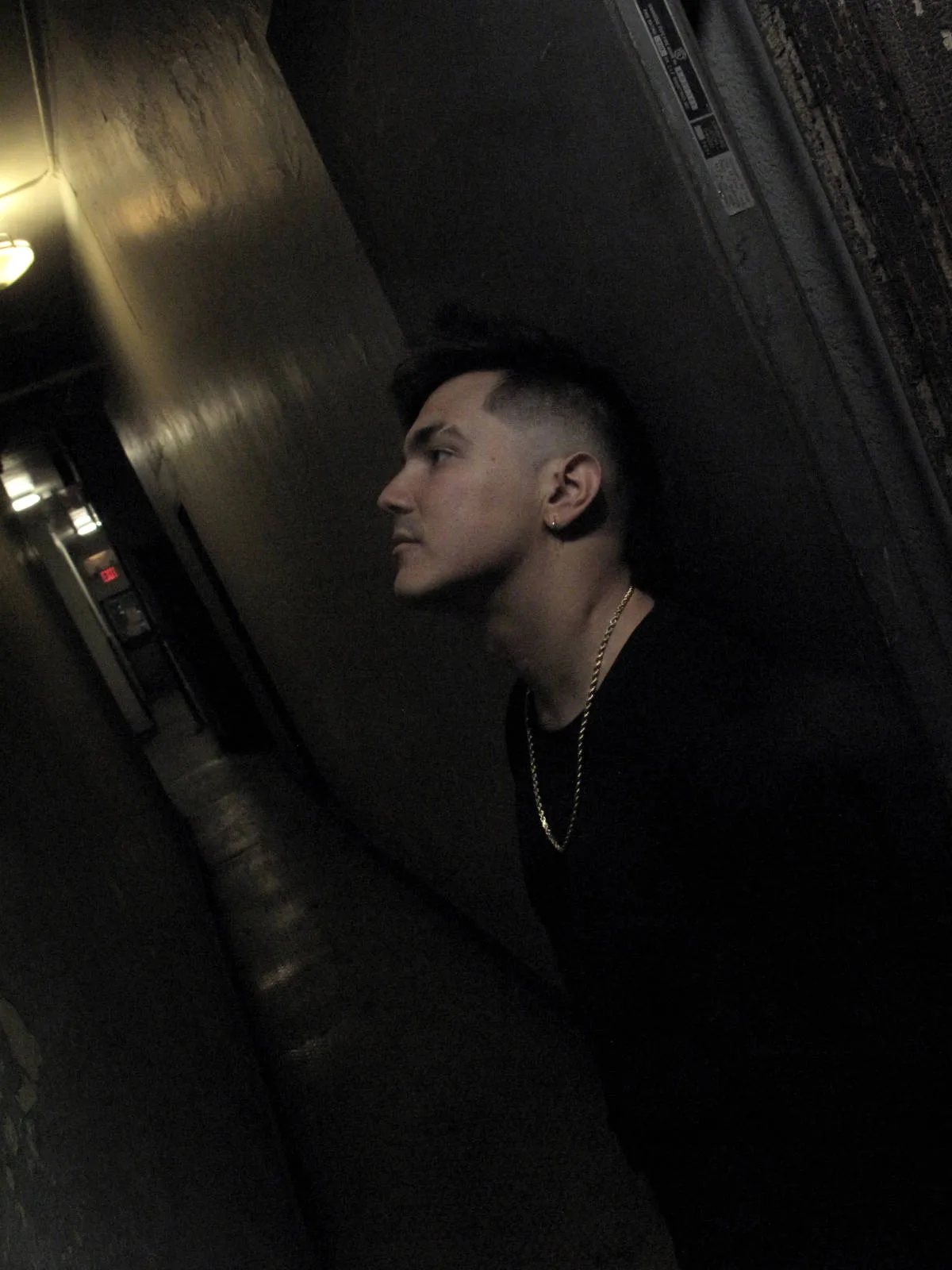
Bathed in the tropical textures of his swampy home city of Miami, producer and DJ Nick Léon has made a name for himself working with the likes of Rosalía and Oklou and for his melancholic remixes of Feid or even Hilary Duff. His debut album, A Tropical Entropy, was named as one of Pitchfork’s best albums of 2025 and received widespread acclaim for its ethereal, nostalgic take on club music. Together, we chat about cruise ships and coral in the Florida bay, how weather influences his work and scoring a documentary about pythons in the Everglades.
Hey Nick, it’s great to sit down with you. Where are you speaking from and how’s 2026 treating you so far?
Hey! I’m currently in New York City, I came here to work on music — there are a few studios I like here and I have a lot of homies with setups, so it’s a pretty convenient place to work from. It’s a little funny but in January and February, I like to escape the Florida heat and migrate to a more wintery climate to work on music, the cold makes it easier to lock in. I played a New Years party in Mexico which was really nice and just took that first week off to chill and hang out with family and friends. I’ve been joking about how my music is very summer-oriented, so now it’s time to make the winter album! I’ve really been inspired by snow and the cold and the fun part is figuring out what my interpretation of that would sound like musically, different textures but still me.
How do you like to introduce yourself as an artist and how would you describe your unique sound?
I got into music from a really early age. When I was about twelve, my older brother had a copy of Fruity Loops on his laptop, which is like a rudimentary beatmaking software that’s still running the world today. I must have taken it off his computer and put it onto the family one and just started making beats in secret. One day, my brother found me doing it and was like, “yo, this isn’t that bad!” And that was all I needed to hear.
Since then, I’ve just been going at it. I started off in the South Florida rap scene making beats for friends in high school. It was a very active era, people like SpaceGhostPurrp and Denzel Curry were just emerging. That era in Miami was interesting and less musically separate — lots of parties where people were rapping or doing live art, DJing whatever Soundcloud edits they could find — it was all a big mix. That’s always been one thing I love about the city, and which has had a big influence on my musical output — finding the through lines between different genres of music and styles. From there I got into DJing electronic and club music and it’s been a dance ever since!
Since then, I’ve just been going at it. I started off in the South Florida rap scene making beats for friends in high school. It was a very active era, people like SpaceGhostPurrp and Denzel Curry were just emerging. That era in Miami was interesting and less musically separate — lots of parties where people were rapping or doing live art, DJing whatever Soundcloud edits they could find — it was all a big mix. That’s always been one thing I love about the city, and which has had a big influence on my musical output — finding the through lines between different genres of music and styles. From there I got into DJing electronic and club music and it’s been a dance ever since!
Is music the only thing you’ve ever done?
One job I had which has actually been weirdly influential on my work is that I used to check people onto cruises with my grandma between the ages of sixteen and twenty-one. It was full of interesting characters, including older folks who would show me music. Those are formative years in a person’s life and you tend to remember every detail. I remember one of my coworkers gave me an Aphex Twin CD when I was sixteen— a funny little life nugget. It was an interesting job because it was very people-watchy. To me, it was similar to DJing in the sense that in Miami at least, you’re this figure caught up in the middle of a lot of moving parts and if you pay enough attention, you start to figure out how things work on a macro level. Being a DJ there, you get to learn a lot about corruption and the same thing goes for cruises, the rules only apply to certain kinds of people. It was very influential in shaping my worldview. I even checked in the first Holy Ship!, an EDM cruise boat in 2011/12, when Skrillex was just popping up and I remember going into work one day and thinking “what’s Skrillex doing here?” I must add that I think cruises are one of the worst things for the planet. And the working conditions were terrible. Plus, I’ve never been on one. Other than that, I’ve been very lucky in that respect and have just been doing music ever since.
Your hometown is inherently present throughout your sound and influences. What is it about the city’s iconic music scene that inspires you so much?
I was definitely a Miami missionary for a long time, going around spreading the gospel at parties in the city when I was twenty/twenty-one. I would go up to people and say, you don’t understand, we have so much talent here, you don’t need to move away, you just need to figure out how to make it work here! For a really long time that was my mission. It's nice to have a sense of home, you learn more about the place and understand the history, the generations to pull from, all the OGs on the scene that I didn’t necessarily know about. A good example is Schematic Music Company run by Romulo del Castillo [and founded with Josh Kay] who used to be in Soul Oddity — they were doing IDM in the early 2000s and were even competing with Warp Records at one point.
But like many cities around the world, a lot of things outside of my control have changed, lots of clubs are closing and it’s got a lot more gentrified. It's not as welcoming as it once was. To a larger extent, what’s happening in Miami is reflective of what’s happening in the US, there’s a strain running through everything. Musically, we’re in a different era and my role in it is changing and I’m also reckoning with that. I’ve been there for so long, it just feels nice to explore other places and options. A lot of great talent is still coming out of the city, like Johnny From Space, who’s on the album, DJ Fitness I think is one of the most incredible electronic artists right now. I feel like I’ve just been waiting to see who pops up and lending my help to whoever needs it. But now that the album is out I don’t feel like I have much more to say about Miami because in a sadder way, it does seem unrecognisable to the one that I’m portraying in the project or the one that I was nostalgic about — I need to learn to let it go.
But like many cities around the world, a lot of things outside of my control have changed, lots of clubs are closing and it’s got a lot more gentrified. It's not as welcoming as it once was. To a larger extent, what’s happening in Miami is reflective of what’s happening in the US, there’s a strain running through everything. Musically, we’re in a different era and my role in it is changing and I’m also reckoning with that. I’ve been there for so long, it just feels nice to explore other places and options. A lot of great talent is still coming out of the city, like Johnny From Space, who’s on the album, DJ Fitness I think is one of the most incredible electronic artists right now. I feel like I’ve just been waiting to see who pops up and lending my help to whoever needs it. But now that the album is out I don’t feel like I have much more to say about Miami because in a sadder way, it does seem unrecognisable to the one that I’m portraying in the project or the one that I was nostalgic about — I need to learn to let it go.
Speaking of the album, 2025 was a huge year for you, wrapping up with multiple publications naming your debut A Tropical Entropy as one of the best albums of the year. How does that feel? Were you expecting that kind of response?
Absolutely not. I'm really grateful to be honest, I was pretty nervous going into it because a lot of the album was formed out of frustration from the club circuit and being super worn down from DJing all the time, in places that I didn’t necessarily need to be at. I started missing the whole reason for doing it, which was being in the studio making music. I don’t think I could have made a real club record even if I wanted to and I wasn’t sure people would understand that. The album is definitely club-esque and there’s rhythm to it obviously but I feel like something different was expected of me. I just tried to do the most honest thing I could do in the moment and see what might happen. And I couldn’t have asked for a better response — the day it came out, it was named Pitchfork’s Best New Music, which felt surreal. You work on something without really knowing how it’s going to land and then it does and people get it. I felt like it was something that I needed to get off my chest so that I could keep making stuff. So I’m really happy with how it came out and am excited to do more!
Can you tell me about your vision for the record and how it came together? I know it was many years in the making and that you named it after a quote from Joan Didion’s Miami.
When I was working on the record in London, I was thinking about Miami from an outsider’s perspective for the first time ever really. Miami is such an interesting city because it’s quite young and as I was saying earlier, it’s at the center of so many moving parts, where you get to witness global situations unfold. It's the gateway to Latin America and often the first stop when you’re entering the States. It’s a corrupt, lawless land and that book, which was given to me by my ex-girlfriend, deals with the topic from Joan Didion’s perspective, only it’s set between the 70s and the 80s. I just found it really intriguing how similar it sounded to how it is today, maybe slightly more lawless back then. It hit in the same way that I was thinking about it. And I remember reading that phrase “a tropical entropy” and I thought “honestly, that’s a vibe”. It sounds cool and it makes sense.
An entropy is an interesting concept, especially considering that at the time I was really going through it, to put it lightly. My thought process was: what does it feel like when everything is falling apart but you have this beautiful, tropical surrounding? How do you hold both of those things without one overtaking the other? Miami is a place where people go to retire but when you’re actually living there, you have the weight of your own life and what does that feel like when you have the permanent backdrop of paradise? I also got really into watching films that took place in Miami or Florida and I feel like a lot of that seeped into the music as well.
An entropy is an interesting concept, especially considering that at the time I was really going through it, to put it lightly. My thought process was: what does it feel like when everything is falling apart but you have this beautiful, tropical surrounding? How do you hold both of those things without one overtaking the other? Miami is a place where people go to retire but when you’re actually living there, you have the weight of your own life and what does that feel like when you have the permanent backdrop of paradise? I also got really into watching films that took place in Miami or Florida and I feel like a lot of that seeped into the music as well.
Alright, what’s the best movie set in Miami then?
I really love 2006’s Miami Vice with Colin Farrell and Jamie Foxx. It's such a sign of the era it was made in. The other one that I was watching a lot, which has actually been a huge influence on me, is Spring Breakers. Skrillex, again! I’ve always loved that movie, it hits on multiple levels depending on how you watch it and I just wanted to make a project that could be experienced in a similar way.
Your record also features a ton of collaborators, including Erika de Casier on the iconic summer hit Bikini and many, many more. Tell me about that.
I definitely wanted vocals on this album, because part of the concept was that, for the longest time I was holding two different lives in music which were: my own work and production that I do for other artists. How could I merge these two separate worlds together? What if I approached this project from a pop side as opposed to making a really cool electronic album? My vocal abilities are limited, even though I am on one of the songs, Crush. I liked the idea of having ephemeral voices, like my friend Xander Amahd on the opening track Entropy. Ela Minus, who’s an amazing artist I’ve always wanted to work with, is also on it. When I was working on the song Ghost Orchid I kept thinking about having a Spanish ASMR thing going on in the middle and she ended up just writing a whole song.
Bikini featuring Erika de Casier is the track that truly set me off. I’d had that beat for a really long time and already knew that I wanted my project to sound like it — nostalgic, melancholy, plucky — because I really love guitar but also fast drums, a style that I’ve been perfecting over the years. Once Bikini came together I thought to myself, this is the north star of the project. It came out quite early because Erika wanted to perform it at Primavera and it got such a good response that I thought, okay we have to finish this and put it out this summer, I can’t wait until next year. The way I envisioned it was like the end credits song.
The first collab to actually come together on the album was Ocean Apart with Casey MQ whom I really love, he’s done a lot of the Oklou stuff. We got linked up in LA and one of the first ideas I’d written was this ballady beat that would eventually become our song and it ended up being really moving music. Without even having to talk about it, all the artists tap into my world, the world of the music — it’s all very aqua and nostalgic, there’s a lot of yearning, heartbreaky stuff thrown in there, which is what I was going through at the time. I would love to keep doing more of it, including more vocals, which is part of the concept for the next record. I’m not going full singer-songwriter but will definitely add a little more of that stuff in there.
Bikini featuring Erika de Casier is the track that truly set me off. I’d had that beat for a really long time and already knew that I wanted my project to sound like it — nostalgic, melancholy, plucky — because I really love guitar but also fast drums, a style that I’ve been perfecting over the years. Once Bikini came together I thought to myself, this is the north star of the project. It came out quite early because Erika wanted to perform it at Primavera and it got such a good response that I thought, okay we have to finish this and put it out this summer, I can’t wait until next year. The way I envisioned it was like the end credits song.
The first collab to actually come together on the album was Ocean Apart with Casey MQ whom I really love, he’s done a lot of the Oklou stuff. We got linked up in LA and one of the first ideas I’d written was this ballady beat that would eventually become our song and it ended up being really moving music. Without even having to talk about it, all the artists tap into my world, the world of the music — it’s all very aqua and nostalgic, there’s a lot of yearning, heartbreaky stuff thrown in there, which is what I was going through at the time. I would love to keep doing more of it, including more vocals, which is part of the concept for the next record. I’m not going full singer-songwriter but will definitely add a little more of that stuff in there.
Has the city’s hot, humid weather influenced your music?
Both the weather and the water have. A big aha moment for me when I was learning about electronic music and finding my own voice, was when I started focussing on impressionist versions of music — a big influence for me was the album Ghettoville by Actress. His music evokes an image, the sounds and the texture almost feel material and I believe there are a handful of artists that do that really well and who also happen to be some of my favourite electronic artists. I try to approach music in a way where the sound feels material and a lot of the time the material is weather, humidity specifically. It feels wet, soupy and thick, yet not necessarily opaque because you can still walk through it. Miami in the summer oscillates between super rainy and really hot and that finds its way into the music as well, it’s dynamic and changing all the time. Actress has been a guiding light for me, OPN obviously, as far as contemporaries go. I’m always looking for artists who are able to do multiple things, I also love working with other people and producing all whilst having my own personal vision. I’ve recently got into doing film scores and I find it inspiring to see artists doing all of the above.
Can you tell me about a scoring project?
Yeah! It’s coming out in April. I scored this documentary by Xander Robin called The Python Hunt. You might not know this but Florida has a real python problem. They’re an invasive species and don’t have any natural predators, so it’s actually legal to kill them here. A competition takes place every year, where people go out into the Everglades and catch as many pythons as possible and the film focusses on the type of characters who would involve themselves in that kind of endeavour. I worked with Pablo Arrangoiz who also goes by DJ Fitness on it and it was a great experience, making it in parallel to the album — both projects have a similar swampiness to them and I was finding different ways of working with textures, all while thinking about music cinematically. It was a learning experience trying to balance my signature sound with what the director wanted, realising their vision. It’s definitely more swampy, there are more guitars, it’s a little more spooky. I absolutely adored the experience and was hungry to keep going! It also relieved the pressure of having to make something for myself. There was room to try new things out that I wasn’t necessarily comfortable doing for myself and it was cool to involve Pablo because he’s a great musician and a lot of it just ended up with us jamming late nights in his studio.
You’ve also collaborated with Miami-based Coral Morphologic, a musician and marine biologist duo, who chronicle imperilled coral reefs around the world. Can you tell me about Projections of a Coral City?
Coral Morphologic are amazing and I’m happy you mentioned it because I feel like that project gets a bit overlooked. I’ve known both Colin Foord and Jared McKay for a long time, they’ve always been very supportive of me and I of them. They’ve done visual work for Laraaji and Animal Collective but recently they started this project called Coral City Camera, which is a 24/7 livestream from the bay of Miami and the coral bed where you can see fish and a lot of other stuff going on underwater if you tune in. Projections of a Coral City was commissioned for Art Basel, projecting a 15’ montage of coral native to Miami and around the world onto the Adrienne Arsht Center and they needed a soundtrack for it.
Colin is the marine biologist and Jay is the artist. We’re both really into Brian Eno, Laraaji and all this ambient stuff so we wanted to make a watery version that fit the coral, there was a bit of a story going on there. They have a lab in Miami, which is like an Alien laboratory with glow in the dark coral — when you turn off the lights, it’s like Avatar in there. It was really fun to work on and we liked the music so much that we ended up pitching it to a few different labels and Balmat took a liking to it and asked if they could put it out and we ended up releasing it on vinyl. We’ve been talking about collaborating in new ways, so there will definitely be more.
Colin is the marine biologist and Jay is the artist. We’re both really into Brian Eno, Laraaji and all this ambient stuff so we wanted to make a watery version that fit the coral, there was a bit of a story going on there. They have a lab in Miami, which is like an Alien laboratory with glow in the dark coral — when you turn off the lights, it’s like Avatar in there. It was really fun to work on and we liked the music so much that we ended up pitching it to a few different labels and Balmat took a liking to it and asked if they could put it out and we ended up releasing it on vinyl. We’ve been talking about collaborating in new ways, so there will definitely be more.
Your 2023 edit series which featured remixes of Feid, Lady Gaga and Hilary Duff is incredible. You’ve also remixed Rauw Alejandro and more recently Oklou’s iconic blade bird. Tell me about how you manage to work with all those melodies.
I think my remixes are related to the album too, the edits are just me finding excuses to cut up semi-emotional melodies and recontextualise them for the club. I love the Lady Gaga Telephone line, which is my favourite harp sound blended with some RnB drama. The Rauw song also has this great guitar line and a lot of plucky stuff going on that I’m just really into. I don’t always have the time to flush out my own original ideas so I cut up these things and make little edits. Sometimes I start my day in the studio making a quick edit and that’s how I get the blood flowing. But I’ve always loved remixing because of sampling and its reinterpretive nature. I was really happy about the Oklou project because I’ve been a fan of hers for so long and we’ve been Soundcloud friends since 2017. I already did an edit of one of her songs called Samuel and we just ended up staying in touch over the years. I’d worked on this song with her and Casey Manierka-Quaile called The Make Believe and did some drum stuff on it. They reached out for some help with her song harvest sky and I was really grateful that they felt that I could help with that. After that, they asked if I’d be open to do a remix for it and I remember hearing blade bird live at Dekmantel, so I cheekily asked to listen to the album to choose a different song before it came out. blade bird was immediately my choice, I really wanted to remix it, I just think it’s such a beautiful song and I’m so happy with the outcome — it almost felt tied musically and spiritually to my album too. I called it Broward Remix because where I’m from in South Florida is called Broward County and I just wanted to immortalise that.
You also have an incredible track record as a producer, working with the likes of Oklou, Rosalía and Empress Of. Who else are you collaborating with at the moment?
I’ve been making more stuff with Erika de Casier, I love her so much, she’s a dear friend. She came to Miami for a week and we started working on a bunch of ideas. I’m also working on a remix for Shygirl right now and a goal of mine for 2026 is definitely to be more in the studio and work with all these artists that I admire. I have another song with Empress Of that I’ve been working on that sounds really nice. I have to check in with myself sometimes about artists I’ve been a huge fan of and that I work with now and we’re friends and I think that’s my favourite part about making music.
How about touring this year? Are you still as interested in it?
I was frustrated with how much it overtook my life. I’m obviously grateful for every opportunity and to be able to live off it, but it’s a conversation that’s had with a lot of people in a similar position — you get burnt out from all the travelling and performing. Because the setting is usually a party or a club you have to get into party mode and as a pretty introverted person, it sometimes takes a lot to activate that side of me. The extra work that it would take would burn me out quicker but I was so grateful for the opportunities that I just took everything that I could get. It’s all been a big learning experience over the last two or three years, understanding what I want to do and what I don’t wanna do. It all just got a little too existential. It’s all been about finding the right balance, finding the time to work on music, being in a position where I can say no to gigs, because I do like travelling and performing but one can never overtake the other.
Any other projects you’d like to mention? What do you have in store?
Tbd! I’m working on new music and excited to share it whenever it’s ready!