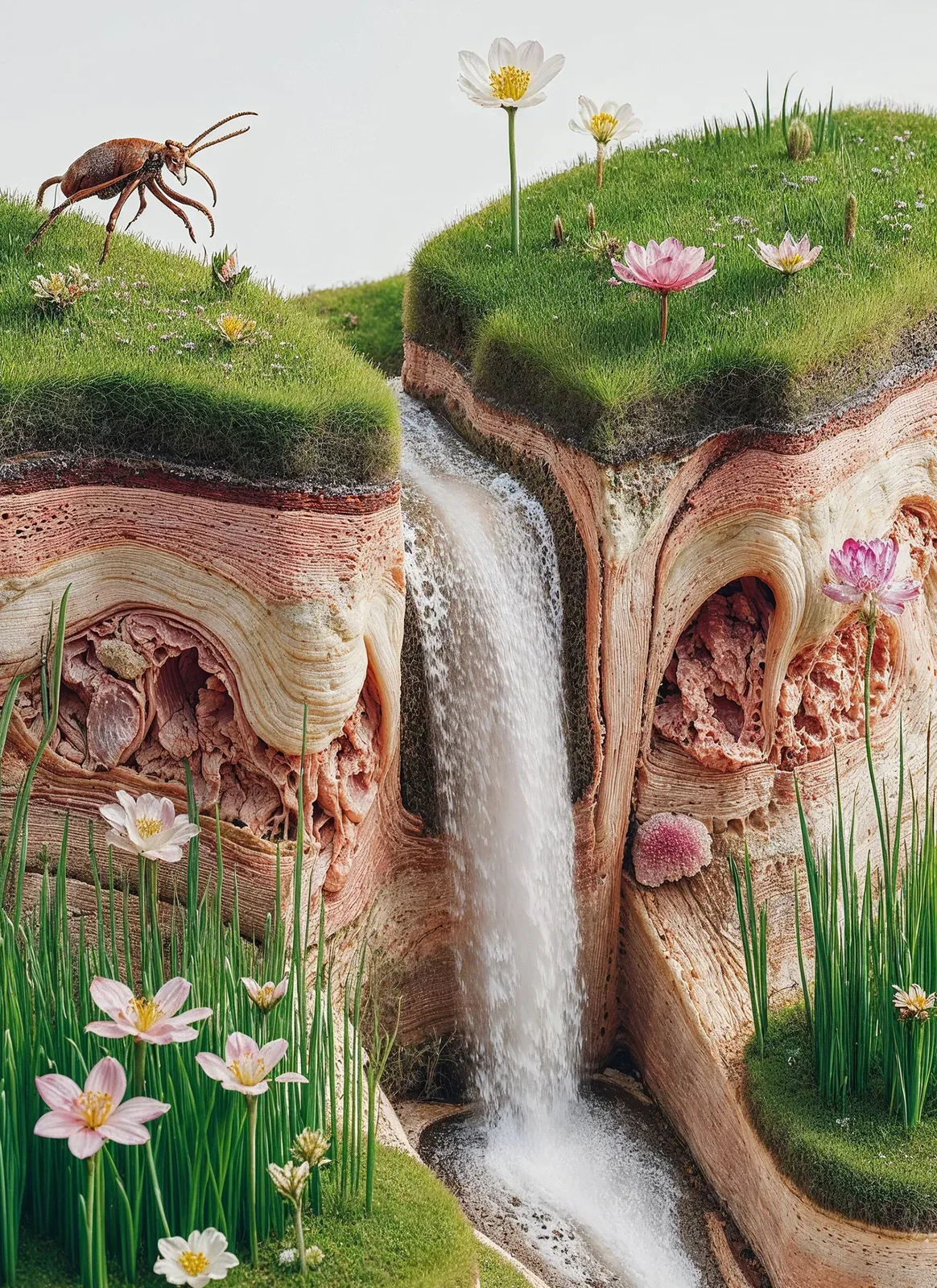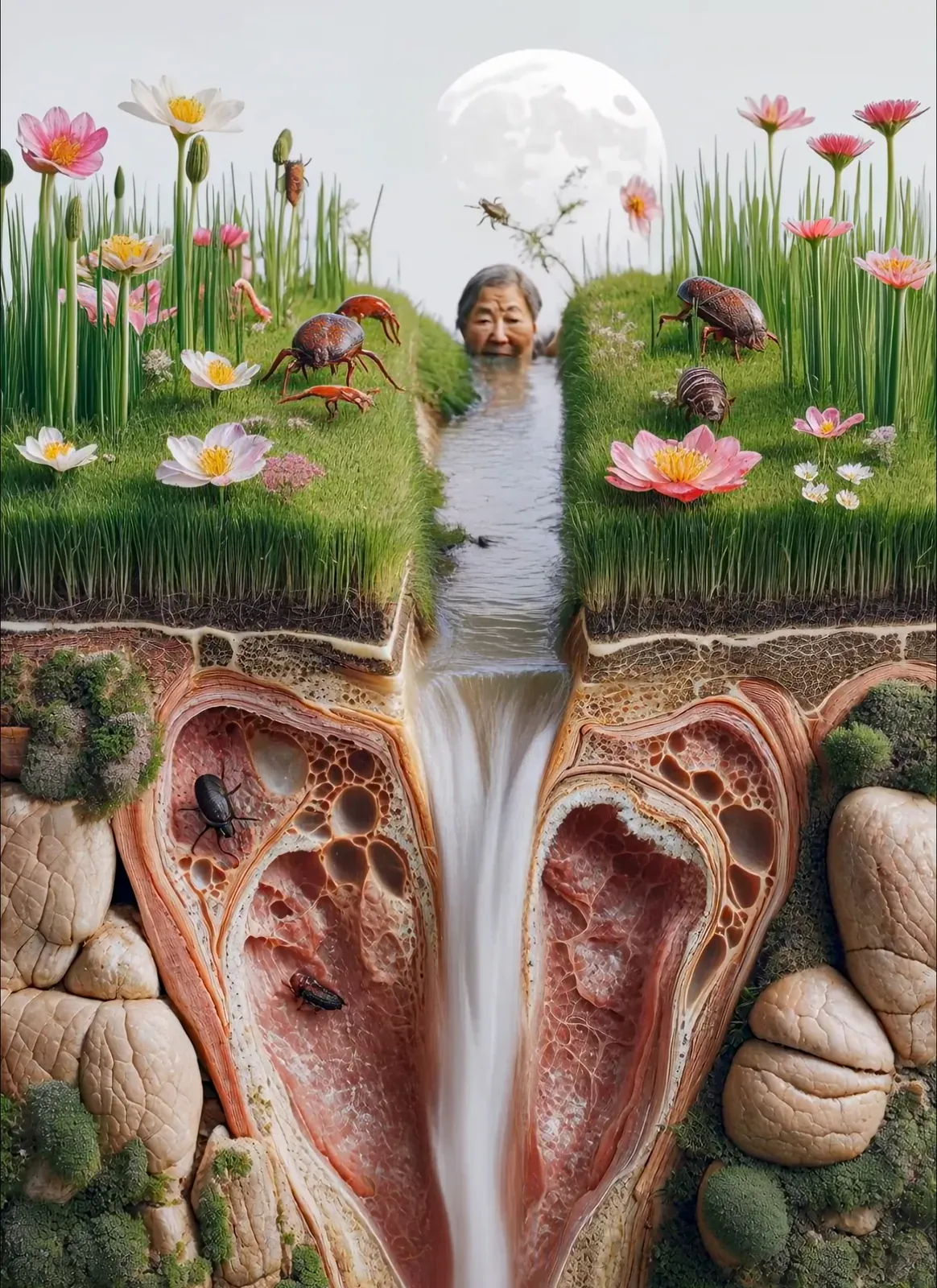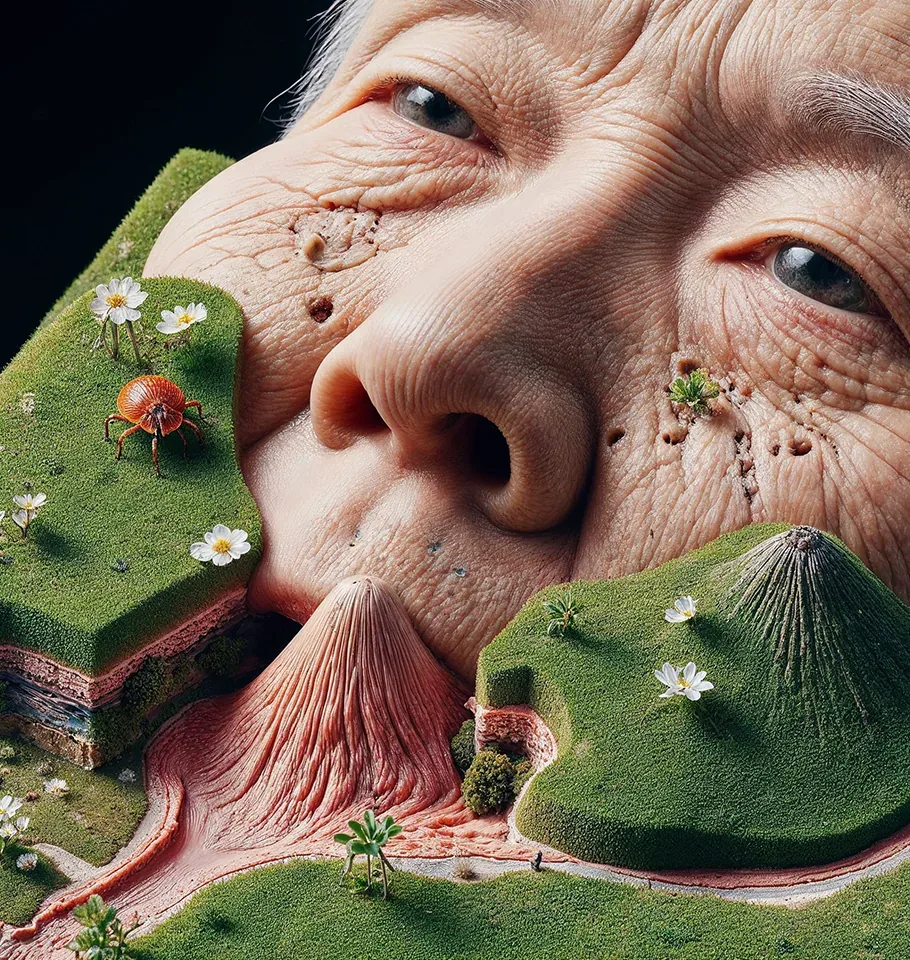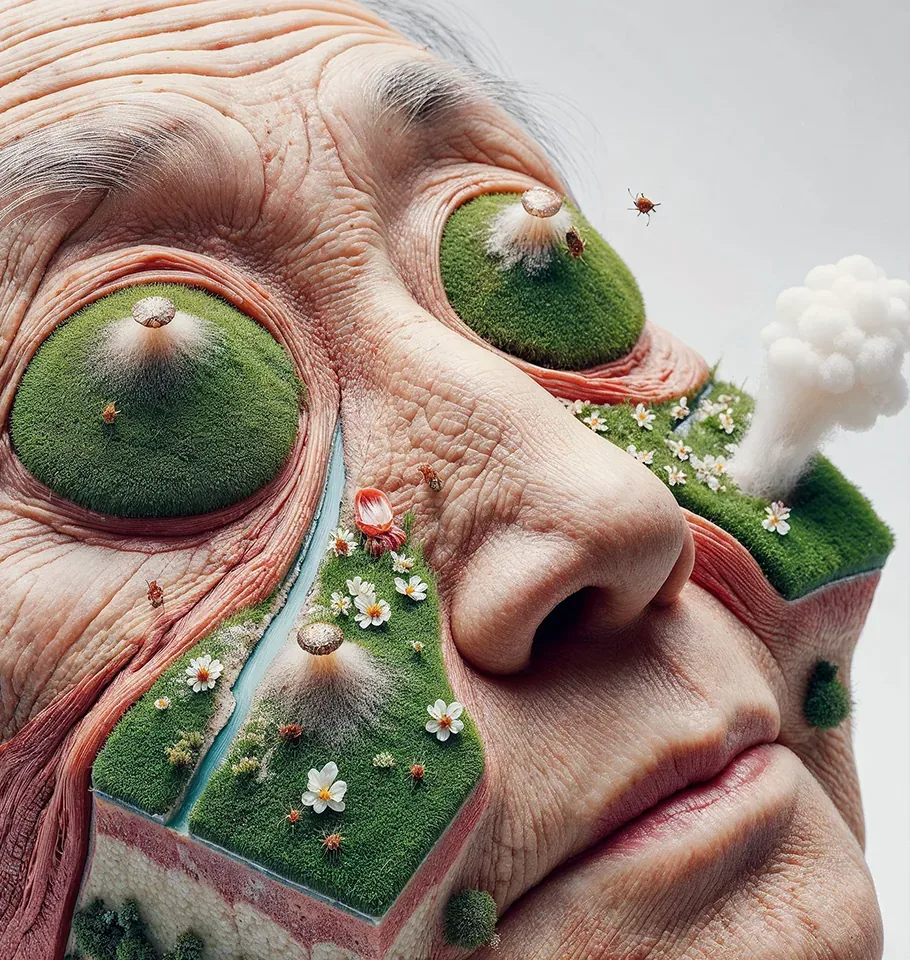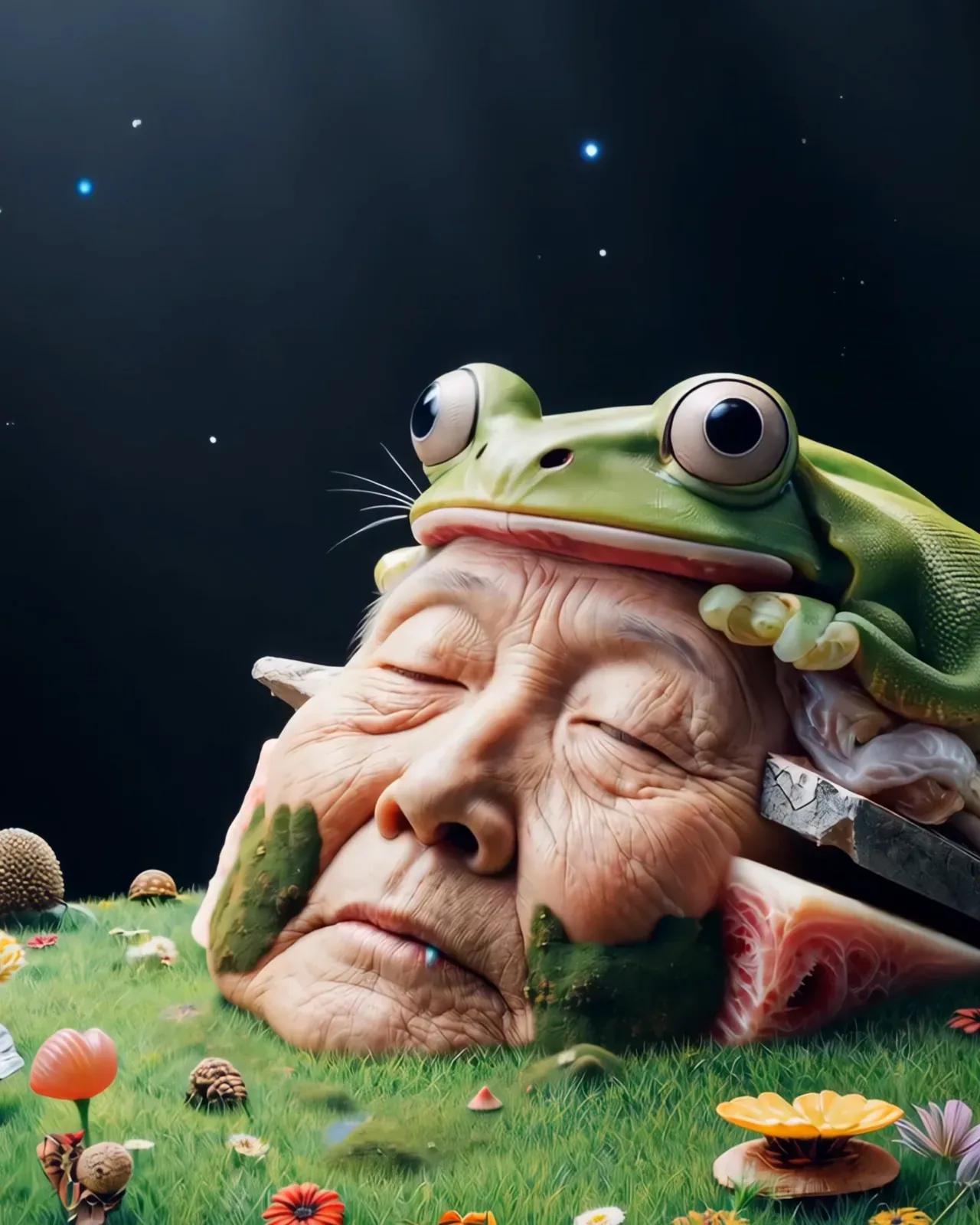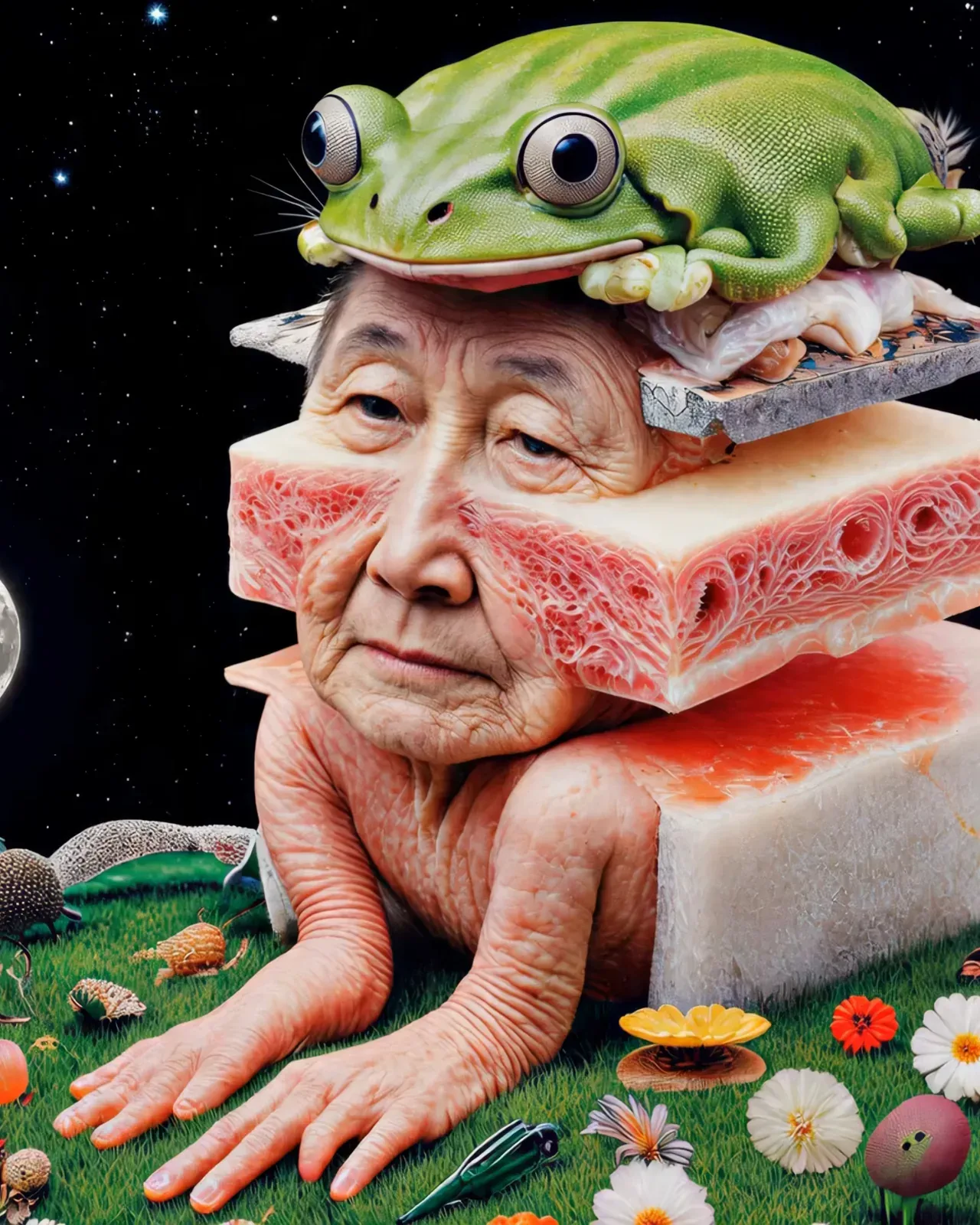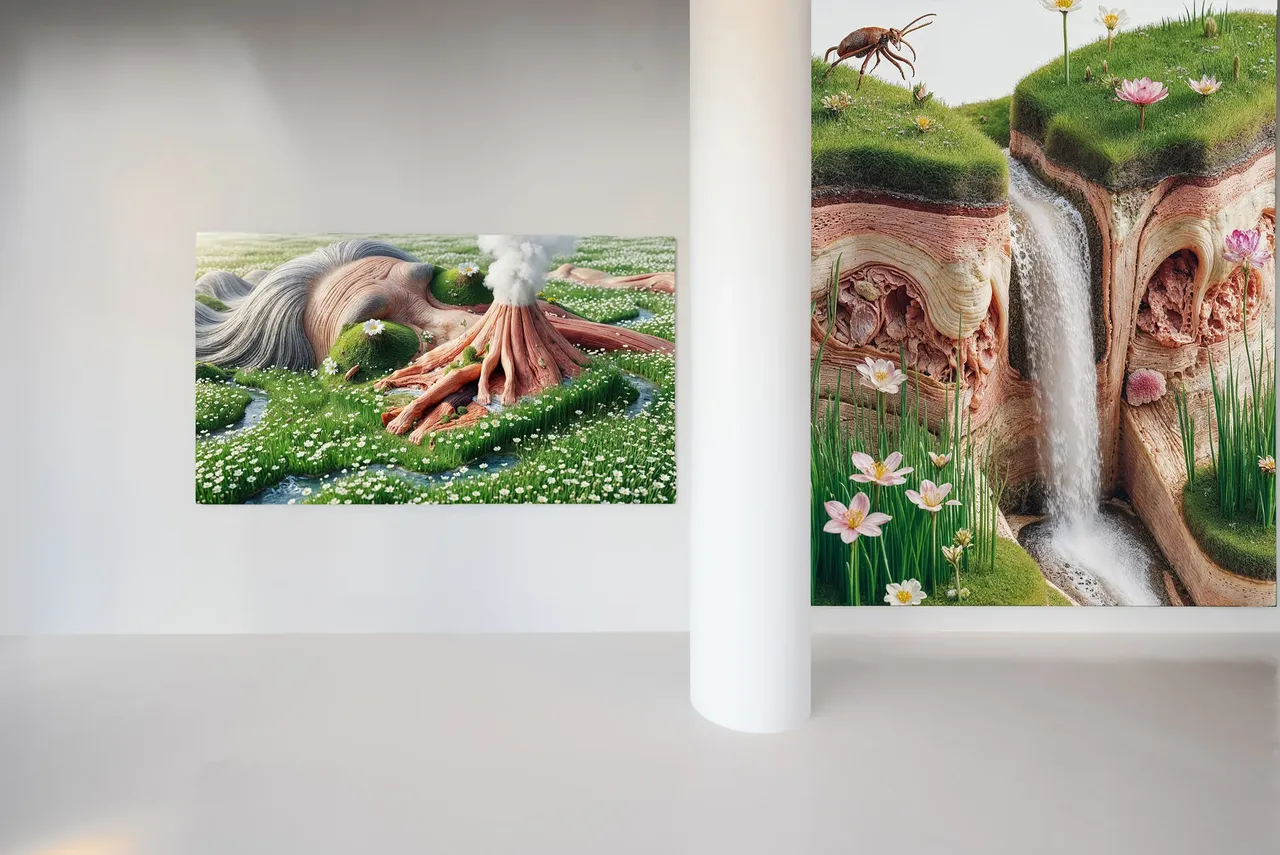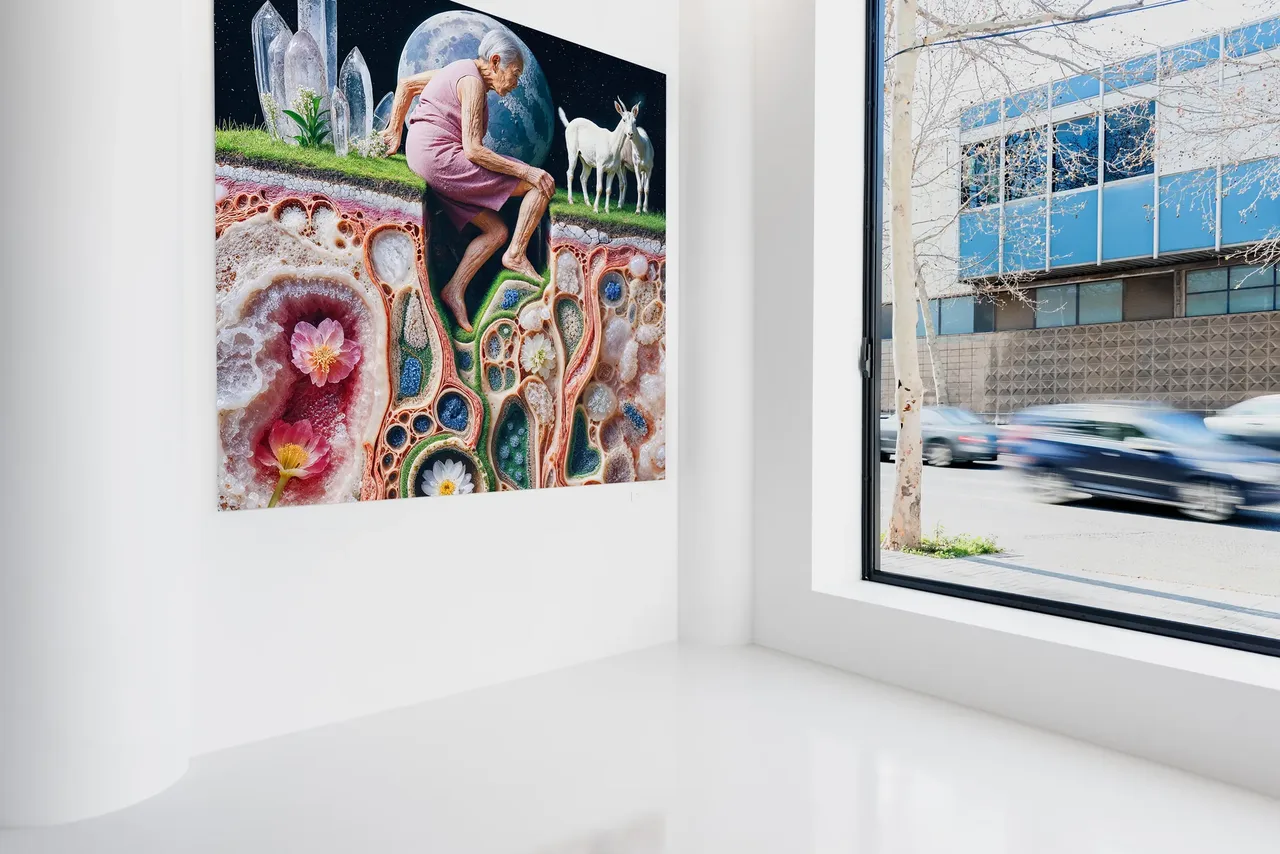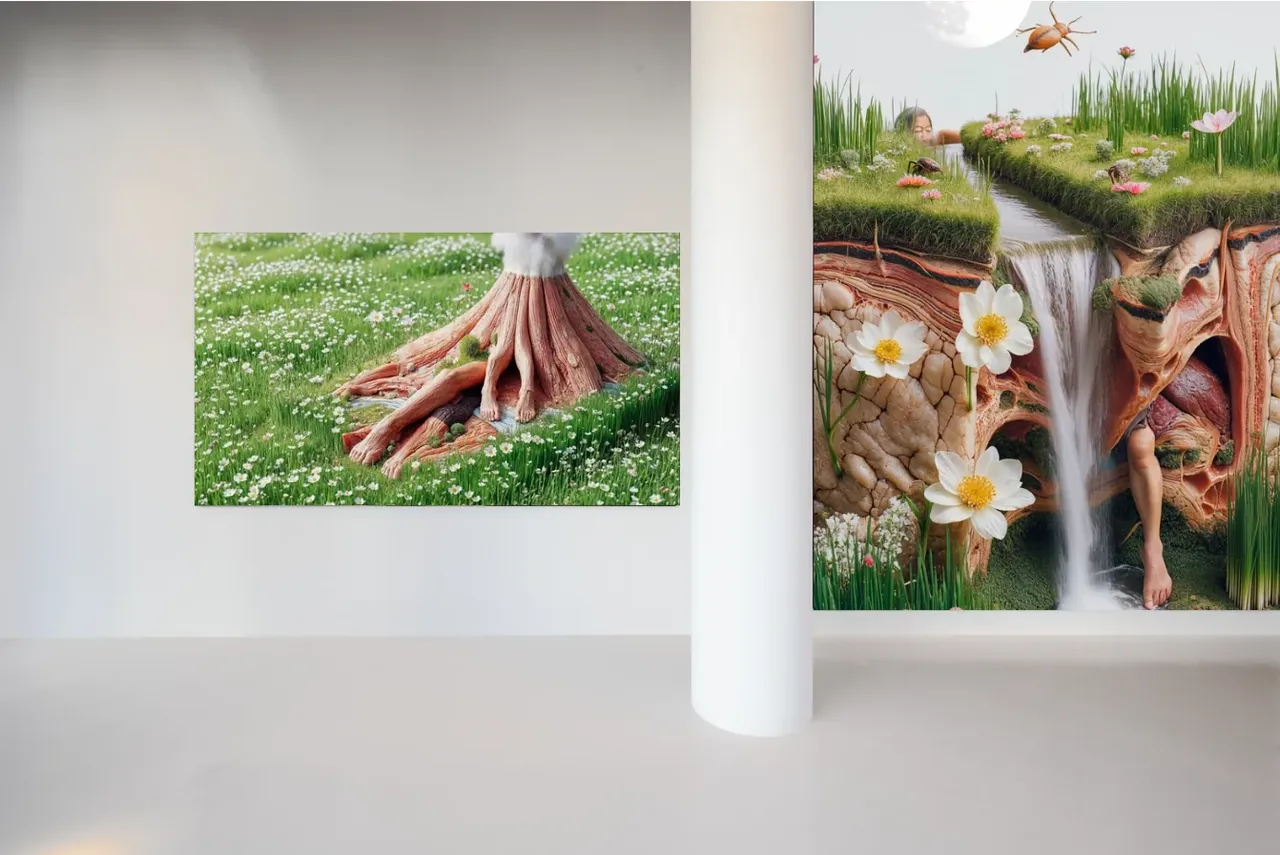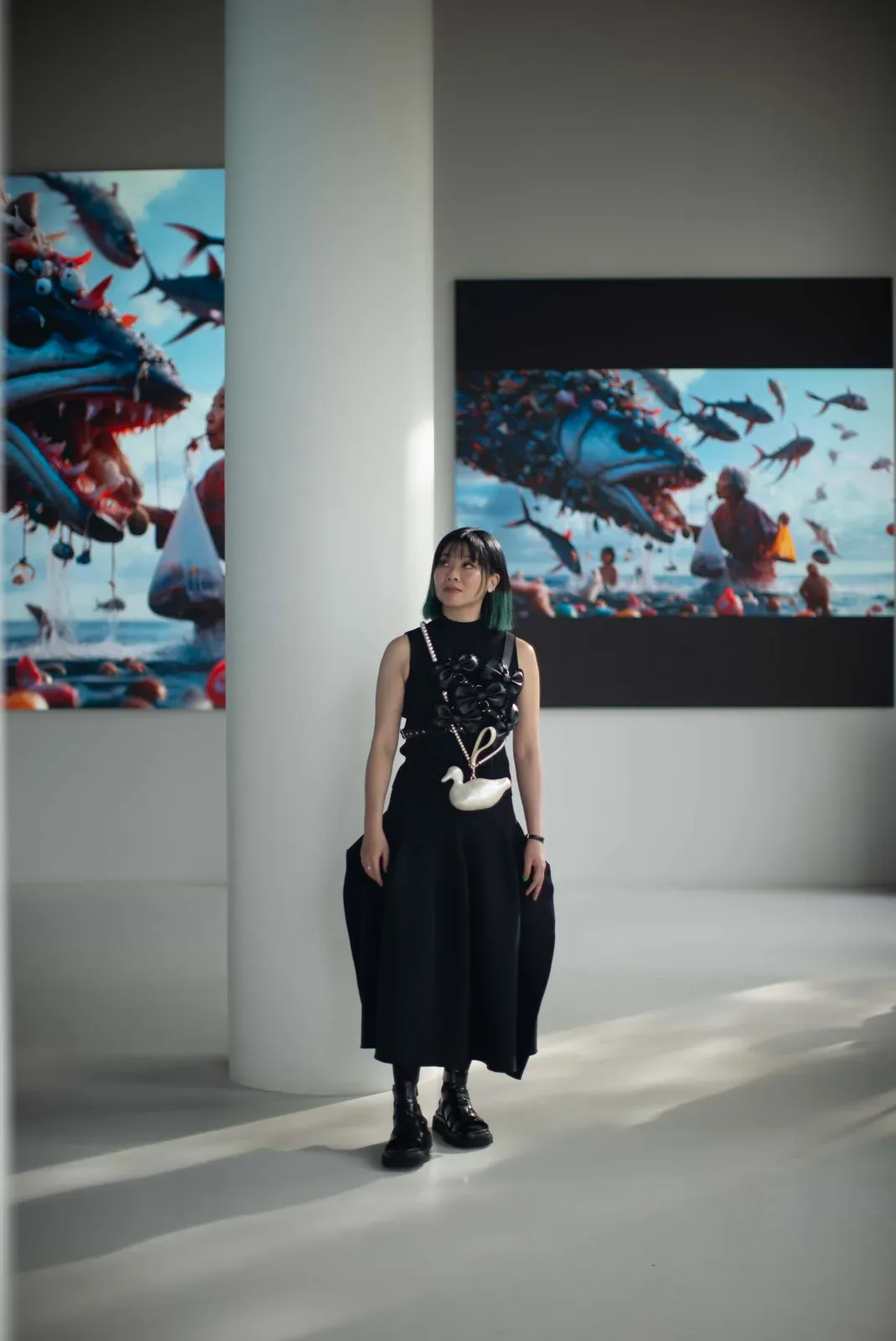
The idea of ageing, especially when it comes to women, often carries an unspoken cultural expectation: to slowly fade into the background, to become less visible, and eventually to be absorbed into a kind of collective of the overlooked. Yet despite this erasure, some artists are reclaiming visibility from a culture that has long reduced old age to the margins. It is from this tension between presence and disappearance that niceaunties constructs Auntiescapes, on view at Load Gallery in Barcelona until 15 August 2026.
The exhibition extends her ongoing Auntieverse into physical space, where digital bodies, AI-generated landscapes and reimagined archetypes acquire a new material weight, reframing ageing as something expansive rather than reductive. In this conversation, we enter the imaginative world of niceaunties, aka Wenhui Lim, to unpack the vision behind her ever-expanding Auntieverse, where humour, technology and emotional memory intertwine to reframe conventional narratives surrounding femininity, beauty and time.
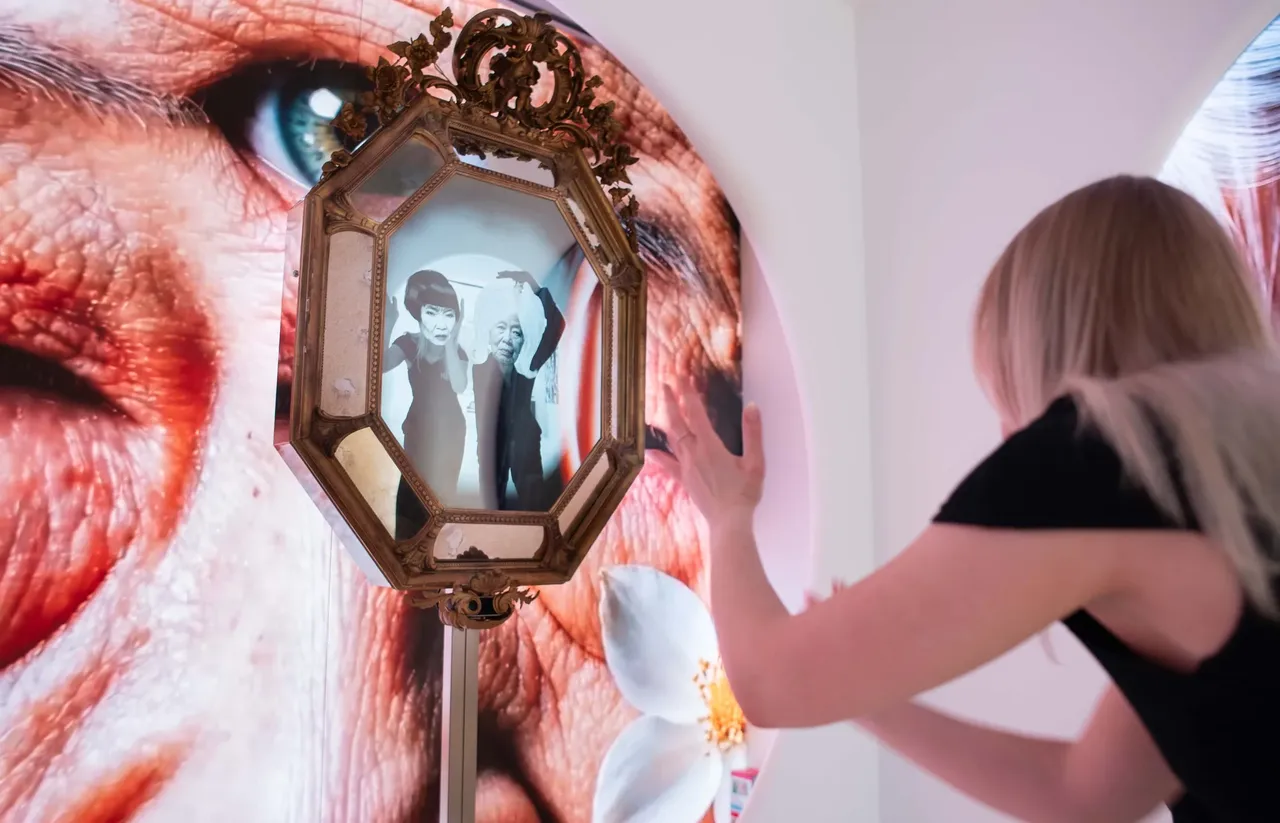
First of all, congratulations on your new exhibition Auntiescapes at Load Gallery. Although you already have an established trajectory and several exhibitions behind you, I was wondering, do the nerves ever really disappear? How do you emotionally navigate the beginning of each new project?
Hello, thank you for saying that! The nerves are still there, but now it feels more like an inner auntie voice asking questions such as: Are you asking the right questions? Are you staying true to your path? Is it good enough? It is still about taking a deep breath and putting myself out there, while recognising that it is a journey and another opportunity to level up in my exploration. A new project has to begin with excitement, anticipation and a sense of challenge. I trust my intuition, and if it does not start that way, it is probably not the right one.
Your work revolves around the figure of the "auntie" as a social archetype, yet you reinterpret it through these futuristic, vibrant and emotionally expressive characters. In many ways, your work also challenges the idea that ageing should mean becoming quieter, invisible or emotionally restrained. Are there other archetypes or social figures you would be interested in exploring in future projects? Perhaps even characters that feel less represented or socially "unpolished", like the chaotic younger niece, or other personalities that exist outside conventional expectations?
My work is indeed centred around questioning my own attitudes towards ageing. I wanted to imagine an alternative future for my grandmother's generation, a generation of women who lived in a time and environment with very little personal choice, where their lives were shaped by the needs of others and largely occupied by domestic responsibilities. Even in the current state of the world, ageing women remain largely invisible or underrepresented in popular culture, although this is gradually beginning to change. Through these perspectives, I feel I can explore endless topics and continue building the Auntieverse, which I have been developing since 2023, when I first started using AI.
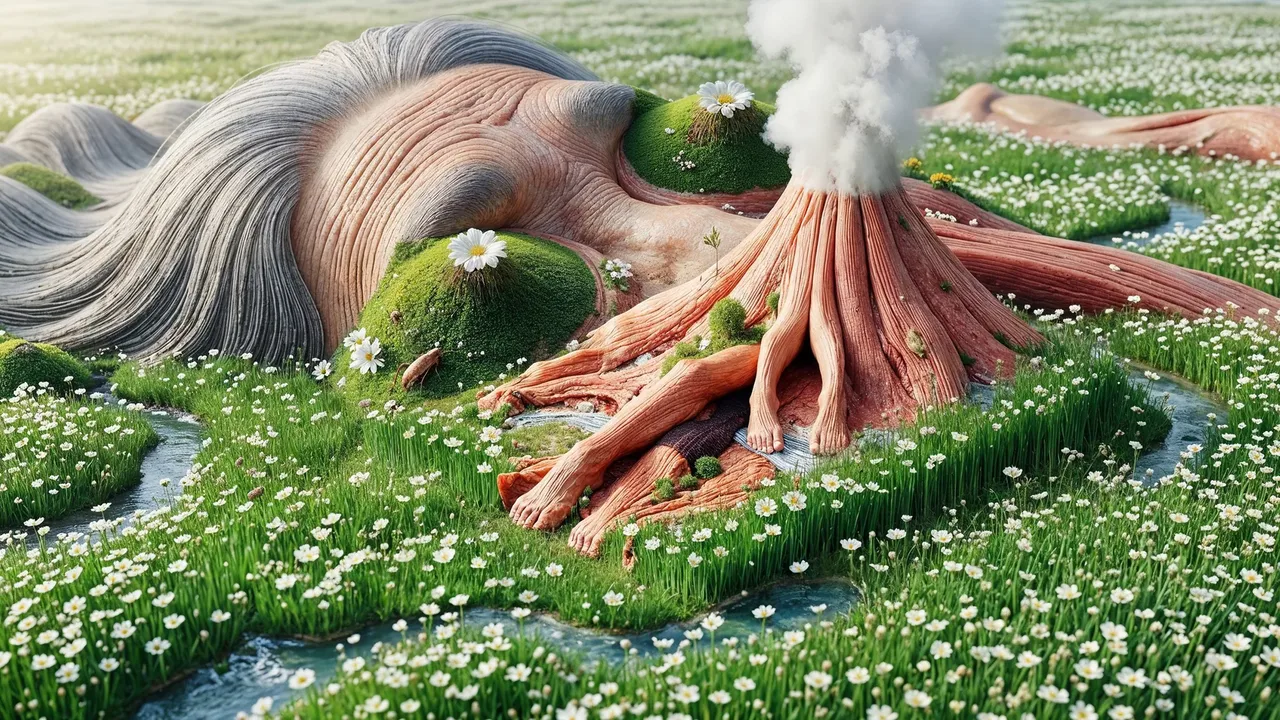
Throughout the exhibition, the body is presented as a landscape, a fusion between something geological, emotional and constantly shifting rather than fixed or controllable. Do you think contemporary society has distanced us from experiencing our bodies as living, intuitive spaces, especially in an era so dominated by optimisation and self-surveillance?
I feel that we have become disconnected not only from our bodies, but also from our heritage, from the land and from one another. There has historically been very little discussion or information about the changing body, particularly the ageing female body, menopause, for instance, although that is gradually beginning to shift. In many traditional families, connecting with our bodies is not something openly spoken about, whether in terms of sexuality or mental health, and I think that contributes to this sense of disconnection. But it is never too late.
On another note, I recently read a very interesting article by Sharon Blackie about the archetypal old woman in Gaelic tradition, and how nature and the land are deeply connected to this elder goddess figure. It is the opening essay in the book accompanying The Coming of Age exhibition in London (Wellcome Collection), where aunties from the Auntieverse are also being shown. It feels like a wonderful coincidence that both exhibitions in Europe are happening at the same time while exploring similar themes. I was not previously aware of this Gaelic folklore, but the cycles, the land and the ageing aunties represented in Auntiescapes resonate with it deeply. In parallel Chinese folklore, the goddess Nüwa created mankind from the earth, which also inspired one of the artworks, AuntieNvwa.
On another note, I recently read a very interesting article by Sharon Blackie about the archetypal old woman in Gaelic tradition, and how nature and the land are deeply connected to this elder goddess figure. It is the opening essay in the book accompanying The Coming of Age exhibition in London (Wellcome Collection), where aunties from the Auntieverse are also being shown. It feels like a wonderful coincidence that both exhibitions in Europe are happening at the same time while exploring similar themes. I was not previously aware of this Gaelic folklore, but the cycles, the land and the ageing aunties represented in Auntiescapes resonate with it deeply. In parallel Chinese folklore, the goddess Nüwa created mankind from the earth, which also inspired one of the artworks, AuntieNvwa.
“My imagination is still my own. I use AI to generate scenes I imagine, although in the early days, when AI tools were more experimental.”
I found it very interesting how humour operates in the exhibition almost as a Trojan horse: the auntie figure feels funny and familiar at first, yet beneath that there is something much more unsettling about inherited judgement, shame and emotional conditioning. Do you consciously use humour as a way of making difficult subjects more approachable, or does that tension emerge naturally through the work itself?
It is definitely part of the way I communicate daily, and it is consistent with the way my family communicates as well. The energy is often light-hearted, a casual way of approaching all kinds of issues. I did not consciously think of it as humorous, although I have often been told that it is.
As AI-generated art continues to spark debate within the creative industry, how do you position your own practice within that conversation? Do you see these technologies as extensions of artistic expression, new collaborative tools or something else entirely?
I see my practice as a form of social questioning about ageing and a way of spotlighting an invisible figure. I use technology to support my project, not just AI but also other digital tools, physical tools and disciplines such as academia. Because AI collapses production time, it allows me to focus much more on developing ideas and staying in a state of flow. In that sense, it is collaborative.
Do you think AI, in any way, shapes or conditions your visual imagination? Are there aspects of it that feel limiting or even challenging for your practice?
AI allowed me to bring together several ideas that previously did not exist in the same scenario, within a single image and in a very quick process, which would have been very challenging or even impossible to achieve using traditional resources. My imagination is still my own. I use AI to generate scenes I imagine, although in the early days, when AI tools were more experimental, some results included unexpected details that sparked further imagination. Nowadays, AI tools are more precise and tend to adhere more closely to prompts, so there are fewer accidents.
And when the result does not quite match what you had in mind, how do you usually respond or work around it?
I tweak the prompts until I get close to what I am looking for, or I move on to the next idea.
Besides this type of installation work, you also explore many other artistic fields, ranging from video art and digital pieces to public projects, editorial collaborations, world-building and speculative storytelling. Do certain mediums allow you to express ideas or emotions in ways that others cannot, or is the constant movement between formats an essential part of your practice?
I am curious and excited to try new things, new mediums and new fields, to reach a wider audience so that the project can raise questions about ageing or inspire others to do so.
The Auntie sculpture is one of my favourite pieces you have created so far. There is something incredibly exciting about seeing a body of work that was initially born within digital spaces suddenly occupy the physical world in such a tangible way. What did that transition feel like for you personally? Did materialising these characters in sculptural form change the way you relate to them or understand your own practice?
I felt incredibly fortunate. The Auntie sculpture was my second physical piece. The first was a giant inflatable garlic, a character from the video Aioli Times, which was exhibited alongside the sculpture at the ArtScience Museum in Singapore in 2024. The auntie sculpture was special not only because I had the opportunity to work with hyperrealistic sculptor Valter Adam Casotto, but also because of its context. In the traditional beauty industry, typically centred on youth, having an auntie take centre stage at a L'Oréal private event called The Beauty of Longevity marks an important milestone in shifting beauty standards. Not too long ago, the outdated, old-fashioned image of an auntie would not have been associated with new ideas of beauty, especially in Southeast Asia.
You have mentioned that part of your inspiration comes from childhood memories, among many other sources. You pay close attention to small, everyday details, the kind of things that often go unnoticed or are considered insignificant. Has this sensitivity always been part of the way you observe the world, or is it something that has evolved over time, as you have learned to appreciate the beauty within more ordinary moments?
I have always loved imagining characters and stories since I was a child, especially after my auntie introduced me to Doraemon manga, in an era when books and television were the only forms of entertainment. There was no internet when I was growing up, and, being alone, I often escaped into my own mind.
“There was no internet when I was growing up, and, being alone, I often escaped into my own mind.”
Coming from a cultural background where hard work and sacrifice are often deeply valued, I was wondering how your family or close circle reacted when you decided to leave architecture after twenty years to pursue your artistic career. Did that transition feel like a significant shift for them? Were you told that it was a crazy idea?
My own family is pretty chill about it. Acquaintances, journalists and friends, however, especially in Singapore, have been asking questions about security, making a living, the courage of “doing this when you are already so old,” and “wow, you gave up your career.” They are very practical.
In every artist’s life and career, there often comes a moment when you suddenly realise that your work is truly resonating with people in a meaningful way. Have you ever experienced a moment like that with your own practice, a point where you realised your art was genuinely impacting others? If so, when did that feeling first arise for you?
There are some moments when I realise this, when I see people react emotionally to my practice, with tears after watching a video narrative, or with joy and smiles at exhibitions and talks. People also react with anger. They are triggered by the use of AI and by their views on my exposure. In the beginning I was troubled by this, and eventually I realised that art captures a moment of creation that moves people who resonate with its energetic frequency. When people respond to it, whether with warmth or resistance, it has served its purpose.
Finally, your aunties already feel so vivid and alive that I have to ask: do you think you might eventually grow into one yourself? What kind of auntie do you think you would become?
One could say I am designing the future version of my ageing self. I will be a nice auntie!