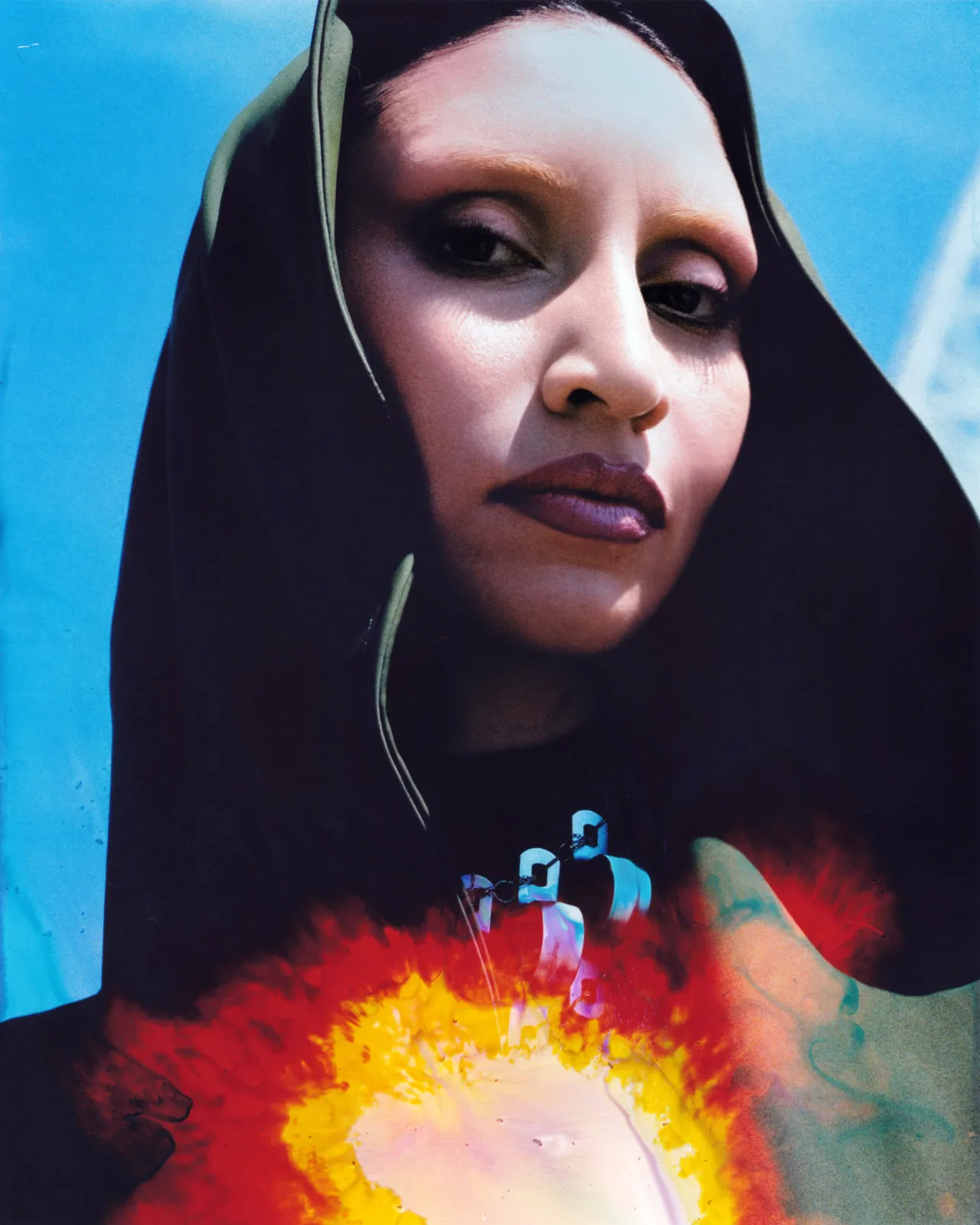
A fusion of Persian identity, memory, and artistry, NAVA’s latest LP, Gabbeh, explores the intimate moments of her life through hypnotic electronic melodies and lyrical storytelling. Based in Milan and unable to return to her native Iran, currently living an unprecedented revolution aiming to dethrone the Islamic regime, NAVA channels her emotional and physical experience of displacement into her craft. She shows us what it means to live as authentically and openly as possible while facing her fears and finding liberation in doing so.
Gabbeh takes you on an enchanting journey starting with the fate of a life choosing you. We experience the out-of-body adventure of summoning souvenirs of your past, and of losing yourself and your culture in the expectations that close in on you more each day. We end by confronting our truest selves. All the while, the LP’s imagery communicates a confident, fierce woman who has found her calling and is able to revel in her complexities sans shame.
Music is an outlet for NAVA to traverse the innermost workings of her mind, from dealing with exile to the psychological turmoil of finding yourself. It becomes a tool for her to recall memories and pay tribute to her heritage and the people who helped build her up while also embracing the present version of herself. Today, we speak with the artist about diasporic identity, what artists owe to their audiences, and her alter ego.
Hey NAVA, to break the ice, what is your favourite Persian instrument and why?
I think the Persian santur. It has something between seventy-two and one hundred strings and is super complex. I love how this instrument survived through centuries, even in periods when music was banned, and nowadays, I’d love to experiment with it a bit.
You said in an interview that “music moves everything.” What is one of your first memories of being moved by music?
I remember when I was in middle school, my mom took me to guitar lessons and one day my teacher decided to give me a song I could sing along to. I remember it was so liberating for me to sing — I had never had that kind of emotion running through my whole body!
You also said that music found you. Where did it find you and how did that discovery go?
Music has always been whispering around me. Some of my early memories are of my sister playing the piano. A vivid memory of mine is my grandma telling me how she worked so hard so that her dad would buy her a piano. It was almost unheard of at that time. As time passed, I found myself in Italy, not knowing what university I wanted to enrol in. When all of a sudden, I found a music academy flyer on the metro and I thought, ok, let me start there because music has always been a safe place, until I figure out what I want to do. I never left.
“I think Gabbeh became liberating to me because I was able to face my fears through it. At first it was scary because I had to go deep and find what was the root of my discontent.”
Sharing something as intimate and vulnerable as Gabbeh is quite scary, but you’ve said that it feels quite liberating now. Had you always planned to make a record like this, and did you always think it would feel liberating?
I think Gabbeh became liberating to me because I was able to face my fears through it. At first it was scary because I had to go deep and find what was the root of my discontent and find a way to deal with it. It all happened naturally because all the lyrics came from my notes app with dates and places of things I had to get off my chest or things that were tormenting me. So it had quite a natural cycle. I think that's the beauty of a Gabbeh as well, the intertwining of a thousand knots that make a masterpiece.
Kashan is my personal favourite. It feels very different, very defiant from the rest of the songs in the LP. What went in to making this one?
I love how you said that! Kashan is the first song Erio, Fabio, and I started writing together. It happened so randomly. Erio, my friend who wrote the album with me, was in Milan that day and came to visit us in the studio. He is such a precious soul! I remember I was talking to him about Kashan (the city) and my memories there being the last place I visited in Iran and how I wanted to scream how much I was missing it from the top of my lungs. He sat at the piano with Fabio and started playing a melody and we wrote a draft. After that random session/non-session, Fabio and I had found the missing piece to our album: Erio. He has this quality of a musical psychologist, which is what I needed to be able to write Gabbeh. I’m so grateful that my A&R Claudio and Label Oyez gave us the ‘ok’ to have Erio on the team and fly him to Milan for our sessions. They saw our vision as clearly as we did.
You’ve said that you prefer being labelled as Persian instead of Iranian. Could you tell me about your reasoning behind this?
Growing up, I always heard my parents referring to themselves as Persian when we were abroad, so that stuck with me. After a bit of digging, I understood the reasoning behind it: Persia has far deeper roots for us. It links us back to our ancient history and heritage, which we hold close to our hearts. We are proud of it, and it comes from the word Pars/Fars, which also connects us to our language (Farsi), that has been kept safe through thick and thin.
You said your biggest fear is forgetting, specifically forgetting your identity. I think a lot of people in the diaspora can relate to this feeling of living in a place for so long that their cultural heritage feels thinner. How is this album helping you remember and keep the memory of others alive?
I feel like Gabbeh raised awareness, interest, and intrigue. Through writing the songs, I was reliving so many memories, places, scents, tastes and so much history. It’s as if through Gabbeh, I was able to travel back in time and relive everything I’m missing and talk about it and describe it just as I remembered it. That is so precious because in our hectic everyday lives, it's something that is always put in second place because we're constantly running forward and almost never realising what we are leaving behind.
Not being able to return home must also play a big role in trying not to forget your identity, your roots. It is an incredibly brave sacrifice to give up returning to your home for supporting the rights of women and freedom of expression. Does it feel like a sacrifice to you?
I feel like if you have a platform, not even necessarily a huge one, you must use it. I have always been advocating for women’s freedom of expression, especially through my visual presence, from the very beginning. I have been criticised for it a million times, but it only made me persevere and push the limits even more because I wanted to be the role model that is not in the norm, but at least it still exists. If you have the privilege of freedom of expression (and I say privilege because it is not a given for where I come from), you must use it to amplify the voice of those who don’t have the same opportunity as you.
You’ve said art is a form of liberation, especially when coming from a repressive regime. Historically and presently, we see art being targeted by authoritarian governments. What is the danger of art to these systems?
I think it’s all rooted in the fear of freedom of expression, that’s why it is considered a danger. But I’m so happy that the underground scene in Iran is still thriving and flourishing stronger than ever. In Persian we have a saying, ‘a willow tree doesn’t tremble in these winds,’ meaning the wind might bend me, but it sure won’t break me.
“In Persian we have a saying, ‘a willow tree doesn’t tremble in these winds,’ meaning the wind might bend me, but it sure won’t break me.”
You’ve said that you feel you owe it to your roots to speak out. As a musician, what do you think artists owe to their audiences listening to the music?
Raising awareness — one hundred percent! You need to be the voice that amplifies the message. At least it has always been that way for me and for the artists I admire.
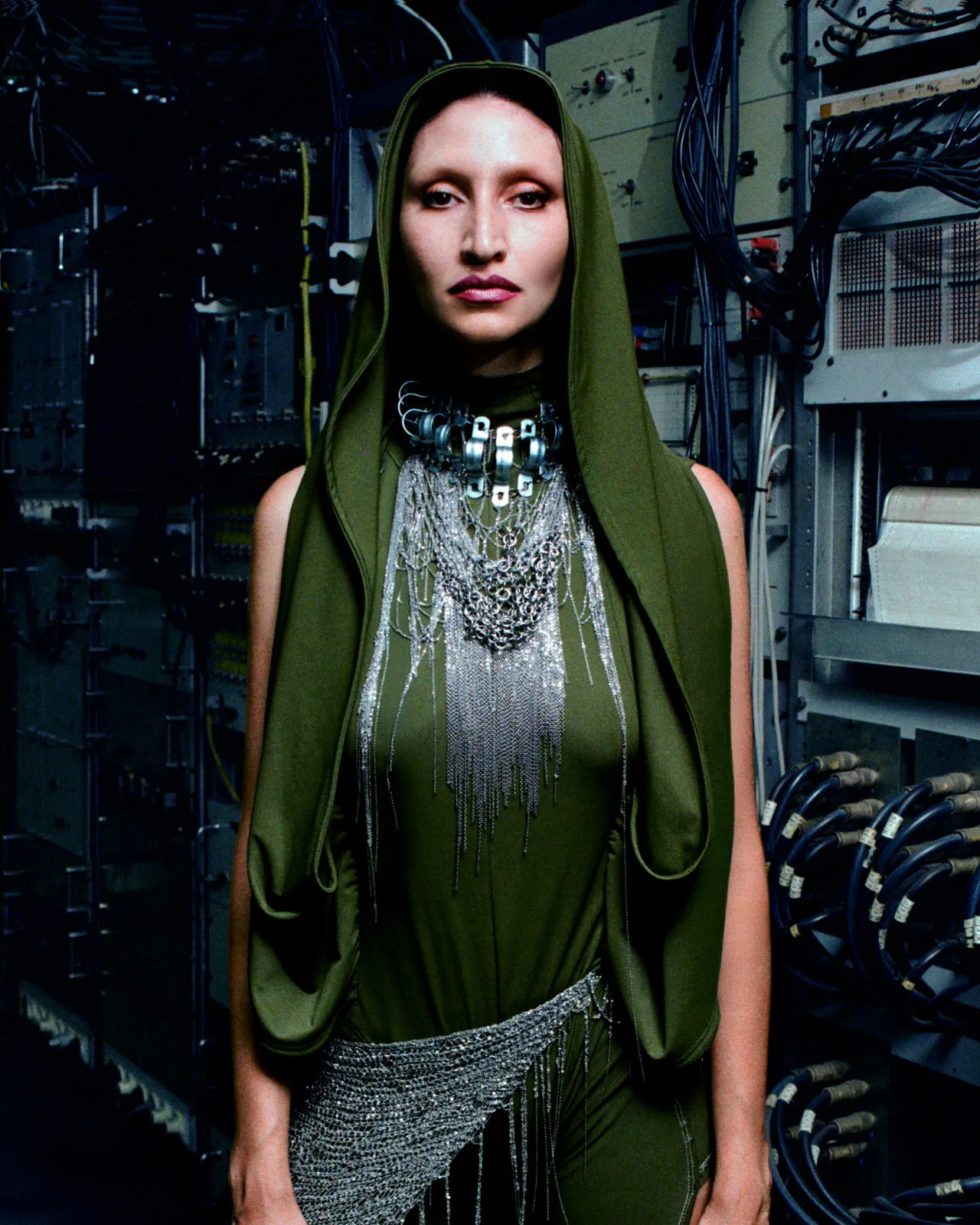
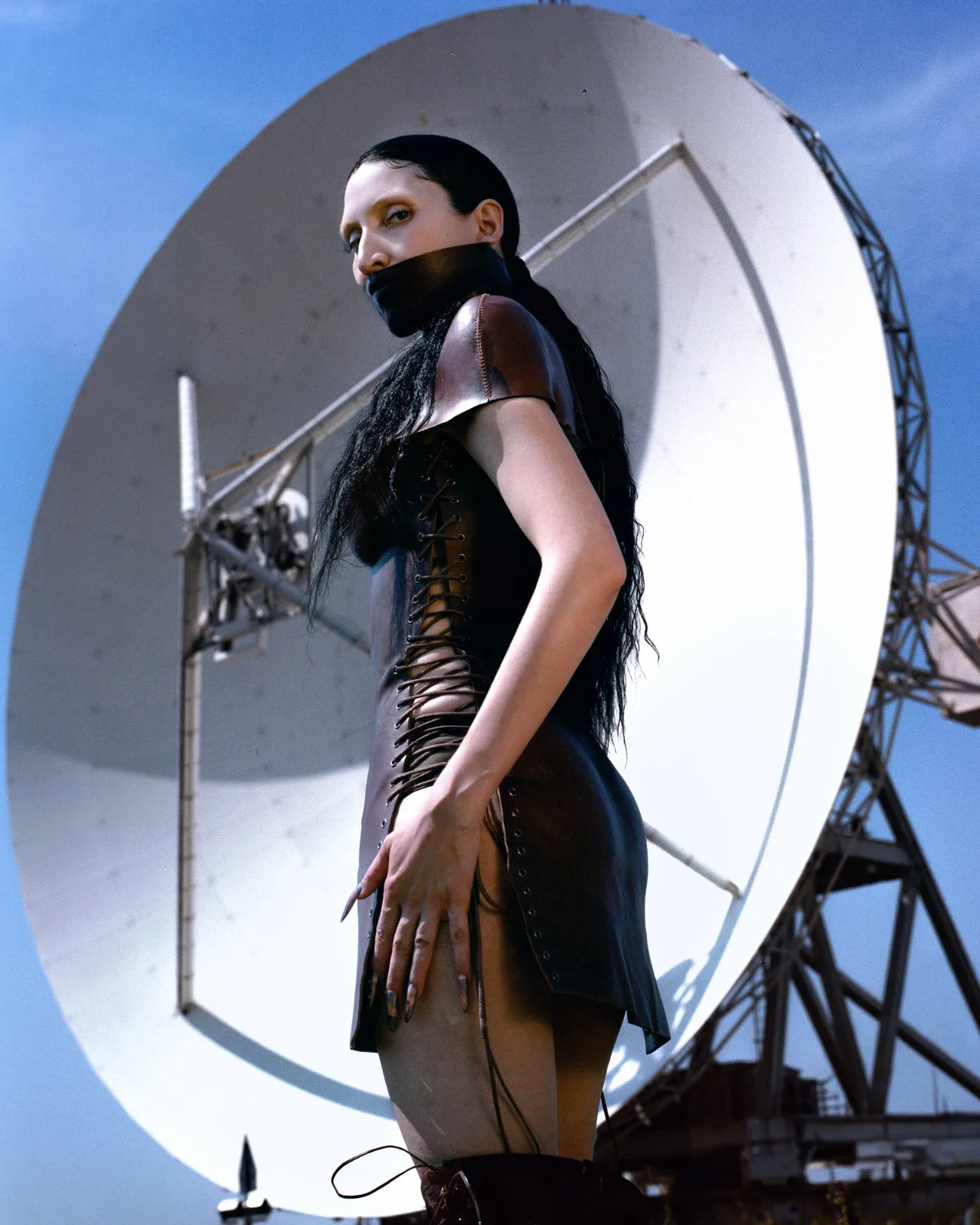
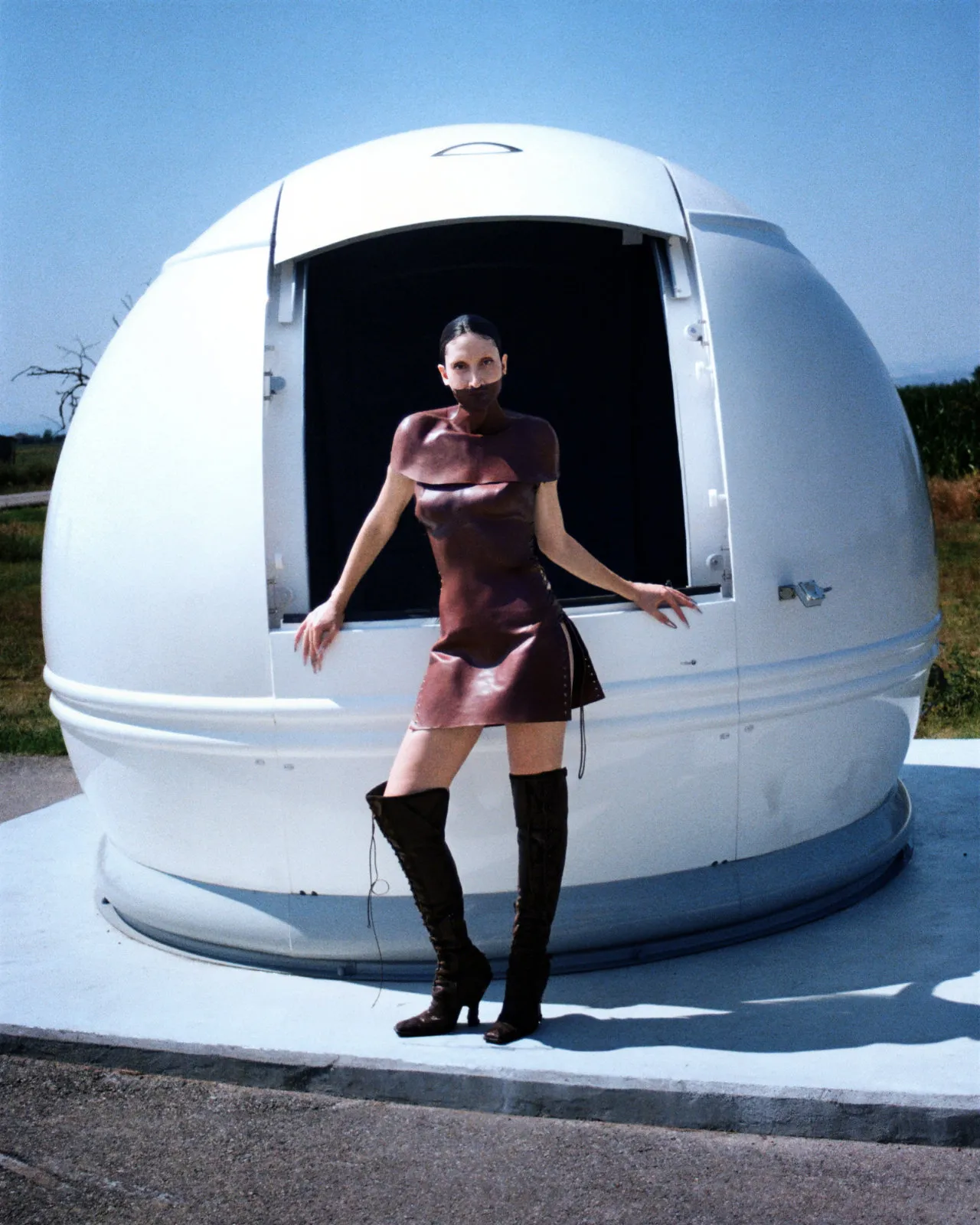
The imagery for the album is extremely fierce with the metallic spears curving around you and the chain-link body armour, but it also weaves in very personal and heartfelt touches with the rugs, jewellery, scarves, and stamps. What does it mean for you to combine these two seemingly clashing concepts?
I think the imagery represents me one hundred percent. I used my grandpa’s stamp collection and my grandma’s jewels, gloves, and my mom’s rug collection. They are part of my roots and my essence. Then we mixed everything with the futuristic 3D models that represent my present and future self. All the photos were first taken in analogue because my team (who makes all of this come true) and I are obsessed with the human aspect. Then we brought in the 3D futuristic touches that are part of my persona, so I think it portrays me completely — where I come from and where I’m going.
Fashion seems to be a very big avenue of expression for you aside from music. Can you tell me about your style?
Of course! NAVA is a NAVATAR. She is my alter ego, she gives me the strength and courage that I don’t think I would have had if it weren’t for her. This all beams through my music but equally through my imagery. I have experimented so much through the years with my two guardian angels, Matteo Strocchia and Marco Servina, creating our shapeshifter. I feel like it breathes life into me, it keeps things exciting, and there is no limit. We have also brought this to life during the concerts through Karol Sudolski’s visual world that accompanies the live show. NAVA brings us ultimate freedom of expression. I want to be inspiring and eye-opening for Persian girls and boys. I didn’t have that growing up, so it became my mission.
To finish, what are your plans for 2026? Will we see you tour, for example?
Not gonna lie, touring has become such an expensive nightmare for artists, especially in my range and level. But we are trying to push through and give the live show the spotlight it deserves. We have a couple of gigs lined up, so hopefully we will definitely see you around.