For two decades, Nathan Fake has traced the emotional topography of the dancefloor, shaping sound into something tactile and transportive. His music has long belonged to the night, to the pressure and release of packed rooms and strobe-lit introspection. With Evaporator, he steps into full daylight, trading cavernous intensity for open skies, rushing air, and a sense of boundless horizon. Rather than abandoning club culture, the record reframes it, where euphoria unfolds in slow motion and textures glow instead of detonate.
Fake calls it “airy daytime music", and each track moves like a weather system, shifting between warmth, rainfall, and drifting melodic mist. Collaborations heighten this sense of landscape. Ewan Mackenzie, aka Dextro, dissolves ferocity into a blurred choral pulse on Baltasound, while Orbiting Meadows, created with Clark, suspends microtonal piano inside a pastoral dream that never fully settles. Accessibility emerges not as compromise but as atmosphere, inviting rather than confronting.
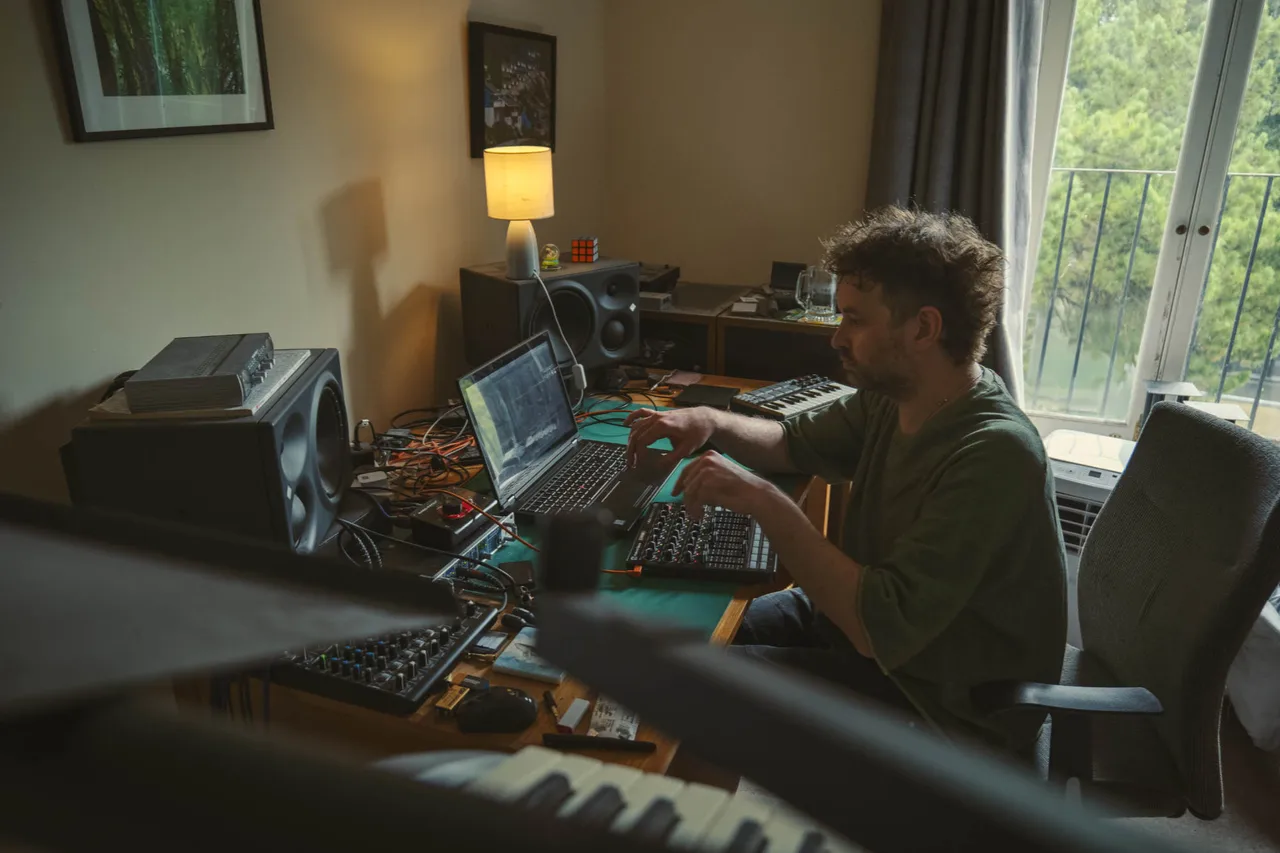
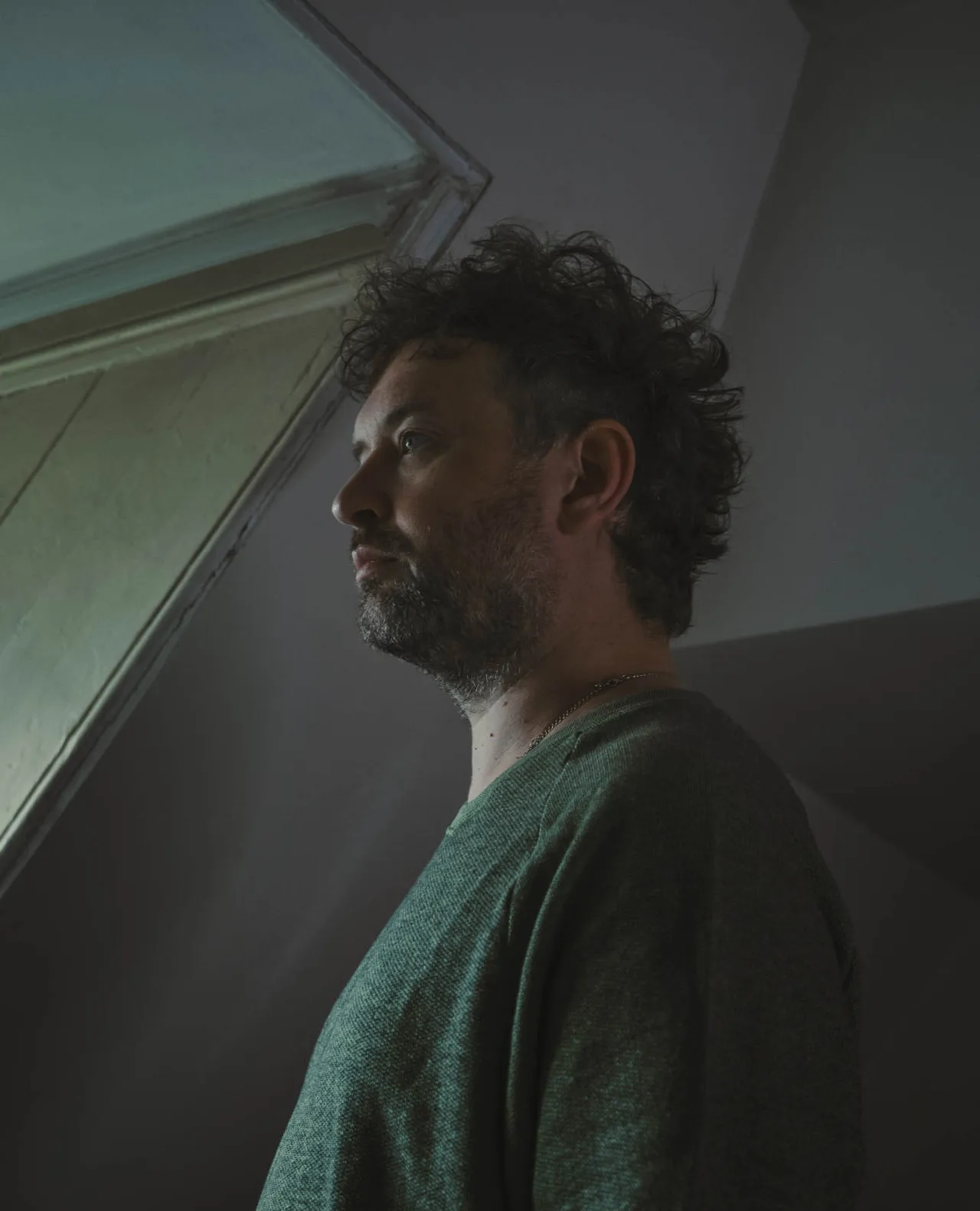
Technically, the album sits between past and present. Fake still relies on ageing tools like Cubase VST5, letting familiarity guide instinctive ideas that loop until they lock into place, producing music that feels discovered rather than engineered. After twenty years of distance and abstraction, he also places his face on an album cover for the first time. It is a quiet gesture of acceptance, mirroring a record that captures Fake still evolving, still curious, and newly luminous in the light.
Evaporator feels like a decisive shift from nocturnal spaces into daylight. What drew you toward light, air, and openness at this point in your life, and did that change how you physically approached making music?
Without wanting to give a boring answer, it was really just what I was naturally leaning towards at the time. I tend to make music that I want to listen to myself, and that’s really what I wanted at that moment.
You have described the album as “airy daytime music", almost as if each track is a weather system. Do you think in environmental or spatial terms when composing, or did that language emerge only once the album revealed itself?
I think an album should have a natural, cohesive progression throughout, so I think those themes become apparent once the album begins to take shape. It’s all part of what comes together during the flow state of working on the album.
Compared to the rave catharsis and subterranean pressure of earlier records, Evaporator feels deliberately non-confrontational. Was accessibility a conscious intention or simply a byproduct of trusting your instincts?
I’d say there are definitely elements of "rave", as in Hypercube, but I think it’s definitely not confrontational and more friendly and inviting. I think with wanting to write a more breezy-sounding album, it probably naturally came to have a more accessible sound.
Collaboration has entered your process gradually over the past decade. What does inviting other musicians into your previously solitary workflow unlock, or disrupt, for you creatively?
Yeah, it’s a very occasional thing, as you’ve probably noticed. They happen very organically, usually with friends or at least people who I’ve built up a very organic connection with.
“I tend to make music that I want to listen to myself, and that’s really what I wanted at that moment.”
On Baltasound, Dextro’s ferocious drumming is transformed into something choral and blurred. How do you approach translating another artist’s physical energy into your own sonic language?
Actually, Ewan (Dextro) is playing processed guitars and textures on that track. I really enjoy putting someone else’s sounds through my processes. It normally involves writing something around them or bending that around something that I have in mind. Similar to remixing, I suppose, but much more “artful" (laughs).
Your second collaboration with Clark on Orbiting Meadows feels eerily pastoral yet unstable, especially with the microtonal piano. What attracts you to these slightly “off” harmonic systems, and what emotional space do they open up?
The piano was part of Chris’s input. He has a real piano that’s been microtuned, and he’d been sending me a lot of sketches using it, so I really wanted to have that in my music too. I’ve always loved that strange fine line between lush-sounding and almost unsettling textures and notes. I’m not sure what emotion they evoke in me, but somehow it seems to produce endorphins, haha.
You have spoken openly about your long-term relationship with older software like Cubase VST5. Do you feel that creative intimacy with tools can outweigh the pressure to constantly update and optimise?
I think it definitely has now, although that wasn’t always the case. It’s just a matter of where I feel more confident and comfortable, I think.
Much of Evaporator seems to have arrived instinctively, with ideas looping until they locked into place. How do you recognise that moment when a track stops being worked on and simply is?
Sometimes that can take a long while, haha. When it’s consciously an album track I’m working on, I tend to be OK at saying, “OK, that’s finished.” Sometimes it can be quite excruciating, though.
“I tend to keep things on a very simple theme, but then that theme is sort of constantly contorting and sometimes ends up in a different place.”
Tracks like Aiwa and Hypercube feel like temporal collisions, where different eras of your own music history coexist. When you listen back, do you hear continuity or transformation more strongly?
To me, those tracks sound quite different to my early stuff. When I hear my really old stuff, it does feel like it’s someone else. But there’s also that kind of melodic and rhythmic composition at the core that I definitely still recognise, which I don’t really hear in anyone else’s music at all.
There is a sense throughout the album that sounds are constantly mutating, never fully settling. Is that instability a reflection of how you experience the world right now or more a formal sonic curiosity?
I think that’s kind of how I’ve always approached music, really. I tend to keep things on a very simple theme, but then that theme is sort of constantly contorting and sometimes ends up in a different place. I think it’s very hard to make tangible themes like world issues come through in instrumental music. I think people will attach their own references and feelings to it.
You have expanded the stereo field dramatically on this record, especially on Slow Yamaha. How important is physical immersion, how sound occupies space, to how you want listeners to experience your music?
I’ve always been pretty mindful of wide stereo fields in my tracks, to be honest. I think “immersiveness” is subjective. If someone is immersed in it, then great, but another person might be totally bored by it. I obviously get very immersed in the process when listening back, so all I can hope is that people feel the same as me when they listen to it.
After twenty years, you have placed your face on an album cover for the first time, despite describing yourself as shy and resistant to visibility. What did that gesture mean to you personally, and does it signal a broader shift in how you relate to being seen as an artist?
It’s funny really. I mean, yes, I am very shy, but I also totally love playing live, just not because of being physically seen, obviously. I thought it’d be nice to have my face on the cover before I’m definitely too old to look good enough to do it, haha. I should’ve done it back in my 20s or 30s when I actually did look good.