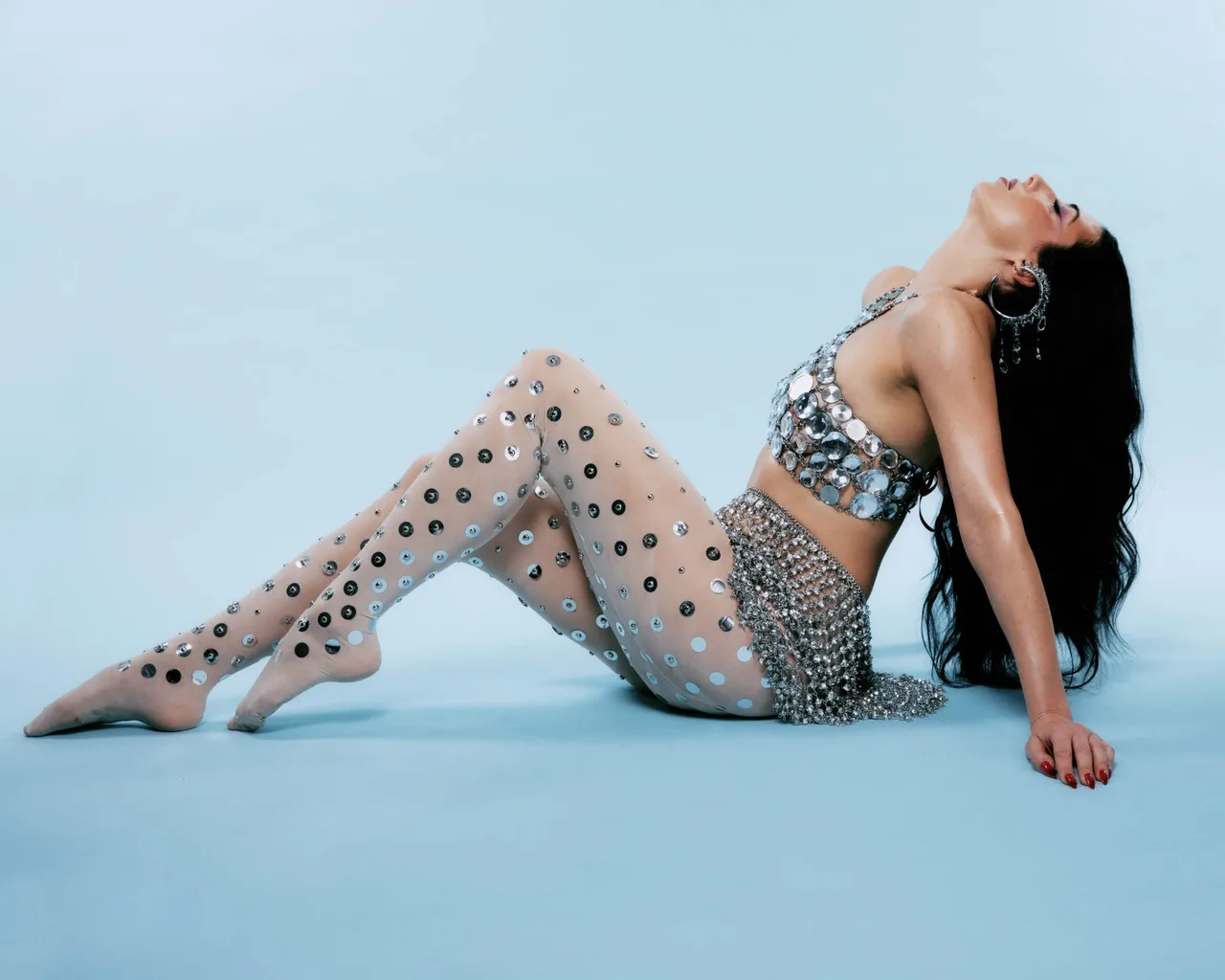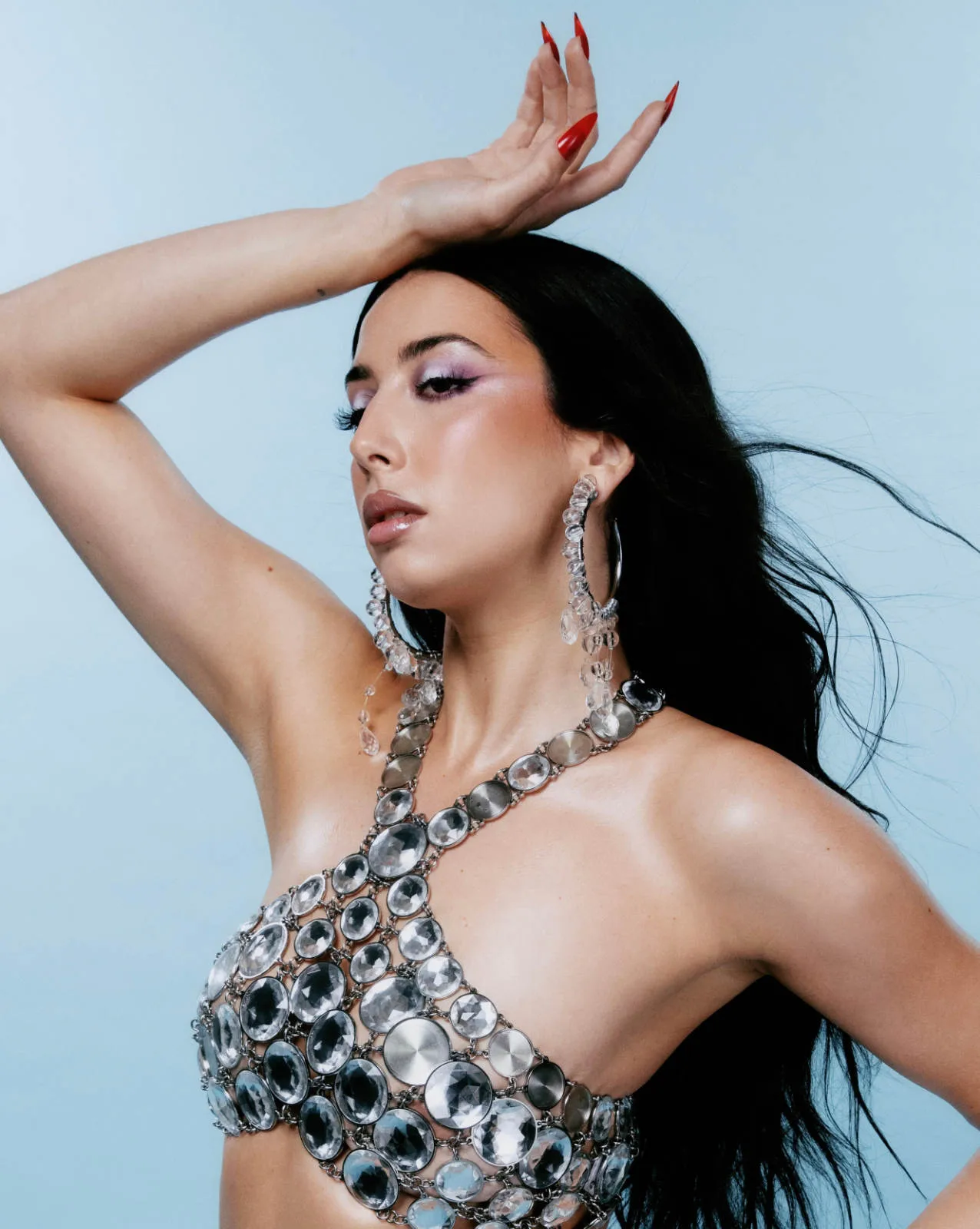
A process of change is taking place in pop music that can be seen especially in the new generation of artists; those who, because they are young, carry the worry that they will not have a decent future and must accept it. Many of them wanted to be pop stars from the moment they saw artists glow on TV (or on their smartphone screens). Zoomers’ strength is embracing difference. This way, they are provoking and promoting their own future where there is light. And one of the best examples of this is French Haitian singer and pop artist Naïka, who has just released her debut album Eclesia.
It’s not her first step in music though, she has already experienced much deserved success. With Eclesia, she makes the pop world richer by telling her story, narrating every chapter authentically, by being original and staying true to herself.
Born to a Haitian mother and French father and raised across four continents, Naïka brings a global perspective to her music, singing in English, French, and Creole. With two EPs, her viral hit Sauce with over 165 million streams, and collaborations with brands like Jimmy Choo and Fendi, she has established herself as a compelling new voice.
She has already performed in critically respected festivals such as the Montreal Jazz Festival and the Colors Festival in Paris. Now, she’s embarked on another adventure: an almost sold-out international tour across Europe and North America, that includes Somerset House in London, visiting Germany, The Netherlands, Belgium and a lot of the US. Beyond just data, it is worth noting, people all over the world want to see Naïka live.
In the album we find amazing songs such as the bright, island-infused single One Track Mind, that captures the instant heartbreak gives way to clarity. It follows a run of singles that make the decision of choosing your favourite really tough: the delicious Bloom, the addictive Matador and the soothing Blessings. You can tell that Naïka has been part of different places' cultures and the fusion all across the album is a meticulous multi-lingual exercise to create fusion with respect to her own journey.
What’s more, there is so much more to it: Eclesia might heal your circadian rhythm. There’s a lot of dopamine released by listening and dancing to songs like All My Life or Soleil, in which her voice sounds supernatural. Also, there’s also time for introspection and reflection in the beautiful and hopeful Barely Barely, and for some tears when playing Message in a Bottle. In the final song of her debut album she sings: “I’m not the best with my words. But you understand me”, and you do. We do. The visual side of this project feeds this narrative of universality by showing her universe with detailed references, DIY cinematography and a lot of elegance. A radical statement of authenticity that challenges and manages to tell so much through her voice and music.
We had the chance to speak to the artist about her debut album, languages, travelling the world and coping with it in this interview.
Hello, Naïka! It’s so nice to speak with you. Your debut album, Eclesia, has recently been released. How do you feel after all the work you've put into it?
It really feels surreal. I feel excited, nervous, focused and so so grateful!!!
Eclesia is a very cool name for a debut album, and it's quite an inspiring concept for the current state of the world. It originally comes from the greek ekklesía, which means community. How did the idea for the title come about?
Thank you! Actually, the title of the album came before the music was even made. I was on the phone with my dad and told him I was looking for a name for the album, one that would symbolise or mean Eclecticism. He immediately said “Eclesia” out of nowhere. I asked him, looked it up, I saw that in ancient Greece it once meant a gathering of people. I got so excited when I read this because that’s exactly what I wanted the album to represent. I knew that was the name right then and there.
Your single, One Track Mind, fights against a harsh reality through self-awareness. It's built around a konpa beat and sounds fantastic. It feels like the rhythm has just the right amount of intensity. I wonder what made you think of using this type of rhythm for this particular track.
This album is my introduction to the world, and it was very important to me to represent all of the musical and cultural elements that make up who I am. Konpa is a big part of Haitian culture and a big part of my upbringing, and it was important for me to have a konpa beat in the album.
On the album, you sing in English, French and Haitian Creole. For some people, this may be seen as a risk, but for others it is a way of staying true to their identity. Is there a language in which you feel more comfortable writing or singing? What is the process of composing music like for you?
It might be a risk but to me it’s who I am, and authenticity is something I strive for and value greatly, especially when it comes to my craft. As for the writing process, my go-to is always English as a base (unless I intentionally decide to write a song in French or Creole). English is usually my main base because it’s a language that people all around the world will either know or relate to, and at the end of the day I want my music to reach the world and connect people together.
Soleil is a beautiful bolero, Bloom has a delicate soulful touch, and Blessings could perfectly be described as a slow dance hall song. Despite the diversity of genres on the album, there seems to be a lot of cohesion in terms of sound. How did you work to achieve this from a production standpoint?
It makes me happy that you said that, sometimes I get worried that the songs might be too different from one another. But I think it goes back to the strive for authenticity. The music is a reflection of who I am, so at the end of the day that’s what makes it all cohesive (along with the vocals that tie everything together as well).
Do you think the music industry is becoming more and more diverse in terms of including other genres from other places, or is that just an illusion we perceive from the outside?
I think thanks to social media, the world is becoming more and more connected, and so people have a chance to discover and learn about things outside of what they know, what they are familiar with. This is mostly what is pushing the diversity in the industry. Within the doors of the industry however, I will say there is still work to be done when it comes to betting and investing on artists that are outside the box.
At the time of writing, you were on the cusp of starting your international tour, which is already almost sold out. Congratulations! Nowadays it's very difficult to achieve something like that. You're going to play different concerts in venues such as KOKO in London, Élysée Montmartre in Paris and the beautiful Botanique in Brussels. Is there any other place you're particularly interested in visiting?
Thank you!! I’m so excited! Yes I want to visit Brazil really bad. It’s my big big dream country to visit next. And I know I got Brazilians that ride with me so I wanna go party with them!!!
You've lived in the Caribbean, the South Pacific, Kenya, France and South Africa. How much cultural influence has being in all these different places had on you? Was there any culture that influenced you the most in order to pursue music?
At the end of the day, we are a product of our environment(s), especially during our coming of age. So all of the different places and cultures that I grew up in are part of the fabric of who I am. I feel really blessed to have been moulded by a variety of such beautiful places. I think the one that influenced me the most to pursue music is “American culture” because when I experienced Britney Spears, Beyonce, Destiny’s Child and 50cent at the age of seven years old it changed my life.
Do you remember the moment (or moments) when you realised you wanted to sing? And who were the artists who inspired that desire?
I’ve always loved music and singing. As a kid the only way my parents got me to do anything was by singing to me. At first, I used to love singing opera when I was very little. My mum would yell at me to stop because all I would do when my vocal chords developed was sing high soprano notes around the house. Then, like I said, when I was seven I discovered Britney Spears and that was the moment when I knew I wanted to be a pop star.
“With all your wars and your hate / Against people who love each other / You sow bitterness / From the oldest to the young,” you sing in Matador. It's a very interesting way to create almost like a mantra of resistance that can be interpreted in many ways. How are you dealing with the situation in the world, with its wars and hatred?
I don’t really know how to deal with the situation of the world to be honest. Sometimes, I wish I didn’t feel so intensely. I’ve had moments where I completely lose it and get fully absorbed by my emotions and feelings. But then I remind myself that this world exists in duality, yin and yang. I remind myself that darkness doesn’t exist without light, and with that in mind I choose to feed, connect and contribute to the light in this world. We all have that choice. We have to put in what we want to see more of it in the world. Treat others how you want to be treated.
Finally, I wanted to ask you about your work with various non-profit organisations dedicated to children's education and women's rights. What have you learned from these experiences that you can share?
I’m nowhere near the work that I plan to do in these areas yet. I’m still learning when it comes to how to go about making substantial impact and difference. It’s something I’m really looking forward to growing. I will say that one of the things I’ve learned is how much every little bit counts. A small action or tiny donation contributes greatly to a much larger picture and can change somebody’s life.
Thank you so much for your time, Naïka! All the best with the album and the tour!