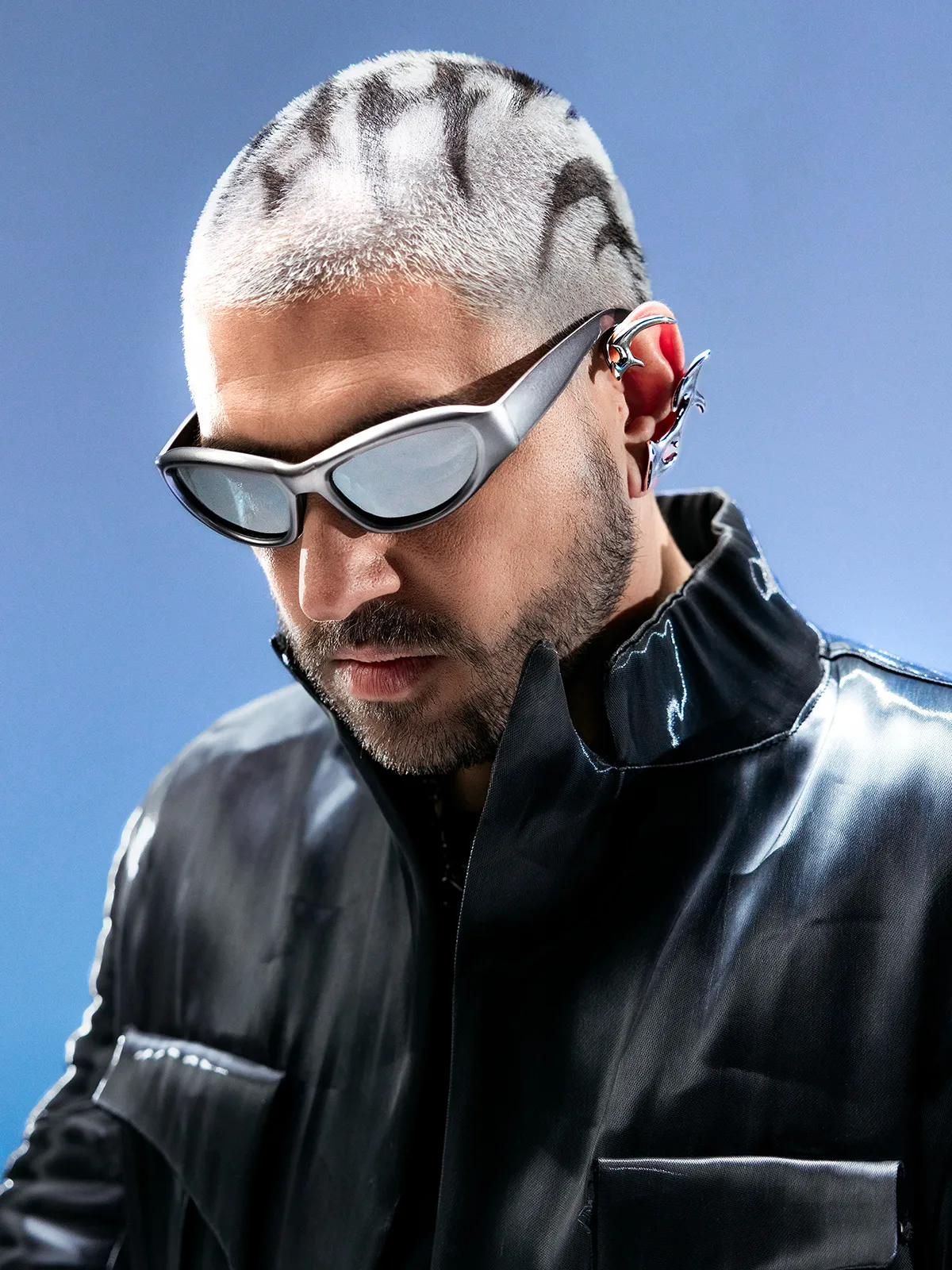
In less than two weeks, Mosimann will bring his Dream Tour to Barcelona, taking over Razzmatazz with the hybrid show that has turned him into one of electronic music’s most dynamic performers. When we catch up with him, he’s quite literally between two worlds: leaving one city behind while heading toward the next, living the strange rhythm of touring where airports, stages and tour buses blur into a single continuous journey.
At the heart of this new chapter is Dream Track, a concept born from a deceptively simple question: What would your dream track sound like? What began as a social media idea soon evolved into something deeper. “I realised people weren’t really talking to me about music, they were talking about themselves,” he tells us. “From that moment on, it stopped being a concept. It became a space for expression.”
On stage, Mosimann pushes that idea even further. His performances move far beyond the traditional DJ booth, mixing, singing, drumming and playing keys in real time. “I needed body, breath, presence,” he says about the moment he decided electronic music could become something physical and performative. “To every little boy and girl, no matter their age, if you believe in your dreams, you can go far.”
First of all, where do we find you right now?
I’m between two worlds, two cities. One I’ve just left and another one that’s about to make me feel something. Touring is a bit like that, constantly being in between. Right now, I’m in my tour bus, turning these moments on the road into memories.
The Dream Tour has already taken you across several cities. How has life on the road been so far?
It’s intense but very alive. Some nights stay with you more than others, not necessarily the biggest shows but the ones where you feel something moving. A real energy. That’s what I’m chasing. It’s exactly what I was dreaming about when I was a kid.
Touring often looks glamorous from the outside but the reality can be quite intense. What is daily life actually like for you during a tour like this?
Much less glamorous than people might think. It’s a lot of movement, fatigue, technical adjustments, and doubt as well. But in the middle of all that, there are these suspended moments on stage that make everything worth it.
The Dream Track concept started from a very simple question. At what point did you realise that this idea could grow into something much bigger than a social media series?
The day I realised people weren’t really talking to me about music, they were talking about themselves. From that moment on, it stopped being a concept. It became a space for expression.
A dream track is rarely just about sound; it’s usually an emotion or an atmosphere. When someone shares that idea with you, what are you listening for?
I try to listen to what they’re not saying. The emotion behind the words. Sometimes it’s nostalgia, sometimes it’s something missing. My role is to translate that into music.
You’ve turned those conversations into real releases like Halo and Ghosts. When a Dream Track moves from an abstract idea to a finished record, what part of that transformation excites you the most?
There are two things. The moment when an idea becomes real, when something invisible takes shape, it’s almost magical but also very concrete. And then there’s the blank page. Starting from nothing but with constraints. I like finding freedom inside constraints. That’s often where the best ideas come from.
Your performances are quite unique because you mix, sing, play drums and control keys at the same time. At what point did you realise electronic music could be something this physical and performative?
The day I felt that staying behind machines wasn’t enough anymore. I needed body, breath, presence. And also, the moment I understood that this music could transform endlessly, I told myself I would do this for the rest of my life.
The Dream Tour brings the concept from the screen to the stage. When you designed the show, what kind of experience did you want people in the room to have?
First of all, I wanted to send a message: to every little boy and girl, no matter their age, that if you believe in your dreams, you can go far. And beyond that, to create a moment where people reconnect with that feeling. Not just a show, but something they truly feel.
“I like finding freedom inside constraints. That’s often where the best ideas come from.”
One of the upcoming dates that caught our attention is Barcelona’s Razzmatazz. What kind of night are you imagining there?
Barcelona, to me, is a city of fire. I haven’t played there in a while and I kind of fantasise about it as a city of freedom, of celebration. So I’m imagining a very free, very alive night. A moment where people let go, and I with them.
When you spend so much time travelling and performing, your relationship with success can change. Has your idea of what success means evolved over the years?
Completely. It used to be about numbers, now it’s about impact. What people feel, what they take with them.
Despite the long nights, flights and pressure, what still excites you about this job?
The sharing, above everything. The time spent with people. Those moments where everyone lets go at the same time. And also challenging myself, moving forward, going all the way with my ideas and with my dreams.
Your performances sit somewhere between a DJ set and a live concert. Do you still see yourself primarily as a DJ, or has the project evolved into something closer to a full live act?
I’m in between. I love playing a four-hour set in a small club with just two decks in front of four hundred people as much as I love being on a big stage with my keyboards, analogue modelling synths, loopers, drums — really playing and improvising. I need both. The club for that raw, instinctive connection. And the live for something more expansive, more organic.
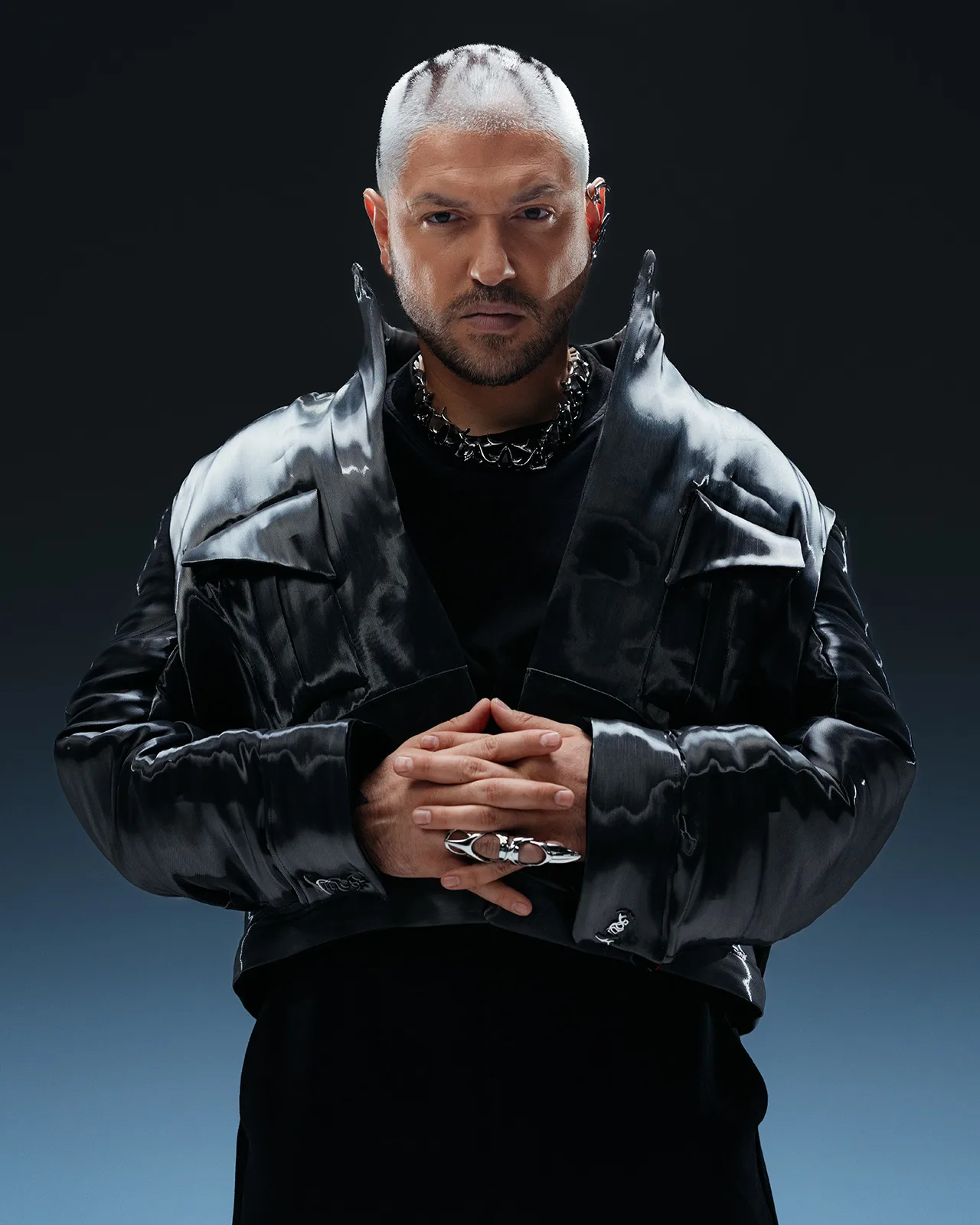
Your style is very distinctive, and you often play with silhouettes and gender norms. How important is fashion in expressing who you are as an artist?
It’s part of the language. Before you even play a note, you’re already saying something.
Do you see clothing almost as part of the performance, almost like another instrument on stage?
Yes, completely. It’s an extension of the performance. A way to amplify the message. And it’s also a space where I can let a designer speak, let another form of art exist through me, something that goes beyond me and enriches what happens on stage.
I recently saw a comment on your Instagram praising not only your music but also your humility and authenticity, saying that what truly sets you apart is how deeply your work connects with people. When you read something like that, how does it make you feel?
It touches me deeply. Because that’s exactly what I’m trying to be: sincere. The rest is just noise.
This summer, you’ll also bring your project to Ibiza with the Voulez-Vous nights at Cova Santa. The island has its own mythology. What kind of atmosphere are you hoping to create during those four nights?
Something very sensory and immersive. Less frontal, more emotional. Ibiza is almost a state of mind. And for me, there’s also something very personal about it: programming French Touch artists who made me dream when I was younger. It’s another childhood dream coming true, but this time from the other side.
And finally, when you imagine yourself ten years from now, what do you see?
Hopefully still moving. Still searching. Because in the end, the dream is not about arriving. It’s about continuing.