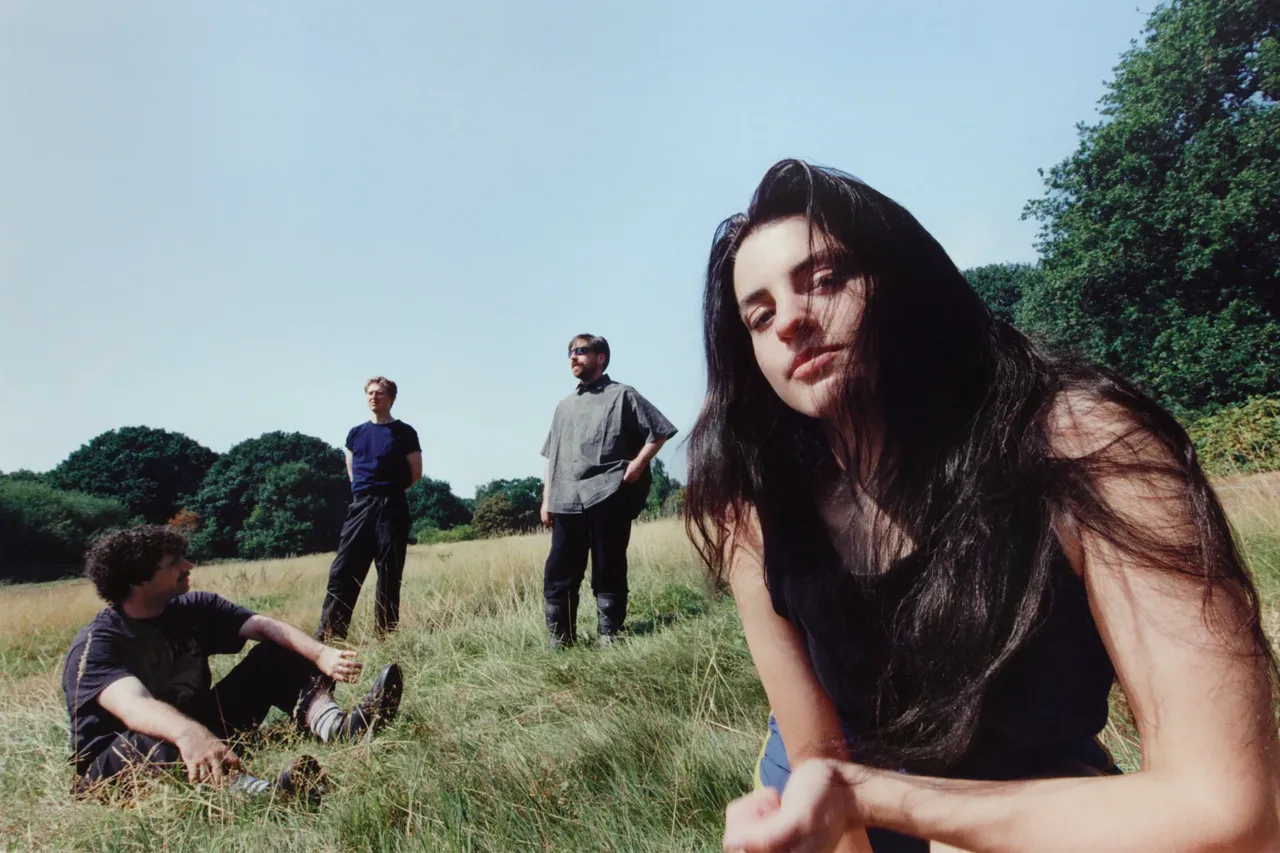
Since forming in London, Modern Woman have built a reputation for performances that blur the line between poetry and noise, folding post-punk, avant-garde, and folk traditions into a sound entirely their own. Now, they are set to release their debut album Johnny’s Dreamworld, with singer-songwriter Sophie Harris leading the band through a tender yet confrontational meditation on womanhood, memory and the everyday.
Johnny’s Dreamworld offers a rich sensory landscape, combining influences from film and literature to explore the relationship between beauty and brutality. Harris’ vocals are accompanied by violinist David Denyer, bassist and saxophonist Juan Brint-Gutiérrez and drummer Adam Blackhurst, whose combined talents drive the record between delicate and untamed. We spoke to frontwoman Sophie to discuss tensions at the heart of Modern Woman’s album and the force behind one of the UK’s most distinctive new voices.
Your group name Modern Woman feels like a statement in itself. What does a Modern Woman mean to you in 2026, and how do you try to convey that through your songwriting?
I think it’s different for all women, but for me personally, I believe in expressing myself genuinely. I try to do that in all parts of my life, including songwriting, as best as I can.
Your lyrics explore the female experience, yet the band is primarily male. How do you navigate that dynamic when expressing ideas about girlhood and womanhood?
I write and sing all the lyrics, so I write about female experience and girlhood, I guess because it is my experience, because I can’t ever separate myself from my own perspective, interests, memories, experiences. I’ve always written through my lens — Modern Woman was originally a solo project, and a lot of the songs were performed alone before the band became a band.
The opening track Johnny’s Dreamworld was written collectively by the whole band. How did you find that collaboration process different from when you focus on songwriting individually?
I usually write on guitar or (rarely) bass or keys at home. This song developed slightly differently from the others. Juan and Adam formed a great groove underneath the guitar/vocals and chorus parts I came to the studio with. This groove went on to become a key part of the song, and something we ended up changing the song structure to accommodate. I would say it became the most important element of the song.
You have discussed how the idea of conflicting things is a vital theme for the band. How do you cultivate that sense of tension? Is it very deliberate or does it emerge naturally through the creative process?
This is multifaceted. I’ve found, when looking at my lyrics as a whole, I have a personal draw to conflicting things as a theme in itself, sometimes. I think conflict can create a variety of emotions; that’s something I have always been drawn to — why those things evoke such responses. Like, seeing something gross in a beautiful place, or someone doing something unexpected by societal standards. A lot of my lyrics explore this.
Then, I have always wanted conflict to come through in the music when we play the songs as a full-band, and I do get drawn to this during the process. And the rest of the band do too. That’s partially why I think I was drawn to them as musicians. Maybe because of their backgrounds in classical music, or metal etc., they have an interesting handle on when music should be loud and grating or polished and quiet. But also, when we should amp up more experimental arrangements, and when we should tone them down to be more simple. So, I would say partially deliberate, partially process.
Then, I have always wanted conflict to come through in the music when we play the songs as a full-band, and I do get drawn to this during the process. And the rest of the band do too. That’s partially why I think I was drawn to them as musicians. Maybe because of their backgrounds in classical music, or metal etc., they have an interesting handle on when music should be loud and grating or polished and quiet. But also, when we should amp up more experimental arrangements, and when we should tone them down to be more simple. So, I would say partially deliberate, partially process.
Following from that, how do you arrive at a place where a song feels complete and polished, even when contradictions are central to the music?
I’m not really sure, I suppose there is a point where it just feels finished. Though, I am a big over-thinker, and I delayed signing off on each step for a painful amount of time. So, maybe I’m just forced to arrive at that place!
You have spoken about wanting to explore the rawer side of femininity. What parts of womanhood do you feel are most underrepresented in the current music scene?
I do try to write about the rawer side of femininity sometimes, in the sense that I try to be as honest in my lyrics as possible, be true to what I have felt personally, or what interests me, personally, and not be apprehensive when writing about feelings or desires that others might say are unpalatable, or superficial, or whatever.
In terms of the representation of female voices in general, though, there are many female voices that aren’t heard or less heard because they don’t have the same platform. And because of that, their own voices and own personal experiences do continue to be underrepresented.
In terms of the representation of female voices in general, though, there are many female voices that aren’t heard or less heard because they don’t have the same platform. And because of that, their own voices and own personal experiences do continue to be underrepresented.
The album combines soft femininity and vulnerability with real aggression — not just vocally, but in the imagery too, like the album cover. Female aggression is an emotion that is easily scrutinised within the media, so were you conscious of shining a light on this subject when making Johnny’s Dreamworld?
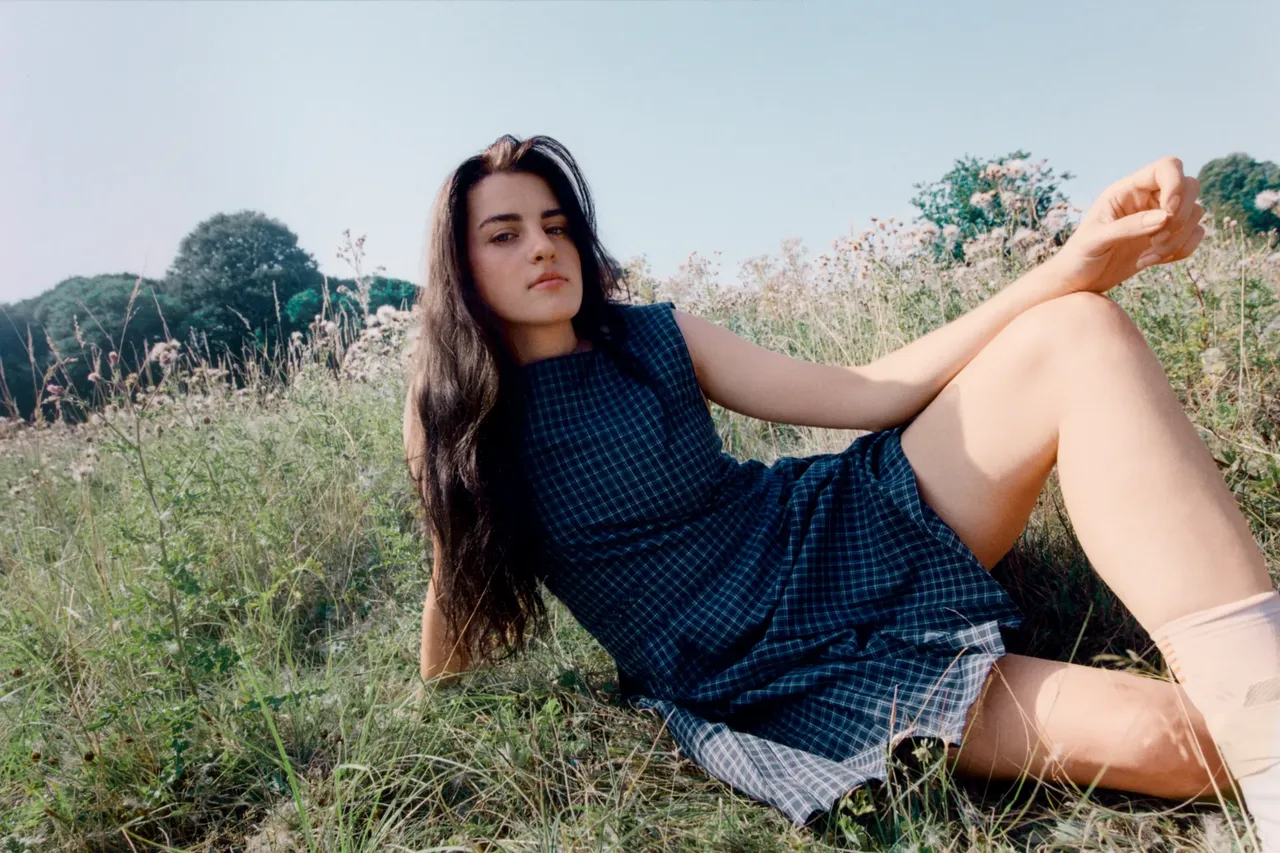
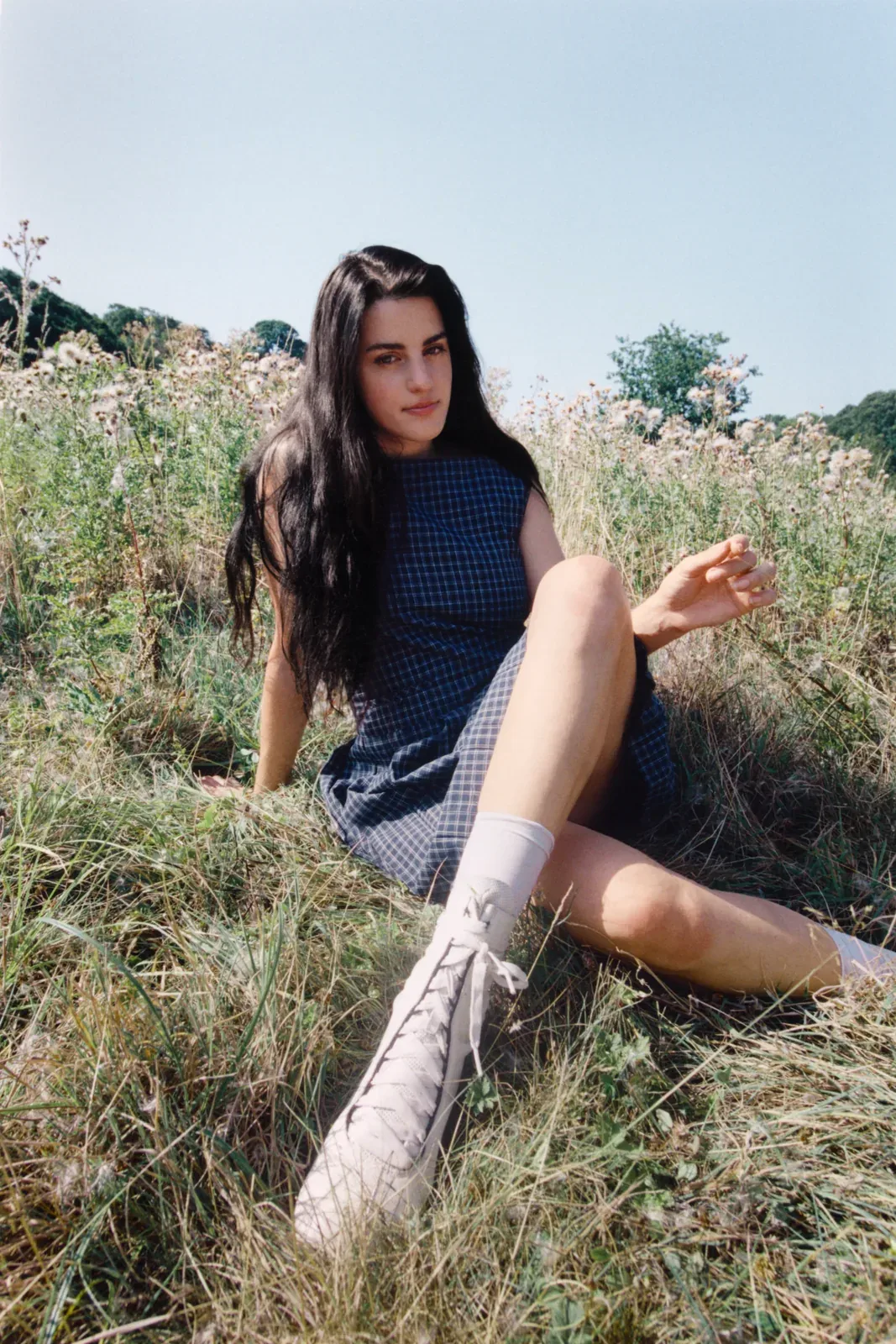
I agree, and that was part of my impulse to use the photograph, as I feel it reflected some of those conflicts in the songs. It was based on something that happened in my life. Sandra Ebert, the photographer, captured it really well. We wanted to present that moment in the way I look back at that experience; like a still from a film, and surreal, almost dreamlike as many memories do in retrospect.
I’ve always been interested in impulses that lie under my own life and others’ — like you say, that push and pull — I’ve always made a concerted effort to allow that to come to the surface through my songwriting, live performance, and the cover.
I’ve always been interested in impulses that lie under my own life and others’ — like you say, that push and pull — I’ve always made a concerted effort to allow that to come to the surface through my songwriting, live performance, and the cover.
The song Fork/Heart imagines a home where objects and memories carry their own pulse and energy. What object from your own home brings you the most positive energy?
It’s dark but I always say if my house was on fire, I’d save my rings. I only had rings recently. I have a ring that has my dog’s name on it. It was made by my good friend Willa Hilfreich, she’s great. Then I have a ring of my grandma’s. Neither are alive any longer, and I feel if I lost those rings I would lose them both again! I love wearing them, they’re my favourite things I own.
Johnny’s Dreamworld is said to be shaped by a long-standing admiration for vocalists like Björk and Sinéad O’Connor, two artists who are known for being unapologetically themselves. Do you draw from their attitude as much as their music?
Yes, I don’t know if the record itself was shaped by them, but certainly their vocals and expression were hugely influential to me. I remember hearing Björk’s voice in The Sugarcubes’ Birthday when I was a teenager and being fixated on her natural ability to sing raw, without inhibition, in such a genuine way. It seemed to make me think about landscape and nature — it just felt so genuine, like it came out of the ground or something. That’s how I feel about Sinéad O’Connor too. It feels a bit like attitude. But it’s the authenticity in singing I’m drawn to the most.
I saw Sinéad O’Connor, only once, perform at a show that celebrated the career of Shane MacGowan, and I was fixated on what she could do to a song. I have never seen anything like it since.
I saw Sinéad O’Connor, only once, perform at a show that celebrated the career of Shane MacGowan, and I was fixated on what she could do to a song. I have never seen anything like it since.
You are also now signed to One Little Independent, the same label as Björk. How does it feel to share a home with one of your biggest inspirations?
We are all very very happy.
As someone who studied literature, and with a love of poetry, what writers or styles of literature influence your songwriting, and how do you approach the combination of those two art forms?
Many by proxy, I have never really sat down and forced myself to imitate or be consciously influenced. But reading has always been my method of escapism, and so is music, so naturally I think some of it will come through.
I know I learned a lot, and read a lot of Alice Munro, Sharon Olds, Octavia E. Butler, Raymond Carver, Mina Loy, John Betjeman, Charles Simic, Daisy Johnson etc., it goes on.
I know I learned a lot, and read a lot of Alice Munro, Sharon Olds, Octavia E. Butler, Raymond Carver, Mina Loy, John Betjeman, Charles Simic, Daisy Johnson etc., it goes on.
Film is clearly a huge influence on the sound and visual identity of Modern Woman and you even directed the Dashboard Mary music video. How would you describe your relationship between music and film? Do you see one as always serving the other?
I do like to approach songs very visually, I usually have a strong image in my head when writing them, and I think that can sometimes be like a film. I have strong images in my head when listening to music. I like the idea of music, memories, daydreams being like little films. I think they both serve each other, for sure.
You have previously said that live performance is how you imagine the songs to be played, so how do you want someone to feel walking out of a Modern Woman show?
Energised, maybe a bit confused.
Johnny’s Dreamworld is your debut album. Looking back at the whole process, what's the most important thing you learned about the music, yourself, or the band?
You hear the same song in three thousand different ways. The band is patient. Finishing a record is painful.