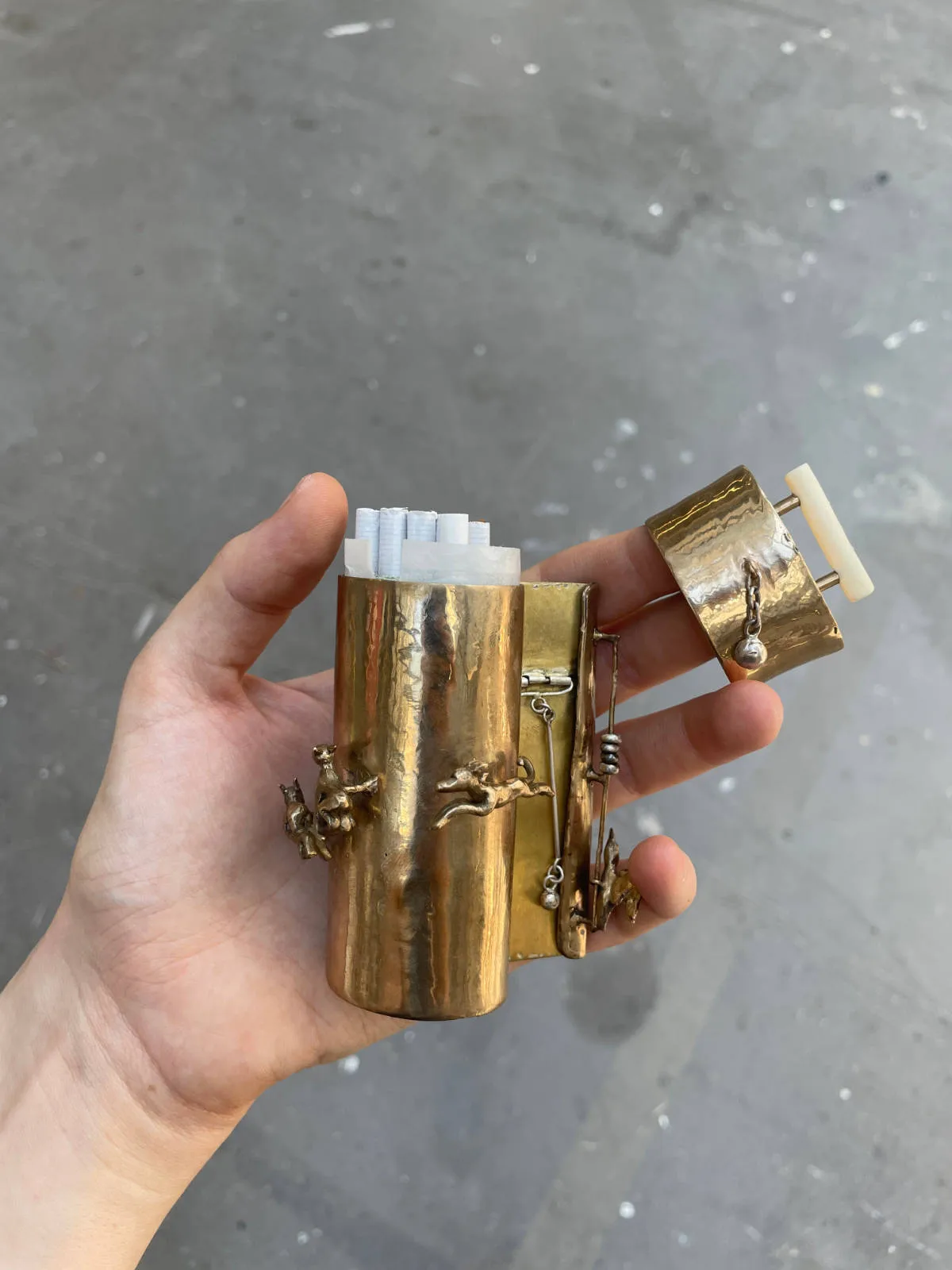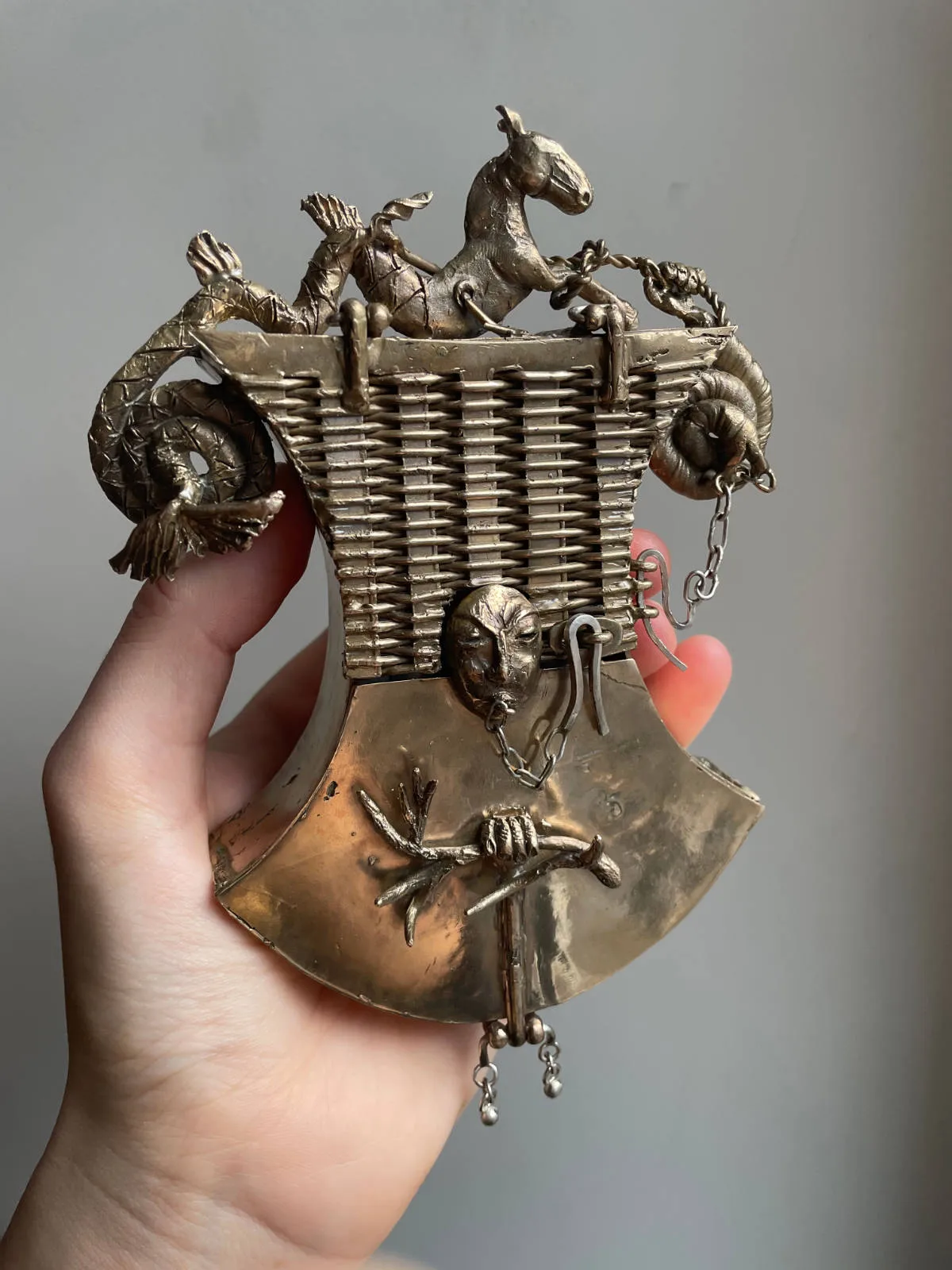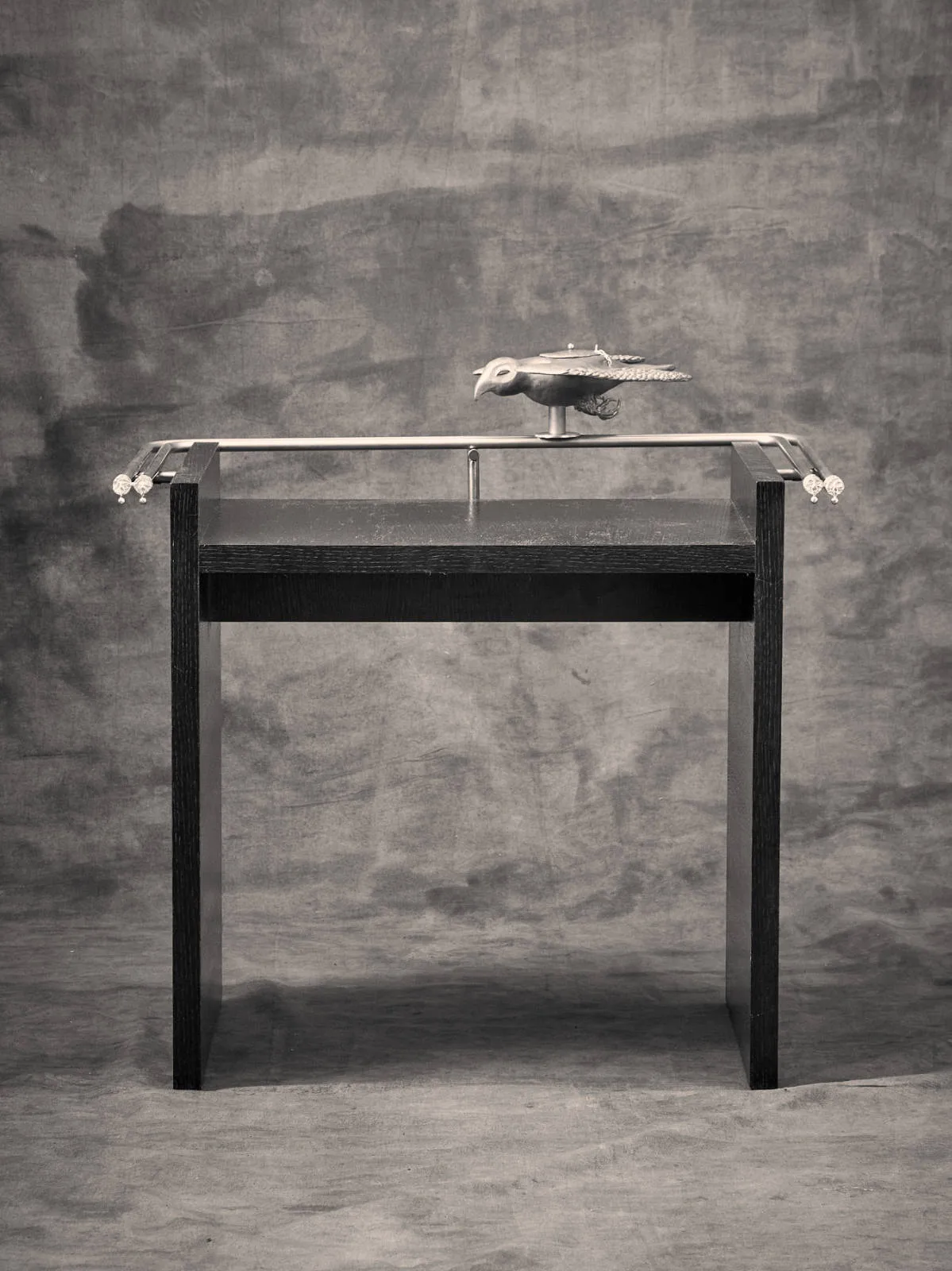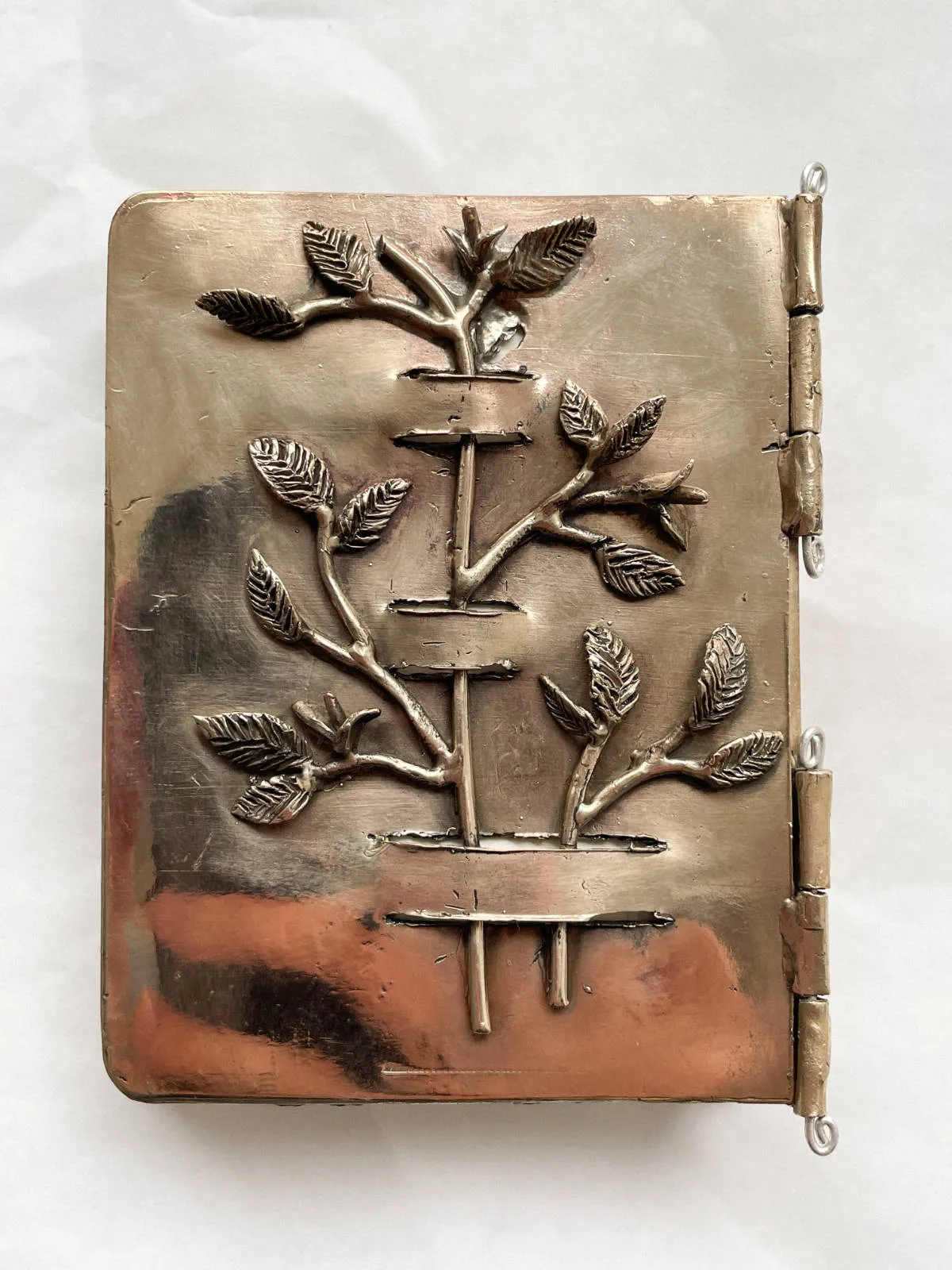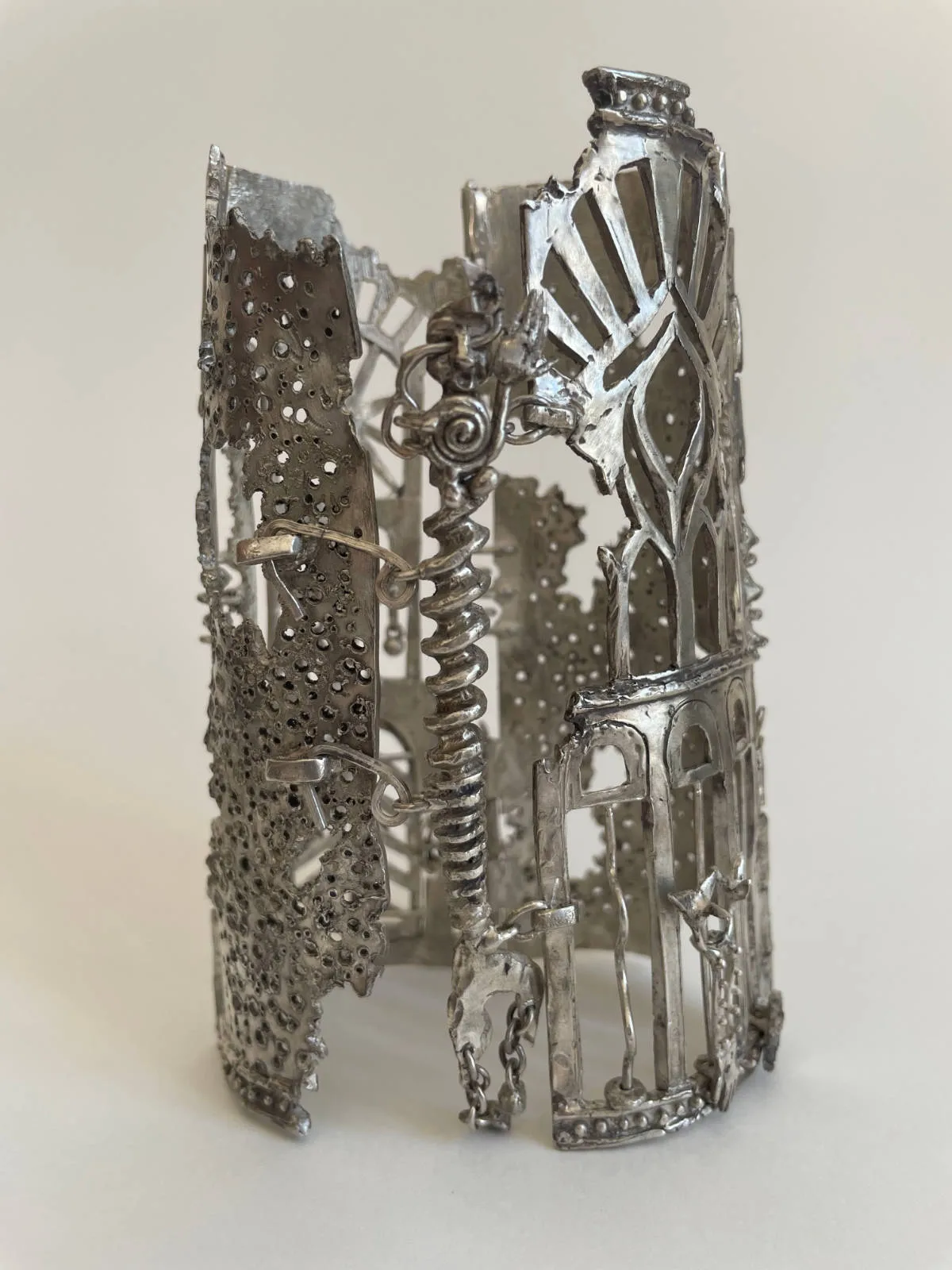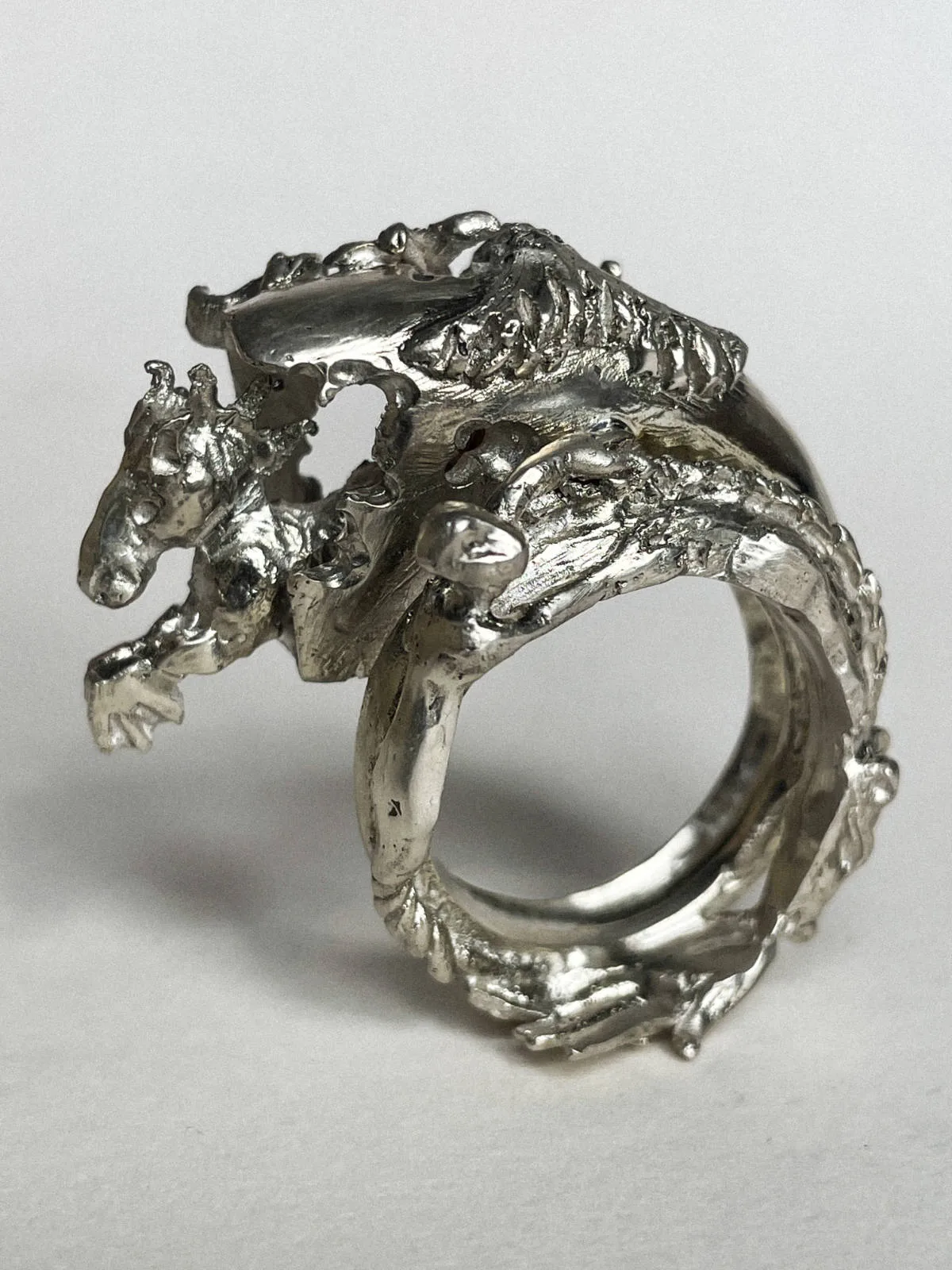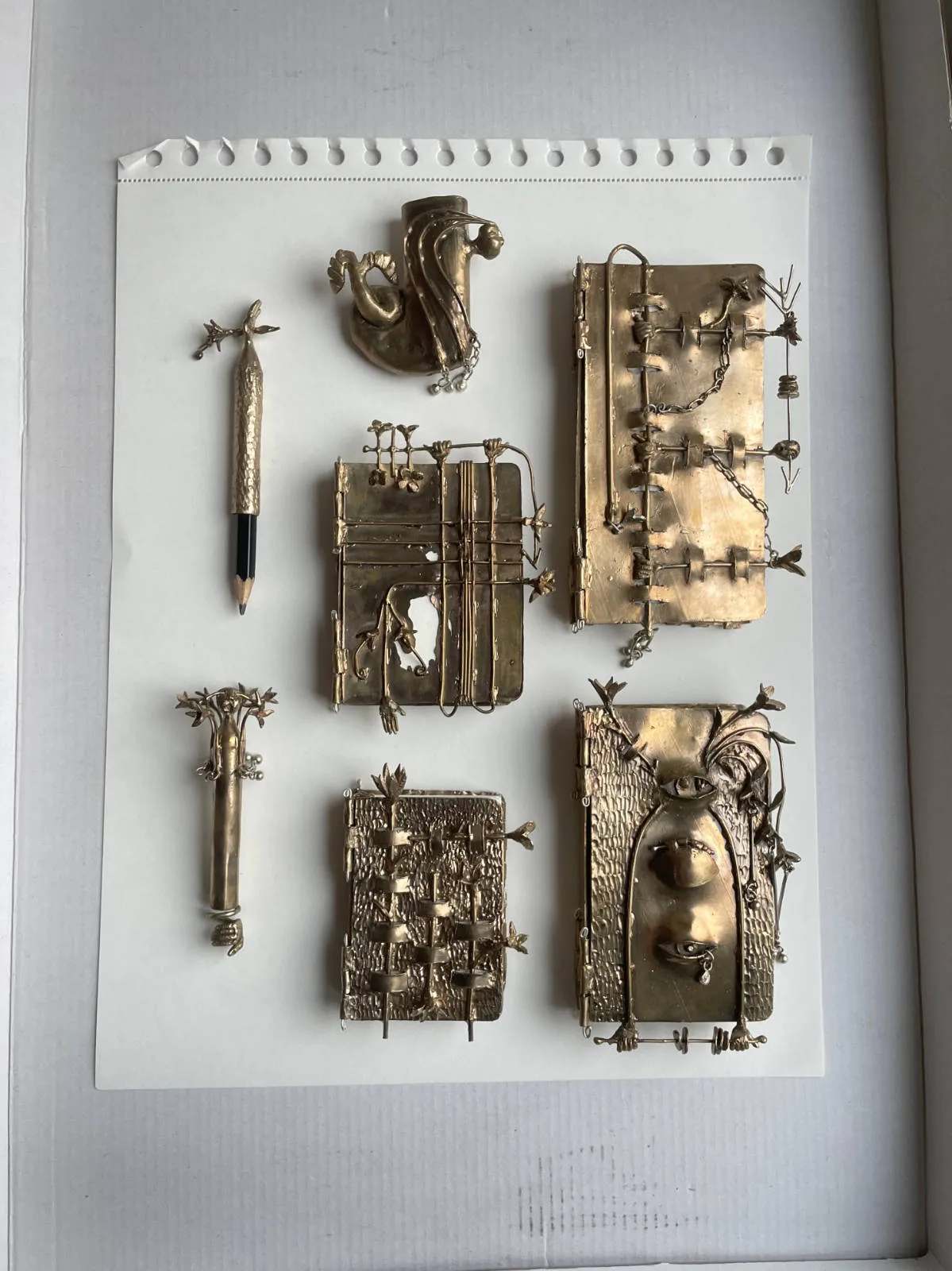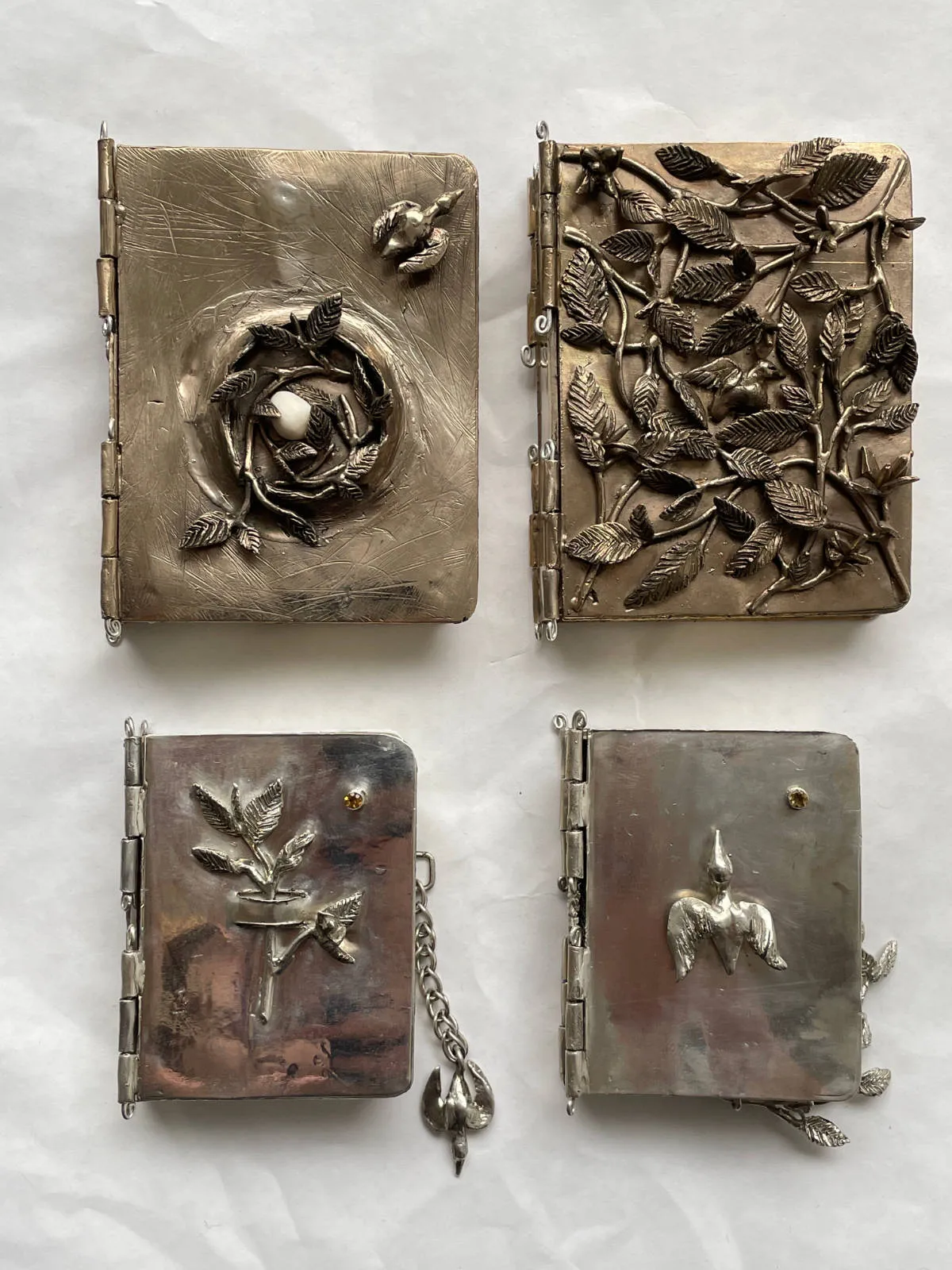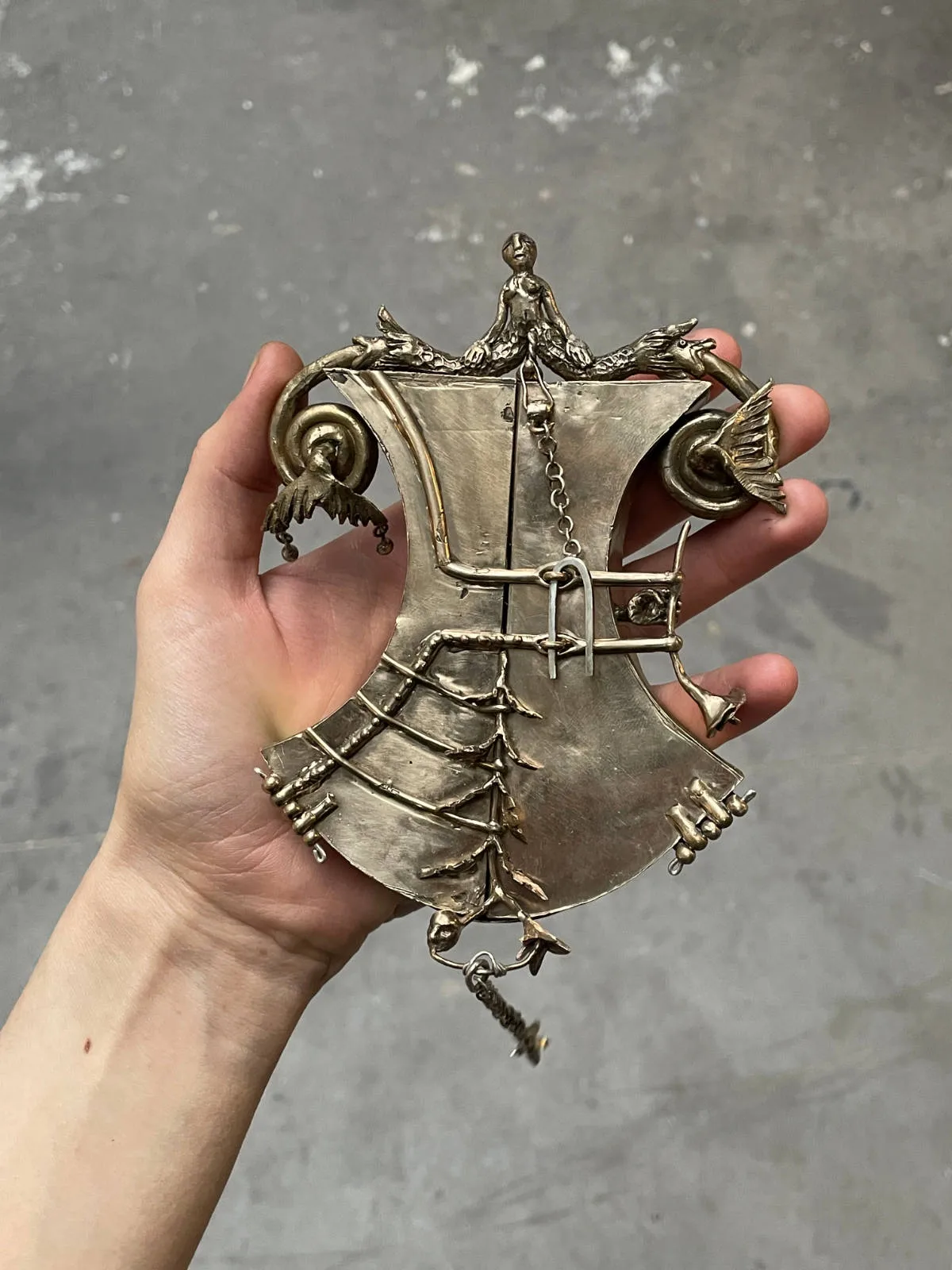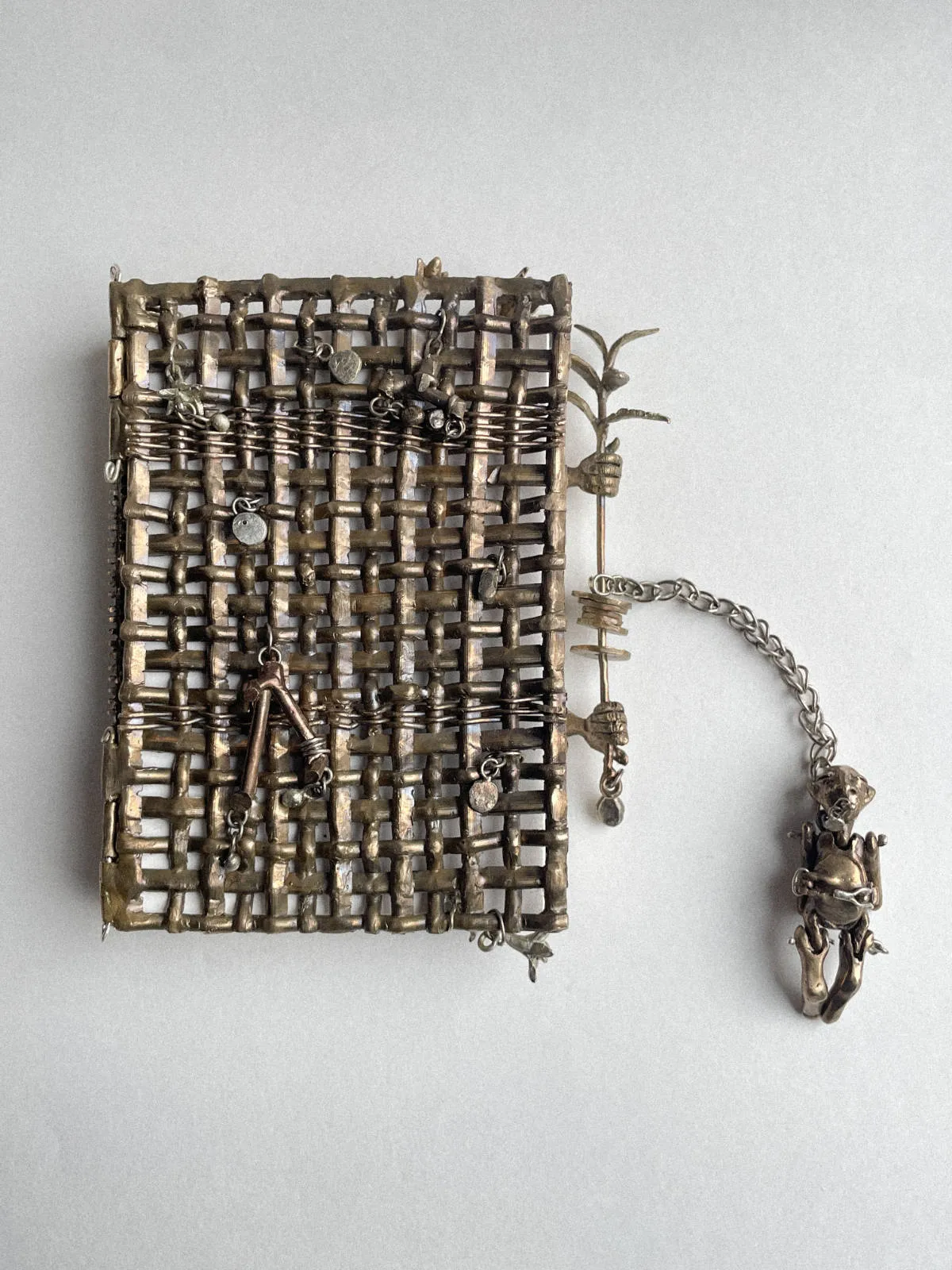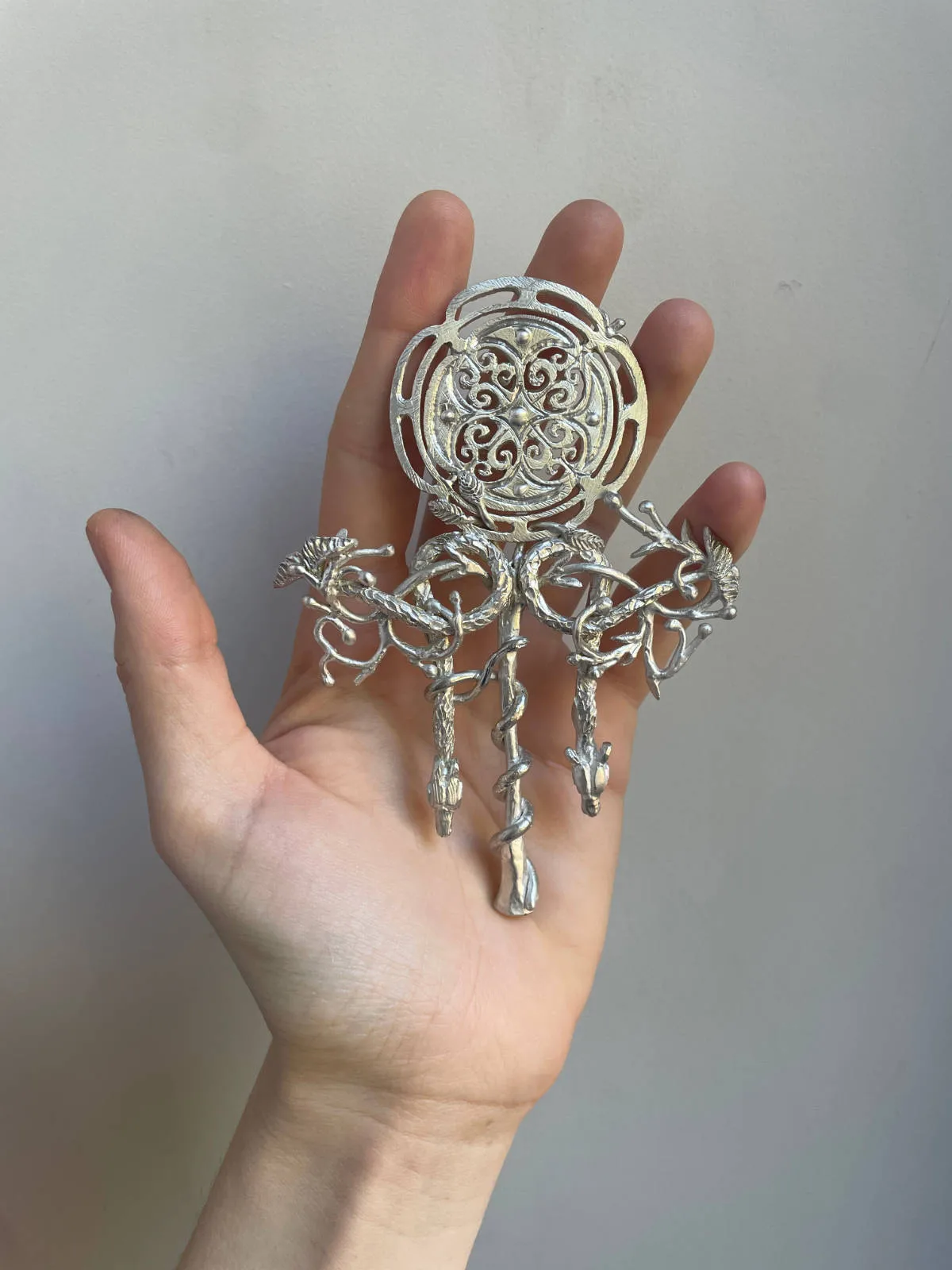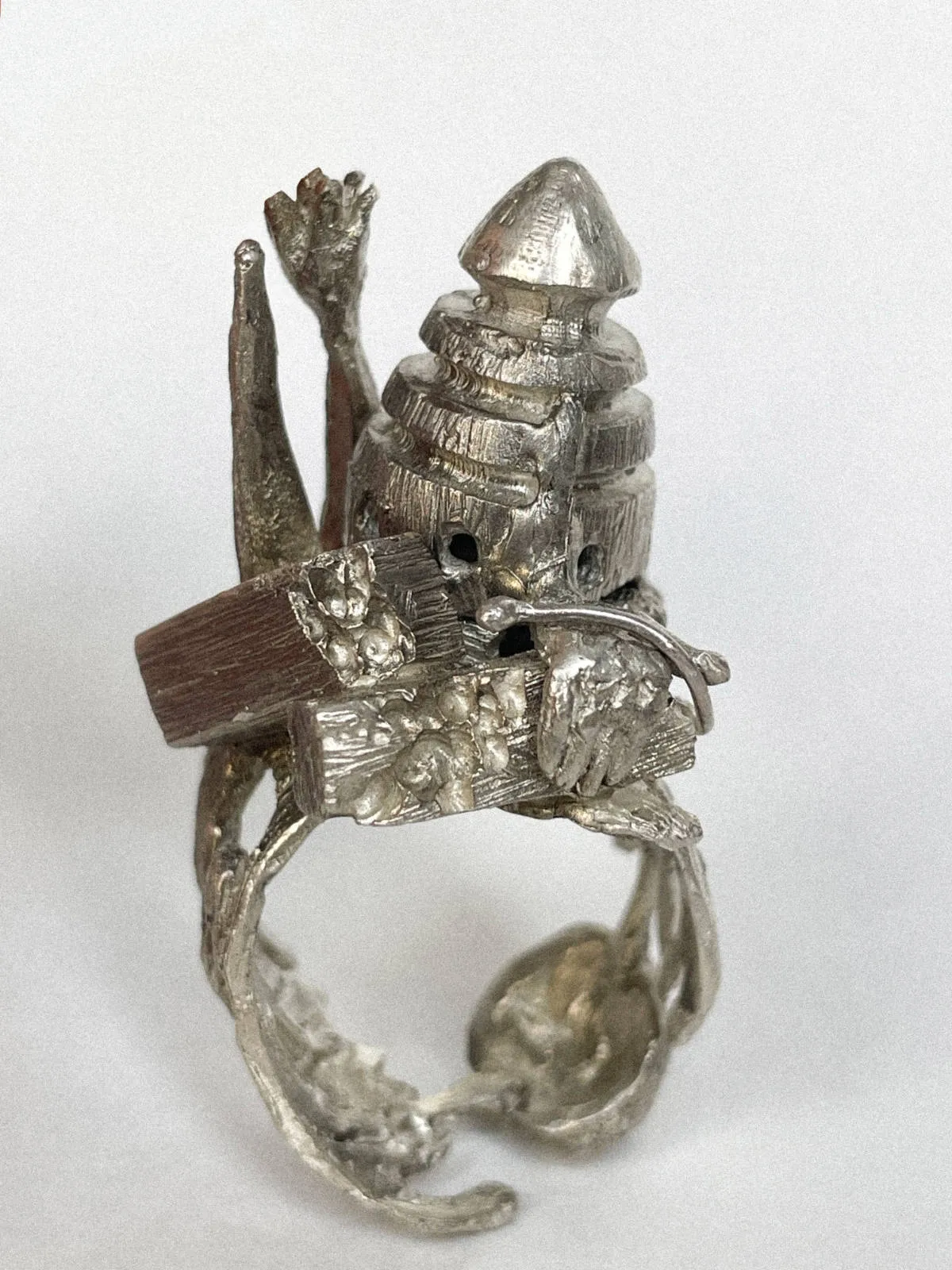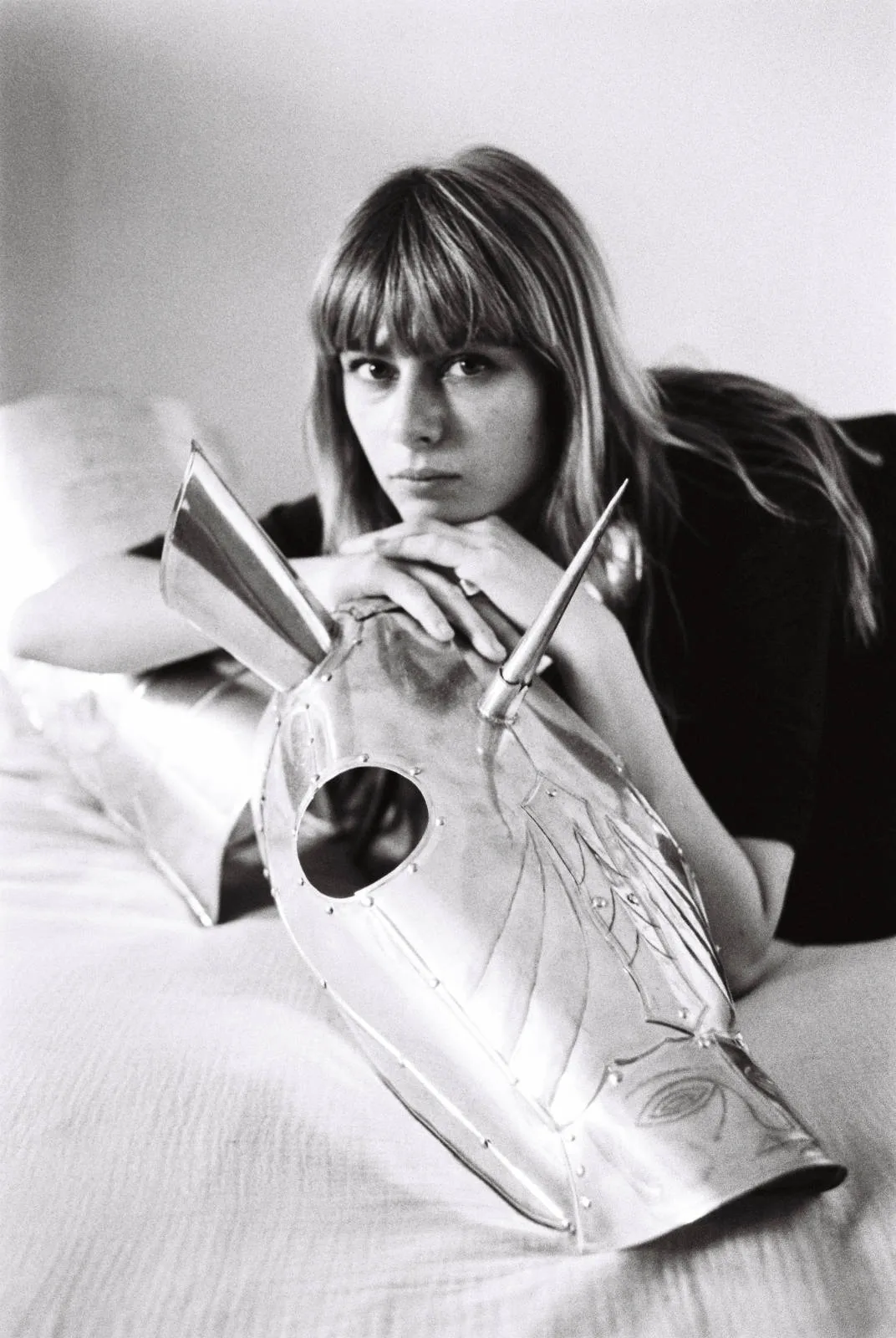
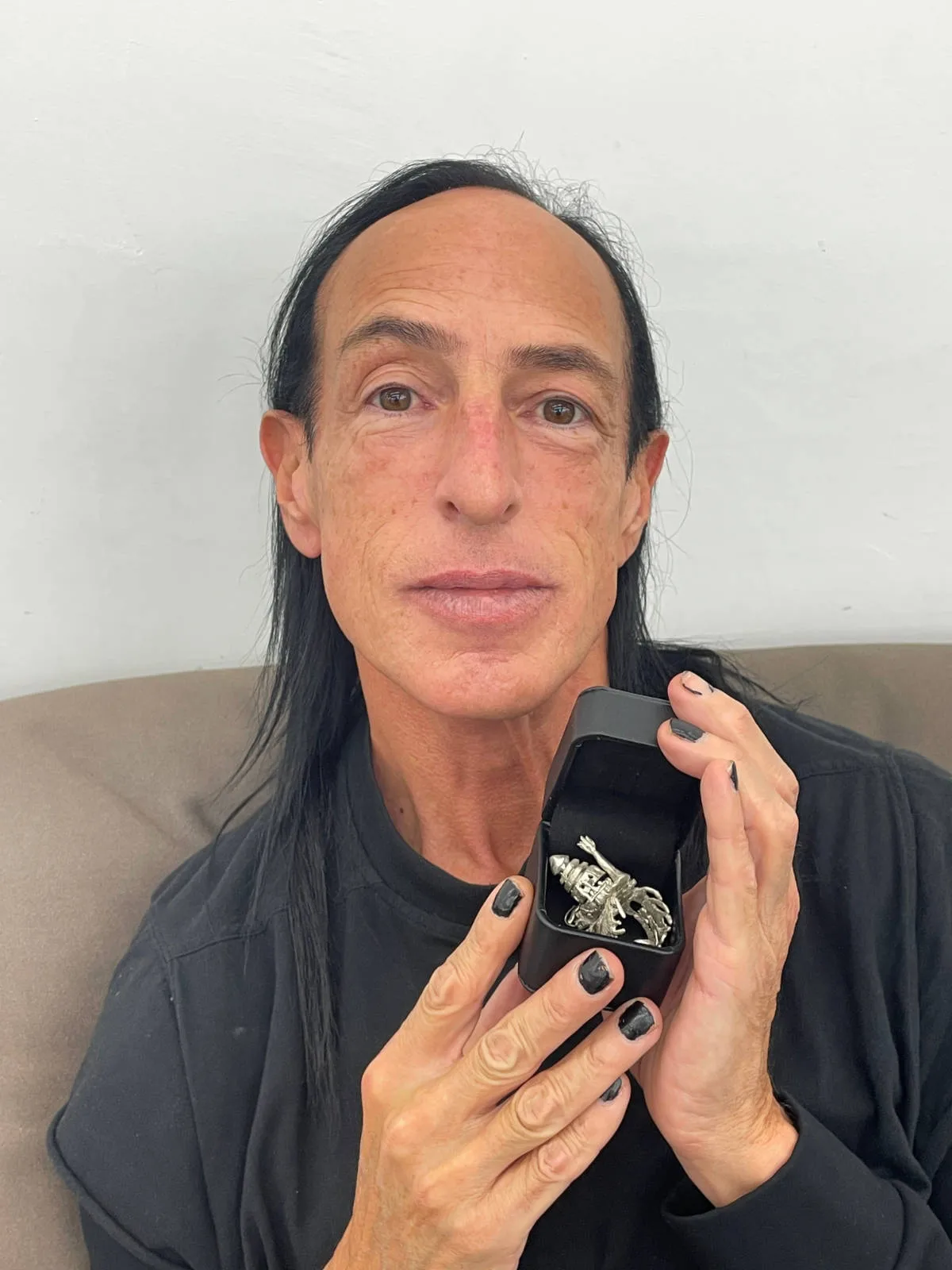
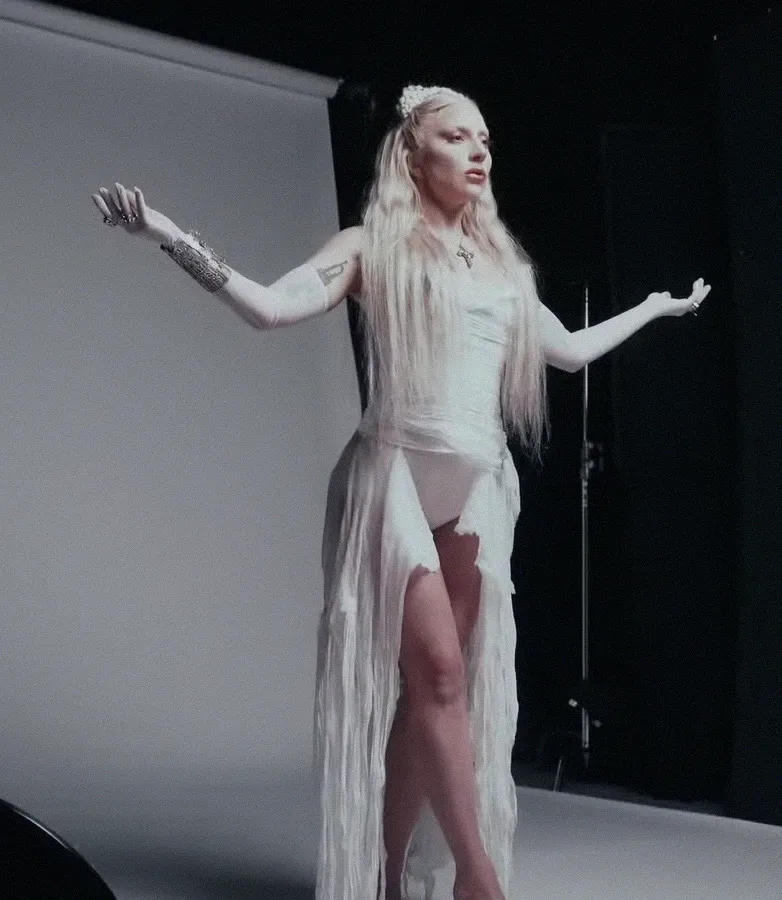
From a profoundly intricate need to be surrounded by antique objects and an unmistakable current of nostalgia, Mia Gosset has found a way to give birth by crafting, hammering and forging what our generation was born without, or rather, what was almost entirely taken away from us: artefacts. Her uncanny talent and vision seem to attract the audience and some of the biggest stars of our time alike, with luminaries such as "Mother Monster" Lady Gaga herself or Rick Owens gravitating towards her magical universe and commissioning Mia pieces imbued with a dreamlike, mythical aura.
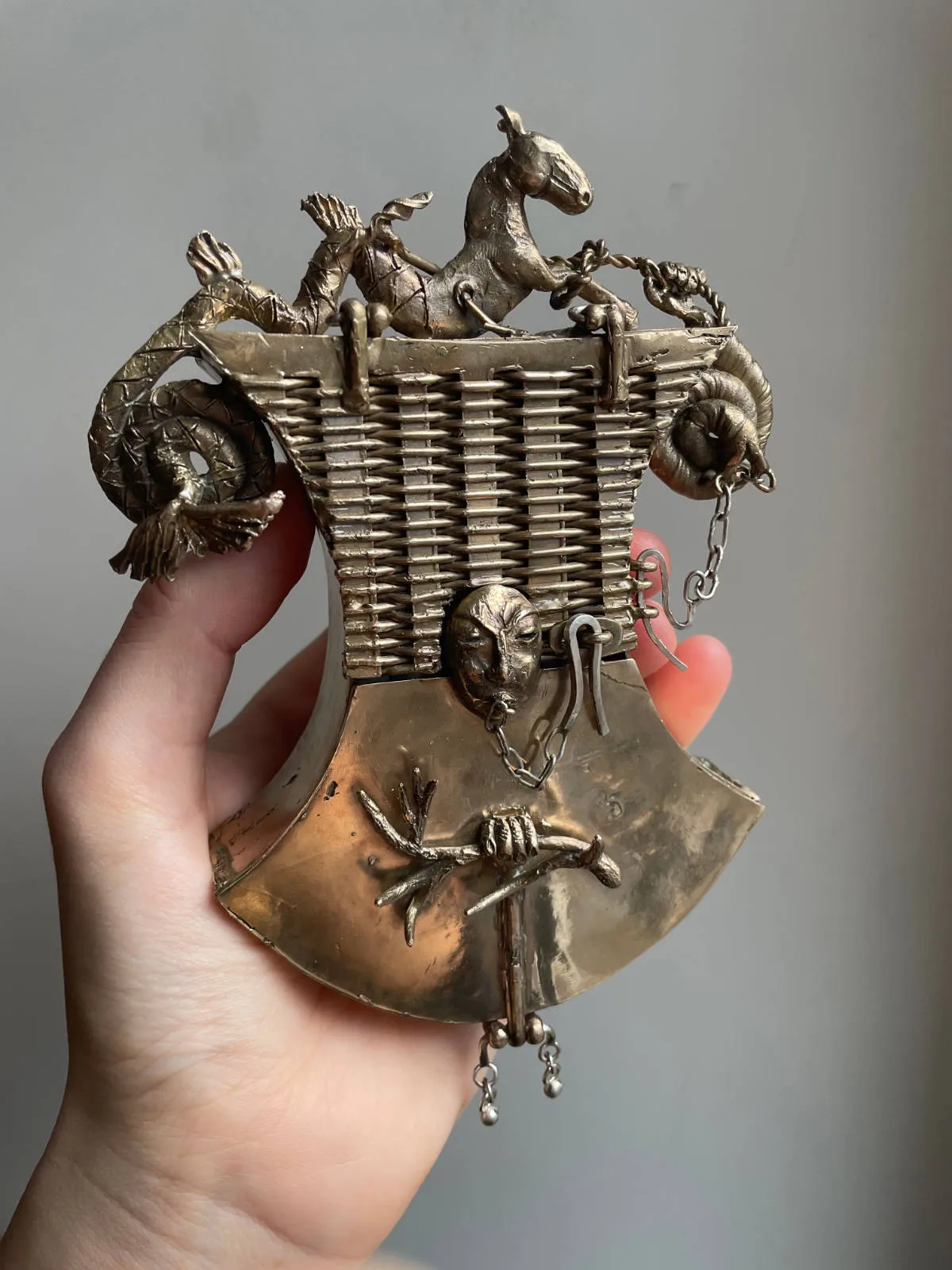
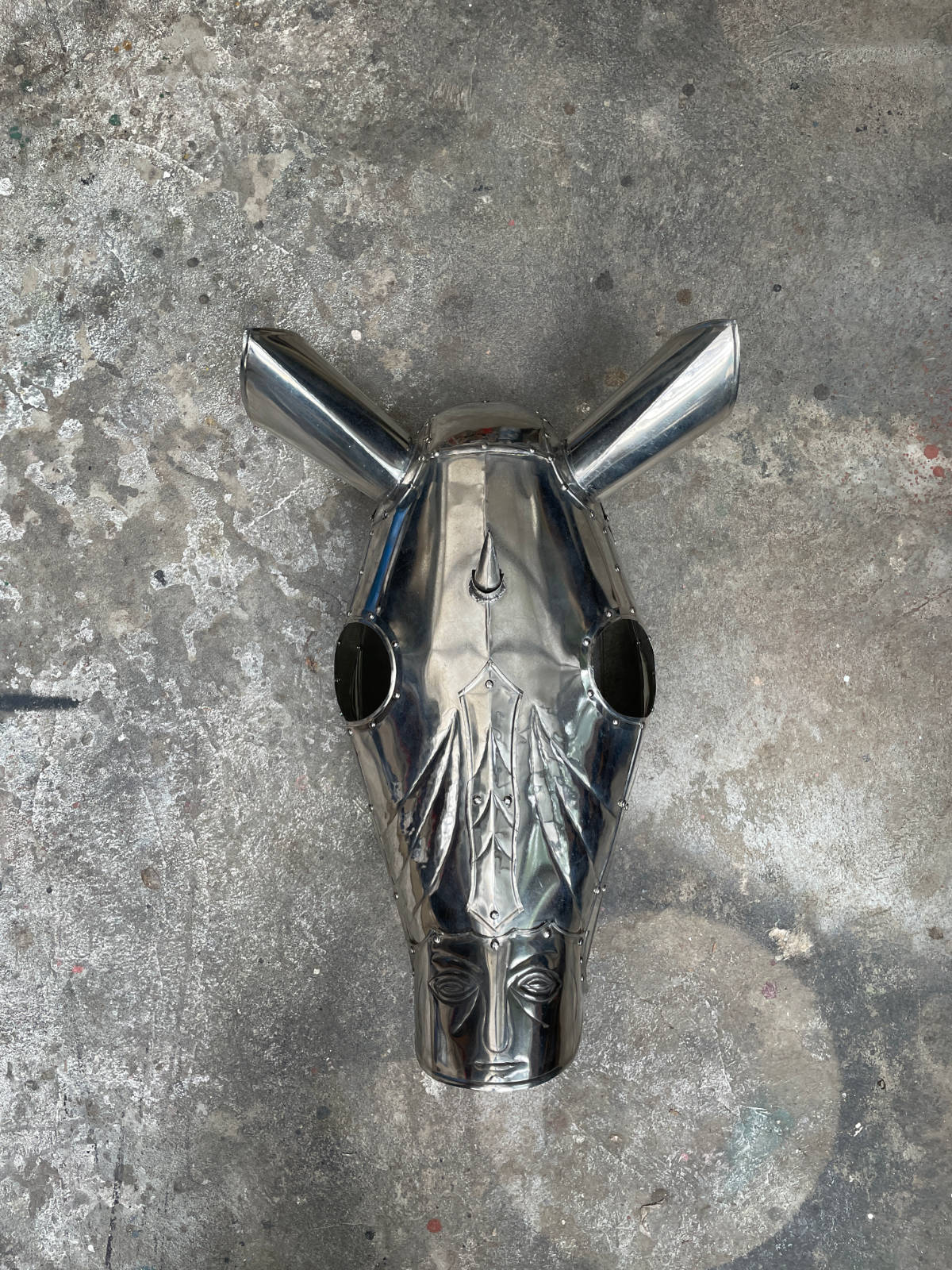
Now based in Paris, with Belgian roots, Mia is a creative whose childhood was marked by treasure hunts with her father at local flea markets. A fortuitous encounter with metallurgy and forging techniques ultimately led her to her current project: an ongoing collection of metal creations, ranging from jewellery to practical trinkets and even horse armour, each sealed with a signature mark. Every piece tells a story, mostly including moving parts to fidget and interact with, adorned with fables, creatures, and plants — a small mythos cast in metal. Rings, bracelets or ashtrays whose handcrafted tales you’d want to live in.
As she has reflected in the past, her process is less a strict methodology than a daily exploration, a journey that leads her to discover and refine new ways to reach the ideal final form, accompanied by the volatile angel of empiricism, and grounded in a foundation in fashion from Duperré. We approached this gifted artist in an attempt to glimpse the world through her eyes.
Antiques, relics, treasures and the past in general seem to be a critical part of your creative process. As a young person, why do you feel the call to look back, not only to seek inspiration but also to bring back the use and aesthetic of forgotten trinkets?
Because things disappear — techniques, aesthetics, and ways of making — and I’ve always been drawn to what is vanishing. I hate the idea of the “new”. Growing up, I was surrounded by objects made with an almost frightening level of mastery. They felt unreachable, untouchable. I looked at them as a collector would, or from a museum distance. For a long time, that separation remained. Making my first objects broke it. Through self-teaching and through the influence of what I collected or encountered in Brussels, my pieces naturally began to resemble relics. Even today, I struggle to assign the same value to my work as to historical objects, but I hope that one day, I’ll be able to look at both with the same gaze.
What would be four words/attributes/characteristics you think could help those who want to better understand who Mia Gosset is and what her creative project is about?
Tales. Collection. Relic. Chaos.
It’s me telling myself stories, producing relics inside my own collection, sometimes in chaos.
It’s me telling myself stories, producing relics inside my own collection, sometimes in chaos.
Your commissions to public figures have blown the internet away and gone viral. Both Rick Owens and Lady Gaga are two of the most respected and admired representatives of their respective industries. Aside from the evident superb craftsmanship and creativity, why do you think they end up feeling attracted to your accessories?
Maybe because returning to a smaller scale, to the miniature, speaks to everyone. The intimacy we share with a small object is universal: something precious, something we carry, something almost sacred. Jewellery, like an object, is a fragment of ourselves. The difference is that it exists with us, against us, on the body. It incarnates. It amplifies. It extends. Where objects communicate quietly, jewellery speaks loudly, in a language that is immediate and universally readable.
These garments embody a deep sentiment of magic, almost as if you actually used some to create them. Do you have any personal/artistic rituals before, during or after the creation of your pieces?
I would love there to be pure magic involved, but aside from reading tarot cards and surrounding myself with witches, I don’t have many other tools in my pocket. I think it’s mostly about alignment with oneself and connection with others, especially when it comes to commissioned pieces. There are days when it simply doesn’t work, when I don’t feel that link. On those days, I focus on administrative tasks or the more technical parts of the work.
“Practicality comes only after aesthetics.” Often in museums or flea markets we see artefacts from the past which then had a logical use, but inevitably, with time, they end up becoming less convenient: pocket watches, photo frames, paperweights or letter openers. Do any similar antiquities come to your mind, and which are you craving to create soon?
Of course, those are actually the objects I love most. When an object loses its function, it becomes even more of an artefact. Once it’s no longer projected into a utilitarian framework, it turns into a testament to an era, a person — something meant to be displayed. An incense burner, a tabernacle, a candlestick… very religious objects, all of them.
In another interview you’ve mentioned your pieces “weave together personal and popular mythologies.” Is there any particular myth from a specific culture (Greek, Celtic, Japanese, Nordic, among others) around the world you have always wanted to make into a piece, but you haven’t got the chance yet? If so, what is it?
I don’t see myth as a story to illustrate but as a symbolic structure and a tool for thought. My work seeks to activate mythological systems, popular, personal, or archaic, by making them dialogue with one another rather than directly quoting them.
Certain shamanic cosmologies, particularly Siberian and Altaic ones, remain a field I would love to explore: they conceive myth as an embodied experience, transmitted through objects and ritual rather than text. I’m also drawn to Celtic and Japanese mythologies for their relationship to metamorphosis and liminality. My approach is therefore less about representation than about contemporary archaeology of myth.
Certain shamanic cosmologies, particularly Siberian and Altaic ones, remain a field I would love to explore: they conceive myth as an embodied experience, transmitted through objects and ritual rather than text. I’m also drawn to Celtic and Japanese mythologies for their relationship to metamorphosis and liminality. My approach is therefore less about representation than about contemporary archaeology of myth.
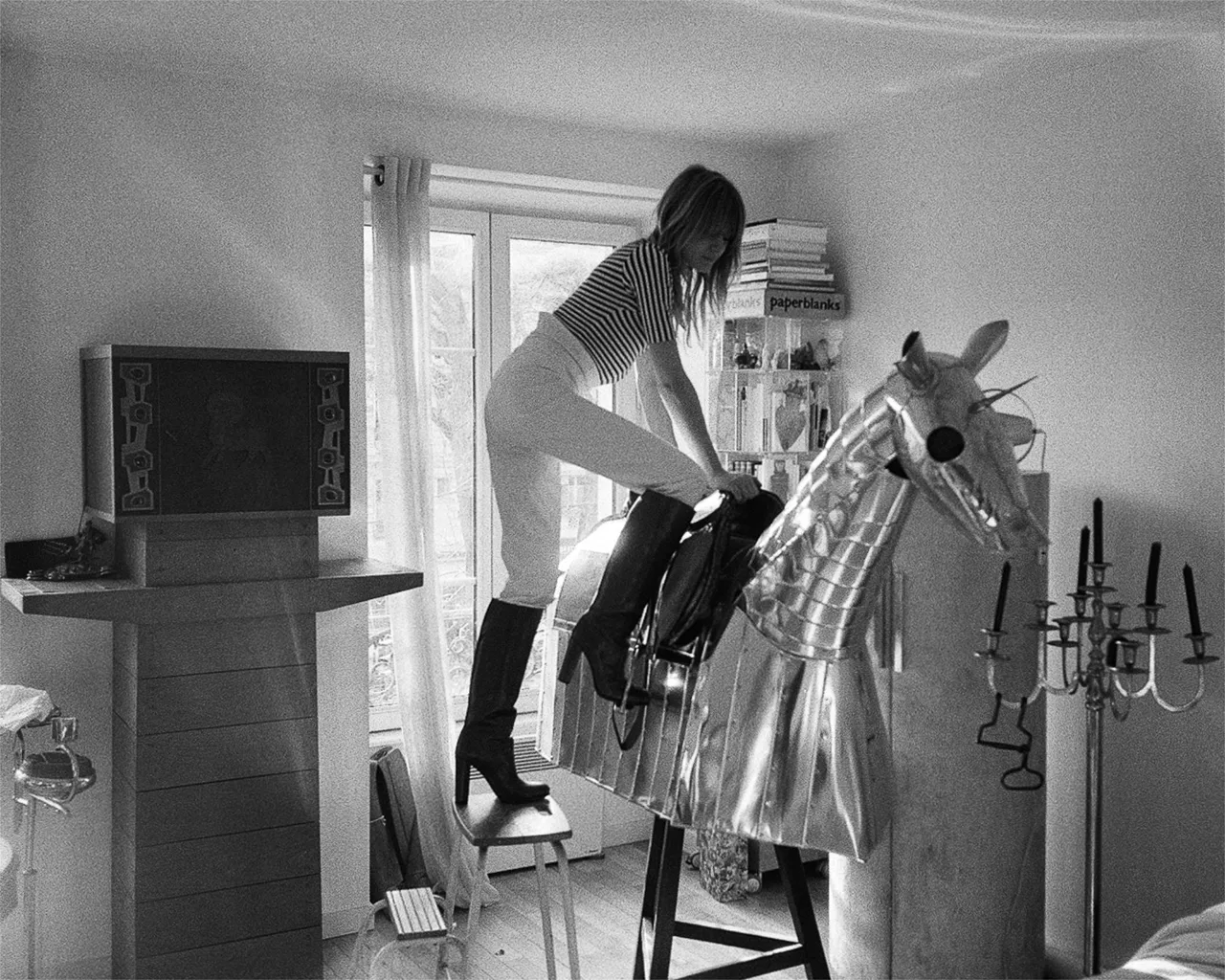
Your pieces usually cast creatures, scenes, little fragments of architecture or plants, like a fairy tale summarised and shaped into metal. Have any of your creations ever originated from dreams? Like you’d wake up with a clear image and feel the need to make it into something real?
Yes, but not fragments. I dream of finished objects. Sometimes I wake up in the middle of the night and sketch them half-asleep. My father dreams pieces for me too. He calls, describes them, and insists they must exist. In a way, the work inhabits him as well.
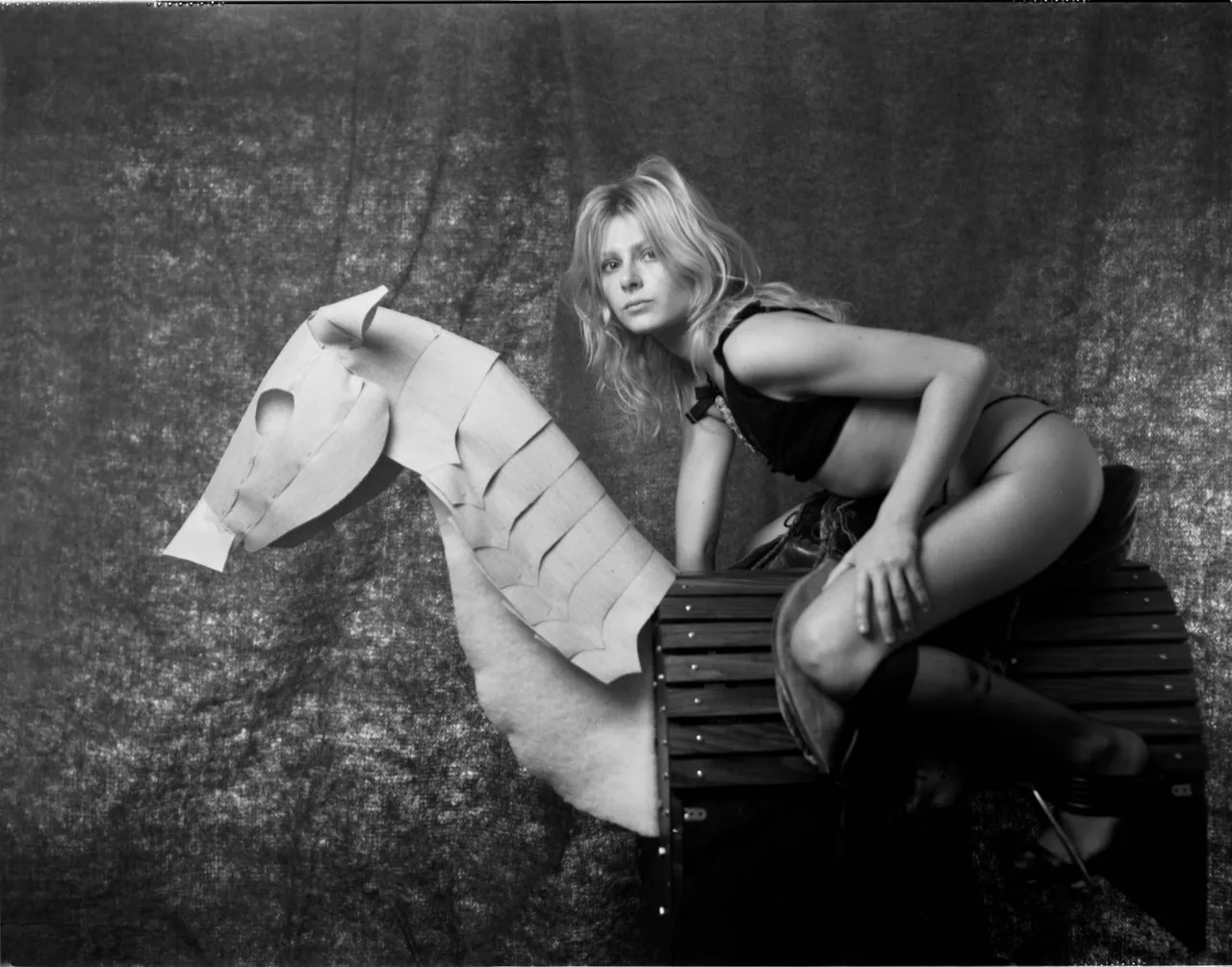
You have recently been working on a horse sculpture, taking the challenge of size to another level if one compares it to jewellery proportions. You’ve mentioned you’d like to be able to produce a whole environment. What do you think would be the most impactful piece from this metal-made, dreamy, real-sized world of Mia Gosset?
There are several, but I think it would be a cabinet, similar to the tabernacles I have at home, a piece of furniture that opens and unfolds, revealing a series of objects that complete it and tell a story together. I’m deeply drawn to non-utilitarian furniture: furniture made to tell stories, or furniture made to believe. That’s what matters to me. I think I would have loved to recreate the liturgical furniture of Notre-Dame; that’s the kind of piece I enjoy imagining.
But the biggest project would be acquiring a place and renovating it entirely, allowing found objects and pieces made by my own hands to coexist, all conceived specifically for that space.
But the biggest project would be acquiring a place and renovating it entirely, allowing found objects and pieces made by my own hands to coexist, all conceived specifically for that space.
There’s a video on your Instagram account where you fidget and play with the moving parts of the silver cathedral cuff. Does this happen often when you are around your jewellery? Getting immersed in the hypnotic movement of these pieces. Are these special moving parts simply an aesthetic or playful feature, or do you think there’s something deeper behind them?
I think the activation of the pieces is an integral part of their essence. Manipulating the jewellery, seeing elements move, and creating motion — it’s not just playful. It’s a way for the wearer to connect with the object, to bring it to life, and to experience an intimate, personal interaction with it. Each movement reveals something new, as if the piece had its own life and rhythm. It can transform the simple act of wearing jewellery into a more sensitive, immersive experience.
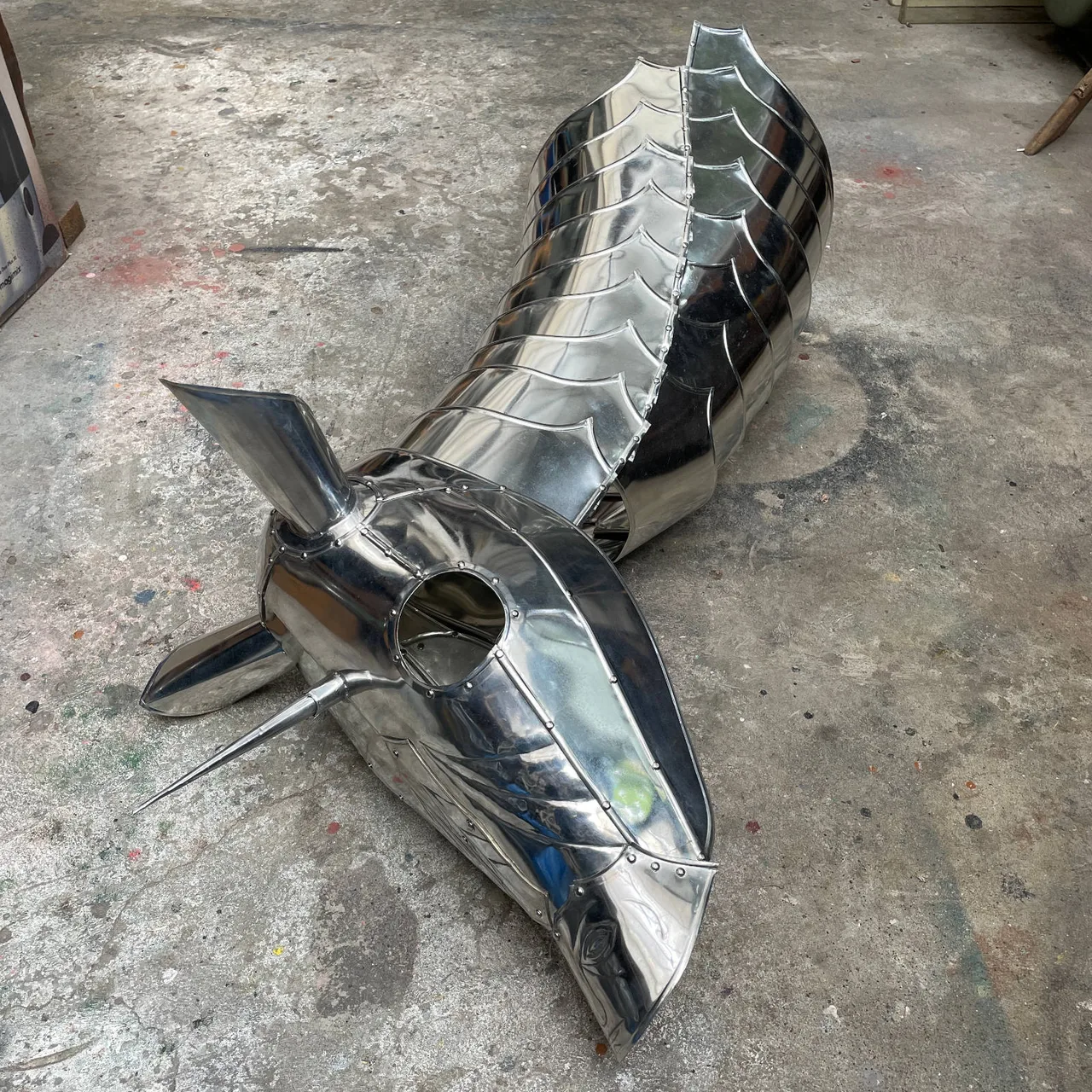
You’ve mentioned how both physical and mental efforts play a vital key in your process. What are those “must-haves” Mia Gosset always has around when working with metal to give 100% performance: any playlist, snacks, people, background or special place you could share with us?
A lot of food, for sure: the bánh mì from Saigon Sandwich in Belleville, a drink at La Pétanque bar in Ménilmontant, and groceries from Paris Store. Then, on the road to coming back home, take a walk at the Père Lachaise cemetery.
The playlist by my dear Aleph for Purple, analog issue – playlist #1 on SoundCloud. My must-haves are also impossible places: My friend Iris’s vampiric, Japanese apartment with tatamis and Siamese bats; and the intensity of past spaces and nocturnal environments like Maison Pourpre, where Matisse, my best friend, embodied herself as a puppy. The first time I held her on a leash, I asked a stranger to watch my dog, disappeared into the crowd, and found her again two hours later and three pairs of licked boots further. We were living inside a film. The beautiful violence of those places still dictates how I speak and create today. If I had one piece of advice, it would be: de (parfois) péter les plombs et de n’avoir peur de rien, ni de soi, ni des chiens.
The playlist by my dear Aleph for Purple, analog issue – playlist #1 on SoundCloud. My must-haves are also impossible places: My friend Iris’s vampiric, Japanese apartment with tatamis and Siamese bats; and the intensity of past spaces and nocturnal environments like Maison Pourpre, where Matisse, my best friend, embodied herself as a puppy. The first time I held her on a leash, I asked a stranger to watch my dog, disappeared into the crowd, and found her again two hours later and three pairs of licked boots further. We were living inside a film. The beautiful violence of those places still dictates how I speak and create today. If I had one piece of advice, it would be: de (parfois) péter les plombs et de n’avoir peur de rien, ni de soi, ni des chiens.
In a hundred years, would you rather have your objects be showcased in a museum or in a flea market, and why?
I hope my pieces will one day testify to something belonging to the past. I struggle with claiming the museum space, but the idea that these objects carry a certain preciousness, that they can slip into the world and later be discovered by chance at a flea market, really appeals to me.
Could you recommend three other young creatives like you whose work you think is worth following from up close?
Rose Mihman for her photography, Kelly W. Fung for her jewellery, and Yumo Yuan for his textile work.