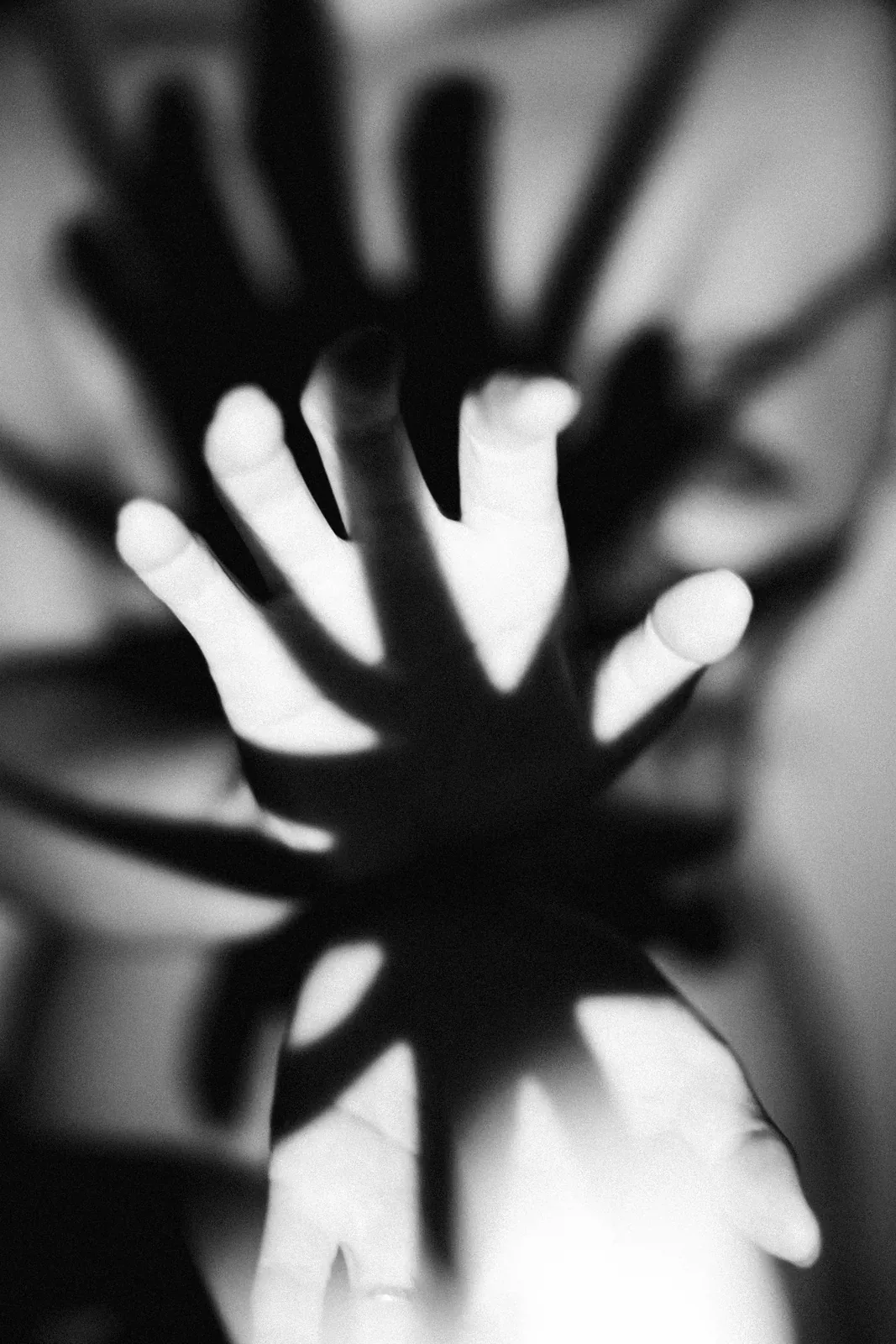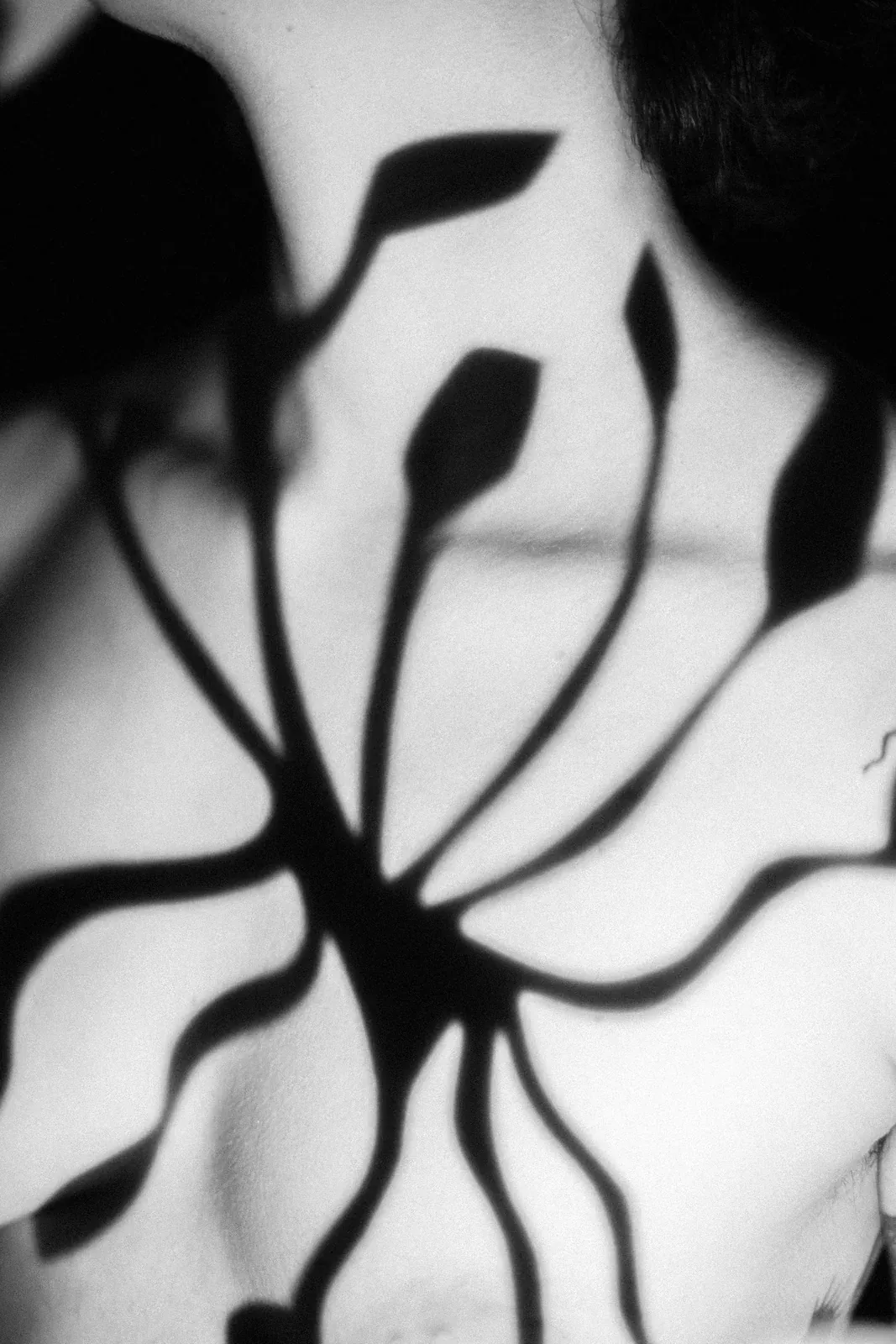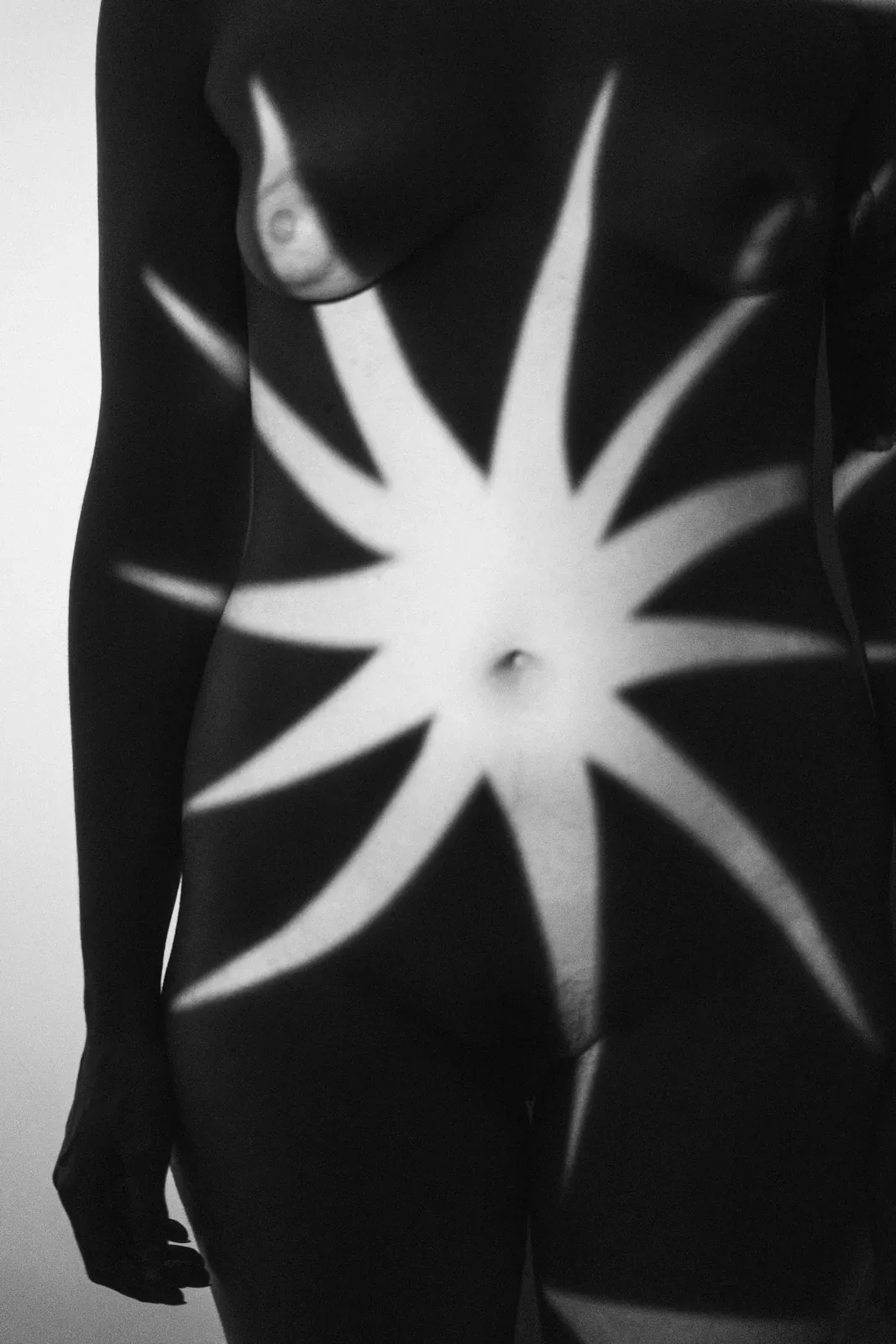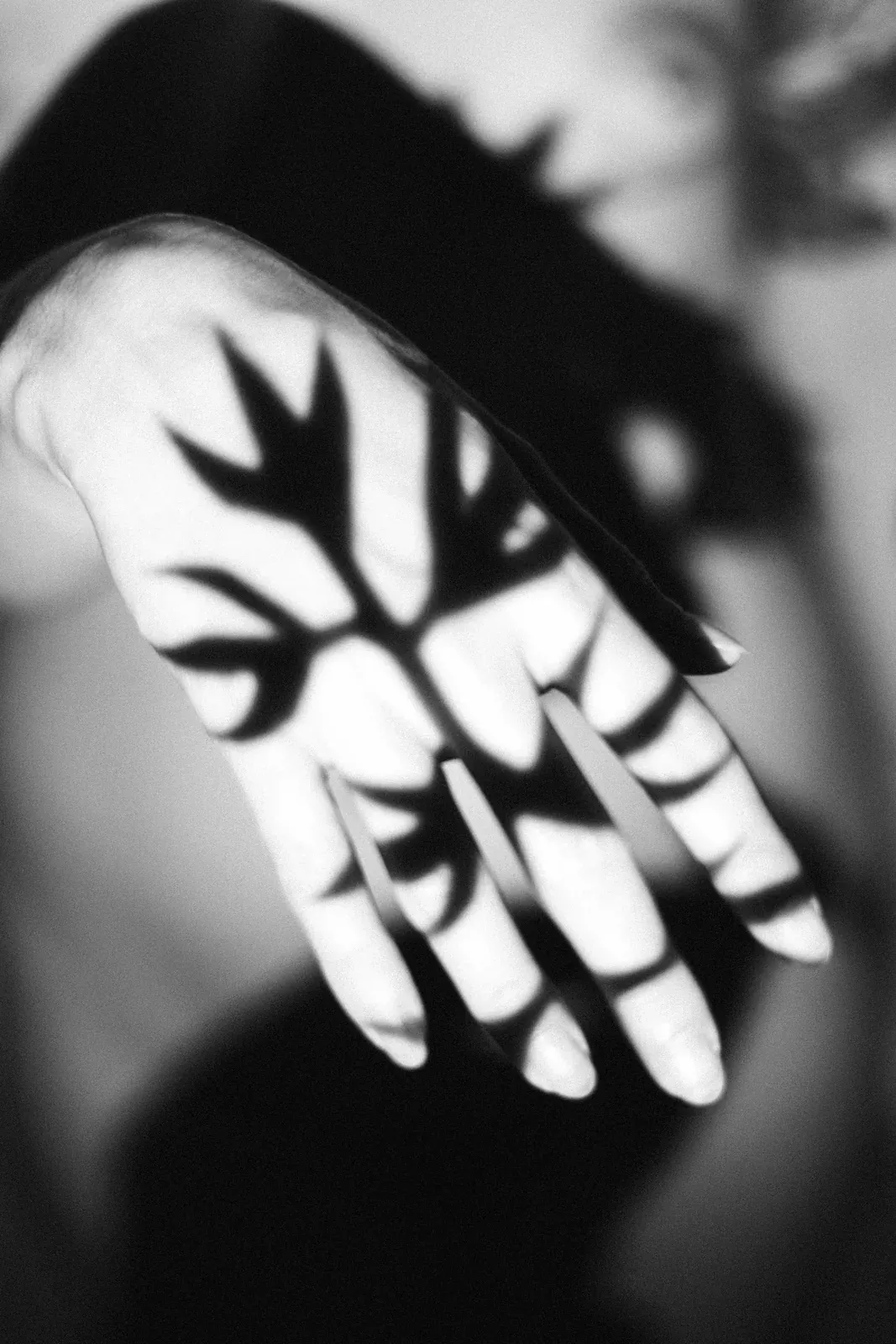
We catch up with Chinese Australian artist Meng-Yu Yan (颜梦钰), whose visual practice spans many disciplines, but predominantly centres photography, blending digital with analogue processes. Informed by Daoist philosophy, as well as explorations of Derrida’s theories of hauntology, their work is preoccupied with notions of cultural lingering, the unconscious and the ephemeral. Their lens questions and distorts reality, it is interested in pushing beyond our static perceptions of the real.
Our conversation touches upon many things: the subtle art of referencing, their grandmother’s home at Ganquan Temple in Fuzhou, their experiences as a person of colour of the Chinese diaspora living in Australia, an encounter with their psychic, and their newest project around Bian Lian (face-changing) dance, an ancient dramatic art incorporated in traditional Sichuan opera.
It’s such a pleasure to be in conversation with you. I wanted to start by asking about references and how inescapable they become when creating. Your work has been in dialogue with many artists such as American photographer Robert Mapplethorpe and Taiwanese author Qiu Miaojin. I’m wondering how you approach the dialogic nature of artmaking and if there was a particular artist or body of work that changed you or that intrinsically moved and shaped you as a maker and thinker?
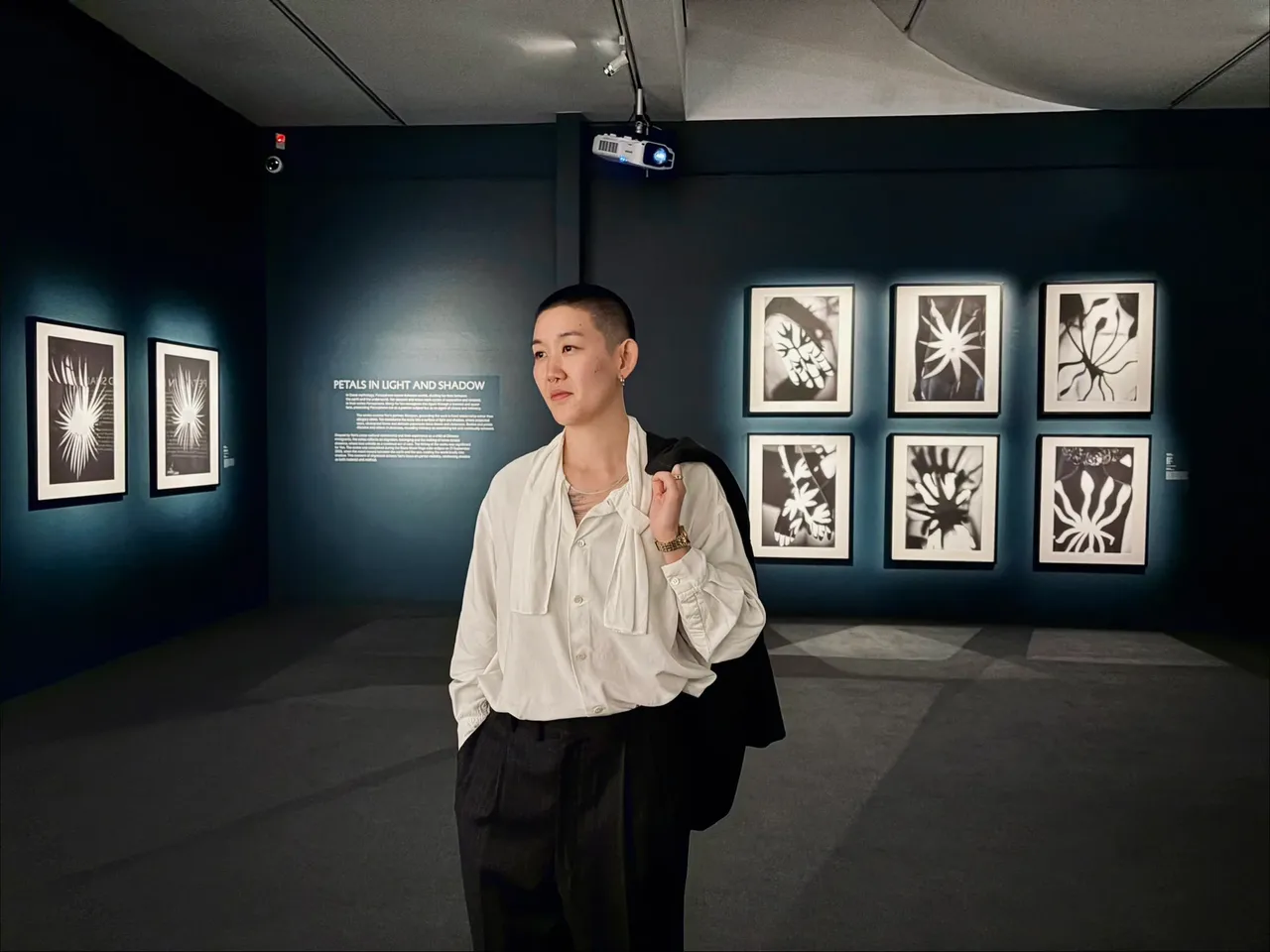
Thank you so much for inviting me to be in this conversation with you. As an artist, and as a human, we are always in dialogue with others. Obviously, nothing is created in a vacuum and connection is a fundamental part of existence. So, I am grateful to have been able to connect with people I admire through art, particularly as you mentioned Robert Mapplethorpe and Qiu Miaojin who I see as both queer ancestors and queer kin in a way. I was invited by the Museum of Australian Photography last year to respond to the works of Robert Mapplethorpe in a series I created called Persephone (2025). It was exhibited this year in a group exhibition with Mapplethorpe called _Coded
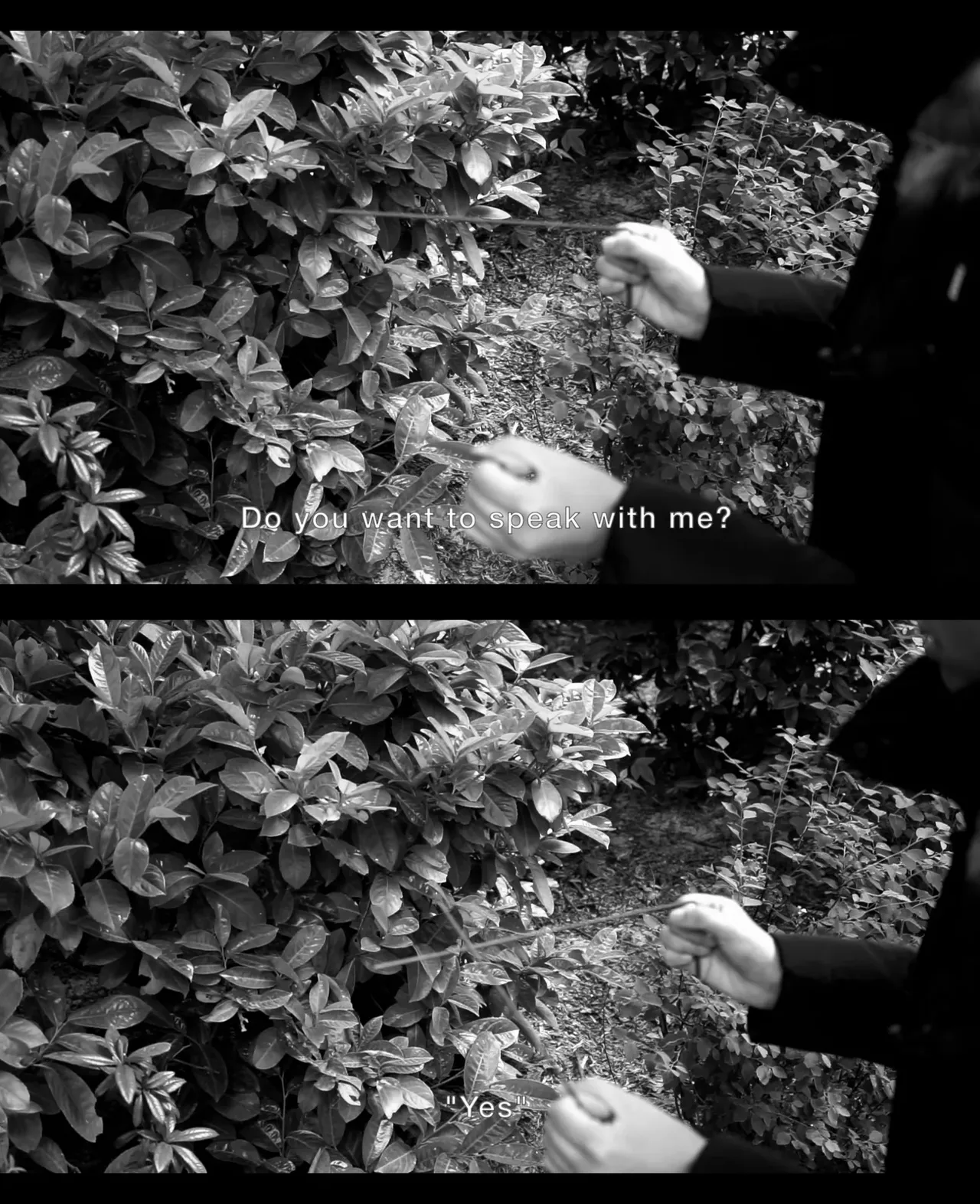
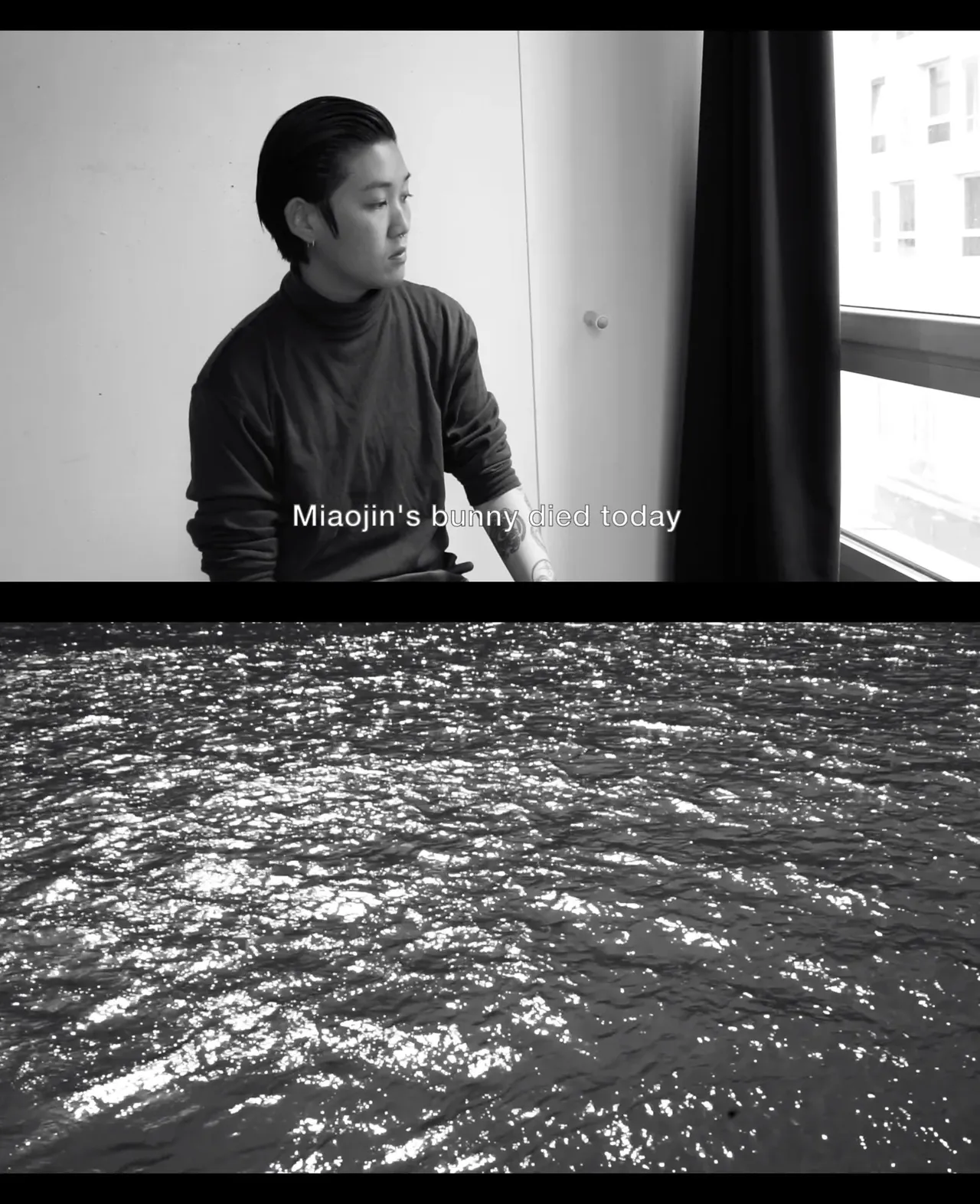
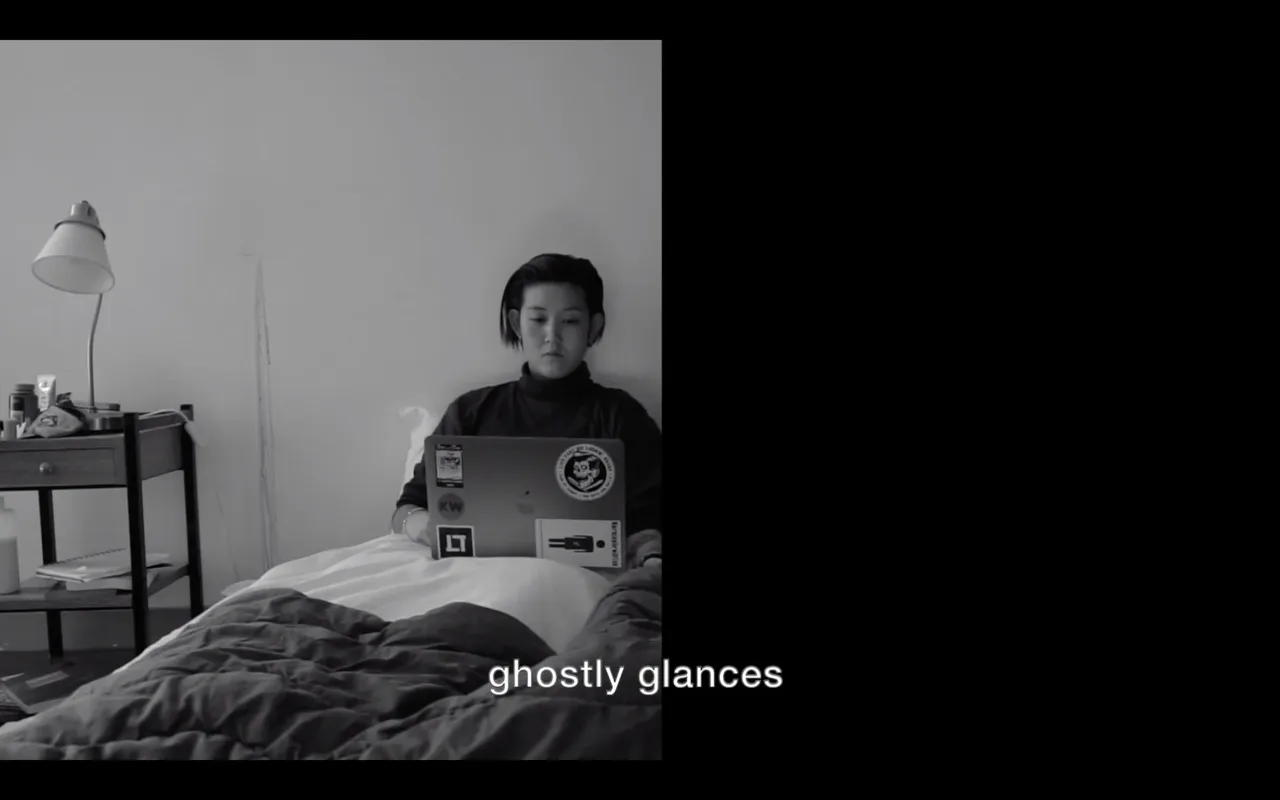
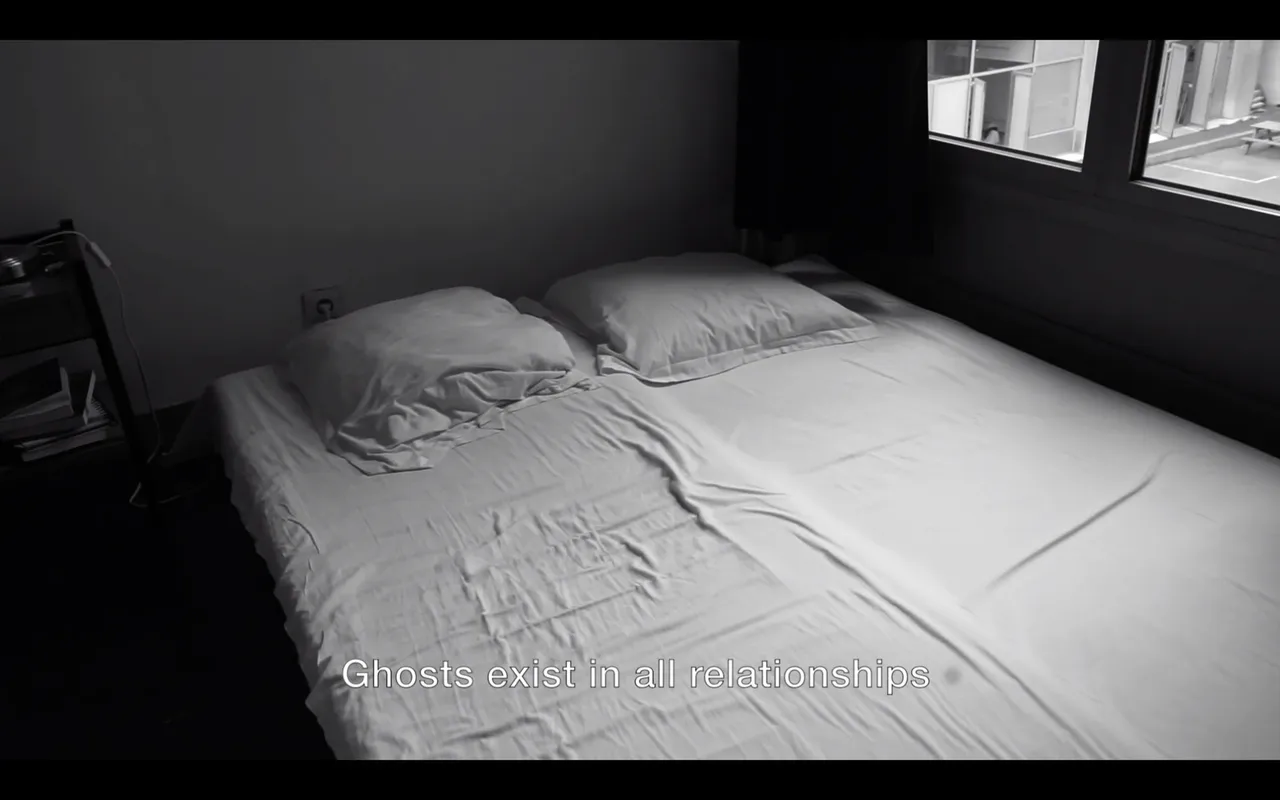
Blooms: flowers have never been innocent (2026) curated by Angela Connor. Hanging beside Mapplethorpe is an experience (and honour) I could have never imagined. Regarding Qiu Miaojin, I feel like she is someone who continues to haunt and possess me through her writing, and in many other ways. In 2019, whilst on residency at the Cité Internationale des Arts in Paris, I retraced the steps of her final book Last Words from Montmartre in a video work called Double Witness_ (2020). She wrote that last work just before she died by suicide, and my research at the time focused on queer spectrality and cultural haunting inspired by Derrida’s theories of hauntology. Years later, I am still haunted by her. Many other artists have had a profound influence on me. I would say the first and most significant one was when I was fourteen and I saw a silver gelatin photograph by Edward Weston which looked like a magnificent flowing silver cascade or waterfall. To my surprise, it was actually an image of a humble cabbage leaf. That work left a deep impression on me — how photography can completely change the way we see our ordinary existence. After that experience, my mother bought me my first camera.
Blooms: flowers have never been innocent (2026) curated by Angela Connor. Hanging beside Mapplethorpe is an experience (and honour) I could have never imagined. Regarding Qiu Miaojin, I feel like she is someone who continues to haunt and possess me through her writing, and in many other ways. In 2019, whilst on residency at the Cité Internationale des Arts in Paris, I retraced the steps of her final book Last Words from Montmartre in a video work called Double Witness_ (2020). She wrote that last work just before she died by suicide, and my research at the time focused on queer spectrality and cultural haunting inspired by Derrida’s theories of hauntology. Years later, I am still haunted by her. Many other artists have had a profound influence on me. I would say the first and most significant one was when I was fourteen and I saw a silver gelatin photograph by Edward Weston which looked like a magnificent flowing silver cascade or waterfall. To my surprise, it was actually an image of a humble cabbage leaf. That work left a deep impression on me — how photography can completely change the way we see our ordinary existence. After that experience, my mother bought me my first camera.
Your work has surrealist tendencies (although perhaps being associated with a tradition is too confining) but there is an undeniable preoccupation with phantasmagoria and the unknown. Could you talk about your relationship with divination and astrology and how this presents itself in your work?
I resonate with the Surrealists who were fascinated by dreams, the unconscious, and alternate realities because my name, Meng-Yu, means dreams of Jade in Mandarin. My mother had a dream about me when she was pregnant, and a voice in her dream told her to include the word “jade” in her child’s name. Naturally, when she awoke, she put her dream and jade together to create my name. In this way, before I was even born, I have been connected to a reality that is beyond what we can see. As such, I’ve always maintained an interest in spirituality, esotericism, mysticism, astrology, divination, dreams, haunting and other psychic practices. The connection isn’t always obvious, but it is always there as an undercurrent throughout my work. For example, my series created in response to Mapplethorpe’s work was completed on a Virgo eclipse in 2025. The constellation Virgo is often associated with Persephone who was the goddess of spring, flowers, and the underworld. These works were made in response to Mapplethorpe’s still life photographs of flowers which represent life, death, and rebirth.
I was very drawn to your photography project on 35mm film around your visit to Fuzhou temple and the legacy of your grandmother’s work and life as a Buddhist nun. I particularly love the kinship you mention feeling with Miao Sifu, who presents as a butch nun. Could you tell us more about the urge to photograph this place and the people that inhabit it?
Something I am working toward one day is a video work and more photographs about my grandmother’s temple, Ganquan Temple in Fuzhou, China. It has a long, complex, and fascinating history. The original temple dates back to the Tang Dynasty and my grandmother, alongside her Sifu (i.e. Master), Changrong Sifu, who has since passed, rebuilt the temple together. Spending time over the years with my grandmother and the other nuns at the temple has had a profound impact on me. I relate to the nuns in the way that, just like queer people, Buddhist nuns are called to an alternate way of life that is outside the mainstream. Before she passed, Changrong Sifu told me that she was like me, she never wanted to get married to a man, settle down, and have kids. All she wanted was to pick mushrooms in the mountains. Miao Sifu who you mentioned also has this unspoken element of queerness about her. She showed me photographs of her before becoming a nun looking very butch. She loved motorbikes and cars, and she was friends with the local gangsters who called her “brother”. But her queerness was never spoken about or acknowledged — it’s an understanding that remains implicit. My grandmother also faced marginalisation as a single mother during a time when divorce was a major taboo. She became a nun later in life and has since devoted her life to the temple and its community. She was always ahead of her time, and growing up, she wanted to be like Mulan who is such a significant queer figure in Chinese culture. My grandmother is aging rapidly, however, and I feel the need to capture her story, the stories of the other nuns, and the story of the temple itself as soon as I can. If anyone would like to support this project, please reach out!
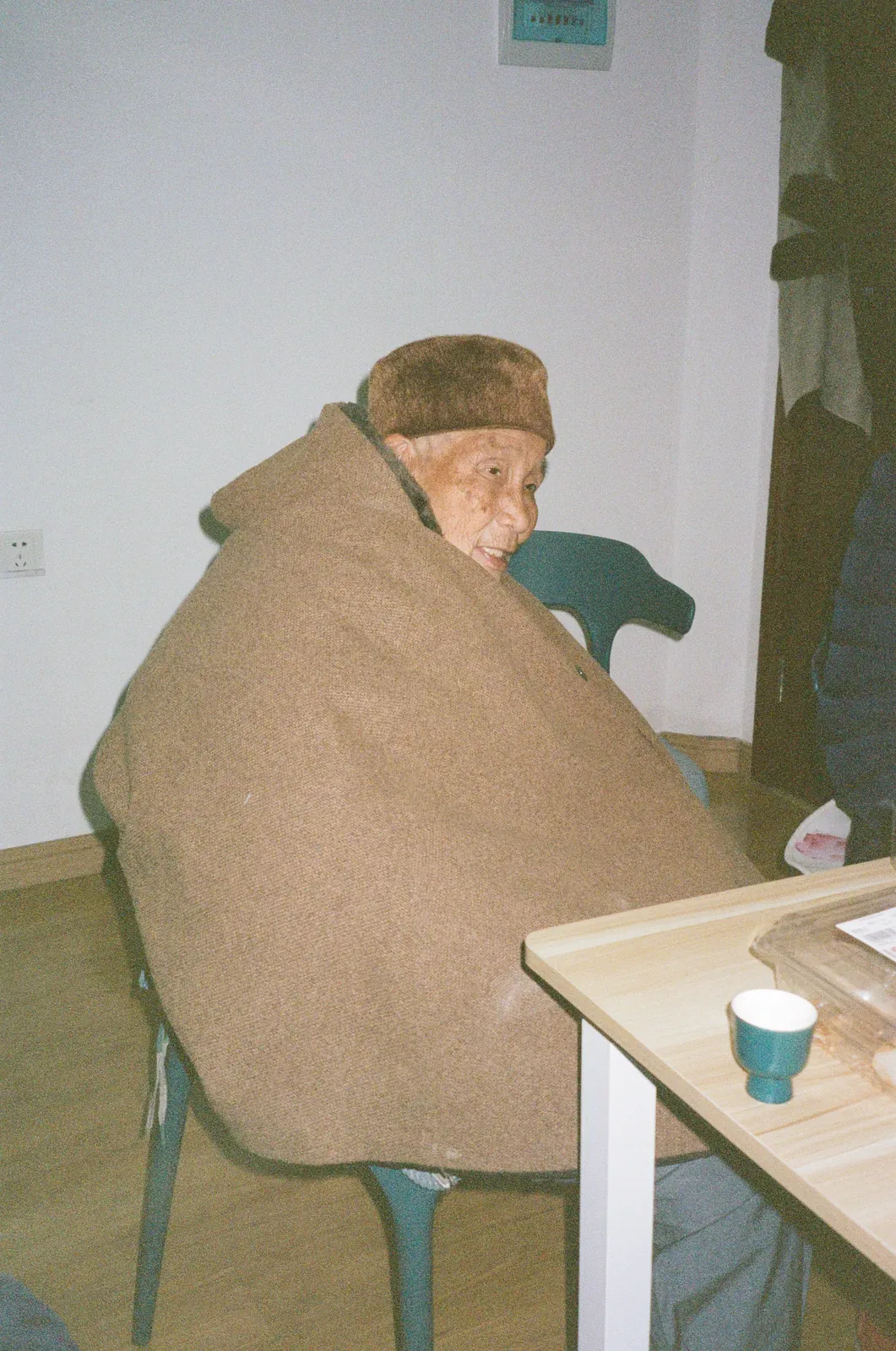
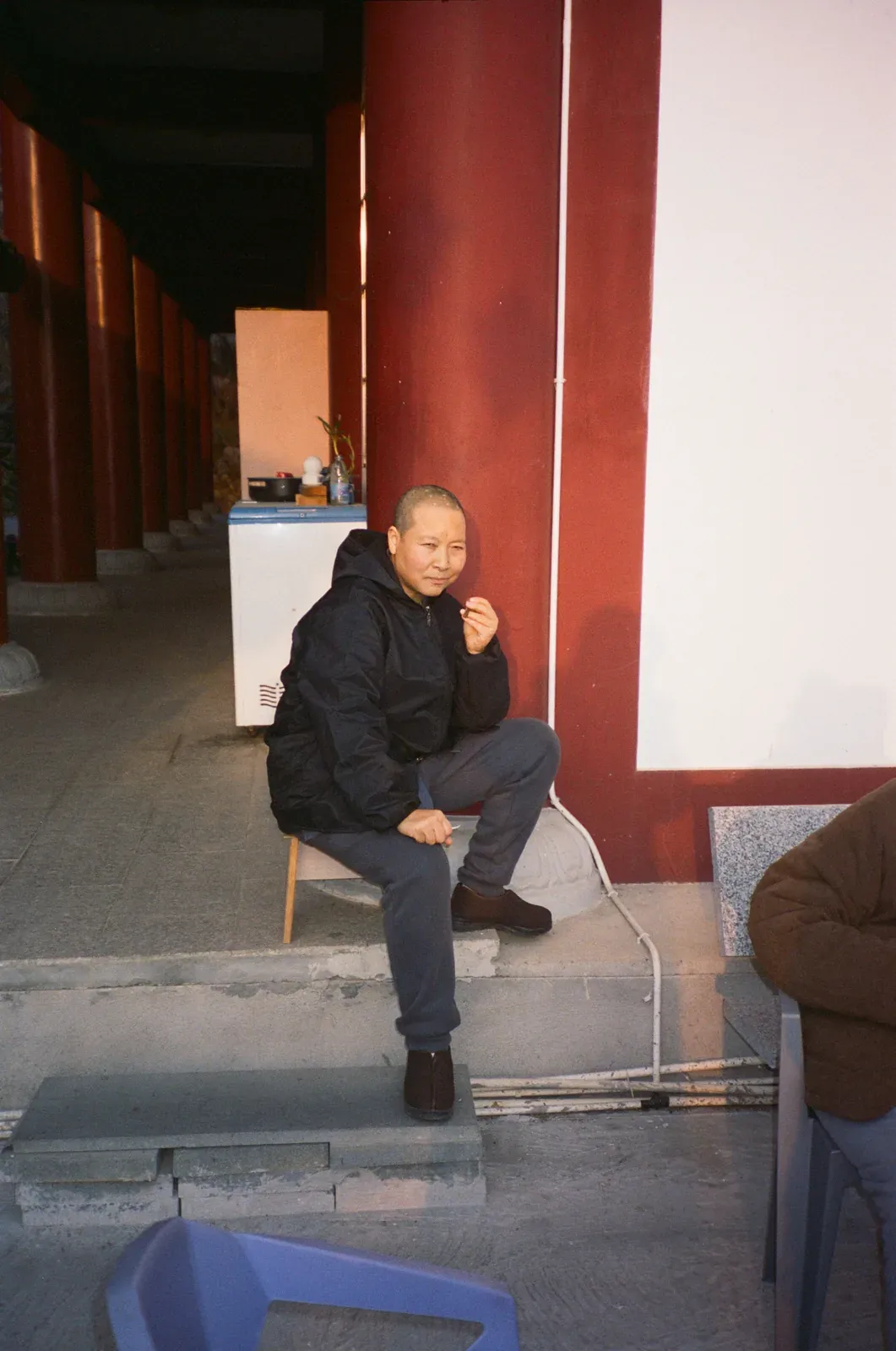
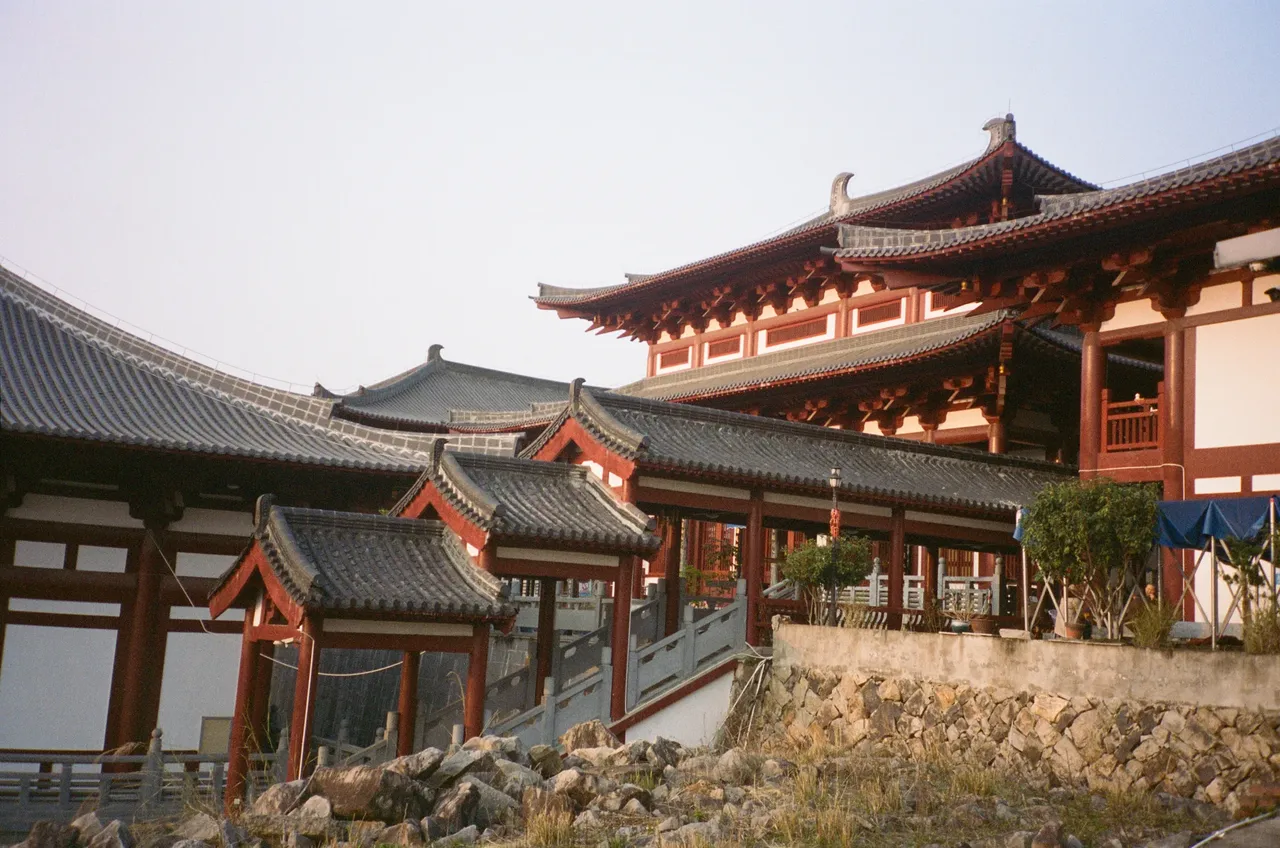
Do you always use 35 mm film? What cameras and processes are you interested in at the moment?
I use a mixture of digital and 35mm. I create a lot of my works with a digital camera which I often edit on Photoshop. I decided to pick up a Minolta 110 Date Zoom point and shoot after reading that it was Ren Hang’s camera. I found the same model on eBay and bought it. He feels like another queer ancestor, continuing to haunt us through his photographs. Another artist I admire is Lin Zhipeng (aka No. 223) who spoke about how liberating it is to shoot on film because there is no post-production or editing needed, everything is done as is. I find both ways of working very liberating.
You have many lines of inquiry in your work: surreal dreamscapes, fate, self-reflection, violence. Some of the work seems more journalistic, some is more diaristic and personal (although it seems to me that perhaps your work debunks this binary and is both at the same time). Could you speak on how you tread or view that line?
I think as an artist there is often enormous pressure to conform to a specific and cohesive so-called brand identity which feels flattening. Everyone contains multitudes and this multiplicity is what I try to express through my practice. I have many different interests, and so many ideas all at once that sprawl in a variety of directions, it sometimes feels difficult to try and bring them all to life. The main thing I try to focus on, and come back to, is vulnerability. Whilst flicking through an art magazine one day I came across an interview with Tracey Emin who said that the greatest strength is vulnerability. As an artist, I think that is the greatest strength we can possess, and something we should aspire to.
Your practice is multidisciplinary, spanning photography, installation, sculpture, and the moving image. How do you approach form? Does the subject or theme come to you first and then form follows?
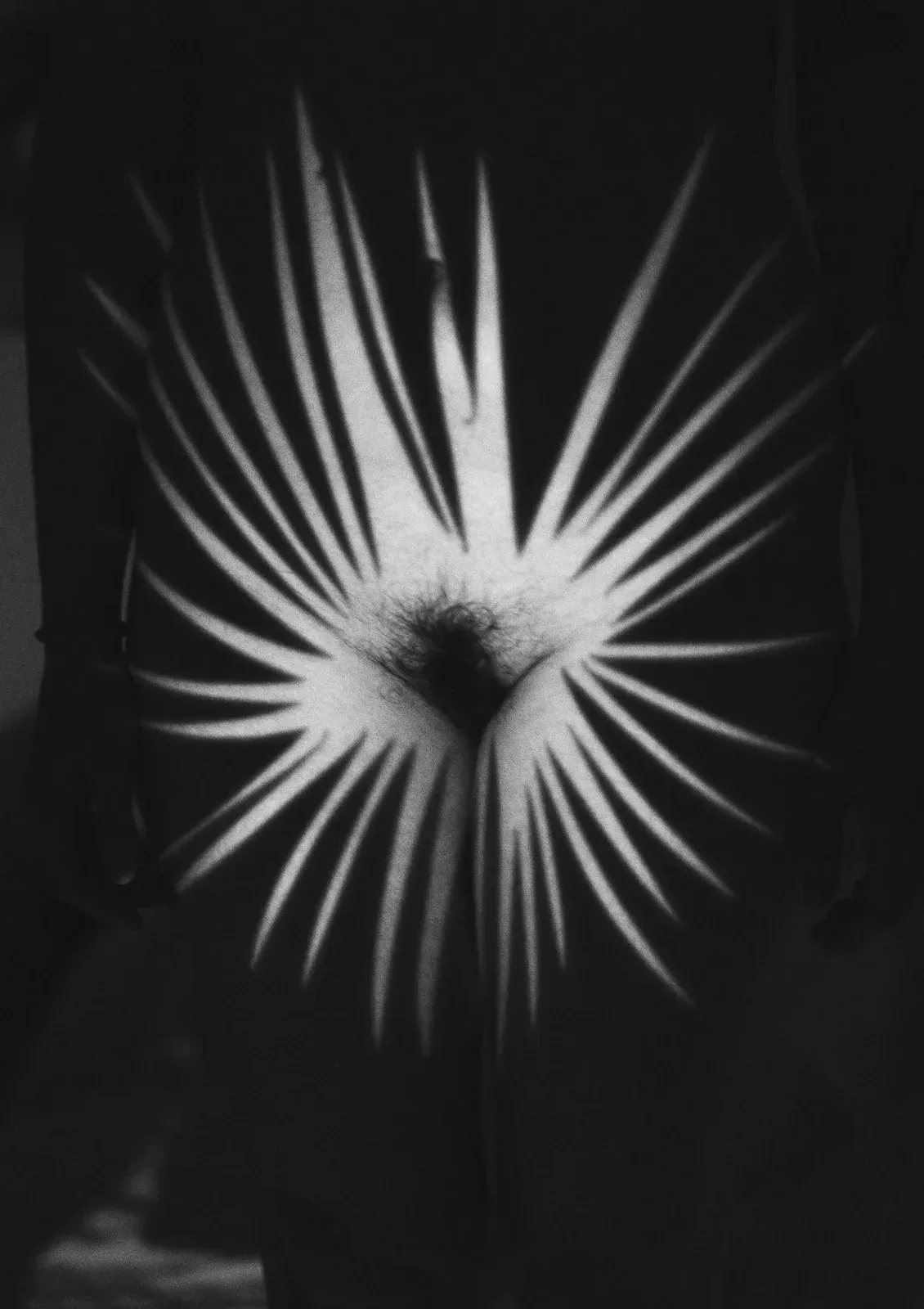
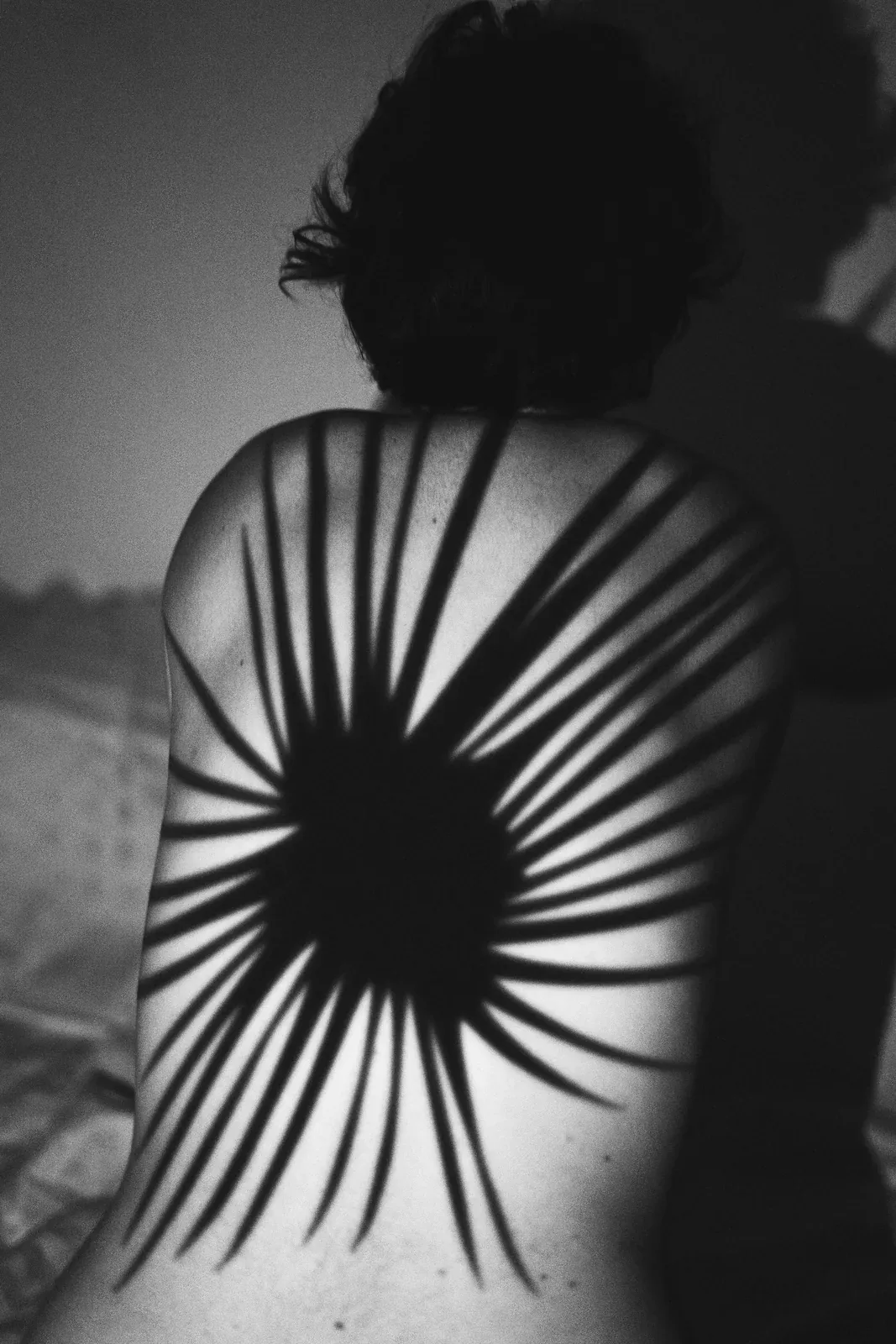
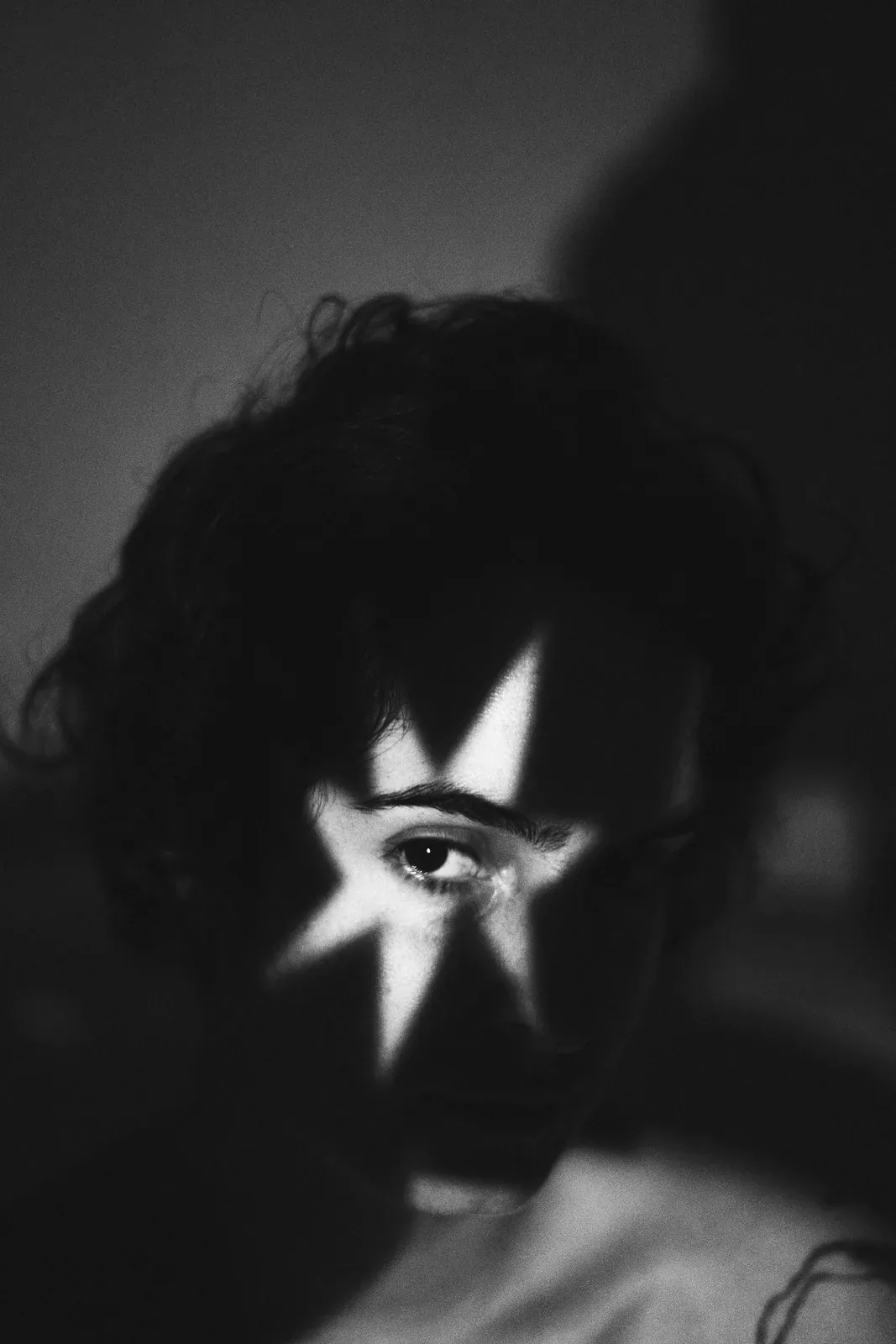
I would say that photography is my primary medium as I am most fascinated by its history, by the gaze, by its connection to spiritualism, its temporality, and its connection to life and death. But I don’t like to limit myself to one medium and I love to explore a variety of things. For my piece about Qiu Miaojin, as she was also a filmmaker (and wrote extensively about film), and her work was so deeply connected to time, I felt that video was the best medium to engage with her work. They say that photography is the art of painting with light, so I keep this in mind when I create installations too. When I create installations, or even sculpture, I often think through a photographic lens. Sculptures I’ve made in the past often involved glass, water, and light — again playing with optics and how we perceive the world. Creating shadow installations has also been a way of playing with shadow and light in real time, live, and in three dimensions — instead of being limited to an image.
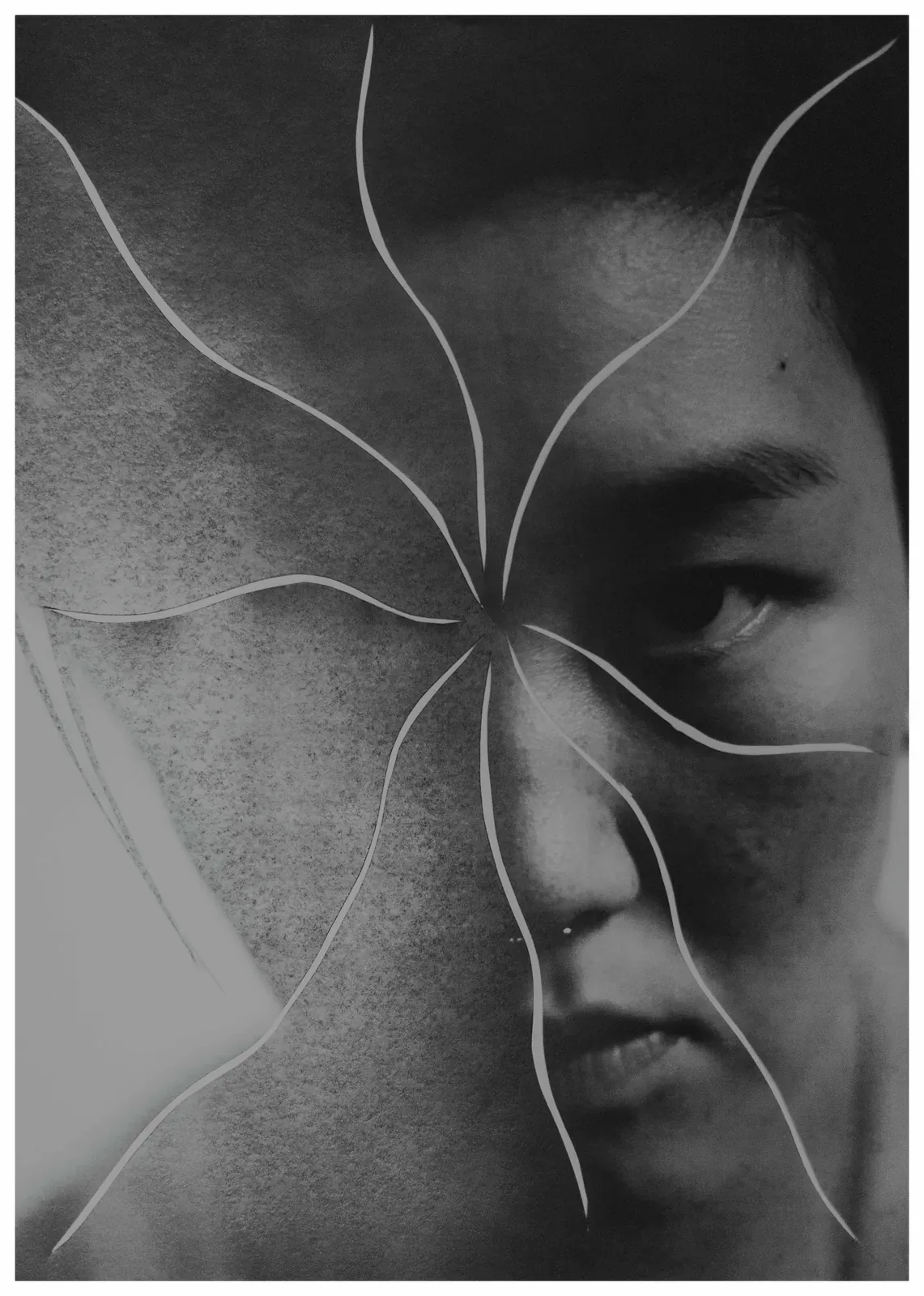
You’re very interested in fragmentation and deconstruction, and I was particularly drawn to your self-portraits, which feel so gestural and porous, particularly in Heaven; Just Another Ruin. Do you think the fragment or serialisation is the ideal vessel for uncovering how layered and nuanced the self can be? I ask this while thinking about how we reflect and navigate our own gender, racial, sexual and ethnic identities, particularly in the face of how these can certainly be cannibalised and flattened in certain art world markets and spaces. Could you talk some more about this return to self and the violence held within the process of cutting and editing?
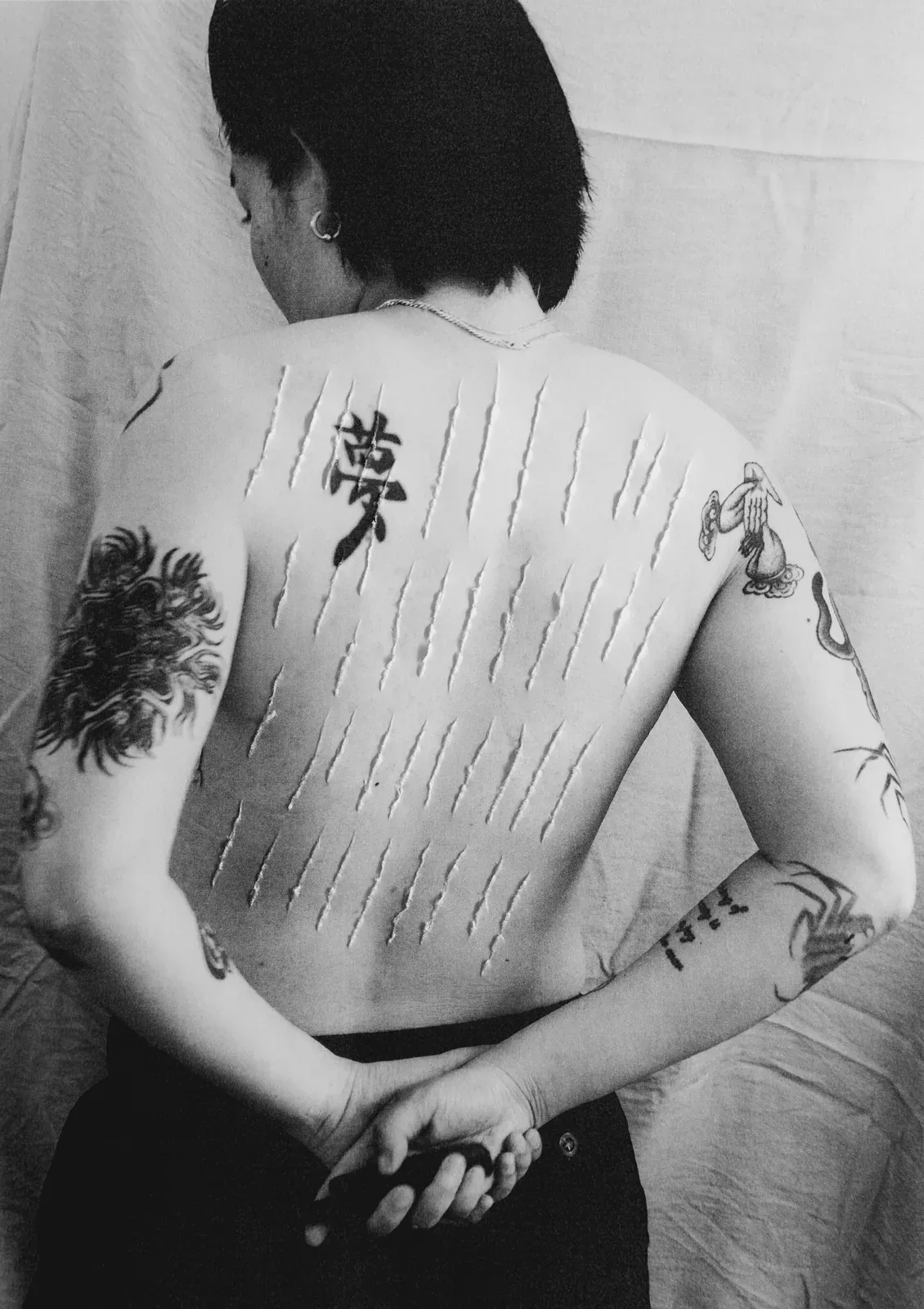
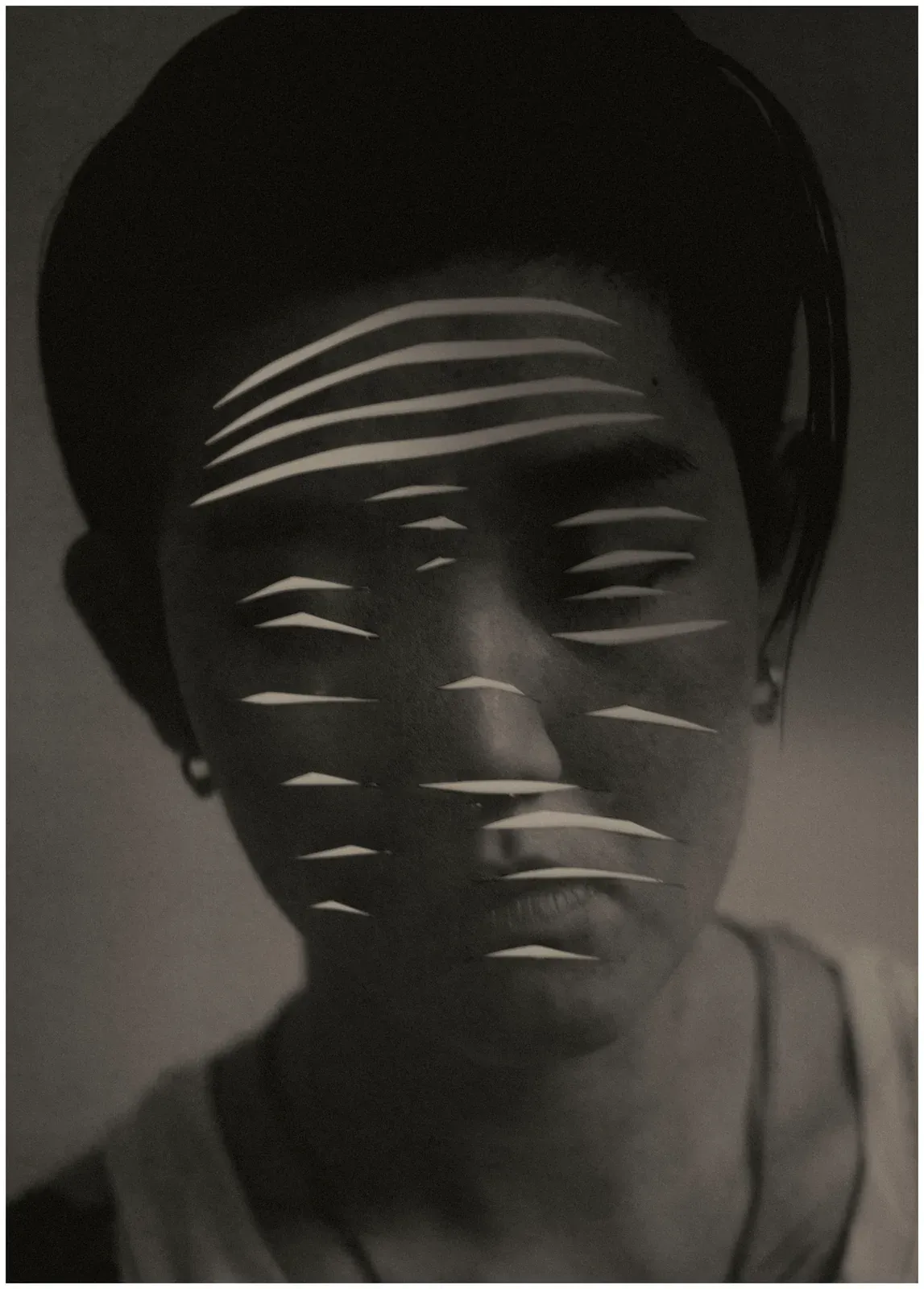
Thank you, yes, something I have been focusing on in my recent work such as my series Another Ruin (2023) and Scars and Dreams (2025) is cutting into my self-portraits. It’s a process that feels very cathartic to me and it was partly inspired by a session I had with a psychic. She told me that she saw a vision of me and my back, covered with many scars from the intergenerational trauma and pain I had been silently carrying. This image stuck with me, and I knew I had to bring it to life through my practice. Cutting into my works has felt liberating in an age that is so digital, virtual, and shaped by the rapid acceleration of AI. Going back to what is handmade and tactile has been important to me, and that is what cutting into my photographs has enabled. We live in an age where images and content are constantly being produced and generated. By cutting and destroying, subtracting rather than adding, I feel an immense sense of relief. For now, at least, those handmade cuts are not something that can be replicated. On a more personal level, the act of cutting into a self-portrait in some ways parallels the experience of cutting into one’s own body, turning that sadness, pain, and anger inward. I think as a queer, non-binary, person of colour of the Chinese diaspora here in Australia, people like me face so much violence, tokenisation, erasure, and so much more than words could ever describe, every single day. It really is, as the saying goes, death by a thousand cuts. These cuts look like scars, battle-wounds, but they are not symbols of weakness — they’re symbols of strength and healing. The cutting was also partly inspired by Louise Bourgeois. I saw an exhibition of hers at the Art Gallery of NSW and the work that stayed with me was Untitled (Scissors) (1986). The didactic panel read: “The act of cutting fascinated Bourgeois. As the daughter of tapestry restorers, she knew that cutting was often a prelude to repair.” A prelude to repair, those words and that artwork has left a permanent mark on me.
In a few of your installations there is this deep preoccupation with shadows and impermanence. Could you tell us more about traditional Chinese shadow play and how this has informed your practice particularly in works like Shadow Shrine?
The invention of shadow puppetry is said to have originated in China during the Han Dynasty, about two thousand years ago. According to legend (and there are many different versions of this story), Emperor Wu was heartbroken at the death of his concubine. His grief caused great instability throughout the land, so advisors tried to think of a solution. One of them saw children playing on the street with parasols in the sun, creating lifelike shadows. This sparked an idea — the advisor would create a puppet and bring the emperor’s concubine back to life through light and shadow. Shadows have an inherent connection to death, the underworld, and the afterlife. Perhaps that is why death, darkness, and shadows have often been feared. But a book that has had an enormous influence on my outlook and art practice is Jun’ichirō Tanizaki’s In Praise of Shadows (1933) and the way he writes about the Eastern appreciation for shadows, both aesthetically and philosophically. He compares this to the Eastern appreciation of jade in contrast to the Western appreciation of the diamond. The latter is bright, clear, and hard, whereas the former is cloudy, shadowy, and soft. In Chinese Daoist philosophy, both light and shadow, Yin and Yang are part of us and the world we inhabit — we can’t sacrifice one in favour of the other.
What are you working on at the moment? What are you listening to? What is exciting you?
Right now, I am planning on creating a series with my father. He is a natural performer, and he often performs a traditional dance called Bian Lian (or face-changing). It’s an ancient dramatic art that is part of traditional Sichuan opera and the costumes are dazzling. As the name suggests, throughout the dance, the performer changes their mask or face with quick flourishes, almost like magic. My father has an incredible costume collection, and I have plans this year to photograph a series of him and me together. I was really inspired by an incredible exhibition I saw in 2025 at Three Shadows Photography Art Centre in Xiamen, China, of Masahisa Fukase’s series Family (1971-1989) and Memories of Father (1991) where he poses with his father. I’ve been thinking about it ever since. What is exciting to me, and what I’m listening to at the moment, is the album Promises (2021) by Floating Points, Pharoah Sanders, and the London Symphony Orchestra. I cannot put into words what that album means to me, but it has changed my life.