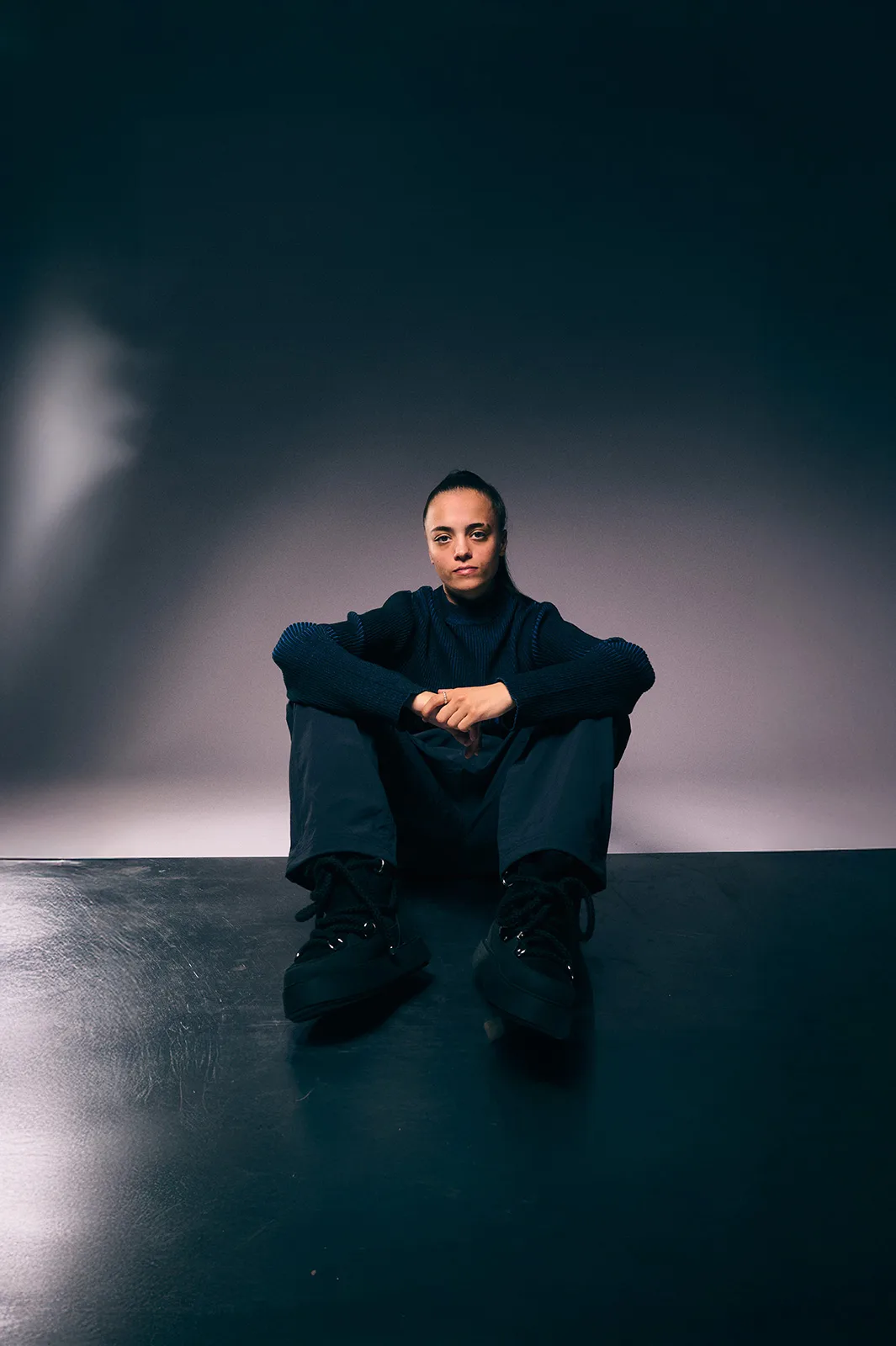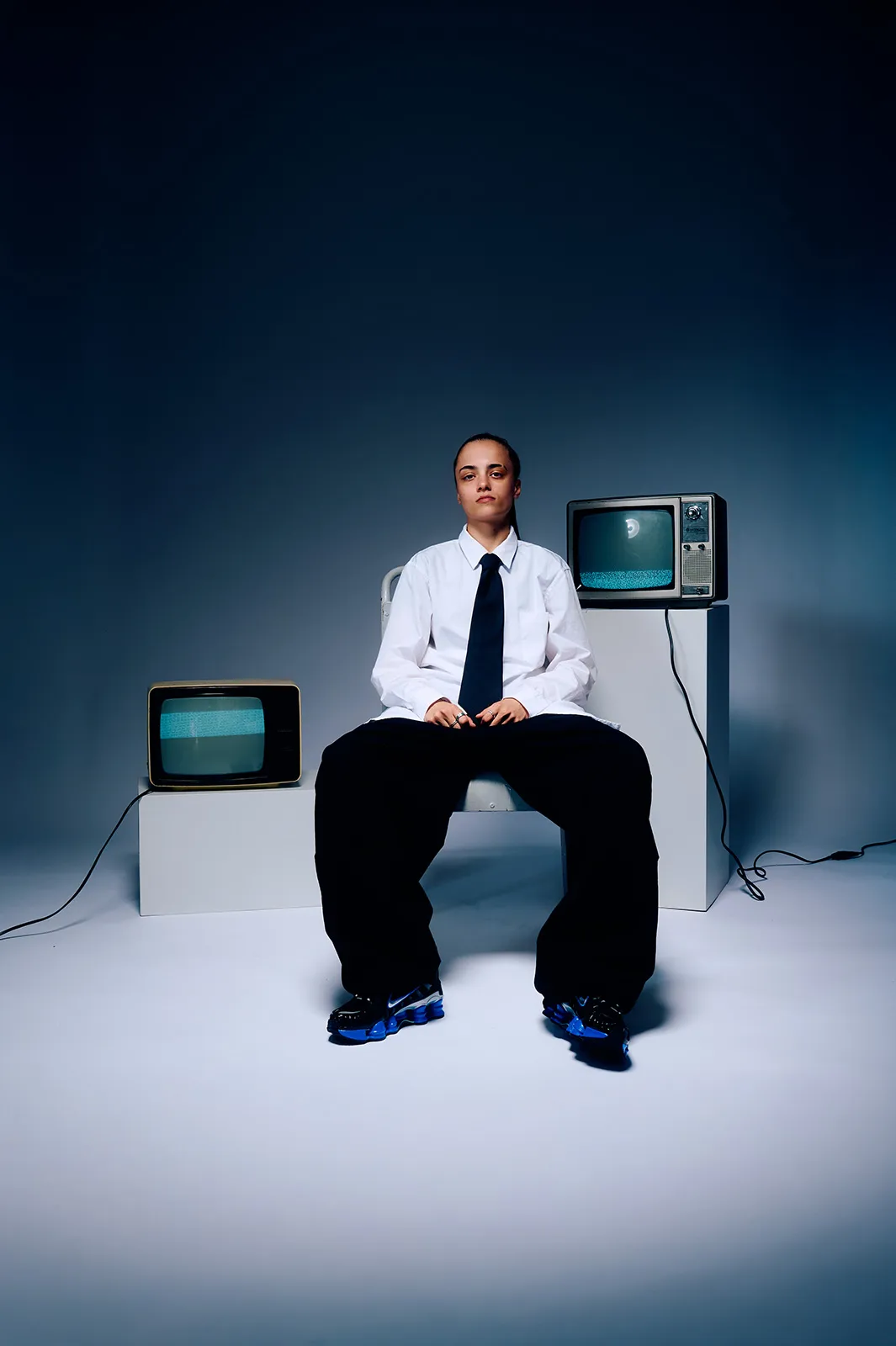
There’s a particular tension in the days leading up to a release, that quiet, suspended moment where the music exists only between the artist and the people who’ve heard it early. When we spoke to Maya Randle just a few days ago, redemption pt.2 was still living in that liminal space: finished, humming with intention, and waiting for its first breath outside the studio. Today, it finally steps out into the world.
“It's always scary releasing a new project,” she admitted, reflecting on the weight that comes with letting go of something so personal. But fear has never dictated her direction. Built from self-taught instinct and an emotional palette sharpened over years of solitary creation, her new EP moves deeper into the shadows she’s been tracing since my streets cracked something open earlier this year. This time, the edges are darker, the drums heavier and the storytelling more exposed. A shift she embraces with the kind of clarity that only comes from being pushed against your own limits.
And if let you in signalled that transformation, a song she revisited because “it became more relevant to my life as time went on”, then redemption pt.2 confirms it. It’s the sound of someone stepping into the version of themselves they’ve been orbiting for years, finally close enough to touch.
Your new single, let you in, has been out for a few days now, settling into the world with its new video, while you’re only days away from releasing redemption pt.2. What does being in this in-between moment feel like for you?
The main feeling right now is anticipation. It’s always scary releasing a new project and wondering how people will take it in, if they will understand your message and your meaning behind it and, most importantly, if they’ll like the music. I feel like in the time where you are waiting for your music to drop, that is the time when you can really start questioning yourself and your work, but ultimately, I love this project, and I'm very excited for it to be released.
When you revisited let you in, a track born from your earliest days experimenting with drum & bass, what drew you back to it?
One of the main things that drew me back into this song was the backing vocals. I feel like they're quite addictive, which is why they are running through pretty much all of the track. I knew I loved the song when I originally made it, but I knew I could give it a new lease of life with a new, better, more intricate production, especially with the drums and adding my own pitch-shifted vocals onto it. I also think the concept of the song drew me back into it as it became more relevant to my life as time went on. I think this is why I found it so easy to write more of my own lyrics to it, as it resonated with me more and fits in the same space as other songs on the EP and my streets from redemption pt.1. Also, the fact that this song stuck with a lot of people when I first made it and showed them, in the same way it did with me, made me realise I had a strong foundation and concept for the song.
The song circles around trust and the moments when it fractures. Now that a bit of time has passed since releasing it, does that feeling sit differently for you?
The feelings around trust still sit the same with me, and I think I’ll always have a similar view on it. Trust means a lot to me, so when it fractures, it impacts me a lot. A lot of my music touches on the concept of trust, but with let you in, it focuses on what it’s like to trust, have it be broken and the feelings that come after that. I hold trust quite highly in my life, as it takes a lot of time to build and strengthen and isn’t something that comes naturally with every person you meet. It’s usually built with the people you choose to be closest to, which is why when it’s broken, it feels more significant. Let you in almost acts as a reminder for me of past situations or times where I've put my trust into the wrong person or people.
And which detail of let you in still gives you that internal jolt when you hear it?
There's a synth sound in there which sounds quite sinister; it almost gives the feeling of empowerment when I hear it. I think it really ties the song together whilst giving it a mysterious vibe, but it’s also how I imagine my thoughts to be as a sound. Especially in the period of time when I was making this song.
Your sound has always carried emotional weight, but this new chapter feels even more shadowed and internal. You mentioned someone once told you your music “sounds lonely”. Did that description shape how you approached the EP?
I feel like that comment has always stuck with me because I find a lot of truth in it throughout all my music. I think a few of the songs in this EP are a lot darker because my music will always reflect certain periods of my life, but also because I found a way to add one of my passions that I started when I was quite young—drumming—into my music too. I started to think more about live performances and the feeling and atmosphere I wanted to create when I started curating my own live shows, and I feel like a lot of these songs will carry a lot of weight in a live performance.
Redemption pt.1 built a real foundation—my streets, whenever you’re ready, and the momentum they created. When you began pt. 2, what did you feel was unfinished?
I knew I wanted this EP to be two parts from the start, as I felt that five songs weren’t enough to tell the story I wanted to tell. With my streets especially, I had only just begun to scratch the surface of where I wanted to take it. I wanted to keep a lot of emotional weight in some songs, while in others I wanted to showcase the drums and the vocals, whilst keeping the music impactful to try and drive the messages more. I also think I made it a two-part EP because all the songs feel like they live in the same space and were all made in a period of my life where I was really searching for redemption.
These new tracks, you’ve said, came from a place of escapism. What were you running from when you wrote them, and what did you find in the process?
I think I was running from reality and my thoughts; making music is a good way to get away from that, but also being able to put your emotions into your music helps to separate them a bit more. A lot of these tracks I made in a period of my life where I felt kind of stuck in my career; things weren’t really going the way I thought they would for a while, and it made me really doubt myself and my craft. But I found a new way of looking at things, a new style of sound or a new, more impactful way to tell my story. I found purpose in the music I was making, as it was connecting with people in a different way, in a way I had always wanted it to emotionally.
Even though some of the songs aren’t necessarily “sad songs”, they still hold a lot of power, meaning, and emotion, and I’ve found that you can also express “sad” feelings in songs with different emotions. I've found it’s about telling a story or having a concept that people can relate to, but making sure it really comes from the heart; I think that’s when it connects the most. I've also found out a lot more about myself in the process of making all this music, about what this really means to me and what impact I want my music to have on the world.
Even though some of the songs aren’t necessarily “sad songs”, they still hold a lot of power, meaning, and emotion, and I’ve found that you can also express “sad” feelings in songs with different emotions. I've found it’s about telling a story or having a concept that people can relate to, but making sure it really comes from the heart; I think that’s when it connects the most. I've also found out a lot more about myself in the process of making all this music, about what this really means to me and what impact I want my music to have on the world.
You’ve built your entire production identity from scratch, self-taught on a bedroom laptop. When you think about that version of yourself, what would surprise her most about the music you’re making now?
I'd be most surprised at the freedom in what I'm making. I've been writing lyrics for years, and they've always lived in my notes app with not really any intention of using them, so I'd be surprised that I've found a way to share my story with my lyrics and have put them in my own music in a way that fits with my style. I also think my music has sonically come a long way from where I started. Most producers would probably feel the same, but you never really notice the progress until you look back on it.
I think I'd be proud of the music I'm making now, as it seemed so far away at the time. Also bringing back my love of playing the drums, I started when I was around ten years old but stopped when I got to grade 6. I wasn't sure if I'd ever revisit that passion, but I'm glad I've rediscovered it from the new music I've been making. I started making music with no expectations so where I am now in general would surprise me too.
When I listen to my very first EP, focus, I still love all the music but feel as though I have learnt a lot production-wise and about myself, so I think what I'm making now feels a lot more whole, has more finesse and is more conceptual. Genre-wise I always knew I'd experiment with different ones as when I first started producing, I was making completely different genres, so I knew my love for music wasn't at all genre-based but more based on emotions and feelings, which it still is now.
I think I'd be proud of the music I'm making now, as it seemed so far away at the time. Also bringing back my love of playing the drums, I started when I was around ten years old but stopped when I got to grade 6. I wasn't sure if I'd ever revisit that passion, but I'm glad I've rediscovered it from the new music I've been making. I started making music with no expectations so where I am now in general would surprise me too.
When I listen to my very first EP, focus, I still love all the music but feel as though I have learnt a lot production-wise and about myself, so I think what I'm making now feels a lot more whole, has more finesse and is more conceptual. Genre-wise I always knew I'd experiment with different ones as when I first started producing, I was making completely different genres, so I knew my love for music wasn't at all genre-based but more based on emotions and feelings, which it still is now.
Your stream numbers keep climbing. How do you keep that noise from shaping the music itself?
It’s always hard to know if people are going to like what you’re creating and knowing when or if you're in the right lane, but I've always wanted my music to make people feel something in the way that it does for me, so as long as my music is doing that, even when tapping into completely different emotions, it will all kind of live in a similar space. Starting from my streets, I've explored a slightly different avenue with my style of music, and it’s nice to see that it has resonated more, but you have to stay true to the music you want to make and the music that feels right, I think, rather than going off-stream numbers.
Your work with other artists, including co-writing and producing for 49th & Main, shows another side of you entirely. How does collaboration reshape the way you approach your own sound afterwards?
With collaborating and music in general, I find it’s more about the feeling in a song rather than the genre or anything else. It definitely inspires me a lot when I go back into creating on my own after a collaboration, as it opens your mind to sounds or ideas that I may not have thought about before. I always feel madly inspired after collaborating and not always because of the music, but because of the conversations you have with the new people you meet. It’s different from just meeting someone new, as it feels like when you have something in common that's to do with music, quite often you have similar experiences you can share or you click with them in a way you maybe wouldn't with everybody else. Which ultimately makes the music you're making together feel so much more connected and real. I feel as though when two or more very creative minds meet and connect, it’s almost inevitable that something special will come out of it, whether that be a song or a conversation full of inspiration or ideas.
When you think about the person behind the artist, what part of yourself are you still getting to know?
I think I struggle to separate any part of myself from the music because of how much passion I have for it. Most of my life involves or revolves around music, to the point where I find it’s all I talk about sometimes, so I'd say I'm still getting to know the person I am without all the music. It’s so easy to isolate yourself in this industry, especially starting as a bedroom producer—you spend a lot of time by yourself—so I find it can be hard to go back into reality or “normal life” outside of producing and making music, which can make it harder to get to know yourself away from all of that.
And what can you tell us about your projects for 2026?
For 2026, there will be a lot more music, a lot more emotion and a lot more thought and planning for live shows. In terms of projects, my cards are quite close to my chest at the minute, but there is definitely a lot more music on the way.