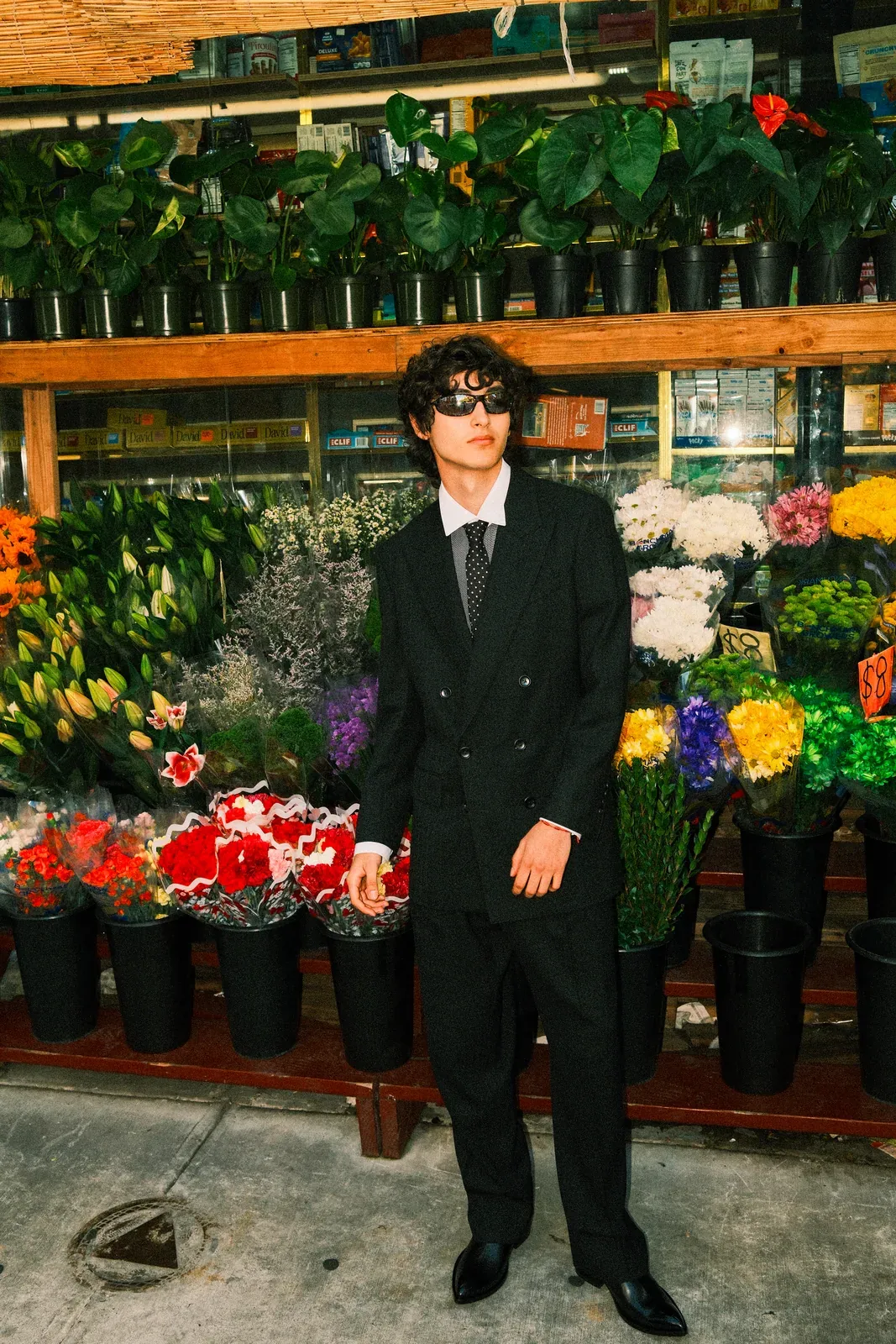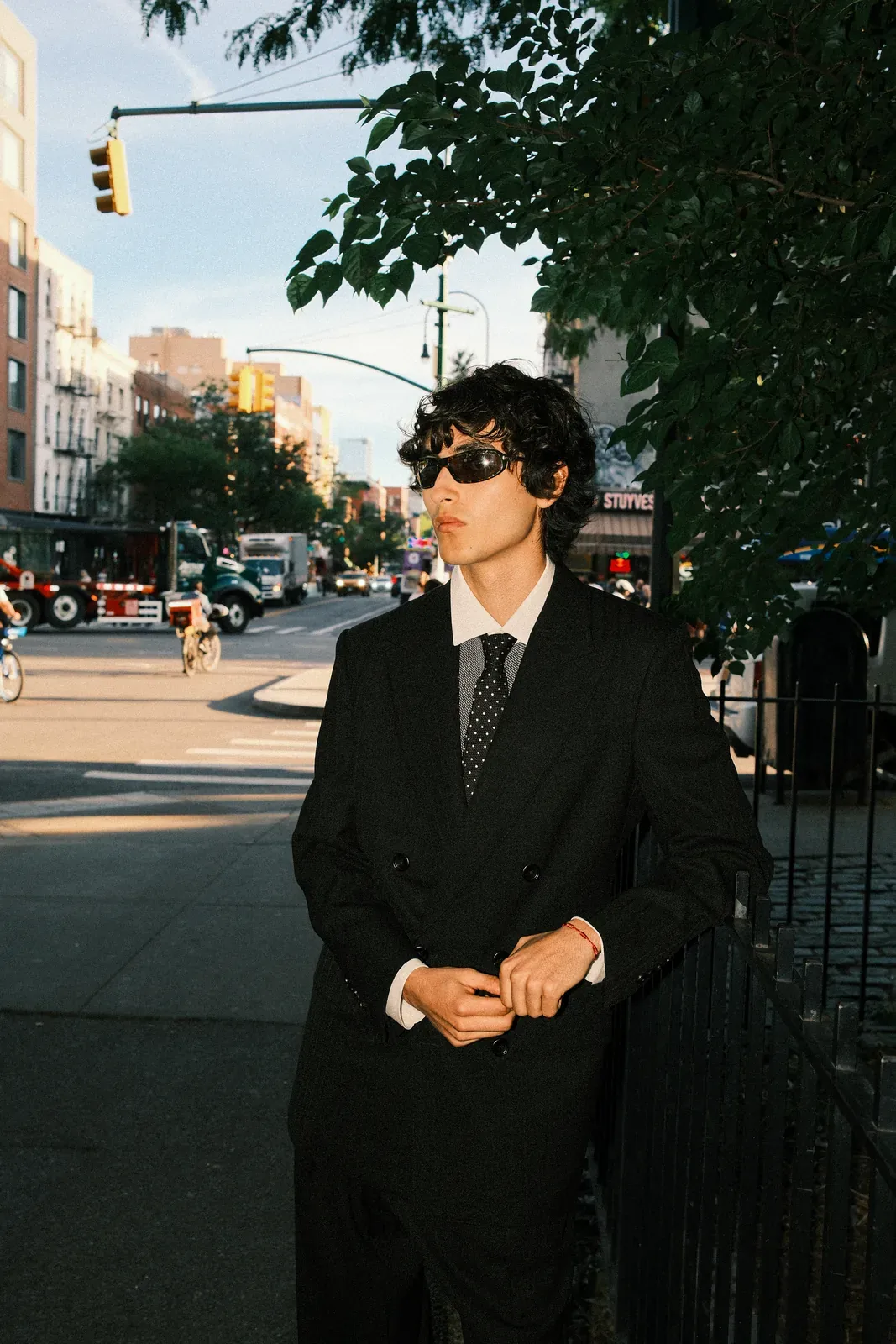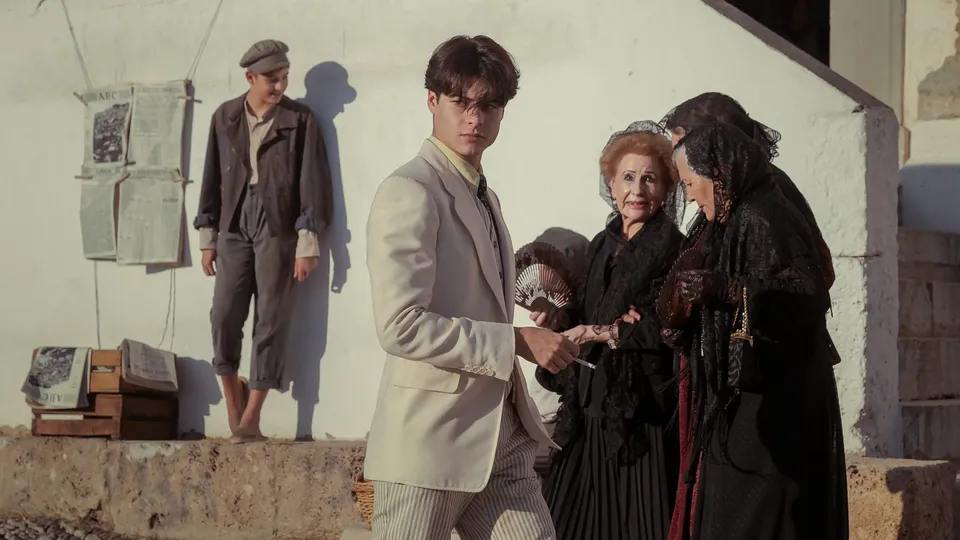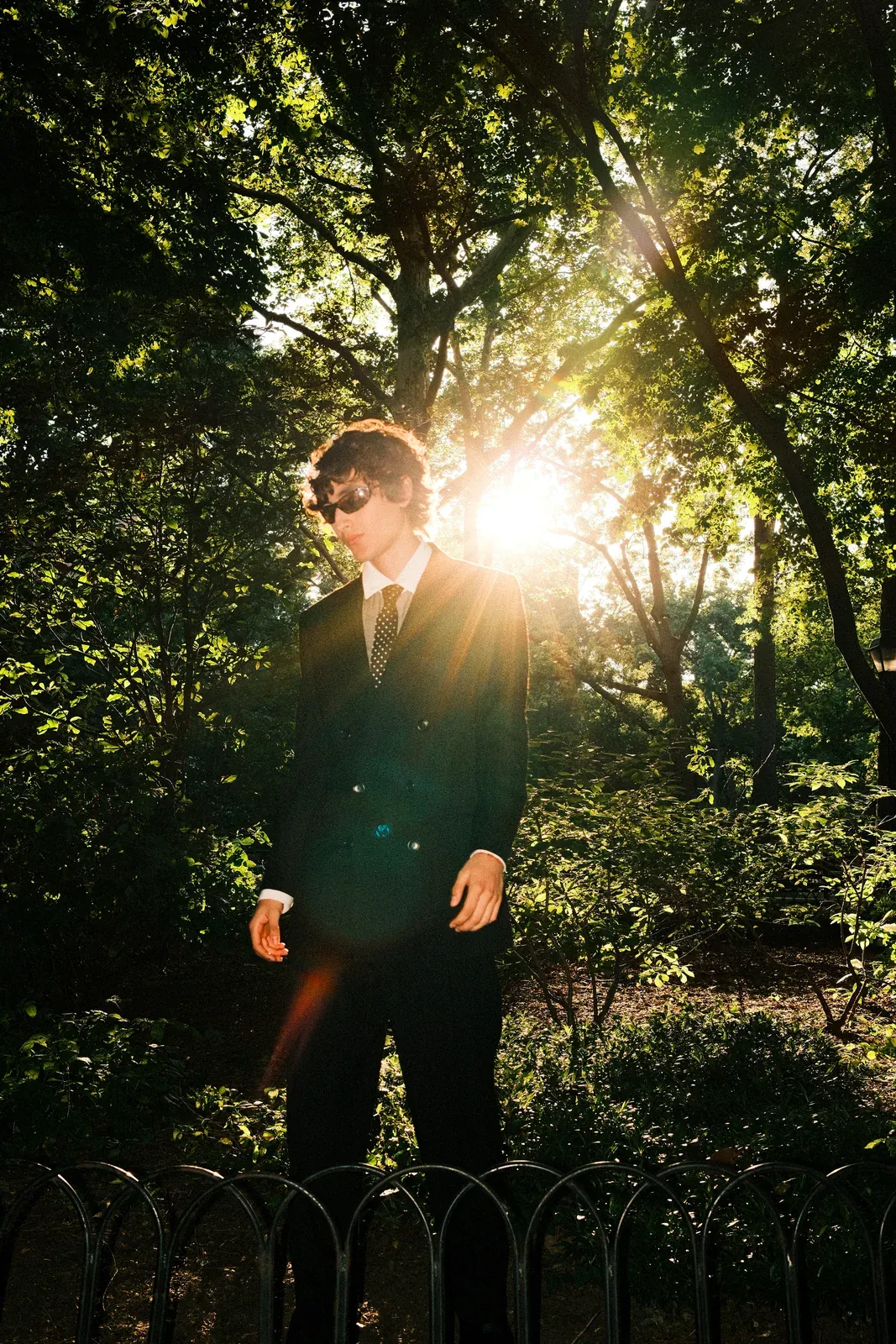
Born from a collaboration with his father, Carlitos Ruíz-Ruíz, who directed the film while Marcel Ruiz co-wrote, acted and produced, Summer of Three is a heady, naturalistic portrait of adolescence in Puerto Rico, inspired in part by their own experiences coming of age there. Following the screening of the film, which premiered at Tribeca Film Festival, METAL caught up with Ruiz to discuss the challenges of taking on such a range of roles, reflections on working with his father on the film, and his experience of falling in love with acting.
Ruiz is no stranger to performing: with both parents working as filmmakers, he grew up acting in commercials before his breakout role in Netflix’s One Day at a Time (2017) resulted in a Teen Choice Award nomination. Alongside acting, he regularly performs as a DJ too, whilst Summer of Three is his first experience in producing and screenwriting.
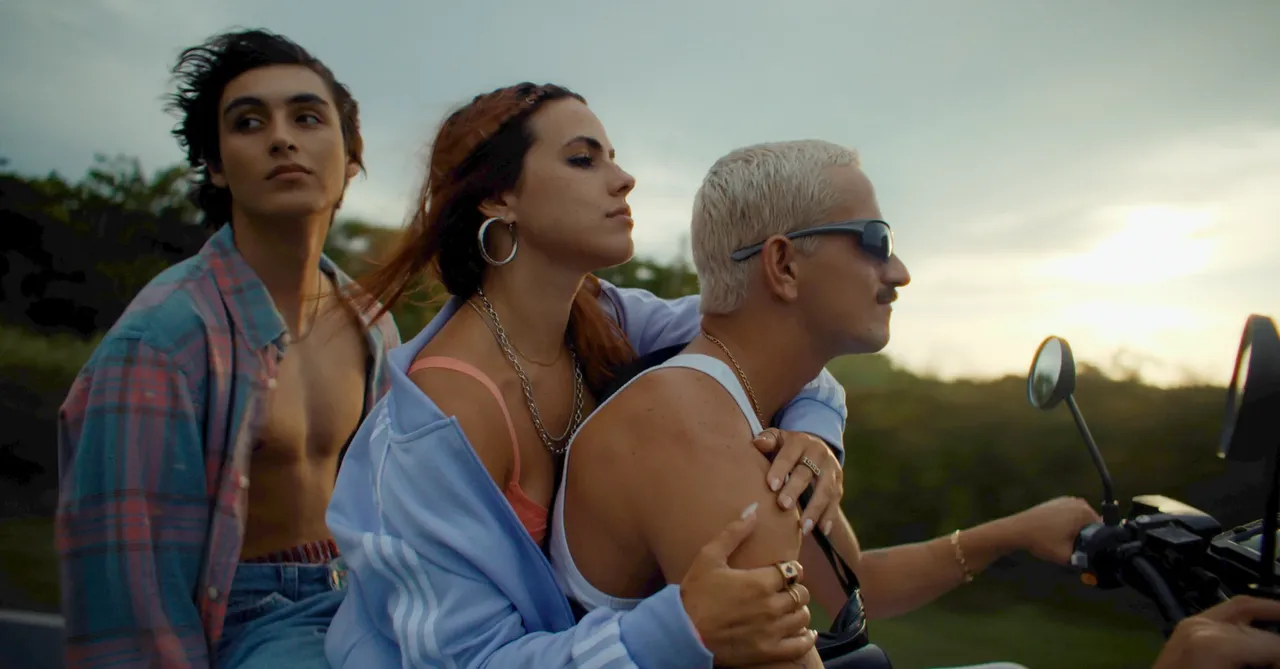
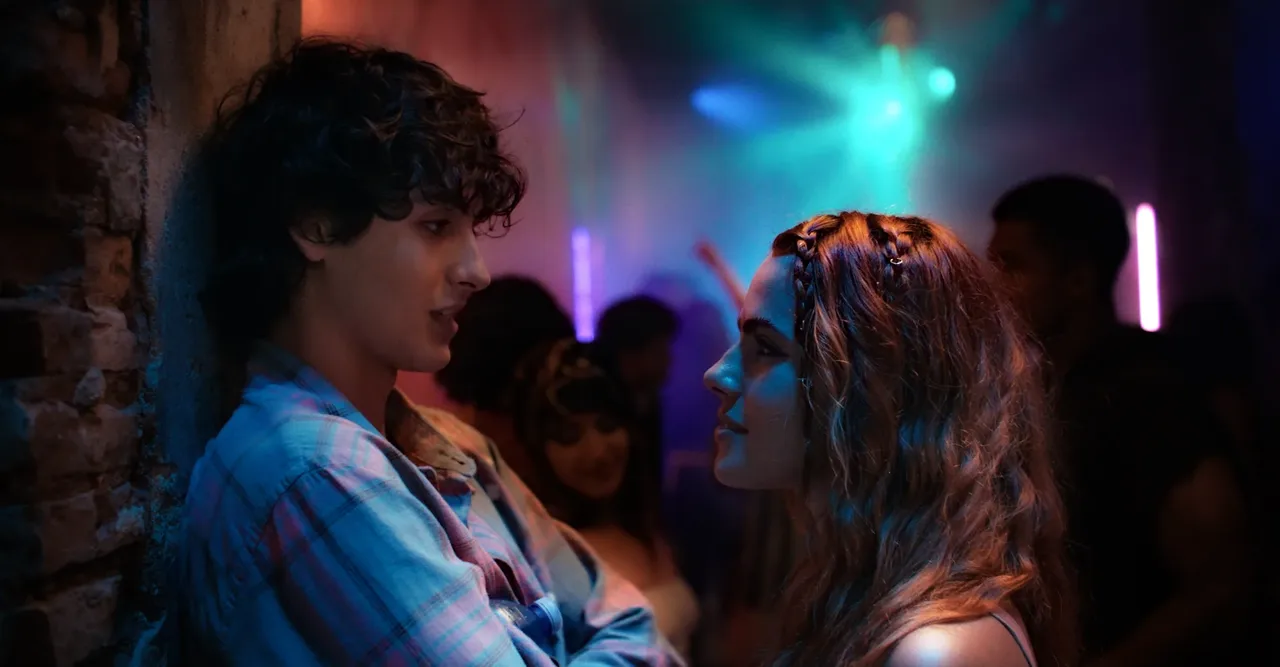
Drenched in the colours, landscapes and sounds of Puerto Rico, Summer of Three is at once a portrait of its culture and a universal coming of age story. With a core cast of just three individuals, it follows Javi (Ruiz), who returns to Puerto Rico following the death of his grandfather after growing up in LA, and is drawn into the lives of Luife (Paolo Schoene) and Kiki (Kiki Montilla). Throughout the summer, he experiences love, longing and loss while processing the difficult memories he has of Puerto Rico.
Summer of Three feels like a warm, keenly observed study of Javi, Luife, Kiki, and Puerto Rico itself, capturing both the characters and its sense of place with remarkable depth. All three characters are afforded nuance, depth and complexity, and their chemistry as a trio is palpable. Just as striking is the way in which the film captures the sensorial aspects of youth and Puerto Rican culture — the soundtrack features a combination of reggaeton and indie from the region, and the lush landscapes are immersive and dreamlike.
Hi Marcel! Congratulations on the release of Summer of Three — premiering at Tribeca is so impressive, how are you feeling about it?
Good, yeah, very, very grateful. You know, making a movie takes so long, it's kind of like making a sculpture where it’s just every day for a long period of time, little by little, in increments. Then once you step back and see the whole finished product, it's an amazing feeling, because it’s a long-term type of relationship with the work. So, when it finally comes to the day where you can share it with people that have nothing to do with the project or know nothing about it, it’s really special because it’s very unpredictable, and that’s what’s exciting. We got to be in the theatre several times with all kinds of audiences, and their reactions were better than our expectations. That’s definitely the best, and it’s the reason why you do it.
You wrote, and produced, and acted for the movie. How did you find that experience?
Definitely challenging and inspiring, but I do recommend it when it’s a project that you’re so passionate about and you want to just submerge yourself completely. I think it’s sometimes what you have to do. In a project like this, especially an independent film, it’s something that was so near to my heart and something that I knew from the start that I connected with as a writer first and then as an actor. At that point, it’s not even about picking credits or anything. It's about, what can I do to make this project better in any capacity? I think that’s what my relationship with it was, and that’s the best way. When you want to do all of these roles in a movie: it should be because you’re so passionate about it, that it's not even a choice. It’s like a need, you know? It helps, because you enjoy it more and if you didn’t have that commitment or relationship with the work, it would definitely make it much harder because not only is it a minimum of a three-year process, but if you're taking on all of those roles, it makes it twice as difficult if you don’t love it.
Do you think that having such control and agency over the character arc and the traits of Javi helped you feel you connect with him more as a character?
Yeah, I think so. If anything, with acting, connecting is just being comfortable, you know? To be able to connect with a character, to be able to be open to all these decisions on set, is just feeling comfortable first and feeling like you understand their world, and being able to write already does that work for you. I got to understand the background and the subtext of where this character comes from so much better in comparison to other work of mine, thanks to being a writer. It’s something that I’ll take with me for every other job from now on — that writer's mentality, whether I am a writer or not, when I’m acting. It was a very familiar dynamic on set, which helped being able to throw out all these ideas without feeling judged or constrained, just to be able to be free. No wrong choices, is what you want as an actor: to be able to take risks, and if it works, amazing, or it doesn't, okay, let’s do another take.
“I felt early on when we moved to the States, this kind of limbo between not feeling like I was from LA, and then when I go back to Puerto Rico, also feeling like an outsider.”
You worked with your father on the project, what ways do you think that you challenged and learned from each other?
I feel like, us being from different generations, it helped the project because we bring two different perspectives to a very universal story of growing up and coming of age. When we were writing the script, it was inspired by our memories of coming of age in Puerto Rico, on the island. It was a mix of his memories and mine, going from that non-fiction starting point, and then letting that take us into the fiction aspect of the story. But then the challenge of that, too, is, as a writer, as a creative, you don't necessarily ever want to just defend your idea because it’s yours. It’s not like there’s a right or wrong answer. But you also want to defend it, because you believe in it! And I think that’s something that we were very passionate about, where it was like, if you were passionate about an idea, or a choice, throughout this project, you had to defend it, and you had to try it. We would always go with whatever was best for the project at the end, not because it was his idea or mine, and that was a great way to work. Something I learned from that, that was challenging, is knowing why you’re passionate about something or why you think an idea should work. Really being able to put that into words, but also always trying every choice before saying no to something, saying okay, let’s see it. Like, if it’s in the editing process where there’s a lot of choices with cuts, or scenes that we could try — before anyone would say, “No, that doesn't work”, they’d say “let's see it first” and that would really change the expectations of it. So, that’s something that I learned for sure. I’ve never worked officially with my dad before, but in a way, I've been working with him all my life when it comes to this world, in film and acting. So, it felt very comfortable and familiar, and that definitely brought me back to my roots of how I got into this in the first place. Being on set felt very comfortable because of that father-son dynamic as well.
Your mother’s a filmmaker as well, right? How was that, growing up with both of your parents being filmmakers? Did it influence you?
Yeah, 100%. To be honest, I don't know if I would have found acting if my family wasn’t in the filmmaking world. I always ask myself that question, if I would have gone into acting or not, because when I did get into acting, it wasn’t a point in life where I chose to do it. It was like, I grew up around it, and it came very naturally. I did it as a hobby for fun, and there were opportunities when I was growing up where I got to act in commercials and stuff. I always felt like it was kind of like a hobby, and it wasn’t until more recently, and thanks to a project like Summer of Three, where I finally actually, even though I already had a full-on career as an actor, felt like, okay, this is what acting is. Now I'm actually falling in love with it on my terms, because of my choice. It’s beautiful to see that, because on the one hand, yes, I’ve grown up around it, and my parents at home, all their conversations, even if it was us working or not, are around filmmaking, and it’s difficult sometimes, because when you’re talking about creative conversations about art and stuff, it’s, like, well, technically it’s not work, you can talk about that as a conversation. But, when it is their job, there was always this blurred line between home life and work life at home. I got very used to that, but it’s nice to know that I found my own way as well, aside from that, and now I can go back to my roots and do something that I’ve always wanted to do, which is, now that I have the tools to work with them, be able to also collaborate with my parents. It’s a very full circle moment. I’m very grateful for that.
You grew up spending time in both Puerto Rico and LA, like Javi. You touched on this earlier, but do you think that your personal experiences influenced your writing process? How much of you personally is in the character?
Yeah, if there’s a similarity with my character or with the story that’s the closest it is my experience of the balance between being in L.A. and Puerto Rico growing up, because I very much feel like Puerto Rico is my home. I grew up there until I was nine years old. So, a very long period of my early years, I spent fully living there, and then we moved to LA, but we would still go to Puerto Rico twice a year. So, all my family was there, we were just living in LA. I felt early on when we moved to the States, this kind of limbo between not feeling like I was from LA, and then when I go back to Puerto Rico, also feeling like an outsider at that point. I think that's a very unique emotion and feeling that not only a lot of Puerto Ricans, but just diasporas in general, feel all over the world. That’s something that I definitely wanted to capture in the character, and it’s something that a lot of people have been able to relate to, seeing Summer of Three. Aside from that, I feel like the social life of Puerto Rico, growing up, is very unique, and it’s nostalgic to me. When I moved to New York more recently for college, my parents moved back to Puerto Rico, so I got to spend more summers there in these more formative years after high school, and that really helped for scenes and certain lines and characters that made it into the movie. Just, that feeling of landing and being very disoriented, and from that point forward, a whole summer, it’s nonstop. It’s very much the Puerto Rican experience of landing on the island and being led by your friends, which is something I’m very used to — most of my friends in Puerto Rico are from when I was in second grade, and I stayed in touch with them, because every time I go back, they're the ones that lead the way and introduce me to more friends. That’s been a great experience growing up, and it’s something that I wanted to capture in Javi’s dynamic with Kiki and Luife in the movie.
The film really immerses you into the intensity of being young. Do you think that your experiences helped in creating that feeling?
Yeah, that was definitely a priority, the naturalistic aspect of it, and just trying to be as grounded and genuine as possible, because my relationship to this project was just, the story came second, and in a way, the main goal was I want to represent my generation in Puerto Rico, as best as I can, and capture that as a portrait in time. And so, through that, it was very important to tackle the senses, the sensorial experience of, when you’re watching this movie, whether you’re from the island or not, you feel like you’re travelling there. And it’s almost like a POV through his eyes, as well as capturing all the other details that come along with it, whether it’s the dialogue and the slang, the pace of being there, the rhythm of day to day life, and that contrast between his life at home with his family versus when he’s out with friends. It’s playing in these extremes, and that’s not only natural to the coming-of-age experience in Puerto Rico, but also just natural to the human experience. I mean, that’s how we experience life. It’s not all perfectly at a balance. Things come in extremes and things happen in unexpected ways. And that’s what’s nice about now, showing the movie to other people, because I’ve been able to realise more and more, that we wanted to make this for the audience and tackle these emotions of love, friendship, even death, that make us human, make us feel alive. Then another thing was music, as well. Music is a very big part of Puerto Rico and part of the influential aspect of Puerto Rican culture around the world. So, the soundtrack, or just the sensorial experience of being out and listening to music was very important. Yeah, I wouldn’t be able to tell this story or help tell it if I didn’t go through things like that in my relationship with that island.
I was going to ask about music. You also DJ, right? Do you imagine that your cultural background influences your musical choices when you're DJing as well?
Yeah, 100%. Puerto Rico, in and of itself, is a melting pot of different cultures and different parts of the world, and that shows in architecture, that shows in fashion, and that shows in music. Growing up, I felt like I had this opportunity, thanks to being Puerto Rican and living in the Caribbean, but then, after that, living in between LA and then New York, and then being a part of a family that, you know, both my grandparents are musicians as well. And so, I had this very diverse and universal relationship with music, but then also this very present rhythm of the Caribbean and Puerto Rico, and that’s something that I take with me when I’m DJing. The best thing about DJing is, through music, being able to tell people who you are. When I’m playing a set, I hope that people can come out of it getting to know me a little more, and also getting to know the history of music in a sense. It’s educational as well. When I moved to New York, I also learned a lot about the history of house music and disco and dance music, and a lot of it is influenced by a lot of Puerto Rican and Caribbean rhythms and instruments. I always connected with it without even knowing that first, and it was probably because it was in my blood. I think that definitely helps a lot in my DJing, and it’s something I’m passionate about. It’s something that now I’ve realised I can also apply to film, which is super cool, because music in film is so important, and film, in a way, connects all of the arts. So, being able to also have knowledge and a passion for music is something I can have a lot of fun with when it comes to movies.
In a way, DJing and acting are both performances. Do they feel similar?
Yeah, no, 100%... It sounds funny sometimes, but I’ve seen so many similarities more recently. The aspect of listening: in DJing, there’s a lot of improvisation, and I have to really be very present and connecting with the audience. In a way, it’s a give and take type of dynamic, and acting, I think, works in the same way. You have to be very present, to be able to listen to what’s being told to you. You shouldn’t have a predetermined way that you’re going to say something, because maybe your castmate or your scene partner will reply in a different way that you didn’t expect, so you have to be very open to that. DJing is the same, you have to listen to what’s working or not, because maybe what you thought would work at home isn’t working when you’re there and the environment is completely different. Even this weekend, I had a set where I thought it was going to be indoors, and then it was on a rooftop, and that changes the dynamic completely, so I ended up playing completely different music. So being able to adapt, listening, being present, and improvising is something that’s very important in acting, and DJing. That’s one of the similarities, but there’s definitely more for sure.
“I want to represent my generation in Puerto Rico, as best as I can, and capture that as a portrait in time.”
There’re so many scenes in the movie in such beautiful landscapes, especially in water, which I found quite moving considering the focus on healing and change in the film. Did you have the places in mind before you started filming or did it come during the process?
We had, obviously, Puerto Rico in mind in the sense of, okay, let’s take advantage of everything Puerto Rico has to offer. As a young person on the island, you get to start your day and go to a river, then a beach, and then at night, go out and hang out with friends. All of that you can do in one day, and even more. That’s something that’s not unique to where we filmed. That’s something that you can find anywhere on the island. It was more about where on the island are we going to capture that. So yeah, when we were writing, we knew that there were a lot of places that we could do this in Puerto Rico, but we didn’t have those specific locations down. And our cinematographer [Pablo Ascanio], he lives in this area of Puerto Rico, called Manatí which is where we filmed, Manatí and Vega Baja. It’s a beautiful area because it’s so colourful, and at the same time, it offers all of this scenery that is a representation of the wider island. It was perfect because we got to film in all these iconic locations, especially, Charco Azul, which is the river. It’s so iconic, and a lot of my friends and I would go there growing up. So, to film there, kind of breaks this barrier as well of not even feeling like you’re filming, you’re really just having fun and living within these spaces, and that helps the acting, helps the dynamic, and helps everyone on set, in front or behind the camera. So, we didn’t have those specific places, but once we wrote it and knew that we were going to film in Puerto Rico, everything came together pretty quickly, and thanks to our cinematographer that knew that area very well, he recommended a lot of other locations, but I think that’s something that’s beautiful that I’ve said a lot recently, even if it was there or not, it’s representative of the island. You can find all of these locations, even if you don’t live in that neighbourhood or that town, anyone on the island can relate, and people in the Caribbean in general.
You mentioned the dynamics with such a small cast, the relationships between Javi, Luife and Kiki, and your chemistry altogether as a trio is such a big part of the film. How did you make sure that those relationships were strong?
I will even say it’s a character in and of itself, the three of them together. It’s the driving force of the film, it’s what Javi and the audience have to fall in love with so that you want to stay with them throughout the whole film. So, it was super important, and how we got there was in the writing. We really spent our time polishing the scenes of the dialogues between them, so that that relationship was earned, because the biggest challenge in a movie, especially, like this, is that sometimes in ninety pages, and even before that, by the thirtieth page, you already have to feel like they have a connection. And sometimes it’s hard to achieve that in such a small amount of time and for it to be believable, for audiences to think, okay, are they really this close, this quick? And that was the biggest challenge, and it was all thanks to the writing and dialogue, and the things they said, and the ways that they connected, that we knew couldn’t just be lazy or basic. It had to be ironed and specific. And so, those, formative kind of scenes of the first times that they meet each other, we took a long time with those. So that once someone like Luife, once someone like Kiki is on camera for the first time, it’s magnetic. It’s like, okay, I have to care about this person. I don’t know why yet, but this person is important. And that came with the writing, and then, obviously, the acting. I think once Kiki and Paolo came on board, it felt like it grew the characters that were already amazing on the page, to new heights, and that’s definitely what you want. That’s the dream as a filmmaker, as a writer. You make a good script, and then you get to have good actors to grow that even more, to levels that you didn’t even know were possible. Kiki, she, we knew her growing up, she had never acted in her life before, and we wrote this character, like, kind of thinking of her, and being very inspired by her, and her kind of mannerisms, and characteristics, and then we were like, wait, she could audition! And she was down, even though she’s never acted before. She did an amazing job, and she was perfect for it. And then Paolo, he’s been an actor throughout his life, and he was studying in Berlin and then Paris, and had just recently come back to Puerto Rico. That was an extensive auditioning process, but once we did a chemistry read, all three of us, we immediately knew it was magnetic, and, and it was also amazing that all three of them were very unique in their own way. I feel like all three characters are very different, and all of them represent a different side of Puerto Rico or that metaphor. Sometimes it’s hard when you have so many young characters, some start overlapping and acting like each other. And that’s also a challenge on the page, when they’re all likeable, they’re fun, you know, wanting to sound like each other. So that’s something I’m very grateful for, is that they’re all very different and stand out in their own ways. You know, you don’t really blame any of them. They’re young, they’re imperfect, and they’re all at fault, and none of them are in the wrong at the same time. And that's why it’s a friendship first. It's very much about the dynamic of the friendship, and you realise quickly that without one of them, that dynamic doesn’t work.
I thought all the characters were so three-dimensional. As you were saying, especially Kiki. You mentioned that you were inspired by the actor when you were writing?
Yeah, I’ve known her all our lives, our parents work together and are great friends, and so she was like a family friend growing up. We wanted to write this character that represented Puerto Rican women and this badass, confident point of view that was also very free. When we were writing, we really felt like Kiki represents the island of Puerto Rico, and she’s representative of that. I think we were able to achieve that, and it was very important that this wasn’t just a dynamic of two guys after a girl. And that it makes sense kind of the dynamic of why everyone is attracted to each other, and not purely in a romantic or physical way. It’s because they’re all very much intelligent in their own ways, and it has to do a lot with their backgrounds, and, through the character of Kiki, growing up in Puerto Rico, being aware of their history, the political context of being young on the island, and in this duality and kind of dilemma of leaving or staying, all these things, you know in a younger generation of not having to put labels on whatever relationship or whatever you’re feeling. All these things were relevant and valid, and I’m so glad that Kiki had a voice to be able to put all of that into words and stand out and not be influenced by everyone else. She is in charge and leads the way. From the start, we wanted to prioritise that.
So, what's next for you? Do you want to continue acting, producing, directing or all of them?
It’s like a project-by-project case. I love it all, and like I said, in whatever way possible I can make a project better, I will. Some projects, I come on board, where I’m attracted to it as a writer, and others soon will be as a director. Right now, I’m lucky enough that I’m getting to enjoy acting a lot, and I’m having a lot of opportunities as an actor. I have a show called The Body that I just recently wrapped, that’s going to come out later in the fall this year on Netflix. I’m really excited about that, because it’s definitely a new character. It’s something I haven’t done before. The show in of itself is a great representation of what it feels like to be young, and in high school, and that experience. And it’s something that I’ve been wanting to do for a while. So, I’m excited about that, and a lot of upcoming things as an actor first, where I’m getting to challenge myself, and act in new roles that I’ve always wanted to do and haven’t done before. Growing up, I felt like everything I did was just a version of myself, and now I’m realising, like, I can be the type of actor that completely transforms or disappears into the character. That’s the best feeling ever and something that I, when I was little, I didn’t think I could ever achieve. So, I’ve been enjoying that and that experience and that ride. But definitely, I want to start writing something new, and I have a couple other projects that I’m attached to as a producer. So, yeah, the only challenge is just time! But I’m very inspired, and I can't wait to get Summer of Three out to the whole world and see what’s next.