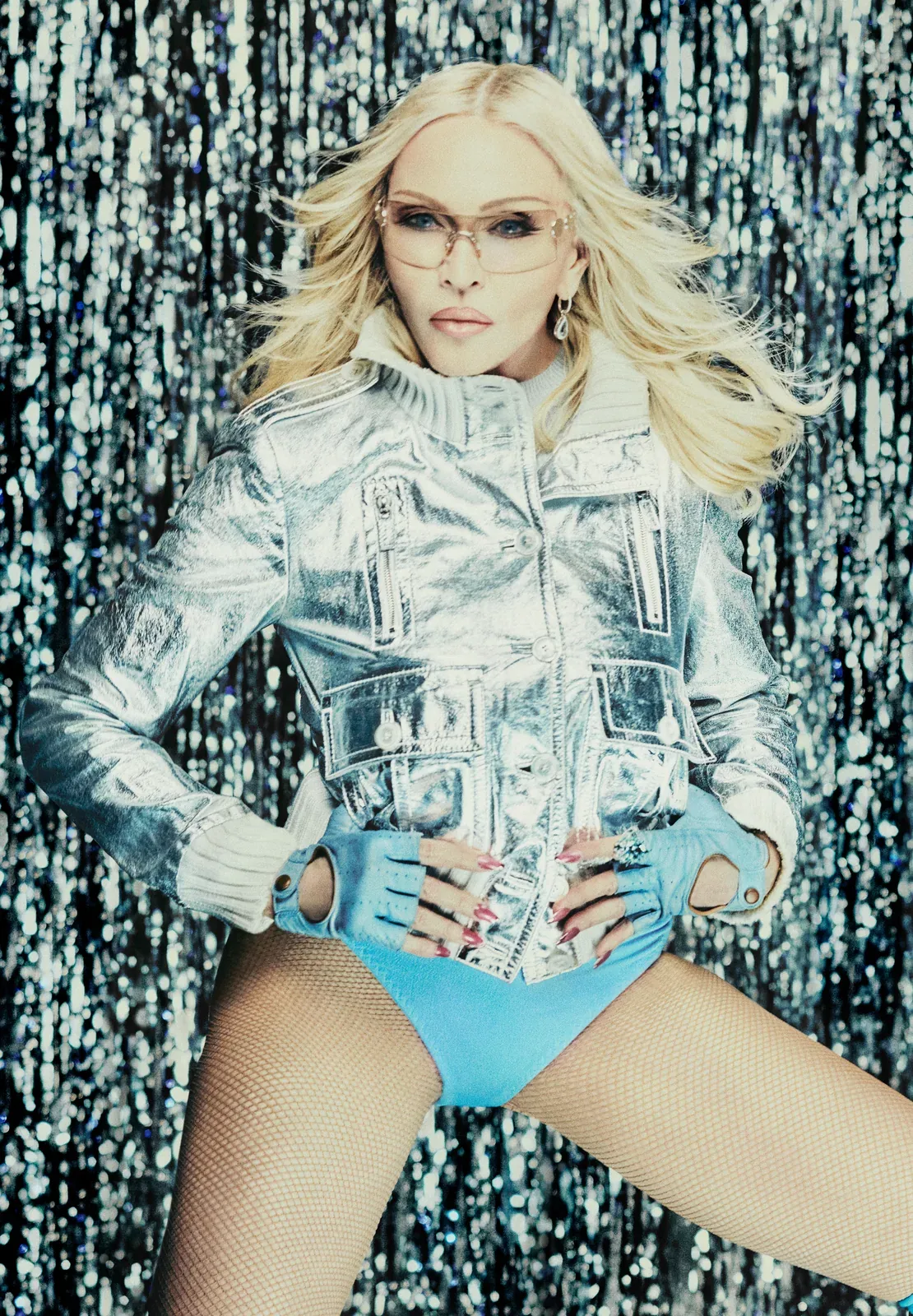
Just seven months ago, we were celebrating the 20th anniversary of Confessions on a Dance Floor, one of Madonna’s finest albums. It was a celebration with a message: even then, we knew the Queen of Pop intended to revisit the energy of this iconic record with a sequel. Fast forward to July 2026 and here we are, in a world that only seems to grow more difficult, with the megastar finally delivering on that promise: Confessions II. Her fifteenth studio album is a landmark event in pop music, and one that has generated enormous excitement among both fans and critics. But is it any good?
‘Great’ is not a word to be used lightly. Whether you like her or not, it’s almost impossible to understand the history of pop music without acknowledging the woman who has inspired almost every major pop star of the past four decades and created some of the most recognisable songs in modern popular culture. Reviewing a Madonna album is no easy task. It demands honesty, however much one might want her triumphant return to succeed, and however much one might fear for one’s life should her most devoted fans happen to read this. Her vast discography and remarkable touring career are full of references, anecdotes and defining moments, and they provide much of the inspiration for Confessions II. Sonically, this is a solid album: it sounds polished, confident and occasionally inspired. But after one listen, there’s this familiar feeling: it seems we have heard this before (no pun intended).
“Thanks for coming. Sometimes I like to hide in the shadows. Create a new persona. A different identity. I can be whoever I wanna be. Create a new persona,” whispers the artist in the opener I Feel So Free through a heavily filtered voice, establishing the album’s central theme from the outset: reinvention. Yet across the twelve tracks that follow, there is no new persona to be found. Instead, Madonna delivers an album in which the new material feels like a collage of past triumphs, familiar themes and recycled ideas. Confessions II is polished and impeccably produced, but it rarely ventures into new territory. Apart from a handful of tracks, almost everything here recalls earlier moments in her catalogue, borrowing from the sonic palette of Vogue, Human Nature, Skin or even Rain, among many others.
It’s difficult not to think about the political function of nostalgia today: the comforting belief that everything was better in the past, that every idea worth having already exists. But it was even harder to imagine Madonna jumping on this bandwagon so easily. Reinvention has always been the defining principle of her career. Even across her last four, admittedly uneven, albums, there were flashes of genuine curiosity and experimentation. On Hard Candy, her embrace of contemporary R&B on tracks such as 4 Minutes and Devil Wouldn’t Recognize You pointed towards a different sonic direction. On MDNA, songs like I’m Addicted and Love Spent refreshed her dance sound while exploring ideas that still felt distinctive. Even Bitch I’m Madonna was the kind of gloriously absurd pop statement that only someone with her career, confidence and cultural weight could have pulled off.
Confessions II, by contrast, feels like the product of immense effort directed towards recreating things we already know. There are certainly highlights, sure. Like its predecessor, the album unfolds as one continuous DJ set, with songs flowing seamlessly into one another. The transitions are magnificent, and the pacing rarely fails. Madonna reunites with longtime collaborator Stuart Price, who produces the record alongside contributions from Andrew Watt and Cirkut. Together, they update the electro-disco foundations of the original Confessions with touches of the progressive house revival currently shaping mainstream dance music. Technically, it’s an impressive achievement. Artistically, however, the album struggles to justify why it needed to exist in the first place.
Love Sensations is easily the album’s standout. Effortless and euphoric, it offers a fresh take on Madonna’s fascination with French house without ever feeling derivative. Bring Your Love, featuring Sabrina Carpenter, explores the tension between vulnerability and optimism, presenting love as the only meaningful defence against the world’s chaos. Whether that sentiment comes across as naïve or quietly subversive is left deliberately ambiguous. Everything is a densely layered pop song anchored by one of the album’s most affecting lyrical ideas: a meditation on social media and self-worth. “Why do you always make me feel so bad about myself? Why do you always make me want to be someone else?” It’s one of the rare moments where the album speaks directly to the present rather than looking backwards. Even Bizarre, with its catchy chorus, eventually wins you over. Its chord progression unmistakably echoes Get Together and mirrors the synths in Sweet Dreams (Are Made of These) by Eurythmics, but once you discover that the song revisits her turbulent relationship with Sean Penn, its emotional weight becomes much clearer. Fragile, meanwhile, feels like a sincere tribute to her late brother and offers one of the record’s few genuinely moving moments.
School hints at a more adventurous sonic direction, perhaps closer to the Madonna many imagined she would be making in 2026. Unfortunately, its lyrics undermine almost everything the production achieves: “Once I had a masterpiece that burned in a fire / Maybe you’re Picasso but you’re also a liar.” It's Kardashian-level cringe. This points to one of the album’s biggest weaknesses. While the original Confessions paired simple lyrics with sharp pop instincts, Confessions II often gives the impression that Madonna has run out of fresh ideas, or at least of compelling ways to express them. Danceteria, the album’s focus track, is perhaps its biggest disappointment. Musically, it feels like a pale imitation of Vogue. Conceptually, it’s a touching tribute to the legendary New York nightclub where Madonna’s career first began, and many of its visual and lyrical references recall the opening act of The Celebration Tour. But nostalgia alone isn’t enough to sustain the song, particularly when it’s weighed down by lines such as “Wait backstage, get into my car / Drive to the disco, have a drink at the bar.” And when this is the main argument she’s had for years to justify her legacy (Bitch, I’m Madonna!), it feels frustrating.
My Sins Are My Saviours, featuring Stromae, starts from an intriguing premise but gradually descends into self-parody. “I've been a Belle de Jour. Can you blame me? Can you blame me? I've read Marquis de Sade. Do you know it? Did you like it?” The production cleverly revisits the dark sensuality of Erotica, but the lyrics repeatedly undercut its sophistication. The same problem affects Love Without Words. Sonically, it’s sleek and elegant, but lines such as “Baby, free yourself and love is on the other side / We only got all night, so baby, party all night long” aim for emotional liberation and instead land somewhere between cliché and self-help. The frustrating part is that none of it appears to be ironic. Read My Lips recalls songs like Isaac and Beautiful Killer, comfortably joining the long tradition of Madonna songs in which she sings snippets of Spanish. “Corazón, me diste duro, but I will survive.” It’s playful enough, but once again the sense of déjà vu is impossible to ignore.
The album’s most honest moment is The Test, a duet with her daughter Lola. Everything about it feels effortless and sincere. For once, Madonna sounds spontaneous, revealing a side of her voice that we rarely get to hear. Even the production resists the temptation to overwork itself. In The Test, she sings from a place of experience, vulnerability and quiet wisdom, and the result is one of the few moments on the album that feels genuinely present rather than haunted by her past. The same goes for L.E.S Girl. Drawing on the acoustic textures of American Life, this lo-fi track offers something refreshingly different. It’s intimate, understated and wonderfully candid, proving that Madonna is still at her most compelling when she allows herself to step outside the mythology she’s spent decades constructing.
In the age of polarisation, it’s important to be precise about certain things. Madonna is a pioneer, and few artists have reshaped pop music as radically or as often as she has. The sexist scrutiny she continues to face is both undeniable and unacceptable. But defending her against that prejudice should not prevent us from acknowledging that there is little, almost none, about Confessions II that feels genuinely new. Rather than pushing her sound forward, the album revisits a formula we already know, extending the narrative of her fortieth-anniversary tour instead of opening a new chapter.
Madonna is one of the few artists who can genuinely afford to take musical risks. At this stage in her career, there’s no competition; only herself and the extraordinary catalogue she’s spent four decades building. That’s precisely why Confessions II feels like such a missed opportunity. Its sonic palette isn’t especially ambitious; for the most part, it settles for polished, contemporary EDM. And for another artist this might be considered a great record; if we are honest and pay attention, this isn’t on a par with historic songs such as Like a Virgin, Frozen, Like a Prayer, Material Girl and so many more. This is why we expect so much more from her. In many ways, Confessions II is Madonna’s strongest album since Hard Candy. Yet it also feels strangely hollow. This is territory she’s explored countless times before, and, unlike Confessions on a Dance Floor, there’s no Hung Up, Sorry, Get Together or even Like It or Not: no defining moment that justifies returning to this world in the first place.
Dancefloors haven’t disappeared, but they no longer occupy the same place in popular culture. Many have fallen victim to gentrification, while younger generations increasingly seek community elsewhere. New sounds continue to emerge, but they’re often found at the margins of club culture rather than at the centre. On Danceteria, Madonna expresses how “everybody here is a work of art”. Yet in 2026, Keith Haring is as likely to appear on a T-shirt as in a gallery, and Picasso is cancelled because he treated women very badly. Art hasn’t stopped evolving, but the way we relate to it has changed dramatically.
In 2000, Madonna released Music, a song that still feels more futuristic than anything on Confessions II. In its chorus, she imagined pop as a place where “the bourgeoisie and the rebel” could meet on equal terms. Twenty-six years later, that idea feels almost utopian. And in the same way art nowadays relates to the latter, Madonna increasingly belongs to the former and its detachment from the real world.