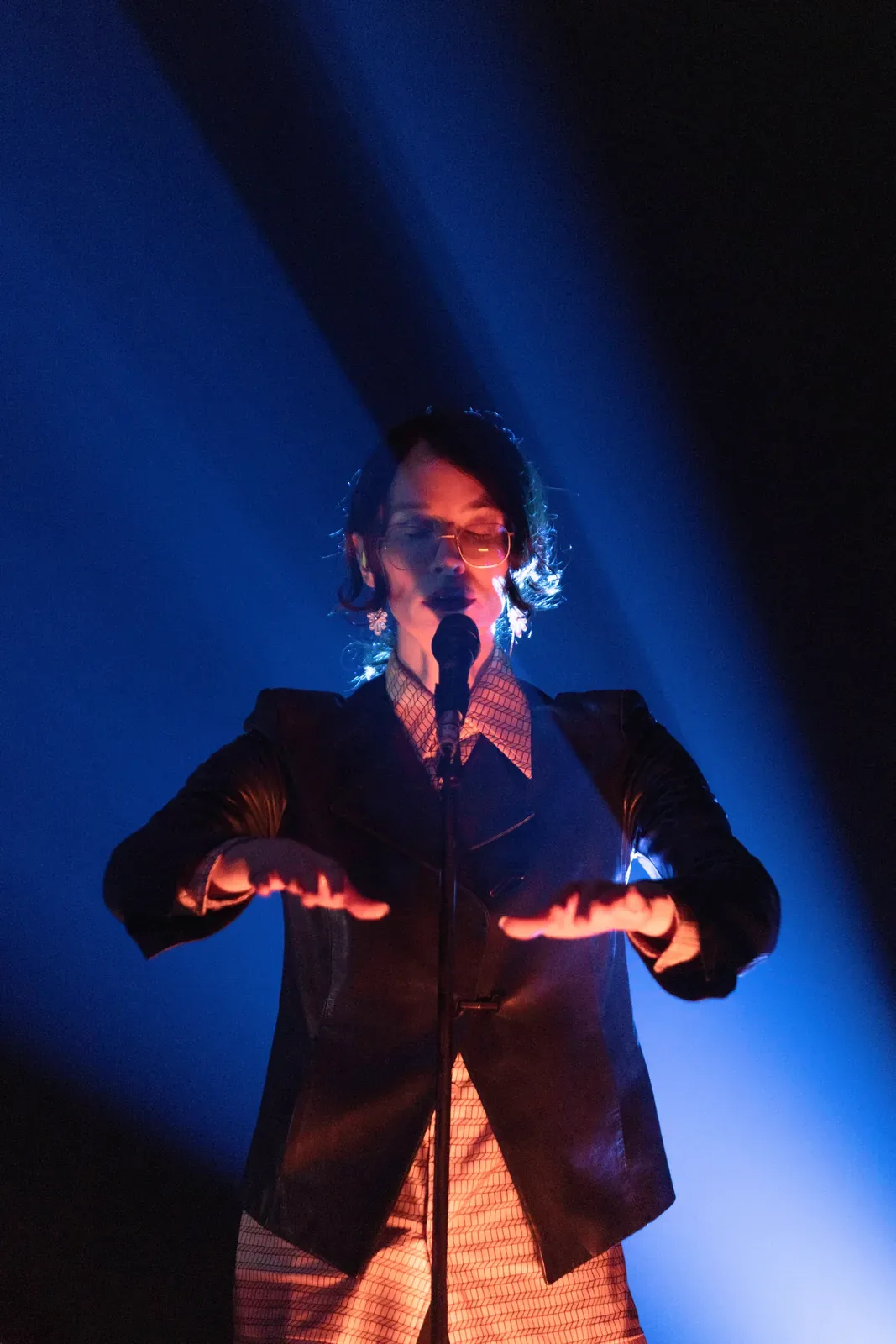
When you speak with someone so dedicated to their craft, passion washes over their face as their mind jumps ten steps ahead, as if they’ve seen something others haven’t yet woken up to. Lyra Pramuk embodies this devotion in her new album, Hymnal, a folky, electronic reimagination of classical music informed by past knowledge we as a society have chosen to forget.
Whether through her use of string instruments made to sound like synthesisers or her angelic voice that crescendos and softens like the whispers of a gentle breeze before it intensifies in a storm, Pramuk’s dedication to music that emulates our natural surroundings marks her sound as both unique and ubiquitous. We find her inspirations all around just by looking out the window. We spoke with Pramuk ahead of her participation in the Electrónica en Abril festival at La Casa Encendida in Madrid, where she performed and hosted a listening session in which attendees were invited to reflect on the way they listen to and talk about music. In our conversation, she tells us about her decolonial motivations, love for active listening, and the sanctity of music and creativity..
You’ve mentioned how important nature is to you as a source of inspiration. Growing up in rural Pennsylvania, do you remember your first experience being moved by the natural world?
Nature was all around me growing up; it was just everything and everywhere. When I think back to my childhood, I remember fireflies in summer, the sounds of cicadas, big snowstorms, the lush forest behind my family’s house, my grandfather’s farm animals, highways lined with wildflowers, sunlight shining through the trees. Nature always felt like my home.
The divide of rural and urban life is undeniable. What does connection to your environment look like for you in practice in a big city like Berlin?
The city has the tendency to overwhelm my mind. I have trouble thinking and feeling in cities; there’s just too much stimulation. I need to go to more rural places, islands and forests in order to feel sane and connected to the universe again.
If humans are considered part of nature — despite our long history being disconnected from it through colonial-capitalist processes — how can we reconnect and become more in tune with our own natural energy? How does creativity fit into that?
I think it’s important to become critical of this Western idea of “technological innovation”, which can be great but is not a universal good. There are many goods or ways our society is designed that lead to further disconnection. The soul wants to pull back to the symphony of nature and the universe, and so we have to try to remove barriers and obstacles that get in the way of our feeling and sensing. This is also a matter of education. I do not see creativity as a neoliberal cultural good but as a fundamental quality of what it means to be a living organism. We are creative in our very nature.
You speak about lineage, ancestry, and history as important facets of your creative process and personal identity as a trans woman. Can you tell me a bit about the importance of historical legacy in your art and how it influences your own identity (or vice versa)?
Trans people are a group that have been targeted for millennia in patriarchal societies, with the erasure increasing more rapidly in the last couple hundred years. I stand in solidarity with all oppressed and colonised peoples who have had their culture erased, to reinvent and reanimate the pre-colonial conditions of our existence. This involves historical research and present-tense reanimation of pre-colonial ideas and identity concepts. This is an act of reclaiming identities and modes of being that have been consciously erased.
Taking inspiration from people across mediums (like philosophers, authors, religions, etc.), you welcome a wide breadth of influences. Why is that diversity significant to you?
I believe that the sacred comes in many forms and that wisdom and enlightenment come through many different mediums. To reject a certain medium where beauty and divinity emerge would be to reject the source of divinity, so it’s important to remain open to divinity in all its numerous, and even unexpected, forms. This is a grounding principle of my faith and the interconnected Oneness of sacred energy that I feel is coursing through all things and beings in the universe.
You noted folk music as an inspiration, not as a genre but as a practice — bringing together the people and their creativity instead of seeing music as a commodity. How do you see those characteristics in the electronic music scene?
I would say that the history of electronic music is largely a folk music history, where that sense of communal solidarity and artistic development is at the very core. Politics, community strengthening, and the birthing of new material worlds that are united around liberation and equity for all people, especially the most marginalised and oppressed.
Does your music collective, pop.soil, contribute to that de-commodification?
With pop.soil we are starting a long-term slow farming project; that means it will take time, and we’re okay with that. It is our goal that pop.soil will contribute to a more beautiful, fair, and honest vision of music and its place in our society, while nurturing music’s aesthetic, formal, and spiritual development. The economic side is riddled with questions, but we plan to be engaged with the discovery and exploration of new infrastructures and models for music’s future.
Listening to Hymnal, it feels like the development process of the album was broken up and reconfigured in a non-linear collage — almost like a constellation of all the aspects of making an album translated into this divine experience. What was that process like?
Yeah, I see that! It’s like a bunch of different, little worlds that become interconnected and reconstellated. I followed a very intuitive process with this album to touch these different tableaux or vistas that point to the complexity of the universe and of human feeling in this time, using my heart to guide me in the process. It’s a lot of listening and trust and eventually a lot of sharing the process with friends to also listen and dialogue at the right moments. Ultimately, I listen to the music as the greatest teacher and try to understand what the music wants from me as its facilitator.
The album was recorded with the Sonar Quartett in Berlin, giving it a spiritual, meditative sound. What was it like working with a quartet? How do you think that practice contributes to the overall emotion of Hymnal?
They are just wonderful, extremely accomplished and fearless musicians who can play in so many different styles. I had such a good time working with them! It took some time to get the sound of the record and to build it together; it was not always an easy process, but the final result is beyond anything I could have imagined at the start. It was my goal to find a sound for the strings somewhere between traditional instruments and synthesisers and to record a quality of loops that would feel infinite but still human. The sound seeks to emulate the majesty of nature and this universe we live in, this continual source of energy and creativity from which we have emerged.
At Electrónica en Abril you will be hosting a group listening workshop. This isn’t your first time teaching or workshopping, though. What do you bring into that space? What do you hope people get out of it?
This is a special workshop focused on emotions and deep listening that I have been offering for about ten years. It is always a special meeting place for community building and focusing on music and its purpose. I always hope that people can bring themselves honestly and fully, without judgement, with the understanding that music is something that is a common good and belongs to all of us.
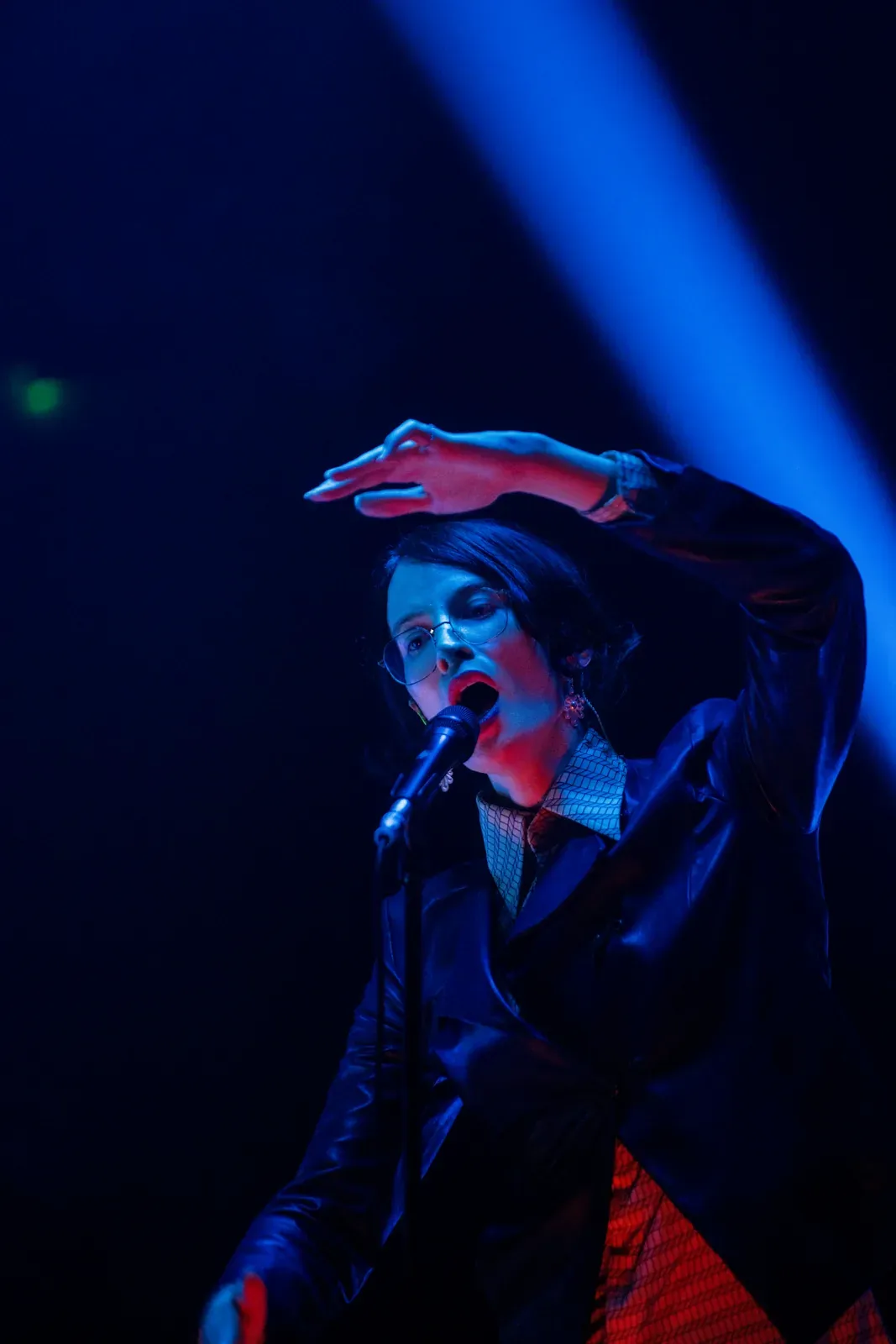
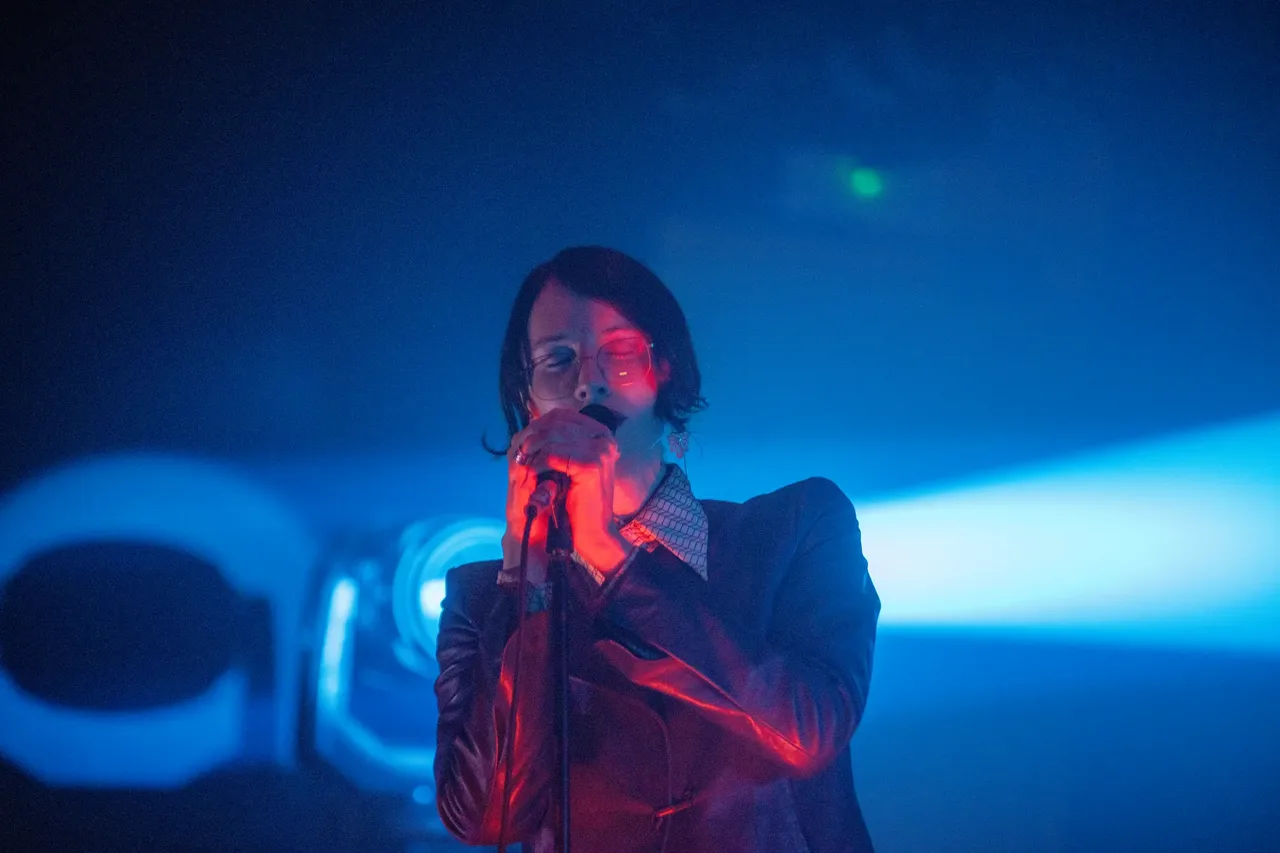
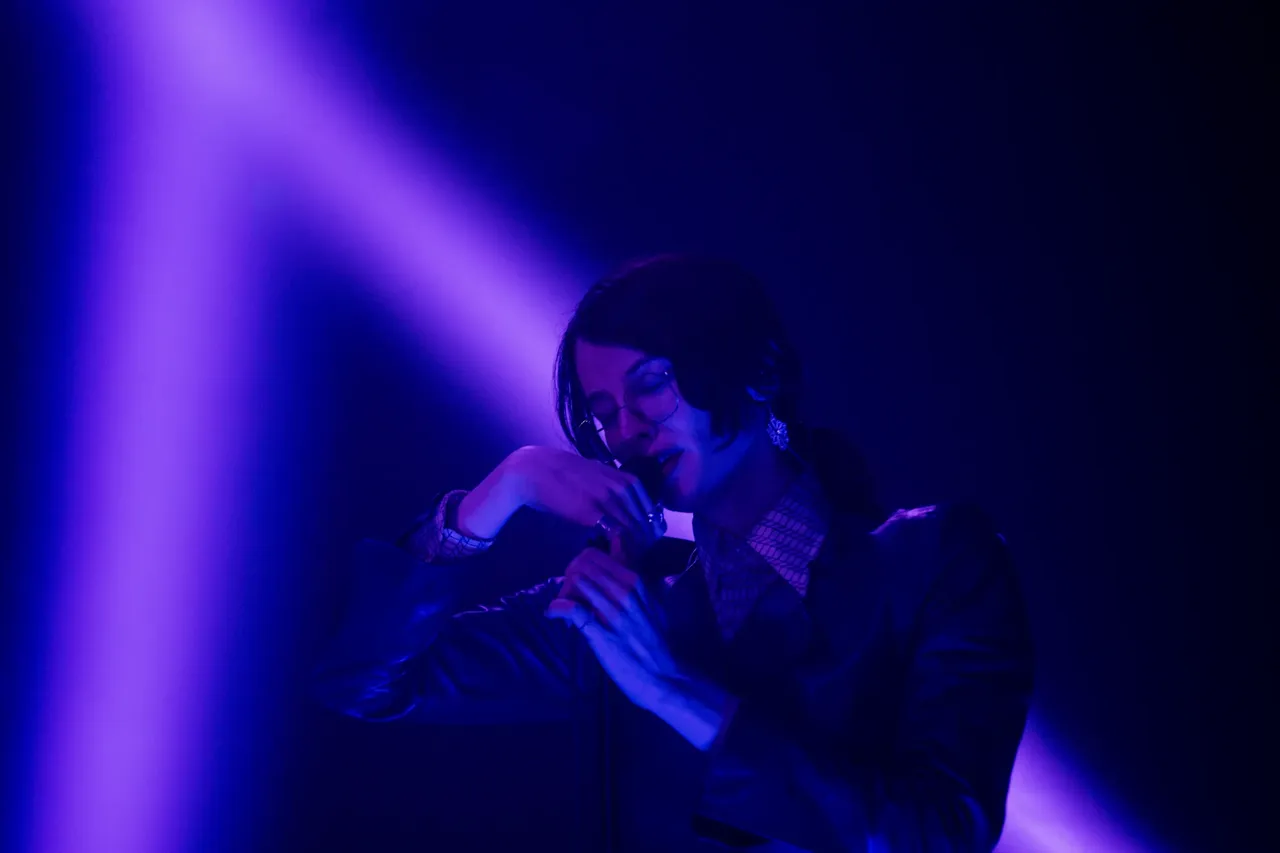
How do you think your listening practices come through in your live shows?
I try to cultivate a space where, as a performer, I am also allowed to listen and “be with” the sound. I feel this also gives the audience the cue that they can have that freedom as well. I do not want to feel a forced performativity or a forced relationship between myself and the audience. This is also a manifestation of “folk” as a political praxis — that we are all equals in the same room, even if I am the one leading the ritual in that moment.