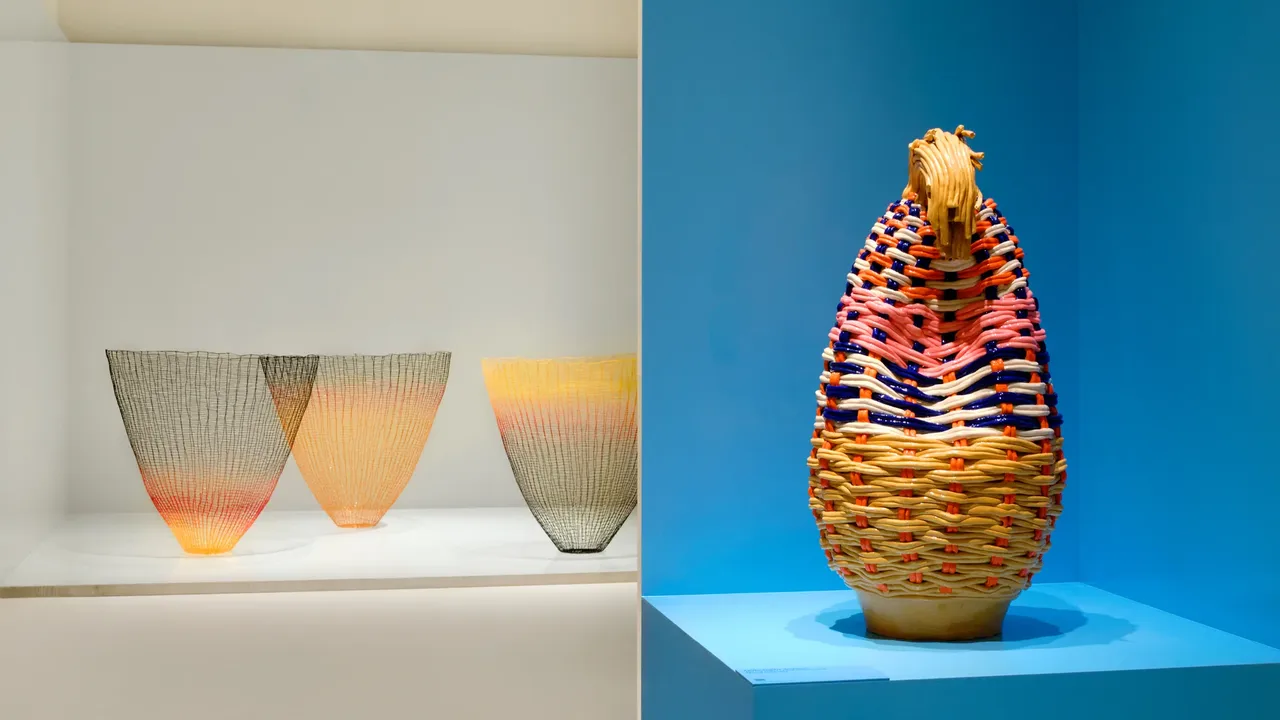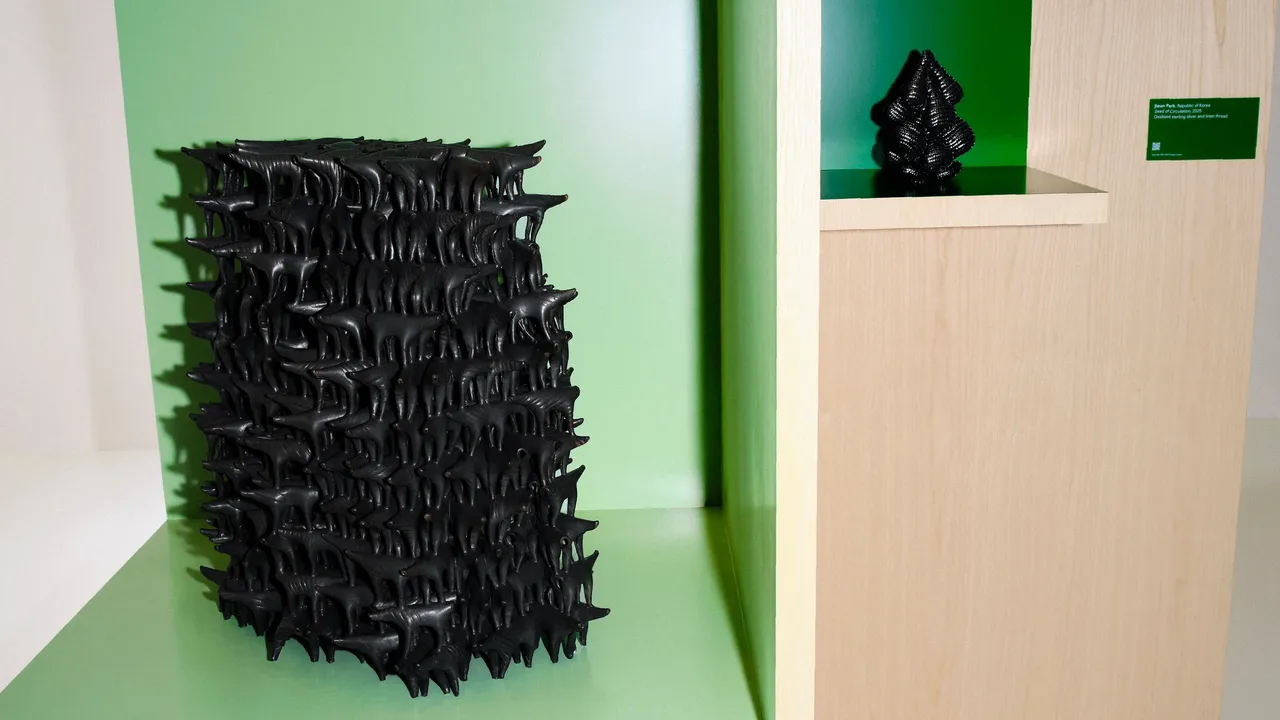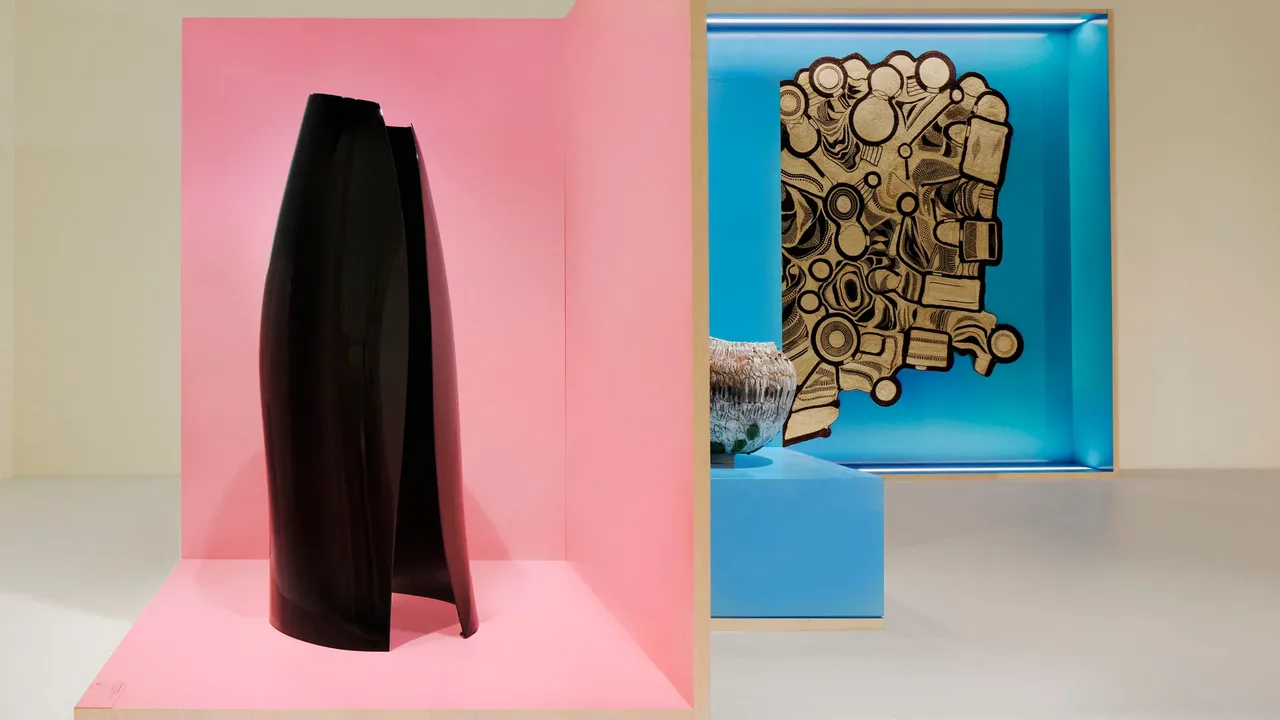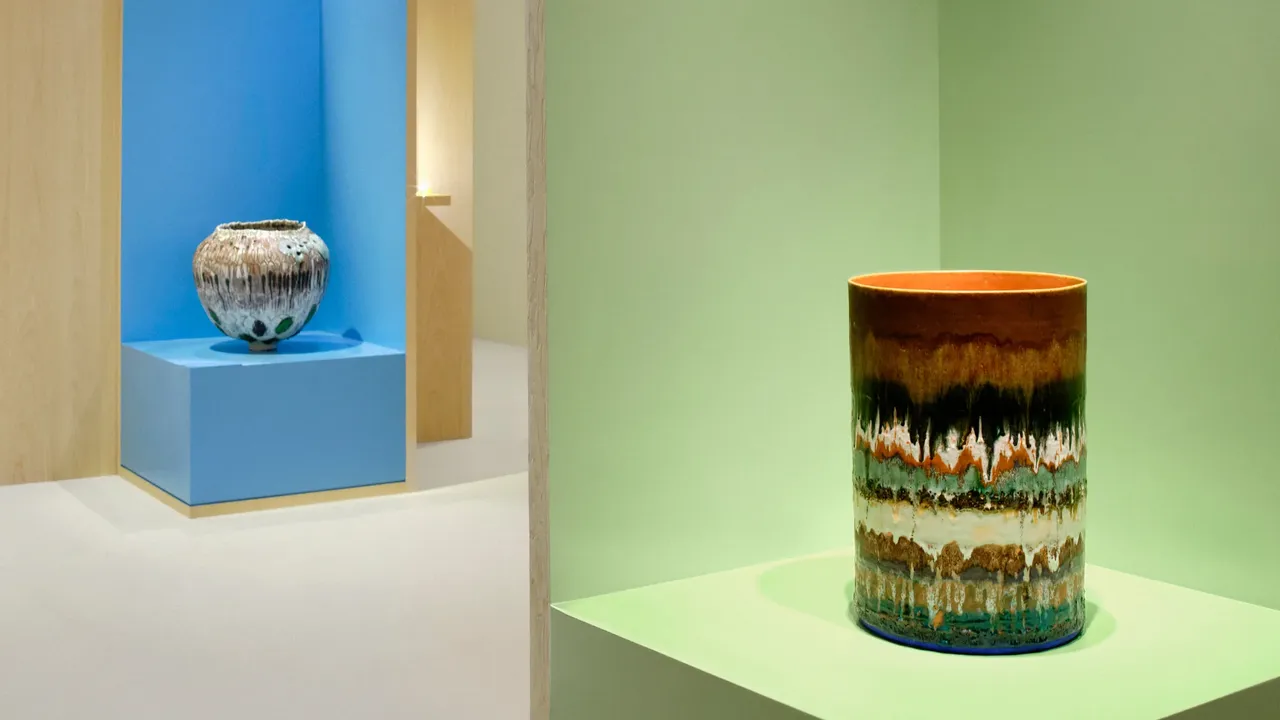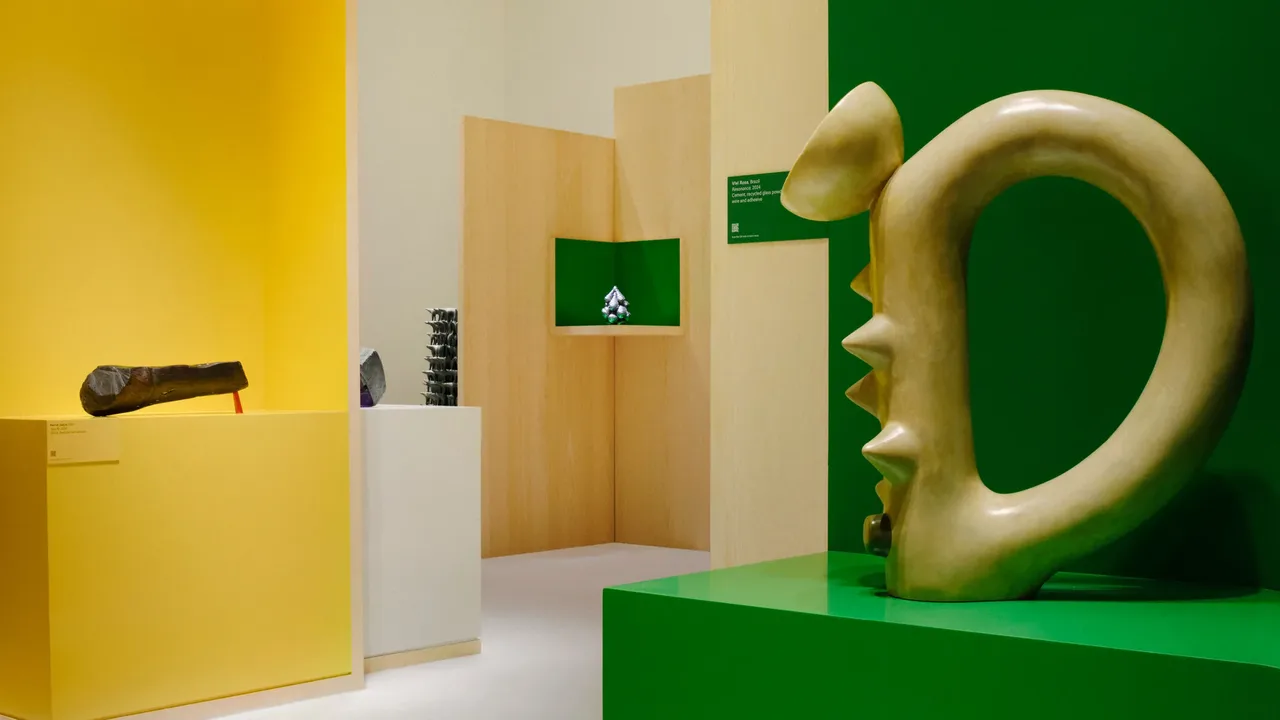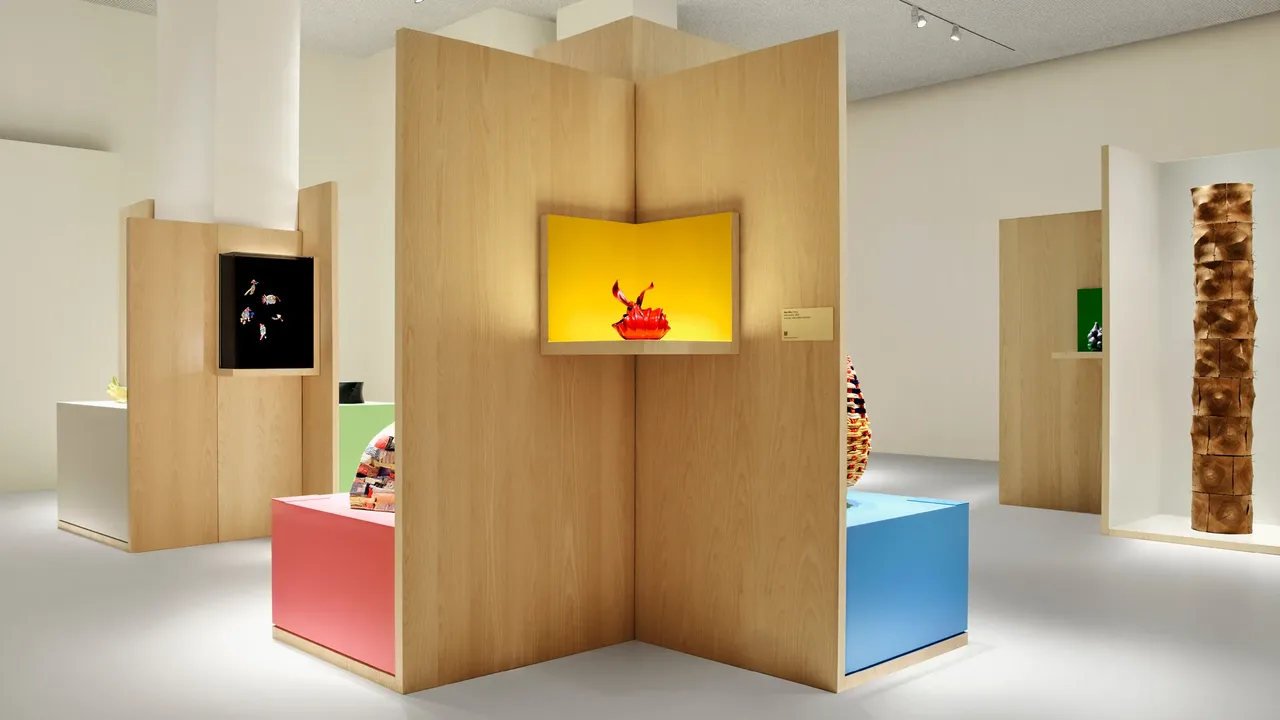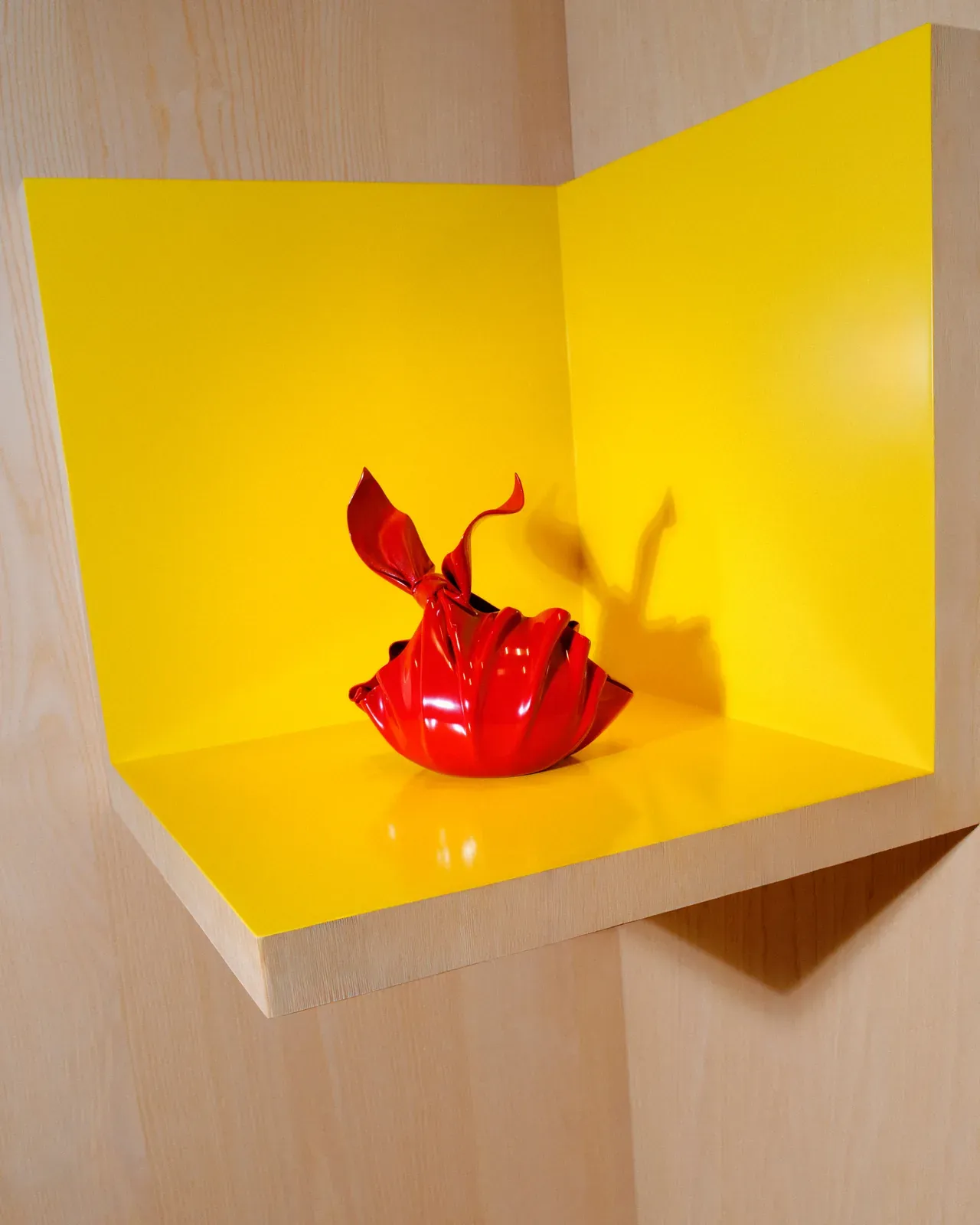
We have a winner! The deliberation process of the ninth edition of the Loewe Foundation Craft Prize has come to an end, naming Jongjin Park of South Korea its winner for his piece, Strata of Illusion. Made from porcelain-slip-coated paper, Park recalls the prize’s focus on “balance, instability and tension” and the delicate harmony between precision and organic creativity. On display at the National Gallery Singapore from 13 May to 14 June, the exhibition celebrates the thirty shortlisted works, each recognised for their “promise to set a new standard for the future.”
Strata of Illusion, selected by the jury unanimously, holds a place at the intersection of multiple mediums, breaking down the marked borders between approaches. The piece is classified as a ceramic work, yet it doesn’t look like your traditional clay. Instead, by dipping sheets of paper in tinted porcelain, firmly folding them and pressing the bundles in place before arranging them into an angular shape, it appears to be made from frayed fabric, papier-mâché, and cardboard. The patchwork look of each cluster evokes the sensation of being in an airplane, looking down at the farmland with defined borders of crop fields pressed up against each other. It seems to call to the natural yet mediated practice of Park’s work, using organic materials, yet configuring them in a technical, precise way.
The form of the piece itself elaborates on this idea, coming across as an armchair folding in on itself from years of use, placing one’s elbows in the same place each time until the structure of the chair moulds to the body. The shape comes from the firing process, as the paper disappears and the porcelain tries to stand up on its own. The tension between structural integrity and collapse is palpable, not in a destructive way but rather a natural melting away as the piece is shaped by the forces of fire and gravity in the kiln. Although, as his title suggests, this is all an illusion: the porcelain (after firing and an initial slump) will hold up, even if the initial exterior appears weak. It forces us to question what else is an illusion? How deep do these illusions go? What are the levels – or strata – of illusory forces?
Among the other contestants, two were selected as special mentions: the Frafra Tapestry from the Baba Tree Master Weavers and Álvaro Catalán de Ocón, and Collier by Graziano Visintin. Collier shows off the Italian jeweller’s skilled return to the Bronze Age technique, niello, a treatment of sulphur, copper, silver, and lead typically overlaid on engraved designs. Visintin uses this technique across the two necklaces in Collier, along with much of his other work. The gold, geometric shapes strung together, treated with niello, host a conversation between the old and new. At once, Visintin embraces the contemporary design of angular minimalism while paying homage to antiquity.
Frafra Tapestry is a woven representation of family compounds in Ghanaian villages made by local artisans in collaboration with the esteemed Spanish designer. Weaving elephant grass is a tradition among the Gurunsi of Northern Ghana that is slowly disappearing. Frafra Tapestry serves as a living reminder that these practices still exist and must be protected because they hold a pivotal position in how we aim to progress as a society.
This conversation between reflection and evolution is carried through the rest of the exhibition with many participants honouring their artistic and cultural predecessors, whether that be people, practices, or movements. We see it in the ceremonial offerings of Hervé Sabin’s Sèvi-Tè, the folkloric narrative of Yoruba women in Fadekemi Ogunsanya’s We Are Not Lying, Your Language is Not Enough, and in poring over the threads of Adlene Koh’s bound wheel, Endless.
The Loewe Craft Prize respects innovation that is grounded in knowledge, craftsmanship, and experimentation. Each selected piece has a story and motivation behind it, both on display until 14 June.