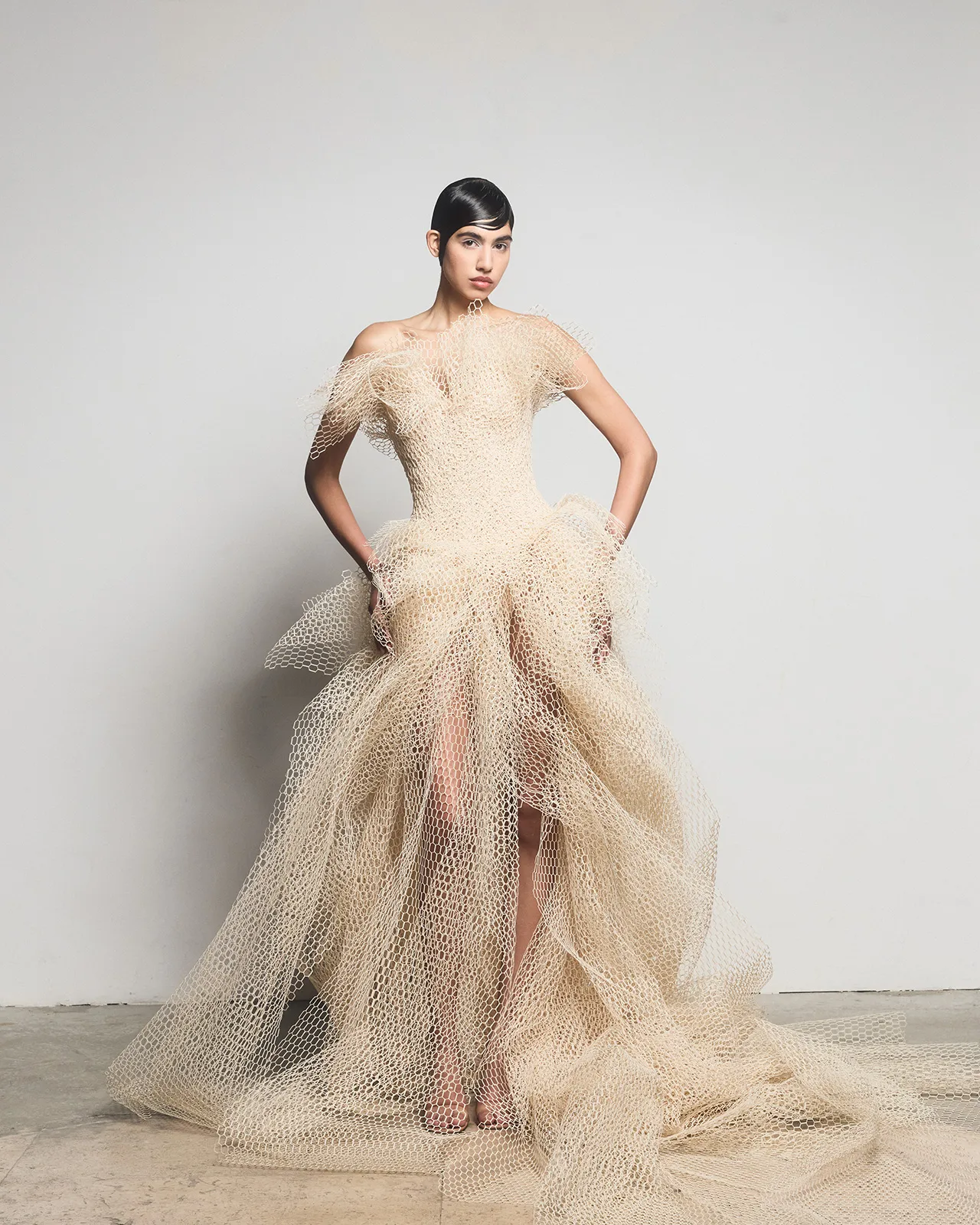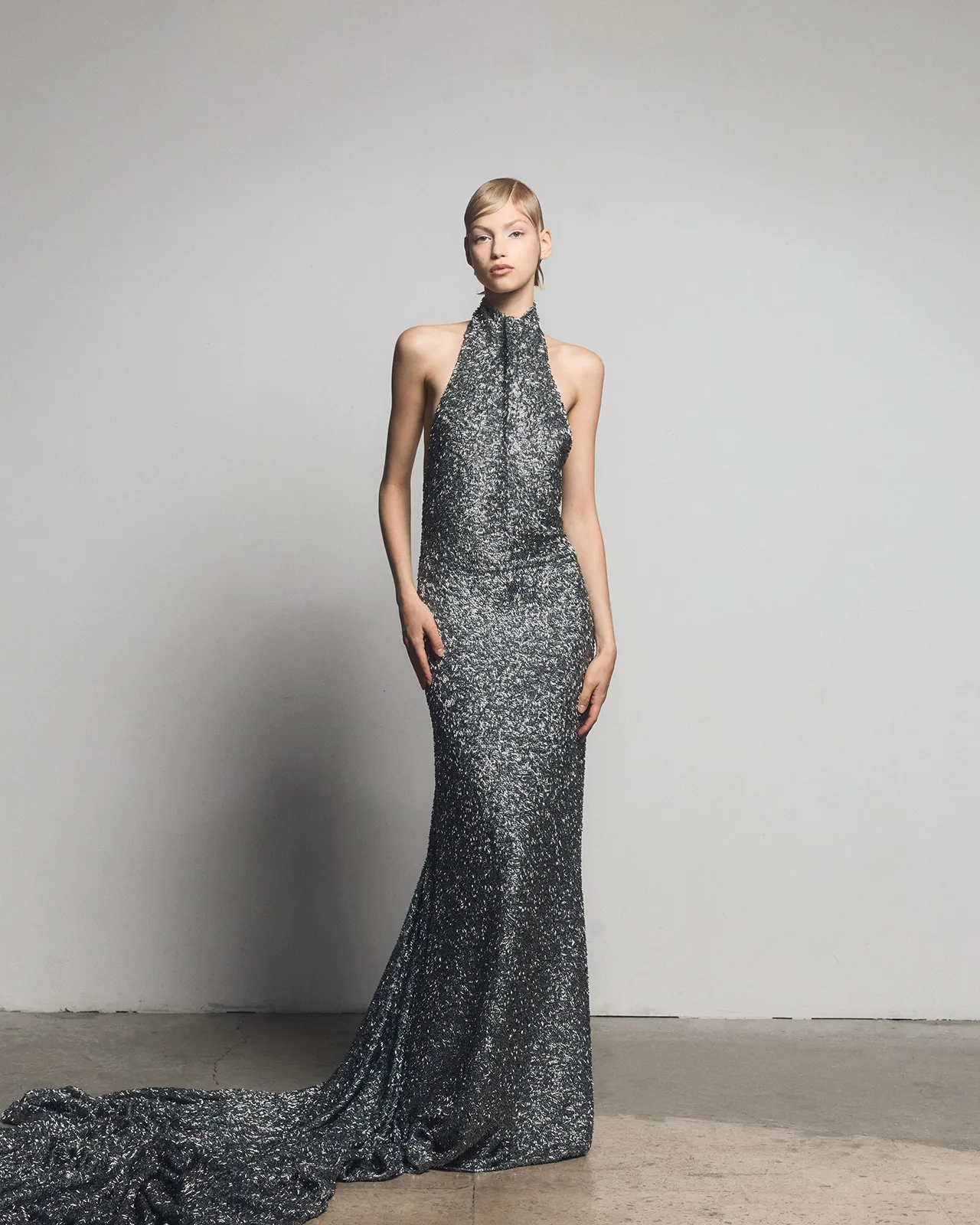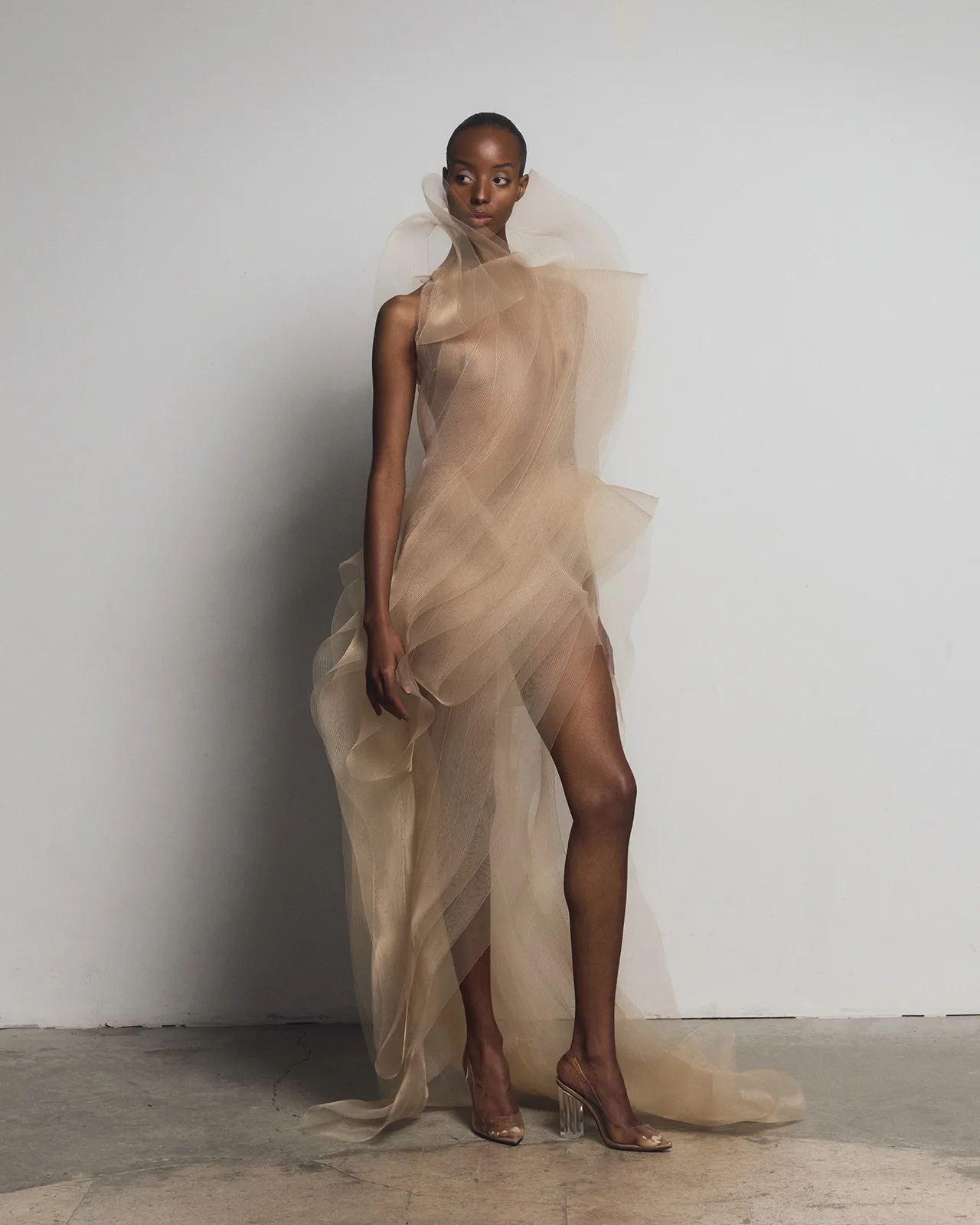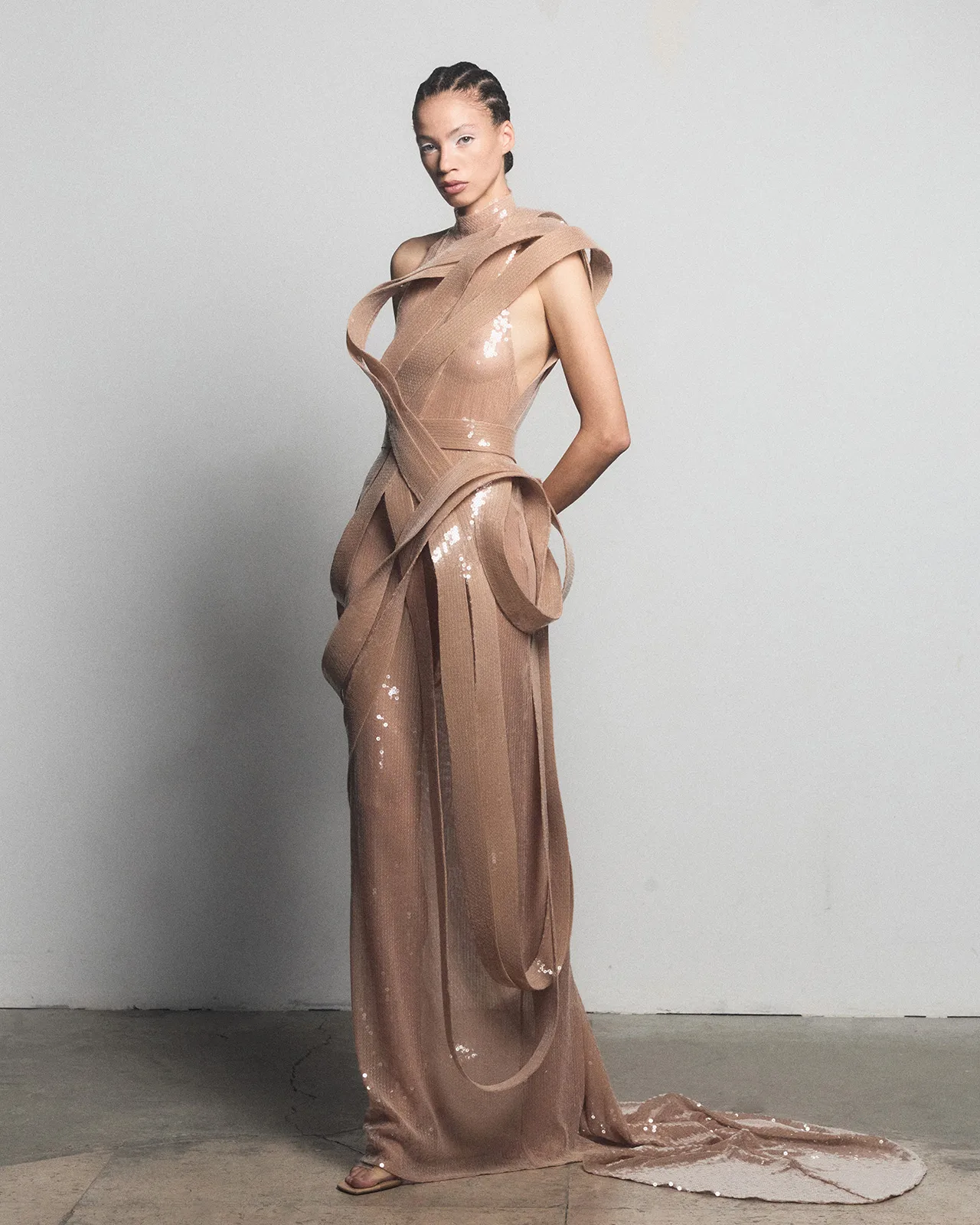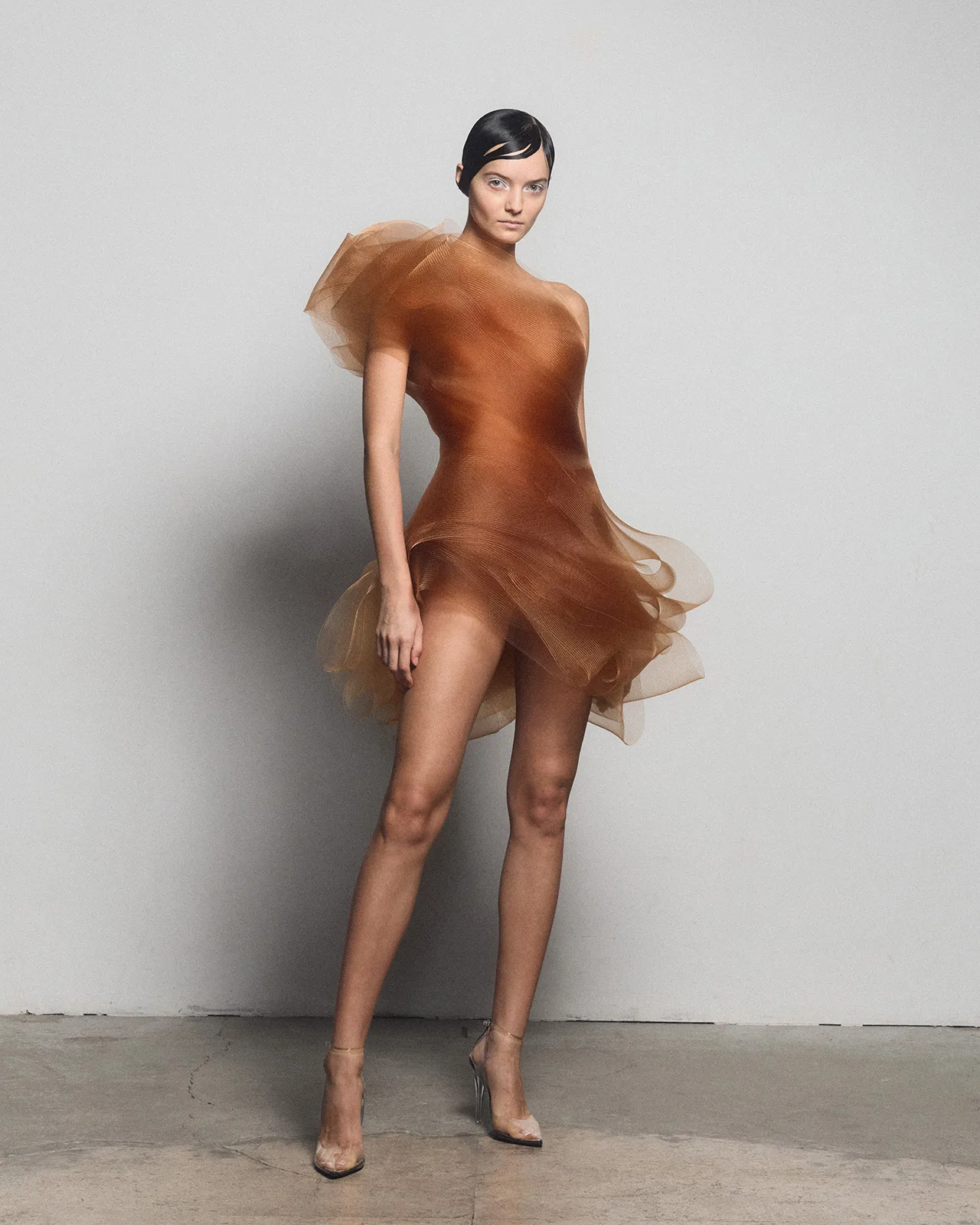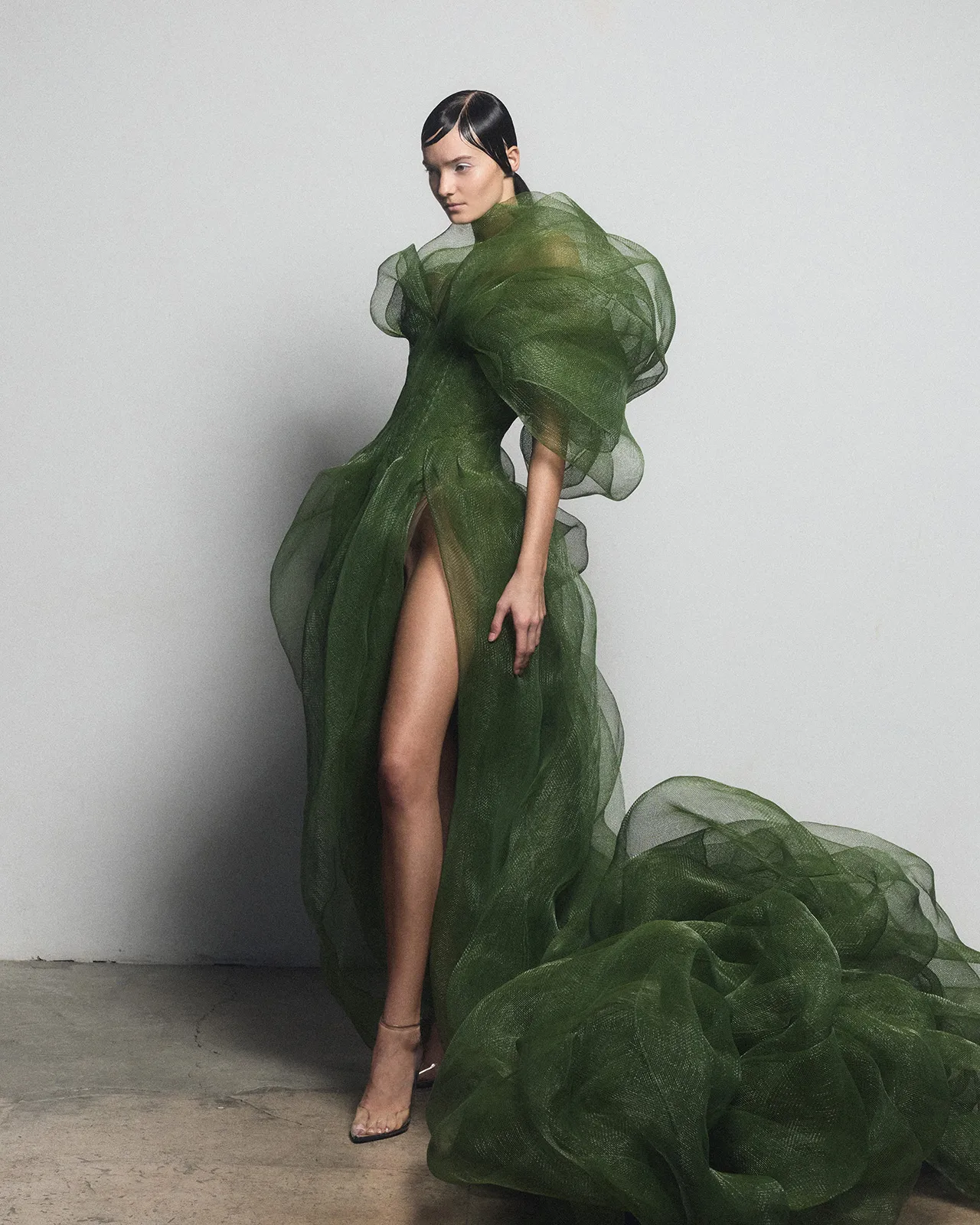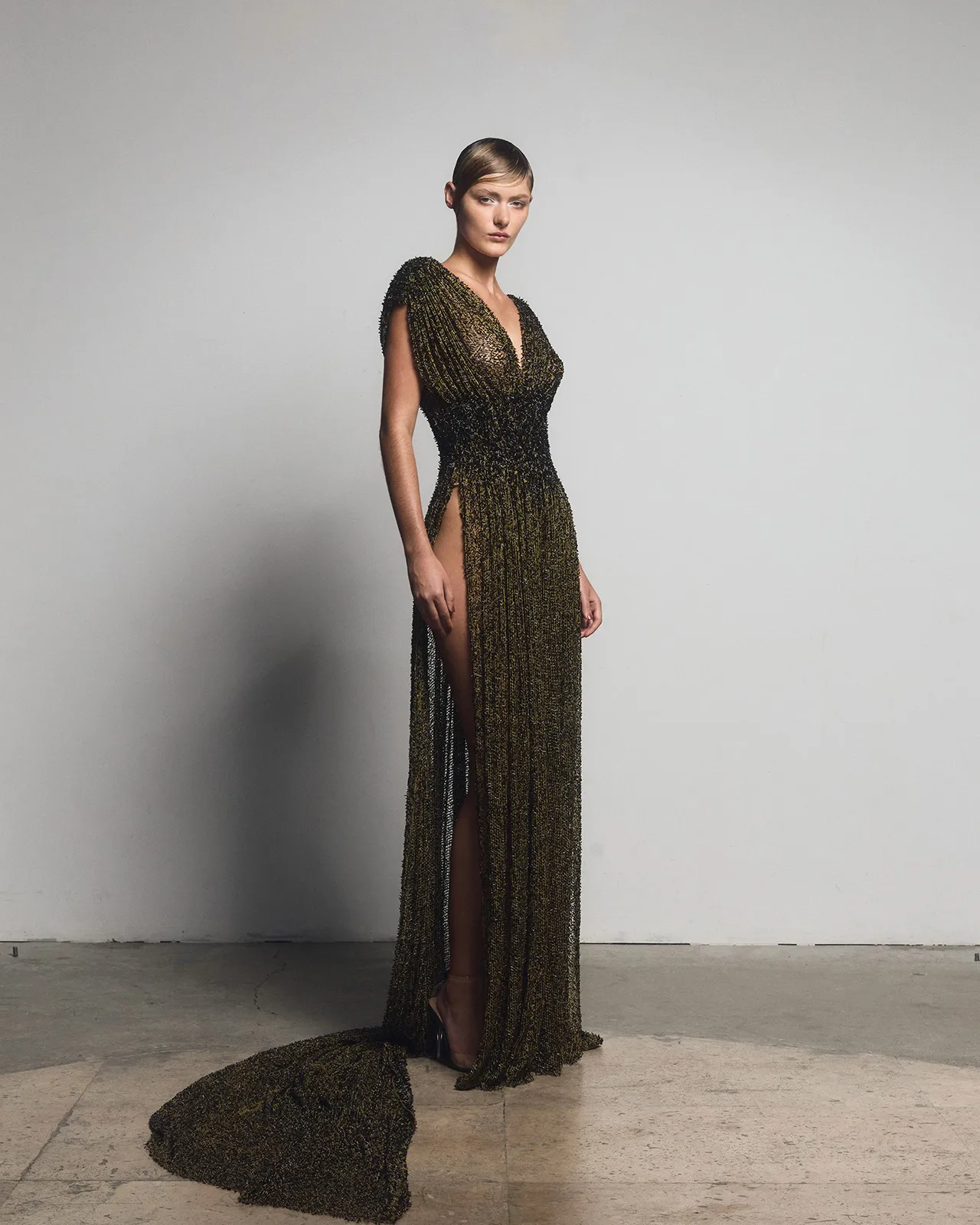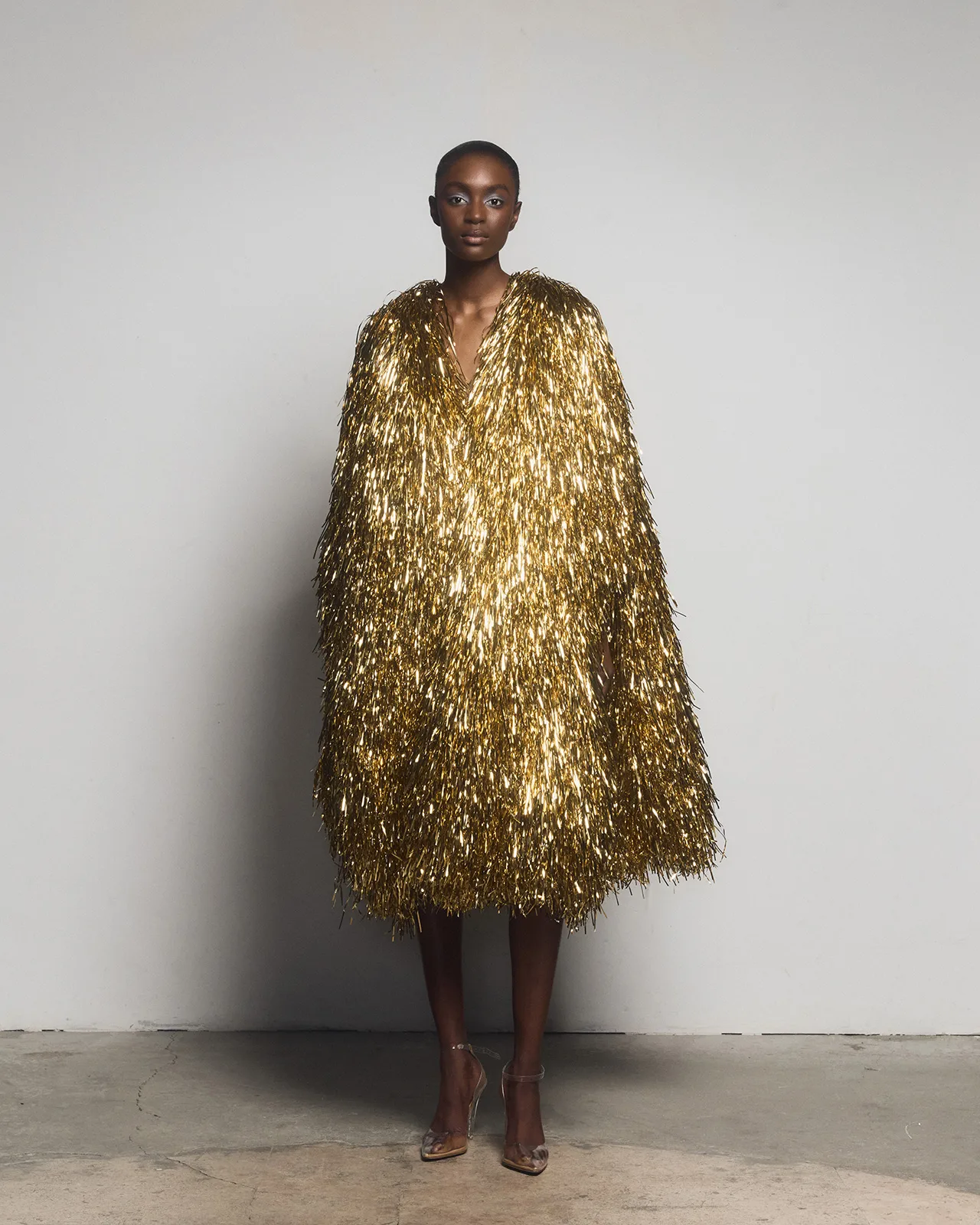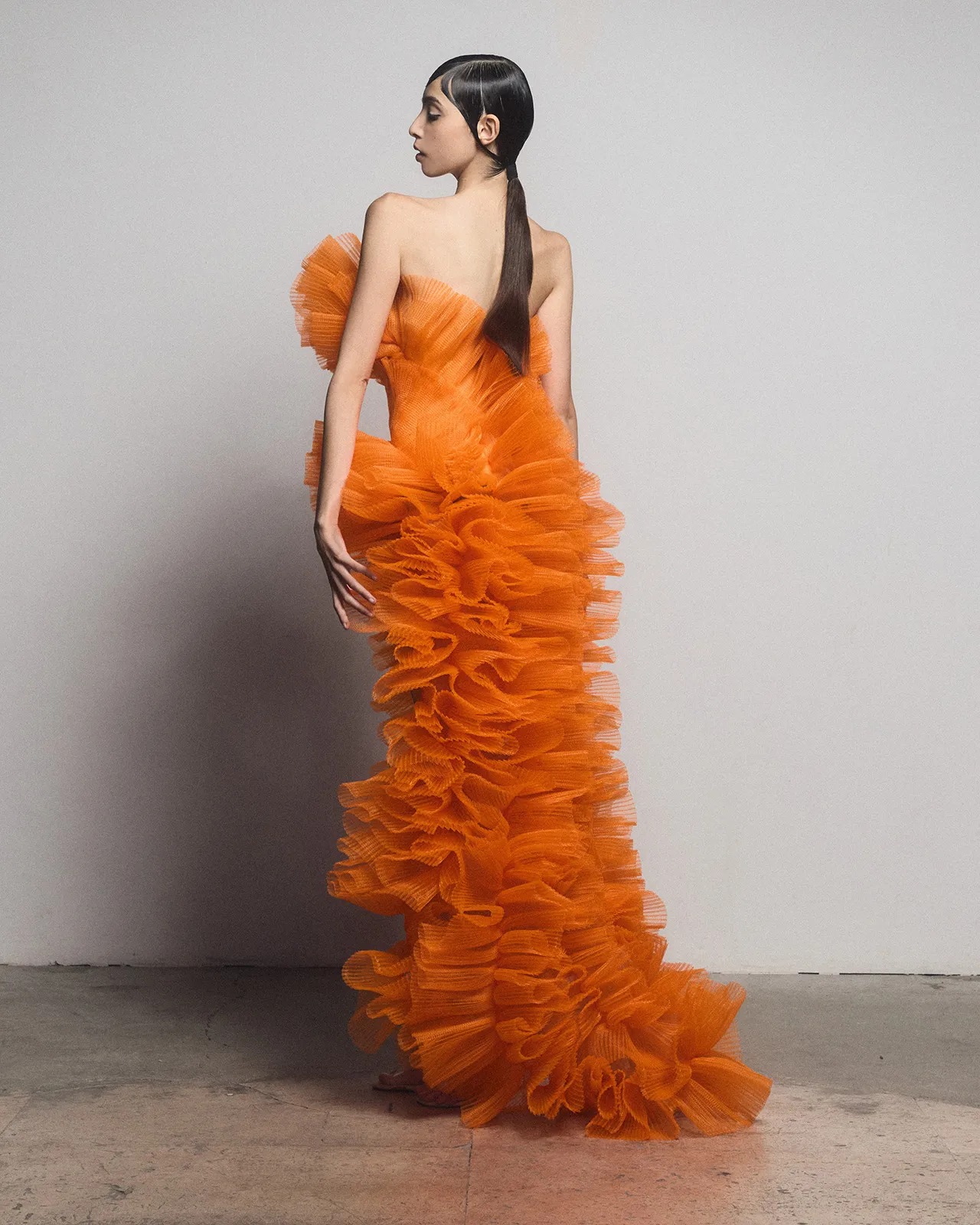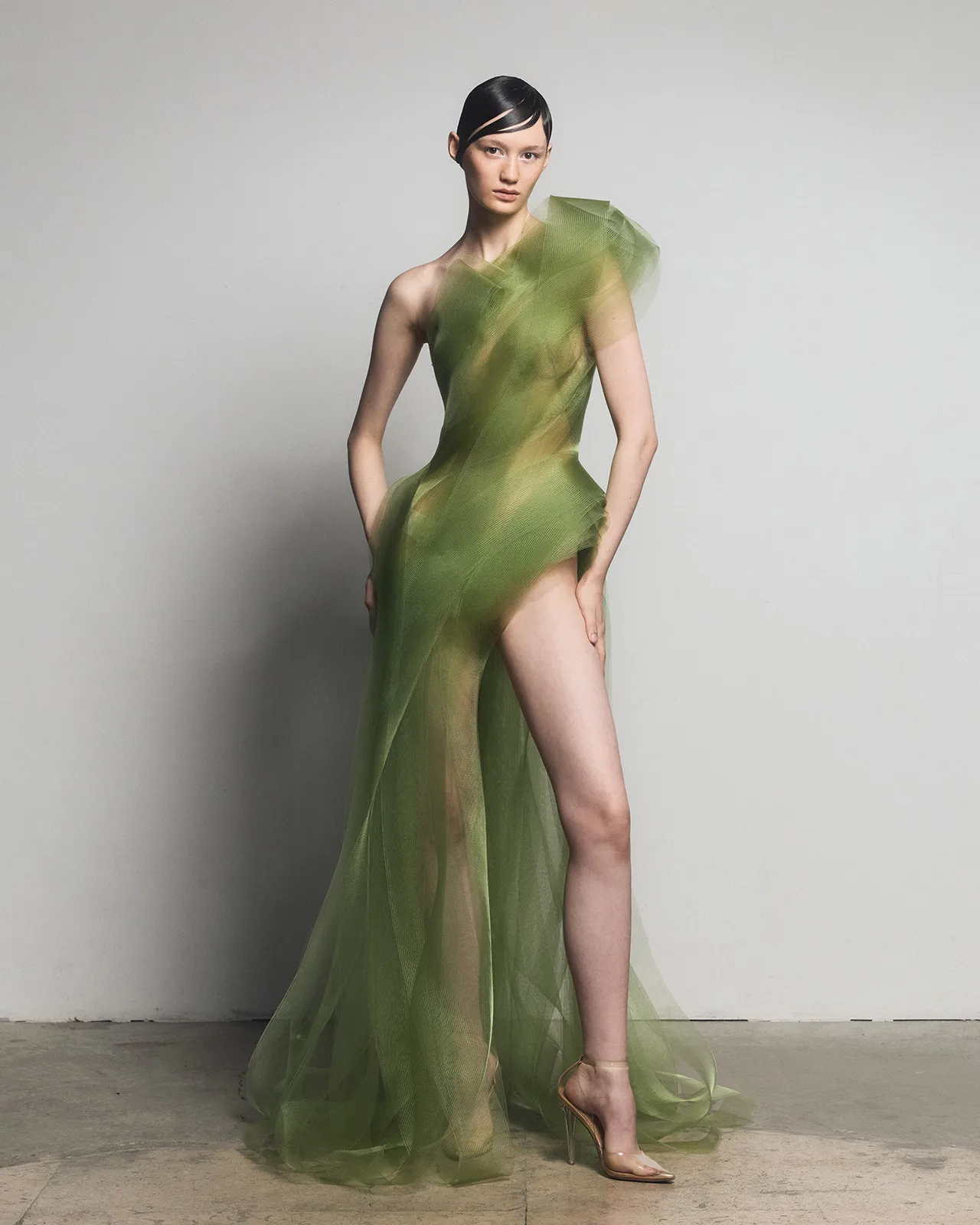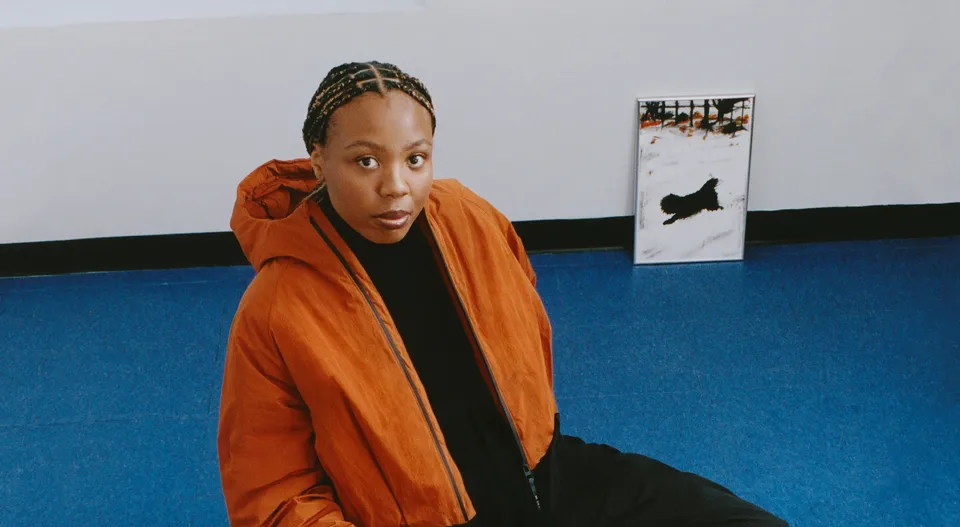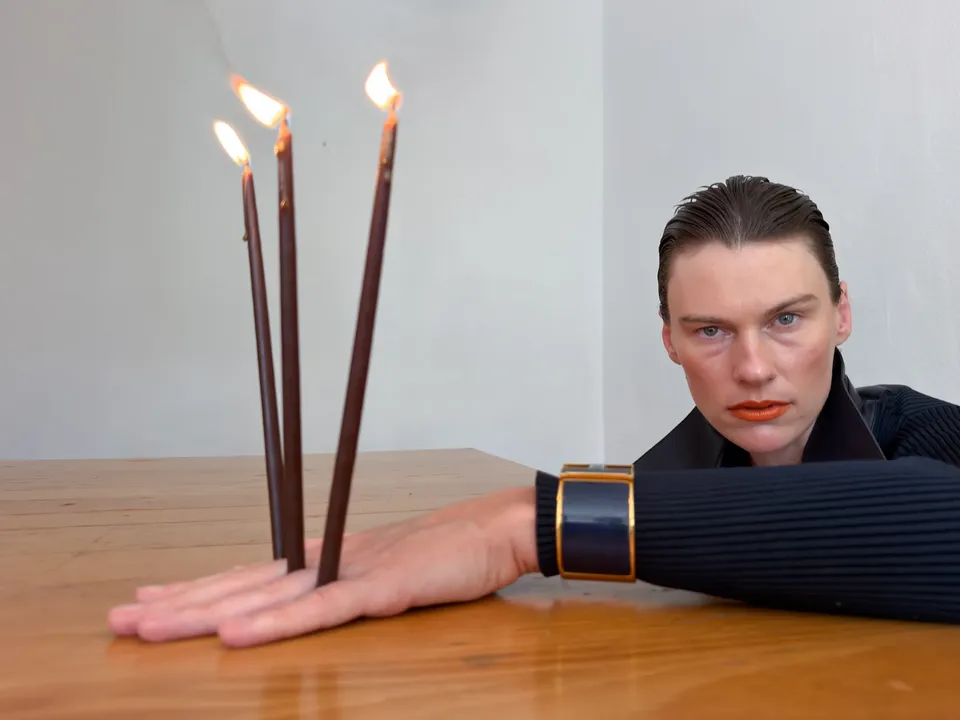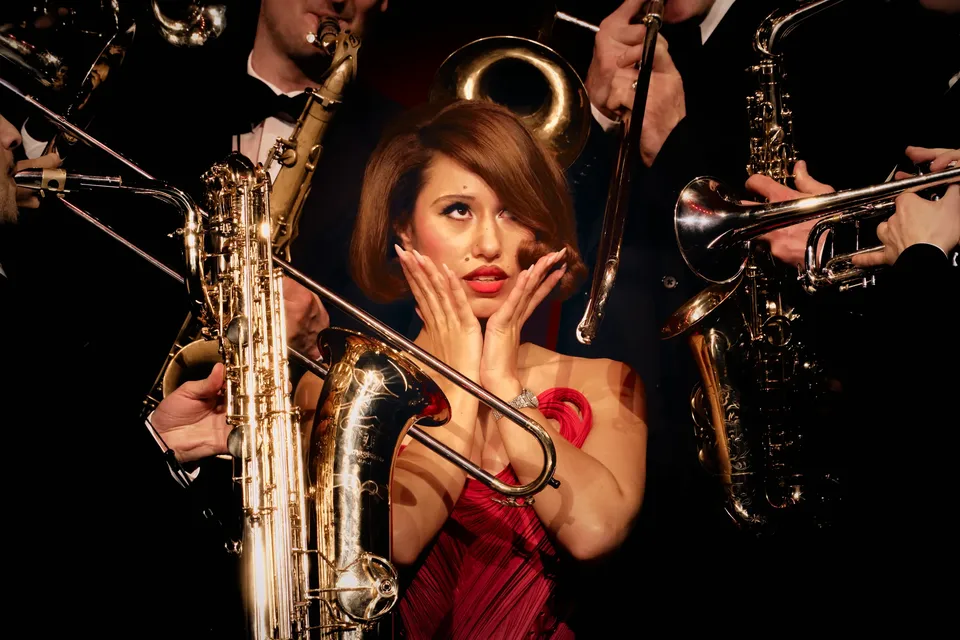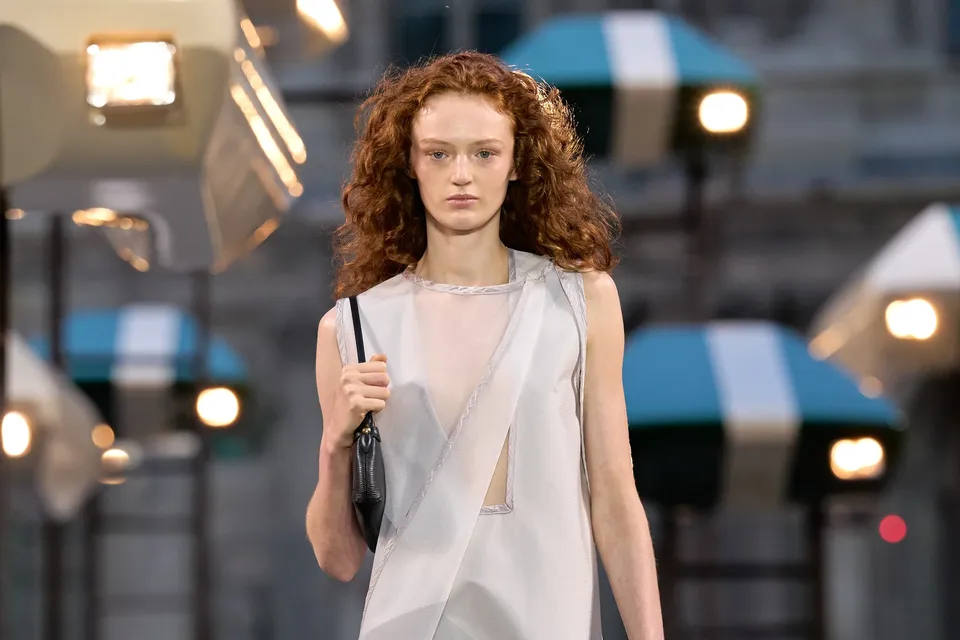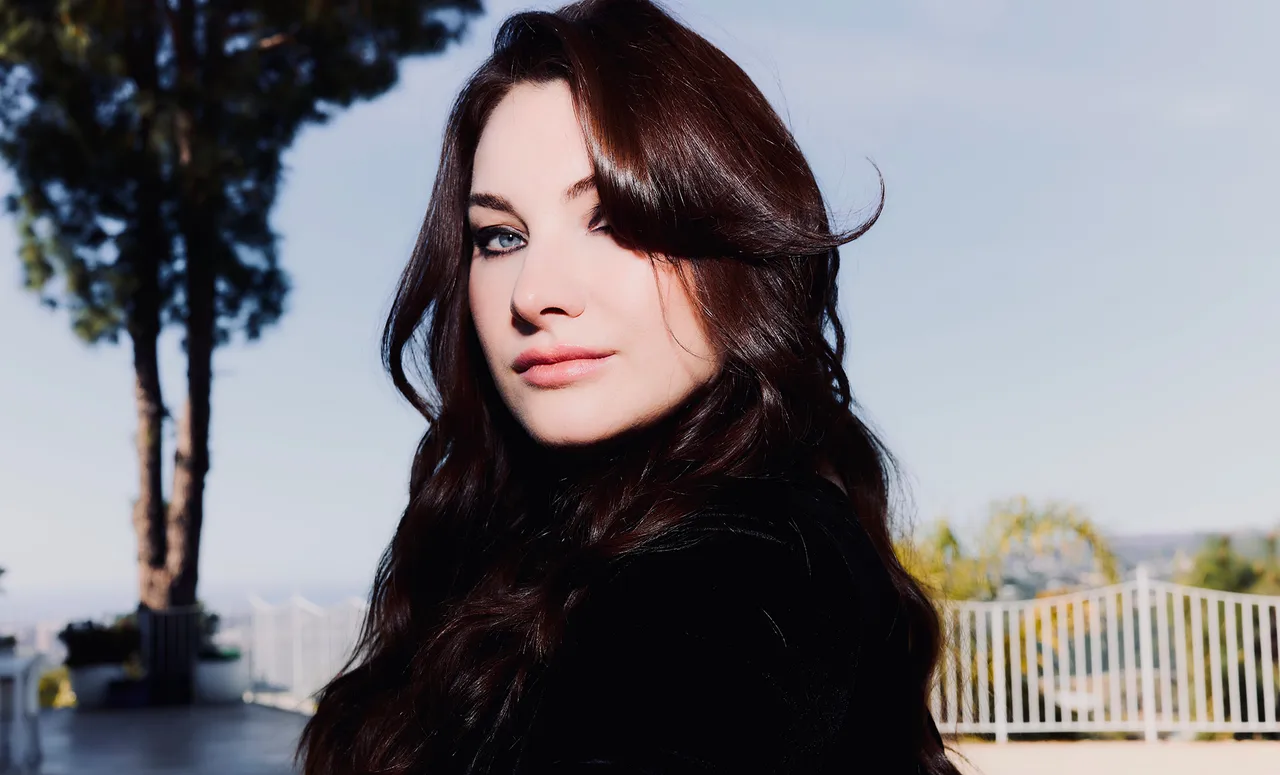
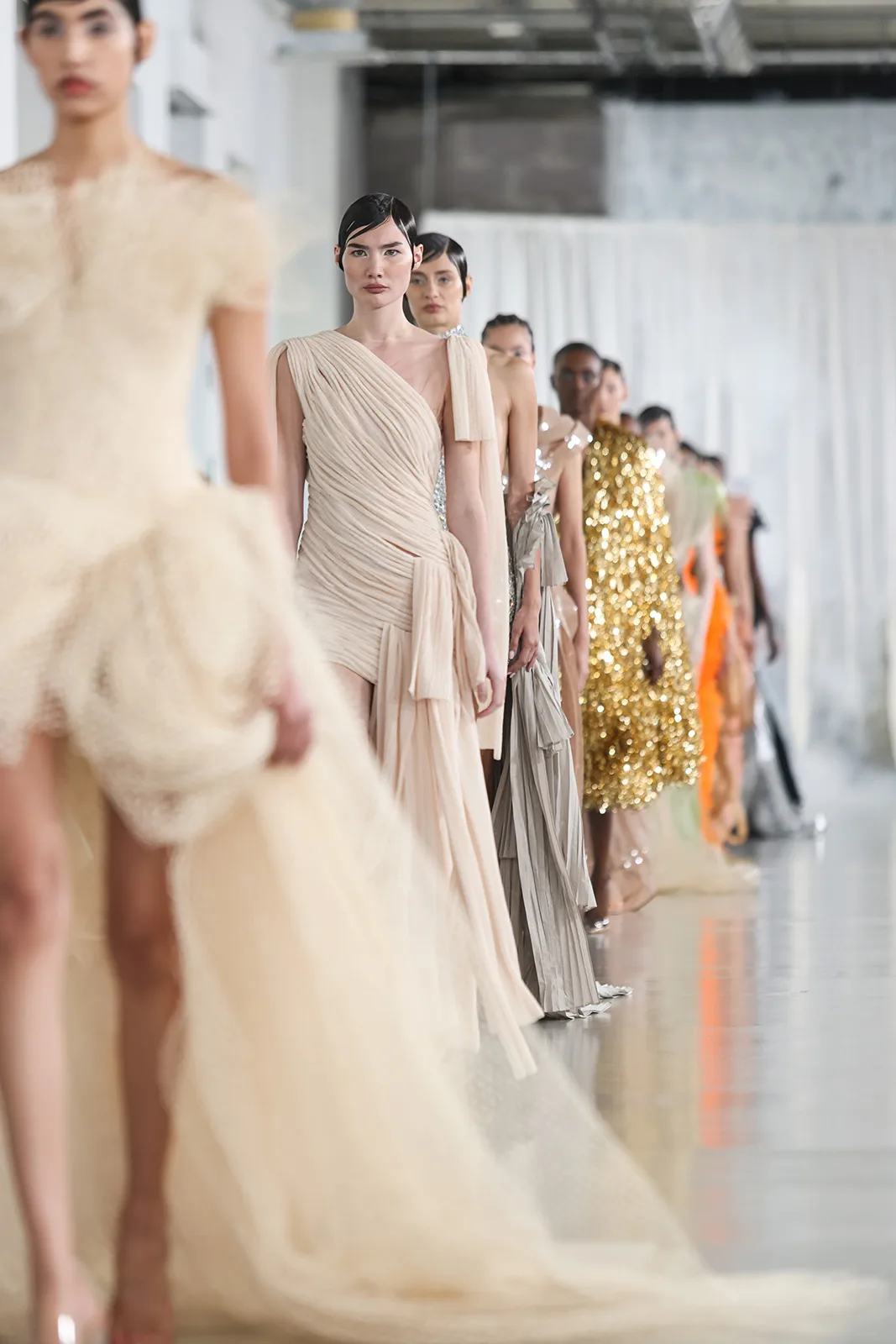
Earlier this summer, Lessja Verlingieri made her long-awaited Paris Haute Couture debut with Anatomy of Identity, a collection that didn’t walk the runway; it haunted it. Staged at the Palais de Tokyo, the show marked a pivotal moment for Lever Couture, the brand Lessja has shaped over the years with obsessive detail and cinematic vision. Known for dressing icons like Lady Gaga, Milla Jovovich, and Anya Taylor-Joy, Verlingieri brought something far more personal to Paris: a body of work that unfolded like a quiet storm. Sculptural silhouettes met emotional weight, revealing a designer not just showing clothes but excavating memory, culture, and the fractured beauty of selfhood.
What followed was an experience charged with intimacy and power. With a solo performance by ballerina Katja Khaniukova, soundtracked by the hypnotic hum of I Monster, the show became a living meditation on identity, trauma, femininity, and defiance. In conversation, Lessja dives into the emotional architecture of her work: how garments can become second skins, how choreography can speak louder than fabric, and how clothing can hold the weight of what we carry, seen and unseen. She speaks candidly about her Ukrainian heritage, her collaboration with creative director Sina Braetz, and what it means to create art that feels timeless, weightless, and unapologetically human.
Lessja, thank you for taking the time to talk to us. First of all, how are you today, and where are you answering us from?
I’m back in Los Angeles, my sanctuary, my happy place. It’s where I find calm between the chaos and where I feel grounded and creatively charged.
Your Paris Haute Couture debut at Palais de Tokyo felt less like a fashion show and more like an emotional experience. How did it feel to stand behind Anatomy of Identity, not just as a designer, but as a woman and a Ukrainian?
Anatomy of Identity was deeply personal. I was born in Ukraine, raised in Germany, and now I live and create in Los Angeles. Each place, each culture, has shaped my voice, my vision, my identity. Standing behind this collection was more than presenting garments; it was like unveiling layers of myself: as a woman, an immigrant, an artist, and a Ukrainian. It was a moment of quiet strength, vulnerability, and immense gratitude for the journey that brought me there.
Anatomy of Identity is such a visceral title. What does identity mean to you right now, in this moment in your life?
As I grow older, identity becomes more introspective. It’s about remembering where I come from—my roots, my culture, my memories. But it’s also about evolution. Identity isn’t fixed; it’s layered, fluid, and shaped by every experience and encounter. Right now, it means honouring my past while embracing the unknown.
You’ve described the collection as exploring gender, culture, trauma, and defiance. Those are profound and personal themes. Where did this particular body of work come from, emotionally?
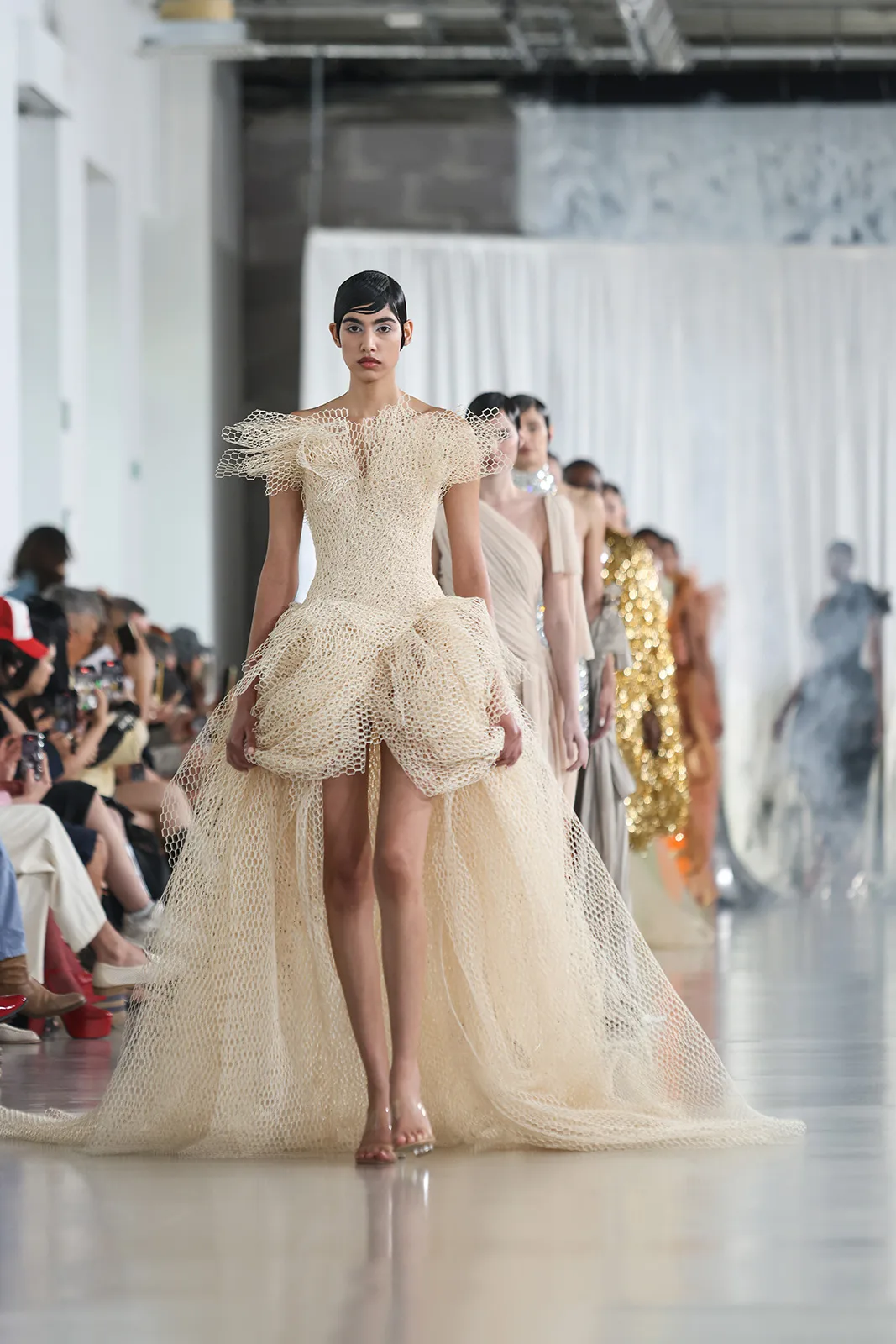
The concept of emotional luggage became central. During the show, Katja Khaniukova carried a huge piece, which symbolised the invisible baggage we all carry: the weight of memories, heritage, trauma, and resilience. Creating this collection was a form of release: letting go, healing, and transforming pain into beauty.
Your work always walks the line between structure and softness, but this collection seemed to push that tension even further. What were you hoping to uncover by pulling those opposites closer together?
I’m drawn to paradox—the fragility in strength, the softness in armour. I wanted the collection to feel simultaneously grounded and otherworldly. To create pieces that whisper and scream, that embrace contradiction. It should feel unexpected but somehow familiar, like a memory you can’t quite place. My dream is to create something timeless, unaffected by trends, able to exist across eras.
As you just said, the show opened with a solo performance by Katja Khaniukova. Why start there?
Together with Sina Braetz, our creative director, we wanted to open with something powerful and intimate. Katja is extraordinary; she moves like a prayer. Our shared Ukrainian heritage added a profound emotional layer. Having her open the show wasn’t just a choice—it was destiny. Her presence honoured the themes of the collection in a way words never could.
That movement, the raw vulnerability of it, made the garments feel even more alive. How closely did choreography and garment design interact during your process?
It was a beautiful synchronicity. The dress was designed with her in mind, even before I knew she would be able to perform. And Katja choreographed the piece herself. It was like an unspoken dialogue between the body and the garment, both telling the same story in parallel.
The score by I Monster, and especially Who Is She?, gave the entire experience a kind of dreamlike gravity. Why that sound? What did you want the audience to feel?
That track has haunted me for over two years. My muse, Alyona Subbotina, introduced me to it, and it became the emotional heartbeat of the collection. I listened to it while designing, dreaming, and building. When I reached out to I Monster, they immediately understood the vision. Who Is She? embodies the Lever Couture woman: mysterious, powerful, soft, and untouchable. It’s more than a soundtrack; it’s our soul.
There’s something very intimate about the way your pieces reveal and conceal at once: sheer mesh, bold fringe, sculptural elements that hint at armour. What does “dressing the self” mean to you in a world where the self is constantly shifting?
I see clothing as a second skin, one that both protects and reveals. Dressing the self is a ritual, a daily transformation. In an age of constant change, clothing becomes a tool to ground or escape, to declare or disguise. My pieces exist in that liminal space between reality and fantasy.
If you had to choose just one look for your latest collection, what would it be, and why?
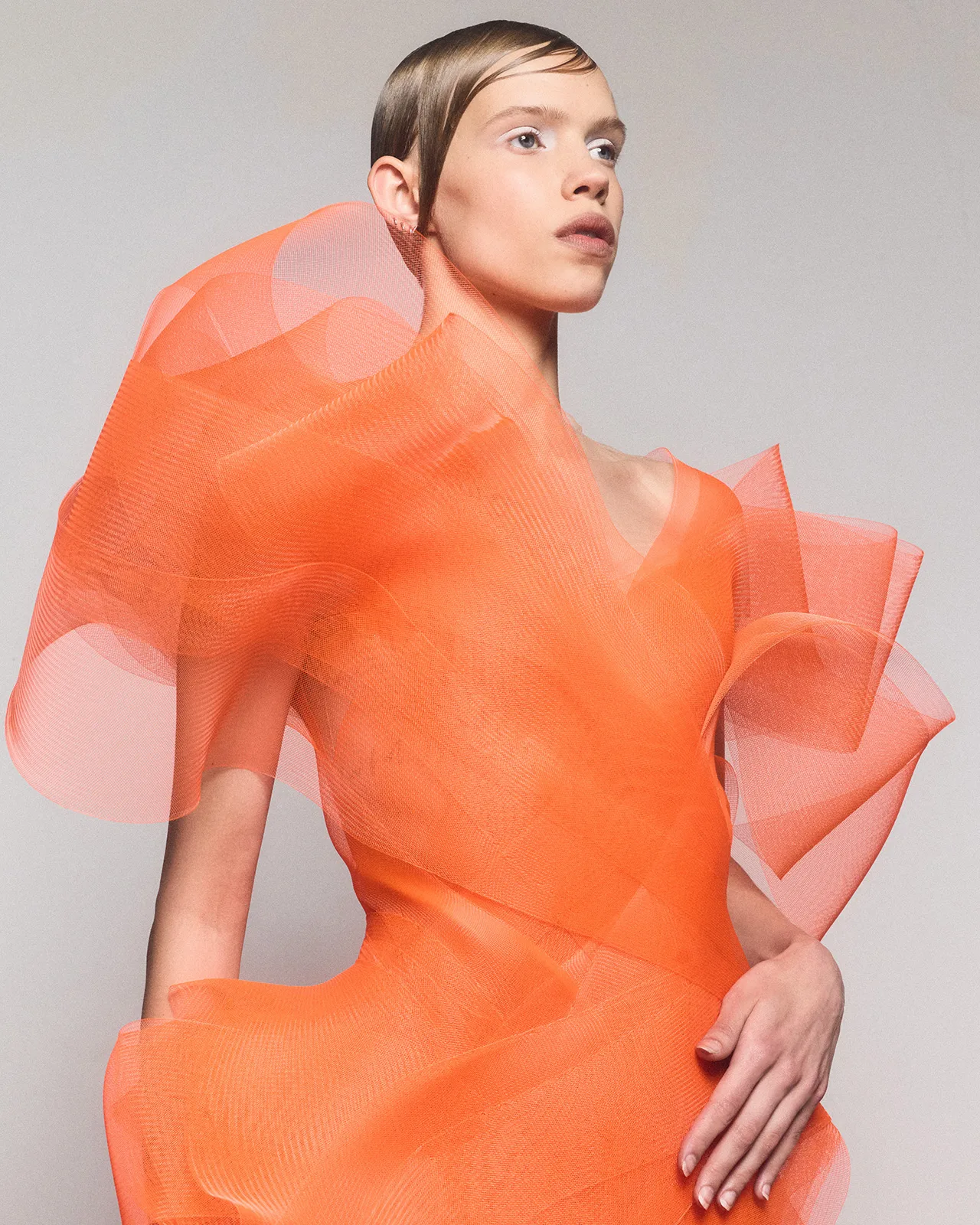
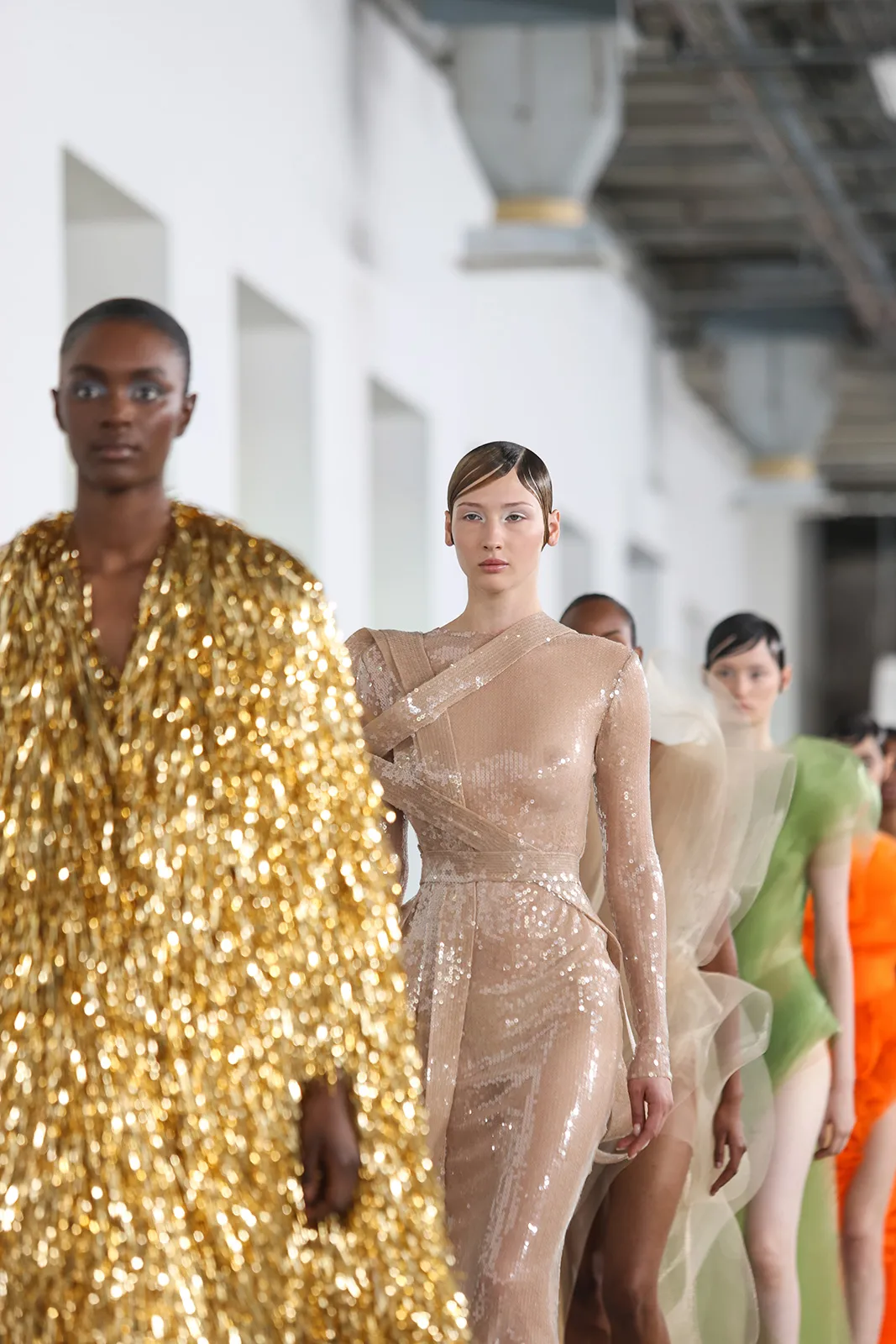
Katja’s dress, this modern reinterpretation of the ballerina. It balances delicacy and strength so effortlessly. But also the green mesh look—it’s grounded yet ethereal, understated yet bold. It encapsulates the tension I’m always chasing.
What was important to you in selecting the models for this show?
Sina and I sought beauty that felt otherworldly, models who embodied the spirit of the collection, not just the silhouette. We weren’t looking for perfection but presence. Faces that felt like poetry.
The use of materials in this collection was striking. How do you approach texture and fabric selection when building a visual language?
Fabric speaks to me before I even sketch. It’s an emotional connection. I’ve collected textiles for over a decade; sometimes they sit in my studio for years before revealing what they want to become. It’s a quiet dialogue, and I trust it completely.
As a Ukrainian designer presenting in one of the world’s most watched fashion capitals, how do you carry your country with you right now, in your work and your voice?
Ukrainian culture is rich, poetic, and often overlooked. For the show, we included a poem by Lesya Ukrainka, one of our most revered voices. It was our way of honouring the depth and beauty of Ukrainian art. I carry my country in every thread, in every breath of my work.
You’ve worked with talents like Milla Jovovich and Anya Taylor-Joy, among many others. How do you approach designing for personalities with such intensity and magnetism?
It’s a privilege to dress women with such presence. I don’t design for them; I design with them in mind. I want each piece to feel like an extension of who they are. Milla has become a dear friend; she’s as beautiful inside as she is outside. It’s an honour when someone wears your work like armour.
And then there’s Lady Gaga. For the Hold My Hand video in Top Gun: Maverick, she wore a custom Lever Couture dress. How did that collaboration come about, and what did it mean to you personally?
That was the continuation of a long and beautiful love affair. After my very first show in 2011, Nicola Formichetti reached out the same night; I thought it was a prank. But it was real. Since then, we’ve had several incredible collaborations. The Hold My Hand dress was special; it felt cinematic, emotional, and powerful. Just like her.
Do you see couture as a medium for emotional storytelling as much as aesthetic expression?
Absolutely. If fashion is language, then couture is poetry. It’s where you can be unapologetically emotional—raw, abstract, imperfect. You’re not bound by function; you’re free to tell stories that speak to the soul.
You’ve built Lever Couture on precision and future-thinking. How do you use technology not just as a tool but as part of the narrative?
Technology is not just a method; it’s a muse. It allows me to manipulate form, challenge gravity, and rethink silhouette. But it’s always in service of emotion. The future isn’t cold—it’s intimate; it’s deeply human. That’s how I want tech to feel in my work.
How would you describe your creative relationship with Sina Braetz, who led the creative direction for the show?
Sina and I share a deep, creative intimacy. We’ve worked together for years, and we speak the same visual language. She sees beyond the obvious; her mind is endlessly inventive. She’s not just a collaborator; she’s family. And one of the hardest-working, visionary women I know.
Lever Couture lives in a space somewhere between fashion and installation, couture and cinema. Do you imagine your pieces more in motion, on a stage, or frozen in a still image?
Motion. Always motion. I dream in film. I would love to collaborate with a filmmaker who can truly capture the surreal emotionality of my pieces, who can make them live, breathe, and haunt. My work is meant to move, to dance, to escape stillness.
After such a monumental debut in Paris, what does creative success look like to you now?
Success is being able to keep creating. After one collection, another begins. I’m already in the next chapter. The journey never really stops.
Is there anything you can tell us about your upcoming projects?
I’m deep into the next collection, and I’m also working on a film project—something very close to my heart. I can’t say much yet, but soon...
And what message would you like to send to the world?
Sometimes, in the darkest moments, we find hope in beauty. In art. In each other. That’s what keeps us alive—something to hold on to.