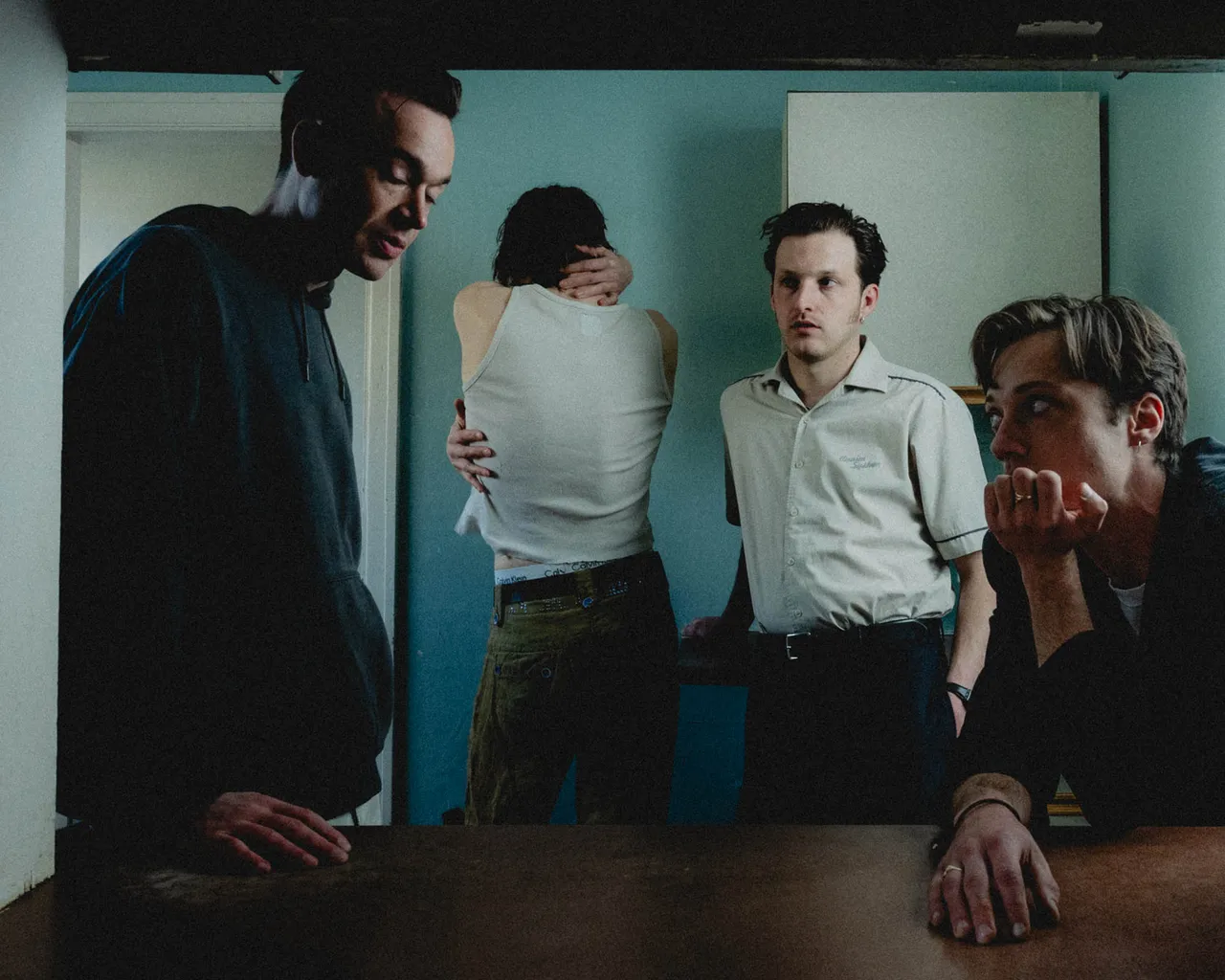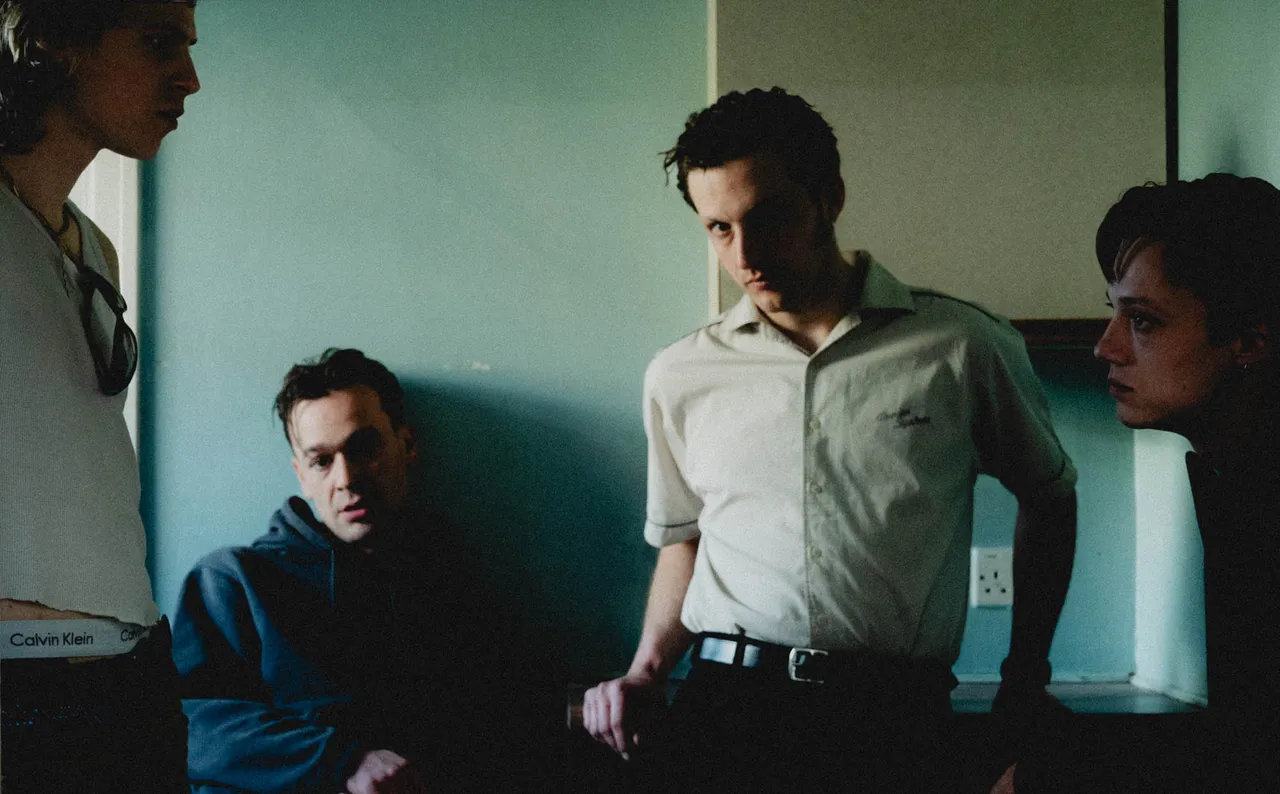
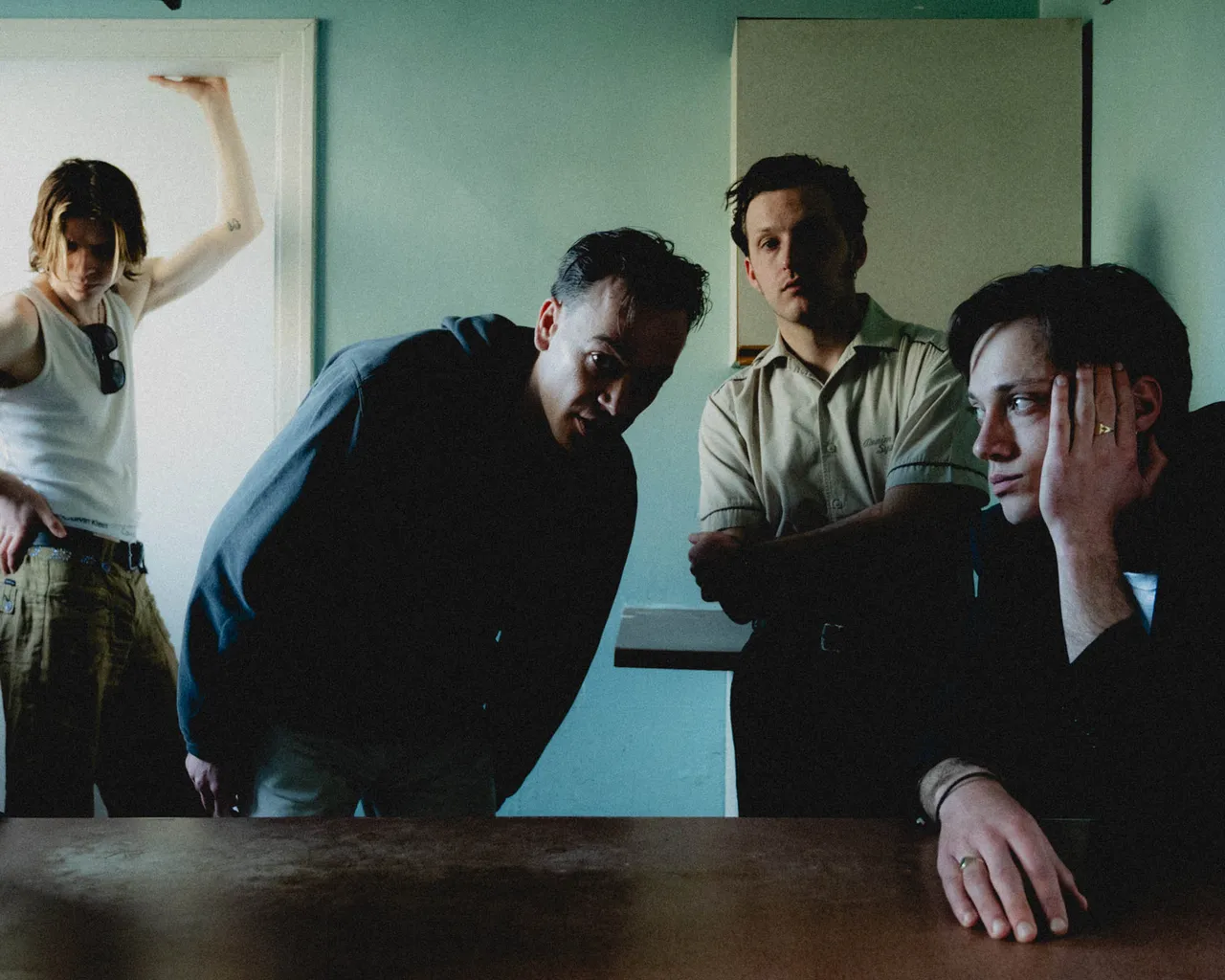
Just last week, poet-post-punk band Legss released their debut album: Unreal. We last spoke with the London-based band in 2021 as they released their Doomswayers music video: mid-Covid pandemic, mid-experimentation with spoken-word rock, and on their second EP. Frontman, Ned, talked to us with a level of wry cynicism, committed to the nihilism of the band’s sound. Three years on, out of the pandemic’s shadow and following 909, a single that tackles the subject of talk-radio with grit, the band is ready to release their debut album.
Unreal feels like a culmination of Legss discography: narrative songwriting bent into distortion; confessional, continuing with their use of surreal embedded cassette recordings. However, the band also presents it as an expansion as they move away from the confines of post-punk into something more versatile. They describe the project as the work of a lifetime.
Your recent single, 909, has been described as the gnarliest, most neurotic song about talk-radio. Its lyrics are rife with fragmented images, all focused on a scene of someone listening to the radio. Why did you choose to release this track ahead of the album? What does it have to tell your listeners?
Because who else would? There’s such a lack of narrative songwriting in our genre, and it’s something we’ve always wanted to push. It’s also a song we’ve worked on for years. It’s existed in so many different forms and we’ve stuck with it, banging it into shape, so it feels good to be releasing it in its final form. Other than that, with the singles we wanted to show the album’s various styles/failings, and so our first was a lot softer and darker, and the one after this is a certified pop song.
As well as thriving post-Covid, NPR described you as part of the “post-Brexit new wave.” Do you write in response to Britain’s fractured political or cultural climate, or is that kind of politicisation something that critics project onto your work?
Yeah, that NPR article helped a lot (laughs). It was so early on, and it did legitimise us a bit more. We definitely don’t write consciously about politics, but I also don’t think it’s projected onto us by critics. We’re political people and we’re trying to write authentically and artistically, so it will always bleed in.
Do you think the London music scene has changed since your early shows, and since METAL interviewed you during the 2021 Covid lockdown? Have you noticed changes about how your audience engages or in the type of new talent coming up?
London audiences have always been bad listeners, and for quite a wordy band I don’t think that’s changed. I do think people are more excited by complexity and depth now though. When we started out, there was a lot of pomp and pantomime, which was tiring, but there’s less of that now. Folk has sort of taken over a bit.
There’s a strong sense of shared history in the London music scene you grew up in, the city fostering a home for punk, post-punk, and newer anti-conformist artists. How did writing and performing within this community effect Legss as a band?
None of us really grew up in London; We’re from its outskirts and Liverpool. As a band, we did do our crawling-to-walking in this city, but I don’t know if we ever really felt part of a scene or musical history. What we did feel is what London offers to everyone regardless of where you come from, and that’s anonymity, or an element of the make-believe. If you’re likeminded enough it infects you with certain delusions, good and bad, which made us think a bit bigger around what we wanted the band to sound like.
In a past interview, you spoke about wanting to exceed one-dimensional music with more ambition and conceptual depth. How has that ambition shaped the creation of Unreal?
By writing out of our comfort zones. That’s been the main difference in terms of being able to expand conceptually. We spoke a lot about this whilst writing the album, and we felt our last EP, Fester, was a sort of stepping stone or portal into allowing us to write more diversely. We definitely felt a bit more caged into a post-punk world before that release. Also, working with Balázs Altsach really opened us up to what we were able to do in the studio. Before that we’d only ever really self-recorded.
Legss’ tracks often unfold into sound collage, monologues, and character driven scenes, like in Letter to Huw. Were these theatrical or fictional modes of storytelling still central to your upcoming album?
Not as central, but we’re turned on by so many things, we wouldn't be able to have one core central theme or sound to a release, and we never have. Every release we’ve done has had a mix of those elements you’ve mentioned, and the album is just a continuation/expansion of that but with better song writing.
How do you balance musical and lyrical vulnerability with a grittier textured alternative rock sound?
By introducing dynamics into the music that allow for thematic/emotional changes in the words.
When we last spoke with you, you mentioned being influenced by pirate radio and early 2000s grime sets, particularly in how you arrange vocals with a mix of talking and reading over instrumentals. Will this influence continue in your upcoming material? How so?
Yeah, deffo. There’s so much still to listen to. People are digging up old cassette recordings and uploading them all the time, so I’m never gonna be able to stop listening to it. Honestly, I think now it’s more of an influence on performance. So many of those MCs were so young, and so versatile, and so angry — listening to it is like my main motivator for doing anything at all. Hearing these forgotten voices giving everything they can to sound powerful and original. There’s honestly nothing fucking like it.
How do you know when one of your tracks is finished, especially given the spoken word monologue element to your music? Is there a process you take to decide its complete?
It definitely differs from song to song, but usually it’s when the words are put on top, which almost always come last.
Unreal’s track titles, including Broadcast, Bit Rot, and Sleepers, Awake, point to themes like media decay, memory loss, and fragmentation (not to mention the album’s title). Did you conceive of Unreal telling a single shared narrative, or is it more a collection of discrete stories?
Definitely all those things, but mostly it’s a body of work about communication/miscommunication, and the changing ways we speak to one another, on a small, personal level but also on a larger, macro scale. The way in which we’re interacting with each other as humans is completely and utterly unreal in so many ways, and that affects all the significant and insignificant aspects of our lives.