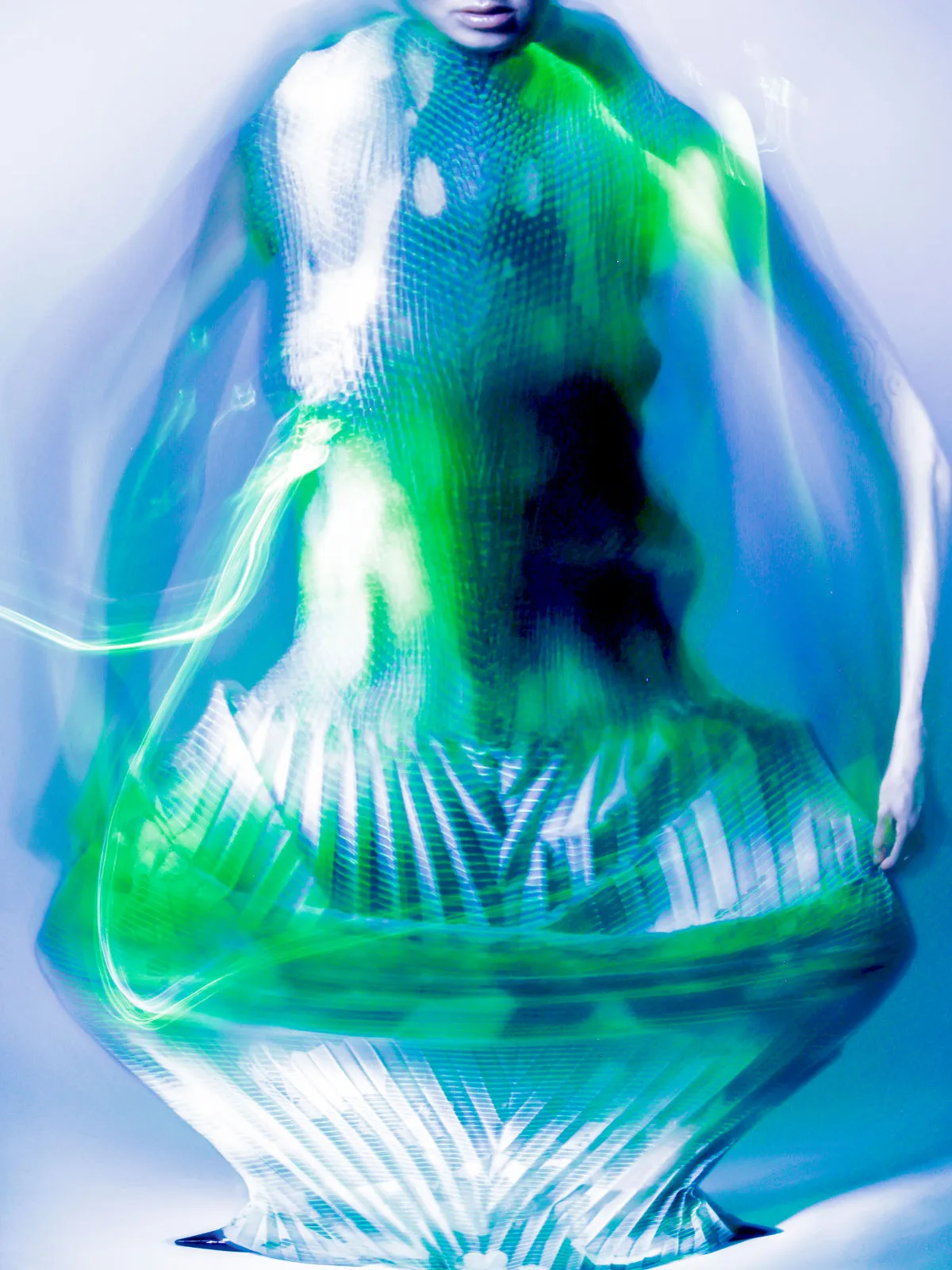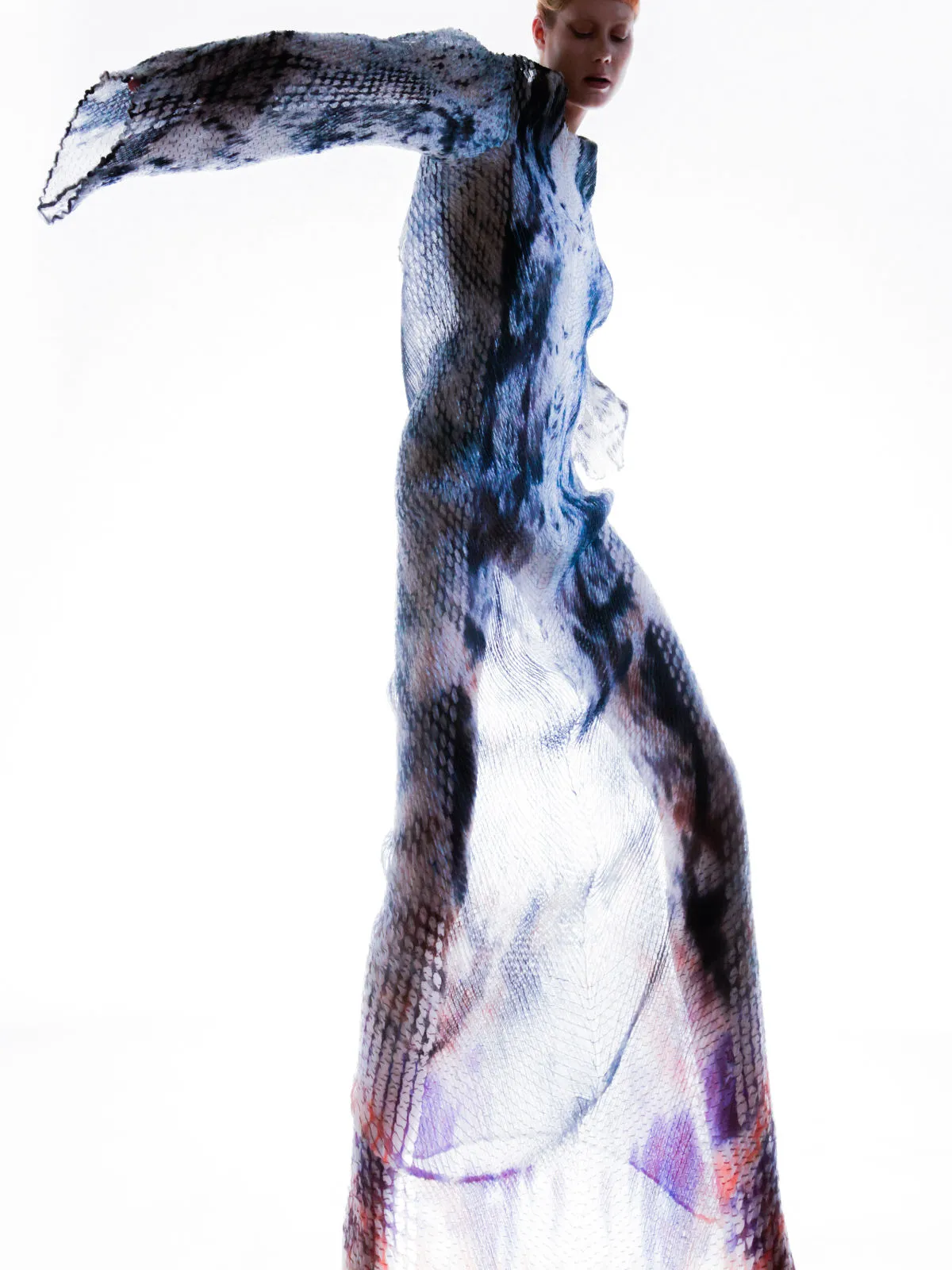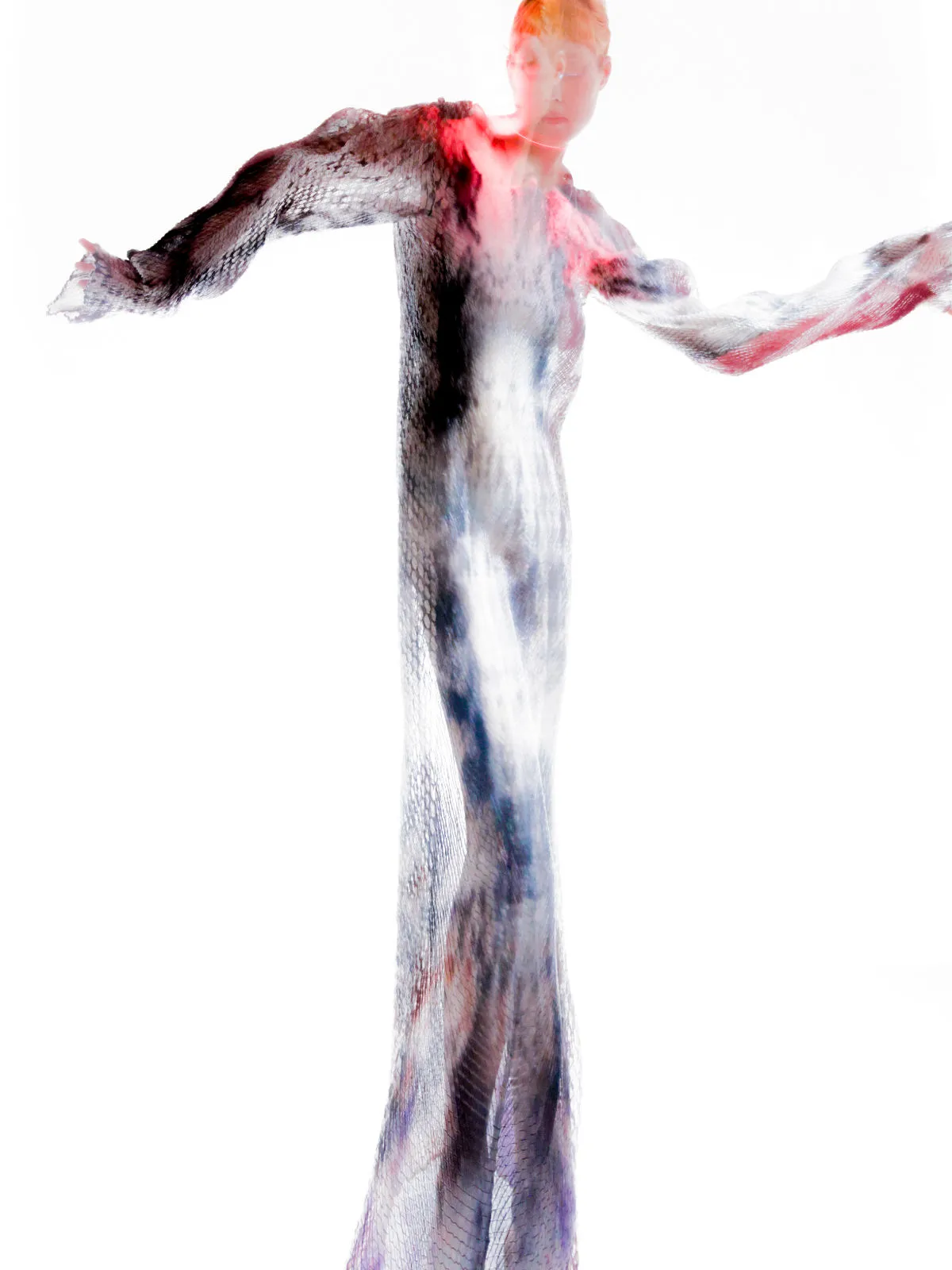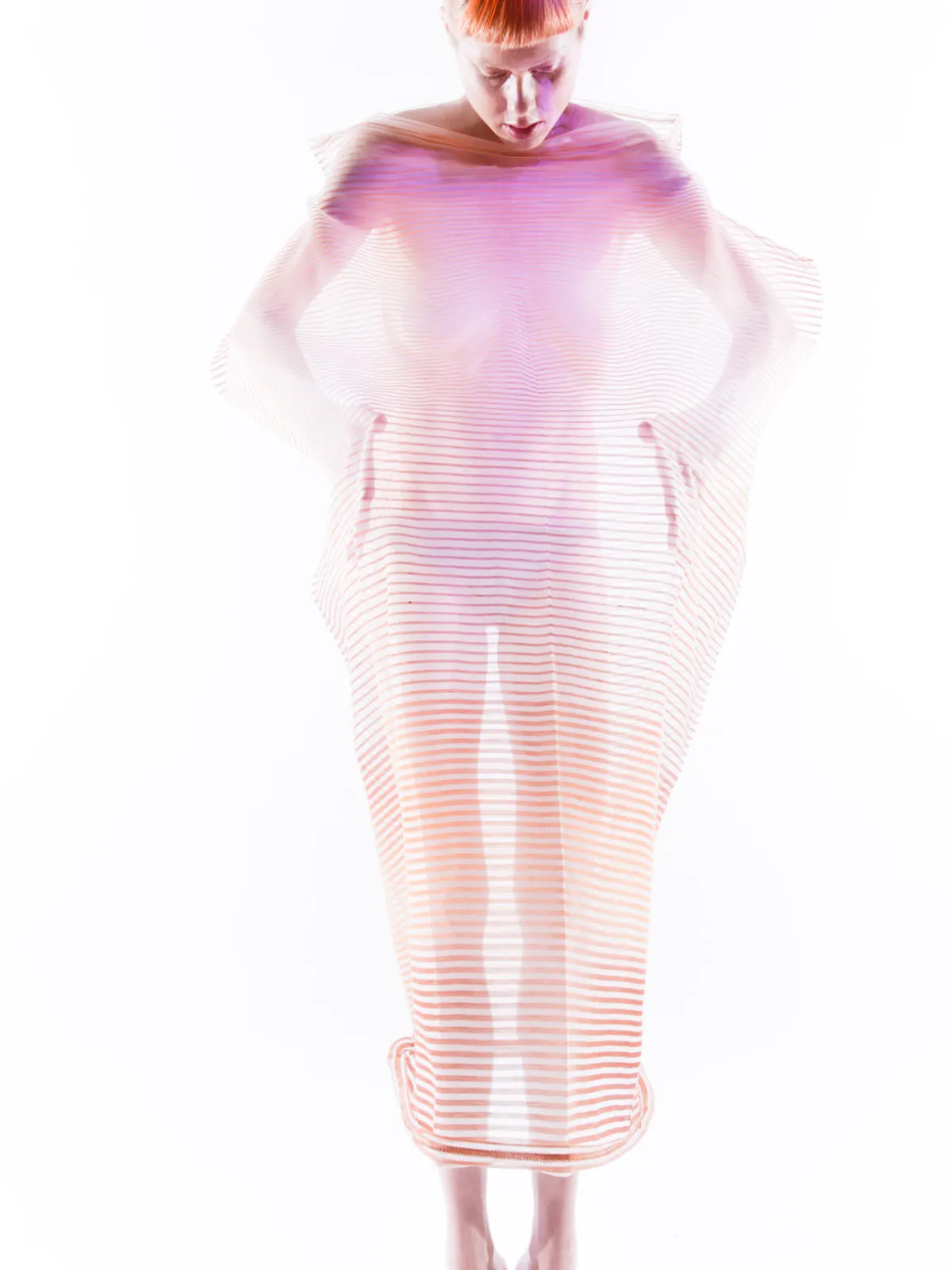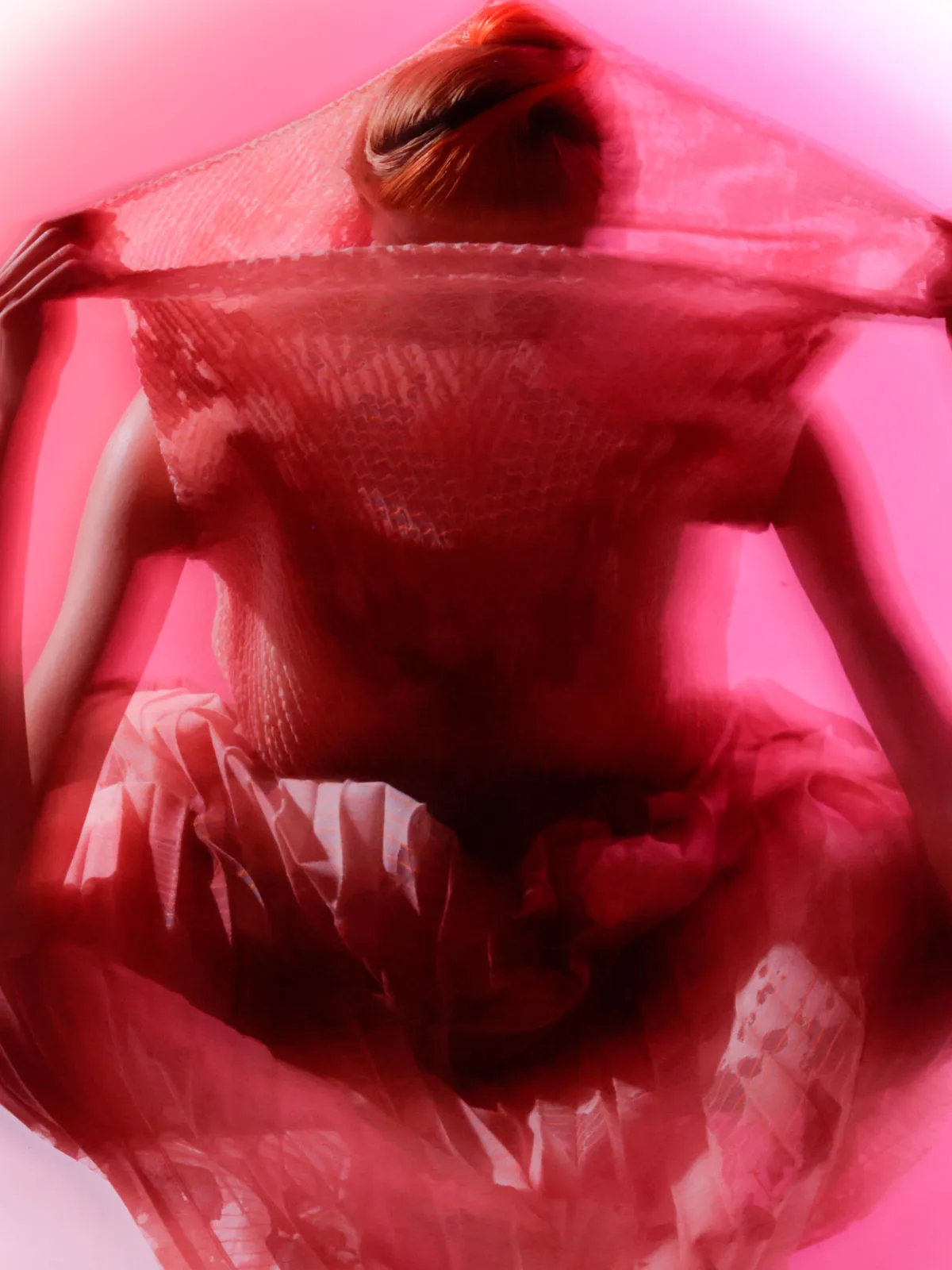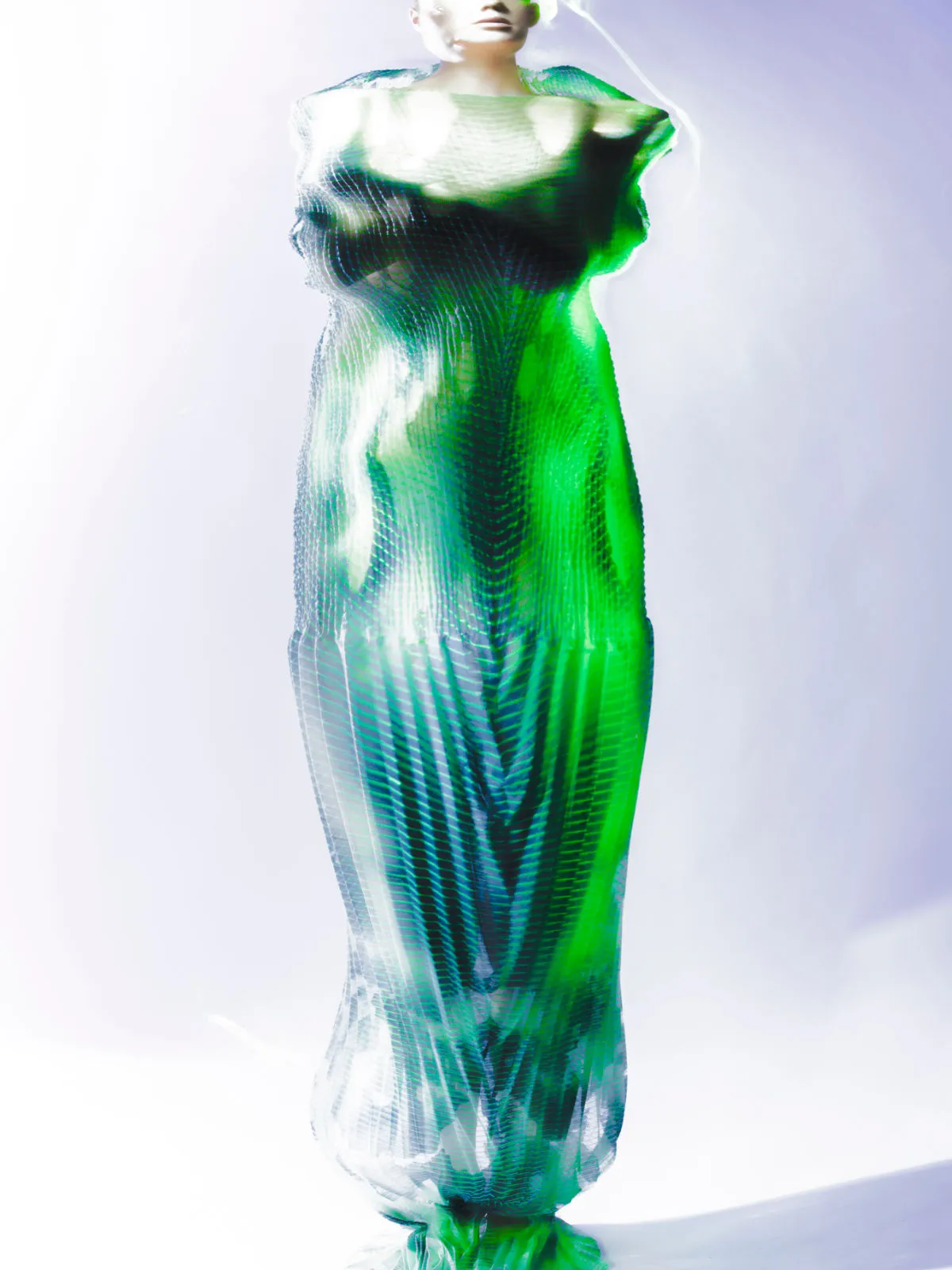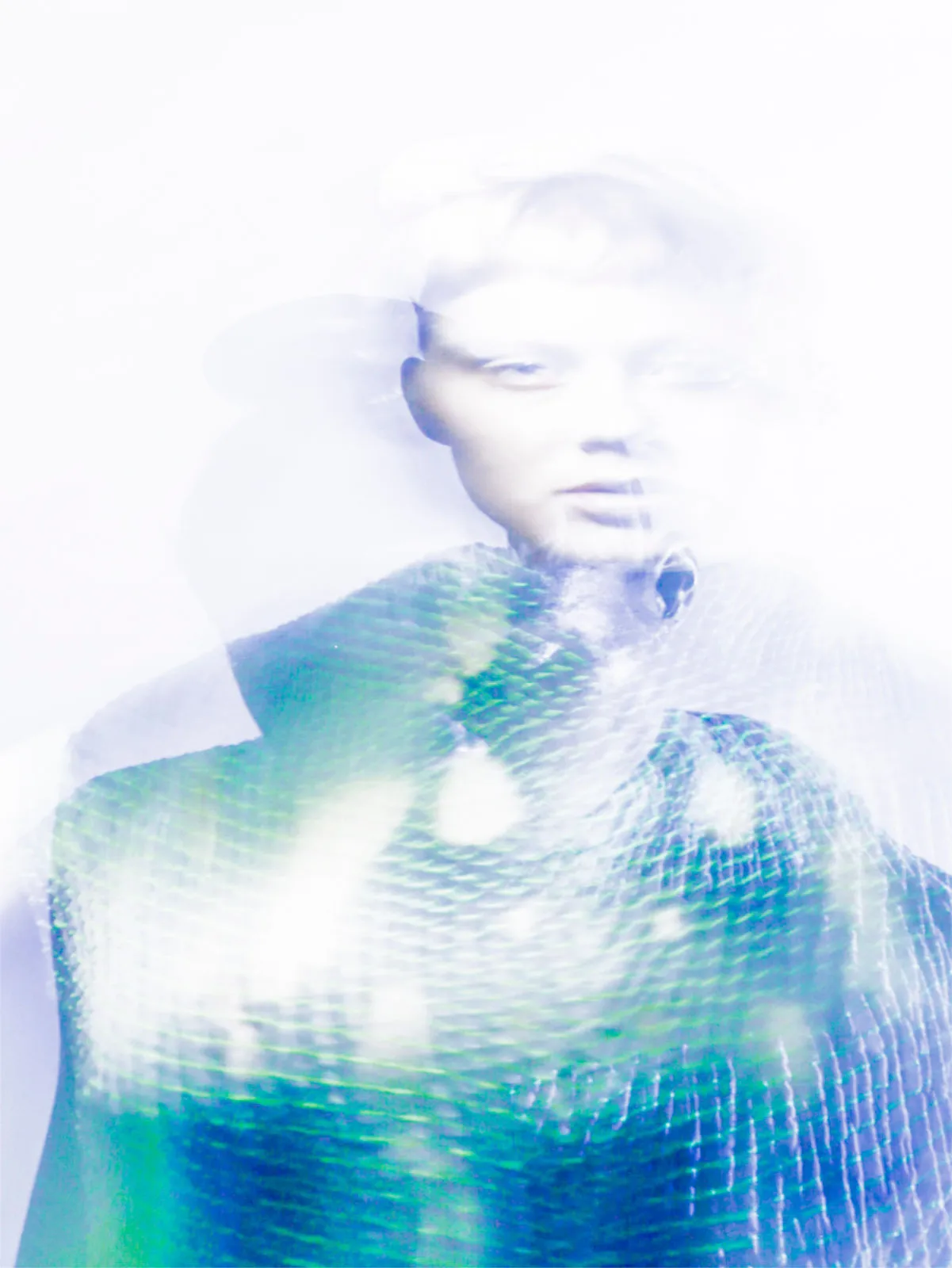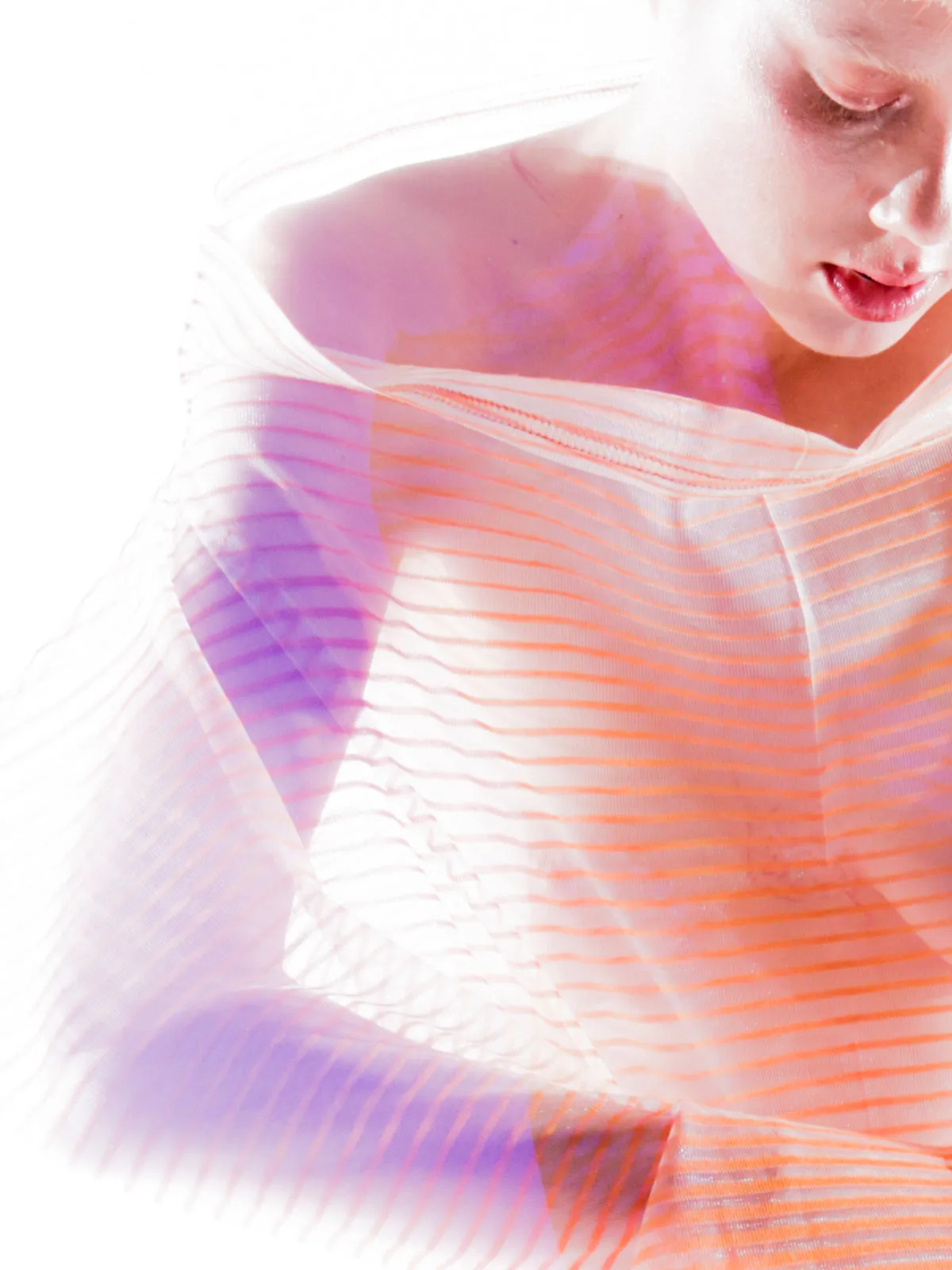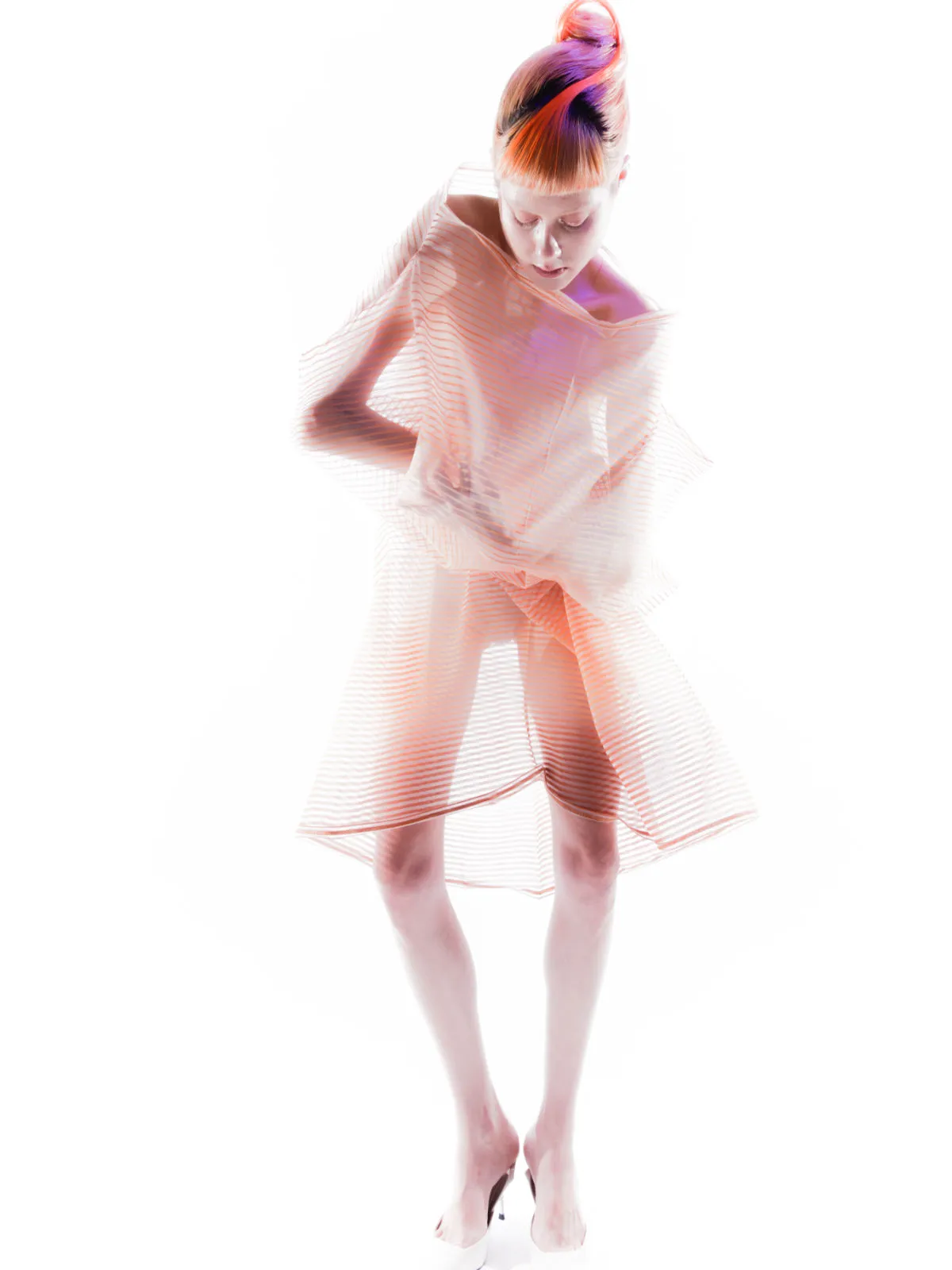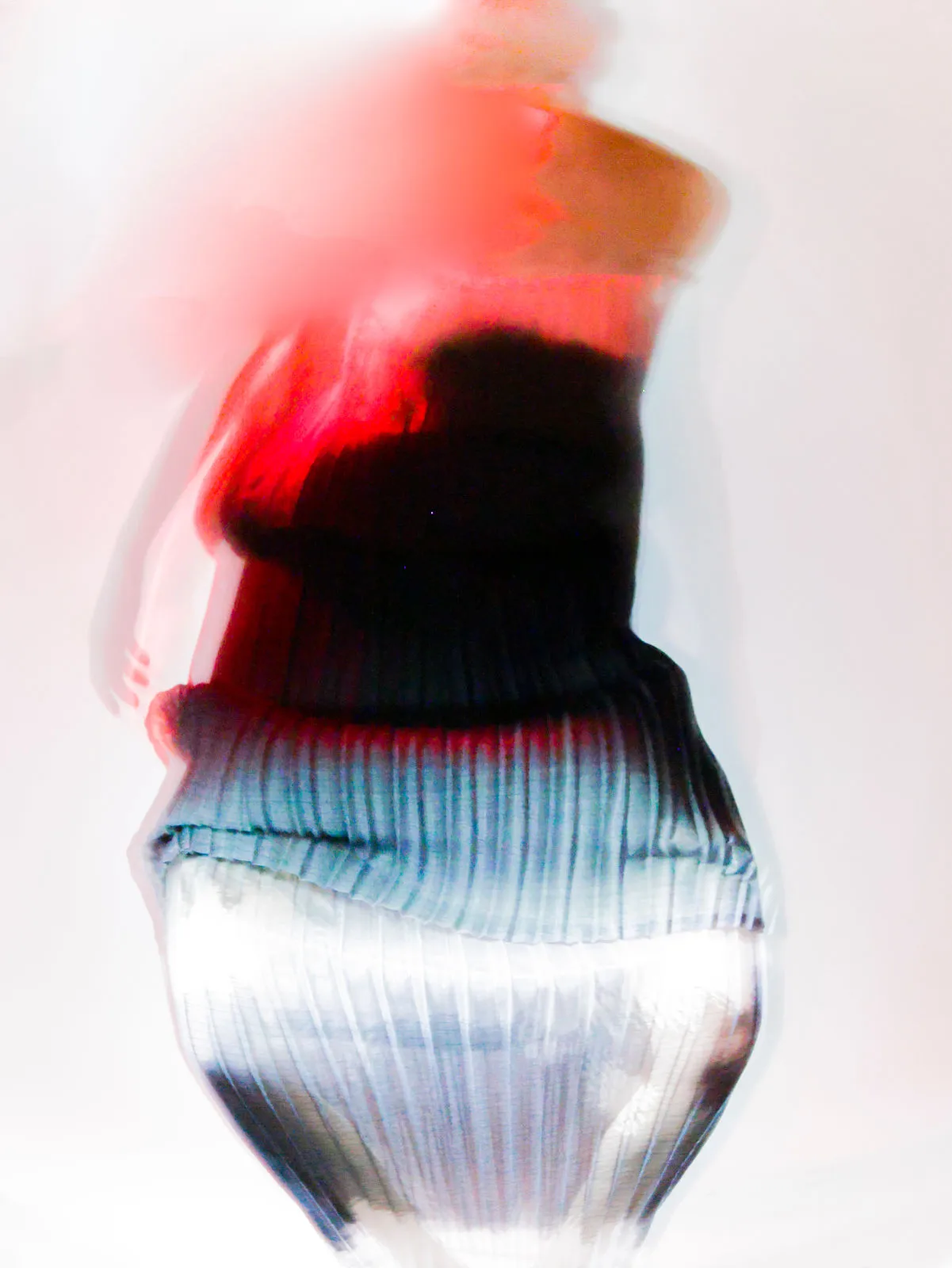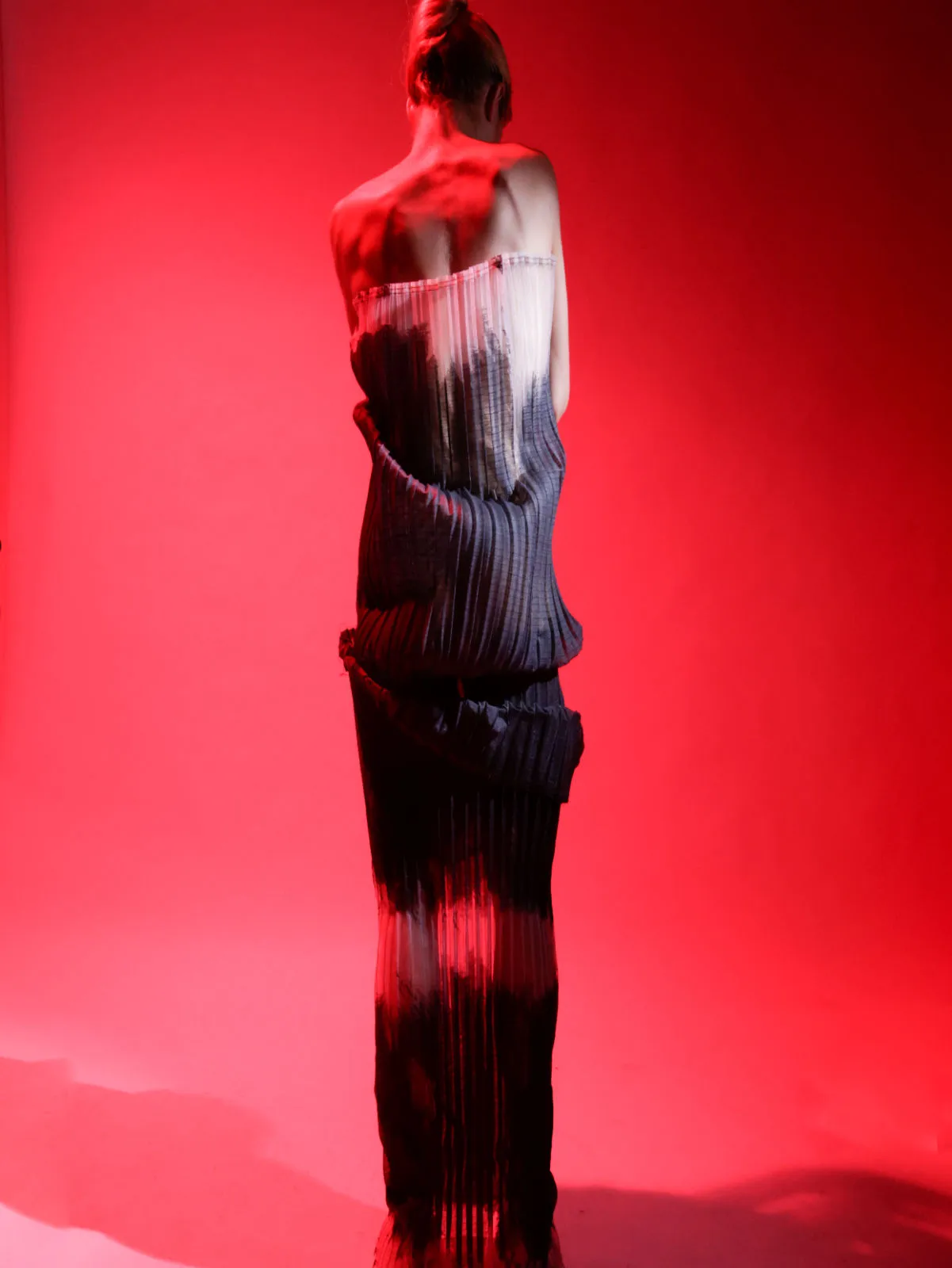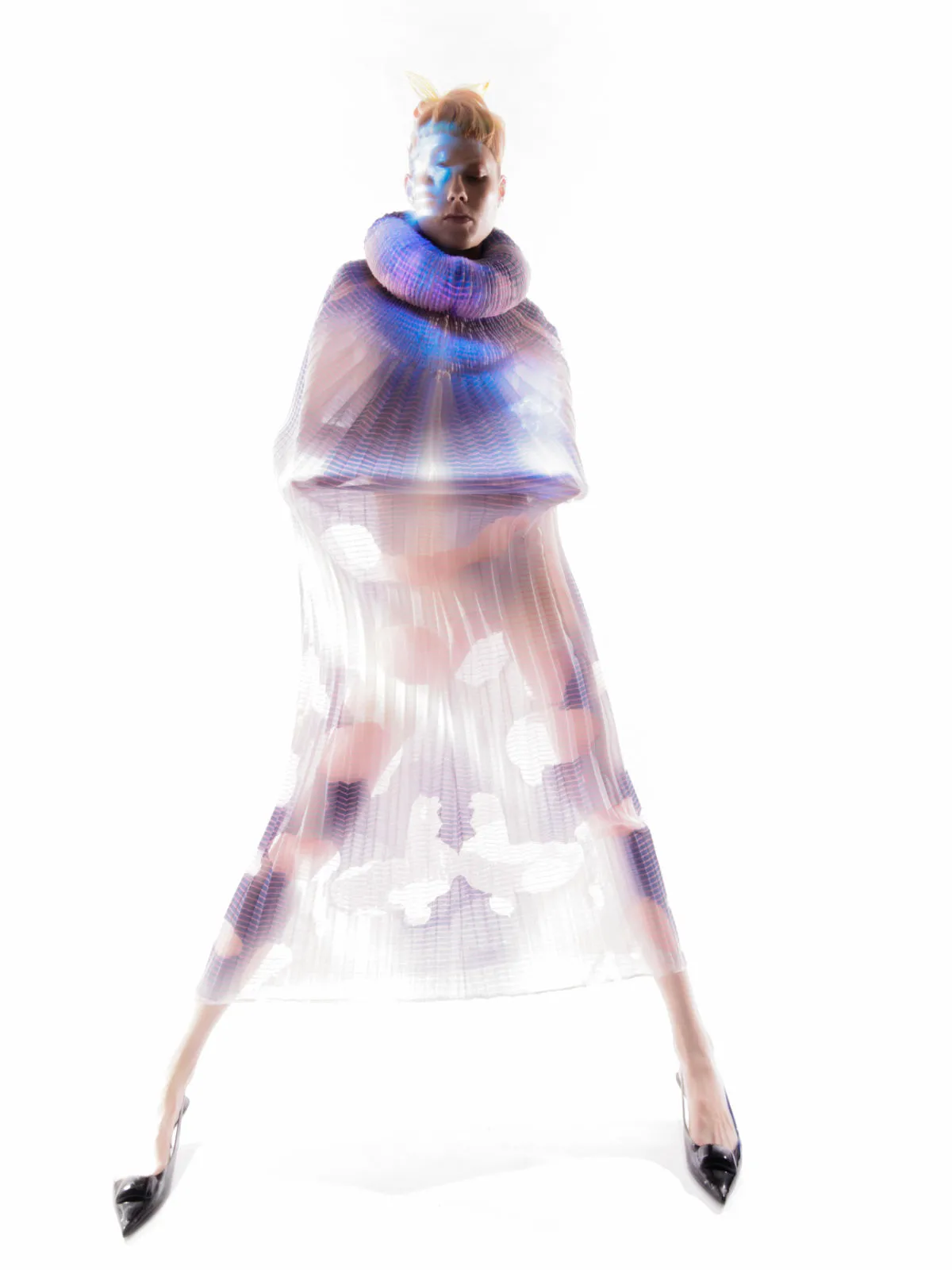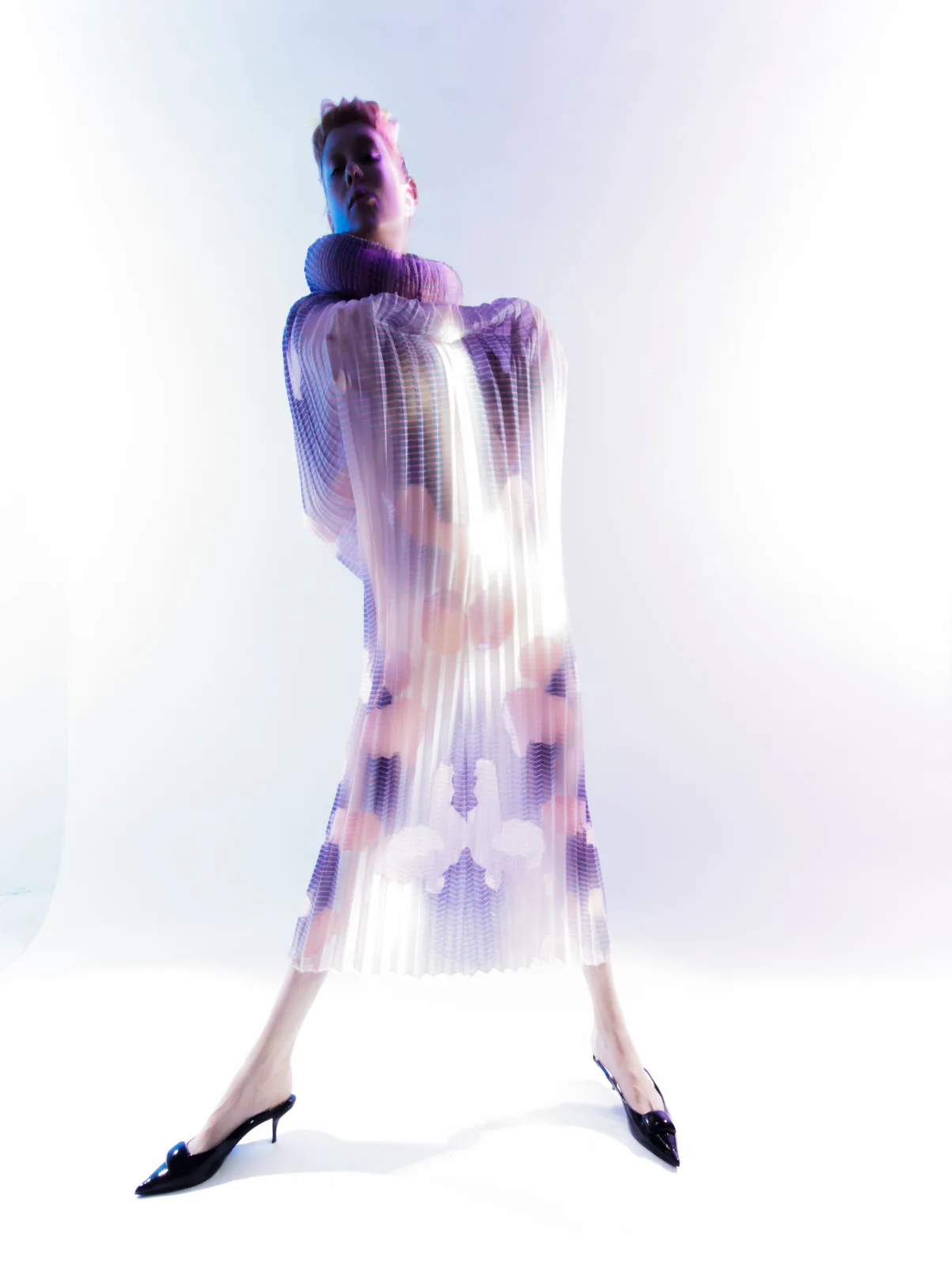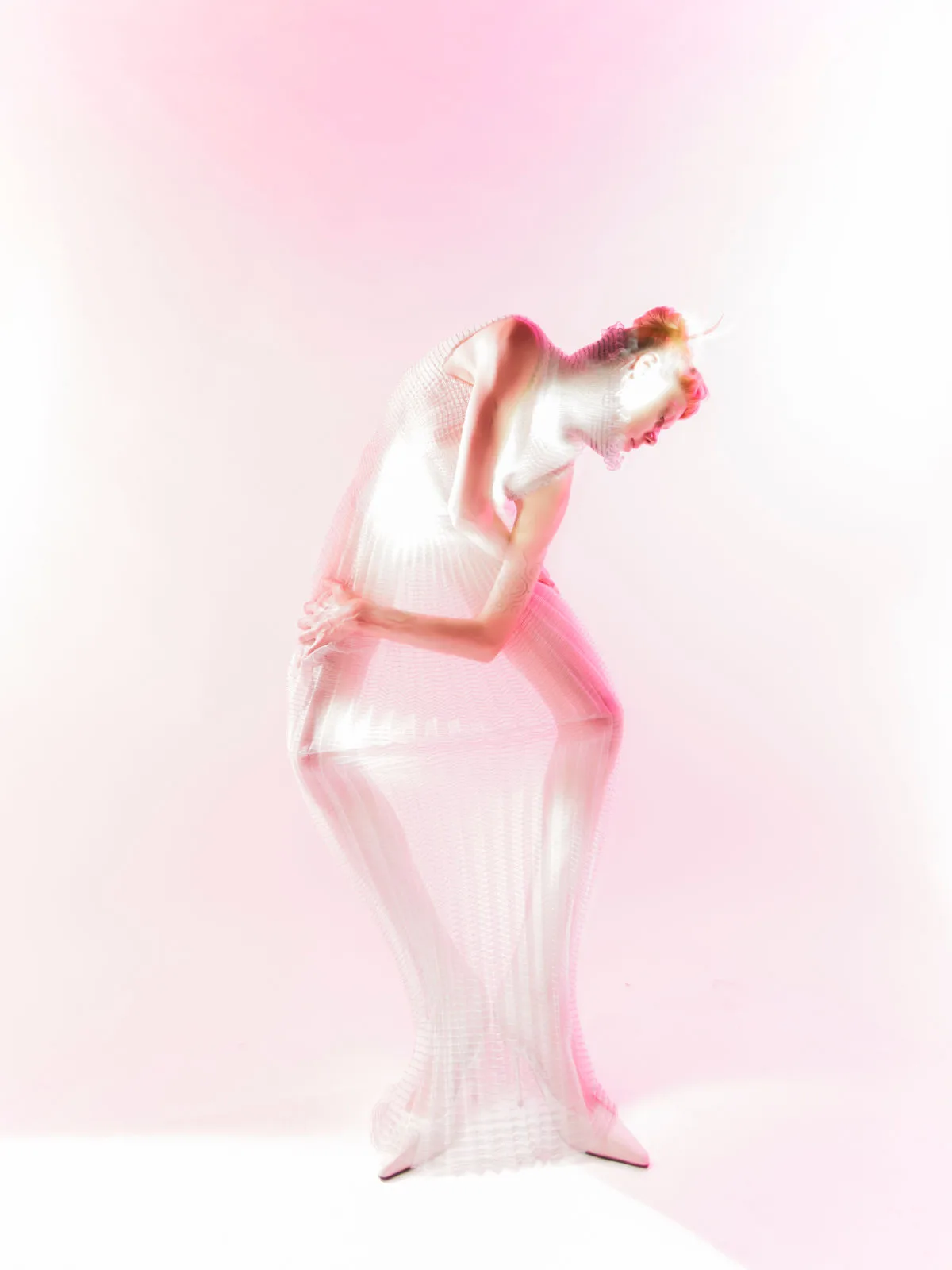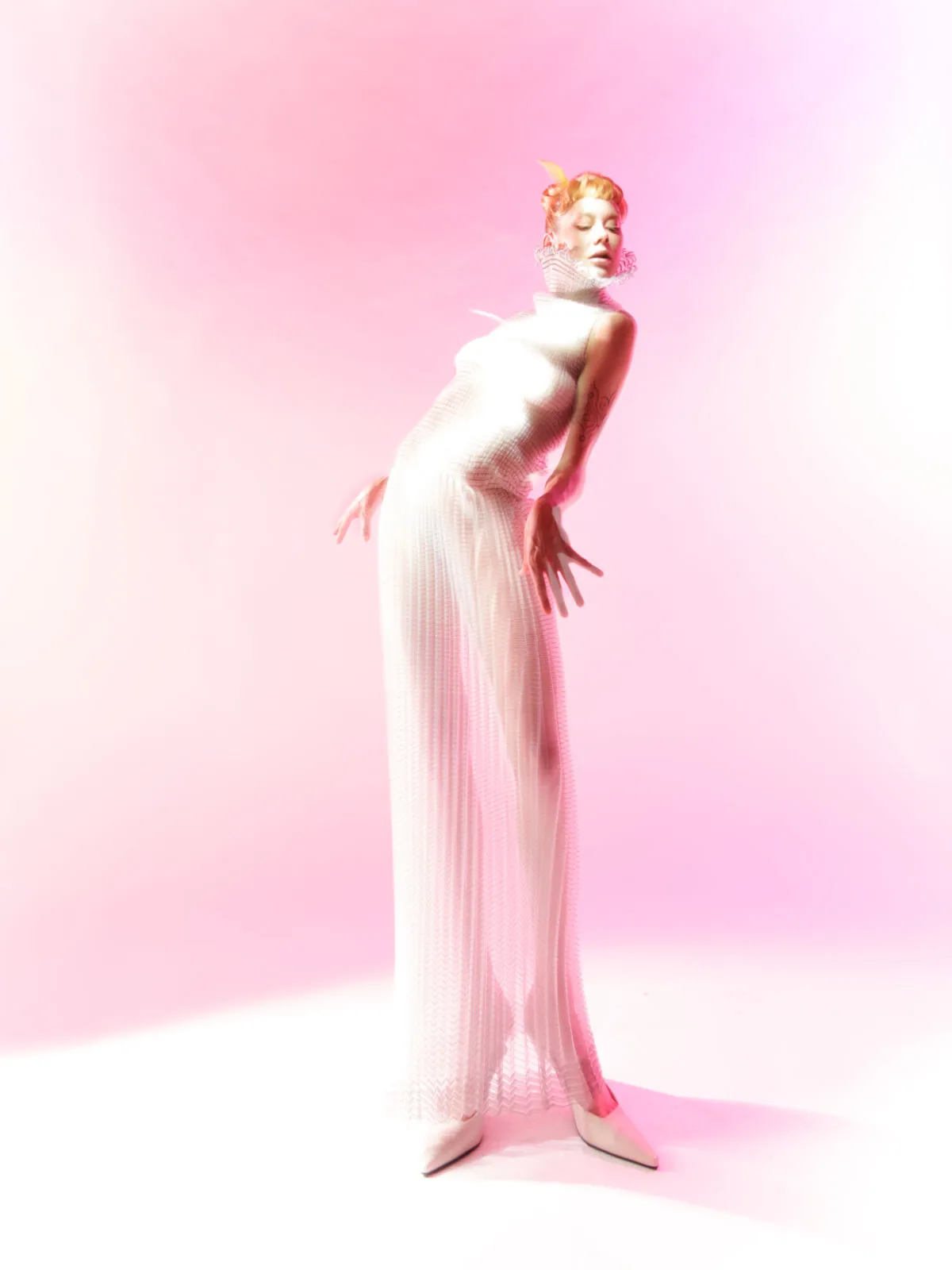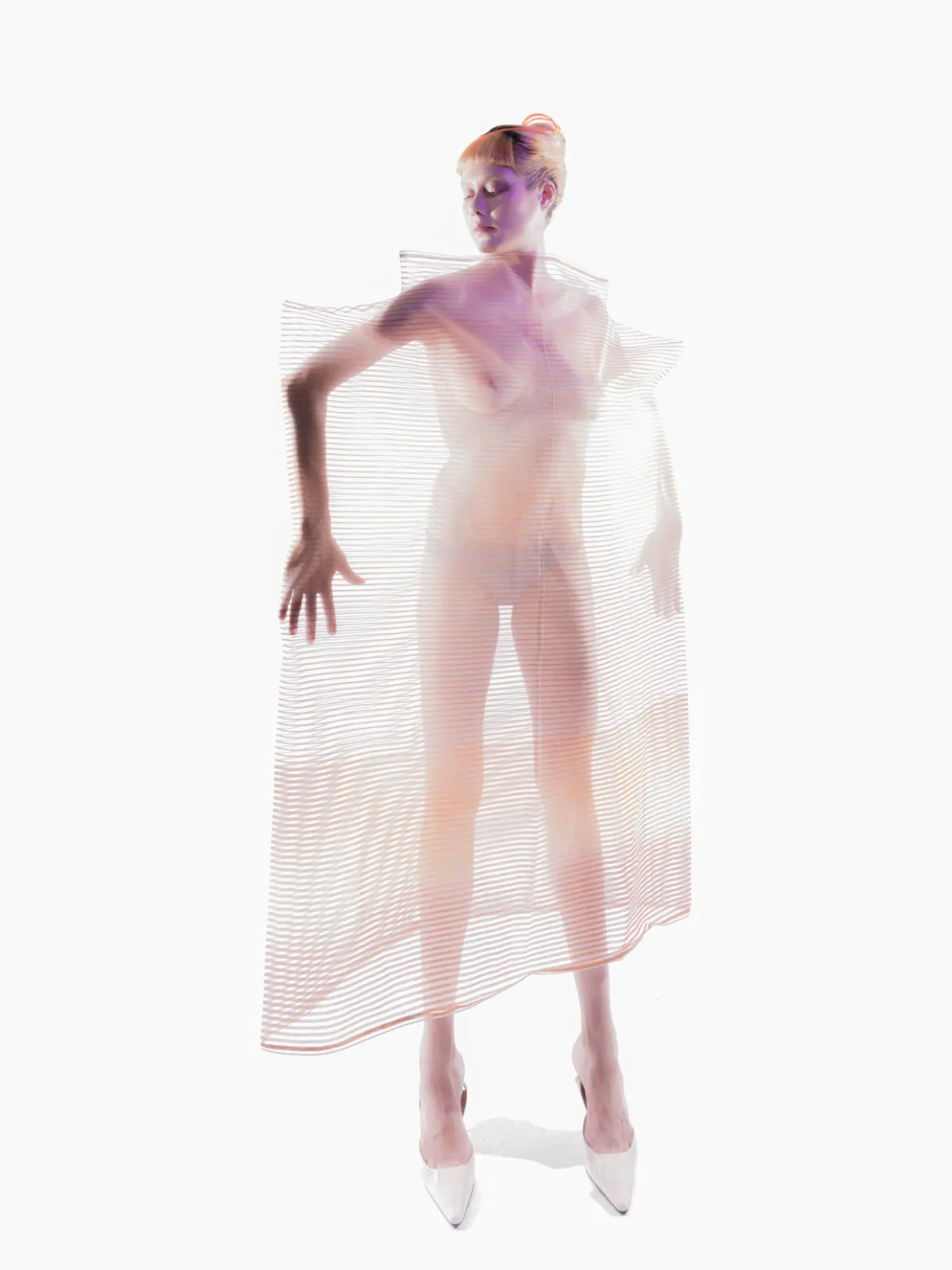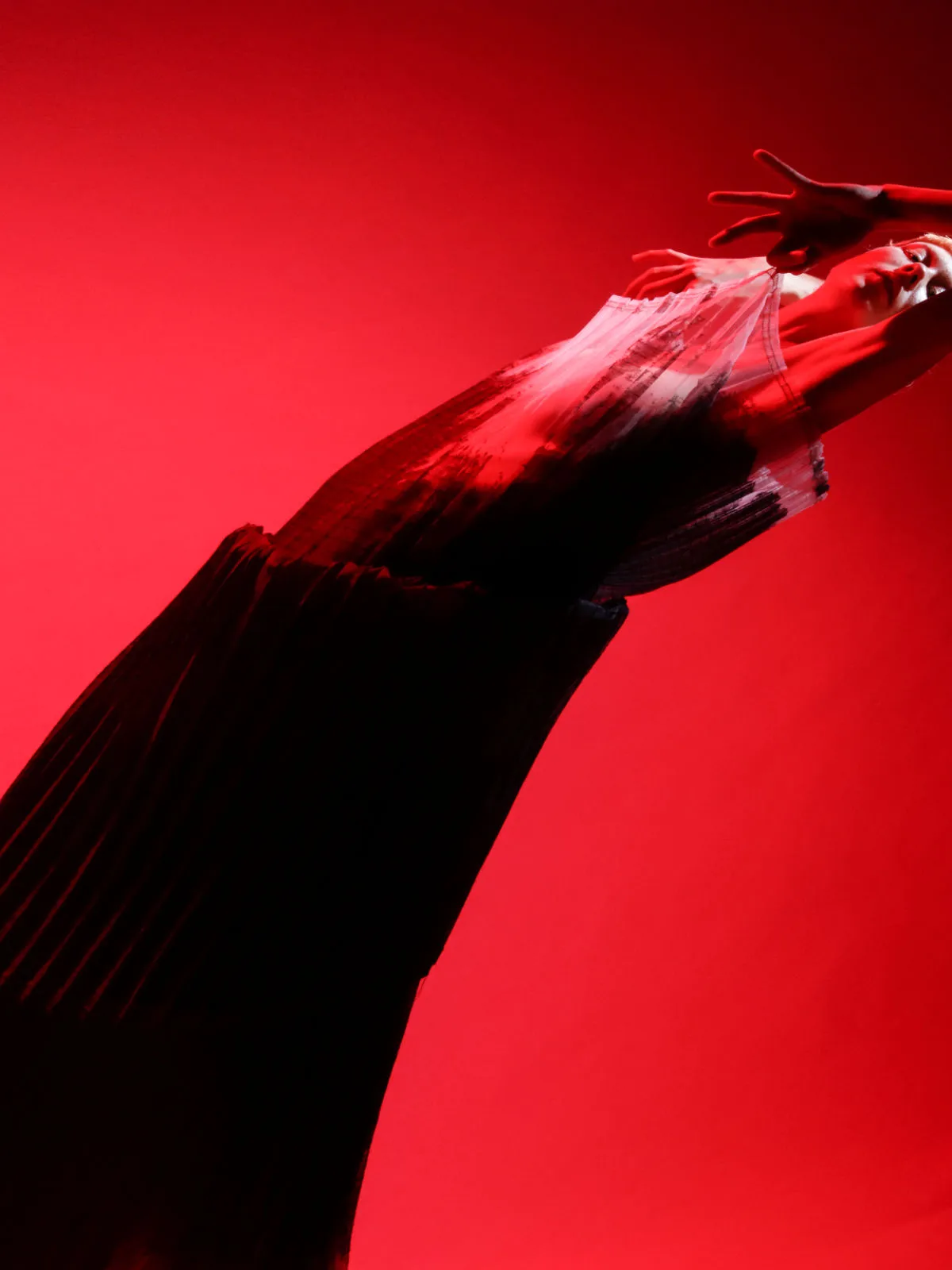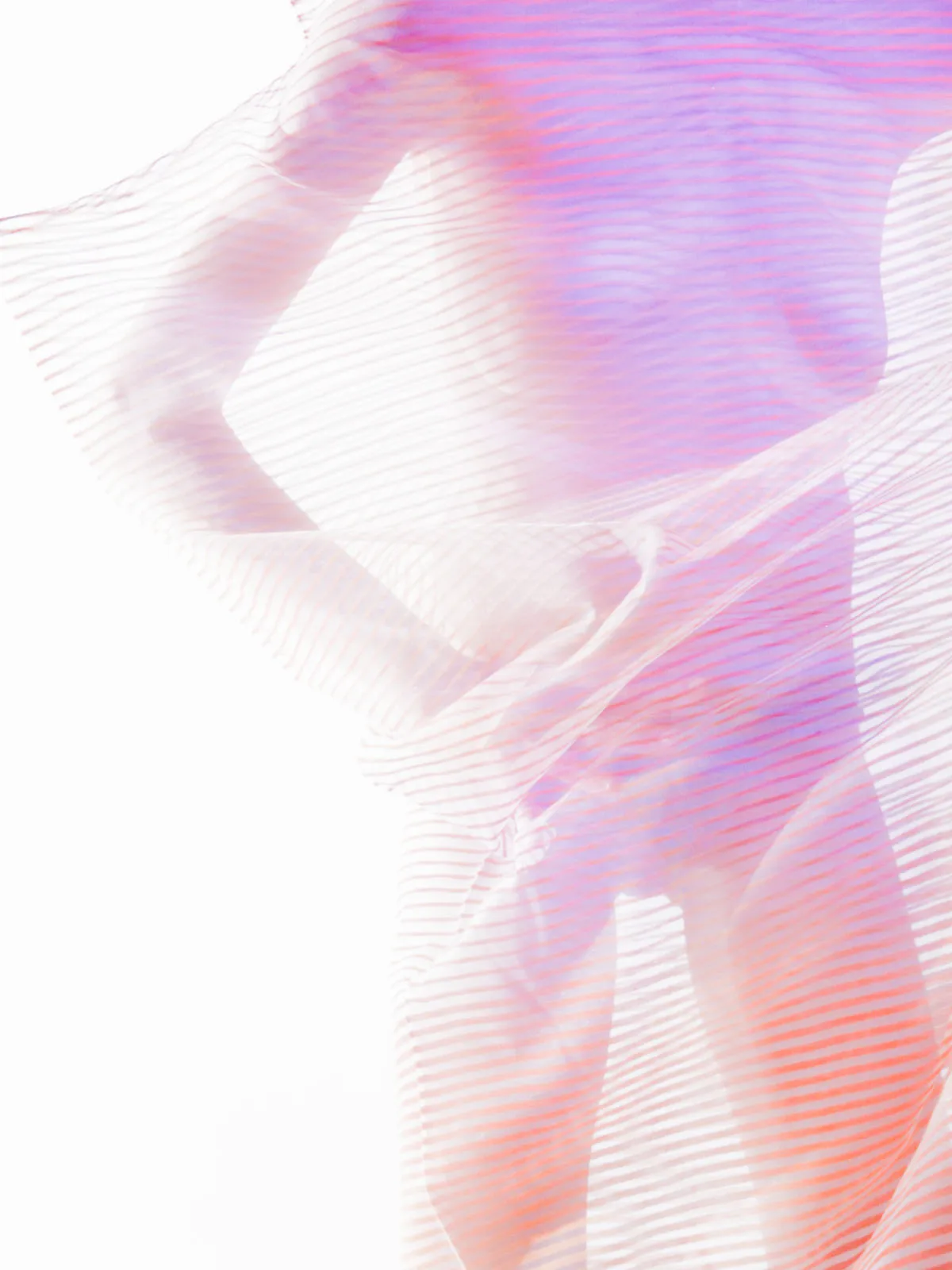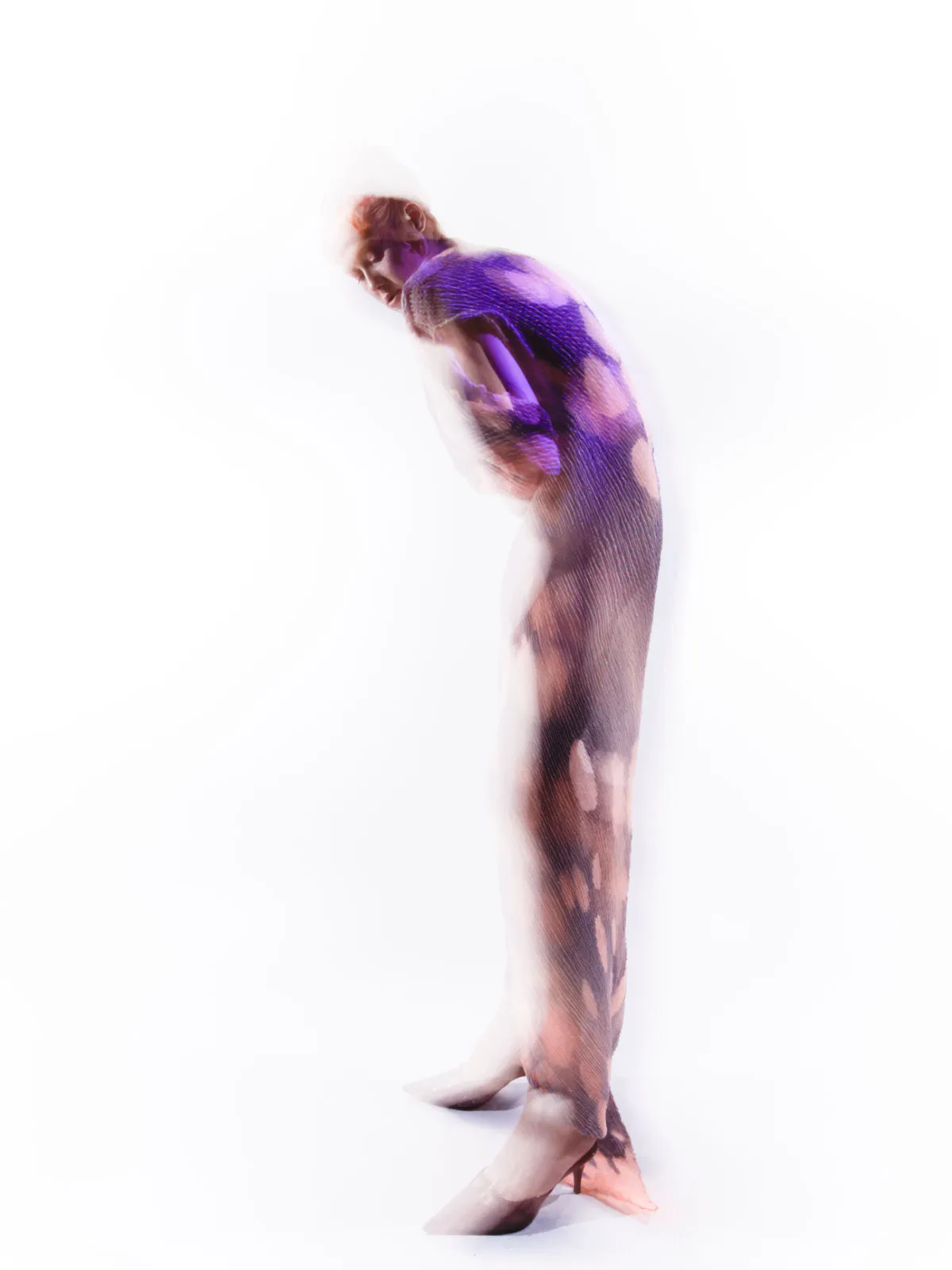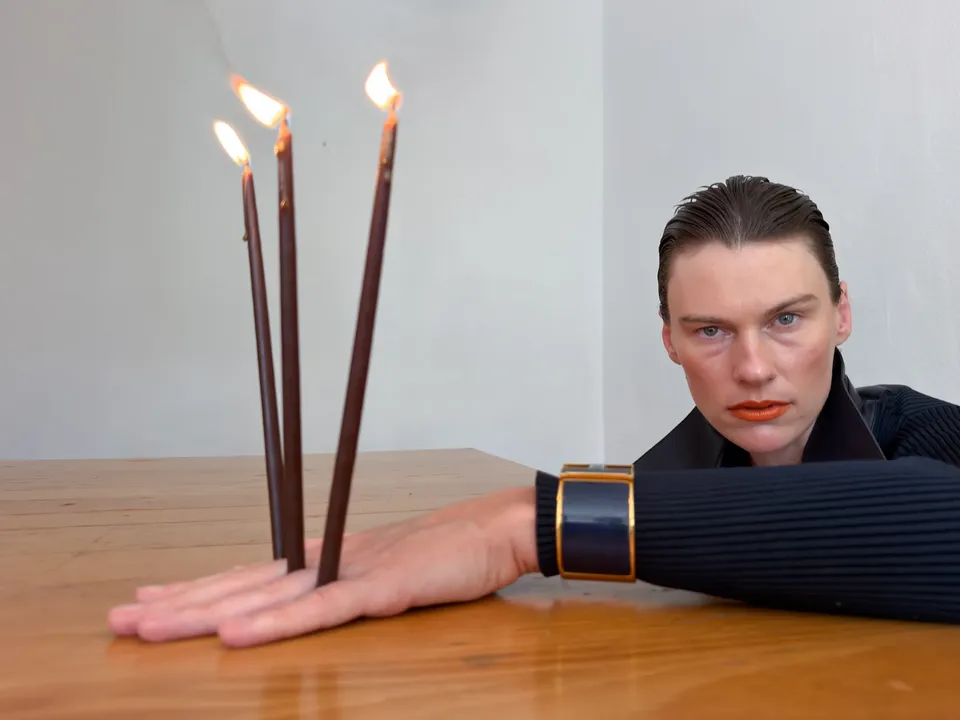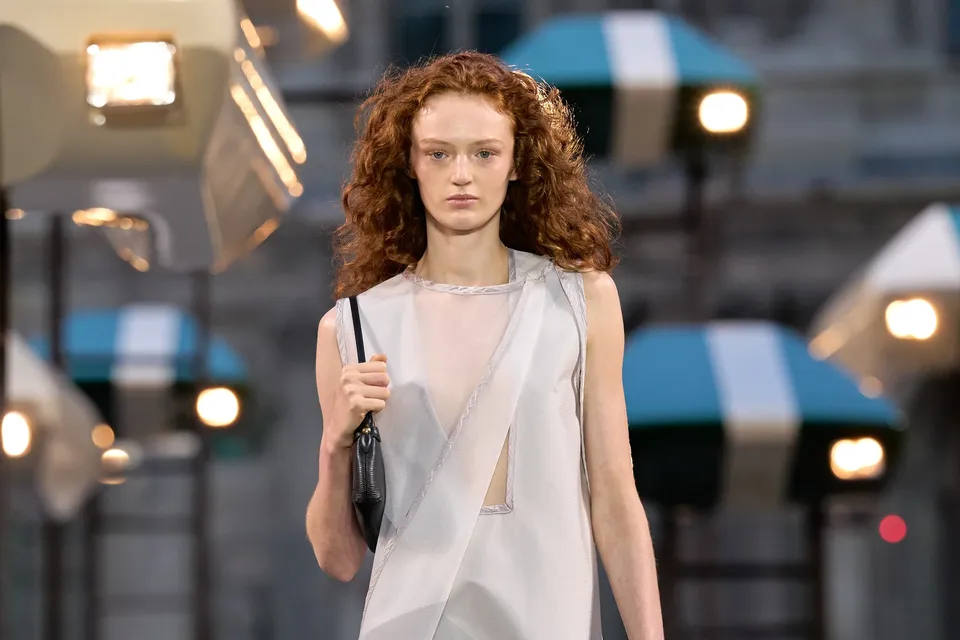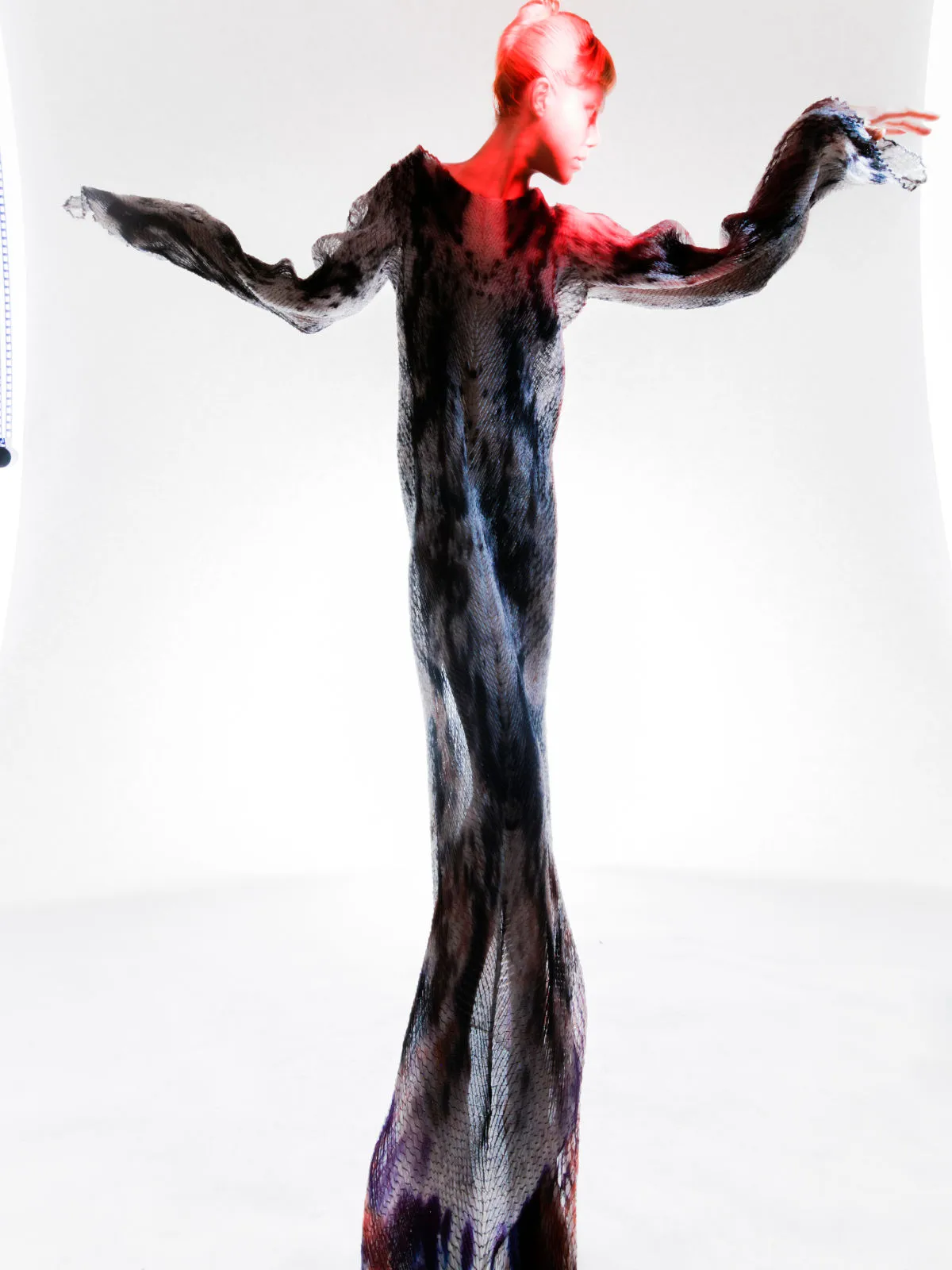
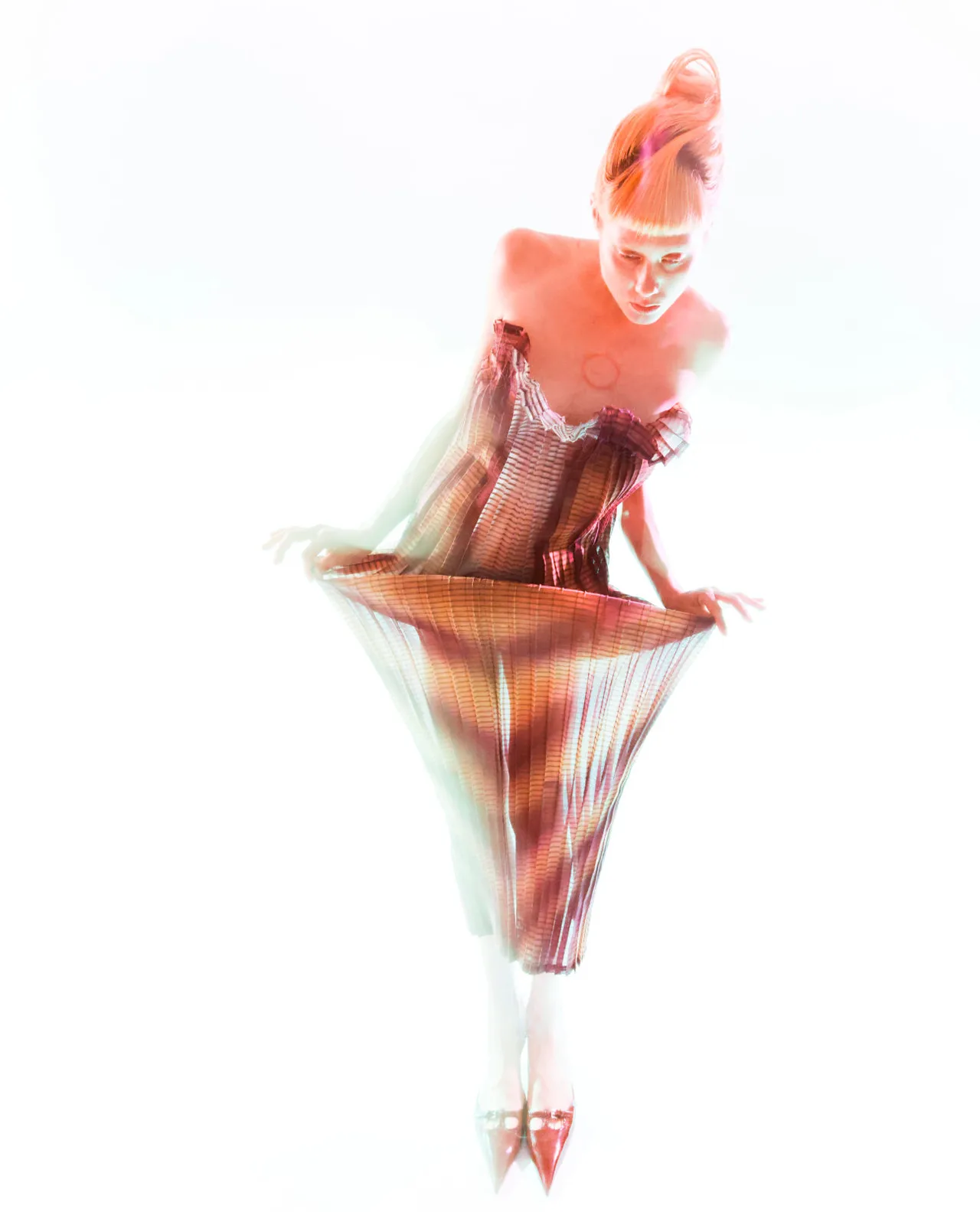
Lan Krebs is making magic out of the mundane, where ethereal, seamless silhouettes are sculpted from one of the most utilitarian fabrics — jersey. Luminous tubular-knits cocoon the body in diaphanous layers that reinterpret and reimagine the fabric’s structure. Since graduating from the Swedish School of Textiles, his focus has always been about exploration in a landscape that can feel restrictive, an ethos that won him the Elle Slovenia Young Talent Award. By pushing beyond functionality into something that both plays and resists, Krebs’ work finds itself in a unique position amongst the current fashion industry for its instinctive fluidity.
After his graduate collection debut for his master’s degree at The Swedish School of Textiles, the Slovenian designer has been non-stop. We spoke to Lan Krebs about life after graduation, his earliest fashion memories, and what it feels like to get recognised for your work.
You recently graduated from your master’s course at The Swedish School of Textiles. What’s life after graduation been like? Is there anything that you’re learning now that you’re out of education?
Life is unpredictable, but I’m enjoying the journey and trying to make the most of everything that crosses my path. Being a student at the Swedish School of Textiles was a truly inspiring space for me, and I had some of the best moments of my life there. Even though I’ve completed my master’s degree, I keep learning something new every day. My curiosity continues to drive me forward. Now, I’m not learning something entirely new, but rather developing and exploring how my degree project can grow further. I’m expanding it with new ideas, techniques, and technologies, allowing it to evolve gradually. The whole process remains a learning experience, and that’s what motivates me.
A great focus of your work is exploring the dynamism of jersey fabric, from fabric manipulation to redefining its structure. What’s your earliest memory with jersey? A childhood sweater, a university project? What about it intrigued you?
I don’t know exactly what my earliest memory with jersey is, but I can say that my mother often dressed my brother and me in striped T-shirts, of course made from jersey. That might be my very first connection with the material. But the first clear memory of when textiles started to truly interest me comes from spending time with both of my grandmothers. I often created, sewed, and embroidered with them. These weren’t perfect creations, but those first attempts opened the door to the world of making things and sparked my passion for design. That early experience encouraged me to choose this path already in primary school, and I am still living it today with dedication and enthusiasm.
One thing that has always intrigued me about single jersey is its simplicity. A technician once told me that things don’t need to come out of the machine already complicated. Simple textiles allow for much more exploration of applied techniques afterwards. Anything that comes out of the machine complex cannot really be simplified, but the opposite works — you can start simple and build complexity through design. This is exactly the approach I use in my own work. I begin with plain or striped fabrics and then make them more exciting through printing, dyeing, and pleating. Starting from something simple gives me the freedom to transform it in many ways.
One thing that has always intrigued me about single jersey is its simplicity. A technician once told me that things don’t need to come out of the machine already complicated. Simple textiles allow for much more exploration of applied techniques afterwards. Anything that comes out of the machine complex cannot really be simplified, but the opposite works — you can start simple and build complexity through design. This is exactly the approach I use in my own work. I begin with plain or striped fabrics and then make them more exciting through printing, dyeing, and pleating. Starting from something simple gives me the freedom to transform it in many ways.
You typically use machine-made tubular knits to create the textures in your designs. What initially drew you to that method? What have you learnt in your exploration?
A circular knitting machine, combined with plating, allows me to create seamless, cut-free garments, but this wasn’t the main reason I chose to work with machine-made tubular knits. Throughout my process, I wanted to truly explore the potential of the material and the prints. To do proper, in-depth research and achieve quality results, I needed time. I chose the circular knitting machine for my MA because it was most available, which meant I had it entirely to myself. If I had received as many time slots and as much support for the flatbed knitting machines at the beginning of my studies, this project might never have happened. Having ideas that are too fixed or plans that are too rigid is not always the best approach. When things don’t go as planned, I don’t panic — I simply go with the flow. Spontaneity often leads to the best results. This once again proves that limitations can sometimes spark the most creative and successful outcomes.
How does your design process inform and influence the aesthetics of your work? Is it something that feels fluid and integral, or secondary?
Feelings and emotions shape who we are, and this is reflected everywhere, not only in design. All stages of my process are very fluid. I don’t follow strict plans or fixed goals; I simply let the work, intuition, and passion guide me. What is important, however, is knowing when to stop. Sometimes I begin with small samples that I later scale up, but most of the time I work in full scale right from the start. I rely heavily on instinct, and somehow the designs almost always turn out well. The flow of the process is what gives the work its character.
Outside of the functionality of jersey, where else inspires you in your work? What do you enjoy doing outside of fashion?
Lately, I’m not even sure if I’m doing anything outside of fashion. I’m constantly trying to please every stylist and every customer, while at the same time developing and creating new work. I really love to travel, but at the moment, with the amount of work I have, I don’t have the mental space to take a trip and truly switch off.
Nature and sports inspire me, not because I take something from them literally for my designs, but because they are the moments when I stop thinking about what else I want to try creatively. Swimming is the best practice for me; I don’t have time to think, only to focus on breathing. I really need to bring these rituals back into my life, because they helped me a lot.
Nature and sports inspire me, not because I take something from them literally for my designs, but because they are the moments when I stop thinking about what else I want to try creatively. Swimming is the best practice for me; I don’t have time to think, only to focus on breathing. I really need to bring these rituals back into my life, because they helped me a lot.
Being from Slovenia, you’ve just been awarded the Elle Slovenia Young Talent 2025 Award. How did that feel to win? Has your upbringing influenced your work in any way?
Being recognised as a young talent means a lot. Receiving this kind of validation is something every creative needs, it’s encouraging and motivating. I’m extremely happy that they saw potential in my work and recognised its quality, even internationally. During my studies, it was important to stay visible and promote myself through accessible channels. Working hard, being honest, and creating eye-catching work were all key. More than anything else, though, it’s patience and consistent effort that have shaped me the most.
Where does your work sit within the context of environmental design? Are there any other fabrics or design methods that you’re eager to explore?
Sustainability is approached as both ecological responsibility and long-term engagement with the systems that support creative work. By focusing on industrially standardised fabrics like single jersey, I explore how subtle, intentional manipulations can radically transform structure and surface. The goal is to echo the complexity of natural forms through material behaviour. Through this process-led practice, a static and often overlooked fabric evolves in form, function, and visual language. The final outcomes demonstrate how even the most ordinary material can become extraordinary through thoughtful transformation. I would like to develop more everyday garments using digital printing, but creating the prints through analogue techniques. I hope I’ll be able to share more of this work soon.
You’ve just graduated into a period that feels uneasy for creatives. How are you navigating that? Where does Lan Krebs fit in amongst the fashion industry?
Right after finishing my studies, it’s been challenging to decide which path to take — whether to join the industry or carve my own way. But I’m still open to everything. There are many opportunities, yet few at the same time, and it’s hard to describe. It’s not an easy choice.
Is there a particular designer that you admire, and would love to collaborate with in the future? What about their work inspires you?
I really admire Pieter Mulier’s knits for Alaïa, and Daniel Roseberry’s craftsmanship for Schiaparelli is on another level. Following the development of Issey Miyake is also exciting, the pleats and knits are incredible. There are so many talented and creative people out there, and I’m curious and excited to see what the future brings and how everything unfolds.