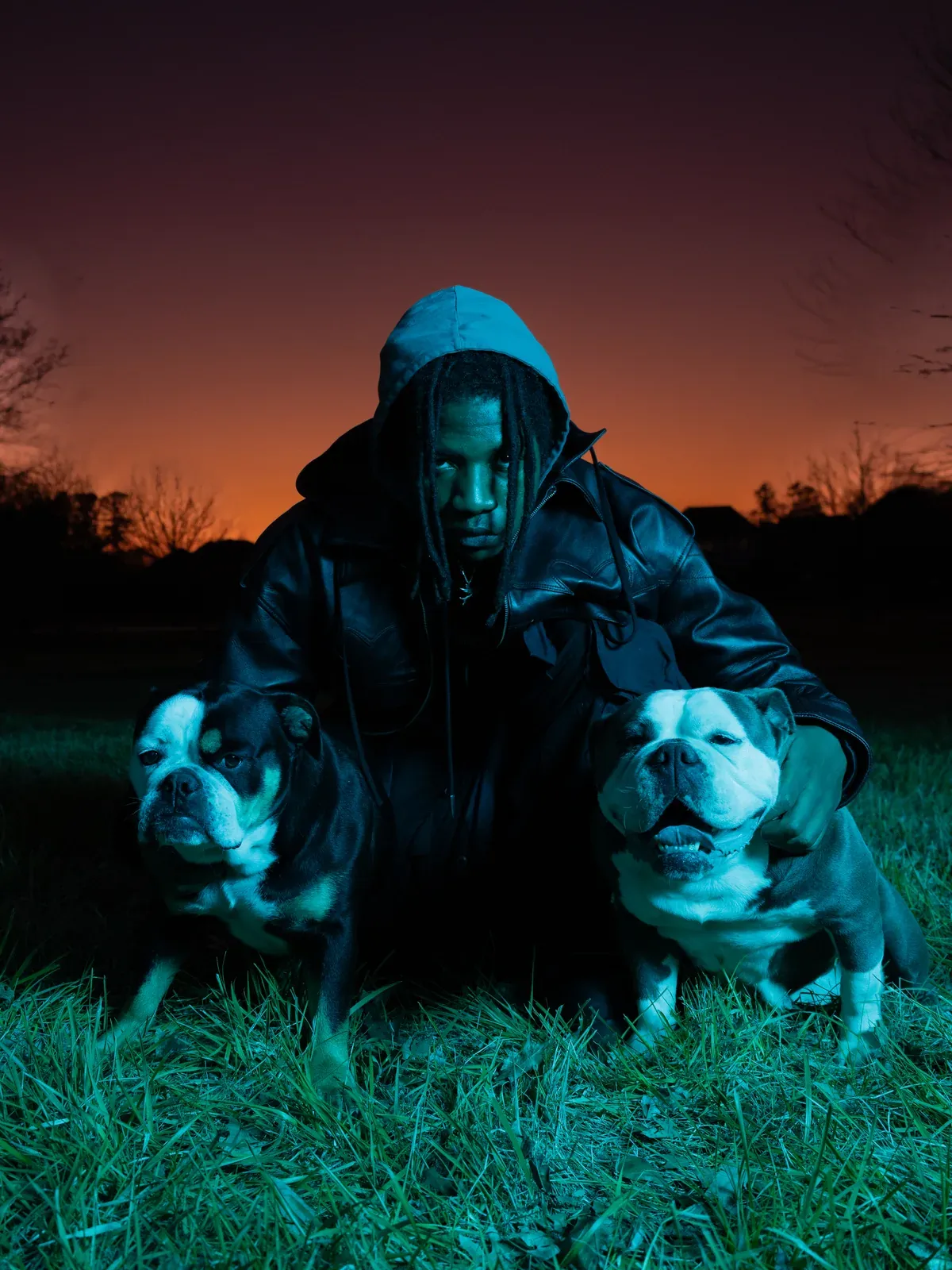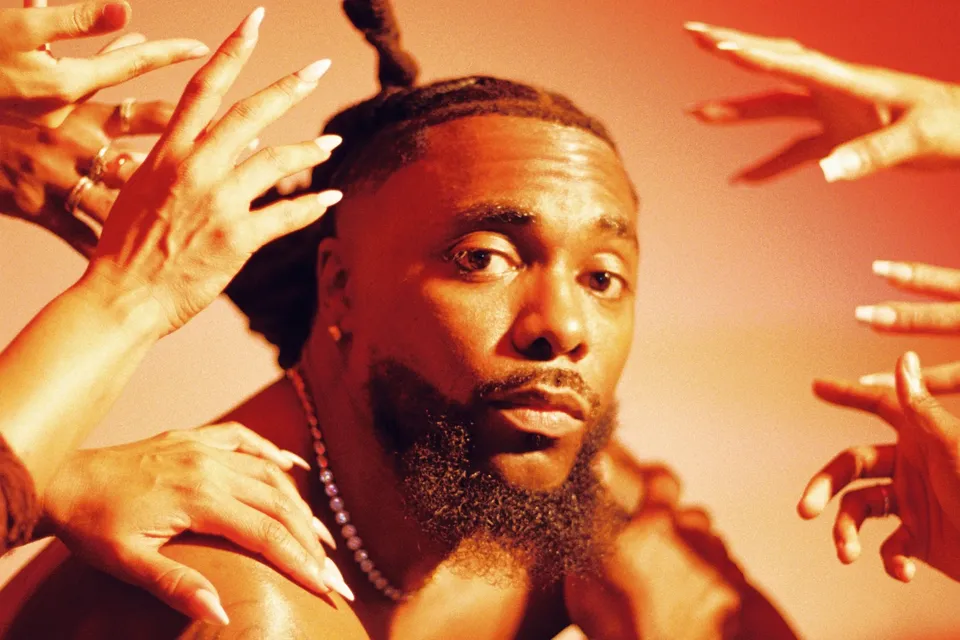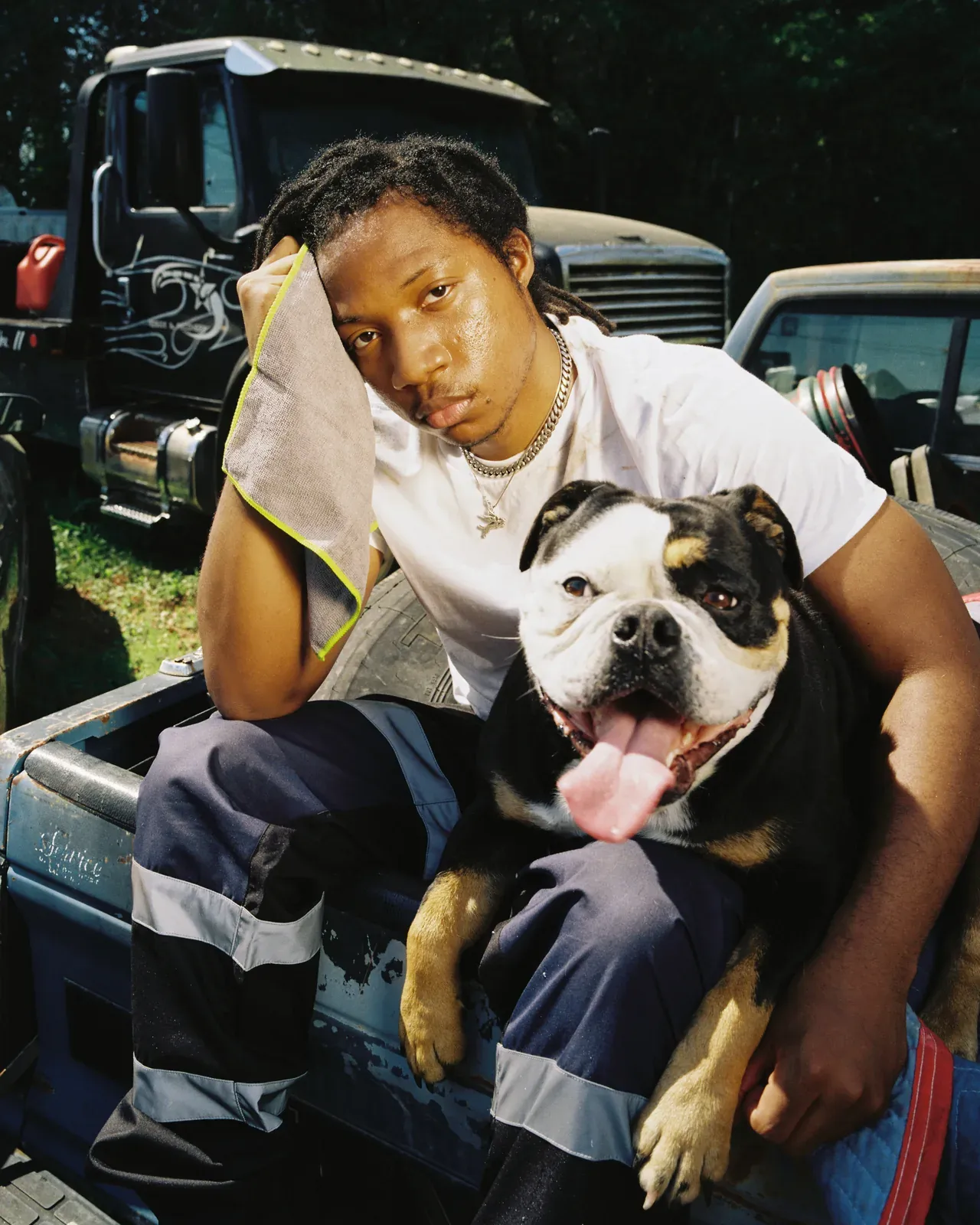
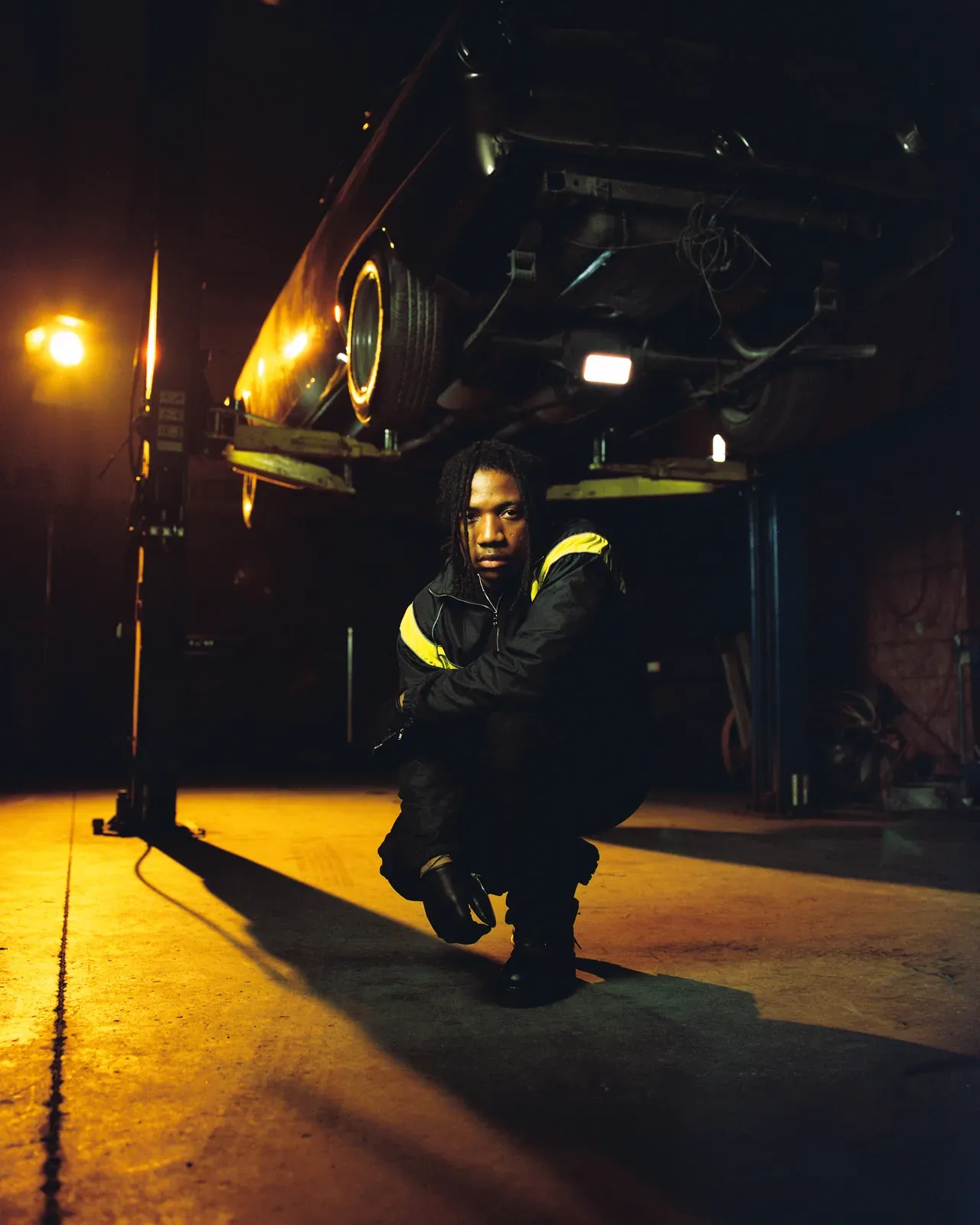
With how loosely “your favorite rapper’s favorite rapper” gets thrown around, it feels too vague to lean on it here — but chances are, your favourite rapper has him on the radar. J. Cole, Lil Wayne, JID, Project Pat, Denzel Curry, Freddie Gibbs, Veeze… they’ve all seen something in Kenny Mason. Even the Euphoria series tapped him for its curated soundtrack. Now, after nearly two years of releasing singles and EPs, Kenny returns with his third full-length project, Bulldawg, and is set to hit the road at the end of the month on an eighteen-city North American tour, taking him to Los Angeles, New York, Toronto, Detroit, and closing out in his hometown of Atlanta.
Despite his SoundCloud rap roots, his influences stretch to bands like Deftones, Title Fight, My Chemical Romance, and Smashing Pumpkins. These rock influences coexist in the most natural way, resulting in what feels like a deep study in versatility that we needed to unpack. After the mandatory start-of-the-Zoom brief chat, we quickly find ourselves diving into the hidden layers of his new LP, his take on today’s rap scene, his background marked by violence, his mental health, and how he navigates being naturally introverted.
Bulldawg feels like your most personal work to date. I know it’s the classic thing to say, but I think it really comes across as a snapshot of where you are right now. Do you agree with that?
Yeah, definitely. I have been working hard for the last five years without really giving myself a break, either mentally or energetically, and this album is a cathartic symbol of that frustration and ambition that I’ve married together.
This project also reflects how artists are often treated as disposable. How do you balance ambition with self-preservation?
The answer to that is loving and valuing yourself as a choice. It’s a mental strength game. It’s only ever going to be good for you if you choose to accept your true identity, and that’s what Bulldawg is all about. We’re in an industry, and a world, that constantly tries to devalue us and compare us to the next thing. I think we, as artists and creators, have to actively love and value ourselves, and use that as our defense.
Has that dynamic made you rethink the path you’ve decided to follow?
Yeah, for sure. I question pretty much weekly if this is what I should be doing. My personality is very much introverted, I don’t socialise, I don’t go out, and that completely juxtaposes with me being a public figure or having to promote myself and put myself out there. It’s a crazy dichotomy but I do it because I love it and because, at the end of the day, I feel like my music is helping people. That pushes me to be brave enough to step outside my comfort zone, and what my personality entails.
As you said, people often try to determine your value, which is one of the themes you explore on this new album. On every video, there’s always someone commenting that you’re underrated. How do you feel about that?
I like it, I think it’s a compliment. It’s better than being called overrated. I like the notion of people feeling like I should be placed higher, I guess. I think it’s endearing.
You’ve already collaborated with big names. Were you always fully confident your work belonged in those spaces?
Absolutely. I put up shots in the gym; I care about what I do. I know a lot of rappers try to act like they don’t care about rapping, but I care about my craft. I feel like, even with this album, I wanted to get better. I wanted to put up more shots, do more reps in the gym, and improve my vocals, my writing, everything across the board. I take this seriously.
You’ve been dropping music since 2016, but it feels like things really picked up around 2020. What do you think sparked that?
I believe that the community that I was in, and that I’m still in, uplifted me. People already knew me in an underground capacity, and I had a string of songs that really connected with that community, and I have to thank the city of Atlanta for that. It was the perfect storm of the music I was making and the energy of the city. That catapulted my career that year and gave me the foundation and platform to build a strong fan base, that is Kenny Mason’s family.
That was also the year the rock influence started to come through. With all those references in the mix, what’s a dream feature you’d still want to make happen?
When I was younger, I had dream features and stuff like that, but now, more than it being about a big legacy act, I want to work with people who I have really good chemistry with. That being said, Billy Corgan (from The Smashing Pumpkins) and any of the legacy rap acts would be cool.
“We’re in an industry, and a world, that constantly tries to devalue us. As artists and creators, we have to actively love and value ourselves, and use that as our defense.”
Well, Billy Corgan already showed you love publicly. What was your reaction to that?
That was amazing, bro. That was so validating and surreal, especially because at that specific time I was going through a lot mentally. I was having doubts about this alternative sound I have, I wasn’t sure if it was getting the love that it deserved amongst my community. I think that I was being put into a box and this part of my identity wasn’t getting as much love as it should. So that all happened in the same week, and Billy actually posted me on my birthday, which was super crazy. It was the perfect timing. It was just what I needed to hear, and it felt like a great gift from the universe.
I recently watched an interview with Yung Lean where the interviewer brought up this quote of his: “You make a couple of rap albums and then you can do whatever you want.” Do you buy into that idea?
That’s funny. I love Yung Lean, by the way. But yes and no. I feel like genre or style changes depending on your energy, or the emotion or aesthetic that you want to put out at that point. If you want to make two or three rock or alternative albums and then do a rap album again, that’s fine. I think you can do whatever you want as long as you’re strategic. You want to be pretty consistent with your brand, but I don’t think that necessarily has to be boxed in by genre.
Do you think people will eventually stop questioning this whole genre duality (like I’m doing right now, to be fair)?
(Laughs) Yeah, I think eventually people will get used to it and it’ll be normalised. There are a lot of artists doing this now. I feel like me and a few other guys were a Trojan horse, we kind of pioneered it. But I think the new generation doesn’t really care about genres or stereotypes at all.
One of the things people truly appreciate about you is the thought you put into your lyrics. Some think that’s missing in rap and trap right now. What’s your take on that?
I don’t think that’s missing at all. It’s probably a controversial take, but I feel like this generation has the best lyricists ever. When I think about artists like Saba, Noname, JID, Mavi, Marco Plus, Little Simz… there are so many artists that are incredible lyricists. These are some of the best writers in rap history in my opinion.
Also, there are trap artists saying some of the craziest bars and concepts, like Rylo Rodriguez. People have to shift their paradigm on what they feel like a genre should be versus what it is proving itself to be like in real time. They gotta open their mind more and listen a little bit more unbiasedly.
Also, there are trap artists saying some of the craziest bars and concepts, like Rylo Rodriguez. People have to shift their paradigm on what they feel like a genre should be versus what it is proving itself to be like in real time. They gotta open their mind more and listen a little bit more unbiasedly.
You once wrote a story about your dad giving you twenty dollars after winning your first fight (laughs). Were you exposed to violence at a young age?
I was definitely introduced to violence at a young age, since infancy most likely. I think that’s what comes with impoverished areas. Violence is a result of poverty, so in the areas I grew up in, I saw it all the time: family members fighting, uncles fighting, gun violence… all that type of stuff was pretty much normalised in the neighbourhoods that I grew up in.
How much of that still shapes who you are today?
As I’ve grown older and matured into a man, I’ve had to actively unlearn certain behaviours. I’ve been going to therapy to get to the root of why I have so much anger and why I feel the way I feel about things. It’s like an automatic response that I have to recalibrate, especially when it comes to being in the music industry, because if somebody pisses you off, you can’t just go and kick their ass, you’ll get sued. Those are things you have to learn for your own peace, for your own mental clarity.
“It’s probably a controversial take but I feel like this generation has the best lyricists ever.”
Who do you think you would be without music?
I think that I’d still probably be somebody who expresses himself through some type of medium, a creative of some kind. I’d be somebody who writes a lot, maybe a screenwriter or something like that.
But do you think you would have been able to manage those emotions as well?
It’s hard to say, but I don’t think so. Music saved my life. I would like to think that I would have found a way, but music is the way for sure.
And with the tour coming up, how do you handle being naturally reserved and then stepping on stage?
With a lot of practice, care, and intention. Rehearsing every day. It’s more than practicing my voice or my movements; it’s practicing my energy. I’m introverted, so I have to practice turning that off and stepping into Kenny Mason. When I’m on stage, I have to be Kenny Mason. In that sense, a tour is like the military, it’s tough. But this album was designed for tour, so I’m very excited. I feel that excitement every day, knowing I’m going to see how it affects the fans in real life, how they get their emotions out through the music, screaming it at the shows and moshing. That’s the reward.
After the tour, do you already have a plan for what’s next?
I do, but I’ll keep it under wraps. For now, I’m gonna keep building up this world, the world of Bulldawg.